The Classics Spin #11: My list

The Classics Club

I was just thinking yesterday that it’s been a while since the last Classics Spin, so I’m pleased to see that another one has been announced today! It’s hard to believe that this is the eleventh Spin – I think I’ve taken part in all but one of them and have been very lucky with most of my results.

Here is a reminder of the Spin rules:

* List any twenty books you have left to read from your Classics Club list.
* Number them from 1 to 20.
* On Monday the Classics Club will announce a number.
* This is the book you need to read by 1 February 2016

And here is my list:

1. Shirley by Charlotte Brontë
2. The Time Machine by H.G. Wells
3. Wives and Daughters by Elizabeth Gaskell
4. Crime and Punishment by Fyodor Dostoevsky
5. Mary Anne by Daphne du Maurier
6. East of Eden by John Steinbeck
7. The Heir of Redclyffe by Charlotte M. Yonge
8. The Leopard by Giuseppe Tomasi di Lampedusa
9. Wuthering Heights by Emily Brontë (re-read)
10. Vanity Fair by William Makepeace Thackeray
11. Kristin Lavransdatter by Sigrid Undset
12. Louise de la Valliere by Alexandre Dumas
13. The House of Mirth by Edith Wharton
14. Around the World in Eighty Days by Jules Verne
15. The Mill on the Floss by George Eliot
16. I, Claudius by Robert Graves
17. Excellent Women by Barbara Pym
18. The Day of the Triffids by John Wyndham
19. Jane Eyre by Charlotte Brontë (re-read)
20. The Woodlanders by Thomas Hardy

I have been making good progress with my Classics Club list recently and I’ve found it much easier to choose twenty titles for the Spin now that I have fewer books left to read.

The odd numbers on my Spin list are books by women and will count towards the Women’s Classic Literature Event which I’m participating in. I would be happy to get any of those numbers, particularly one of the Brontë re-reads as I just never seem to be able to find time to re-read my favourite books anymore. The even numbers on my list are by male authors and again, I think I’d be happy with any of them. I’ve included some very long books, but I’m not too worried as I’ll have until February to read them.

Will you be taking part in the Spin? Are there any numbers you think I should be hoping for?
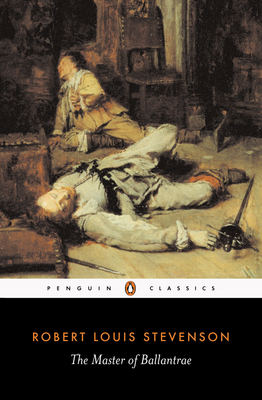
The Master of Ballantrae by Robert Louis Stevenson

The Master of Ballantrae My experiences with the work of Robert Louis Stevenson so far have been mixed. I liked Dr Jekyll and Mr Hyde, although knowing the basic plot beforehand spoiled it slightly; I gave up on Kidnapped halfway through (but would like to give it another chance); and while I did read Treasure Island as a child, it was an abridged version for children, and I have no idea what I would think of the book as an adult. I wasn’t sure what to expect from The Master of Ballantrae, then, but I’m pleased to say that I enjoyed it.

Published in 1889, The Master of Ballantrae: A Winter’s Tale is set much earlier, opening in Scotland in 1745, just before the Jacobite Rising. When news of Bonnie Prince Charlie’s arrival in Scotland reaches the Duries of Durrisdeer and Ballantrae, the family must decide what to do. There is no question of Lord Durrisdeer himself joining the rebellion, but his two sons – James Durie (the Master of Ballantrae), his eldest son and heir, and Henry, his younger brother – are both keen to go. A coin is tossed and it is decided, to Henry’s disappointment, that the Master will join the Jacobites while Henry stays at home and remains loyal to King George. This way, the family titles and estates will be safe no matter which side wins.

As history tells us, the rising will fail – and it is not long before the Duries receive reports that James has been killed. Henry becomes heir in his brother’s place and, at his father’s urging, marries the Master’s grieving fiancée, Alison. These are difficult times for Henry: his neighbours see him as a traitor for not taking part in the rising, and he knows that his father and wife will never stop mourning for James, always the favourite son. But things are about to get a lot worse for Henry – it seems that the Master of Ballantrae is not dead after all and is about to come home to Durrisdeer to take his revenge.

The Master of Ballantrae has all the elements of a typical adventure story – duels, pirates, sea voyages, buried treasure – but it is also a fascinating psychological novel about the relationship between two very different brothers. James, the Master, is the charming, charismatic brother whom everyone seems to love, yet he is also devious, scheming and manipulative. Henry is his opposite – quiet, responsible and dutiful, but less glamorous and less popular. At first it seems that this is another Jekyll and Hyde story, with one character representing good and the other evil, but it soon becomes obvious that it is not as simple as this and Henry’s personality begins to change as his obsession with his brother starts to rule his life.

We get to know these two men from the perspective of Ephraim Mackellar, a family servant at Durrisdeer, but I couldn’t help thinking that Mackellar is not a very reliable narrator. It is clear from the start that he is loyal to Henry and his narration is definitely biased towards the younger brother, but whenever he spends time alone with the Master his opinion seems to change slightly and he is able to acknowledge that the elder brother also has some good points as well as bad.

Not all aspects of The Master of Ballantrae worked as well for me as others: the purely ‘adventure’ scenes, such as the encounters with pirate ships at sea and the treasure hunts in the American wilderness, became a bit tedious, especially whenever the narration switched away from Mackellar while another narrator took his place. But I loved the central storyline and the rivalry between the two brothers; I particularly loved the Master, who may have been the devilish brother, but was so much more interesting to read about than poor Henry! I will read more by Robert Louis Stevenson, though I’m not sure whether to move straight on to one of his other books, maybe The Black Arrow, or to try re-reading Treasure Island and Kidnapped first.

Looking back, looking forward: November 2015

November

November was an interesting month reading wise. I feel I’ve read a good mixture of new books and old, some by authors who are new to me and others by authors I already know and love. Most of my reads were classics and historical fiction, but I also read one collection of short stories and one fascinating non-fiction book.

Let’s look back at November before looking forward to December.

Favourite books this month:

Lustrum

Lustrum by Robert Harris (2009) – This is the second part of a fictional biography of the Roman statesman Marcus Tullius Cicero. I loved the first book, Imperium, and thought this one was even better.

The Last Enchantment

The Last Enchantment by Mary Stewart (1979) – I enjoyed all three books in Mary Stewart’s Merlin trilogy, of which this is the last.

Also read and reviewed this month:

The Silvered Heart by Katherine Clements (2015)
Master of Shadows by Neil Oliver (2015)
Death in Venice & Other Stories by Thomas Mann (1897-1912)
Dickon by Marjorie Bowen (1929)

Read but not yet reviewed:

The Master of Ballantrae by Robert Louis Stevenson (1889)
The Good Soldier by Ford Madox Ford (1915)
Royal Mistress by Anne Easter Smith (2013)
The Georgian Menagerie by Christopher Plumb (2015)

Looking forward to December

As we move into December, I am in the middle of two books – The Storm Sister, which is the second book in Lucinda Riley’s Seven Sisters series, and The Sea-Hawk by Rafael Sabatini – and am enjoying both. The Sea-Hawk is the last book I need to read for my Ten from the TBR project, so you can expect an update on that (and another selection of ten books) later in the month.

I don’t have any other plans for December’s reading, so I’ll just see what I’m in the mood for. At the end of the month, of course, I’ll be posting my list of favourite books of the year. I feel that I’ve read a lot of good books in 2015, but not many that really stand out from the rest, so this year’s list could be either very easy to compile or very difficult! I’m hoping that some of my December choices will be the outstanding reads I’ve been waiting for.

How was November for you? Do you have any reading plans for December?

Dickon by Marjorie Bowen

Dickon Marjorie Bowen (1885-1952) was a very prolific author of historical fiction, romance, crime and horror, producing over one hundred and fifty books during her lifetime. Endeavour Press have gradually been making some of them available to modern readers and there are several that I’m interested in reading, but I decided to start with this one, Dickon, as it is set during one of my favourite historical periods: the Wars of the Roses.

The title refers to Richard III (Dickon, of course, is a nickname for Richard) and the novel follows Richard throughout his entire life, beginning with the moment when, as a child, he learns that his father, the Duke of York, and elder brother, Edmund, have been killed at the Battle of Wakefield. The book is divided into three sections; the first is called The Three Suns, which refers to the parhelion which appeared in the sky at the Battle of Mortimer’s Cross, but could also be a pun on the three remaining ‘sons’ of the Duke of York – and covers Richard’s childhood up to the point where his brother wins the throne for York, becoming King Edward IV.

The middle section, The Bear and Ragged Staff (a reference to the emblem of the Earl of Warwick) concentrates on 1470-1472, the period of the rebellion of Warwick and George, Duke of Clarence. Finally, The White Boar takes us through Edward’s death and the period immediately afterwards – Richard’s own brief reign and his tragic end at the Battle of Bosworth in 1485. There is no doubt that Richard suffered a lot of misfortune and tragedy and this is symbolised in the novel in the form of Jon Fogge, a man-at-arms whom Richard believes has been haunting him throughout his life, bringing bad news and bad luck to the Plantagenets.

Dickon was published in 1929 and I think it’s fair to say that it’s quite different from the majority of historical fiction that is being published today. The dialogue has a very old-fashioned feel, being sprinkled with words like ‘thou’, ‘thee’, ‘doth’ and ‘hath’, something that seems to have been dropped by most modern historical novelists, and the whole novel also has an air of innocence, with sex scenes only hinted at rather than explicitly described. I do like ‘older’ historical fiction but I suspect some readers will find this book too archaic and romanticised.

In her preface to the novel, Marjorie Bowen says that she has studied all of the known sources and “has violated no known fact, nor presented any character or action in any light that is not probable, as well as possible”. I did notice a few historical inaccuracies, but as I’m not completely sure how much material was available in 1929 and how much has only come to light in more recent years, I’m not going to be too critical. There are also a lot of controversies surrounding Richard III and his reign – there is no one version of events that has been accepted by everybody – so different authors and historians do have different theories and different interpretations. I was particularly curious to see how Bowen was going to approach the mystery of the disappearance of the Princes in the Tower, so I was disappointed to find that her solution was simply to ignore the whole episode!

Richard himself is portrayed as sensitive, loyal and trusting, a brave warrior and a devoted brother, father and husband. His character lacks the depth and complexity I would have liked and sometimes seems too good to be true, although I can appreciate that this is one of the earliest pro-Ricardian novels, written decades before books like The Daughter of Time or The Sunne in Splendour, and that the author was trying to provide an alternative to the usual view of Richard as the hunchbacked villain of Shakespeare’s play.

If you’re completely new to this period of history and the life of Richard III, this book is maybe not the best place to start, but I did find it quite enjoyable and a good addition to my collection of Wars of the Roses fiction. I will be reading more by Marjorie Bowen.

Thanks to the publisher for providing a review copy via NetGalley.

Death in Venice and Other Stories by Thomas Mann

Death in Venice When I decided to participate in this year’s German Literature Month (hosted by Caroline and Lizzy) I discovered that I already had two books by German authors unread on my shelves: Death in Venice and Other Stories by Thomas Mann and Wolf Among Wolves by Hans Fallada. I chose the Thomas Mann simply because the book was a lot shorter and I could be sure of finishing it before the end of the month, but now that I’ve read it I wish I had gone with my heart and chosen Hans Fallada, whose books I have read before and loved. I did find a lot to like and appreciate in Mann’s writing, but I’m not convinced yet that he’s really an author for me.

As well as the title novella, Death in Venice (1912), this edition includes six other stories by Thomas Mann. I read all of them, but will concentrate here on Death in Venice as it is by far the most famous story in this collection and the one I was most interested in reading.

Death in Venice tells the story of Gustav von Aschenbach, an ageing author suffering from writer’s block. He decides to travel in the hope that it will clear his mind and provide inspiration and the destination he settles on is Venice. Mann’s descriptions of Venice are beautifully written, even though at the time of Gustav von Aschenbach’s arrival the weather is dark, gloomy and oppressive, matching the overall mood of the story. I have been to Venice myself, so I found the descriptions of Aschenbach’s approach over the lagoon, his ride in the gondola and his trip across to the Lido particularly vivid.

While in Venice, von Aschenbach becomes intrigued by Tadzio, a beautiful young Polish boy who is staying with his family in the same hotel. Day by day, his infatuation with Tadzio grows; he finds himself watching out for the boy entering the breakfast room each morning and then tries to secretly follow him around Venice. Even when he learns that it may not be safe to remain in the city any longer, von Aschenbach is unable to tear himself away from Venice and Tadzio…and eventually, as the title suggests, his obsession will lead to a death in Venice.

Reading Death in Venice in 2015, it’s difficult not to feel disturbed by the story of a middle-aged man’s infatuation with a teenage boy – although I should point out that Aschenbach never touches or even speaks to Tadzio. The focus is on Aschenbach’s private feelings for the boy and how he chooses to deal with those feelings. I think at least part of his obsession can be attributed to an appreciation of beauty and the despair of a man who is growing older, knowing that his own youth is lost forever (towards the end of the novella, we see Aschenbach dye his hair and cover his wrinkles with make-up in an attempt to look younger). I found out after finishing the story that it was based on Thomas Mann’s real-life experiences and this made me think again about what he was trying to say and how he may have wanted it to be interpreted.

I found the other six stories in this collection a bit uneven, but they are all worth reading. Little Herr Friedemann (1897) – one of the earliest examples of Mann’s work included in the book – is a sad story of a man who was dropped on the floor as a baby and grew up with physical disabilities. Herr Friedemann has learned to cope with his lot in life and things aren’t going too badly for him…until he falls in love. The Joker (also 1897) has some similar themes, but I have to admit the details of this particular story have faded from my mind just a few days after reading it.

The Road to the Churchyard (1900) is a very short story about a widower who sets out to visit the churchyard and becomes irrationally angry with a boy (referred to only as ‘Life’) who is riding his bicycle along the path. This is followed by Gladius Dei (1902), in which a man called Hieronymus enters an art gallery in Munich and loses his temper when he sees a piece of immoral artwork displayed in the window.

Tristan (1903), one of the longer stories in the book, is a love story set in a sanatorium. It contains allusions to the legend of Tristan and Iseult, as well as some musical references and an exploration of attitudes towards life and death. Finally, Tonio Kröger (1903), another novella, follows the course of a man’s life from childhood to adulthood and, like Death in Venice, has some autobiographical elements.

I’m pleased to have finally read some of Thomas Mann’s work, but I found this an interesting book rather than an enjoyable one. I am not a huge fan of short story collections, though, so now I’m wondering whether I would have a better experience with one of his longer novels.

Master of Shadows by Neil Oliver

Master of Shadows There were several things that drew me to Master of Shadows: the setting (the fall of Constantinople in 1453) was one, and the protagonist (the Scottish engineer, John Grant) was another. Most of all, I was curious to see what Neil Oliver’s fiction would be like. Oliver is best known as a television presenter and historian – he recently presented the BBC series Celts: Blood, Iron and Sacrifice – and although he has previously published some non-fiction, Master of Shadows is his first novel.

I have mentioned Constantinople, but much of the first half of the novel is actually set in Scotland, where the soldier Badr Khassan has come to fulfil a deathbed promise, having sworn to protect the wife and child of his friend, the late Patrick Grant. He finds Jessie Grant and young John just in time to interrupt an attempt on their lives by the men of Patrick’s enemy, Sir Robert Jardine of Hawkshaw. Pursued by the vengeful archer, Angus Armstrong, Badr and John leave Scotland and travel across Europe, making a living by fighting as mercenaries. Along the way they meet a mysterious female warrior called Lena who is also a target of the same group of Scots and who is hiding some important secrets regarding her own identity and John’s.

Eventually John arrives in Constantinople, one of the final strongholds of the Byzantine Empire, now under threat from the mighty Ottoman army. As the Emperor Constantine XI prepares to defend his city and Sultan Mehmet II gathers his forces outside the walls, two more characters come to the forefront of our story: Prince Constantine, the Emperor’s crippled son, and Yaminah, the girl he loves. The lives of John, Yaminah and the Prince come together during the dramatic Siege of Constantinople and the final days of the Byzantine Empire.

Master of Shadows is a combination of history, adventure and romance set against a backdrop of what is surely one of the most fascinating and significant periods in Europe’s history – the collapse of one empire and the expansion of another. I thought the book was generally well written and, knowing that the author is an archaeologist and historian, I also felt confident that it would have been well researched. However, he does take some liberties with certain historical characters; I really disliked Lena’s story, although I can’t explain why without telling you who she really is and that would be a spoiler! There’s also a supernatural aspect to the novel – John Grant is able to feel the Earth moving through space and can sense the people around him without using sight or touch – but this didn’t become such a big part of the story as I’d feared at first.

I had previously encountered John Grant as a character in Dorothy Dunnett’s House of Niccolò series (under the slightly different name of John le Grant) and was quite fond of him, so I was looking forward to seeing how he would be portrayed by another author. Very little is known about the real John Grant; records show that a Johannes Grant was employed as an engineer by the Byzantine Empire and his expertise in counter-tunnelling prevented the Turks from invading Constantinople from under the walls. He was originally thought to have been German but more recent research suggested that he was actually Scottish. This lack of historical information has allowed Neil Oliver to create a whole backstory for John to explain how he came to be in Constantinople. The character is quite different from the one in Dunnett’s novels, but I did still like him (although I found it irritating that he is always given his full name of John Grant, sometimes multiple times in the same paragraph, and is never just referred to as John).

Master of Shadows is an interesting first novel – I particularly liked the Scottish chapters near the beginning and the romance between Prince Constantine and Yaminah – but there were too many little things that didn’t work for me. As well as the Lena storyline and the supernatural element I’ve mentioned above, there’s a lot of jumping around in time which makes it slightly difficult to follow what is happening. I’m not sure whether I’ll read any more of Neil Oliver’s fiction, but I might try one of his non-fiction books instead.

Review copy provided by the publisher via NetGalley.

The French Lieutenant’s Woman by John Fowles

The French Lieutenants Woman I feel I’ve been making a lot of progress with my Classics Club list recently. I have just finished two books from the list – one by Thomas Mann and another by Robert Louis Stevenson – but before I tell you about either of those, I wanted to post my thoughts on a book I read almost a month ago. It has taken me a while to motivate myself to write about The French Lieutenant’s Woman because I wasn’t quite sure what I wanted to say. I didn’t dislike it but I certainly didn’t enjoy it as much as I hoped I would or as I feel I should have done.

The story is set in the 1860s in the English coastal town of Lyme Regis (which Jane Austen readers will know as the place where Louisa Musgrove fell down the steps in Persuasion). Sarah Woodruff, the ‘woman’ of the title, spends her days standing alone on The Cobb, the town’s harbour wall, staring out to sea. Nicknamed ‘Tragedy’ by the people of Lyme, Sarah is considered to be a disgraced woman following a brief relationship with a French naval officer who abandoned her and married another woman on his return to France.

Charles Smithson, who is staying in the town with his fiancée Ernestina Freeman, encounters Sarah while out walking one day and is intrigued when he is told about her background. The more he learns about Sarah, the more fascinated he becomes, but as he is still engaged to Ernestina, he will soon be faced with making some important decisions.

The French Lieutenant’s Woman is an unusual novel and I can definitely understand its appeal. Published in 1969 but set in 1867, there are times when it feels almost like an authentic Victorian novel and others when the author intrudes into the story to make an observation from a very contemporary perspective. In John Fowles’ own words:

“You are not trying to write something one of the Victorian novelists forgot to write; but perhaps something one of them failed to write. And: Remember the etymology of the word. A novel is something new. It must have relevance to the writer’s now – so don’t ever pretend you live in 1867; or make sure the reader knows it’s a pretence.”

This novel, then, is a mixture of old and new. It’s a book about the Victorian period – the culture, the science and literature, the conventions of society – as well as a book set in the Victorian period. The author (or the narrator – it’s difficult to distinguish between the two) plays an important role in the story, giving us his opinions of the characters and their actions, and even appearing as a character himself later in the novel. And this, I think, is probably why I had a problem with the book. It doesn’t bother me at all when a Victorian author stops to talk directly to the reader – Anthony Trollope in particular uses that technique a lot and it always seems very natural to me – but when a modern author does it, I don’t think it ever feels quite the same.

In addition to the narrative style, Fowles also incorporates other experimental or postmodern elements. The most intriguing of these, I thought, was his use of alternate endings. He gives us three to choose from: one traditional ‘happy ending’, another which offers some hope, and a third which isn’t very happy at all. By the time I had reached this stage of the novel, I had accepted that I wasn’t going to be drawn into the story emotionally and had no real preference as to how the story should end, so I found it interesting to read all of the endings and think about which might have been the most likely.

I don’t want to sound too negative about this book. I loved the early chapters, particularly the memorable opening scenes where we see for the first time the lonely figure of Sarah gazing out to sea, and I also enjoyed the subplot involving Charles’ servant, Sam, and Mary, Ernestina’s aunt’s maid. I’m sure The French Lieutenant’s Woman must be a fascinating book to study at university or to discuss with a group, but when I’m reading for pleasure I prefer a novel that I can lose myself in, rather than one like this where I am constantly being pulled out of the story. Despite this, I did like John Fowles’ writing and would be happy to try more of his books, but maybe someone who has read them can let me know if they are all like this one?