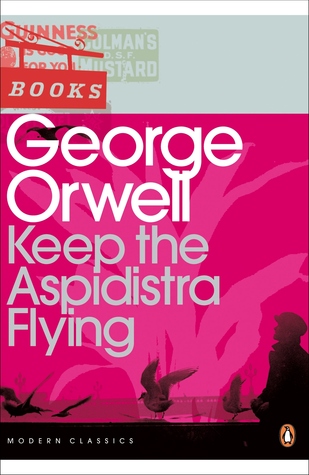
Keep the Aspidistra Flying by George Orwell

Keep the Aspidistra Flying For a long time I only associated George Orwell with Animal Farm and 1984 and it never occurred to me to look into what else he may have written…until last year when I read Coming Up for Air and was surprised by how much I enjoyed it. I wanted to read more of his books, so a few weeks ago I picked up his 1936 novel Keep the Aspidistra Flying.

Keep the Aspidistra Flying is the story of Gordon Comstock, a struggling poet who gives up a secure job at an advertising agency to escape from what he calls “worship of the Money God”. Determined not to live a life ruled by money and capitalism, Gordon takes a poorly-paid job in a bookshop in the hope that this will free his soul and allow him to concentrate on his poetry. In reality, all that happens is that he finds himself living in a squalid lodging house with no money for food or cigarettes, unable to afford to go out with his friends or his girlfriend, and failing to make any progress with his masterpiece, London Pleasures.

Even as he begins to feel disillusioned and depressed, Gordon still insists that he is doing the right thing and refuses to even consider going back to his old, well-paid job. In the corner of his room he keeps an aspidistra, a house plant popular in the 1930s, which he views as a symbol of the middle-class respectability and conformity he is trying to avoid. Eventually, though, he receives some unexpected news that will force him to make an important decision about his future and to decide what is most important to him.

Gordon is the sort of character some readers will be able to identify with while others will find him completely infuriating! I did have some sympathy for him at first; I admired his principles and could understand his desire to escape from convention and the worship of money. But as the story progressed, I found him more and more frustrating (my sympathies quickly shifted to his long-suffering girlfriend, Rosemary). Far from freeing himself of money-dependency, he was more obsessed with it than anyone else in the novel, blaming every negative thing that happened in his life on his lack of money. The world is full of people doing jobs they would rather not be doing just so that they can make ends meet; I couldn’t feel sorry for someone who was choosing to impose poverty on himself while taking money from his hardworking sister, knowing that he would never pay it back.

I don’t know much about George Orwell as a person, but I guessed that parts of Gordon Comstock’s story were probably autobiographical and I confirmed this when I turned back to read the introduction after finishing the book. I also discovered that Orwell himself didn’t rate this novel very highly and I do certainly think it was the weakest of the four books of his that I’ve read so far – although I did still enjoy it. As well as telling Gordon’s personal story, Orwell also paints a vivid picture of life in 1930s London and I really liked this aspect of the book – and I loved the opening chapter in which Gordon describes the customers who come into the bookshop where he works.

I still have two of Orwell’s novels left to read as well as his non-fiction; I’m looking forward to reading more of his work, especially Down and Out in Paris and London and The Road to Wigan Pier.

Historical Musings #8: Women’s Classic Literature

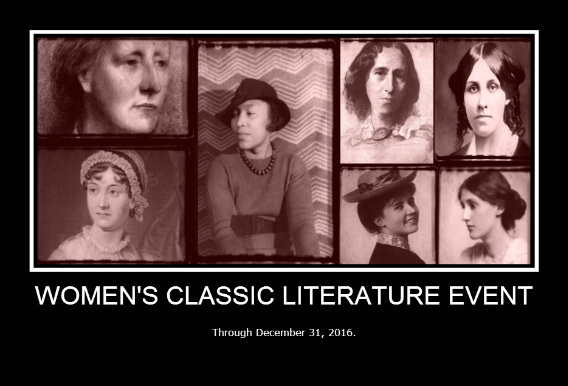
Historical Musings From now until December 2016 I am participating in the Women’s Classic Literature Event hosted by The Classics Club. You can read more about it in this post (which includes my answers to the introductory survey) and I have already made a good start, having read My Ántonia by Willa Cather a few weeks ago. I’m hoping to read lots of other women’s classics over the next year – and as historical fiction is my favourite genre, I’m particularly interested in reading historical novels by classic female authors.

I have already read several, many of which I have reviewed on my blog, and I thought I would list some of them below.

Romola George Eliot

Most of George Eliot’s novels were set in her recent past, so not quite contemporary but not truly historical either (Middlemarch, for example, was published in the 1870s but set in 1829-32). She did, however, write one novel set in Florence during the Italian Renaissance – this was Romola, which I read earlier this year. It wasn’t an easy read but I did enjoy it.

Daphne du Maurier:

Du Maurier is usually associated with gothic suspense, but many of her novels are historical fiction. The King’s General is set in seventeenth century Cornwall during the English Civil War and follows the story of Honor Harris and her relationship with the King’s General in the West, Richard Grenvile. Jamaica Inn, one of du Maurier’s best known novels, is set in the early 1800s and is an atmospheric story of smugglers, shipwrecks, and the inhabitants of a lonely inn on Cornwall’s Bodmin Moor. Hungry Hill is a family saga covering five generations of the Brodrick family who live at Clonmere Castle in Ireland and whose fortunes revolve around the copper mine on Hungry Hill.

And there are others: The House on the Strand is a dual timeline novel in which part of the action takes place in the 14th century and The Glass-Blowers is based on the lives of du Maurier’s own ancestors who lived through the French Revolution. Mary Anne, which I haven’t read yet, is set during the Regency, and Frenchman’s Creek, also still to be read, is set during the reign of Charles II.

Sylvia's Lovers Madame de Lafayette

Published in 1678, The Princess of Cleves is thought to be the first French historical novel. It is set between 1558 and 1559 at the court of Henri II. I found the writing quite dry (although that could be the fault of the translation) but I loved the portrayal of the French court. It’s worth reading if you’re interested in French history or the early development of the novel form.

Elizabeth Gaskell

Sylvia’s Lovers is set in the 1790s in Monkshaven (a fictional English town based on Whitby, North Yorkshire). The story of Sylvia Robson and the two men who hope to marry her is played out against a backdrop of the Napoleonic Wars. I haven’t read all of Gaskell’s other books yet, but I think this is the only historical one. It’s also, in Gaskell’s own words, “the saddest story I ever wrote”.

Orlando Baroness Emmuska Orczy

Baroness Orczy wrote many historical fiction novels, the most famous being The Scarlet Pimpernel, her adventure novel set during the French Revolution. I have tried two of the many Pimpernel sequels (there are at least ten, plus some prequels and short story collections) but so far they haven’t lived up to the original.

Virginia Woolf

The only Virginia Woolf novel I have read so far is Orlando. It could be described as historical fiction, though not in the conventional way: the protagonist, Orlando, lives for four hundred years and experiences the Elizabethan era, the Great Frost of 1608, the Restoration, the 18th century, and the Victorian period. I found this book a lot easier to read than I’d expected.

Margaret Mitchell

It’s been years since I last read it, but this list wouldn’t be complete without Gone With the Wind, Margaret Mitchell’s classic story of Scarlett O’Hara and Rhett Butler set in the American South during the Civil War.

***

Womens Classic Literature Event

These are all I can think of at the moment, though I’m sure I’ve probably read more. There are plenty of other books that I consider to be ‘classic historical fiction’ but maybe not ‘classics’ in the usual sense of the term.

Can you think of any other historical fiction novels by classic women authors? Just to clarify, the Classics Club’s definition of a classic is a book published before 1960 (although this is just a guideline and would rule out some of the du Maurier titles I’ve mentioned above). I do already have Kristin Lavransdatter by Sigrid Undset on my list to be read, but I would love some more suggestions.

And for those of you who are also taking part in the Women’s Classic Literature Event, I hope I’ve given you some ideas to consider!

The Last Enchantment by Mary Stewart

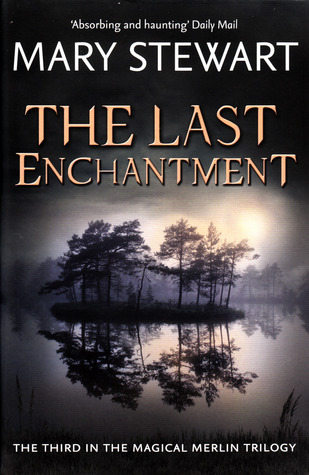
The Last Enchantment The Last Enchantment is the final part of Mary Stewart’s Merlin trilogy, which began with The Crystal Cave and The Hollow Hills. I have been reading it this week for Lory’s Witch Week, a celebration of fiction based on fairy tales, folklore, myths and legends, but I’m sure I would have picked it up soon anyway as I loved the first two books and was looking forward to reading the conclusion of Merlin’s story.

The Last Enchantment picks up the story where The Hollow Hills ended, with Arthur beginning his reign as High King of Britain after pulling the sword Caliburn (Excalibur) from its stone. Almost immediately, Arthur must begin a series of battles against the Saxons before he can achieve peace and security throughout his kingdom. But Arthur is not the main focus of the novel; like the previous two books, this one is narrated by Merlin…and Merlin is facing a battle of his own. Arthur’s half-sister, the witch Morgause, has given birth to a son, and Merlin has foreseen that this child, Mordred, could pose a threat to the King.

In the first half of the novel, Merlin tells us of his journey north in search of Mordred, as well as several other events, such as the building of Camelot and Arthur’s marriage to Guinevere, which will be familiar even to readers who, like me, only have a basic knowledge of the Arthurian legends. In the second half of the book, there is a growing sense of sadness and poignancy as Merlin ages, his magical powers begin to fade and Arthur, while still valuing his friendship, no longer relies on him as he used to. Merlin takes on an apprentice, Nimuë, whom he hopes will eventually take his place as the King’s enchanter, but he soon discovers that his new assistant has some surprises in store for him.

Maybe because I found this such a sad story, I didn’t love it quite as much as The Crystal Cave and The Hollow Hills, but I do think all three are wonderful books. I was slightly disappointed with the portrayal of the female characters (I think I mentioned that in my review of the previous novel too). Arthur’s sisters, Morgan and Morgause, are both evil witches, while Guinevere is pushed into the background and never really comes to life at all. Then there’s Nimuë, whose storyline I really disliked and found quite painful to read at times. Merlin’s relationship with Arthur, though, is one of the highlights of the book and I found myself looking forward to all of their scenes together.

Before reading this trilogy my knowledge of Arthurian myth was limited to T.H. White’s The Sword in the Stone and one or two television adaptations which I can now barely remember watching; I think this was an advantage, because it meant I was kept in suspense, only vaguely aware of the outline of the story and the role each character would play. I was surprised that there was no Lancelot (his part in the story is taken by Arthur’s friend, Bedwyr, instead), I had no idea that Arthur was thought to have had more than one wife called Guinevere and I knew nothing of the involvement of Nimuë in the later stages of Merlin’s story. Mary Stewart discusses all of these things and more in her author’s note at the end of the book, explaining how she chose to interpret various sources and to decide what to include in her version of the legend.

I was sorry to reach the end of Merlin’s story, but I can definitely see myself wanting to re-read all three of these books in the future – and, of course, I would also like to read Mary Stewart’s other two Arthurian novels, The Wicked Day (the story of Mordred) and The Prince and the Pilgrim. I think it’s fascinating that there are so many different variations of these legends and now that I’ve read this version, I’m interested in reading interpretations by other authors. If you can recommend any good ones, please let me know!

Flood of Fire by Amitav Ghosh

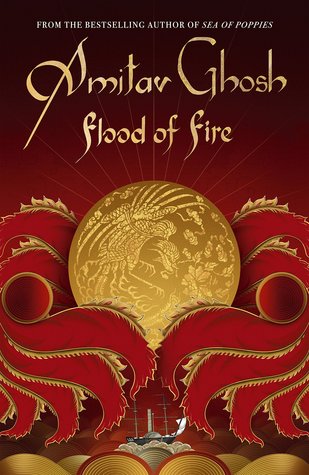
Flood of Fire Flood of Fire is the third and final part of Amitav Ghosh’s Ibis Trilogy and I think it’s probably my favourite of the three books. Set in India and China before and during the First Opium War, the trilogy follows the adventures of a group of people thrown together on board a former slaving ship called the Ibis.

This third novel pulls together threads from the first two and while it may be possible to still enjoy this book without having read the others, I would strongly recommend reading all three in order. While Sea of Poppies and River of Smoke took us through the build up to the conflict, describing the disputes over the trade of opium and the deterioration of relations between Britain and China, Flood of Fire covers the war itself.

The novel opens in 1839 and the first character we meet is Kesri Singh, brother of our old friend, Deeti. Kesri is a havildar (a rank equivalent to sergeant) in the Bengal Native Infantry, part of the East India Company, and through his storyline we are given some insights into army life and the contribution made by Indian regiments to Britain’s military victories in China. Next we are reunited with Zachary Reid, the American carpenter-turned-sailor who played a major part in Sea of Poppies but was absent from River of Smoke. In this book, Zachary begins an affair with his new employer, Mrs Burnham, before setting his sights on becoming a successful businessman.

We also rejoin Neel Rattan Halder, the former Raja of Raskhali, who is now living in Canton where he is able to use his skills as an interpreter to assist China’s war effort. Neel’s story is told mainly in the form of a journal and gives us a Chinese perspective of events. Finally, the widowed Shireen Modi is travelling to Hong Kong to visit the grave of her husband, Bahram, and to try to recover some of the money he lost when his cargo of opium was confiscated in River of Smoke. These are the four main characters in Flood of Fire, but other characters from the previous two novels also make appearances, including the French botanist Paulette Lambert; her childhood friend, Jodu; Bahram Modi’s illegitimate son, Ah Fatt (known as Freddie); and Baboo Nob Kissin, the Burnhams’ agent.

Before reading these books I knew nothing at all about the First Opium War, so this trilogy has provided a perfect introduction. Devoting three long novels to a relatively short period of history allows the author to go into a lot of depth, describing first the production of opium in India (Sea of Poppies), the merchants who transported the drug to China (River of Smoke) and finally, in Flood of Fire, the reasons why Britain went to war with China after the trading of opium was banned in Canton. The events of the war itself are given a lot of attention too, from descriptions of battles and strategies to the negotiations that would lead to the British acquisition of Hong Kong.

Although there were times when I felt too much time was being spent on one character and not enough on another, I did find all of their storylines compelling and interesting – with the exception of Zachary’s affair. It was obviously intended to add some comedy to the book, but it didn’t work for me at all and I didn’t think it fit the tone of the rest of the trilogy. Zachary is the character who changes the most over the course of the three novels – and not for the better; his transformation in Flood of Fire could be seen as an example of how greed and ambition can lead to corruption, and is written quite convincingly, but I still found it disappointing as he was such a likeable person at first. As for the other characters, some of their stories end in happiness and others in sadness or tragedy, but I was pleased that they were all given a proper resolution.

The book finishes with a very long list of sources, showing the amount of research which must have gone into the writing of the Ibis Trilogy. We are told that these sources were taken from the archives of Neel Rattan Halder (one of the characters in the story) and that Neel and his descendants have left behind more information which has not yet been used. This gave me hope that, although Flood of Fire is the last of this particular trilogy, it would be possible for Amitav Ghosh to continue the story by moving forward to another period of history. Whether he does or not, I am still happy to have had the opportunity to read these three wonderful novels!

Looking back, looking forward: October 2015

It’s hard to believe that there are only two months left of 2015, especially as the weather has been so lovely here this weekend. It was even warm enough to sit outside with my book this afternoon; it didn’t feel like the first day of November at all!

Looking back at October I read ten books, which seems to be about average for me this year. Apart from two recently published books, the rest were older books and classics.

Book of the month:

Flood of Fire

Flood of Fire by Amitav Ghosh (2015)

This is the final part of Amitav Ghosh’s Ibis Trilogy, set in China and India during the First Opium War. I enjoyed the first two books in the trilogy but in my opinion this one is the best of the three. I’m hoping to post my thoughts within the next week.

Read and reviewed in October:

A God in Every Stone by Kamila Shamsie (2014)
Footsteps in the Dark by Georgette Heyer (1932)
The Glass Blowers by Daphne du Maurier (1963)
My Antonia by Willa Cather (1918)
Beau Geste by P.C. Wren (1924)
Hammer for Princes by Cecelia Holland (1972)

Also read in October but not yet reviewed:

Keep the Aspidistra Flying by George Orwell (1936)
The French Lieutenant’s Woman by John Fowles (1969)
Non-Combatants and Others by Rose Macaulay (1916)

Plans for November:

Lory of The Emerald City Book Review is hosting a Witch Week this week, celebrating fiction based on fairy tales, folklore, myths and legends. I am reading The Last Enchantment, the third book in Mary Stewart’s Merlin trilogy and enjoying it so far.

November is also German Literature Month. I haven’t decided what to read yet – I was thinking about reading Wolf Among Wolves by Hans Fallada, but the length is putting me off. I also have Death in Venice by Thomas Mann, which is shorter but sounds less appealing to me. I do want to participate, though, so I will definitely try to read something!

What have you been reading in October? Do you have any plans for November?

Hammer for Princes by Cecelia Holland

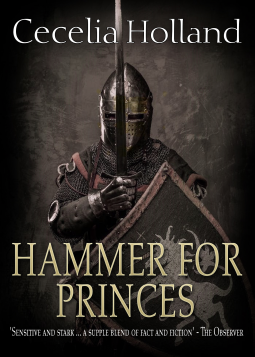
Hammer for Princes Cecelia Holland is an American author of historical fiction; her novels cover a wide range of time periods and settings as diverse as 12th century Iceland, the Mongol invasion of Eastern Europe, medieval France, and the search for Tutankhamun’s tomb. Earlier this year I read City of God, a story of Borgia-ruled Rome, and enjoyed it enough to want to try more of her work.

Hammer for Princes (which I have discovered was originally published in 1971 as The Earl) is set in England during the period known as The Anarchy. Since the death of King Henry I in 1135, the country has been divided between supporters of his nephew, King Stephen, and his daughter, the Empress Matilda. At the point when Hammer for Princes begins, Matilda’s son, Prince Henry, has taken up the battle for the throne and the country is still in a state of civil war. Fulk, Earl of Stafford, has pledged his loyalty to Henry and it is through Fulk’s eyes that the events of the novel unfold.

Fulk is an intelligent, shrewd man with a lot of experience when it comes to warfare and politics. But even as he leads his men in battle, storms castles and fights in tournaments, Fulk’s biggest problems come in the form of his own family. His scheming uncle Thierry has his eye on some of Fulk’s lands, which he believes are rightfully his, and to Fulk’s disappointment it seems that his own son, Rannulf, is ready to take Thierry’s side in the family feud.

This novel is written in the same detached, unadorned style I remember from City of God, which gives Cecelia Holland’s books a distinctive style all of their own. The characters are difficult to like and difficult to understand or connect with on an emotional level, but this just makes them all the more fascinating and complex. I’m not sure that I fully understood the purpose of everything Fulk said and did (I felt very much the same about the actions of Nicholas in City of God) but I do like books in which not everything is clearly explained for the reader and I don’t mind sometimes being left to interpret things for myself.

Hammer for Princes doesn’t have a lot of plot, being more of a series of episodes in Fulk’s life which, when added together, build up a vivid picture of the world of a medieval nobleman. The setting is a little unusual because Fulk is on the move all the time: on horseback, in camp, getting ready to ride into battle or journeying between castles. Holland does not write long, flowery descriptions but she does choose just the right words to set the scene and create atmosphere.

As I read Hammer for Princes I kept thinking of Wolf Hall; they are very different stories, of course, but the portrayal of Fulk reminded me very much of Hilary Mantel’s portrayal of Thomas Cromwell. Both novels are written in the third person, but delve deeply into the minds of their protagonists, both of whom are clever, subtle men with the sort of personal qualities that enable them to find their way through the shifting loyalties and political intrigues of their time.

I enjoyed following Fulk’s story and am looking forward to my next Cecelia Holland novel, whichever that may be.

Thanks to Endeavour Press for providing a review copy via NetGalley.

My Ántonia by Willa Cather

My Antonia Between now and December 2016 I am participating in the Women’s Classic Literature Event hosted by the Classics Club. There are many classic female authors whose work I’m looking forward to reading, but I decided to begin with a book by Willa Cather. I read my first (and until now, my only) Cather novel more than five years ago; it was The Professor’s House and, although I did like her writing, I wasn’t very impressed. I suspected, though, that it just wasn’t the right book for me and that I would enjoy a different one more. My Ántonia, probably Cather’s most well-known and well-loved novel, seemed the obvious choice for a second attempt.

First published in 1918, My Ántonia is narrated by Jim Burden, a lawyer, who is looking back on his childhood and his relationship with Ántonia Shimerda. Orphaned at the age of ten, Jim leaves his home in Virginia to live with his grandparents on their farm in Nebraska. Jim travels to Nebraska on the same train as the Shimerdas, a family of Bohemian immigrants who are hoping to build a new life for themselves on the plains and who will become the Burdens’ closest neighbours. Ántonia is only a few years older than Jim and a friendship soon forms between the two of them.

I loved the first part of the book, showing the struggles faced by a family of immigrants trying to adapt to a new country and a new lifestyle (the Shimerdas are completely unprepared for the harshness of their first winter in Nebraska). Written in the beautiful prose I remembered from The Professor’s House, there are some wonderful, vivid descriptions of the landscape, the sod houses and rough dugouts in which the pioneer families live, the tall prairie grasses and the changing seasons.

Later in the novel, Jim’s grandparents decide they are growing too old to work on the land any longer and the family move to Black Hawk, their nearest town. It’s not long before Ántonia also comes to town, to work as a housekeeper, and she and Jim renew their friendship for a while – but due to differences in background, gender and education, their lives eventually take them in very different directions. Although Jim and Ántonia grow apart over the years, both characters continue to cherish their childhood memories and their shared experiences of life on the Nebraska plains.

While Ántonia is the title character, the whole story is seen through Jim’s eyes and there are long sections, particularly in the second half of the book, where Jim is discussing his time at university or his relationship with Lena Lingard (another immigrant girl) and Ántonia is barely mentioned. However, it is when Ántonia is on the page that the story comes alive and I think this is why I enjoyed the book more at the beginning than I did towards the end.

I’m glad I gave Willa Cather a second chance and I’m sure I’ll be reading more of her books in the future. If anyone else is considering reading Cather for the Women’s Classic Literature Event, I would definitely recommend starting with My Ántonia!