Top Ten Tuesday: Animal Companions

This week’s topic for Top Ten Tuesday (hosted by That Artsy Reader Girl) is “Animal Companions (These animals can be real or fantasy!)”

The ten books I’ve listed below are all books I’ve read and reviewed on my blog and feature a range of different animal and bird companions.
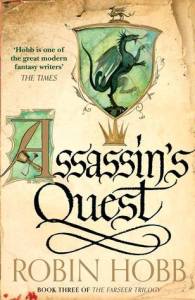
1. Nighteyes in the Farseer Trilogy by Robin Hobb – The wolf Nighteyes is much more than just a companion to FitzChivalry Farseer in Hobb’s epic fantasy series, but to say any more would be a spoiler!

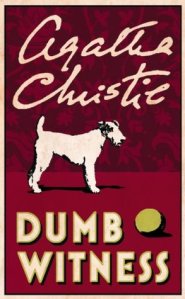
2. Bob in Dumb Witness by Agatha Christie – Poor Bob the dog gets the blame when his mistress falls down the stairs in the night. It’s up to Poirot to find another explanation!

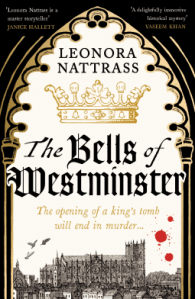
3. Cuthbert in The Bells of Westminster by Leonora Nattrass – Cuthbert, Susan Bell’s talking parrot who lives in the Deanery of Westminister Abbey, is the star of this historical mystery set in 1774.

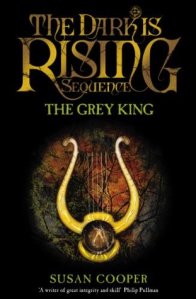
4. Cafall in The Grey King by Susan Cooper – In this fourth book in the Dark is Rising sequence inspired by Arthurian legend, Cafall, a sheepdog with silver eyes, is the friend and companion of Bran Davies.

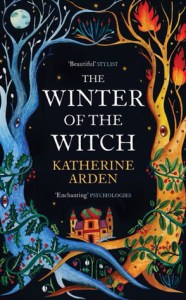
5. Solovey in The Winternight Trilogy by Katherine Arden – The magical horse Solovey is a companion to Vasya, the heroine of this excellent fantasy trilogy set in a version of medieval Russia.

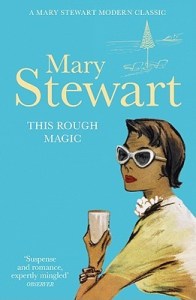
6. The dolphin in This Rough Magic by Mary Stewart – Not exactly a ‘companion’, but the dolphin in this book forms a bond with Lucy, our narrator, and becomes an important character in the story.

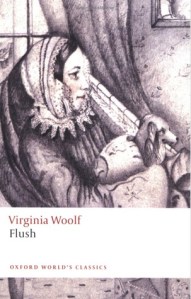
7. Flush in Flush by Virginia Woolf – I loved this short novel written from the perspective of Elizabeth Barrett Browning’s cocker spaniel.

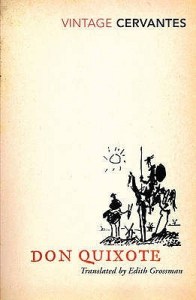
8. Rocinante in Don Quixote by Miguel de Cervantes – An eccentric gentleman of La Mancha, inspired by tales of romance and chivalry, renames himself Don Quixote and sets out in search of adventure mounted on his trusty steed, Rocinante!

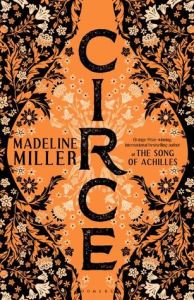
9. The lion in Circe by Madeline Miller – In this beautifully written Greek mythology retelling, the witch Circe is banished to the island of Aiaia where a female lion becomes her closest companion.

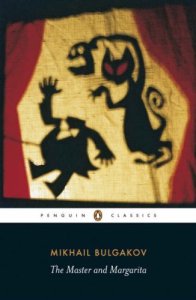
10. Behemoth in The Master and Margarita by Mikhail Bulgakov – My tenth and final animal companion is Behemoth, the demonic black cat who is part of the devil’s entourage in this weird and wonderful Russian classic.

~

Have you read any of these? Can you think of any other books with animal companions?
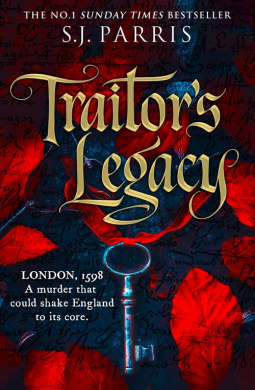
Traitor’s Legacy by S.J. Parris

I know S.J. Parris’s Giordano Bruno historical thrillers, set in Elizabethan England, are very popular, but I’ve only read one of them – Sacrilege – and wasn’t particularly impressed. When I saw that she’d started to write a new series, of which Traitor’s Legacy is the first, I thought it would be a good opportunity to give her another try. As it turned out, this is actually a spin-off featuring some of the same characters (but not Bruno himself, although he is mentioned once or twice).

Traitor’s Legacy is set in the winter of 1598 and follows Sophia de Wolfe, formerly an agent of the Queen’s spymaster, Sir Francis Walsingham. Now Walsingham is dead and Secretary of State Robert Cecil has stepped into his role. It’s Cecil who summons Sophia when a girl’s body is found in the foundations of a building site with a scrap of paper tucked inside her clothing. The paper contains a message written in a cipher used by Sophia during her time as a spy, suggesting that someone is trying to link her to the murder. But who would want to do that and how could the secret cipher have fallen into anyone else’s hands?

The girl is quickly identified as Agnes Lovell, a wealthy heiress and a ward of the powerful nobleman Sir Thomas North, who had been planning to marry her to his son, Edmund. It’s possible that the murder could have been committed for political reasons – North had gained a reputation for corruption during a recent military campaign in Ireland – but there also seems to be a connection with the ambitious Earl of Essex, the Queen’s favourite courtier. However, things take a more personal turn for Sophia when suspicion falls on her own illegitimate son, Tobie. Sophia will do whatever it takes to clear his name, but this is made more difficult by the fact that Tobie himself has no idea that she is his mother!

Having only read one of the Giordano Bruno novels, I’m not sure how much we actually learn about Sophia in that series. I vaguely remember her from Sacrilege and presumably she’s in some of the other books as well. It’s definitely possible to follow what’s happening in this book without any prior knowledge, but I did feel there was a lot of backstory I wasn’t familiar with and had to pick up as I went along. I didn’t find Sophia entirely believable as a 16th century woman, but not wildly anachronistic either and she’s aware of the limitations placed on her by society. I liked her as a character and enjoyed following her investigations. She’s assisted by Anthony Munday, a playwright and another former spy, sometimes working together and sometimes separately which helps the story to move along.

Many of the characters in the book are people who really existed; I’ve already mentioned some of them, but we also meet others including Thomas Phelippes, Cecil’s cryptographer, and Frances Devereux, wife of the Earl of Essex. Through the character of Anthony Munday, the novel also touches on Elizabethan London’s theatrical world and the rival groups of actors, the Lord Chamberlain’s Men and the Admiral’s Men. There’s a lot going on, then, but the plot, although complex, is easy enough to follow and I gradually became gripped by it. I enjoyed this book and am looking forward to meeting Sophia and her friends again as the series progresses.

Thanks to Hemlock Press for providing a copy of this book for review via NetGalley.

20 Books of Summer 2025

It’s nearly June, which means it’s time to get ready for this year’s 20 Books of Summer! Having been hosted by Cathy of 746 Books for the last ten years, the challenge now has two new hosts: Annabel of AnnaBookBel and Emma of Words and Peace. Emma has designed a beautiful new logo – and for the first time, there’s a 20 Books of Winter one for those in the Southern Hemisphere! As usual, there are also 10 and 15 book options.

This year’s challenge runs from Sunday 1st June to Sunday 31st August and once you’ve signed up for 10, 15 or 20 books, the rules are very flexible. You can make a list in advance or read at whim – and if you do make a list, you can change it at any time.

My list

Books for other events or challenges:

1. Come, Tell Me How You Live by Agatha Christie (Read Christie book for July)
2. One, Two, Buckle My Shoe by Agatha Christie (Read Christie book for August)
3. To be confirmed – a book for Mallika’s Reading the Meow

Books for review/NetGalley:

4. A Schooling in Murder by Andrew Taylor
5. The Stepdaughter by Caroline Blackwood
6. The Rush by Beth Lewis
7. These Wicked Devices by Matthew Plampin
8. Sinners by Elizabeth Fremantle
9. Strange Houses by Uketsu
10. The Spiral Staircase by Ethel Lina White
11. The Art of a Lie by Laura Shepherd-Robinson
12. Love and Other Poisons by Lesley McDowell
13. How to Lose a Lord in Ten Days by Sophie Irwin
14. The House at Devil’s Neck by Tom Mead

The rest:

15 – 20. For the remaining six spaces on my list, I’m going to take advantage of the flexibility of the rules and just pick books at random depending on my mood at the time. However, I’ll only count them towards the challenge if they were already on my TBR prior to January 2025. That should mean I’ll be reading a good balance of newer and older books this summer.

I’m looking forward to getting started! Are you taking part in 20 Books of Summer/Winter this year?

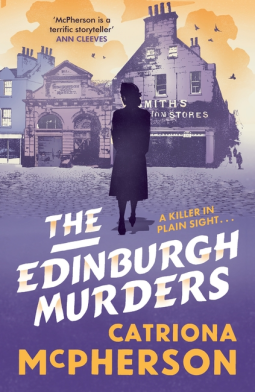
The Edinburgh Murders by Catriona McPherson

This is the second book in Catriona McPherson’s new mystery series set in 1940s Edinburgh, but if you haven’t read the first one (In Place of Fear) it shouldn’t be a problem as both books also work as standalone novels. Those of you who have read In Place of Fear will remember that it introduced us to Helen Crowther, a welfare officer (formally a ‘medical almoner’) in the newly formed National Health Service. This second novel again follows Helen as she carries out her duties for the NHS and becomes embroiled in another mystery.

The novel opens with Helen taking a patient to the public bath house on Caledonian Crescent. As she helps the woman to wash herself, they become aware of a disturbance in one of the men’s cubicles. A man has been found boiled to death in a bath of scalding hot water – but how? Why would he continue to lie there as the water got hotter and hotter? And how could it have reached such a high temperature anyway? Even more worrying for Helen is the fact that she has spotted her father, Mack, at the baths, but when she speaks to him at home later, he tries to deny that he was there. As the bodies of more men are found around Edinburgh, all killed in equally unusual, gruesome ways, Helen becomes convinced that her father knows more about the deaths than he’s admitting to.

When I reviewed In Place of Fear, I mentioned that the mystery only formed a small part of the book, with more focus being on the historical element and the work of an almoner in the NHS. This book is the opposite – the mystery is much stronger, with the first murder discovered in the opening chapter and several more following soon after. The murders are carried out using imaginative methods and are obviously linked in some way, so Helen needs to decide exactly what the link is in order to identify the killer. It’s quite a dark book, but although the descriptions of the murders are unpleasant, they’re not too gory or graphic.

As with the first novel, there’s a great sense of time and place, bringing the atmosphere of Edinburgh’s Fountainbridge area to life. McPherson uses a lot of dialect and there’s a glossary at the front for those readers who need help with the Scottish words and phrases. I found that there was less time spent describing Helen’s welfare work, though, which was one of the things I thought was particularly interesting in the first novel. Still, I enjoyed meeting her again, as well as the other recurring characters such as the two doctors she works for and her younger sister, known as Teenie. There’s also the beginnings of a possible romance for Helen with her friend Billy, who works at the morgue and helps her investigate the mystery and I’ll look forward to seeing how this develops in the next book.

I still haven’t read any of Catriona McPherson’s other novels, although she seems to have written a lot of them! I should probably investigate while I’m waiting for a third Helen Crowther book.

Thanks to Hodder & Stoughton for providing a copy of this book for review via NetGalley.

Top Ten Tuesday: Books that feature travel

This week’s topic for Top Ten Tuesday (hosted by That Artsy Reader Girl) is “Books that feature travel”.

This will be an easy topic for those of you who read a lot of non-fiction travel books, but as I don’t I’ve had to stick to fictional travel instead. Here are ten novels that feature people going on a journey, pilgrimage or voyage of some kind. I’ve tried to include several different genres and different methods of travel!

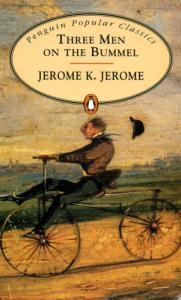
1. Three Men on the Bummel by Jerome K. Jerome – J, Harris and George go on a bicycle tour through Germany’s Black Forest in this lesser known sequel to Three Men in a Boat.

2. The English Girl by Katherine Webb – A young Englishwoman travels to Oman in the 1950s, where she meets a female explorer who crosses the Empty Quarter desert.

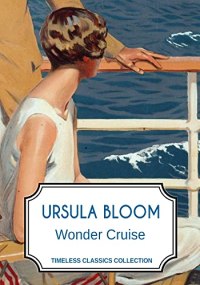
3. Wonder Cruise by Ursula Bloom – A single woman in her thirties wins some money and decides to spend it on a Mediterranean cruise, the first time she’s ever been abroad.

4. To the Bright Edge of the World by Eowyn Ivey – Colonel Allen Forrester leads a (fictional) expedition up Alaska’s Wolverine River to chart previously unmapped territory.

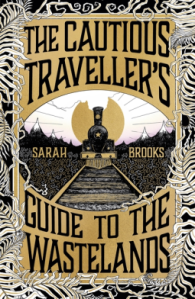
5. The Cautious Traveller’s Guide to the Wastelands by Sarah Brooks – A dystopian novel in which a group of passengers embark on a four thousand mile train journey aboard the Trans-Siberian Express.

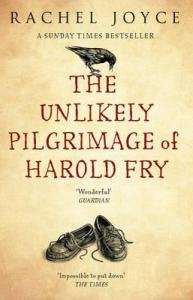
6. The Unlikely Pilgrimage of Harold Fry by Rachel Joyce – A man sets out on foot from his home in Devon to visit a dying friend in a hospice five hundred miles away.

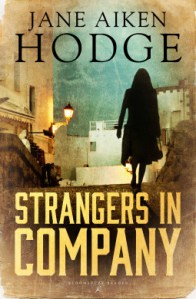
7. Strangers in Company by Jane Aiken Hodge – Marian Frenche is on a tour of major Greek archaeological sites when a series of accidents begins to befall members of the party.

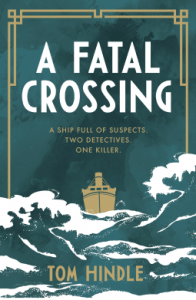
8. A Fatal Crossing by Tom Hindle – A murder mystery set on a cruise liner crossing the Atlantic in 1924.

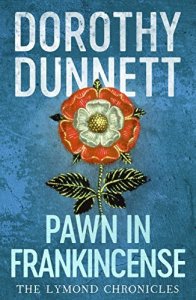
9. Pawn in Frankincense by Dorothy Dunnett – Francis Crawford of Lymond travels across Europe and North Africa in search of a child who may or may not be his son.

10. Around the World in Eighty Days by Jules Verne – The ultimate travel novel, in which Phileas Fogg attempts to circumnavigate the world in just eighty days.

~

Have you read any of these? Which other books featuring travel have you enjoyed?

Historical Musings #90 – Reading the French Revolution

You may have seen my recent review of The Woman in the Wallpaper by Lora Jones, set during the French Revolution. It has inspired the theme of this month’s Musings post as I take a look at other books I’ve read set during the same period of history, as well as some I still intend to read. Let me know if you can suggest any more!

Books I’ve read and reviewed on my blog:

Many of the French Revolution novels I’ve read are classics, including A Tale of Two Cities by Charles Dickens. This is my favourite book by Dickens, partly because I found it quite different from most of his others – less humorous and more tightly plotted – and also because it has such a beautiful, heartbreaking ending. Baroness Orczy’s The Scarlet Pimpernel is another famous one and I’m sure many of you will know the story even if you haven’t read the book. The mysterious and elusive Scarlet Pimpernel is rescuing aristocrats from the guillotine and smuggling them to safety, but who is he and will he ever be caught? I’m slowly working my way through the sequels and although they’re all enjoyable, none of them are quite as good as the original.

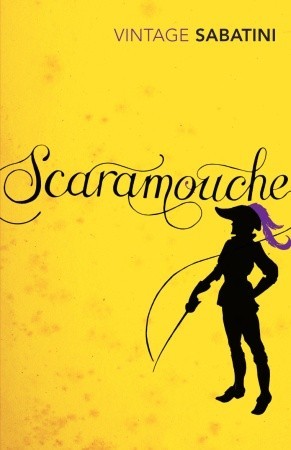
In Rafael Sabatini’s Scaramouche, Andre-Louis Moreau becomes caught up in the events of the French Revolution after taking the role of Scaramouche the clown in a Commedia dell’Arte troupe as part of an elaborate plan to avenge his murdered friend. From the wonderful opening line (“He was born with a gift of laughter and a sense that the world was mad”) I could tell I was going to love this book!

Audrey Erskine Lindop’s 1961 novel, The Way to the Lantern, sadly seems to be out of print, along with the rest of her books. It’s the story of a disreputable young actor who is accused of being both a French aristocrat and an English spy, despite being neither. It’s great fun and if you can find a copy, I highly recommend it. Farewell, the Tranquil Mind by RF Delderfield is also currently out of print, one of his only novels not to have recently been reissued. It follows David Treloar, who flees England after a failed smuggling operation and arrives in France in the middle of the Revolution.

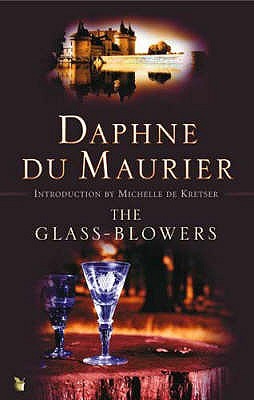
I love most of Daphne du Maurier’s books, but The Glass-Blowers – based loosely on du Maurier’s own ancestors and set during the French Revolution – isn’t one of my favourites. I felt that it didn’t have such a strong sense of time and place as some of her other books, which was surprising considering the setting. Another author I love is Andrew Taylor, but again his French Revolution novel isn’t my favourite. The Silent Boy features a ten-year-old boy who witnesses a murder on the night the Tuileries Palace is stormed and the French monarchy falls.

The final two books I’m going to mention here are books that weren’t entirely to my taste, but were still quite entertaining. The Time of Terror by Seth Hunter is a nautical novel set during the Reign of Terror, while The Bastille Spy by CS Quinn is a fast-paced historical thriller which I described as ‘a cross between The Scarlet Pimpernel, James Bond and Pirates of the Caribbean‘.

To read:

I’ve enjoyed some of Hilary Mantel’s other novels, including the Thomas Cromwell trilogy, so I’m sure I’ll try A Place of Greater Safety eventually, but the length looks so daunting!

Everyone seems to have enjoyed Little by Edward Carey, about Anne Marie Grosholtz, better known as Madame Tussaud. I’m not sure why I still haven’t got round to reading it – possibly because I tried to read Madame Tussaud by Michelle Moran and didn’t get on with it. Maybe Little will be more to my taste.

I’m also planning to continue with the Pimpernel series; Lord Tony’s Wife is the next one on my list!

~

Have you read any of the books I’ve mentioned here? Which other books about the French Revolution can you recommend?

Cleopatra by Natasha Solomons

This is a novel about Cleopatra, as you’ll have already guessed from the title and cover! Beginning with a visit to Rome with her father – the first time Cleopatra, then thirteen, has ever left Egypt – and ending just after the death of Julius Caesar in 44 BC, it’s a retelling of the life of one of history’s most famous women.

Although I love history and historical fiction, Cleopatra is not one of the historical figures I have a particular interest in and I haven’t read a lot of factual information about her. This means I can’t really comment on the accuracy of the book or how the choices Solomons makes on what to cover or not cover compare with choices made by other authors. Purely as a work of fiction, I found it quite enjoyable, especially the parts of the book dealing with Cleopatra’s personal life – her friendship with her beloved servant, Charmian; the development of her relationship with Caesar; and the birth of her son, Caesarion (depicted here as Caesar’s child). Solomons also delves into the politics of the period, the shifting allegiances and power struggles and the changing dynamics between Egypt and Rome. I found some of this a bit difficult to follow and I think including dates at the start of the chapters may have helped me keep track of the passing of time.

The novel is narrated mainly by Cleopatra herself, which allows us a lot of insight into what she is like as a mother, lover, sister and friend. However, there are also some chapters narrated by another woman: Servilia, sister of Cato the Younger and a mistress of Caesar’s (as well as the mother of his eventual assassin, Brutus). There weren’t enough of these chapters for me to fully connect with Servilia on an emotional level, but seeing things from her point of view did provide a very different (and more negative) impression of Cleopatra. I can understand why Solomons chose Servilia, but it would have been interesting if she had also written from other perspectives such as Charmian’s or maybe one of Cleopatra’s brothers and sisters.

The novel ends soon after Caesar’s death, leaving a lot of Cleopatra’s story still untold – her relationship with Mark Antony and the events leading to her suicide, for example. I haven’t seen any indication that there’s going to be a sequel, but there would definitely be enough material for one. Maybe Natasha Solomons will move on to something else for her next book, though; her previous work has included a novel narrated by the Mona Lisa, a reimagining of Romeo and Juliet, and a saga about a wealthy banking family, so clearly she likes to write about a wide range of topics and characters!

Thanks to Manilla Press for providing a copy of this book for review via NetGalley.