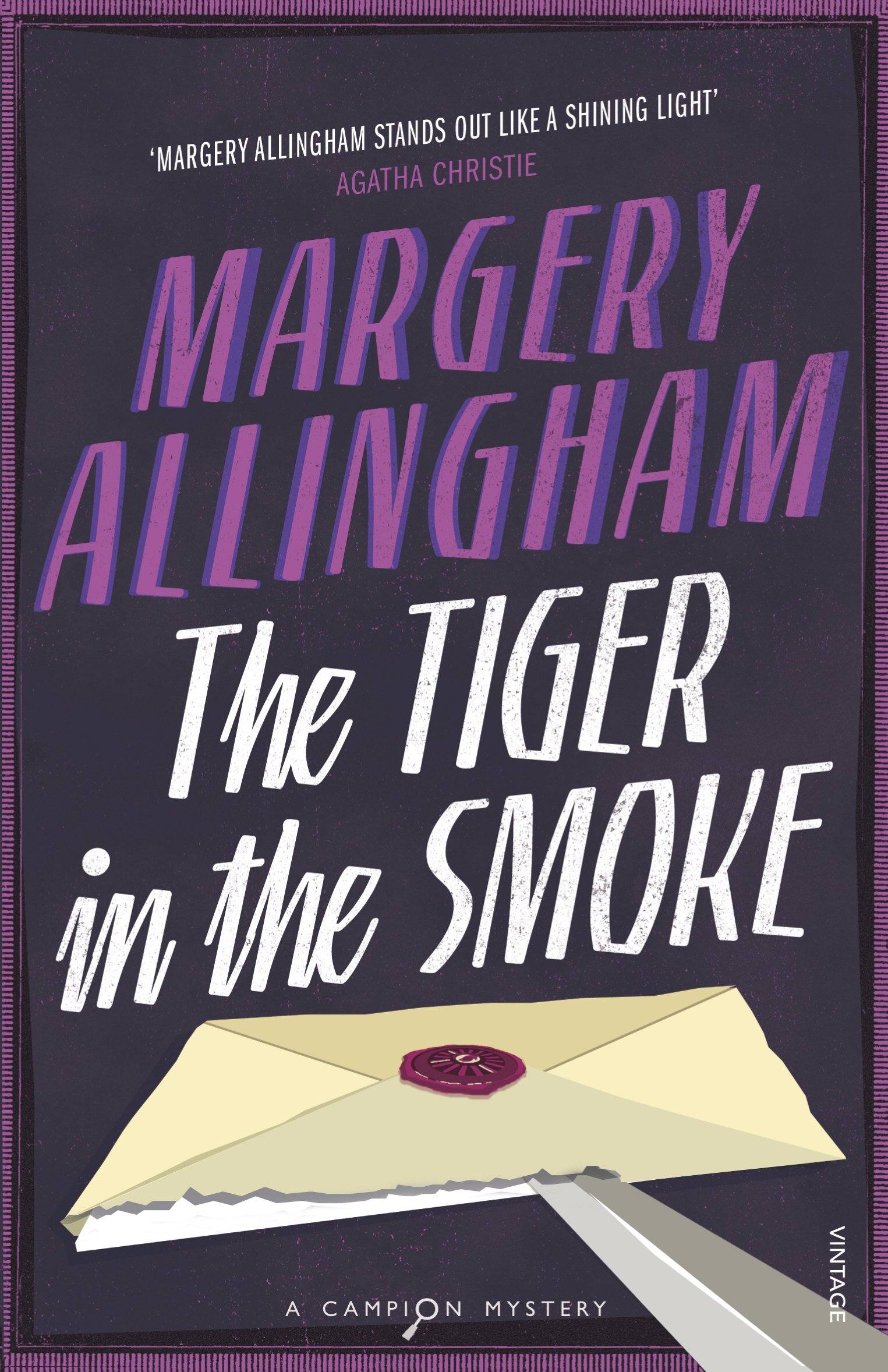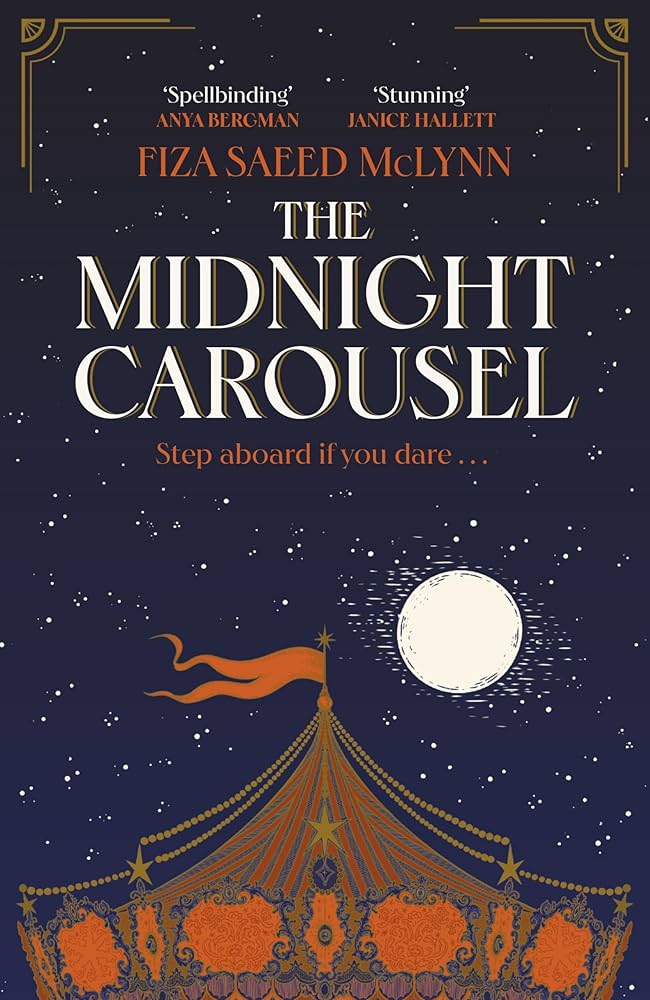
The Thirteen Problems by Agatha Christie

This month for the Read Christie challenge we’re reading books with authors as characters. The recommended book, The Thirteen Problems, is one I hadn’t read before so I thought this would be a good opportunity to pick it up. First published in 1932, it’s a collection of short stories featuring Miss Marple and her nephew, Raymond West, who is a writer. It has also been published in the US as The Tuesday Club Murders, so you may know it by that title.

There are thirteen stories in the book. In the first, a group of six friends gather at Miss Marple’s home in St Mary Mead and during the evening the conversation turns to mysteries. It seems that each of them has experienced or been involved in some kind of mystery and it’s suggested that over the next few weeks they should take turns telling their story and seeing if the rest of the group can solve it. Five of the friends have professions which they claim are ideally suited for detective work – an artist, a writer, a clergyman, a lawyer and a retired policeman – so they all agree to the plan and the Tuesday Night Club is born! The sixth member of the group, Miss Marple, is just there to make up the numbers; how could an old lady who has barely left her quiet little village possibly know anything about solving mysteries?

After all six have told their stories, several members of the group – with the addition of a doctor and a young actress – meet again at the home of Colonel and Mrs Bantry, where another set of stories are narrated. You won’t be surprised to hear that it’s Miss Marple who provides the correct solution for all thirteen of them, after everyone else has tried and failed!

I tend not to be a big fan of short stories, but I do usually enjoy Agatha Christie’s. This collection isn’t a favourite and I think I know why: it’s because the stories all involve mysteries that have already happened or have already been solved, so we don’t get to see Miss Marple or the other characters actively investigating them at the time. It’s a similar concept to Baroness Orczy’s Old Man in the Corner stories where her detective solves crimes while sitting in the corner of a London tearoom. Still, the stories are all interesting and I even managed to solve one or two of them myself!

Some of the stories have a supernatural feel – although the solutions have more logical explanations. My favourite was Colonel Bantry’s story, The Blue Geranium, in which a woman is visited by a fortune-teller who warns her to beware of a blue primrose, a blue hollyhock and finally, a blue geranium, which means death. When the flowers on her bedroom wallpaper begin to turn blue one by one, the woman begins to fear for her life. Another one I enjoyed was The Blood-Stained Pavement, narrated by the artist Joyce, who was visiting Cornwall to paint some picturesque village scenes. She’s sitting outside working on a painting when she notices drops of blood on the ground that weren’t there just a few minutes earlier. These bloodstains turn out to be important when a woman is reported missing two days later.

Although the stories in this book all stand alone, they are not completely separate as there’s also an overarching narrative, with the group of friends discussing the story that’s just been told and deciding whose turn it is to speak next. By the end of the book, Miss Marple has impressed everyone with her detective skills and has shown them that sometimes all that’s needed to solve a crime is a knowledge of human nature. Just as she does in the full-length novels, she draws on parallels with life in St Mary Mead and people she knows who remind her of the suspects or victims in the stories.

I did enjoy The Thirteen Problems, then, and found the stories just the right length. It’s always a pleasure to spend some time with Miss Marple!

The Secrets of the Rose by Nicola Cornick – #ReadIndies

I like Nicola Cornick’s books because you always know what to expect from them, but at the same time each one is different and has something new to offer. With The Secrets of the Rose, her latest novel published this month, I got exactly what I knew I would get: a dual timeline narrative, strong female protagonists, a search for an historic relic that has found its way into the present, cameo appearances by characters from other Cornick novels, and hints of the supernatural. However, I also had the opportunity to learn about a woman I’ve never read about before – Dorothy Forster of Bamburgh Hall.

In the present day, we meet Hannah Armstrong, an author working on a new book about Grace Darling, the lighthouse keeper’s daughter who became a 19th century celebrity after helping her father to rescue the survivors of a shipwreck. In order to research the biography, Hannah has returned to Bamburgh, the village on the Northumberland coast where she grew up and which she can use as a base for visiting the Darlings’ lighthouse in the nearby Farne Islands. Unfortunately, Hannah is finding that she has very little interest in Grace and her life – the woman she really wants to write about is another local heroine, Dorothy Forster.

Dorothy’s story unfolds in 1715, the year of the Jacobite Rising when supporters of the exiled James Edward Stuart attempted to restore him to the throne. Dorothy, who is living at Bamburgh Hall with her ailing father, is alarmed when she learns that her two brothers, Thomas and Nicholas, have been persuaded by one of the Jacobite leaders, the Earl of Derwentwater to join the rebellion. As the nephews of Lord Crewe of Bamburgh Castle, not only will their involvement put their own lives at risk, it could also leave the whole family in danger. Then Dorothy discovers that the Forsters are the keepers of the Rose, a legendary talisman that both sides in the conflict believe could be the key to victory. Can Dorothy hide the Rose from their enemies and keep her brothers safe?

These two storylines start to come together when Hannah goes to stay at Bamburgh Hall, her stepmother Diana’s home, while researching her Grace Darling book. Here she finds a portrait of Dorothy Forster which appears to be full of Jacobite symbolism. As Hannah digs into Dorothy’s past, she learns about the Rose and its powers and begins to suspect that it may have survived into the 21st century. However, she’s not the only one who has come to that conclusion – it seems that someone else is also on the trail of the Rose and is prepared to go to any lengths to get their hands on it.

As is often the case with dual narrative books, I found that one storyline interested me more than the other and this time it was the Dorothy Forster one. There were a lot of things I liked about Hannah’s story as well – her relationship with her stepmother, a mystery surrounding her brother who seems to have fallen out with everyone in the village, a romance that begins to form with an old friend – but Dorothy’s was more exciting. Legend states that Dorothy rode to London on horseback to rescue her brother Thomas from Newgate Prison after the failed rebellion and Cornick does incorporate this episode into the novel, but also shows that there’s a lot more to Dorothy’s story than that. The Jacobite aspect of the novel plays out mainly in the background, far away from Bamburgh (although I did enjoy the brief appearances of the Earl of Derwentwater whom I first met in Anya Seton’s Devil Water) so the focus is more on Dorothy’s personal life and her relationships with family and friends.

I thought the novel was interesting enough without the magic talisman element and I’m not sure if it really added much to the plot. Still, Nicola Cornick’s books do usually have some supernatural touches and they’re not as strong here as in some of her others. I did love the setting – although I wouldn’t say I know Bamburgh well, I’ve been there a few times and enjoyed seeing it through the eyes of Hannah and Dorothy in two different centuries. And I was intrigued to find when I read the author’s note that Dorothy’s uncle, Guy Forster, and his wife also appear in Cornick’s previous book, The Other Gwyn Girl, which I haven’t read yet. The relationship between them is fictional, although they share the Forster name, but I do want to read that book anyway.

I really enjoyed The Secrets of the Rose, then, and would probably rank it in my top three Nicola Cornick novels so far, along with The Last Daughter and The Phantom Tree.

Thanks to Boldwood Books for providing a copy of this book for review via NetGalley.

As Boldwood is an independent publisher, I am counting this book towards this year’s #ReadIndies event hosted by Kaggsy’s Bookish Ramblings and Lizzy’s Literary Life.

The Resurrectionist by A. Rae Dunlap

It’s 1828 and James Willoughby has just arrived in Edinburgh to begin his medical studies at the university. Having found himself completely unsuited to the career in the church that his parents had planned for him, James has decided that medicine is his true vocation. After speaking to some of his fellow students, he discovers that due to the large class sizes the university can only offer very limited opportunities for practical experience. In order to gain the surgical knowledge he desires, it will also be necessary to attend one of the city’s private anatomy schools where he’ll be able to dissect and study the human body for himself.

Although James comes from a wealthy family, they have fallen on hard times since his father’s death. There’s enough money to pay for his lodgings at the Hope and Anchor Inn, but not much else. If he wants to go to anatomy school, he’ll have to find a way to pay the fees himself. Signing up for Dr Malstrom’s prestigious school, James confides in the doctor’s apprentice, Aneurin MacKinnon, explaining his financial difficulties. Aneurin – or Nye, as he prefers to be called – tells him he may have a solution to the problem. And with that, James finds himself drawn into the secretive, macabre world of body snatching – taking corpses from graves under cover of darkness and selling them to anatomists for study and research purposes.

I loved this book! As a debut novel it’s very impressive and I’ll certainly be looking out for more by A. Rae Dunlap. From the very first page she captures the formal feel of the 19th century novel and manages to avoid using the sort of inappropriately modern language that could have so easily pulled me out of the historical setting. As with Ambrose Parry’s Raven and Fisher series, there are lots of insights into the medical world of 19th century Edinburgh, with the focus here being on the study of anatomy and surgery and how progress was hampered by the lack of human cadavers for students to work with. Edinburgh itself provides an atmospheric setting for the novel, especially as most of the action, for obvious reasons, takes place at night. There are lots of suitably Gothic descriptions of lonely cemeteries, dark alleys and disreputable inns, all forming the backdrop to the trade of body snatching.

The Resurrectionist is narrated by James Willoughby, whom I really liked and believed in as a character. He begins the novel as an innocent, well-meaning young man who has led a somewhat sheltered life and who gradually grows as a person as he has his eyes opened to things and experiences he had never imagined. Over the course of the novel, we see a friendship form between James and the more worldly Nye, which eventually develops into something more. I thought the story was already interesting enough without adding a romance, but it does seem to arise naturally from the characters’ interactions rather than being forced in for the sake of it. It also provides an extra sense of danger, as both men are under no illusions as to the importance of keeping their relationship secret and what could happen to them if they are found out.

Although James and Nye and their friends are fictional, several other characters in the book really existed, most notably the infamous Burke and Hare, probably the best known body snatchers – or ‘resurrectionists’ – in history. As competition amongst the city’s anatomists increases and tasked with providing a steady supply of corpses for their employer Dr Knox, Burke and Hare decide that in addition to grave robbing, there could be another way to meet the demand for bodies. I knew very little about Burke and Hare before reading this book, so I enjoyed seeing how things played out for them and how Dunlap seamlessly worked them into James and Nye’s fictional story while also staying true to the historical facts.

The end of the novel wraps things up enough to make this a satisfactory standalone, but also sets up a potential sequel. This one felt very much like a coming of age novel for James, so I would be interested to see what the future has in store for him. If Dunlap has decided to move on and write something different, though, I will be equally interested to read whatever it is!

Thanks to HarperNorth for providing a copy of this book for review via NetGalley.

Strange Pictures by Uketsu – #ReadIndies

Translated by Jim Rion

Strange Pictures is a strange novel, but it’s also a completely fascinating one. I’ve been reading a lot of the classic Japanese crime published by Pushkin Vertigo recently, but this is a modern crime novel, first published in Japan in 2022 and made available in an English translation last month. I had never heard of the author, but apparently he’s a ‘YouTube sensation’ known only by the single-word pseudonym Uketsu. He always appears in his videos wearing a mask and his true identity has not been revealed to the public.

In this book, Uketsu takes as his premise the idea that studying drawings made by victims or perpetrators of crime can give us important insights into the psychological state of those people, which could provide clues to help solve the mystery. Strange Pictures consists of three interconnected short stories based around this concept. The links between the stories are not clear at first, but gradually an overall narrative starts to form, raising questions that are answered in a final, fourth section of the book.

Each of the three stories involves some ‘strange pictures’. First, a series of drawings made by a pregnant woman before her death, which her husband posts on his blog. Then, a disturbing picture of a house drawn by a child at school. And finally a sketch of the mountains drawn by a murder victim in the final moments of his life. These pictures are reproduced in the book, along with various other illustrations, and Uketsu interprets them for us step by step as the characters begin to uncover the clues they contain. He discusses the symbolism in some of the pictures and in other cases the physical drawing itself – the paper it was drawn on; the way images can be digitally resized, rotated and layered; the use of gridlines to help with proportion and perspective; coloured crayons that smudge and blur. All of these things and many more are significant to the plot.

The first two stories in the book help to introduce the characters and provide context, but the third one is a great little murder mystery in its own right. I loved the interactive feel, with not just the main drawings but also other sketches, maps and diagrams helping to clarify what’s happening and lead us to the solution. There are also some very creepy moments, particularly a scene with a woman and child convinced they are being followed home to their apartment, and another where a man awakes in his tent in the mountains to discover that he’s no longer alone.

Although I found this book very enjoyable, it’s not one that you would choose to read for the beauty of the prose as the writing style is very plain and simplistic. However, it’s easy to read and while it’s obviously better if you can experience the book in its original language, I think Jim Rion has done a good job with the translation. A second Uketsu book, Strange Houses, revolving around a series of floorplans, is due to be published in English later this year. I’m already looking forward to it!

As Pushkin Press are an independent publisher, I am counting this book towards this year’s #ReadIndies event hosted by Kaggsy’s Bookish Ramblings and Lizzy’s Literary Life.

This Sweet Sickness by Patricia Highsmith

Virago have just reissued ten of the books from their Modern Classics range with new green cover designs, including Valley of the Dolls by Jacqueline Susann, Their Eyes Were Watching God by Zora Neale Hurston – and this one, Patricia Highsmith’s This Sweet Sickness. I’ve been meaning to try another Highsmith novel since reading Strangers on a Train a few years ago, so when I spotted this book on NetGalley it seemed the perfect opportunity.

This Sweet Sickness was first published in 1960 and takes us inside the mind of David Kelsey, a young man who lives in a boarding house in the town of Froudsburg, New York, and works as a scientist at a fabrics factory. At least, this is his life from Monday to Friday. When the weekend comes around, David leaves for his own house in nearby Ballard, where he becomes William Newmeister, a freelance journalist. For two whole days he locks himself away and imagines he is happily married to Annabelle, the love of his life. He has decorated the house the way he thinks Annabelle would have wanted it, prepares the meals he’s sure she would like and has even bought her a piano. The only problem is, Annabelle ended their relationship two years earlier and married another man. She and her husband, Gerald Delaney, live in Connecticut with their baby son and Annabelle has never even visited the house in Ballard, let alone lived in it.

David thinks he has successfully covered up his dual identities, having convinced everyone at work and at the boarding house that he visits his elderly mother at her nursing home every weekend. His mother has actually been dead for many years, but he’s sure no one will ever find out! However, two of his friends – a work colleague, Wes Carmichael, and a fellow boarder, Effie Brennan – begin to grow suspicious and decide to investigate. They are right to be concerned, because David is becoming increasingly unstable. He can’t and won’t accept that his relationship with Annabelle is over and bombards her with letters and phone calls, urging her to leave Gerald and marry him. Eventually, things take a more sinister turn and David finds himself in trouble. Is his double life about to be exposed at last?

I loved this book and although the first half is quite slow, I was completely gripped by it all the way through. It’s definitely a disturbing read, though, particularly as the whole book is written from David’s perspective (in third person). I was so impressed by the way Highsmith changed my perception of him several times throughout the book. At first I saw him as a basically decent person who’d had his heart broken and was struggling to move on, then I quickly lost sympathy for him when it became clear how dangerous his obsession was and how relentlessly he was stalking Annabelle, and finally, despite his actions, I began to pity him again because by then he had completely lost his grip on reality and desperately needed help.

Annabelle, although we do meet her occasionally, exists mainly as a fantasy woman in David’s mind and it seems obvious that if he got his wish and married her he would find that the real Annabelle didn’t quite live up to the imaginary one. Annabelle frustrated me because she could have been much more firm with David; instead, at least at first, she seems to be encouraging him, speaking to him on the phone, agreeing to meet him and letting him think there’s still hope. It would have been interesting to have seen things from Annabelle’s perspective, I think. Did part of her still care about David and not want to hurt him? How did she really feel about Gerald?

Effie is another character who interested me. She’s clearly in love with David, but he’s too preoccupied with his delusions and obsessions to pay her much attention. He becomes more and more irritated by her persistence and her ‘spying’, without acknowledging that he is behaving the same way towards Annabelle. Effie and the other characters in the book are seen only through David’s eyes which almost certainly doesn’t give us a true or fair picture of what they are really like.

This Sweet Sickness is an unsettling novel and not very comfortable to read, but it’s also fascinating from a psychological point of view and I found it very immersive. I liked it better than Strangers on a Train and look forward to reading more of Patricia Highsmith’s books.

Thanks to Little, Brown Book Group UK/Virago for providing a copy of this book for review via NetGalley.
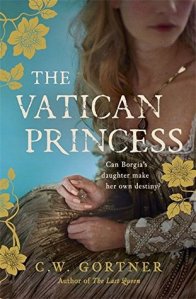
The Queen of Fives by Alex Hay

The Queen of Fives. They breathed the title with reverence on the docks, down the coastline. A lady with a hundred faces, a thousand voices, a million lives. She might spin into yours if you didn’t watch out…She played a glittering game: lifting a man’s fortune with five moves, in five days, before disappearing without a trace.

I enjoyed Alex Hay’s first novel, The Housekeepers, about a group of servants staging a heist during a ball in a grand London house. I hoped for something similar from his next book – and that’s what I got! If anything, this one is more complex, ambitious and inventive.

It’s 1898 and Quinn Le Blanc has five days to convince the Duke of Kendal to marry her and trick him out of his fortune. Why five days? Because Quinn is the ‘Queen of Fives’, the leader of a network of London con artists based at a house known as The Château who play by a specific set of rules. Their current game is called False Heiress and there are a number of steps that have to be carried out on each day of the con. The Château has been operating for generations and there have been many previous Queens. During Quinn’s eight-year reign, however, things have started going wrong: debts are mounting and the house is falling into disrepair. She desperately needs this latest scheme to be a success.

Quinn is assisted by Mr Silk, whose job is to serve the Queen and to guard the all-important Rulebook, which contains the instructions for the Château’s various games. But watching from the shadows is the mysterious Man in the Blue Silk Waistcoat – and also the equally mysterious Woman in the Cream Silk Gown – who will do whatever it takes to stop Quinn in her tracks.

As you can see, this is an unusual story based on an unusual premise and, to be honest, I was never fully convinced by it. I didn’t really understand why it was so important to complete the game within five days and to stick so rigidly to the Rulebook, when allowing more time or adapting the rules to fit unforeseen circumstances could have made it easier to win. Still, I managed to just suspend disbelief and go along with it! After a slow start, with time spent introducing the characters and the history of the Château, things gradually pick up pace and by the middle of the book I was gripped.

As with The Housekeepers, the reader is in the rare position of wanting the villains, in this case Quinn and her friends, to succeed. However, we also get to know the victims, the Duke of Kendal and his sister, Tor (short for Victoria). Tor is a single woman in her thirties who still lives with her brother and their stepmother and she is worried about losing her home should the Duke decide to marry. Tor is immediately suspicious of the woman who appears out of nowhere and introduces herself as Miss Quinta White, but the Duke himself seems unsuspecting. Later, we discover that he has reasons of his own for wanting to marry quickly, so Quinn’s attentions aren’t unwelcome to him – though, of course, he has no idea who she really is or what her plans are.

There are some great twists towards the end of the book and although in hindsight I feel I should probably have seen them coming, I didn’t and was taken by surprise. I think overall I preferred The Housekeepers, but both books are fun and I’m already looking forward to a third book by Alex Hay, whenever and whatever that may be.

Thanks to Headline for providing a copy of this book for review via NetGalley.
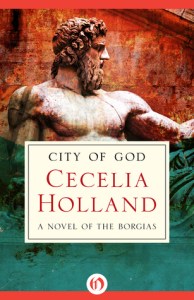
Six Degrees of Separation: From Dangerous Liaisons to Birdcage Walk

It’s the first Saturday of the month which means it’s time for another Six Degrees of Separation, hosted by Kate of Books are my Favourite and Best. The idea is that Kate chooses a book to use as a starting point and then we have to link it to six other books of our choice to form a chain. A book doesn’t have to be connected to all of the others on the list – only to the one next to it in the chain.

This month we’re starting with Dangerous Liaisons by Pierre Choderlos de Laclos.

Published in 1782, just years before the French Revolution, Les Liaisons Dangereuses is a disturbing and ultimately damning portrayal of a decadent society. At its centre are two aristocrats, former lovers, who embark on a sophisticated game of seduction and manipulation to bring amusement to their jaded existences. While the Marquise de Merteuil challenges the Vicomte de Valmont to seduce an innocent convent girl, the Vicomte is also occupied with the conquest of a virtuous married woman. But as their intrigues become more duplicitous and they find their human pawns responding in ways they could not have predicted, the consequences prove to be more serious, and deadly, than Merteuil and Valmont could have guessed.

Dangerous Liaisons has been adapted for film several times, sometimes transposing the setting to different periods and countries. The most famous version was the 1988 one, which received seven Oscar nominations including one for Glenn Close for Best Actress. She also appeared in an adaptation of Agatha Christie’s Crooked House (1) in 2017.

In the foreword, Christie states that “practically everybody has liked Crooked House, so I am justified in my own belief that it is one of my best”. Similarly, Thomas Hardy named his novel The Woodlanders (2) as a personal favourite, saying “I like it as a story best of all”. It’s one of my favourite Hardy novels as well – definitely in my top three!

Trees grow in woodlands, so the next book I’m linking to is The Dance Tree by Kiran Millwood Hargrave (3). This fascinating novel is set in Strasbourg in 1518 during a plague of dancing – something which may sound strange, but did actually happen!

Another novel I’ve read with a dancing theme is Russian Winter by Daphne Kalotay (4) in which a retired ballerina looks back on her career with the Bolshoi Ballet in the 1940s and 50s.

A simple link to another book with ‘winter’ in the title: The Winter Garden by Nicola Cornick (5), which tells the story of the family of Robert Catesby, one of the conspirators involved in the failed Gunpowder Plot of 1605. I found it interesting to read about Catesby as the name usually associated with the Gunpowder Plot is Guy Fawkes.

Lizzie Fawkes is the main character in Birdcage Walk by Helen Dunmore (6). Although the novel is set in England, the lives of the characters are affected by events in France as the French Revolution gathers pace. With our starting book, Dangerous Liaisons, being set just before the Revolution, I think this brings the chain full circle!

~

And that’s my chain for February! My links this month have included: Glenn Close adaptations, authors’ personal favourites, woods and trees, dancing, the word ‘winter’ and the name Fawkes.

In March we’ll be starting with Prophet Song by Paul Lynch.