A Daughter’s a Daughter by Mary Westmacott

I haven’t taken part in the Read Christie challenge for the last two months and wanted to join in with the May read. The book of the month, Cards on the Table, is one that I’ve read quite recently, though, and I’ve also read all of the other alternative suggestions – so instead I decided to read a book I had been considering for 1952 Club in April but didn’t get to as I ran out of time. A Daughter’s a Daughter, published in 1952 (obviously), is one of six novels that appeared under the name Mary Westmacott, Christie’s pseudonym for her books that weren’t mysteries or thrillers. It’s the third Westmacott I’ve read (the others being Unfinished Portrait and Giant’s Bread) and it’s my favourite so far.

The novel opens with Ann Prentice saying goodbye to her nineteen-year-old daughter, Sarah, who is going on a skiing trip to Switzerland. Ann, a widow in her early forties, is very close to her daughter and isn’t looking forward to spending three whole weeks without her. However, while Sarah is away, Ann meets Richard Cauldfield at a party and falls in love. Richard has spent many years in Burma since the death of his wife and has only recently returned to England. On the surface he seems a pompous man, but as Ann gets to know him she sees that he is good and kind – and just days after meeting him, she agrees to marry him. The only problem is, Sarah is due back from Switzerland soon and Ann is worried about how she’ll take the news.

Sarah takes it very badly: she dislikes Richard on sight and decides that her mother can’t be allowed to marry him. Richard tries to befriend Sarah, but has no idea how to speak to a teenage girl and gets everything badly wrong. Meanwhile, Sarah deliberately tries to provoke him and cause arguments, until the atmosphere in the household becomes unbearable. Ann is caught in the middle – she loves Richard and is sure she will be happy with him, but Sarah is her only child and she loves her too. Eventually, she is forced to choose between them and makes a decision she’ll regret for the rest of her life.

I loved this book, but at the same time I found it uncomfortable to read. Sarah is infuriatingly selfish and spiteful, so much so that even later in the book when she ends up desperately unhappy, I couldn’t find much sympathy for her. My heart broke for Ann when she had to make her difficult choice, but after a while she also began to annoy me and I felt that she didn’t handle the situation as well as she could have done. Both Ann and Sarah feel very human, though, and it’s a testament to Christie’s writing that her characters were able to evoke strong emotions in me. Fortunately, there are also some characters I liked, such as Sarah’s boyfriend, Gerry Lloyd, and Ann’s loyal but outspoken housekeeper, Edith. My favourite, though, is Dame Laura Whitstable, Ann’s friend and Sarah’s godmother. A woman in her sixties, Laura has more experience of life than the two younger women and tries her best to pass on her wisdom and knowledge to them without actually giving ‘advice’ or telling them what to do.

I’ve seen the Westmacott books described as romances, but this one is much more of a psychological novel, exploring the relationship between mother and daughter and what it really means to sacrifice your own happiness for someone you love. I found it surprisingly gripping and finished it in two days. I’m now looking forward to reading the other three Westmacotts.
The Other People by C.B. Everett

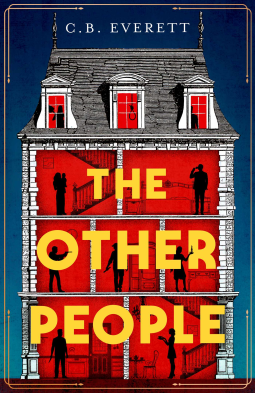
Imagine you wake up in an unfamiliar room with no idea where you are or how you got there. Venturing through the door you discover that you’re locked inside an old country house with nine strangers, none of whom know what’s going on either. Once you’re all gathered in one room, a woman enters and introduces herself as Amanda. She explains that a girl has been abducted and is imprisoned somewhere within the house. Twelve hours from now her oxygen will run out and she’ll die; if you can find her, you’ll save her life and will also find the way out of the house. Amanda has barely finished speaking when she is shot dead. Unless you want to be next, it seems you have no choice but to find the missing girl as soon as possible.

This is what happens to student Kyle Tanner, executive Diana Landor, retired policeman Len Melville, mother and baby Cerys and Monica Herbert, military man Captain Saint, warehouse clerk Sylvia Moult, thief Iain Wardle-Roberts, stripper Ramona O’Rourke and child molester Desmond Blaine. As these ten people begin to search the house for the hidden prisoner, they start to get killed off one by one. Is the murderer one of the ten – or are there other people in the house as well?

This book is being compared to Agatha Christie’s And Then There Were None – and there are some obvious similarities – but it reminded me more of The Seven Deaths of Evelyn Hardcastle by Stuart Turton. Like the Turton novel, this one requires the reader to accept an unlikely scenario that feels contrived and implausible, which is something some readers will be happy to do and some won’t. In this case, it does all make perfect sense by the end of the book, but in the meantime you have to be prepared to be patient and just go along with the plot.

The novel is narrated by all ten characters (well, nine – baby Monica only gets a few sentences), with the perspective switching rapidly between them throughout the book. We hardly get to know some of them before they are killed, but the ones who survive further into the book become more developed as characters. None of them are very pleasant people, though, and I can’t say that I really enjoyed being inside any of their minds – particularly not Desmond’s! There’s also another narrator, one who’s known only as The Beast in the Cellar, who interrupts the story now and then to speak directly to the reader, make observations and, I suppose, provide some humour. I found these chapters fun at first, but they quickly started to irritate me.

I was expecting a stronger murder mystery element to the book, so I was surprised to find that the characters don’t actually seem to have much interest in looking for the abducted girl and just wander around the house arguing with each other and wasting time. It’s not really the sort of book that has clues and red herrings and where you can try to work out who the murderer is. The real mystery is the one surrounding the house itself, why the characters have been brought there and why those ten in particular have been chosen. I came up with lots of theories while I was reading, but didn’t come close to the correct answer.

This is definitely a book that needs to be read right to the end to be fully appreciated, then. It was only when the truth was revealed that I understood some of the things that had confused or annoyed me earlier on. It would be interesting to read it again from the beginning, with the knowledge of how it ends, but I’m not going to do that as I have far too many other books waiting to be read! It’s a fascinating book, though, even if it didn’t entirely work for me.

Thanks to Simon & Schuster UK for providing a copy of this book for review via NetGalley.

The Midnight Carousel by Fiza Saeed McLynn

Whenever you decide to read a book by an author who’s new to you, you never really know what to expect and there’s always a risk you won’t like it, particularly when it’s a debut novel like this one. Fortunately, I loved The Midnight Carousel from the beginning; it’s such an original, unusual story that I was completely captivated by it.

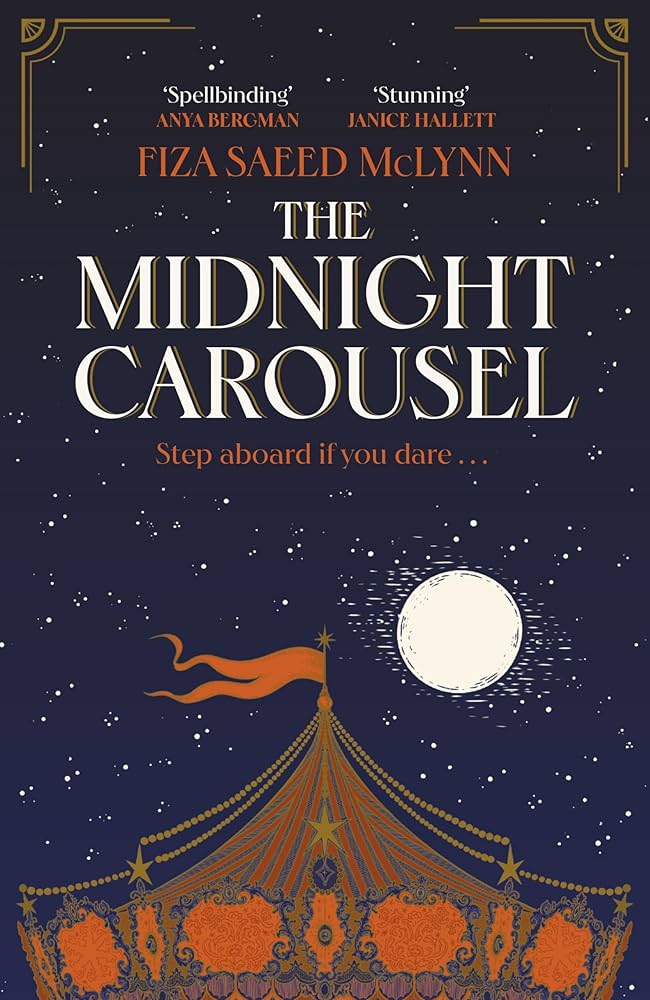
The carousel of the title is built in 1900 by Gilbert Cloutier for the Grand Exhibition in Paris. Gilbert is struggling to come to terms with his grief over the recent loss of his young son, so he decides to add some special features to the carousel in memory of the boy. This is the last thing he does before disappearing without trace. Over the years that follow, the carousel gains a sinister reputation when it becomes linked with further disappearances and Detective Laurent Bisset is asked to investigate. He thinks he has caught the culprit, but several years later history begins to repeat itself, leaving Laurent questioning whether he has made a terrible mistake.

Meanwhile, in England, Maisie Marlowe is being raised by abusive foster parents in Canvey Island, Essex. Maisie has no idea who her real parents are and the only things that sustain her through this miserable period of her life are her friendship with her foster brother and a picture of a beautiful carousel that she found on the beach. Eventually, an aunt comes to rescue her and takes her to live in the home of Sir Malcolm Randolph where she has just taken a job as housekeeper. Due to an unexpected sequence of events, Maisie ends up emigrating to America with Sir Malcolm where they open an amusement park in Chicago with a magnificent carousel as the star attraction – the exact same carousel as the one in Maisie’s picture and the same one that was built at Gilbert Cloutier’s factory in Paris.

When the disappearances begin again, Laurent Bisset is sure there must be a connection with the earlier incidents in France, so he travels to Chicago determined to uncover the truth this time. Here he crosses paths with Maisie, bringing the two threads of the novel together. I loved both characters and was interested in their personal stories – Maisie’s Dickensian childhood and her incredible change of fortune and Laurent’s dedication to making amends for his past mistakes – but I also enjoyed watching their relationship develop as they come together over the mystery of the carousel.

The mystery element of the book is not so much a whodunit as a howdunit. How can people be disappearing into thin air while riding the wooden jumping horses? Is the carousel itself haunted? Did Gilbert Cloutier place a curse on it? Is someone somehow snatching people from the horses without being seen? Although there were a few clues that I thought could and should have been noticed by Laurent and the police, I can also understand how they could have been missed. When we eventually get some answers, they are both clever and creepy and what I found particularly unsettling is that all through the book I never really knew whether I was reading magical realism or something with a more human explanation. The eerie atmosphere, along with the fairground setting, kept reminding me of Erin Morgenstern’s The Night Circus, but I think this is a better book.

I thoroughly enjoyed The Midnight Carousel and loved getting to know Laurent, Maisie and the secondary characters – I particularly liked Mrs Papadopoulos the dairy seller and Madame Rose the fortune-teller. I’ll certainly be putting Fiza Saeed McLynn on my list of authors to look out for in the future.

Thanks to Michael Joseph for providing a copy of this book for review via NetGalley.

Six Degrees of Separation: From Rapture to The Graces

It’s the first Saturday of the month which means it’s time for another Six Degrees of Separation, hosted by Kate of Books are my Favourite and Best. The idea is that Kate chooses a book to use as a starting point and then we have to link it to six other books of our choice to form a chain. A book doesn’t have to be connected to all of the others on the list – only to the one next to it in the chain.

This month we’re starting with Rapture by Emily Maguire, which is loosely based on the legend of Pope Joan, who was supposedly the first and only female pope. I haven’t read it and am not sure if I want to, but it does sound interesting.

I found it very easy to decide on my first link this month, particularly with the recent death of Pope Francis. It’s Conclave by Robert Harris (1), a fictional account of a papal conclave, the process by which cardinals gather at the Vatican to elect a new pope. It may not sound like the most exciting subject for a thriller, but Harris makes it gripping and suspenseful.

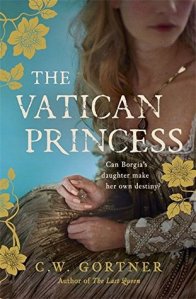
The Vatican is my next link and leads me to The Vatican Princess by CW Gortner (2). Set in Renaissance Italy, this novel is narrated by Lucrezia Borgia, whose father Rodrigo bribes his way to the papal throne and becomes Pope Alexander VI.

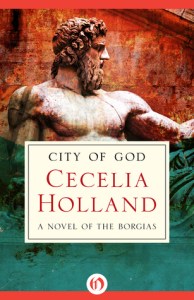
City of God by Cecelia Holland (3) also tells the story of the Borgias, this time seen through the eyes of Nicholas Dawson, secretary to the Florentine ambassador to Rome. This is a complex novel, mainly concerned with political intrigue and spying, and gives a completely different perspective from the Gortner book.

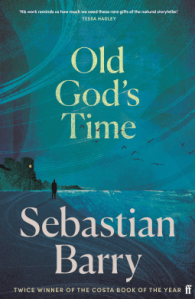
Another book with the word ‘God’ in the title is Old God’s Time by Sebastian Barry (4). Set in Ireland, this novel follows Tom Kettle, a retired police detective looking back at his memories of a case from the 1960s which has been reopened. It involves one of the darkest episodes in the recent history of the Catholic Church.

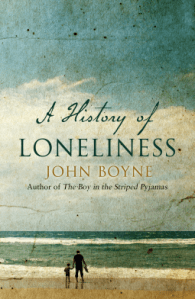
In A History of Loneliness (5), John Boyne tackles the same subject from the perspective of Odran Yates, a Catholic priest. This is a fascinating novel, raising the question of whether choosing to look the other way and do nothing makes us complicit in crime.

The John Boyne novel is set in Dublin and so is The Graces by Siobhan MacGowan (6), the final book in my chain. This is the story of Rosaleen Moore, known as The Rose, who becomes known for her gifts of prophecy and healing in the early 20th century and makes a shocking deathbed confession to the priests of Mount St Kilian Abbey.

~

And that’s my chain for May! My links have included: popes, the Vatican, the Borgias, the word God, Irish authors writing on a shared theme and Dublin. The books are also all connected to the topic of religion and the Catholic Church.

In June we’ll be starting with All Fours by Miranda July.

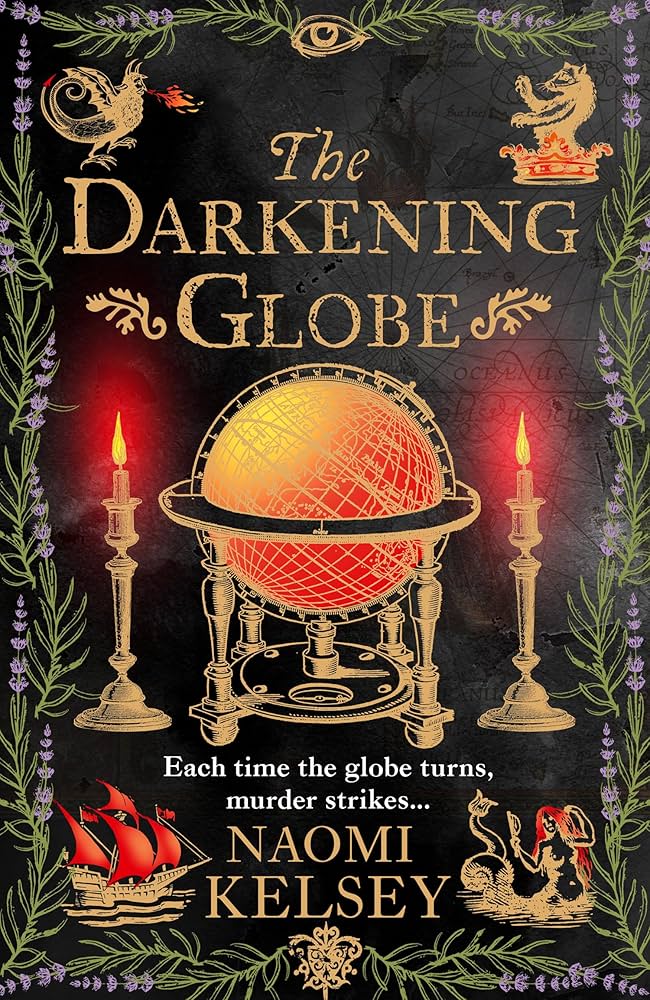
The Darkening Globe by Naomi Kelsey

Naomi Kelsey is a new author for me – I haven’t read her debut novel, The Burnings – but I was drawn to this book by the cover and title, which hinted at an atmospheric Gothic story.

The Darkening Globe is set in 1597, towards the end of the Elizabethan period. It’s a time of travel and adventure, of great explorers like Sir Francis Drake and Sir Walter Raleigh – and the fictional Sir Hugh Radclyffe. As the novel opens, Sir Hugh is returning to England from a voyage to the New World and his wife, Beatrice, is both happy and apprehensive. She’s pleased to have him back, but afraid he’ll find out she’s been having an affair with one of the male servants. However, Hugh doesn’t come home alone – he is accompanied by Catalina, a beautiful woman with dark hair and skin. Because Hugh refuses to explain who she is, Beatrice comes to the conclusion that he has also been unfaithful and her resentment grows as Catalina settles into their home and shows no sign of leaving.

There’s also another new addition to the Radclyffe household: an enormous painted globe, decorated with mermaids, serpents, lions and a multitude of other illustrations. Other courtiers have been commissioning them for their houses and Hugh is very proud of his. Beatrice, though, is less impressed – in fact, she finds the globe threatening and creepy. Her fear of it appears justified when she sees it start to spin one night and then a sinister new drawing appears on its face. Not long afterwards, a death takes place in a way that seems to resemble the picture. Beatrice is sure she’s not imagining things and is determined to uncover the truth. Has someone been tampering with the globe – and could it start to rotate again? What really happened on Hugh’s expedition? And why has he brought Catalina home with him?

I enjoyed The Darkening Globe, particularly the parts of the story involving the globe itself – it’s quite eerie every time it starts to spin and a new picture appears, hinting that another death will happen soon. It’s not immediately obvious what is going on with the globe, as it really does seem to have a mind of its own. The other mystery, involving Catalina, is also interesting. I jumped to a conclusion about her very early in the book, but I was wrong and her connection with Hugh Radclyffe was not what I’d expected. I was pleased to be wrong as the real explanation for her presence was much more intriguing than I had assumed.

Although I felt that Beatrice, as our heroine, could have been a stronger character and the villains could perhaps have been given more depth, this was an entertaining novel with an imaginative plot. I’ll have to find time to read The Burnings and will also look out for future books by Naomi Kelsey.

Thanks to HarperNorth for providing a copy of this book for review via NetGalley.

My Commonplace Book: April 2025

A selection of quotes and pictures to represent April’s reading:

commonplace book
noun
a book into which notable extracts from other works are copied for personal use.

~

“What on earth made you bring all those books with you?” said Edmund, looking up from his model, with a note of impatience in his voice. “They’re far more than you can possibly read in the time we’re going to be here.”

“I know,” said Richard, “but I like to choose the book I’m going to read from a lot of other books. That’s half the fun of reading.”

Linden Rise by Richmal Crompton (1952)

~

London in the Great Smog of 1952

“Lying wastes more time than anything else in the modern world.”

The Tiger in the Smoke by Margery Allingham (1952)

~

‘But that leaves us with a bit of a problem,’ Dr Sarah said. ‘We can’t sit idly by and let such a thing happen. No matter the rights and wrongs of it. Do you see?’

The Edinburgh Murders by Catriona McPherson (2025)

~

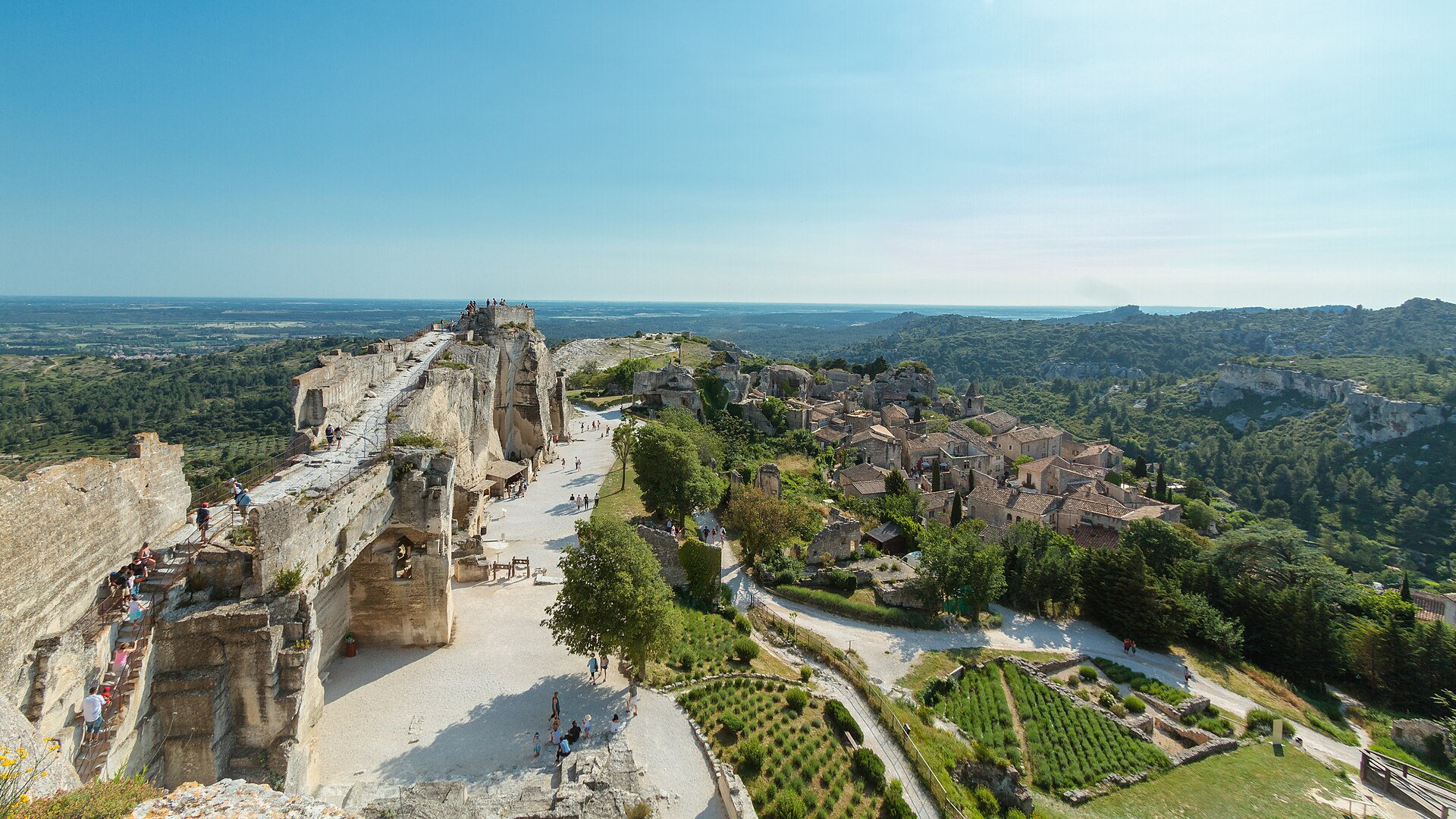
Les Baux-de-Provence, France

Each day had its own page, which Olive Branson had used not only for her appointments, in themselves scarce, but also to record books she wanted to read and observations about the weather. Here and there, the diary turned into a commonplace book, with short passages in French that had caught her eye.

That Dark Spring by Susannah Stapleton (2025)

~

When Clara had proved right about the drifting back, George blamed her. Blaming inwardly is annoying when the one blamed is ignorant that blaming is taking place.

Aunt Clara by Noel Streatfeild (1952)

~

People are complicated; most people do some good things and some bad things.

The Six Murders of Daphne St Clair by MacKenzie Common

~

Favourite book read this month:

The Tiger in the Smoke

Authors read for the first time this month:

Susannah Stapleton, MacKenzie Common

Countries visited in my April reading:

England, France, Scotland, US, Canada

~

Reading notes: April was a slower reading month for me, compared to the first three months of the year, and it was mainly devoted to reading books for the 1952 Club. Reading less means I’ve had time to start catching up with my backlog of reviews, although I still have some left to post.

I somehow have seven books from NetGalley all with publication dates in May and have so far only read one of them, so that’s what I’ll have to concentrate on for the next few weeks. Otherwise, I don’t have any other reading plans for May and will just see where my mood takes me.

What did you read in April? Do you have any plans for May?

Top Ten Tuesday: Books with House in the title

This week’s topic for Top Ten Tuesday (hosted by That Artsy Reader Girl) is “Books with the Word “[Insert Word Here]” in the Title”. I picked the word House as I’ve reviewed a lot more than ten books with that word in the title, which meant I had plenty to choose from and could cover a range of genres.

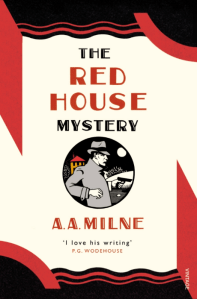
1. The Red House Mystery by A.A. Milne – Published in 1922, this is Milne’s only detective novel (although he did also write a spoof, Four Days’ Wonder). It’s a lot of fun and I wish he had written more of them!

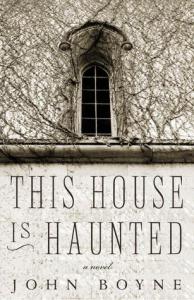
2. This House is Haunted by John Boyne – A wonderfully entertaining and atmospheric ghost story set in Victorian England and featuring a governess who takes a position at a house which appears to be haunted.

3. The Valentine House by Emma Henderson – This dual time period novel is set in the French Alps and follows several generations of the Valentine family from 1914 to 1976.

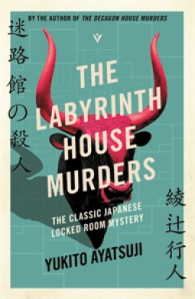
4. The Labyrinth House Murders by Yukito Ayatsuji – An imaginative Japanese crime novel set in a house built in a labyrinth design and inspired by the Minotaur myth. I enjoyed this much more than The Decagon House Murders by the same author (which could also have been on this list).

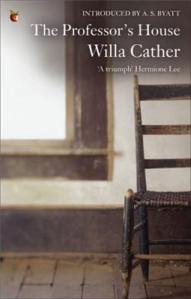
5. The Professor’s House by Willa Cather – Moving house causes Professor Godfrey St Peter to reflect on his life and his memories of a former student. This was my first Willa Cather book and I found it slow but beautifully written.

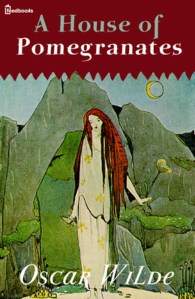
6. A House of Pomegranates by Oscar Wilde – A collection of four fairy tales by Oscar Wilde. Although each one has a moral, they are also very entertaining! The stories are quite dark in places (like many fairy tales), but I think they’re suitable for both children and adults.

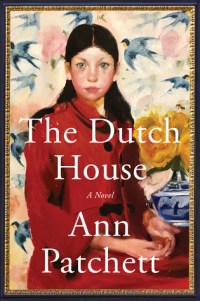
7. The Dutch House by Ann Patchett – The story of a brother and sister and their connection to the house in Philadelphia where they grew up. I hadn’t expected to enjoy this as much as I did!

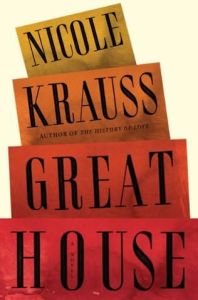
8. Great House by Nicole Krauss – A novel made up of four separate stories, linked by an antique writing desk that once belonged to a Chilean poet. The desk touches the lives of each of the main characters in some way and you need to read all four stories to fully understand how they are connected.

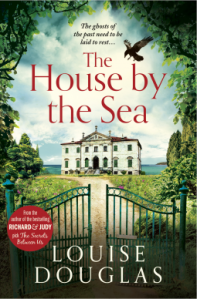
9. The House by the Sea by Louise Douglas – Our narrator inherits a house in Sicily and intends to sell it until she discovers it’s hiding some intriguing secrets. This book combines mystery and romance with some beautiful descriptive writing.

10. The House on the Strand by Daphne du Maurier – This time travel novel is set in the author’s beloved Cornwall and moves between the 1960s and the 14th century. I love du Maurier and this is one of my favourites.

~

Have you read any of these? Which other books with House in the title have you read?