Classics Club Group Check-in #13

group-check-ins

Tell us what you’ve read, how you’re feeling about your progress, how much you love the classics or the community — any struggles, a favorite read so far. Really, whatever you feel like sharing!

I think this is the first time I’ve participated in one of the Classics Club Group Check-ins but as it’s nearly the end of the year I thought I would take this opportunity to look back on the classics I’ve read in 2014. It seems I’ve read thirteen books from my Classics Club list, which is better than I thought because I don’t feel that I’ve been making much progress with my list at all.

Before I start to talk about the classics I’ve read this year, I want to list the other Classics Club activities I’ve taken part in over the last twelve months. These are:

The Classics Club 50 Question Survey
July Meme: Biographies of classic authors
March Meme: Literary Periods

There have also been four Classics Club Spins this year (for those of you who don’t know what a Spin is, we list twenty books, number them 1-20, a number is announced and we have to read the corresponding book on our list). I participated in all four and have been quite lucky with the results:

Can You Forgive Her? by Anthony Trollope
The Mayor of Casterbridge by Thomas Hardy
The Idiot by Fyodor Dostoevsky
Bellarion by Rafael Sabatini (reading now)

I’ve enjoyed/am enjoying all of these, even The Idiot which I’d had my doubts about before I actually started reading it. The spins usually seem to work well for me, so I’m sure I’ll be tempted into joining in with them again next year.

I participated in two readalongs of classic novels this year: Madame Bovary by Gustave Flaubert and The Haunting of Hill House by Shirley Jackson. I can’t really say that I loved either of these books, but I’m glad I’ve now read them both and it was interesting to see the thoughts of other readalong participants as well.

A long-term reading project for me in 2014 was Don Quixote by Miguel de Cervantes. I started it in January, broke it down into small segments throughout the year and finished it in November. This was one of the longest books on my Classics Club list, so I really felt I’d accomplished something when I reached the end!

I read one of the modern classics on my list – The Remains of the Day by Kazuo Ishiguro, which I loved – and one that you could probably call a forgotten classic – Family Roundabout by Richmal Crompton.

I also read another two books which weren’t on my original Classics Club list but which I added when I decided to make some changes to my list at the beginning of the year. The first was Coming Up For Air by George Orwell – I read it in January and it really surprised me because it was entirely different from the other Orwell books I’ve read. The second was Tender is the Night by F. Scott Fitzgerald. I had wanted to give Fitzgerald another chance because I wasn’t very impressed by The Great Gatsby, but I didn’t like this one either so I’ve decided he probably just isn’t my type of author.

Elizabeth Gaskell is my type of author and so is Anthony Trollope. I read Gaskell’s Cranford in July and enjoyed it (and then followed it with her novella Mr Harrison’s Confessions, though I’m not counting that book for the Classics Club) and I read the second of Trollope’s Palliser novels, Phineas Finn, in November. I’m looking forward to continuing with the series soon.

The only book I haven’t mentioned yet is Victor Hugo’s The Hunchback of Notre-Dame. I loved that one too, so overall I’m very pleased with the selection of classics I’ve read this year!

I haven’t gone into any detail about the books above, but if you want to know more you can click on the titles to read my reviews and I’m sure a few of these will be appearing on my end-of-year list later in the month!
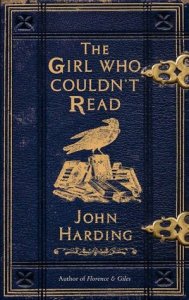
The Girl Who Couldn’t Read by John Harding

The Girl Who Couldn't Read Three years ago I read John Harding’s Florence and Giles and loved it, so I was pleased to find a copy of The Girl Who Couldn’t Read in the library. It’s a sequel and will make more sense if you’ve read Florence and Giles first, but don’t worry if you haven’t because it should still work perfectly well as a standalone.

The story is set in the 1890s and is narrated by Doctor Shepherd, who has just arrived at his new job in a women’s mental hospital on an isolated island in New England. Taking a tour of the hospital’s facilities with his new colleague, Doctor Morgan, he is appalled by some of the methods being used to control the patients. When he tells the other doctor of his concerns, Morgan agrees to an experiment: Shepherd can choose one of the women to work with using his own methods in an attempt to prove whether gentle, humane treatment can be as effective as harshness and brutality.

The patient Doctor Shepherd picks for his experiment is a young girl known as Jane Dove – she says she can’t remember her real name, her age or anything about her past. She is also unable to read (and claims that she has never been allowed to learn) and, according to Doctor Morgan, she can’t even use the English language correctly. It seems Shepherd’s task could turn out to be a lot harder than he’d expected! After spending some time with Jane, though, he begins to realise that while the girl’s speech is unconventional, the way she uses nouns and verbs actually makes perfect sense.

She invented new words from old, often by changing the way they were used. She said “we outsided” rather than “we went outside”, or “I downstairsed” in place of “I went downstairs”, both of which I found perfectly clear and actually more economical than the conventional expression.

Jane immediately reminded me of a character from Florence and Giles – another girl who used language in a creative and unusual way. As Doctor Shepherd continues to work with her, encouraging her to search her memory and giving her books to look at, the connection between Jane and that other girl becomes clear. But what about Shepherd himself? It’s obvious from the very first chapter that he is not who he says he is either…and possibly not even a doctor at all!

I love books with unreliable narrators and Doctor Shepherd is a very intriguing one. We know that he is unreliable, we know that he is not being honest with us – but we don’t know why and we don’t know who he really is. The truth about Shepherd isn’t revealed until near the end of the novel, but along the way there are plenty of plot twists and surprises! And to make things even more interesting, Doctor Shepherd and Jane Dove aren’t the only people in the story with secrets to hide; there’s also a third mystery and this one made me think of a classic Victorian novel – an impression that grew stronger as the story progressed.

The Girl Who Couldn’t Read is a great book – it’s maybe not quite as good as Florence and Giles but it comes very close! I did wonder whether the setting might make it too similar to The Asylum by John Harwood, which I read just a few weeks ago, but fortunately they are two very different novels with very different plots and characters. I thoroughly enjoyed them both!

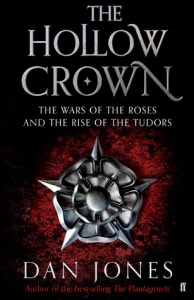
The Hollow Crown by Dan Jones

The Hollow Crown A rare non-fiction review here today! Having loved Dan Jones’ book on the Plantagenets, I was curious to see how he would approach the Wars of the Roses, which is one of my favourite periods of English history. I was looking forward to another well written, thoroughly researched book that would make a complex subject accessible and easy to understand – and that’s what I got, although there were one or two problems which prevented me from enjoying this book as much as the previous one.

The Hollow Crown: The Wars of the Roses and the Rise of the Tudors begins with the marriage of Henry V and Catherine of Valois, laying the foundation for the years of conflict that would follow. Best known for his victory over the French at Agincourt, Henry V was considered one of England’s great medieval kings, but when he died in 1422 of a sudden illness with his only heir still a baby, the scene was set for decades of uncertainty and instability. As Henry’s son, Henry VI, grew into an adult it became obvious that he was unfit to rule. Suffering from an unspecified mental illness, he was a weak and ineffectual king, and this paved the way for rival claimants to the throne – Richard of York and his son, the future Edward IV.

From the 1450s to the 1480s a series of battles were fought between the two rival branches of the royal house – York and Lancaster. This book takes us through the entire period in chronological order, detailing each battle and its outcome and examining the reigns of Henry VI, Edward IV, Richard III and finally Henry VII, who defeated Richard at the Battle of Bosworth and founded a new royal dynasty – the Tudors. Naturally a lot of the focus is on the male figures of the period – the kings and dukes and earls – but Jones shows understanding and sympathy for some of the women too: Margaret Beaufort who gave birth to Henry Tudor at the age of thirteen and according to Jones may have been left physically and mentally traumatised by the experience, and Henry VI’s wife, Margaret of Anjou, who found herself with the responsibility of trying to maintain some sort of control of the kingdom during her husband’s long spells of illness.

This is a shorter book than The Plantagenets (and focuses more intensely on a shorter period of history) and, like the previous volume, it’s very readable and even quite gripping in places. There was one area, though, where I felt that this book was not as good as the first one. In The Plantagenets I felt that Jones had given a fair and balanced account of the historical people and events concerned but The Hollow Crown feels very biased towards the Lancastrian/Tudor point of view. The bias is most noticeable, maybe not surprisingly, in the sections dealing with Richard III where Jones makes it clear where he stands on the questions of what happened to the Princes in the Tower and how Henry VI met his death. Now, I know Richard is a controversial figure and it would be difficult for any historian not to have an opinion of him one way or the other, but it would have been nice if some alternative theories could have been explored here as well instead of just being dismissed in one or two sentences!

I did enjoy The Hollow Crown, though. Dan Jones’ writing style is lively and entertaining, which means his books are good choices for someone like myself who prefers fiction to non-fiction. I feel that I’m starting to have quite a good knowledge of the Wars of the Roses now but there was still some information here that was new to me (particularly near the end of the book, where he looks at the fate of the de la Poles, the final Yorkist claimants). This book could also be a good place to start if you know nothing about the Wars of the Roses – it’s a very complex and confusing period but Jones does a good job of making it as easy to understand as possible…I hope you’ll find it as fascinating as I do!

I received a copy of The Hollow Crown for review via NetGalley.

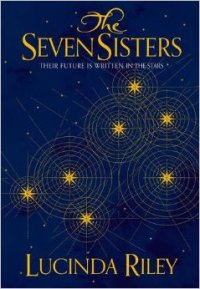
The Seven Sisters by Lucinda Riley

The Seven Sisters This is the first in a planned series of seven novels based around the legends of the Seven Sisters star constellation. Each novel follows the story of one of six sisters, all born to different parents and adopted as babies by a man the girls call ‘Pa Salt’. Pa Salt has named his adopted daughters after the stars in the constellation: Maia, Alycone (Ally), Asterope (Star), Celaeno (CeCe), Taygete (Tiggy) and Electra. There is no seventh sister, which has made me very curious about the seventh book in the series!

This first novel introduces us to Maia d’Apliese, the eldest of the six girls. Growing up on Pa Salt’s estate, Atlantis, by Lake Geneva in Switzerland, Maia and her sisters have been loved and cared for by their adoptive father and his housekeeper, Marina, but know almost nothing about their own origins. When Pa Salt dies suddenly, the sisters – all now adults with lives and careers of their own – gather at Atlantis to remember the man who had been a father to them all. To their surprise, they discover that Pa Salt has left each of them an envelope containing clues to their heritage and pointing them in the direction of their place of birth.

Maia is surprised to find that her own life began in Rio de Janeiro, and with no reason to remain in Switzerland, she sets off to Brazil to research her roots. With the help of the Brazilian novelist, Floriano Quintelas, Maia begins to uncover the story of a young woman called Izabela who lived in Rio during the 1920s and played a part in the creation of the statue of Christ the Redeemer. As she learns more about Izabela, Maia begins to gain the confidence to move on with her own life and seize her own chance of happiness before it’s too late.

The Seven Sisters is a big book with over 600 pages in the hardback edition I read, but I never felt that it was too long. I was drawn into both main characters’ stories, so I didn’t really notice the length of the book. The experiences of Maia and Izabela are very different in some ways – Maia, in 2007, has freedom and opportunites that Izabela could only dream of – but there are also some similarities between their two stories. Both women are hiding secrets, both have made mistakes and both have lost someone close to them. Of the two characters, I preferred Maia, but both storylines interested me.

I also liked the setting – or settings, as there is more than one! Some of the 1920s chapters are set in Paris where Izabela spends some time among the Bohemian artists and writers in Montparnasse, but my favourites were the sections set in Rio. I know very little about Brazil and its history, so I enjoyed going back in time and learning about the construction of Christ the Redeemer, as well as the modern day chapters in which Maia sees some of the city’s famous sights.

I really love the concept of this series; it’s ambitious and something different. After I finished the book I took the time to explore Lucinda Riley’s Seven Sisters website, where she explains some of the mythology behind the Seven Sisters, or Pleiades, constellation. I discovered that she had also woven some anagrams and mythological allusions into the story too, which I hadn’t noticed while I was reading the book but will look out for in future novels now that I’m aware of it! I’m already looking forward to the second in the series, which will be Ally’s story. Ally’s personality seems to be very different from Maia’s and I can’t wait to get to know her better.

Sanctuary by Robert Edric

Sanctuary Set in Haworth, West Yorkshire, in 1848, this is the story of a frustrated, unhappy young man whose life has been a series of disappointments, rejections and unfulfilled promise. In poor health, with no job and mounting debts, he has returned to the family parsonage where he remains completely dependent on his father, the only person who still sees his potential. To make things worse, his three sisters have succeeded where he has failed, having had some of their poems and stories published (under male pseudonyms). Disillusioned and miserable, he turns to alcohol for comfort.

The young man’s name, as you may have guessed by now, is Branwell Brontë and his sisters are Charlotte, Emily and Anne. Sanctuary is a fictional account of the final months of Branwell’s life leading up to his death in September 1848 at the age of thirty-one. Branwell himself is the narrator of the story, giving us some insight into his state of mind as he tries to come to terms with seeing the success of his sisters while his own literary ambitions come to nothing.

As a fan of the Brontë sisters I have always been intrigued by Branwell and the possible influence he may have had on their work. Earlier this year I read Daphne du Maurier’s biography, The Infernal World of Branwell Brontë, which I thought was quite a sympathetic portrayal. It was much more difficult to have any sympathy for the Branwell we meet in Sanctuary; he spends the whole book feeling sorry for himself and wallowing in self-pity without making any attempt to change things. However, I didn’t need to like Branwell to appreciate that his character was well written, complex and believable. As a portrait of an intelligent, talented man who had wasted his potential and thrown away opportunities through his own self-destructive behaviour, it was very convincing.

Unfortunately, none of the other characters in the book were as well developed as Branwell. Charlotte, Anne and Emily all felt like the same person rather than three strong, separate personalities, which was very disappointing (especially when compared with their portrayal in Jude Morgan’s excellent The Taste of Sorrow). For the same reason, I thought it was hard to distinguish between Branwell’s friends, several of whom appeared in the story and, like his sisters, felt bland and lifeless. On a more positive note, I did like the setting – we learn a lot about life in a small Yorkshire community in the middle of the 19th century.

Because of my love for the Brontës, I found this an interesting and worthwhile read, even though the slow pace and weak secondary characters meant that I didn’t particularly enjoy it. I like the sound of some of Robert Edric’s previous novels, though, so I would consider reading another one at some point.

I received a copy of Sanctuary for review via NetGalley.

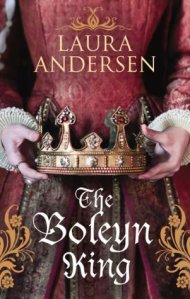
The Boleyn King by Laura Andersen

The Boleyn King We all know what happened to Anne Boleyn: having failed to give Henry VIII the son and heir he needed, the King turned his attentions to Jane Seymour and Anne was beheaded, leaving behind her only child, the future Elizabeth I. But what if Anne had given birth to a living son? What if that son grew up to become King of England? Laura Andersen takes that idea as her starting point for The Boleyn King and weaves a whole alternative history around it.

At the beginning of the novel, King Henry IX, better known as William (the fictional son of Anne and Henry), is approaching his eighteenth birthday. His uncle, Lord Rochford, has been acting as Lord Protector for the last few years but William is now almost ready to begin ruling in his own right. Rochford is a clever, ruthless man and he has not done a bad job of ruling the kingdom, but as William prepares to take over there are still several problems and potential conflicts to be dealt with.

First, there’s the threat posed by the Lady Mary, William’s half-sister, who many of England’s Catholics would prefer to see on the throne. Then there’s the prospect of war with France. Most worrying of all for William is news of a document known as The Penitent’s Confession which claims to throw William’s paternity into doubt and which, if it falls into the wrong hands, could lose him his throne.

Amidst all of this drama and danger, there are only three people whom William feels he can trust: his other sister, Elizabeth, and two more fictional characters, Dominic Courtenay and Minuette Wyatt. Dominic is his best friend and William has come to rely on his honesty and advice, while Minuette, the daughter of one of Anne Boleyn’s ladies, has been raised as a royal ward and is very close to William. Elizabeth, Dominic and Minuette are the people William turns to for help in ensuring the security of the kingdom – and locating the Confession before his enemies find it first.

The Boleyn King is part alternate history, part mystery and part romance. It was the history part that I enjoyed the most; the book raises some fascinating questions and although these weren’t explored in a lot of depth, it’s still very intriguing to think about all the different ways in which just one small change (the birth of one boy) could affect the future of England, Europe and maybe even the entire world. If there really had been a Henry IX, that must mean there would have been no Edward VI. Does that also mean that Lady Jane Grey would never have briefly taken the throne and then lost her life and that Mary would never have become Queen either? What if Henry IX had children of his own? Would the outcomes of wars have been changed? What about the implications for religion, culture, art, literature and exploration? The possibilities are endless.

The mystery storyline, which begins with the death of a friend of Minuette’s and ends with the search for the hidden document, was quite enjoyable too, but the romantic aspect of the book was of less interest to me. Elizabeth, as she apparently was in real life, is in love with Robert Dudley, while both William and Dominic develop feelings for the same woman – who happens to be Minuette. Their love triangle is not resolved in this book but as this is the first in a trilogy, I expect it will continue to play a big part in the next two books.

There was a lot to like about The Boleyn King, but I did have one big problem with it. William, Elizabeth, Minuette and Dominic could have been modern day teenagers – they never felt to me like people who could really have lived during the Tudor era. The way they spoke, the way they thought and the way they behaved just wasn’t right and there was no real sense of the time period. When I read historical fiction I like to feel completely immersed in another time and place but that never happened with this book.

The next two in the trilogy are The Boleyn Deceit and The Boleyn Reckoning. While I would be interested to know how the story develops, I’m not sure if I enjoyed this book enough to want to read two more. Maybe I’ll change my mind if I come across them in the library but at the moment I’m not planning to continue.

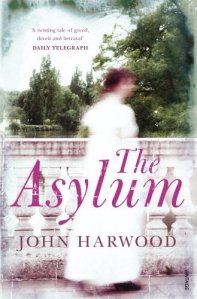
The Asylum by John Harwood

The Asylum Imagine waking up one day to find yourself in an asylum, with no memory of how you came to be there. You know your own name – Georgina Ferrars – but the doctor tells you that you had admitted yourself as a voluntary patient the day before under the name Lucy Ashton. The clothes and belongings you’ve brought with you, marked with the initials LA, seem to confirm this, but you’re sure that’s not who you are. Sending a telegram to your uncle, a London bookseller, you wait for him to prove your identity, but when the reply comes it isn’t what you’d hoped for at all. Apparently Georgina Ferrars is safe and well at home…which means you must be an imposter.

This is the nightmare scenario in which a lonely young woman finds herself in this atmospheric gothic tale of betrayal and deceit, secrets, insanity and identity. To describe the plot in any more detail would risk giving too much away, so I won’t try – I think it’s best if you begin this novel knowing no more than I’ve already told you above as part of the fun is in wondering what’s going on and coming up with theories of your own. And I certainly came up with plenty of theories…and had to keep changing and revising them as new clues and revelations came to light!

As I read The Asylum I felt as confused and bewildered as our narrator did. Was she really Georgina Ferrars, as she claimed to be? I thought so at first – I liked her and wanted to believe her – and I was convinced she must be the victim of a conspiracy. But who exactly was involved in the conspiracy? The doctor? The uncle? The fake Georgina? After a while, though, I began to have doubts. Was the narrator herself the fake after all? I couldn’t believe she was telling lies, so did that mean she was deluded or just suffering from a total loss of memory? There were so many questions to ask and so many possible answers.

The story is set in the 1880s and written in the style of a Victorian sensation novel. Like Wilkie Collins’ The Woman in White and other books of that era, parts of the story are told in the form of journal entries and letters. These help to fill in some gaps in our knowledge so that we can start to understand what is happening to Georgina. There were other aspects of the novel that reminded me of Fingersmith by Sarah Waters and one of the letter writers finds herself in a situation similar to the heroine of Samuel Richardson’s Clarissa, but there were enough original ideas here to make this an intriguing and absorbing story in its own right.

Most of the action takes place within the confines of Tregannon House (the private asylum on Bodmin Moor, Cornwall, in which Georgina becomes trapped) and the atmosphere Harwood creates is wonderfully claustrophobic and eerie. I really sympathised with Georgina’s situation and shared her terror and bewilderment. My only criticism of the book is that the ending – in particular the way in which one of the villains of the story is eventually dealt with – felt a bit too melodramatic in comparison to the rest of the book.

This is the third John Harwood novel I’ve read and while I think the first, The Ghost Writer, is still my favourite, I enjoyed this one more than the second, The Séance. They’re all great, though, and if you like this sort of book you can’t go wrong with any of them!