Gibside

On Saturday I decided to take advantage of the warm, sunny weather and my National Trust membership to visit Gibside, a beautiful 18th century country estate overlooking the Derwent Valley, only a few miles away from where I live. Gibside was formerly the home of the Bowes-Lyon family before becoming a National Trust property. I thought I’d share some of my photos with you today.

This is Gibside Hall, sadly now in ruins:

Gibside Hall 2

Gibside Hall

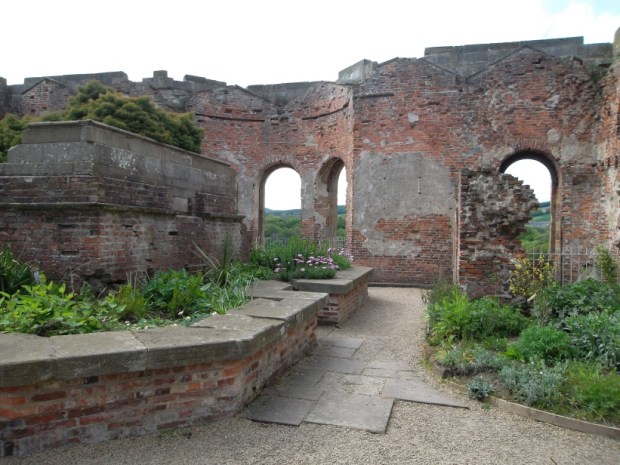
Several views of the Orangery, also a ruin:

Gibside Orangery 1

Gibside Orangery 2

Gibside Orangery 3

Gibside Orangery 4

The long tree-lined Avenue and the path beside it:

Gibside avenue

Gibside avenue 2

The Column of British Liberty, built in the 1750s:

Column of Liberty

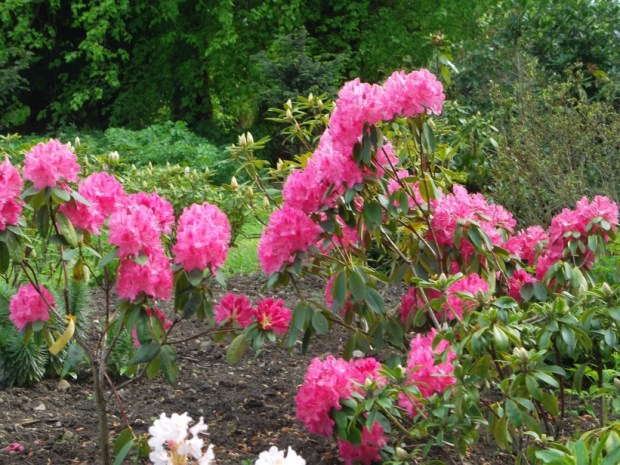
I loved the pretty colours here:

Gibside 2

Gibside 3

Gibside

The estate also includes a chapel, stables and a newly restored walled garden (still a work in progress). I didn’t take any pictures of these this time, but maybe on my next visit!

The Chains of Fate by Pamela Belle

The Chains of Fate This is the second book in Pamela Belle’s Heron series, set in the 17th century and following the adventures of Thomazine Heron and her family in an England torn apart by civil war. I loved this one almost as much as The Moon in the Water, which I read last month, and would highly recommend these books to anyone who enjoys family saga-style historical fiction. The only problem is that they are now out of print, but I definitely think it’s worth trying to find copies.

*Spoiler warning – As this is a sequel and as the previous book ended on such a big cliffhanger, it would be almost impossible for me to discuss this novel without making references to the first one. If you’re interested in this series, please see my review of The Moon in the Water before reading any further!*

The Chains of Fate begins where The Moon in the Water ended, with Thomazine embarking on a journey north to Scotland in search of her cousin and lover, Francis Heron. Believing Francis to have drowned, Thomazine had married Dominic Drakelon before discovering that she had been misled and he was not dead after all. Leaving her husband and baby son behind, she sets off to find Francis with only her friend Grainne, servant Holly and Grainne’s two young children for company. The road north through a country at war is not without its dangers but Thomazine eventually arrives at the Borders home of her Graham cousins – only to discover that convincing Francis of her innocence will not be as easy as she’d hoped.

Will Francis and Thomazine find happiness together in the end or will they be separated forever by war or by the evil scheming of cousin Meraud? I’m not going to say any more because the story that unfolds throughout The Chains of Fate is a wonderful, epic tale of love, war and betrayal and I wouldn’t want to spoil a single page of it for you.

Much as I enjoyed reading this book, however, it’s not without a few flaws that prevented me from loving it quite as much as the first book. While I love Thomazine as a narrator, the fact that she is telling her story in the first person means that she is usually far removed from the centre of the Civil War action. The outcomes of various battles and the movements of the armies are described to Thomazine through letters or gossip picked up in taverns and I thought this became a bit tedious at times. Having said that, I am not a big fan of battle scenes, so I did appreciate the focus on ordinary families and the people who were forced to stay behind, worrying about their loved ones in the thick of the fighting.

I was also slightly disappointed that Thomazine and Francis are kept apart for such long stretches of the book. The other storylines the author brings into the novel – the relationship between Thomazine and her little boy, Kit; the love affairs of Grainne, Lucy and Jamie; and the question of who will inherit Goldhayes – were compelling too and did interest me, but I still found myself getting impatient wondering when Francis was going to make another appearance!

Anyway, this was another great book and I’m now looking forward to reading the third one, Alathea – but apprehensive too because I’m aware that it’s about the next generation of Herons and in my experience sometimes a series is not as good once we leave the original characters behind. I’m hoping this won’t be the case with Alathea and it shouldn’t be too long before I have the chance to find out.

A Dark and Twisted Tide by Sharon Bolton

A Dark and Twisted Tide This is the fourth book in the Lacey Flint series by Sharon (formerly S.J.) Bolton and I’ve been looking forward to it since finishing the third one more than a year ago!

Having been involved in three very traumatic cases in a short space of time (which you can read about in Now You See Me, Dead Scared and Like This, For Ever) Lacey is now living alone on a houseboat in Deptford Creek, just off the River Thames, and trying to come to terms with her recent experiences. She has also abandoned her career as a detective to become a uniformed police officer again, hoping that her new position patrolling the river with the Marine Unit will be less stressful. While out swimming in the Thames early one morning (not something to be recommended!) she discovers a dead body floating in the river, wrapped in a white linen shroud. It seems that Lacey’s plans for a more peaceful life have been thwarted already…

I wish I could discuss the plot in more detail as it was fascinating, but if I say any more I’ll be giving too much away and spoiling the mystery for future readers. Instead I’ll mention the setting and the atmosphere, which were both as wonderful as I’ve come to expect from Sharon Bolton’s novels. The story is set almost entirely on the Thames and I loved the descriptions of the creeks and waterways, the derelict pumping station and the marina where Lacey’s boat is moored. I didn’t find this book quite as creepy as some of Bolton’s others, but there were a few scenes involving crabs that weren’t very pleasant!

If you’re new to this series you could start here if you wanted to (it’s a complete novel, with a beginning, middle and end), but my recommendation would be to begin with Now You See Me and read the series in order so that you can watch Lacey’s character develop book by book. She’s such a complex and secretive person that although you learn a little bit more about her in each novel you’re always left with the feeling that there’s still a lot more to learn. I particularly enjoy reading about her trips to Durham to visit the prisoner Toc, possibly the only person who really knows and understands Lacey and her troubled past.

Of course, Lacey is not the only interesting character in the series – another is Detective Inspector Dana Tulloch. I’ve never liked Dana much before and her treatment of Lacey in the previous book really annoyed me, but I found myself warming to her at last. In this book, she and her partner Helen make the decision to have a child and I’ll be interested to see how that storyline continues in the next book – assuming there is going to be a next book! I was disappointed, though, that Mark Joesbury doesn’t have a big role to play this time – although he does have a very good reason for his absence.

This is not my favourite book in the series – that would still be the third one, Like This, For Ever – but I did enjoy reading this dark and twisted tale.

I received a copy of this book from the publisher via NetGalley for review.

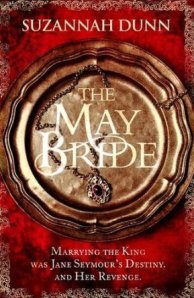
The May Bride by Suzannah Dunn

The May Bride One day in May 1536, Jane Seymour became Henry VIII’s third wife – but she is not the only May bride in Suzannah Dunn’s new novel. The other is Katherine Filliol, the wife of Jane’s elder brother, Edward. Jane is only fifteen when Edward first brings Katherine to Wolf Hall, the Seymour family home, and she is instantly captivated by her beautiful new sister-in-law. Jane and Katherine become close friends – or so Jane thinks, but gradually she discovers that Katherine has been keeping secrets from her and that her marriage to Edward may not be as perfect as it first appeared.

I had my doubts about this book before I started reading it because I had tried to read another of Dunn’s books a few years ago, The Confession of Katherine Howard, and didn’t get very far with it before giving up, not having connected with the writing style or the characters at all. I wondered if I would have the same experience with this book, but luckily that didn’t happen; I found this one much more enjoyable and easier to get into.

I’ve read a lot of novels set during the Tudor period, but this one is slightly different, for several reasons. First, it is a very domestic story, being set almost entirely at Wolf Hall with only the final, shortest section of the book covering Jane’s time at court as lady-in-waiting to Katherine of Aragon and Anne Boleyn. Until that last section there are so few mentions of politics, court intrigues or famous people of the period (apart from the Seymours themselves) that it could almost have been a story about any other wealthy Tudor family going about their daily lives.

I also found it intriguing that although Jane is the most famous Seymour and the one who is narrating, this novel is actually about Katherine Filliol as much as it is about Jane. I didn’t know anything about Katherine before reading the book and although Suzannah Dunn admits in her author’s note that there is very little historical information available on Katherine (and no record of what eventually happened to her) I still appreciated the fact that she had chosen to focus on a little-known character who is not usually the subject of historical fiction.

Finally, this book is written in a style that feels very modern and there is no real attempt to use language appropriate to the period. This is something that usually irritates me, but in this case I think it actually worked quite well once I got used to it. Because this is a family drama, with the emphasis on exploring the relationships between Katherine, Jane and the other Seymours, the fresh and contemporary feel made it easy to identify with the characters. I thought Jane’s brothers, Edward and Thomas, with their very different personalities, were particularly well drawn.

Compared with some of Henry VIII’s other wives, Jane Seymour as queen is often portrayed as quiet and uninteresting but here the young Jane comes to life as a loyal and loving person who is able to see the best in everyone. Unfortunately I didn’t share her fascination with Katherine, but I suppose that’s because I was able to pick up on clues and nuances that wouldn’t have been obvious to an innocent fifteen-year-old girl who is dazzled and enchanted by her new friend.

Although I maybe haven’t learned as much about Jane as I would have done from a more conventional historical novel, I did enjoy reading about her early life and the experiences that shaped the woman and queen she would become.

I received a copy of this book for review from the publisher via NetGalley

And my Classics Club Spin book is…

The Classics Club

Number 1

Last week I decided to take part in the sixth Classics Club Spin. The rules were simple – list twenty books from your Classics Club list, number them 1 to 20, and the number announced today (Monday) represents the book you have to read before 7th July 2014.

The number that has been selected is 1, which means the book I’ll be reading is:

The Mayor of Casterbridge

The Mayor of Casterbridge by Thomas Hardy

I’m happy with this. There were some other titles on my list that I would have preferred, but I do love Thomas Hardy and I haven’t read any of his books for a while.

If you participated in the spin too, were you pleased with your result?

Cider with Rosie by Laurie Lee

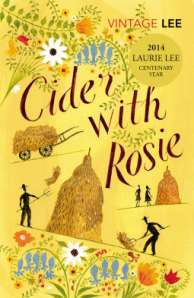
Cider with Rosie Laurie Lee was a British novelist and poet most famous for his autobiographical trilogy which begins with Cider with Rosie and continues with As I Walked Out One Midsummer Morning and A Moment of War. Published in 1959, this first volume looks back on Lee’s childhood in the small Cotswold village of Slad in Gloucestershire. Lee moved there at the age of three with his mother and siblings at the end of the First World War. In Cider with Rosie he writes about his family and friends, his school days and the eccentric characters who lived and worked in Slad.

I had never considered reading this book until now, partly because it reminded me of being at school (we never actually read the whole book, but I remember having to study excerpts from it for English comprehension exercises) and I think that was enough to put me off! The scene that I particularly remembered was the one where Laurie’s sisters send him off for his first day at school wrapped in scarves with a hot potato in his pocket. When he comes home he tells the family about his disappointing day:

“They never gave me the present!”
“Present? What present?”
“They said they’d give me a present.”
“Well, now, I’m sure they didn’t.”
“They did! They said: ‘You’re Laurie Lee, ain’t you? Well, just you sit there for the present.’ I sat there all day but I never got it. I ain’t going back there again!”

I’m glad I waited until now to read this book, as I don’t think I would have appreciated it when I was younger. It’s not the most exciting book to read – it doesn’t seem that anything particularly dramatic happened to Lee in his early years and being an autobiographical work (or semi-autobiographical, as Lee admits at the start that “this is a recollection of early boyhood and some of the facts may be distorted by time”), it is not a book with a ‘story’ or a plot. However, it is still worth reading for the beauty of Lee’s descriptions and imagery and because it paints a portrait of a world that has gone and will never come back again.

The book has quite an interesting structure with each chapter devoted to a different theme with titles such as ‘Village School’, ‘The Kitchen’ and ‘Mother’. Laurie does age gradually throughout the book, so that the earlier chapters are seen through the innocent eyes of a small child and the later ones are more mature (including the famous scene drinking cider under a hay wagon with the Rosie of the title), but otherwise the book doesn’t follow strict chronological order.

Some chapters are more enjoyable than others (I loved ‘Grannies in the Wainscot’, which describes two of the Lees’ elderly neighbours) but my favourite is actually the final chapter, which shows how life in the village starts to change with the coming of progress. With the arrival in Slad of cars and electricity, for example, the world suddenly becomes a different place and the simple life Laurie Lee has always known begins to disappear forever.

Cider with Rosie has been reissued by Vintage Classics in a beautiful new edition and I received a copy for review via NetGalley. The book includes drawings by John Ward and although I don’t think you really get the full benefit of them when you’re reading an ebook version, it’s always nice to see illustrations!

The Gondola Maker by Laura Morelli

The Gondola Maker The Gondola Maker is set in Venice in the 16th century and tells the story of Luca Vianello, the son of a gondola maker. As the novel opens in 1581, Luca’s future seems secure – he will marry Annalisa Bonfante, the blacksmith’s daughter, and on his father’s death he will inherit the family business. However, when a tragedy unexpectedly tears the Vianello family apart, Luca is forced to leave the squero (boatyard) behind to seek a new life and career for himself.

I was lucky enough to visit Venice for the first time last year and reading The Gondola Maker reminded me of what a beautiful, unique city it is and how I would love to go again. The author’s descriptions are so vivid that whether or not you’ve been to Venice you’ll be able to picture the grand palazzos of the rich merchants and noblemen lining the Grand Canal, the sun setting behind the basilica of San Marco, the view across the lagoon to the island of San Giorgio Maggiore, and the inside of a prison cell in the Doge’s palace.

Being a novel about a family of gondola makers, it’s no surprise that we are given lots of information on the art of gondola making. And it really is an art! As we accompany Luca on a mission to restore one of his grandfather’s old gondolas, we see how many different people are involved in the process, from the remèri who make the oars and the fórcole (rowlocks which secure the oar) to the blacksmiths who construct the ferri (the metal decorations at the prow). Each of these artists pours their skill, knowledge and love into their work so that each complete gondola is an object of beauty and perfection.

This was all much more interesting to read about than I had expected, but of course there is more to this story than just the making of boats. While it’s true that most of Luca’s time is spent among fellow craftsmen and gondoliers, after he leaves the family squero his adventures also bring him into contact with a successful portrait painter, a maker of costumes for balls and carnivals, and a beautiful young woman who becomes his love interest. Luca himself is a character I found easy to like, which is fortunate as he is narrating his story in the first person, meaning we spend the entire novel in his company.

This is not a particularly fast-paced book and Luca’s story is not always very dramatic, but despite this I did enjoy The Gondola Maker. I found the ending of the book too abrupt and the conclusion of the romantic storyline wasn’t very satisfying which was a bit disappointing, but this didn’t spoil the rest of the novel for me. It was good to have an opportunity to learn about the creation of gondolas, a subject I had never read about or even thought about before – and I loved visiting Venice again, albeit through fiction this time, instead of in person!

1-iRead Button small(1) I read The Gondola Maker as part of an iRead Book Tour. For more reviews, interviews and giveaways please see the tour schedule.