The Midwich Cuckoos by John Wyndham

The Midwich Cuckoos The Midwich Cuckoos begins as our narrator, Richard Gayford, and his wife, Janet, attempt to return to their home in the quiet English village of Midwich after a trip to London to celebrate Richard’s birthday. As they approach the village they discover that the road has been closed by the police; something very strange is happening in Midwich, a place where, as Richard tells us, things just did not happen. That night, Monday 26th September, everyone within the boundaries of Midwich has fallen asleep and anyone who tries to enter the village also loses consciousness.

The next day this phenomenon, which becomes known as the ‘Dayout’, disappears as suddenly as it arrived – the invisible barrier is lifted and people begin to wake up. At first it seems that most of the villagers have been completely unharmed by the ‘Dayout’, but a few months later they make a shocking discovery. Something did happen during their twenty-four hours of unconsciousness and it’s going to have a big effect on the lives of everyone in Midwich.

I’ve decided to end my summary of the plot here rather than tell you exactly what happened to the people of Midwich. I’m sure some of you will already know (maybe you’ve seen the film based on the book, Village of the Damned, or maybe the title of the book and the cover of my old Penguin edition pictured here have given you some clues) but I don’t really want to spoil things for anyone new to the story so I won’t go into any more details. All I will say is that I thoroughly enjoyed this book from beginning to end!

I don’t often choose to read science fiction (looking back through my blog archives I can only see five or six that I’ve read since 2009) and I wasn’t sure what to expect from this book, but The Midwich Cuckoos was probably the perfect type of science fiction for me – instead of being filled with too much action or violence, it’s a subtle, thought provoking portrayal of a small, seemingly normal community trying to cope with something that is threatening their way of life. I think it was the ordinariness of the setting that made the story so effective; this, combined with Wyndham’s thoughtful, undramatic writing style, made it possible to almost believe in what happened in Midwich, while also creating quite an eerie atmosphere.

The only problem I had with this book was that I didn’t feel any connection with the characters. The narrator himself doesn’t have a big part to play and is actually absent from the village for long periods of time, leaving large portions of the story to be told through second-hand accounts, particularly through the philosophical musings of one of the Midwich residents, Gordon Zellaby. It was also disappointing that despite the women of Midwich having such an important role in the story, we never really get to know any of them and they are rarely given a chance to participate in any of the discussions or decisions being made by the men. But although there were a few aspects of the book that I thought could have been better, I did love my first John Wyndham book and am now wondering which one I should read next.
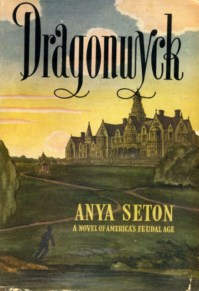

Dragonwyck by Anya Seton

Dragonwyck - Anya Seton Sorry for neglecting my blog recently…I’ve had a busy two weeks at work and haven’t had much time or enthusiasm for blogging. Luckily I have a week off now and will be able to catch up on telling you about all the books I’ve been reading, beginning with this one, Dragonwyck, which I read for the R.I.P challenge.

I had been looking forward to reading this book for a long time, having been a fan of Anya Seton’s for years and also being a lover of both historical fiction and gothic novels. Dragonwyck is a combination of both – it includes some typical gothic elements (mysterious deaths, a mansion with haunted rooms and an old servant who tells tales of ghosts and curses) but it also has a fascinating and thoroughly researched historical background.

One day in 1844 Abigail Wells, wife of a Connecticut farmer, receives a letter from her rich cousin, Nicholas Van Ryn, offering to take one of her daughters into his home as a governess for his own young daughter, Katrine. Eighteen-year-old Miranda is the one who is chosen and she is thrilled to be given this opportunity to improve her situation in life. Nicholas is the Patroon (landowner) of a large estate called Dragonwyck in Hudson, New York, and after growing up on her parents’ farm the naïve and romantic Miranda is immediately captivated by the handsome Nicholas, his luxurious home and his aristocratic lifestyle.

Soon she becomes aware that she is falling in love with Nicholas and is sure he feels the same way – the only problem is, Nicholas is married. When tragedy strikes at Dragonwyck, Miranda’s life is transformed again, but this time she begins to uncover some of the house’s dark secrets and to learn the truth about her mysterious cousin Nicholas. As Anya Seton explains in her author’s note introducing the story: “All Gothic magnificence and eerie manifestations were not at that time inevitably confined to English castles or Southern plantations…”

As a gothic novel I didn’t find Dragonwyck particularly creepy – although it’s certainly a very dark book, with an oppressive, unsettling atmosphere. But the real attraction of this book for me was its wonderful historical setting that gave me some fascinating insights into areas of American history I hadn’t read about before. We learn about the Patroon system, for example, which began when landholders in the Dutch colony of New Netherland were given power over large areas of land, similar to the feudal system in medieval Europe. This led to an uprising of the tenants known as the Anti-Rent War and this forms a large part of Dragonwyck’s historical backdrop. We also learn about the Astor Place Riot during William Charles Macready’s performance in Macbeth and about the steamboat captains who would race each other on the Hudson River with total disregard for the safety of their passengers, sometimes with fatal consequences.

There are also a few brief appearances by real historical figures, most notably Edgar Allan Poe, but these felt as if they had been woven naturally into the story rather than name-dropping for the sake of it (in fact, the Poe episode does have a significance to the plot which only gradually becomes apparent later in the story). The main focus though, is on the three main fictional characters – Miranda, Nicholas and the doctor, Jeff Turner – and you’ll notice I haven’t said much about any of those three, because to attempt to explain why I liked or disliked each character would risk giving away too much of the story.

I did enjoy Dragonwyck but not as much as some of Anya Seton’s other novels (and I don’t think it really comes close to the brilliance of Jane Eyre or Rebecca, two books that it has been compared with). I do love reading ‘older’ historical fiction novels like this one though, as they seem to somehow have a completely different feel from modern ones. This book was published in 1944 and there’s a film too from 1946 with Gene Tierney and Vincent Price. I haven’t seen it, so I’d be interested to know what it’s like and how faithful it is to the book.

As well as this book, I have now read Katherine (one of my favourite historical fiction novels), Green Darkness, The Winthrop Woman, Avalon and Devil Water. If there are any of her others that you think I should look out for, please let me know which ones!

Thoughts on finishing War and Peace

War and Peace

To study the laws of history, we must change completely the object of observation, leave kings, ministers, and generals alone, and study the uniform, infinitesimal elements that govern the masses.

I wasn’t expecting to start writing this post until the end of December! At the beginning of the year I signed up for a year-long readalong of War and Peace hosted by Iris and Amy, attracted by their reading schedule which looked very realistic and manageable. I did stick with the schedule for the first few months and was enjoying being part of the group read (thank you, Amy and Iris!) but somewhere in the middle of the book I discovered that the pace wasn’t really working for me anymore. I found that I was finishing the month’s reading then forgetting about the book for a few weeks, which made it difficult to get back into the story again when I eventually picked it up to read the next month’s section. Once I abandoned the schedule and found a pace I was happy with, I flew through the rest of the book and really enjoyed it.

I didn’t think War and Peace was a particularly difficult book to read (I’m actually finding writing about it much more difficult!) and while it was certainly long, I have read other books of similar length. And yet it’s still a book that has always sounded very intimidating to me, so I felt a real sense of achievement when I reached the final page – especially after persevering through that Second Epilogue (if you’ve read it I’m sure you’ll know what I mean). If you’re wondering what War and Peace is actually about, I’m afraid I’m not going to tell you much about the plot because I don’t even know where to begin! It’s about war, of course – specifically the French invasion of Russia during the Napoleonic Wars – and the way it affects the members of several families of Russian aristocrats, not just in the army but also at home, in their domestic lives and in their interactions with each other.

I loved the ‘peace’ parts of War and Peace and getting to know Natasha, Marya and Sonya, Pierre, Nikolai and Andrei. The ‘war’ sections, however, were much more challenging for me as I often tend to struggle with battle scenes and find discussions of military tactics difficult to follow. This wasn’t helped by the fact that I had absolutely no previous knowledge of the Russian involvement in the Napoleonic Wars and to make things worse, from my point of view, there are lots of long philosophical passages in which Tolstoy spends a lot of time musing on war and its causes; for me to feel involved in what’s happening, I need to be actually ‘on the battlefield’ seeing things through the eyes of our protagonists, otherwise I just feel like a passive observer. Still, some of the book’s most moving and powerful moments occur during the war chapters. I included the following quote in one of my monthly readalong posts, but I’m copying it again here as I thought it really captured the shift from Nikolai’s view of war as something abstract and romantic to something real and harsh:

“Who are they? Why are they running? Can it be they’re running to me? Can it be? And why? To kill me? Me, whom everybody loves so?” He remembered his mother’s love for him, his family’s, his friends’, and the enemy’s intention to kill him seemed impossible.

Now, a note on the format and translation that I read. After reading mixed opinions on the various translations of War and Peace, I decided on the Kindle version of the Vintage Classics edition translated by Pevear and Volokhonsky (I wanted to avoid the Maude translation as I didn’t get on with their translation of Anna Karenina at all – though I know other readers recommend that one, so it’s just a matter of personal taste, I suppose). This P&V translation was very readable and I didn’t have any big problems with it, apart from, as I mentioned in another of my readalong update posts, not liking the way they chose to present the speech impediment of one character, Denisov. It distracted me so much I found it impossible to concentrate on what Denisov was actually saying! Also, I should point out that there’s a lot of French in War and Peace and in this edition, it is left untranslated in the dialogue with translations given at the end of each chapter. This was good as it gave an accurate understanding of how widely French was spoken by the Russian aristocracy and how its use gradually decreased as the war with France progressed, but it did mean a lot of turning back and forth was needed – and this was much more inconvenient with the Kindle than it would have been with a physical book.

Finally, some advice based on my experience with War and Peace: Reading with a friend or with other bloggers can be helpful and is a good way to stay motivated, but it’s important to find a pace you feel comfortable with. Read regularly and don’t leave the book unread for too long. If, like me, you know nothing about this period of Russian history, you might want to think about doing some background reading first to help put things into context – I didn’t and wished I had! And keep a list of the characters beside you as you read…as you would expect from a book of this length, there are a huge number of characters and it can be hard to remember who they all are. Be aware though that searching for character lists online can lead you to see spoilers you might prefer not to know about!

If you’ve read War and Peace too I would love to know what you thought of it – and if you have any more tips for future War and Peace readers please share them with us!

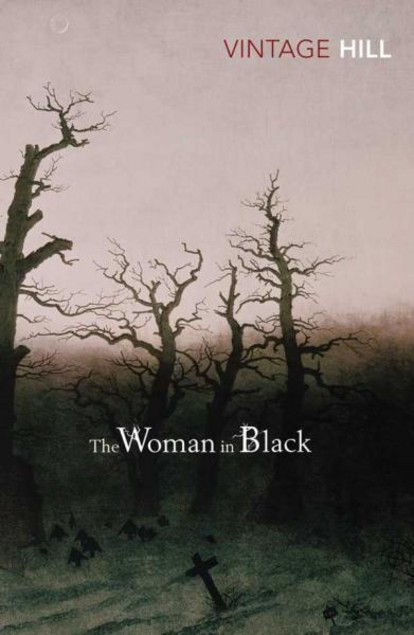
The Woman in Black by Susan Hill

The Woman in Black - Susan Hill The Woman in Black begins on Christmas Eve, when Arthur Kipps’ family gather round the fire to tell ghost stories. To the surprise and disappointment of his wife and stepchildren, Arthur refuses to join in and leaves the room, not wanting to explain that the only ghost story he knows is a true story that’s too terrifying to be told. Standing outside in the cold, Arthur decides to write his story down instead. The rest of the novel consists of Arthur’s account of something that happened to him many years earlier.

As a young lawyer, Arthur was sent to attend the funeral of a client, Mrs Alice Drablow, in the town of Crythin Gifford. Before her death, the elderly Mrs Drablow lived alone in lonely Eel Marsh House, which can only be reached from the mainland by the Nine Lives Causeway which becomes flooded at high tide. At the funeral Arthur sees a woman dressed in black but when he tries to find out who she is he discovers that nobody will answer his questions. Arthur’s work takes him to Eel Marsh House where he decides to stay for a few days sorting through Mrs Drablow’s papers – and alone in the isolated house, cut off by the tide from the rest of Crythin Gifford, Arthur has a series of encounters with the mysterious woman in black, each one more frightening than the one before.

The Woman in Black is a book I’ve wanted to read for a long time. I put it on my list for the RIP challenge last year but didn’t have time for it, so added it again to this year’s list, determined to read it this time. I’m glad I’ve read it at last and I did enjoy it, but I didn’t love it as much as I hoped to. I didn’t find the book as scary as I thought it would be either. There were a few scenes that sent a shiver down my spine, but it wasn’t quite the terrifying story I’d been expecting. I wonder whether the fact that I had to read the book in two sittings with a break in the middle made it have less impact; my advice to anyone else reading this book for the first time is to make sure you give yourself enough time to read it in one sitting if possible (it’s only a short book so it would be quite manageable).

Although this book didn’t really succeed in scaring me, it does still have everything you would expect from a traditional ghost story: there’s a creepy old house in a remote and lonely setting, lots of bad weather including storms and thick fog, a sense of mystery created by the villagers’ reluctance to talk to Arthur or to go anywhere near Eel Marsh House, and of course the ghostly manifestations of the woman in black herself. I am starting to get impatient with characters who insist on staying in houses that they know are haunted, though – Kate in Midnight is a Lonely Place which I read recently was exactly the same. I know it would spoil the story if they ran away at the first sign of trouble but I think I would have more sympathy if they weren’t voluntarily choosing to spend the night in a haunted house!

There’s not really much more I can say about this book without starting to give too much away. It’s written in a Victorian style, which I loved, but I kept wondering when the story was supposed to be set. It was obviously not the Victorian period as there were mentions of cars and electric lights, so I’m assuming it was set in the early decades of the twentieth century. I loved Spider the dog – she was my favourite character! And I thought the ending of the book worked perfectly – it wasn’t entirely unexpected but I was still shocked by it!

Stormy Petrel by Mary Stewart

Stormy Petrel It’s hard to believe it’s only been two years since I discovered Mary Stewart! I read the brilliant Nine Coaches Waiting in November 2011 and since then I’ve read seven of her other books and loved most of them. When I first started to think about what I wanted to read for Anbolyn’s Mary Stewart Reading Week, Stormy Petrel wasn’t a title that came to mind, but I decided to see what the library could offer and this was the only one they had that I hadn’t already read. Knowing that this was one of her later books (published in 1991) and not considered to be one of her best, I was careful not to go into it with my expectations too high.

Stormy Petrel is narrated by Rose Fenemore, a poet and writer of science fiction novels. Due to her busy schedule as a tutor of English at Cambridge, Rose doesn’t have as much time to write as she would like, so she decides to take a break and spend two weeks at a cottage on the Hebridean island of Moila. Her brother Crispin, a doctor, agrees to meet her there as he is a keen wildlife photographer and is looking forward to taking pictures of the rare birds that nest on the island.

Rose arrives several days before Crispin and begins to settle into the cottage, but on her first night the island is hit by a storm and she wakes up to find a strange man in the kitchen. His name is Ewen Mackay and he tells her that his foster parents used to live in the cottage and he has come to visit them unaware that they had moved away. As Rose listens to Ewen’s story, another man arrives at the door. Introducing himself as John Parsons, he explains that he was camping and his tent has blown away in the wind so he is looking for somewhere to shelter from the storm. Rose lets them both stay until morning but over the next few days she learns more about both men and discovers that neither of them has been completely honest with her. How can she decide who to trust?

This was not one of my favourite Mary Stewart books and slightly disappointing compared with some of her earlier ones, but I still liked it and rate it above Rose Cottage, which was her final book, published several years after this one (I didn’t dislike Rose Cottage either, but it was a bit too gentle for me). The problem with Stormy Petrel is that as a ‘romantic suspense’ novel the romance is only hinted at and there’s not much suspense either. After one or two surprises near the beginning of the book the rest of the story is predictable, the villain is not really all that villainous and I never felt that Rose was in any danger.

Something I did love about this book was the wonderful Scottish setting. Every time I read a Mary Stewart novel I find myself enthusing over her beautiful descriptions of the area in which the story is set, and Stormy Petrel is no exception:

The Isle of Moila is the first stop past Tobermory. It is not a large island, perhaps nine miles by five, with formidable cliffs to the north-west that face the weather like the prow of a ship. From the steep sheep-bitten turf at the head of these cliffs the land slopes gently down towards a glen where the island’s only sizeable river runs seawards out of a loch cupped in a shallow basin among low hills. Presumably the loch – lochan, rather, for it is not large – is fed by springs eternally replenished by the rain, for nothing flows into it except small burns seeping through rush and bog myrtle, which spread after storms into sodden quagmires of moss. But the outflow is perennially full, white water pouring down to where the moor cleaves open and lets it fall to the sea.

Moila doesn’t really exist but the descriptions are so vivid I’m sure it must be based on a real Hebridean island. Stewart’s love for the landscape and the wildlife are obvious and throughout the story she explores the importance of preserving the beauty of nature. If you don’t already know what the title ‘stormy petrel’ refers to, she explains that too.

At just over 200 pages, this is a quick read and perfect for those times when you just want to relax with a book that’s not too complex or demanding!

Cragside

Have you remembered it’s Mary Stewart Reading Week this week? I hope to have a review of Stormy Petrel for you later in the week, but today I wanted to share some pictures I took on Saturday.

We drove up to Cragside near Rothbury in Northumberland as they were offering free admission as part of this year’s Heritage Open Days. We had been before but not for a long time and as there’s so much to see there we thought it would be worth going again. Cragside was built in 1863 and was the home of the Victorian engineer Lord William George Armstrong. It was the first house in the world to be lit by hydroelectricity, generated by water from the lakes on the estate.

This is the view of the house from the Iron Bridge at the bottom of the rock garden:

Cragside 1

Another view of the house surrounded by trees:

Cragside 2

A carving inspired by the mythical Green Man:

Cragside 3

The kitchen:

Cragside kitchen

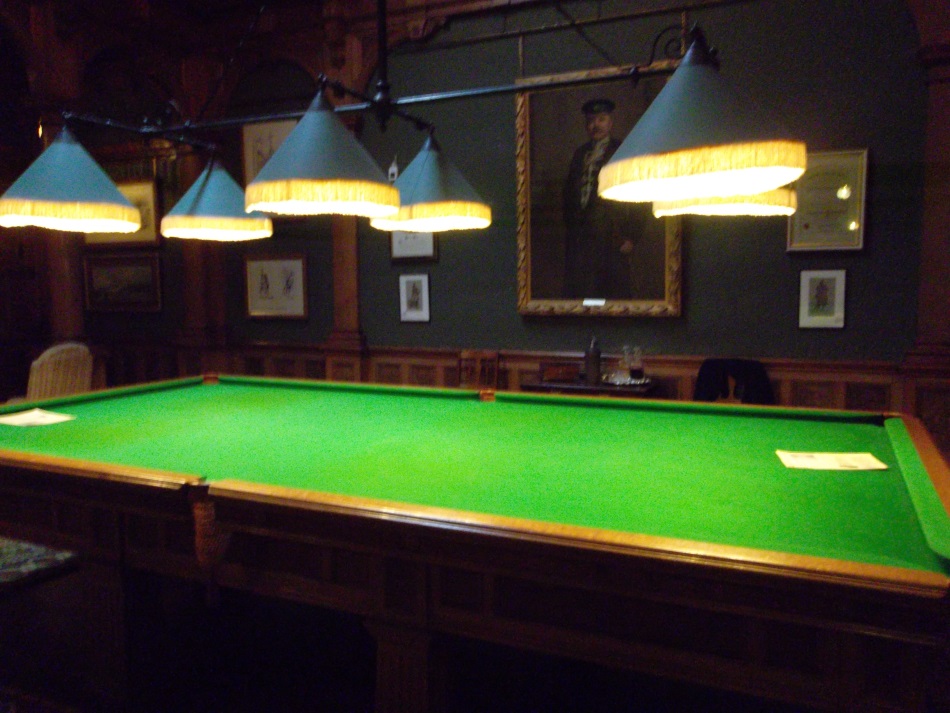
Lord Armstrong’s Billiard Room:

Cragside billiard room

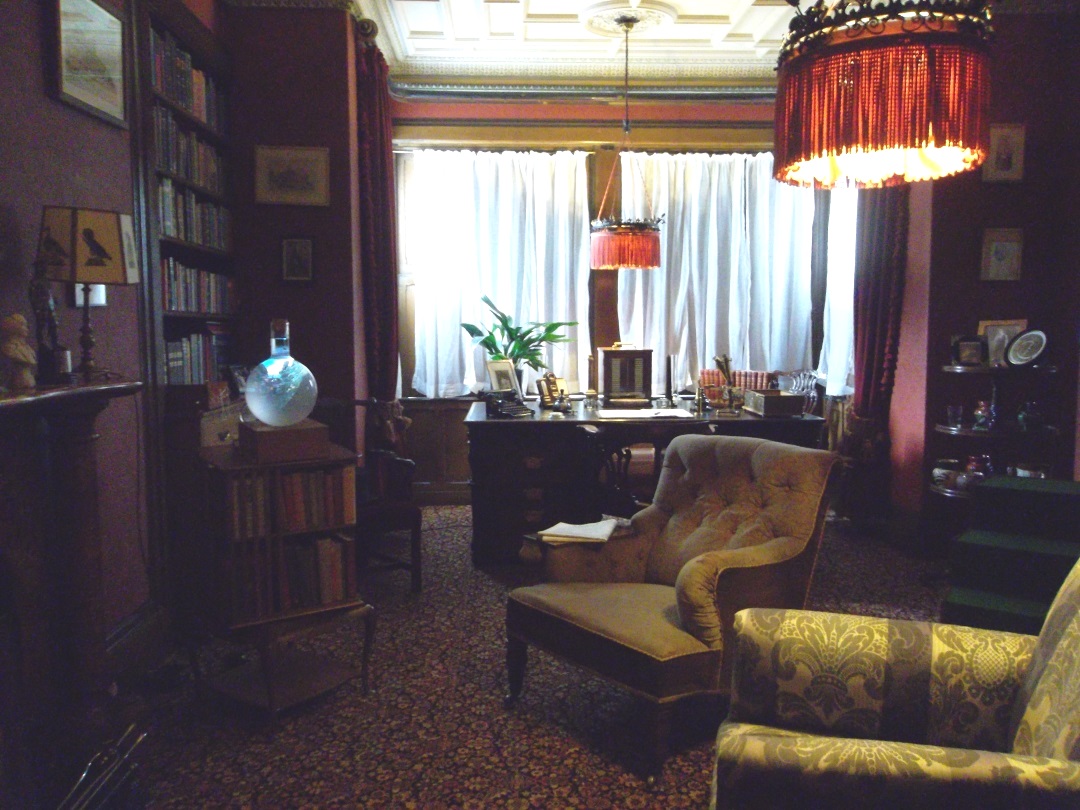
The study (the globe on the left is an art installation forming part of an exhibition):

Cragside 5

Sorry about the quality of the interior pictures; the rooms aren’t very brightly lit and I haven’t mastered the settings on my new camera yet.

Did you do anything interesting at the weekend?

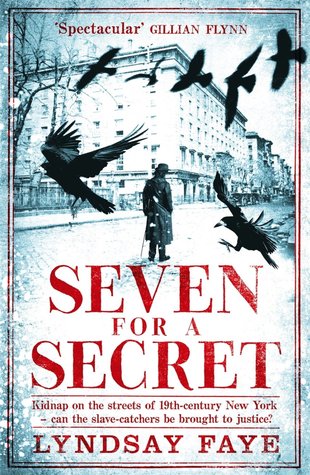
Seven for a Secret by Lyndsay Faye

Seven for a Secret One of the most surprising books I read last year was The Gods of Gotham by Lyndsay Faye. Surprising because it didn’t really sound like my type of book, yet once I started reading I loved it from the first page. Seven for a Secret is the second in the series and just as good as the first. While I like discovering new authors and meeting new characters, there is something comforting about reading a book that is the second or subsequent in a series and returning to a world you’re familiar with and characters you already know.

This series is set in 19th century New York City and follows the adventures of Timothy Wilde, a ‘copper star’ with the newly formed New York Police Department (the name comes from the copper stars the officers are required to wear for identification). After Timothy’s crime-solving skills in The Gods of Gotham brought him to the attention of Chief George Washington Matsell, he has now been given a special position as one of the department’s first detectives. In Seven for a Secret, Timothy is on the trail of a gang of ‘blackbirders’ (people employed to catch runaway slaves and return them to slavery in the South). The gang have captured the family of Lucy Adams, who insists that they are free New Yorkers and not slaves. Timothy promises to help and with the assistance of his brother Valentine sets out to investigate the crime.

Some of the characters we met in the previous novel are back again in this one including Julius Carpenter, Gentle Jim, Bird Daly and Silkie Marsh, but there are plenty of new characters too, from six-year-old chimney sweeps to corrupt Democratic Party members. But one of my favourite things about this series is the relationship between the two Wilde brothers, Timothy and Valentine. Tim continues to be torn between admiration for Val and disgust with his less savoury habits; Val continues to be the exasperated but protective older brother. I love them both, but I have to say I think Val is a wonderful creation and the more interesting character of the two.

The thing that really sets this series apart from other historical mystery novels I’ve read is the setting and the plots that arise from that setting. Before discovering these books I had virtually no knowledge at all of the early days of policing in New York or the work of the ‘copper stars’. And although I have read quite a lot of novels that deal with the subject of slavery, I hadn’t read anything that looked at this particular aspect of slavery. But much as I love Timothy Wilde and think he’s a great narrator, I did sometimes feel that his attitudes towards slavery and other issues raised in this book seemed more like the reactions of someone living in 2013 rather than the 1840s. Other than that, the atmosphere of 19th century New York is completely believable; as in the first novel, the feeling of authenticity is enhanced by the inclusion of ‘flash’, a sort of slang used mainly by criminals but also spoken by both Wildes. There’s a useful flash dictionary at the front of the book to help translate any unfamiliar words, but in most cases it’s easy enough to work out what is being said.

If you’re new to this series you could certainly enjoy Seven for a Secret without having read The Gods of Gotham first, but I would still recommend reading them in the correct order if you can. And really, they are both so good I’m sure whichever one you read first you will want to read the other anyway. I really hope there are going to be more books in this series as I can’t wait to see what the future has in store for Tim and Val!