Midnight in St Petersburg by Vanora Bennett

Midnight in St Petersburg Midnight in St Petersburg begins in the year 1911 and tells the story of Inna Feldman, a young Jewish woman from Kiev. Inna is an orphan living with relatives but when they decide to leave for Palestine to escape the anti-Jewish violence in Kiev, she is left to make her way to St Petersburg on her own to seek refuge with a distant cousin, Yasha Kagan. For a girl travelling alone carrying stolen identity documents, the journey north is dangerous, especially as the Russian Prime Minister has recently been assassinated during a visit to the theatre in Kiev, but with the help of a peasant who calls himself Father Grigory, Inna is able to find her cousin’s home. Through Yasha she meets the Leman family and is given a job in their violin-making workshop.

As the political situation in St Petersburg becomes more unsettled and the country heads towards revolution, Inna finds herself torn between two very different men. The first is her rebellious cousin Yasha, a revolutionary activist who shares her love of violin music. The second is Horace Wallick, a respectable Englishman who paints miniatures for the famous jeweller, Fabergé. Inna must choose between these two men and the completely different lifestyles they offer: one passionate but filled with danger; the other more predictable but secure and safe.

I received a review copy of this book unexpectedly a few months ago and despite being immediately attracted by the title (I love books set in Russia, especially St Petersburg) it has taken me a while to find time to actually read it. I regret not reading it earlier as it turned out to be such an interesting read. The author explained the politics of the period very well, making everything clear and easy to follow, and I liked the fact that we were shown the effects of the revolution on a wide variety of people from different social and cultural backgrounds.

The only problem I had with this book was that I just didn’t find the central romantic storyline very exciting or convincing. This is probably because, for a long time, I didn’t like either of Inna’s two love interests, so wasn’t particularly bothered which of them she would eventually choose. I did start to warm to them both towards the end, though, and after finishing the book and reading the author’s note I was fascinated to discover that Horace’s character was based on the story of Vanora Bennett’s own great-great-uncle who also worked as an artist in pre-revolutionary St Petersburg. I thought this personal connection helped to add a real touch of authenticity to the story I had just been reading.

Luckily, even without being very interested in Inna’s romantic relationships, there were still plenty of other things I could enjoy. One of the most intriguing storylines within the novel, for me, was the one involving Father Grigory, the man Inna met on the train to St Petersburg near the beginning of the book. If you know your Russian history you will know, or be able to guess, who Father Grigory really was, but if not then I’ll leave you to find out for yourself. I also really liked the violin-making aspect of the story as it was something different and unusual. I took violin lessons myself for a few years when I was younger (though I certainly wasn’t as talented as Inna) so I found it interesting to read about the processes of making and repairing violins.

I’m not sure if I liked Midnight in St Petersburg enough to want to look for more of Vanora Bennett’s novels (I know she has written three or four other historical fiction novels) but I did enjoy learning about a period of Russian history I didn’t know much about.

Thanks to the publisher for providing a review copy of this book
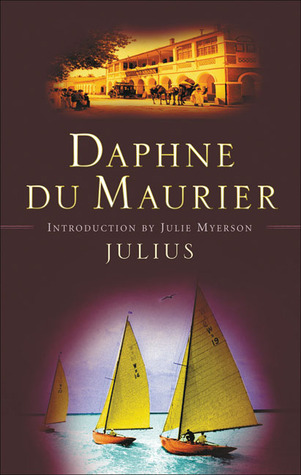
Julius by Daphne du Maurier

Julius This book was originally published under the title The Progress of Julius and is the chilling story of an ambitious and ruthless man who goes through life determined to get “something for nothing” and not caring who gets hurt in the process.

The novel begins in 1860 when Julius Levy is born into a family of French peasants who live in a small village on the banks of the Seine. The biggest influences on Julius’s early life are his loud, coarse grandfather and irresponsible mother, but he later grows closer to his father, Paul, a quiet Jewish man. With the outbreak of the Franco-Prussian war the Levys take refuge in Paris until a tragedy results in Julius and his father fleeing for the safety of Paul’s home country, Algeria.

At first, Julius plans to follow a religious life, but he soon finds that buying and selling in the marketplace holds more attraction for him and that he enjoys cheating people out of their money. When life in Algeria starts to bore him, Julius travels to England where he begins to build up a huge business empire. But even as Julius becomes one of the richest and most successful men in the world, he continues to show a complete lack of regard for the people around him, using and manipulating them to get what he wants…until his daughter Gabriel is born.

This was Daphne du Maurier’s third novel, published in 1933 when she was only twenty six years old and it amazes me that she was able to write such a sophisticated, powerful novel at such an early stage of her career. I’ve found that all of du Maurier’s books have some dark and disturbing elements, but this must surely be the darkest and most disturbing of them all – though not in a gothic way like Rebecca or Jamaica Inn. The main reason I found this book so disturbing is because Julius Levy is one of the most horrible, despicable characters I’ve ever come across in literature.

He’s completely heartless, cruel and callous with no redeeming features at all. Early in the story when the Levy family are forced to leave their village for Paris, Julius drowns his beloved cat rather than leave her with a neighbour, because if he can’t have her he doesn’t want anyone else to have her. This is an early indication of what Julius is like and as the story continues there are dozens of other examples of his selfishness and cruelty. And yet, for some reason, he still inspires feelings of love and friendship in other people, which is hard to understand as he rarely, if ever, shows any consideration or compassion for anybody but himself – they always come second to his latest money-making schemes.

As usual, du Maurier’s settings are wonderfully atmospheric, from the small French village of Puteaux to the dusty marketplaces of Algeria to the area of London in which Julius gets his first job in a bakery. The historical setting, beginning with the Franco-Prussian War and the Siege of Paris, is interesting too. This was not one of my favourite du Maurier novels (it was much too uncomfortable and unpleasant for that) but, like all of her books, it kept me gripped and fascinated from the first page to the last.

A Hero of Our Time by Mikhail Lermontov

A Hero of Our Time - Lermontov

Again, you’ll tell me, no man can be as bad as that; and I’ll ask you why, if you have believed in the possibility of the existence of all the villains of tragedy and romance, you should not believe in the reality of Pechorin? If you have admired inventions far more terrible and monstrous, why does this character, even as an invention, not deserve your mercy? Could it be because there is more truth in him than you would like?

A Hero of Our Time is described as one of the first great Russian novels, though I have to confess that until recently I had never even heard of it or Mikhail Lermontov. Having read the biographical information about the author included in this book, it seems Lermontov’s life was almost as unusual and interesting as his fiction! A Hero of Our Time was published in 1840, just before he was killed in a duel at the age of twenty six.

This is not a novel with a chronological structure or a conventional plot with a beginning and an end. Instead it consists of five separate stories, some very short and some much longer. Together they create a portrait of Grigory Pechorin, a young army officer – though as the author tells us in the preface, it’s also “a portrait built up from the vices of our whole generation, in all the fullness of their development”.

Far from being the hero suggested by the title, Pechorin is actually much more of an anti-hero, selfish, cruel, manipulative and motivated by boredom and disillusionment. He is not a likeable character at all and isn’t supposed to be, but as the novel unfolds and we are given his own version of events as well as seeing him from the perspective of others, we come to understand him better. By the end of the book I found I didn’t hate Pechorin as much as I thought I would at first and for all his faults and flaws I thought he was a fascinating character.

In the first story, an unnamed narrator is travelling through the Caucasus where he is joined by an army captain, Maxim Maximich. As they travel together, the captain tells the narrator about his friendship with Pechorin. In the second story the narrator briefly meets Pechorin and the final three stories are entries from Pechorin’s own journal. With each of these five chapters we learn a little bit more about Pechorin’s life and follow him through a series of adventures, romances and even a thrilling duel. Despite the disjointed and episodic feel of the book it’s fast-paced and never boring. I was also pleased to find that although the main characters are soldiers, the story concentrates on their personal lives and there are no long battle scenes or detailed descriptions of military tactics to struggle with – though there are some great descriptions of the landscape of the Caucasus, where the novel is set.

I really enjoyed A Hero of Our Time. Of all the Russian novels I’ve read, I found this one by far the easiest to read, despite it being written in the early 19th century. This Oxford World’s Classics edition is translated by Nicolas Pasternak Slater (the nephew of Boris Pasternak who wrote Dr Zhivago) and I think it’s an excellent translation; it flows so effortlessly it hardly feels like a translation at all. It’s a very short novel too (the actual story is less than 140 pages long – the rest of the book is made up of the introduction, notes, maps and other additional material) so could be a good choice if you want to read some Russian literature but feel intimidated by Tolstoy or Dostoyevsky.

This edition also includes a piece of writing by Alexander Pushkin entitled A Journey to Arzrum in which Pushkin describes his own travels through the Caucasus. It’s really more of a travelogue or journal than a story but it works as an interesting companion to Lermontov’s novel.

Have you read this book? Which other Russian classics would you recommend?

Cold Comfort Farm by Stella Gibbons

Cold Comfort Farm Cold Comfort Farm was the book the recent Classics Club Spin chose for me to read. I did actually manage to read it before the end of June, as the rules stated, despite the fact that I’m posting my review in July!

This is the story of Flora Poste, nineteen years old and recently orphaned, who decides to go and live with her relations. After writing to various family members and dismissing their offers as being unsuitable, something in the reply she receives from her cousin Judith Starkadder at Cold Comfort Farm in Sussex appeals to Flora and her mind is made up. Flora thinks she knows what to expect from life on a typical Sussex farm (it will be bleak, miserable and old-fashioned – and there’s sure to be a farmer called Amos and two young cousins called Seth and Reuben). As soon as she arrives she discovers that Cold Comfort Farm really is the typical farm she had imagined. Each of the farm’s inhabitants has their own set of problems that require Flora’s assistance, so armed with one of her favourite books, The Higher Common Sense by the Abbé Fausse-Maigre, she begins to ‘tidy up’ the lives of the Starkadders and help them adapt to modern life.

Not having read this book before or seen the adaptation, I didn’t know much about it before I started except that it was a parody of the British rural novel and supposed to be funny. Now, I’m going to be completely honest here and admit that I didn’t find it as funny as I’d expected. A sense of humour is such a personal, individual thing (and I do have one, honestly!) so who can say why a book works perfectly for one person and not so perfectly for another. I did think it was very clever, amusing and witty, but not hilarious. Anyway, it helped that I’ve read some of the types of books Gibbons is parodying (such as Thomas Hardy’s rural novels, for example) though it’s probably not essential to be familiar with these books.

What I enjoyed most about this book was meeting the collection of eccentric characters who live on the farm, from Amos Starkadder, Judith’s husband, who preaches at the Church of the Quivering Brethren to Aunt Ada Doom who “saw something nasty in the woodshed” when she was young and hasn’t left the farm since. Another of my favourites was Adam, the old farm hand who “cletters” the dishes with a twig (isn’t that a great word?) and refuses to use the little dishmop Flora buys him because it’s too pretty.

Something else I found interesting was the fact that this book is set in the future (at least, the future for when it was published in 1932) and there are a few references to video phones and other futuristic elements. I didn’t know about this before I started reading and saw the note at the beginning that told us “the action of the story takes place in the near future”. I’m not sure what the point of this was, though, as it didn’t seem to be necessary or to have any effect on the story.

I didn’t love Cold Comfort Farm the way most people seem to, which is a bit disappointing, and it’s probably not a book I’ll want to re-read, but I did still enjoy it and am grateful to the Classics Club Spin for picking it for me!

An update…

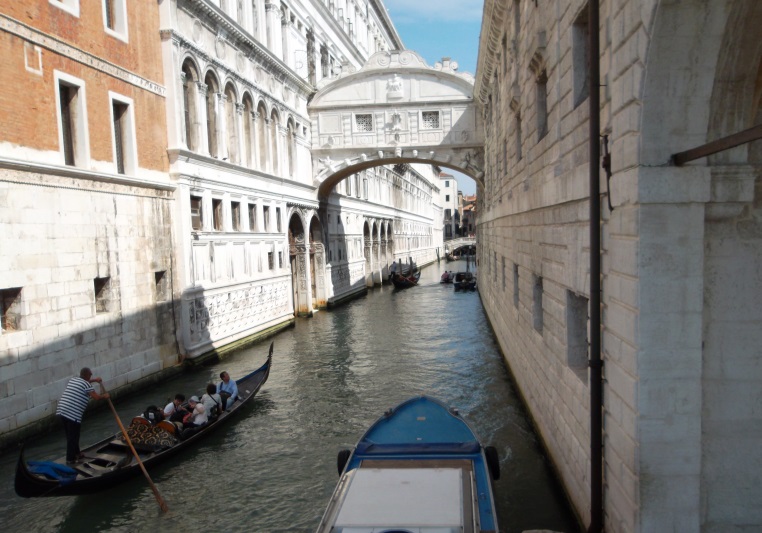
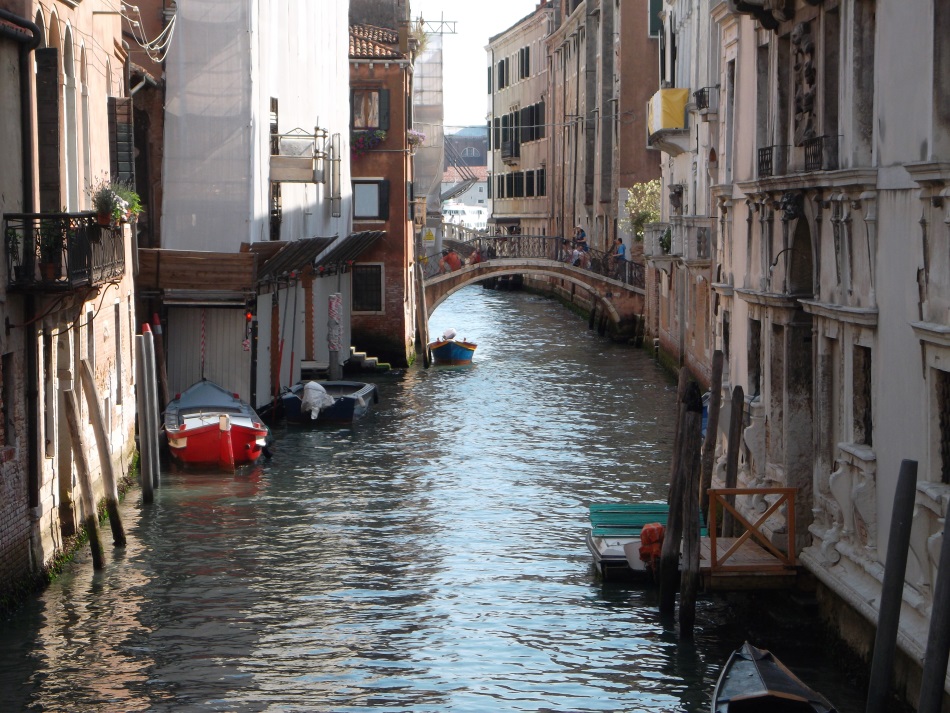
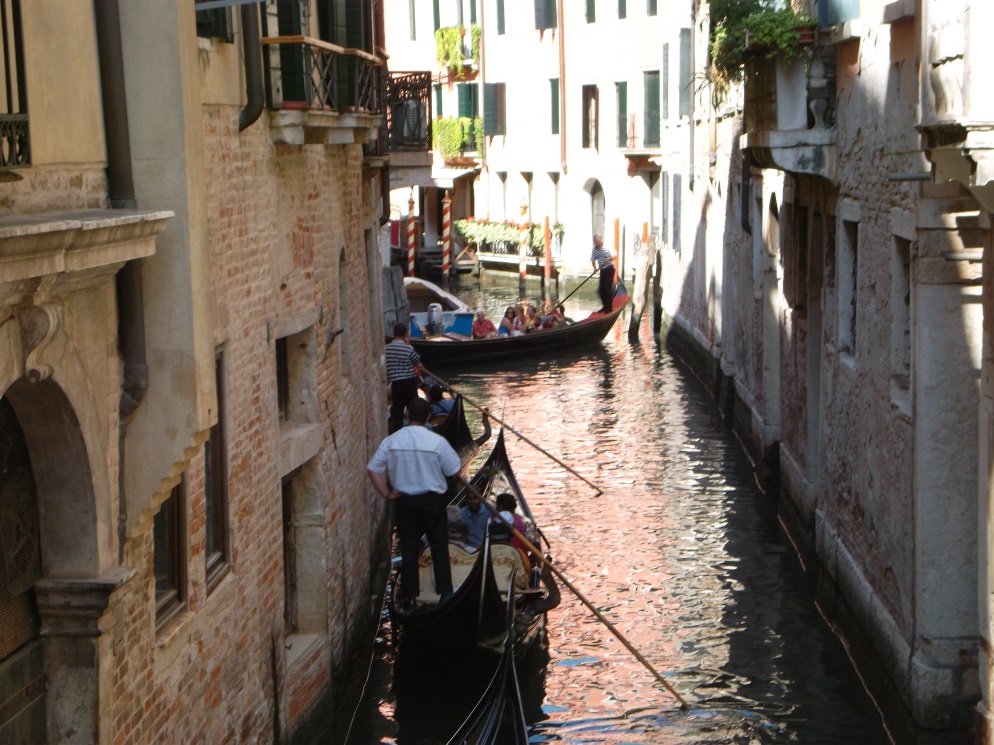
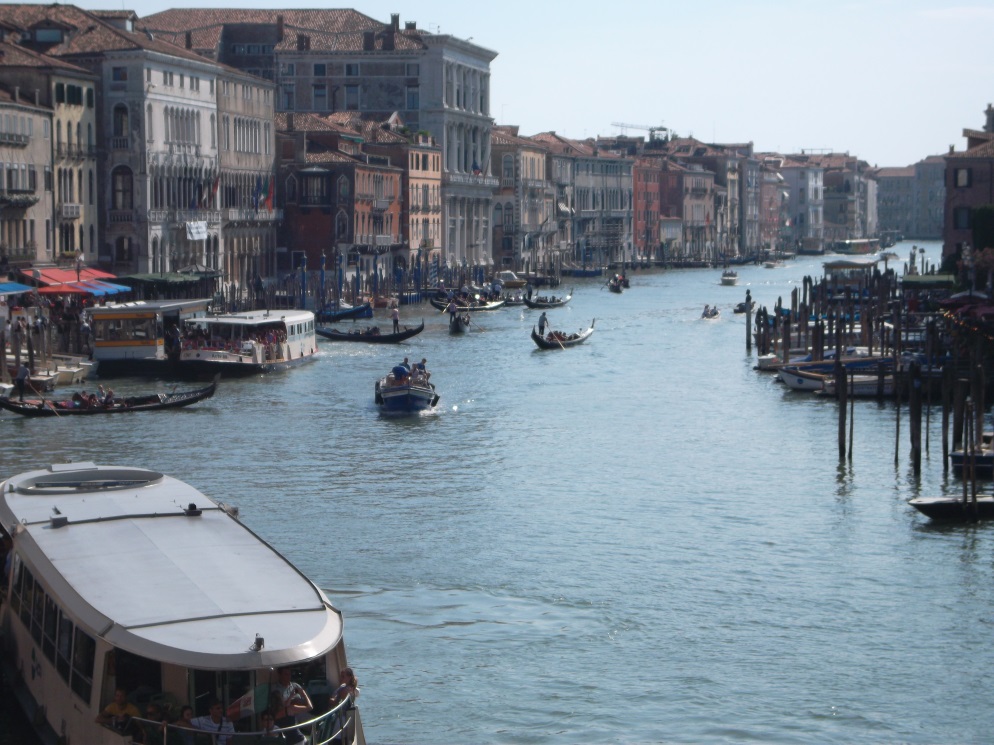
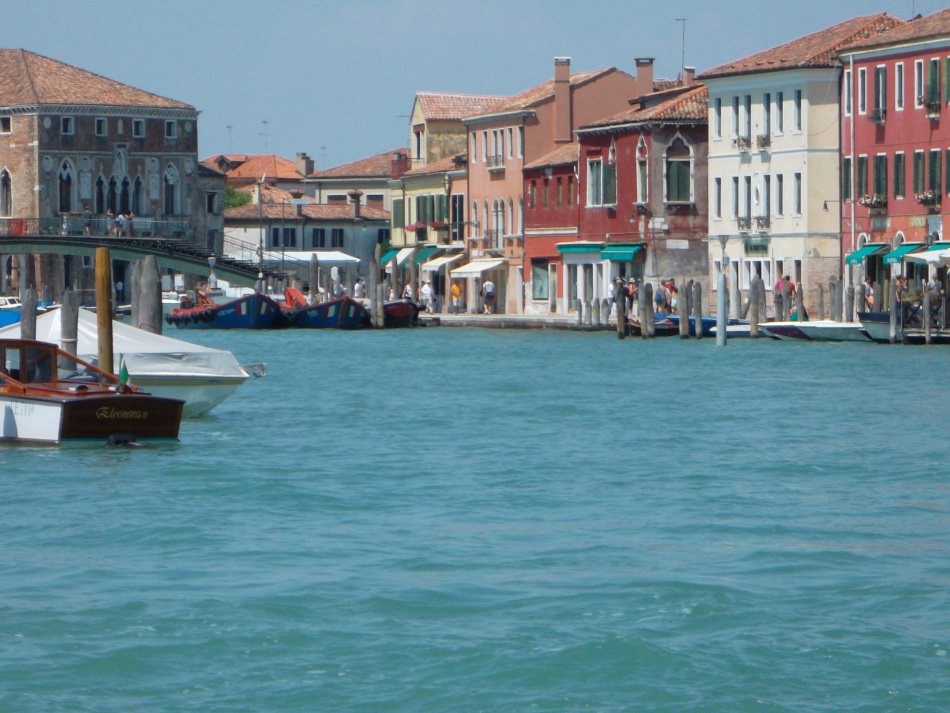
Sorry for the unannounced disappearance last week! I’ve been to Venice for a few days and was meaning to post about it before I went but never got round to it.

I’m starting to catch up now with all your blog posts I’ve missed while I’ve been away, as well as writing about all the books I’ve been reading recently. But for now, I’ll leave you with some pictures from my trip to Venice. It’s the first time I’ve been and it’s as beautiful and unique as everybody says it is.

The Bridge of Sighs

Bridge of Sighs

One of Venice’s many canals

Canal

Gondolas

Gondola

Gondolas 1

The Grand Canal

Grand Canal

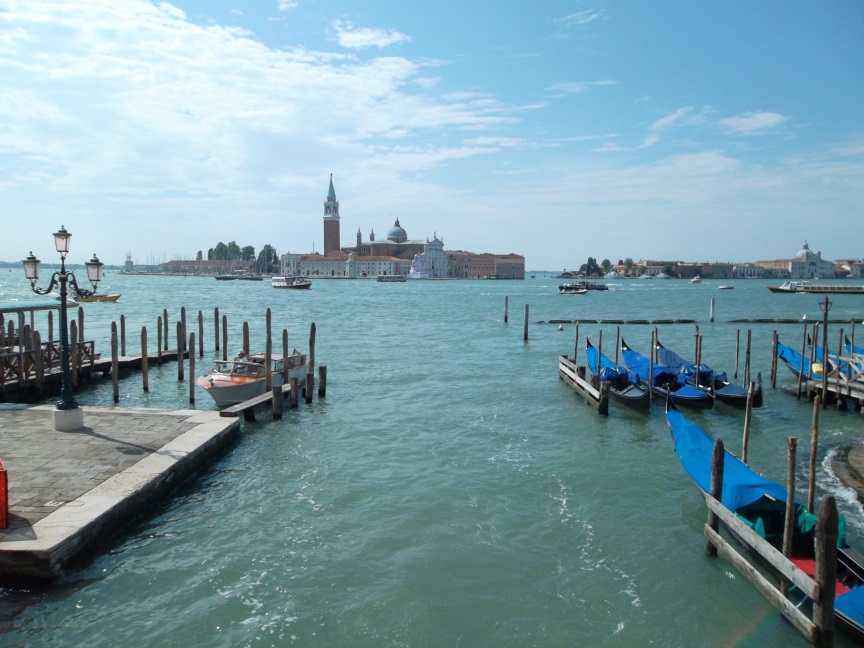
View across the lagoon to San Giorgio Maggiore

Lagoon

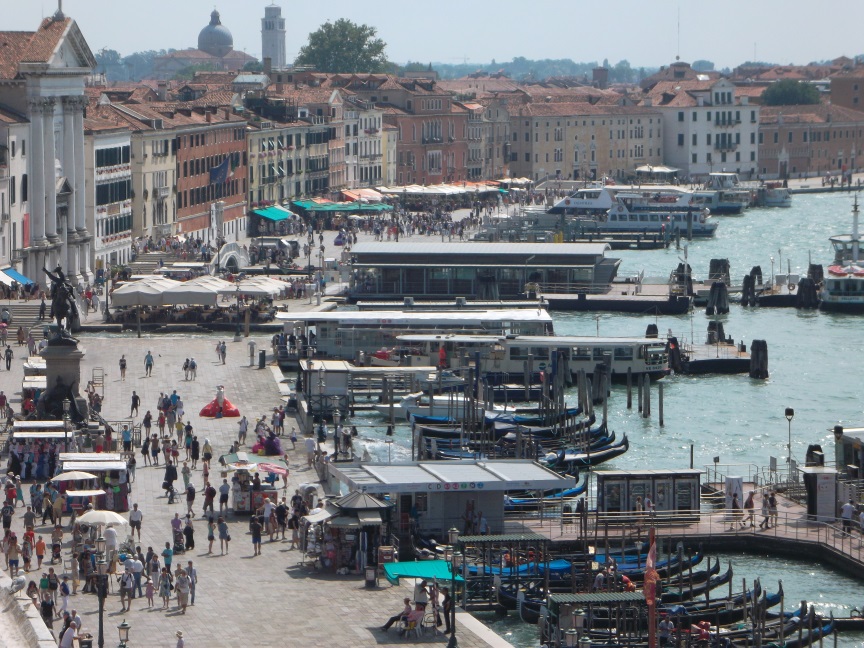
The waterfront near San Zaccaria

San Zaccaria

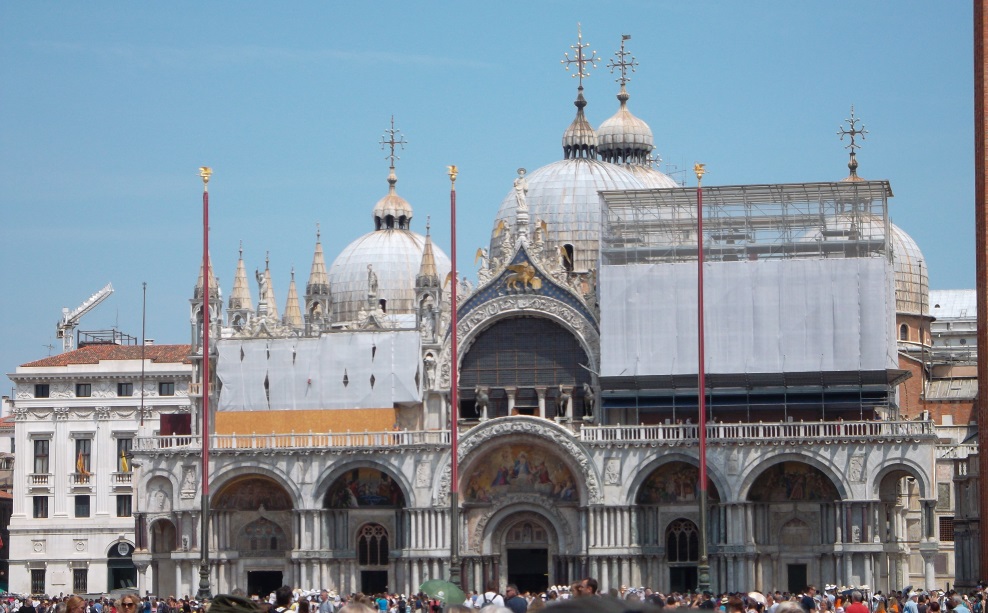
St Mark’s Basilica

St Marks Basilica

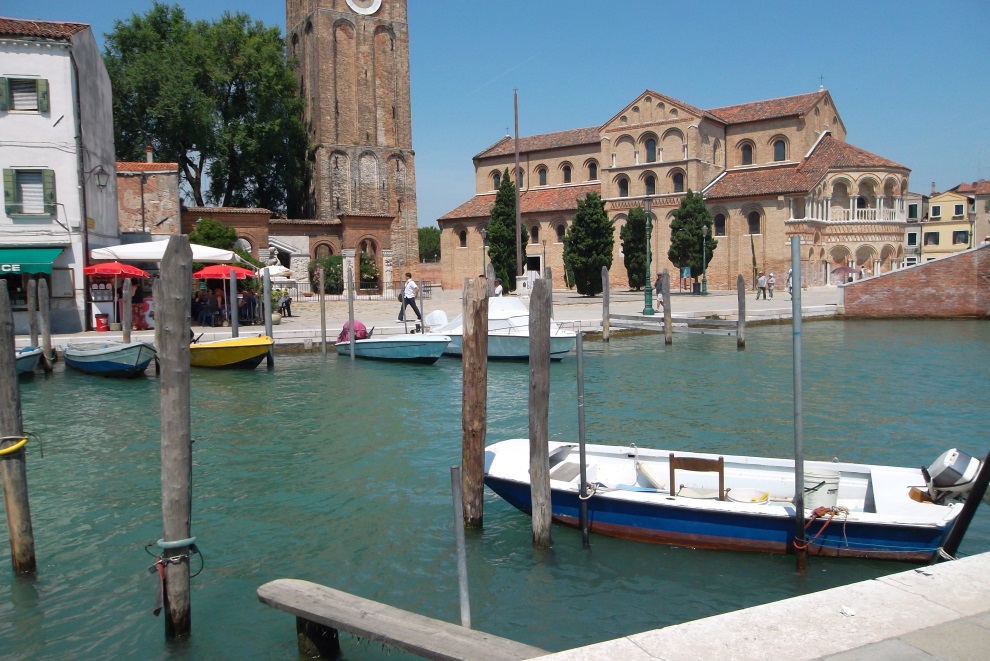
And two pictures taken on the island of Murano

Murano 1

Murano 2

Six sixes…again!

6

This time last year Jo from The Book Jotter came up with a fun way for us to look back at the books we read over the first six months of the year. I was hoping she would bring the meme back again for 2013 – and she has!

The idea of the meme is to choose six categories and within each category list six books or authors that you’ve read so far this year. Here are my six sixes:

***

Six books from my Classics Club list:

1. The Private Memoirs and Confessions of a Justified Sinner by James Hogg
2. The Small House at Allington by Anthony Trollope
3. Doctor Zhivago by Boris Pasternak
4. Far from the Madding Crowd by Thomas Hardy
5. The Painted Veil by W. Somerset Maugham
6. The Ladies’ Paradise by Emile Zola

***

Six books with King or Queen in the title:

1. The Forgotten Queen by D.L. Bogdan
2. The King’s General by Daphne du Maurier
3. King Hereafter by Dorothy Dunnett
4. Queen’s Gambit by Elizabeth Fremantle
5. The Forbidden Queen by Anne O’Brien
6. The Iron King by Maurice Druon

***

Six authors new to me this year:

1. Guy Gavriel Kay
2. Barbara Pym
3. Kate Atkinson
4. E.M. Forster
5. Robert Goolrick
6. Bee Ridgway

***

Six books set in six different centuries:

1. The Three Musketeers by Alexandre Dumas (17th)
2. The Poisoned Island by Lloyd Shepherd (19th)
3. The Memory of Lost Senses by Judith Kinghorn (20th)
4. Lady of the English by Elizabeth Chadwick (12th)
5. The Agincourt Bride by Joanna Hickson (15th)
6. She Rises by Kate Worsley (18th)

***

Six series I’ve started, continued or finished:

1. Anne Zouroudi’s Greek Detective series (continued)
2. Patrick O’Brian’s Aubrey/Maturin series (started)
3. Anthony Trollope’s Chronicles of Barsetshire (finished)
4. Maurice Druon’s Accursed Kings series (started)
5. Philippa Carr’s Daughters of England series (started)
6. Baroness Orczy’s Scarlet Pimpernel series (continued)

***

Six books filled with mystery or suspense:

1. The Moonspinners by Mary Stewart
2. The Chalice by Nancy Bilyeau
3. The White Cottage Mystery by Margery Allingham
4. Like This, For Ever by S.J. Bolton
5. The Scent of Death by Andrew Taylor
6. Aurora Floyd by Mary Elizabeth Braddon

***

Those are my choices! How has the first half of 2013 been for you?

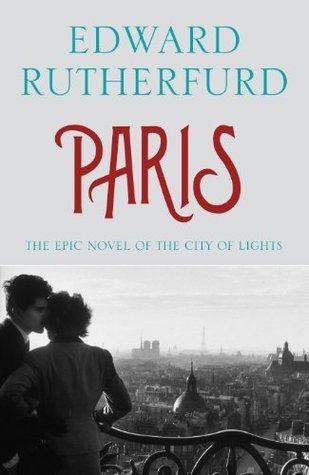
Paris by Edward Rutherfurd

Paris Of all the new books being published this year, this is one that I’ve really been looking forward to, having read and enjoyed all seven of Edward Rutherfurd’s previous books – my two personal favourites, Sarum, set in and around the English city of Salisbury, and Russka, which covers almost two thousand years of Russian history; his other two ‘big city’ novels, London and New York (probably the two I’ve enjoyed the least); his two books on the history of Ireland, Dublin and Ireland Awakening; and The Forest, the story of England’s New Forest.

After reading all of those, I thought I knew exactly what to expect from Paris but I was surprised to find that I was wrong. With all of his other novels, Rutherfurd has followed the same format: beginning in the distant past then moving forward chronologically through the centuries, he attempts to tell the story of a city or a country’s entire history by following several families down through the generations. Paris has a very different structure.

In this book we concentrate on one set of characters who are living in Paris during the late 19th and early 20th centuries (the era known as the Belle Époque). Most of these characters are introduced in the first few chapters of the book and belong to six families, all of different social classes and political backgrounds. First, there’s the bourgeois Blanchard family – Jules Blanchard, the owner of the Josephine department store, and his three children, Gerard, Marc and Marie. Next, there’s Thomas Gascon, an iron worker, and his charismatic younger brother, Luc. There’s the aristocratic Roland de Cygne and his enemy, the revolutionary Jacques Le Sourd. And finally, a Jewish family, the Jacobs, and the Renards, who are merchants. The personal stories of all of these people and their ancestors are cleverly woven around the events that shaped the history of Paris.

Interspersed with this main storyline are several chapters in which we go further back in time and meet some of the earlier generations of our six families. There’s a chapter telling the story of the St Bartholomew’s Day massacre of 1572, for example, and another set in the city’s Jewish community in the 14th century. However, I was disappointed that some of the earlier periods in France’s history were given very little attention at the expense of the Belle Époque chapters. There was nothing prior to the 13th century so the Romans were completely ignored, Napoleon was barely mentioned at all, and I also couldn’t believe that we were only given one short, thinly plotted chapter on the French Revolution. I can see that choosing to focus more on the 1875-1940 thread of the novel allowed Rutherfurd to develop more complex storylines, but unfortunately his characters are just not strong enough to make this new format work. I still thoroughly enjoyed Paris and don’t want to give the impression that I didn’t; it’s just that I’m sure I would have loved it more if it had followed the same chronological structure as the previous books.

While I don’t have any problems with the factual content of Rutherfurd’s books, they do require you to suspend disbelief. You have to be able to accept that Thomas Gascon works on both the Statue of Liberty and the Eiffel Tower and is singled out by Gustave Eiffel from all the other hundreds of workers, that another of our fictional characters spends an evening with Ernest Hemingway and another one models for Coco Chanel, to give just a few examples. Another method he uses is to have the characters conveniently taking sightseeing tours of famous buildings and landmarks, such as the Palace of Versailles or the Père Lachaise cemetery. But although this kind of name-dropping can be annoying in other historical fiction novels, I actually don’t mind it in Rutherfurd’s books and I know he does it because it enables him to show us as many of the city’s famous figures and important events as he possibly can. Sometimes, though, it’s the smaller details and snippets of information that I enjoy the most – a description of a beautiful mille-fleur tapestry or a mention of the famous book shop, Shakespeare and Company.

I know these aren’t the sort of books that would appeal to everyone, though, as you do need to be genuinely interested in learning about the history of the locations each book covers and you also have to be prepared for the fact that most of his books are around 800-1000 pages long. I think of Rutherfurd’s books as interesting, entertaining history lessons. The quality of his writing is nothing very special and his characters are often very thinly drawn, but when you reach the end of one of his novels you feel that you’ve really learned a lot and have gained a good understanding of the place you’ve been reading about.

While this book was not without its flaws, I did love Paris. It’s not his best book by any means, and I definitely prefer the more linear structure of Sarum, Russka and the others, but this book was still a big improvement on his last one, New York. One problem I had noted with New York was that Rutherfurd seemed to run out of ideas towards the end, making the last few chapters very weak. This was not the case at all with Paris – in fact, the final chapter, on World War Two and the French Resistance was one of my favourites. It has definitely been worth the time and effort it took to read this book – and it has left me wanting to visit Paris again soon. I’m not officially taking part in Paris in July (I read this book in June) but Paris would have been a perfect choice!