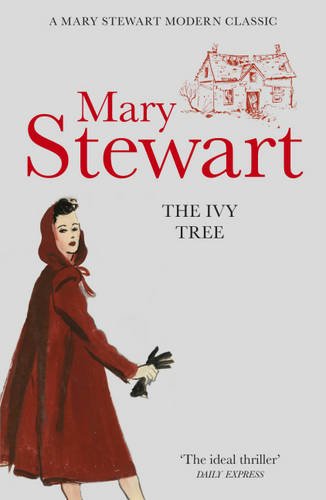
The Ivy Tree by Mary Stewart

Mary Stewart was a new discovery for me last year and since then I’ve been enjoying slowly working my way through her novels. I was looking forward to reading this one, The Ivy Tree, as I’ve seen it described as one of her best.

The Ivy Tree begins on a warm, sunny day when Mary Grey, who has recently moved from Canada to the north east of England, is walking in the countryside near Hadrian’s Wall. Suddenly she is approached by an Irishman who has mistaken her for his cousin Annabel who had disappeared eight years earlier. The man’s name is Connor Winslow (known as Con), the great-nephew of Matthew Winslow, owner of the estate of Whitescar. With Annabel believed to be dead, Matthew Winslow is intending to leave his fortune to his other granddaughter Julie – but Con thinks that he should be the rightful heir and he wants Mary Grey to help him claim the inheritance.

Although Mary explains to Con that he has made a mistake and she is not his cousin, he persuades her to impersonate Annabel as part of a scheme to enable him to inherit his great-uncle’s estate. And so Mary comes to Whitescar and, with the help of Con and his half-sister Lisa, easily manages to convince everyone that she is Annabel. But who exactly is Mary Grey and does she have reasons of her own for agreeing to go along with Con’s plans?

The Ivy Tree was published in 1961 and was written as a contemporary novel, although it now has a lovely, old-fashioned feel. I loved Mary Stewart’s descriptions of the setting, especially as I only live a few miles away from Hadrian’s Wall (the wall built by the Romans almost two thousand years ago) and I know exactly what the scenery she’s describing looks like. Her descriptive passages aren’t too long or too detailed, but include just enough information about the landscape, flowers, animals and birds to build up a vivid and realistic picture of the part of the country she’s writing about.

Mary Stewart’s novels (apart from her historical Arthurian novels) are usually described as romantic suspense. The romantic thread in this book was very weak in my opinion, but there was certainly lots of suspense. There are also one or two interesting subplots including one revolving around Julie’s boyfriend Donald, an archaeologist who is spending the summer working at a Roman fort in the area. And I should also mention the animals: there are some horses that have an important role to play in the story, especially Rowan the colt, as well as some funny scenes involving Tommy, a black and white cat.

Mary Stewart’s heroines are usually such nice, pleasant, likeable people, but the narrator of this book, Mary Grey, is an exception because she’s not so instantly likeable and her willingness to take part in Con’s schemes made me doubt and distrust her from the beginning. I didn’t really like any of the other characters either but I enjoyed being kept wondering who was ‘good’ and who was ‘bad’. As for the mystery aspect of the novel, I guessed the truth long before it was revealed but it was still interesting looking out for clues that might confirm whether I was right or not. This is one of those cleverly plotted books that would benefit from being read twice, so you can appreciate all the subtle little hints that the author has dropped into the story. I didn’t love the book enough to want to read it all again immediately but I did take the time to re-read the first chapter and noticed a few clues that had meant nothing to me the first time.

Of the four Mary Stewart novels I’ve now read, I liked this one a lot more than Rose Cottage but not as much as Touch Not the Cat or my favourite, Nine Coaches Waiting. For a better novel about mistaken identities and impersonations I would recommend Daphne du Maurier’s The Scapegoat. You could also try Brat Farrar by Josephine Tey, which I haven’t read yet, but which is referred to more than once by characters in The Ivy Tree when they’re discussing other famous cases of impersonations – yet another book to add to my list!

If you like Mary Stewart too, can you help me decide which of her books I should read next?

Six sixes from the first six months

When I saw that Jo of The Book Jotter had posted a summary of the first six months of the year by putting six books into six different categories, I thought it was a great idea and the perfect way to look back on our reading so far in 2012.

You can see my own ‘Six Sixes’ below. I’ve changed a few of the categories slightly to suit my own reading and although some of the books I’ve read would fit into more than one category I’ve only listed each book once.

Six books I loved:

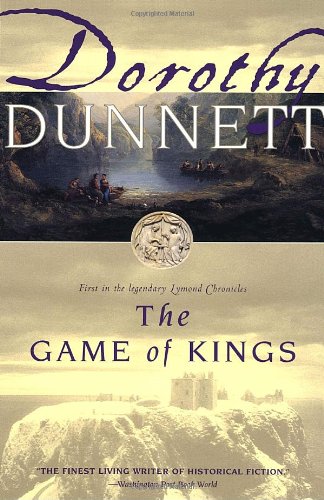
Here are some of my favourite books from the first half of the year. I loved Dorothy Dunnett’s Lymond Chronicles so much it was very tempting to include all six of them here, but I wanted to give other books a mention too!

1. The Game of Kings by Dorothy Dunnett
2. Scaramouche by Rafael Sabatini
3. Here Be Dragons by Sharon Penman
4. The Gods of Gotham by Lyndsay Faye
5. I Capture the Castle by Dodie Smith
6. Mariana by Susanna Kearsley

Six books by authors who were new to me:

I hadn’t read anything by any of these authors until this year and would be happy to read more books by all six of them.

1. The Last Summer by Judith Kinghorn
2. The Light Between Oceans by M.L. Stedman
3. The Song of Achilles by Madeline Miller
4. Wonder Girls by Catherine Jones
5. Russian Winter by Daphne Kalotay
6. The Hunger Trace by Edward Hogan

Six books with a mystery to solve:

I haven’t read many mysteries or crime novels this year but I enjoyed all six of these – especially my first two choices.

1. The Beekeeper’s Apprentice by Laurie R. King
2. Crocodile on the Sandbank by Elizabeth Peters
3. Towards Zero by Agatha Christie
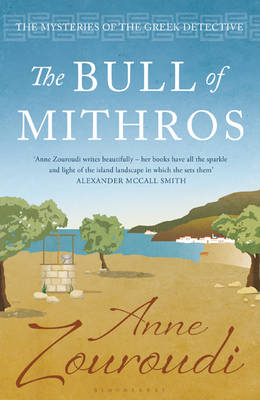
4. The Bull of Mithros by Anne Zouroudi
5. Every Secret Thing by Susanna Kearsley
6. Now You See Me by S.J. Bolton

Six books that took me back in time:

Historical fiction novels appear in most of my other categories too, but as it’s my favourite genre I decided to give it a category of its own.

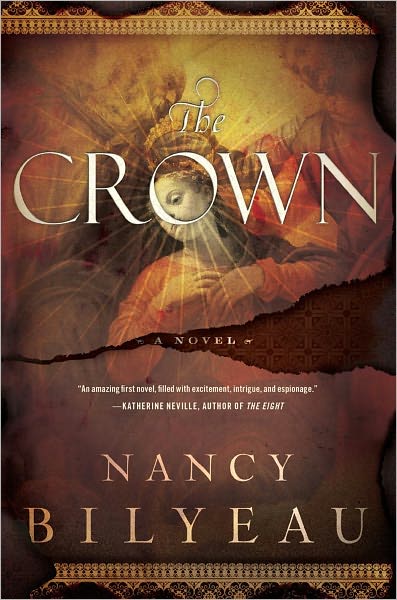
1. The Crown by Nancy Bilyeau
2. The Secret Life of William Shakespeare by Jude Morgan
3. The Midwife of Venice by Roberta Rich
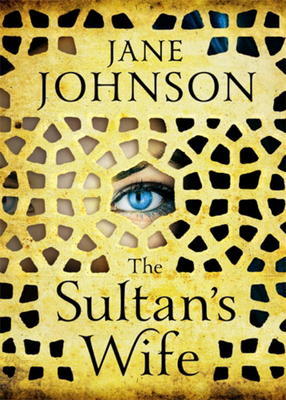
4. The Sultan’s Wife by Jane Johnson
5. The Adventures of Alianore Audley by Brian Wainwright
6. Treason by Meredith Whitford

Six classics I’ve read this year:

So far in 2012 I haven’t read as many classics as I was hoping to. Here are six of them – I’m sure I’ll be reading more over the final six months of the year.

1. Great Expectations by Charles Dickens
2. Mansfield Park by Jane Austen
3. Three Men on the Bummel by Jerome K. Jerome
4. Ivanhoe by Sir Walter Scott
5. Sylvia’s Lovers by Elizabeth Gaskell
6. A Midsummer Night’s Dream by William Shakespeare

Six books that I had one or two problems with but am still glad I tried:

I found these books slightly disappointing but there were still some aspects of them that I liked.

1. Sacrilege by S.J. Parris
2. The Map of Lost Memories by Kim Fay
3. A Small Circus by Hans Fallada
4. The Land of Decoration by Grace McCleen
5. The Glovemaker by Stacia Brown
6. The Professor by Charlotte Bronte

~*~

So those are my sixes – will you be posting your own?

Here Be Dragons by Sharon Penman

Here Be Dragons is the first in Penman’s Welsh Princes trilogy and follows the lives of King John’s daughter, Joanna, and her Welsh husband, Llewelyn ab Iorweth (known as Llewelyn the Great).

The book begins in the year 1183 when we meet Llewelyn as a ten-year-old boy, upset at having to leave Wales and move over the border into England following his mother’s marriage to an English border lord. The grandson of Owain the Great, King of Gwynedd, Llewelyn is homesick for Wales and as soon as he is old enough, he returns to Wales to reclaim his crown from his uncles. Llewelyn becomes Prince of Gwynedd and eventually rules most of Wales and devotes his life to securing the stability of his country as he believes that a united Wales will be stronger and better able to defend itself against the English.

Our other main character, Joanna, is the illegitimate daughter of King John. After her mother’s death she goes to join her father at court and when Joanna is fourteen the King arranges to have her married to Llewelyn in the hope that their marriage will help to bring peace between Wales and England. As the years go by Joanna begins to love Llewelyn but finds herself increasingly torn between her father and her husband.

As Sharon Penman’s The Sunne in Splendour is one of my favourite historical fiction novels I probably shouldn’t have waited so long to read this one, but I do tend to do that with authors I’ve enjoyed – I can never decide whether I would rather read all their books as quickly as I can or spread them out over as long a period as possible so I still have something to look forward to. I finally picked up Here Be Dragons a few weeks ago and I wasn’t disappointed – I loved it!

Penman does such a good job of making some very complicated periods of history easy to follow and understand. Before I read The Sunne in Splendour I didn’t know much about Richard III or the Wars of the Roses but by the end of the book I really felt I had learned a lot, and I had the same feeling at the end of Here Be Dragons. Of course these novels are fiction and you can’t assume that everything in a historical fiction novel will always be completely accurate, but Penman’s books are obviously very well researched and she does include an author’s note where she explains which parts of the novel are fact and which are fiction.

The relationship between Joanna and Llewellyn forms a big part of the plot, but that’s not all this book is about. As well as romance, the story also includes political intrigue, battles, feuds, rivalry between brothers, betrayal and forgiveness. I didn’t always agree with what Joanna did, but I did like her and had a lot of sympathy for her, being caught between her husband and her father; not a choice that anybody should have to make. Using Joanna, in her unique position, as one of the novel’s main characters meant we could see things from both a Welsh and English perspective and neither were portrayed as the villains. There’s no doubt that King John made a lot of mistakes and errors of judgement, but he is portrayed here as having some good qualities as well as bad ones and is shown in a better light than in other novels I’ve read about him.

Of the two Penman books I’ve read, although I loved them both I did prefer The Sunne in Splendour but that’s probably because I’m more interested in that particular period of history. I will read the other two books in this trilogy, Falls the Shadow and The Reckoning and will try not to wait so long this time before I get around to reading them!

Sylvia’s Lovers by Elizabeth Gaskell

Sylvia’s Lovers is set in the final years of the eighteenth century in the small town of Monkshaven on the Yorkshire coast. During this period Britain and France were at war and the men of Monkshaven lived in fear of the press-gangs who regularly captured sailors from the town and forced them into action against France. Against this backdrop we meet Sylvia Robson, the beautiful young daughter of a farmer from nearby Haytersbank, and the two very different men who hope to marry her. One of these is Sylvia’s cousin, Philip Hepburn, a serious, reliable man who works in a draper’s shop; the other is the much more exciting and charismatic Charley Kinraid, a ‘specksioneer’ (chief harpooner) on a whaling ship. When Philip discovers that Kinraid is a rival for Sylvia’s love, he makes a decision that will eventually have tragic consequences for everyone involved.

Elizabeth Gaskell said this was the saddest book she ever wrote and I can definitely understand why she would have said that! Apart from the central storyline involving Sylvia, Philip and Kinraid, there are other characters with their own tragic stories to be told. Hester Rose, for example, who works with Philip in Foster’s shop and has been secretly in love with him for years without ever daring to say so. And Daniel Robson, Sylvia’s father, a former whaler who decides to take action to stop any more of the town’s young men being pressed into the navy.

Monkshaven is a fictional town but was based closely on the real North Yorkshire town of Whitby. A few weeks ago I posted a visual tour of Monkshaven – I hope the photos and quotes I included help to convey some of the atmosphere Gaskell created in her descriptions of the town. My own familiarity with Whitby (I’ve been there many times over the years) made it easy for me to picture the scenes. When we were told of a funeral procession slowly winding its way up the steps to the church on the cliff or the crowds gathering to watch a whaling ship coming in, I could see the images clearly in my mind.

Sylvia’s Lovers took a long time to read (it was 500 pages and felt even longer, partly because I had to concentrate on understanding the dialogue – I should probably warn you that this book does contain a lot of Yorkshire dialect) but the setting, the historical background and the characters kept me interested. Sylvia frustrated me at the beginning because she was so silly and immature, uneducated and unwilling to learn; by the end of the book though, she had changed a lot and I found myself starting to like her. I had sympathy for Philip, both before and after he made his terrible mistake, and I loved Hester Rose. Kinraid was the only character who never felt fully developed but I think that was maybe intentional.

This book reminded me of Tess of the d’Urbervilles by Thomas Hardy, with all the descriptions of scenery, the local dialect, the focus on rural working-class life and the overwhelming mood of sadness and misery. As one tragedy followed another through the second half of the book, it started to seem that there were going to be no happy endings for any of the characters. I can honestly say this was one of the most depressing books I’ve read and on a few occasions towards the end I wondered why I was still reading it. The answer to that is because I find Gaskell’s writing so beautiful and moving and because she had really made me care what happened to Sylvia, Philip, Hester and the others. This is only the second Gaskell novel I’ve read; the first was North and South which is a much more popular book, but I think I liked this one more despite it being so heartbreaking.

Wonder Girls by Catherine Jones

“It’s always the boys who get the heroes, as though girls can’t do brave things too,” says one of the characters in Catherine Jones’ Wonder Girls, a moving and inspirational novel which succeeds in showing that girls can be just as heroic as boys.

In 1928 when Ida Gaze, a sixteen-year-old schoolgirl, announces that she’s going to become the first person ever to swim the Bristol Channel between Wales and England, nobody takes her seriously. Nobody, that is, except her best friend, Freda Voyle. Inspired by the American aviator Amelia Earhart who had recently landed on the coast of Wales after becoming the first woman to fly across the Atlantic, Ida is determined to prove that she can do what no man has ever been able to do.

Years later, Freda’s partner, Cecily, finds an old black and white photograph of Ida amongst Freda’s things. Encouraged by Sarah, a younger woman who has befriended her, Cecily begins to investigate and learns more about the girl in the picture. Throughout the novel we move backwards and forwards in time as Cecily’s story, taking place in 2009, becomes linked with the story of Ida and Freda all those decades earlier.

All of the women we meet in this book are interesting, complex people. They all have a lot of strength and courage, but also some weaknesses that make them more human and more believable as characters. I loved Cecily (I think it would be difficult not to), was alternately impressed and frustrated by Ida, but the character who I found most memorable and who has stayed in my mind a couple of weeks after finishing the book is Freda. I didn’t like Freda at first as I thought she seemed hard and obnoxious, but I quickly discovered that underneath she was a very sensitive, loving person and I felt so sorry for her as she and Ida grew older and started to want different things out of life.

The novel explores other relationships too – some are good and some are bad, some are romantic and some are not. One of my favourites was the friendship that develops between Cecily, in her eighties, and the thirty-four-year-old Sarah. It was so nice to read about two women of different generations and different backgrounds becoming such good friends and being able to give each other the support and advice each of them needed.

I was surprised by how much I enjoyed Wonder Girls. I received a review copy from the publisher, Simon & Schuster, and I’m glad I did because it’s probably not a book I would have chosen for myself. Wonder Girls has its sad, poignant moments, but in the end it’s an uplifting and inspiring novel, as well as a fascinating one. At the back of the book the author has included some information on some ‘real life wonder girls’. Reading these true stories along with the stories of Ida and Freda, Cecily and Sarah, couldn’t fail to make you feel proud of all the things women have achieved.

June Reading Summary

The first book I finished in June was one of my favourites of the month, The Sultan’s Wife by Jane Johnson, the story of a slave at the court of Sultan Moulay Ismail in 17th century Morocco. I loved the setting and was fascinated by what I learned about life during the Sultan’s reign.

Moving back in time to 15th century England, The Adventures of Alianore Audley by Brian Wainwright is a parody of the Wars of the Roses narrated by a young woman who works as a spy for Edward IV and Richard III. And I also read two more historical fiction novels which I haven’t had time to write about yet. The first, Lion of Alnwick by Carol Wensby-Scott, is set in the 14th century and is the first in a trilogy telling the story of the Percys, one of the most powerful families in the north of England. The other book, The Secret Keeper: A Novel of Kateryn Parr, is a Tudor court novel by Sandra Byrd told from the perspective of Juliana St John, a lady-in-waiting to Henry VIII’s sixth wife.

Another book I read in June was The Bull of Mithros, the latest in Anne Zouroudi’s series of Greek Detective mysteries. I haven’t read any of the previous novels in the series but would like to read them at some point. I also enjoyed Every Secret Thing by Susanna Kearsley, a suspense novel in which a journalist travels to Portugal to investigate a World War II murder mystery.

The only book I was slightly disappointed by was The Map of Lost Memories by Kim Fay. I liked the Cambodian setting but found the characters difficult to identify with. And finally, I read Wonder Girls by Catherine Jones – I should be posting my thoughts on that one in the next few days.

So, June was a good month for me overall as I enjoyed most of the books I read. I’m hoping July will be even better – and I’m also hoping the weather might start to improve soon! June has been so wet and miserable here, with the worst day being last Thursday when we had one of the most dramatic thunderstorms I’ve ever seen. So many of the roads were flooded that it took me nearly four hours to drive home from work, a journey that usually takes twenty minutes!

How was June for you?

The Map of Lost Memories by Kim Fay

As a woman in 1925, Irene Blum feels that her work does not get the recognition it deserves. When she misses out on the position of curator at Seattle’s Brooke Museum, she dreams of making an important historical discovery, one that she can build her own museum around. Since her childhood she has been fascinated by Cambodia and its ancient Khmer civilisation, so when she learns of the possible existence of ten copper scrolls recording the history of the Khmer people she sets off on an expedition to Cambodia to search for them.

Irene begins her journey in Shanghai where she hopes to enlist the help of Simone Merlin, a revolutionary activist and Cambodian scholar who shares Irene’s interest in the Khmer. Despite the disapproval of her abusive husband Simone agrees to join her. At first Irene is pleased to have Simone’s support, but soon begins to wonder whether she might have reasons of her own for wanting to find the lost scrolls.

The novel is divided into three sections. The first is set in Shanghai, China, the second in Saigon, Vietnam and in the third Irene, Simone and their companions finally arrive at their destination, the Cambodian jungle. None of these are places that I know very much about (Cambodia was a completely new setting for me and the other two I only have a very limited knowledge of) and I loved all the descriptions of the three locations. It’s always interesting to read about cultures that are entirely different to your own and by the time I’d finished the book I felt I’d learned a little bit about what life might have been like in China, Vietnam and Cambodia in the 1920s, as well as learning some facts about the Khmer civilisation.

The Map of Lost Memories is not a fast-paced thriller filled with non-stop action and adventure, although it might sound like one from the synopsis. Instead, the story develops quite slowly (a bit too slowly for me, to be honest, especially throughout the first half of the novel) and although Irene and Simone do have some adventures and things get more exciting later in the book, there’s also a lot of focus on the personal lives of the two women, their relationships and their motives for searching for the legendary scrolls.

It was good to read a book set in the 1920s with strong female protagonists at a time when women didn’t have the same career opportunities they have today. However, although I sympathised with Irene’s frustration at her achievements constantly being overlooked or ignored and I admired her dedication and determination, I was never able to warm to her as a character. Unfortunately I didn’t feel much connection to any of the other characters either, which meant that even when they were heading into danger I found I didn’t really care what happened to them. The plot and the setting almost made up for my lack of interest in the characters so I did still enjoy the book, but not as much as I might otherwise have done. This was a promising debut novel, though – it was obvious that the author must have a real passion for Cambodia and Khmer history and that she knows the subject well.