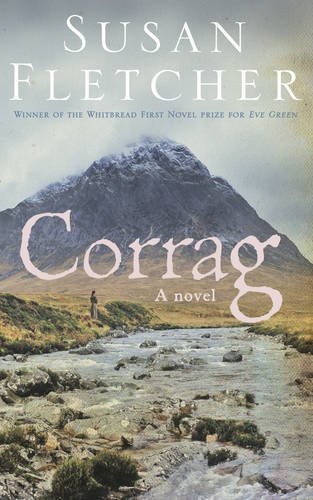
Corrag by Susan Fletcher

I first became aware of this book when Boof of The Book Whisperer said it was one of her favourites. I’ve been curious to see why she loved it so much and now that I’ve read it I agree that it’s a great book, although I didn’t think so at first.

In Corrag Susan Fletcher looks at one tragic moment in Scotland’s history – the Glencoe Massacre of 1692 in which thirty-eight members of the MacDonald clan were murdered by English soldiers and forty more died of exposure as they tried to escape. The story is narrated by Corrag, a young woman who has been branded a witch and sentenced to death for her involvement with the MacDonalds and the part she played in trying to prevent the massacre. As Corrag sits in her cell awaiting her death, she is visited by Charles Leslie, an Irish clergyman and Jacobite who is trying to find evidence to prove that the Protestant King William III was responsible for what happened at Glencoe.

Corrag tells Charles Leslie about her childhood in the north of England and the day her mother, who had also been accused of witchcraft, told her to ride into Scotland, where she believed she would be safe. With only her grey mare for company, Corrag rode “north and west” and made a new home for herself near the valley of Glencoe. Here she met the people of the MacDonald clan and experienced true friendship and love for the first time in her life. As Leslie listens to Corrag’s memories he begins to learn the truth about the Glencoe Massacre and at the same time is forced to change his own preconceived ideas about Corrag herself.

I wasn’t sure about this book when I first started reading. I actually put it down after the first chapter and decided it wasn’t for me. But then something made me pick it up a few days later and try again. Corrag’s narrative style is so unusual and original, it took me a few chapters to get used to it but after that I started to fall in love with the beautiful, lyrical writing. The writing style gives the book a very strong sense of time and place and I felt as if I was really listening to a voice from the past. Corrag is also very observant and appreciates the little details of life that most of us would never even notice. I loved seeing the beauty of the Highlands through her eyes as she rode through Scotland on her grey mare.

Each chapter of Corrag’s story is followed by a letter written by Charles Leslie to his wife at home in Ireland, telling her about his experiences in Scotland and how his opinions about Corrag are changing as he learns more about her life. Corrag of course has not done anything to deserve the accusations of witchcraft; she’s an innocent woman who loves the natural world and has a knowledge of herbalism and healing, like her mother before her and like many other innocent women who were burned at the stake. And yet no matter how hard things get for Corrag and how much cruelty she experiences at the hands of other people she remains a loving, kind-hearted person and never loses her faith in human nature.

Corrag is a beautiful, moving story and I’m so glad I didn’t give up on it.

Note: This book has also been published under the titles of Witch Light and The Highland Witch.

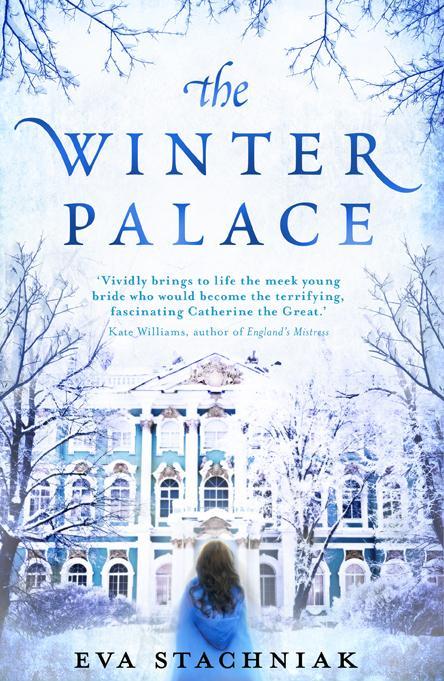
The Winter Palace by Eva Stachniak

I was so looking forward to reading this book. I love historical fiction novels set in Russia and this one sounded wonderful (and has such a beautiful cover too). It would be the perfect book to lose myself in over the Christmas holidays, I thought. Well, unfortunately it wasn’t. Or not for me, anyway – the majority of people who have reviewed this book seem to have loved it, which makes me feel even more disappointed that I didn’t.

The Winter Palace is described as ‘a novel of Catherine the Great’, which is slightly misleading as Catherine is not the main character and the book only covers her early years. Beginning with her arrival at court as the Princess Sophie of Anhalt-Zerbst, a prospective bride for the Empress Elizabeth’s heir, Grand Duke Peter, Catherine’s rise to power is described by her friend, Varvara Nikolayevna. Varvara is a young Polish girl, the daughter of a bookbinder, who is employed as a spy, or ‘tongue’, at the court of Empress Elizabeth. The Winter Palace is really Varvara’s story rather than Catherine’s.

This is a period of Russian history I knew almost nothing about, so I can’t comment on how accurate any of the novel is. I found some of it confusing at first, due to my unfamiliarity with the people and events of the era, though there is a useful character list at the back of the book to help with this. It’s always good to finish a historical fiction novel feeling that you were at least able to learn something about the period and by the time I reached the end of this book I did feel that I had a better knowledge of the subject.

The setting of the book – the Russian Imperial court – was as fascinating as I’d expected it to be. I did enjoy the first few chapters of the book, where Varvara first arrives at the Winter Palace and becomes a spy for the Chancellor, Count Bestuzhev. The atmosphere of claustrophobia and danger was very convincing and showed what it must have been like to live in a world where everything you said or did was being spied on and reported. Reading about all the plotting, scheming, betrayal and changing allegiances made me feel relieved that I didn’t have to experience life at the Russian court myself!

I think the book might have worked better for me if it had been narrated by Catherine herself instead of her story being secondary to Varvara’s, who was not even present at court for long sections of the novel. I didn’t feel enough connection to Varvara and her personal storyline to stay interested throughout the chapters where she was away from the Winter Palace and I thought it was a bad decision to remove her character from the Empress’s household for such a long period of time as this was what led to me becoming bored with the story.

Really, this wasn’t a bad novel; it just didn’t have the depth I was hoping for, especially considering the length of the book. I don’t think I’ll be reading the sequel, though it would be interesting to see how Eva Stachniak continues the story.

A Classics Challenge – January: Charlotte Brontë

This year I am taking part in a Classics Challenge hosted by Katherine of November’s Autumn. The goal is to read seven classics in 2012 and on the 4th day of every month, Katherine will be posting a prompt to help us discuss the book we are reading.

The first book I’ve chosen to read for the challenge is The Professor by Charlotte Brontë. I’m almost halfway through the book and have been enjoying it so far. I’ll be posting my thoughts about the book itself after I’ve finished reading it, but for this month’s prompt, Katherine is asking us to focus on the author – in this case, Charlotte Brontë.

There are three different levels of participation this month depending on how far into the book we are, and I feel I’ve read enough of The Professor to answer the questions for all three levels.

Level 1
Who is the author? What do they look like? When were they born? Where did they live? What does their handwriting look like? What are some of the other novels they’ve written? What is an interesting and random fact about their life?

Charlotte Brontë

Charlotte was born in Thornton, Yorkshire on April 21, 1816, the third of the six children of Reverend Patrick Brontë and his wife Maria Branwell Brontë.

The Brontë Parsonage Museum

The Brontë family lived at Haworth Parsonage, now the Brontë Parsonage Museum.

Charlotte Brontë is the author of four novels: Jane Eyre, one of my favourite classics, Villette, which I read last year, The Professor, and Shirley. I am reading The Professor now and will hopefully have time for Shirley too before the end of the year.

Charlotte Brontë's signature

Here’s an interesting piece of trivia about Charlotte: A tiny manuscript of an unpublished Charlotte Brontë story was sold at auction in 2011 to a French museum. The story was written in 1830 when she was fourteen years old and each page measures only 1.4 x 2.4 inches.

Level 2
What do you think of their writing style? What do you like about it? or what would have made you more inclined to like it? Is there a particular quote that has stood out to you?

I find it hard to explain exactly what I like about Charlotte Brontë’s writing style, but I obviously like it enough to want to read all four of her books! I love the way she expresses the feelings and emotions of her characters; she chooses exactly the right words and phrases to convey their sadness, loneliness and suffering as well as their moments of happiness and love.

However, there are a few aspects of her writing that I don’t like so much. Two problems I’m having with The Professor are the overwhelming number of references to physiognomy (judging a person’s character from their appearance) and also a tendency to include a lot of French dialogue which is not translated, making it difficult for a non-French speaker to follow what’s being said. Overall, though, I do like the way she writes and am looking forward to reading the rest of this book.

Level 3
Why do you think they wrote this novel? How did their contemporaries view both the author and their novel?

The Professor was Charlotte Brontë’s first novel, although it remained unpublished until after her death. The main character, William Crimsworth, is a teacher at a school in Belgium. As Charlotte herself (like her sister Emily) had spent some time studying and teaching in Brussels, she was able to draw on her own experiences when writing this novel. It seems that The Professor wasn’t very highly regarded during Charlotte’s lifetime and she was unable to find a publisher for it, even after she began to have success with her other novels.

Have you read any of Charlotte Brontë’s novels? What do you think of her work?

Don’t forget to visit Katherine’s blog post where you can find links to other participants’ responses. We are all reading different books so a variety of different authors are being highlighted this month.

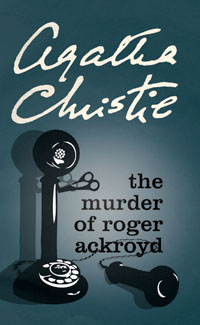
The Murder of Roger Ackroyd by Agatha Christie

2011, among other things, was the year I discovered that I do actually like Agatha Christie, having read a few of her books in the past which I didn’t enjoy very much. I think I had obviously just been choosing the wrong books because I read five in 2011 and loved all but one of them (The Mystery of the Blue Train).

This one, The Murder of Roger Ackroyd, is set in the fictional village of King’s Abbott, home to our narrator, Dr James Sheppard, and the retired detective Hercule Poirot. When Roger Ackroyd is found stabbed to death in his study, Poirot comes out of retirement to investigate the murder. The suspects include Ackroyd’s stepson, his secretary and butler, a big-game hunter and one of the parlourmaids. With Dr Sheppard’s assistance, Poirot begins to piece together the evidence to solve the mystery.

I loved this book and it might even have become my favourite Christie novel so far, if not for one little problem: I guessed the solution to the mystery very early in the story. Now, this is not something that usually happens – I’m normally completely mystified by Agatha Christie’s novels and don’t even bother trying to solve them. This is the first one I’ve ever figured out correctly, but it did mean that in some ways the book was spoiled for me. Not completely spoiled – it was still fun watching for more clues that would confirm whether I was right or not – but it would have been nice to have been surprised when the solution was finally revealed, as the author had intended.

As most Poirot novels are written either in the third person or narrated by Captain Hastings (who does not appear in this book) it took me a while to get used to the new narrator. It gave this book a slightly different feel to the other Poirots I’ve read. I also thought the characters had a bit more depth than usual and I loved the scenes with the doctor’s irritating gossip-loving sister, Caroline, who added some humour to the story. And even though the ending of the story didn’t have quite the impact for me that I would have liked it to have done, I could still appreciate how cleverly constructed the mystery was. There were plenty of suspects, all hiding secrets of their own, lots of red herrings and some plot twists. I’m looking forward to reading more Poirot throughout the year ahead!

Thomas Hardy by Jane Drake (Wessex Books)

Wessex Books are a publishing house based in Wiltshire who specialise in books about the history, mysteries and legends of the Wessex region of South West England. I was unaware of Wessex Books until they contacted me before Christmas to offer me a review copy of one of their titles, Thomas Hardy by Jane Drake, and as Hardy is one of my favourite authors I was very happy to receive this beautiful 32 page guide to his life and work.

Thomas Hardy, as you probably know if you’ve read any of his books, set most of his work in a fictional Wessex and Jane Drake’s book begins with a useful fold-out map and a list of the place names found in his writing. The pages that follow give some basic biographical information about Hardy with a focus on how his life related to his work. There are also some beautiful illustrations and photographs (many of them in colour) showing some of the places that were important to Hardy, including his birthplace at Higher Bockhampton, near Dorchester. And interspersed throughout the books are some of Hardy’s poems: Tess’s Lament, The Ghost of the Past, After the Last Breath, and a few others.

With all the poems, extracts from his novels, quotations, photos and captions taking up so much space, there’s not a huge amount of original text to read in this book. It’s not a comprehensive biography and at only 32 pages it’s obviously not intended to be. However, the book is lovely to look at and I’m sure it would make a nice gift either for someone who is interested in Hardy’s work or who is planning a visit to that part of the country.

December Reading Summary and Plans for 2012

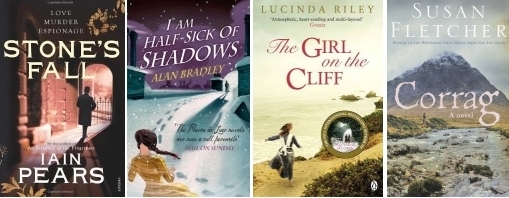
I read eleven books in December and I’ve picked out my four favourites below. Some months I find it very difficult to choose, but this time it was easy.

1. Stone’s Fall by Iain Pears was surprisingly good considering how much I struggled with one of his other novels a few years ago. It was the only one of my December reads to appear on my Top Books of 2011 list.

2. I am Half-Sick of Shadows, the fourth book in Alan Bradley’s Flavia de Luce series, was the perfect book to read in the week before Christmas. I think it might even be my favourite Flavia book so far.

3. The Girl on the Cliff was the last book I finished before the end of the year and I haven’t had time to write about it yet. I really enjoyed it and now I want to read Lucinda Riley’s previous book, Hothouse Flower.

4. I still haven’t posted my thoughts on Corrag by Susan Fletcher either, but it was a beautifully written book with a unique narrative voice and one of my favourites of the month.

The other books I read in December were:

Sense and Sensibility by Jane Austen
Touch Not the Cat by Mary Stewart
The White Devil by Justin Evans
The Distant Hours by Kate Morton
The Winter Palace by Eva Stachniak
Shakespeare’s Mistress by Karen Harper
The Language of Flowers by Vanessa Diffenbaugh

Plans for 2012

I’ve been reading other bloggers’ lists of goals for the year ahead and was thinking about writing my own, but really I just have one goal and it’s a very simple one: I only want to read books that I enjoy in 2012. And so, to achieve that goal I’m going to read books from my favourite genres, re-discover authors whose work I’ve enjoyed in the past, re-read more books than I have in recent years, and avoid the temptation to read books that don’t really appeal to me just because everyone else seems to be reading them or because I feel that I should. I also want to give myself permission to stop reading anything that I’m not enjoying, whether I’ve read twenty pages or two hundred!

So, my goals for this year are not very specific (apart from the few reading challenges I’ve signed up for) but will hopefully lead to an enjoyable year of reading in 2012!

Did you read any good books in December? Have you been making plans for 2012?

My Top Books of 2011

After a lot of thought, here it is: a list of my favourite books read in 2011! I would have found it almost impossible to put them in order, so I’ve just listed them alphabetically. I should also point out that not all of them were published this year (in fact, most of them weren’t).

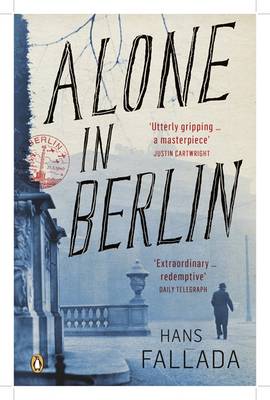
Alone in Berlin by Hans Fallada

(Read in January)

If I had to pick out just one book as my absolute favourite of the year, this would be it. Also published as Every Man Dies Alone, this is the story of two people living in Nazi Germany who launch a postcard campaign in protest against World War II. As well as being a very moving and thought-provoking story, it also has a thrilling plot and although it’s a cliche, I really couldn’t put this book down!

From my review: “I found the plot completely suspenseful, exciting and full of surprises…I would highly recommend it if you enjoy reading World War II fiction and would like to view things from a different perspective and also if you enjoy novels that are both gripping and heartbreaking.”

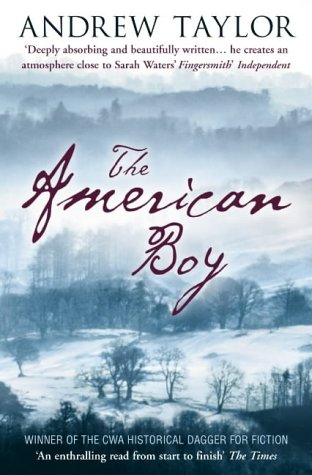
The American Boy by Andrew Taylor

(Read in September)

Although this book was published just a few years ago, it has all the elements of a Victorian sensation novel: murders, mistaken identities, family secrets, betrayal and revenge. The ‘American boy’ of the title is Edgar Allan Poe, though he doesn’t actually play a big part in the story. This was the second book I read by Andrew Taylor this year and I’m looking forward to reading more of his work in the future!

From my review: “A very dark and suspenseful mystery – a perfect book to curl up with and enjoy at this time of year.”

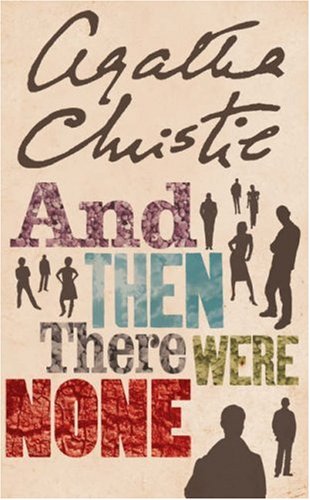
And Then There Were None by Agatha Christie

(Read in March)

2011 is the year I ‘rediscovered’ Agatha Christie. I’ve read five of her books this year and this one is my favourite. Ten people are invited to stay at a house on Soldier Island and one by one they begin to die. Which of the ten is the murderer? I found it impossible to figure out!

From my review: “I admit that solving whodunits is not one of my strong points, but I think most people would be baffled by this one! Christie expertly leads you to believe one thing, then a few pages later proves you wrong.”

The Children’s Book by A.S. Byatt

(Read in October)

The Children’s Book is a long and complex novel which follows the lives of a group of children as they grow up amid the social changes of the Victorian and Edwardian eras. This seems to be the type of book people either love or hate. I’ll admit that it wasn’t an easy read, but I enjoyed almost every page and didn’t have a problem with the slow pace and detailed descriptions.

From my review: “I enjoyed it…but if you’re not interested in the historical and cultural events of the Victorian and Edwardian periods, if you don’t like reading fairy tales, if you prefer books with more action and less description, then this may not be the right book for you.”
Cutting for Stone by Abraham Verghese

(Read in January)

This is the story of Marion and Shiva, the twin sons of an Indian nun and a British surgeon, who grow up within the community of Missing Hospital in Addis Ababa, Ethiopia. I loved this book because not only is it a great story spanning several decades and continents, I was also able to learn a lot about Ethiopia, a country I previously knew nothing about.

From my review: “Even though it’s still only January, I can’t imagine I’ll be reading a lot of books this year that are better than this one.”

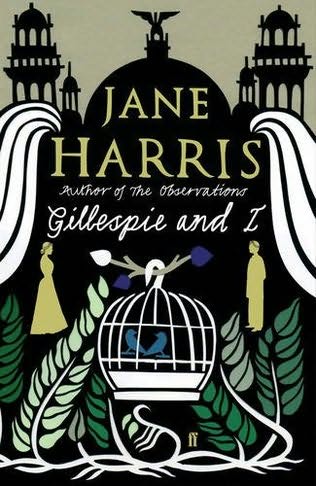
Gillespie and I by Jane Harris

(Read in May)

I was very impressed by this book, my first by Jane Harris, and went on to read her previous novel, The Observations, which I also enjoyed, though not quite as much as this one. I loved the setting (Victorian Glasgow), I loved the voice of the narrator, Harriet Baxter, and I thought some of the plot twists were stunning! This is also one of the few books on my ‘top books of 2011’ list that was actually published in 2011!

From my review: “At times it even felt like a Victorian sensation novel to me, which probably explains why I enjoyed it so much! Gillespie and I has been one of my favourite reads so far this year.”
The House on the Strand by Daphne du Maurier

(Read in January)

Narrated by Dick Young, who agrees to experiment with a new drug that transports the user into the 14th century, The House on the Strand has turned out to be one of my favourite Daphne du Maurier novels so far. This was actually the very first book I finished in 2011 and I knew almost as soon as I started reading it that it would be one of my books of the year.

From my review: “Choosing to begin 2011 with a book by one of my favourite authors was the right decision. The House on the Strand is a strange and unusual book which blends historical fiction, science fiction, time travel and psychology. I loved it!”
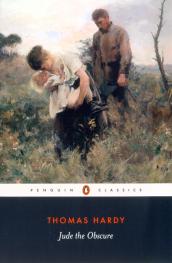
Jude the Obscure by Thomas Hardy

(Read in July)

Thomas Hardy is one of my favourite authors and I had been looking forward to reading Jude the Obscure. It definitely lived up to my expectations. I can understand why it wouldn’t appeal to everyone – it really is a tragic, heartbreaking story and contains what must surely be one of the most shocking scenes in literature – but I loved it.

From my review: “Although this one didn’t have quite the same emotional impact on me that Tess did, I was still moved to tears in places. I can’t recommend Jude the Obscure highly enough, unless you really just don’t like this type of book.”

Little Boy Lost by Marghanita Laski

(Read in February)

I chose to read Little Boy Lost for the Persephone Reading Weekend in February. This story of a man searching for his missing son is one of the most emotional books I’ve read for a long time and definitely my favourite of all the Persephone books I’ve read so far.

From my review: “Nicholas Lezard of The Guardian, who is quoted on the back cover, says it best: ‘If you like a novel that expertly puts you through the wringer, this is the one.'”
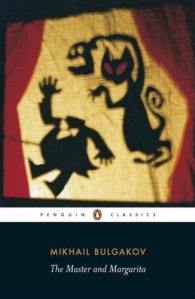
The Master and Margarita by Mikhail Bulgakov

(Read in May)

The Master and Margarita is one of the most bizarre and original books I’ve ever read. I won’t even attempt to describe the plot here, but I can tell you that you’ll meet the Devil, a talking black cat, Pontius Pilate, and a beautiful witch! I’m so glad I decided to stop feeling intimidated by this book and finally just picked it up and started reading.

From my review: “This was a fantastic book – it was breathtakingly different and original, with so many different layers to it…the engaging writing, weird and wonderful characters and the dark humour all helped to keep me interested.”
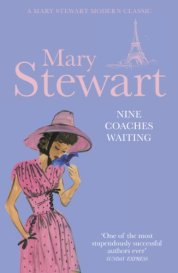
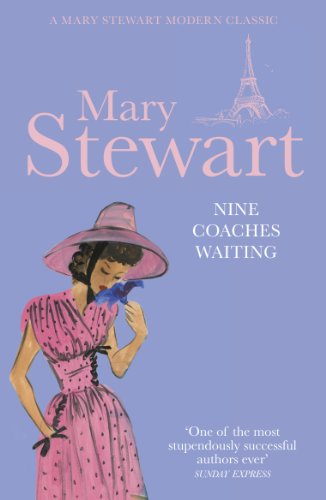
Nine Coaches Waiting by Mary Stewart

(Read in November)

This was my first experience of Mary Stewart’s work. I’ve now read three of her books and she’s already becoming a favourite author! Nine Coaches Waiting is the story of Linda Martin, who arrives in France to start her new job as governess to a nine-year-old orphan, Philippe de Valmy, and finds that both she and the child are in serious danger. This is a wonderful, suspenseful novel with a thrilling plot and a haunting atmosphere.

From my review:Nine Coaches Waiting is one of the best books I’ve read this year. It’s maybe not the most life-changing or the most original, but certainly one of the most enjoyable and exciting.”
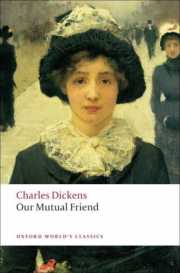
Our Mutual Friend by Charles Dickens

(Read in January)

I read two Dickens books this year, and while I did enjoy The Mystery of Edwin Drood (despite it being unfinished), Our Mutual Friend is the one that has made it onto my list of top books of the year. With its length and complex plot, this was a challenging book but a satisfying one, and with some very memorable characters (who could forget poor Jenny Wren?).

From my review: “It does require the reader to invest a lot of time and effort in it, but it was definitely worth it for me!”
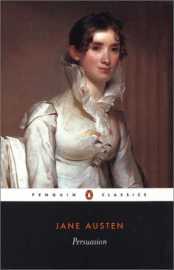
Persuasion by Jane Austen

(Read in April)

I’ve now read all of Jane Austen’s novels and this one is my favourite, even ahead of Pride and Prejudice which I also enjoyed. I loved Anne Elliot and loved the story of her romance with Captain Wentworth. Compared to Austen’s other novels this one has a more serious, mature tone and that appealed to me too.

From my review: “A moving story of mistakes, misunderstandings and second chances…I loved this book.”
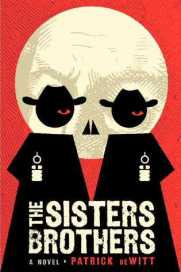
The Sisters Brothers by Patrick deWitt

(Read in November)

I would never have expected a western to be one of my favourite books of the year! I’m so glad I decided to take a risk and try something completely different.

From my review: “I loved this book, which I think proves that it doesn’t matter if something is described as a ‘western’, a ‘romance’, a ‘mystery’ or anything else: a good story is a good story and The Sisters Brothers was one of the best I’ve read this year.”

South Riding by Winifred Holtby

(Read in February)

South Riding is a wonderful novel about life in a small Yorkshire community in the 1930s. When I first started reading I wasn’t sure I was going to enjoy it, particularly when I saw the length of the character list at the front of the book, but I couldn’t have been more wrong. The characters all had so much depth it wasn’t hard to keep track of them all and I soon found myself completely absorbed in reading about their lives. I loved this one.

From my review: “I hadn’t expected to love it as much as I did. It was a book I looked forward to returning to every day and I was sorry when I reached the final page.”
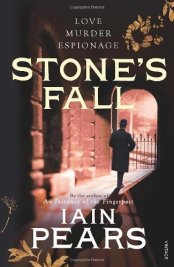
Stone’s Fall by Iain Pears

(Read in December)

I finished this one just in time for it to make it onto this list. Moving backwards in time from London in 1909 to Paris in 1890 and then Venice in 1867, Stone’s Fall is a long and complex novel about the mystery surrounding a man’s death. I loved this book and was pleased I hadn’t allowed a previous negative experience of Iain Pears’ work to put me off reading this one!

From my review: “I found the plot completely gripping and was never bored – it was all so wonderfully intricate and clever.”

Three Men in a Boat (To Say Nothing of the Dog) by Jerome K. Jerome

(Read in March)

This is the hilarious story of three men (and a dog) who go on a boat trip along the River Thames. Despite the fact that it was published more than 100 years ago, most of the humour is still relevant today. I must find time to read the sequel, Three Men on the Bummel!

From my review: “I can’t remember the last time I read such a funny book and I would recommend it to anyone who feels daunted by the thought of reading a Victorian classic.”

Have you read any of these books? If not, I hope I’ve convinced you to read some of them in 2012!