Review: The Night Watch by Sarah Waters

The Night Watch follows the lives of four very different people during and after World War II. There’s Kay, who drove an ambulance during the war, but now, in 1947, there’s something missing from her life and she wanders the streets of London on her own, a lost and lonely figure. There’s Helen, who is feeling insecure in her relationship with the sophisticated Julia. Then there’s Viv, having problems of her own with her boyfriend Reggie, an ex-soldier. And finally, we meet Viv’s brother Duncan, who was in prison during the war and is still haunted by events in his past.

The story quickly becomes so complex and involved that it would be difficult to tell you any more about the plot without spoiling it. What I can tell you about though, is the structure of the book, which was very unusual. The story begins by introducing us to the characters in 1947, after the war has ended, then moves back in time to 1944, and then in the final section goes back further still to 1941. I both liked this structure and disliked it.

I liked it because of the way it led to some surprising revelations about the characters and their histories. I disliked it because so many storylines were left unresolved. I wanted to know what happened; I wanted to know whether Kay, Helen, Viv and Duncan would find happiness. I think this is probably the first Sarah Waters book I’ve read where I really loved and cared about the characters – they all felt so real and believable. But while the book answered some of the questions about the characters’ pasts, I was left with a lot of unanswered questions about their futures.

In comparison to Sarah Waters’ other books, this one feels much more subdued and quiet, with an overall mood of sadness. Apart from relating some of the obvious horrors of war which affected society as a whole, there are some heartbreaking moments in the personal stories of all four main characters (the story that affected me the most was probably Viv’s). I also found it interesting to read about the various jobs that were available to women during the war. With so many of the men away fighting, this was a time when it was deemed acceptable for women to do jobs that would previously have been done by the men. Kay, as I mentioned, was an ambulance driver, and there were other women also doing the same work. Helen and Viv were employed in more conventional office jobs, but were still contributing to the war effort with Helen providing support for people who had lost their homes or were in financial difficulties, and Viv working as a typist for the Ministry of Food.

As I’ve come to expect from Sarah Waters’ books, The Night Watch is both well written and well researched. She manages to incorporate an incredible amount of detail into the book, but the detail never overwhelms the story. I would recommend this to anyone who enjoys reading about life during World War II and the effects of the war on the lives of ordinary people. But if you loved Fingersmith and are looking for more of the same, I should warn you that this book is about as different from Fingersmith as you could imagine!

Recommended.

Review: The Victorian Chaise-longue by Marghanita Laski

Of all the books in the Persephone catalogue this is the one I’ve been looking forward to reading the most. Maybe it was the word ‘Victorian’ that appealed to me (I’m slightly obsessed with the Victorian period) or maybe it’s just that it has sounded so fascinating in every review I’ve read. I’ve seen this book described as a horror story – ‘a little jewel of horror’. For me, though, it wasn’t so much frightening as unsettling and creepy.

Melanie Langdon is a young mother recovering from tuberculosis in bed at her home in 1950s London. When the doctor tells her she can move to another room for a change of scenery, Melanie decides to lie on the chaise-longue in the drawing room, an ugly item of Victorian furniture she had purchased in an antique shop.

Melanie lies on the chaise-longue and falls asleep – but when she awakens, something has changed. She’s still lying on the same chaise-longue, she still has TB, but it’s now the year 1864, she’s being cared for her by her hostile sister Adelaide, and her name is no longer Melanie – it’s Milly. Is Melanie dreaming? Remembering a previous life? Has she really travelled back in time and become somebody else?

Who is Milly Baines? came the gradual inquiry, and at last she looked, as she had not dared to before, at what was immediately around her, examined, tested, interpreted the feeling of this body of Milly Baines in which was imprisoned the brain of Melanie Langdon.

I have to admit I’m not sure that I fully understood what was supposed to be happening in this book. After thinking about it though, maybe that was the point – the reader isn’t supposed to understand because Melanie herself doesn’t understand. The book conveys a sense of confusion, panic and disorientation and I could really feel Melanie’s helplessness as she lay on the chaise-longue, trapped in Milly’s body, desperately trying to work out who she was and how she could escape.

What makes Melanie’s story so disturbing and nightmarish is that although she has apparently been transported back in time, she has kept all of her twentieth-century ideas and sensibilities. As Milly, she finds herself a victim of the repression of Victorian society and there’s nothing she can do to change her situation.

At only 99 pages, this book can easily be read in an hour, but there’s so much packed into those 99 pages that the story will stay in your mind for a lot longer than that.

Recommended

Read-a-Thon Updates

Update #4: End of Hour 24

I’m finished! Since my last update I’ve read three chapters of Bleak House and one story (The Dream Woman) from The Haunted Hotel & Other Stories by Wilkie Collins. I may not have read as much as some of you, but I wasn’t expecting to so I’m quite happy with what I’ve achieved!

Total time spent reading: 8 hours 55 minutes
Total pages read: 526

End of Event Meme

1. Which hour was most daunting for you?
Hour 11, which due to my time zone was the hour when I decided I needed to go to sleep!
2. Could you list a few high-interest books that you think could keep a Reader engaged for next year?
I found that The Victorian Chaise-Longue by Marghanita Laski kept me engaged even though I read it when I was starting to get tired.
3. Do you have any suggestions for how to improve the Read-a-thon next year?
No, I thought everything was well organised (although the End of Event Meme was missing from the Hour 24 post, so I copied the one from last year – I hope these are the right questions that I’m answering!)
4. What do you think worked really well in this year’s Read-a-thon?
The mini-challenges seemed to be going well, though I had decided not to take part in any myself this time so that I could concentrate on reading.
5. How many books did you read?
I finished 2 books and read a few chapters of 3 others!
6. What were the names of the books you read?
The Night Watch, The Victorian Chaise-Longue (finished both of these), Dracula, Bleak House and The Haunted Hotel & Other Stories (did not finish any of these).
7. Which book did you enjoy most?
The Night Watch
8. Which did you enjoy least?
I actually enjoyed all of them.
9. If you were a Cheerleader, do you have any advice for next year’s Cheerleaders?
I wasn’t a cheerleader this year, but I thought they all did a great job!
10. How likely are you to participate in the Read-a-thon again? What role would you be likely to take next time?
I will definitely participate again as a reader and would consider cheering next time too.

Update #3: Hour 21

It’s 9:30am on Sunday morning here. I finished The Victorian Chaise-Longue last night, then I went to bed. So far this morning I’ve read 54 pages of Dracula. There are still more than 3 hours of the read-a-thon remaining and I’m hoping to get lots more reading done in those 3 hours!

Total time spent reading: 6 hours 45 minutes
Total pages read: 413

Update #2: Hour 8
I’ve just finished reading The Night Watch by Sarah Waters and am about to start The Victorian Chaise-Longue by Marghanita Laski.

Total time spent reading: 3 hours 45 minutes
Total pages read: 260

Update #1: Hour 1
The October 2010 Read-a-Thon has now officially begun! I’m going to be updating this post several times throughout the day and the most recent updates will be at the top.

I’m not sure how much time I’ll be spending online today – although all the mini-challenges look very tempting, I’m hoping to actually do a lot more reading during this read-a-thon than I did during the last one! For now though, here are my answers to the Hour 1 Meme:

Where are you reading from today?

I’m at home in Newcastle, England.

3 facts about me…

I’m a vegetarian, my favourite colour is purple and this is my second readathon!

How many books do you have in your TBR pile for the next 24 hours?

I’ve chosen 5 specifically for the read-a-thon but if I get bored with those I do have plenty of other books on my general TBR pile.

Do you have any goals for the read-a-thon (i.e. number of books, number of pages, number of hours, or number of comments on blogs)?

I don’t want to set any goals because I know I probably wouldn’t achieve them. I had a relaxed approach to the April read-a-thon, which worked perfectly for me, and I want to take the same approach this time too.

If you’re a veteran read-a-thoner, Any advice for people doing this for the first time?

Try not to put yourself under too much pressure. If you don’t manage to read as much as you were hoping, don’t worry! Having fun is the important thing.

I’ll be back in a few hours with my next progress report. Good luck to all the other read-a-thon participants and enjoy your reading!

Ready for the Read-a-Thon!

It’s almost Read-a-Thon time again! I really enjoyed participating in my first Read-a-Thon in April – I didn’t actually get much reading done, but I had fun taking part in mini-challenges, I found some great new blogs to add to my Reader and I even won a book!

I’m looking forward to this weekend’s Read-a-thon as I’ve been so busy recently I feel as though I’ve had very little time for reading (or blogging), so this will give me a chance to catch up. I will probably have to go out for an hour or two near the beginning, but after that I shouldn’t have any more interruptions for the rest of Saturday. The way the start and finish times have worked out for my time zone, I will still have time to read when I wake up on Sunday morning too. I’m not going to attempt to read for 24 hours – I need my sleep!

So what am I going to read? Well, I don’t want to feel under any pressure so I’m not setting any targets for numbers of books or pages read. I’m currently reading The Night Watch by Sarah Waters, so unless I finish it before Saturday, that will be my first book to read. I also want to read some more books for the RIP challenge. I’m definitely going to read The Victorian Chaise-longue by Marghanita Laski as it’s short and I’ve been keeping it specially for the Read-a-Thon. I also have some classics on my pile, including Dracula (which I’m halfway through and enjoying) and The Haunted Hotel & Other Stories by Wilkie Collins (I’d like to dip into this one and read at least a few of the stories). I could also try to finish Bleak House as I only have a few chapters left to read. If the classics get too heavy, I do have some lighter books on my shelves too.

I bought a new chair earlier in the week, not specifically for the Read-a-Thon, but it’s very comfortable and in a quiet corner where I should be able to concentrate. In April I was able to do some of my reading outside in the garden in the beautiful spring sunshine, but I don’t think the weather’s going to be warm enough to make that an option this time!

Will you be participating? What are your plans?

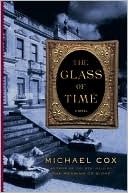
Review: The Glass of Time by Michael Cox

This is the sequel to Michael Cox’s The Meaning of Night, which I read earlier in the year. Although I don’t think it’s absolutely necessary to read the books in the correct order, it would make sense to do so. You’ll definitely get the most out of this book if you’ve read the previous novel first and are already familiar with the plot and the characters.

The way The Meaning of Night ended had left me feeling dissatisfied, but The Glass of Time provides the perfect continuation to the story. Our narrator is Esperanza Gorst, an orphan who has been raised in France by her father’s friend Madame L’Orme and her tutor Mr Thornhaugh. When she is nineteen years old, she is sent by her guardians to the beautiful estate of Evenwood in England, where she will work as lady’s maid to Emily Carteret, the 26th Baroness Tansor. At first Esperanza doesn’t know why she has been sent to Evenwood and is told only that it is part of Madame L’Orme’s ‘Great Task’. As she learns more about her mission, however, Esperanza begins to unravel the mysteries of both her own past and Lady Tansor’s.

I enjoyed The Meaning of Night but I loved The Glass of Time even more. I thought Esperanza was a more likeable character than Edward Glyver (the narrator of The Meaning of Night), and the story also seemed to move at a faster pace. I literally didn’t want to put this book down and finished it in two days (considering it’s over 500 pages long that should indicate how much I was enjoying it).

While I was reading this book there were times when I could almost have believed it really had been written in the 19th century, as the setting, atmosphere and language are all flawlessly ‘Victorian’. Charles Dickens was clearly one of Cox’s biggest influences. In my review of The Meaning of Night I mentioned the Dickensian names Cox gave his characters, and there are more of them in The Glass of Time, from Armitage Vyse and Billy Yapp to Perseus Duport and Sukie Prout. But this time I also noticed lots of similarities to Dickens’ Bleak House: the young orphan searching for the truth of her parentage; the noblewoman with a dark secret; the way the story moves between an idyllic country house and the dark, dangerous streets of Victorian London; the intricate plot and the cleverly interlocking storylines.

I could also recognise elements of various Wilkie Collins novels including Armadale and No Name (Esperanza Gorst is even seen reading No Name at one point). In both writing style and structure this book does feel very like one of Collins’ sensation novels, filled with cliffhangers and plot twists – and with parts of the mystery being revealed through letters, diary entries and newspaper clippings. I did find some of the twists very predictable but that didn’t matter to me, because it was actually fun to be one step ahead of Esperanza, waiting for her to discover what I had already guessed.

It’s so sad that there won’t be any more books from Michael Cox, as he died of cancer in 2009, but together these two novels are the best examples of neo-Victorian fiction I’ve read: complex, atmospheric and beautifully written.

Highly Recommended

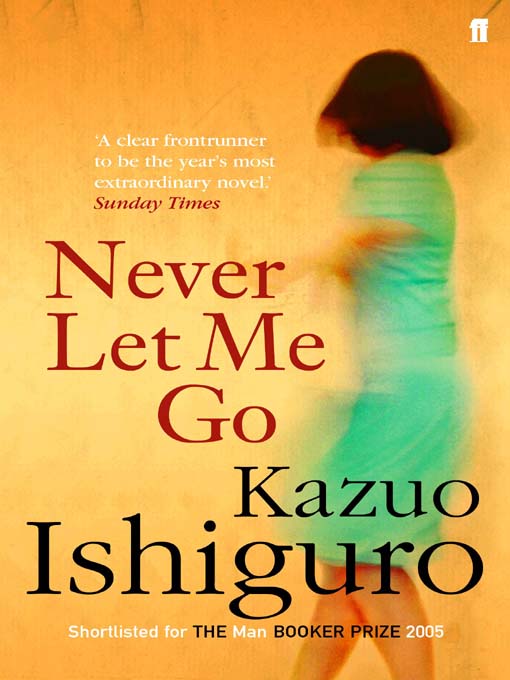
Review: Never Let Me Go by Kazuo Ishiguro

There seems to have been a big resurgence of interest in this book recently, coinciding with the release of the film (in the US now and the UK in January – I’m not sure of the release dates in other countries). I’ve seen a few other reviews this week, and I’m going to add one more.

This was a difficult review to write, because it’s almost impossible to discuss this book without spoiling it. When I started reading it I had no idea what it was about, so I think it probably made more of an impact on me than it would have if I’d known what to expect. I’m sure you could still enjoy it if you did know though, because there’s so much more to this book than the ‘mystery’ – and you may be able to work out what’s happening quite early in the book anyway, particularly if you read a lot of dystopian fiction.

The story is narrated by thirty-one year old Kathy, who is working as a carer, but I can’t tell you who she is caring for or why. In a series of memories and flashbacks, Kathy remembers her childhood at Hailsham School. Right from the beginning it’s obvious to the reader that Hailsham is not your average English boarding school – there’s something very unusual about both the school and its students…

Kathy’s narrative has an interesting structure. She’ll start to tell us something, then go off on a tangent and talk about something else for a few pages, then return to the original story she was telling – and she does this throughout the entire book, which means the plot moves forward very slowly. The whole truth about Hailsham and the fate of the students is revealed very gradually over the course of the novel. And yet, despite the slow pace, I never got bored or lost interest.

After finishing this book I know that I liked it, but I’m not sure how much. This is one of those times when I’m glad I stopped using star ratings on my blog! I found it difficult to care about the three main characters (especially Kathy’s ‘best friend’ Ruth, who I really disliked) or to feel emotionally involved in their story, apart from the final couple of chapters which were very moving. For me the attraction of this book is the range of fascinating questions and issues it raises. I would have liked the book to have explored some of these issues in more detail, but on the other hand I appreciate being left to think about them for myself. And I know I’m going to be thinking about them for a long time.

Recommended

Review: The Little Stranger by Sarah Waters

This is the third Sarah Waters book I’ve read this year, the other two being Affinity and Fingersmith, and I think this one is my favourite. I seem to be in the minority though, as I’ve seen some very mixed reviews of this book.

The Little Stranger is set in Warwickshire just after the end of World War II. When Dr Faraday is called to Hundreds Hall, home of the Ayres family, to treat their young maid, he can’t help noticing that the house has deteriorated since he was last there as a boy. Striking up a friendship with Mrs Ayres and her daughter Caroline, Dr Faraday begins to spend more and more time at Hundreds – and becomes involved in a series of increasingly strange and terrifying events.

This is a typical haunted house story, yet it was psychologically fascinating, very suspenseful – and genuinely spooky. I always find poltergeist-type phenomena very disturbing to read about and there’s plenty of that in this book, from moving furniture and inexplicable fires, to tapping noises, ringing telephones and mysterious handwriting that appears on the walls. I had to avoid reading this book late at night because I knew it would scare me if I did!

I have said before that I think one area where Sarah Waters really excels is in creating believable and vivid settings for her stories. She has done this to perfection in the two Victorian novels that I’ve read, and does it again here with her portrayal of life in post-war Britain – the class system, the economy, housing, medical care and the introduction of the NHS.

Another thing I loved about this book is that it’s not immediately obvious what’s going on, which allows the reader to be a detective. Is Hundreds Hall really haunted? Is there a rational explanation for the supernatural occurrences? Or is someone playing a cruel trick? And if it is a trick, who is responsible for it? I think I suspected every character at some point in the novel! Then there’s Hundreds itself, which is almost a character in its own right – perhaps the most important ‘character’ in the book. It seems to be symbolic that as the house falls further into neglect and disrepair, the Ayres family themselves begin to fall apart one by one.

I was hoping that by the end of the story everything would become clear. However, after finishing the book I am still no closer to knowing exactly what had happened at Hundreds than I was at the beginning. The final few chapters of the book are very ambiguous and leave the story open to interpretation. It was slightly frustrating not to be given all the answers, but in the end it didn’t really matter because the story was wonderful anyway – and even a few days later I’m still thinking about it and wondering whether I’ve interpreted things correctly.

Unless you really don’t like ghost stories, I would recommend The Little Stranger as a great, spooky read, perfect for the RIP challenge or for Halloween.