Review: The Monk by Matthew Lewis

The Monk, published in 1796, is an early gothic novel by Matthew Gregory Lewis, which completely dispels the notion that classics are dull and boring! While I wouldn’t say this was an easy read (due to the 18th century writing style and language you do need to concentrate) it was a real pageturner. I actually started to write this review when I was only halfway through the book and I was going to say that although I was enjoying it, I didn’t think it was a great book. Then, as I continued to read, I changed my mind. It is a great book and the best gothic novel I’ve read so far!

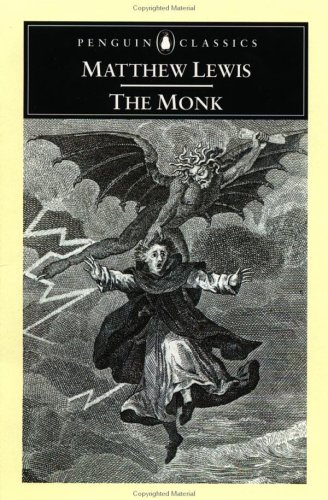
The book cover shown above is the Penguin Classics edition of the book. However, my copy of this novel is actually part of a four books-in-one anthology called Four Gothic Novels, which also includes The Castle of Otranto by Horace Walpole, Vathek by William Beckford and Frankenstein by Mary Shelley. I’ve been reading the novels in the order that they appear in the book, but The Monk was the one that I had really been looking forward to reading.

The novel is set in a monastery in Spain, during the time of the Spanish Inquisition. The plot is very complex, but basically there are three main storylines.

The first storyline revolves around Ambrosio, the Monk of the title, who is highly respected within the monastery and attracts large crowds to his sermons. Ambrosio is regarded almost as a saint yet when a beautiful young woman called Matilda tries to seduce him, he is tempted into breaking his vows. After succumbing to this first temptation, Ambrosio goes on to commit one crime after another, each worse than the one before.

We are also given a long account of the adventures of the young Marquis de las Cisternas. When the Marquis rescues a baroness from a gang of bandits, he is invited to accompany her to the Castle Lindenberg in Germany where he meets and falls in love with her niece, Agnes – and learns the legend of the Bleeding Nun. Finally we follow a friend of the Marquis, Lorenzo de Medina, who also happens to be the brother of Agnes. When a young girl from Murcia named Antonia arrives in Madrid, she and Lorenzo fall in love – but things don’t go smoothly for the pair and Antonia soon finds herself in serious danger.

At first it seemed that Agnes and Antonia’s storylines were unrelated to the Ambrosio and Matilda plot, but I soon began to see how cleverly Lewis was weaving the threads of the story together. Ambrosio is a complex character and his downfall was fascinating to read about. Some of my favourite passages were those which gave us an insight into the different facets of his personality.

He pronounced the most severe sentences upon Offenders, which, the moment after, Compassion induced him to mitigate: He undertook the most daring enterprizes, which the fear of their consequences soon obliged him to abandon: His inborn genius darted a brilliant light upon subjects the most obscure; and almost instantaneously his Superstition replunged them in darkness more profound than that from which they had just been rescued…The fact was, that the different sentiments with which Education and Nature had inspired him were combating in his bosom: It remained for his passions, which as yet no opportunity had called into play, to decide the victory.

Some parts of the book are quite gruesome and disturbing, and the passages which describe the sufferings of Agnes and Antonia are horrifying. I thought the final chapter of the book was stunning. There were several different ways the story could have ended, but the ending Lewis chose was absolutely perfect.

This book has almost every element of the gothic novel that you can think of: ghostly apparitions, haunted castles, ancient monasteries, bad weather, fortune telling gypsies, an evil prioress, dark dungeons and shadowy crypts, witchcraft, magic and pacts with the devil. It’s also very daring for the 18th century; with themes of murder, rape, incest, violence and torture, I can see exactly why it was so controversial in its day.

So don’t let the fact that the book was written in the 1700s prevent you from picking it up!

Recommended

If you enjoy this book you might also like The Italian by Ann Radcliffe which I read a few years ago. It’s very similar to this one in both the setting and the atmosphere (and anyone who was put off Radcliffe by the long scenic descriptions in The Mysteries of Udolpho will be pleased to know there are a lot less of those in The Italian).

Review: The Sweetness at the Bottom of the Pie by Alan Bradley

After hearing so many good things about Alan Bradley’s Flavia de Luce mysteries, I had high hopes for this book – and I wasn’t disappointed. It was every bit as enjoyable and delightful as I had been told it was.

Eleven year old Flavia de Luce, who wears her hair in pigtails and rides a bike called Gladys, most be one of the most unusual detectives in fiction. Her biggest passion is for chemistry – and more specifically, for poisons. She loves nothing more than spending time conducting experiments in her own fully equipped laboratory and her heroes include famous chemists such as Marie Paulze Lavoisier, Robert Bunsen and Henry Cavendish.

When a dead bird with a rare stamp impaled on its beak is found on the de Luces’ doorstep, Flavia is puzzled by the effect the discovery has on her father. Later, Flavia finds something much more sinister in the cucumber patch and when her father is accused of murder, she becomes determined to clear his name.

Although this wasn’t a particularly complex mystery, it was an interesting one, involving magic tricks, a sheet of Penny Black stamps and a slice of custard pie. There were parts of it that I could figure out quite easily but others that took me by surprise. I don’t often read mysteries anymore, but this book reminded me of exactly why I used to love them! However, the mystery itself is only one element of this book. I think due to the characters and the setting (which includes all the little period details that place the story firmly in 1950 and perfectly capture a small village atmosphere), this series could appeal even to non-mystery lovers.

The main reason I enjoyed this book so much was Flavia herself. She really is a wonderful character, innocent and lovable one minute, ruthless and vengeful the next (at the beginning of the book she runs away in tears when her sisters Ophelia and Daphne taunt her by pretending she’s adopted – and then proceeds to inject poison ivy into Ophelia’s lipstick). The chemistry aspect of the book particularly interested me as I have a degree in chemistry myself – although I was never as passionate as Flavia about the subject! She seems to have a PhD level grasp of the subject already. And her sphere of knowledge also encompasses literature, history, film and music. She’s so incredibly clever and independent that it’s easy to forget she’s only supposed to be eleven. There’s no way you would expect a real child of that age to speak or behave the way Flavia does – and yet somehow, in a strange way, I was able to overlook the fact that she’s so unrealistic and could accept her as a plausible character.

I’ve seen comparisons with Nancy Drew and Harriet the Spy, but while I was reading this book I was also reminded of Enid Blyton’s Five Find-Outers series, which was also set in a small English village in the 1940s/50s and featured a group of children who always solved the mystery before the village policeman. I have no idea if Alan Bradley would have been inspired by those books at all, but there are definitely some similarities.

I loved this book and now I can’t wait to read The Weed that Strings the Hangman’s Bag!

BBAW: Unexpected Treasure

I knew I wouldn’t be able to participate fully in Book Blogger Appreciation Week this year because I’ve been ridiculously busy recently, both at work and at home, and just haven’t had time to prepare anything. Today’s question, though, is one that I really wanted to answer:

Wednesday—Unexpected Treasure
We invite you to share with us a book or genre you tried due to the influence of another blogger. What made you cave in to try something new and what was the experience like?

Looking back at the list of books I’ve read so far this year there are quite a few that I probably wouldn’t have thought of reading in the days before I started blogging. I used to stay very much within my own comfort zone and while there’s not necessarily anything wrong with that, as long as you’re enjoying what you’re reading, it did mean I was missing out on a lot of great books and authors. I had never considered reading Georgette Heyer or Sarah Waters, for example, before I saw so many other bloggers reviewing their books. I would probably also never have been aware of Persephone books; I’ve now read and loved three of them and have another two waiting on my shelf.

Going back to the question above, the biggest plunge I have taken into something new is when I decided to try an entirely new medium: the graphic novel. Before I began blogging, I had never even thought about reading a graphic novel. I didn’t have any prejudices about them; it had honestly just never occurred to me that I might enjoy one – and I had no idea how popular they were until I saw so many of them being reviewed on such a lot of blogs. So, this summer I finally read my first graphic novel (I should really call it a graphic memoir) which was Persepolis by Marjane Satrapi. I don’t want to thank one individual blogger for bringing that book to my attention, because I had seen it mentioned by so many people, but all of you who said it was the perfect choice for a novice graphic novel reader were completely right! I haven’t had a chance to read another one yet, but I’m glad I now know that there’s no reason for me not to read them.

Thanks to everyone who has influenced my reading and encouraged me to try something new!

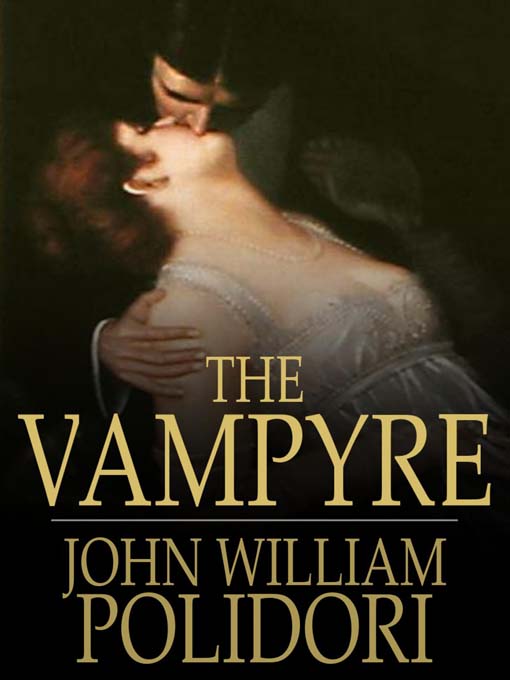
Short Story: The Vampyre by John Polidori

As I’m hoping to read Dracula soon, I thought it might be a good idea to also read one of Bram Stoker’s influences – John Polidori’s The Vampyre. This short story is considered to be one of the first vampire stories in literature and the first to portray a vampire in the way we would recognise today. I have actually been interested in reading this story since I read The Count of Monte Cristo by Alexandre Dumas and was intrigued by the references to the vampire Lord Ruthven. (If you’ve read The Count of Monte Cristo you might remember the scene where the Countess G- is remarking on the Count’s pale skin and nicknames him ‘Lord Ruthven’.)

The origins of The Vampyre are fascinating. John William Polidori was Byron’s personal physician and in 1816, went with him to Switzerland. At the Villa Diodati, on Lake Geneva, Byron and Polidori were joined by the poet Percy Bysshe Shelley, his future wife Mary Wollstonecraft Godwin and her stepsister Claire Clairmont, and decided to amuse themselves by writing horror stories. Mary began work on what would become Frankenstein, and Byron wrote the beginning of a vampire story (which survives today as Fragment of a Novel) based on the various vampire myths and legends. Although Byron abandoned his vampire story, Polidori took inspiration from it and The Vampyre was the result. Unfortunately for Polidori, The Vampyre was wrongly attributed to Byron, despite Byron’s attempts to set the record straight.

As a story, it really isn’t very satisfying. Our narrator is a young Englishman called Aubrey, who travels to Rome with his acquaintance, the nobleman Lord Ruthven. The more time he spends with Ruthven, the more Aubrey begins to distrust him and to realise that Ruthven is not what he seems… The plot is so thin that there’s not much more I can tell you without spoiling it – although really, there’s nothing to spoil as the story is very predictable (for the modern reader anyway – I’m sure it would have been more compelling at the time when it was first published).

The Vampyre is interesting historically because of its portrayal of Lord Ruthven as a mysterious, pale-faced aristocratic figure who preys on innocent young ladies, which is the way many future vampires would be described (the vampires of folklore had generally been described as hideous-looking monsters). If you’re interested in how vampire stories began and how they evolved over the years, this is worth reading. If you’re just looking for a good short story to read, you might be disappointed with this one.

Read The Vampyre online here

Byron’s Fragment of a Novel is also available online and is so short it only takes a few minutes to read. It’s a shame he decided not to continue with this, as I think it had the potential to be much better than The Vampyre. I’ve read a few of Byron’s poems but this is my first experience of his prose and even based on such a short sample of his work I find his writing superior to Polidori’s.

Read Fragment of a Novel online here


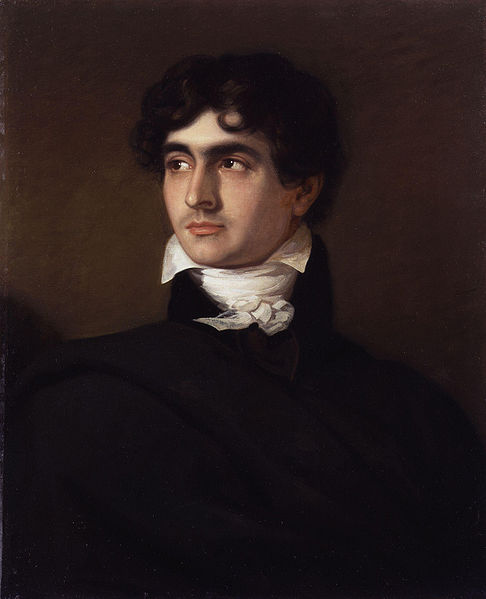
John William Polidori (1795-1821)

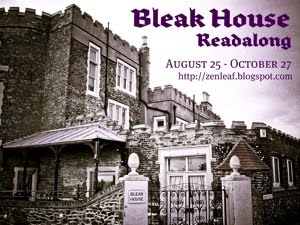
Bleak House Readalong: Chapters 14-19

I’m a few chapters ahead of the readalong schedule again, but this post is based on my thoughts at the end of Chapter 19.

*Please be aware that this post may contain spoilers*

It’s week 3 of the readalong, I’m more than 230 pages into my edition of Bleak House, and Dickens is still introducing new characters and new storylines in every chapter!

In this week’s installments, Esther accompanies Caddy Jellyby to the dancing school where her fiancé Prince Turveydrop works. We also meet his father, Mr Turveydrop, who is always talking about the importance of ‘Deportment’ – very annoying! In chapter 15, Mr Skimpole reappears with news that the debt collector Mr Neckett has died, leaving his three children orphaned. The oldest girl, Charley, is taking care of her brother Tom and the baby Emma, as well as going out to work.

The Snagsbys invite the Chadbands for tea and Mrs Chadband turns out to be a face from Esther’s past. Richard changes career again, deciding he wants to be a lawyer this time. And on a visit to Mr Boythorn, Esther encounters Lady Dedlock, who seems strangely familiar although she’s sure she’s never seen her before.

There are an unbelievable number of characters in the first 19 chapters of this book alone! Luckily, I haven’t had too much trouble remembering who they all are. At the moment it’s difficult to tell which of the characters will play a major part in the story and which won’t. Maybe they all will!

As I mentioned last week, I prefer the chapters narrated by Esther to the others, as they are easier to follow. However, we are now starting to see some indications that Esther is not being completely honest with the reader and is choosing what she does and doesn’t want to tell us (usually in relation to a certain young surgeon called Mr Woodcourt).

“For I was so little inclined to sleep, myself, that night, that I sat up working. It would not be worth mentioning for its own sake, but I was wakeful and rather low-spirited. I don’t know why. At least, I don’t think I know why. At least, perhaps I do, but I don’t think it matters.”

I’m enjoying the book but it still feels quite disjointed and confusing. It still seems that storylines are being started and then abandoned just as they’re starting to get interesting, and characters are being introduced then disappear for several chapters at a time. I’m sure that when things start to come together later in the book I’ll be able to appreciate the importance of these early chapters more. I think I just need to be patient!

More posts on the Bleak House readalong here.

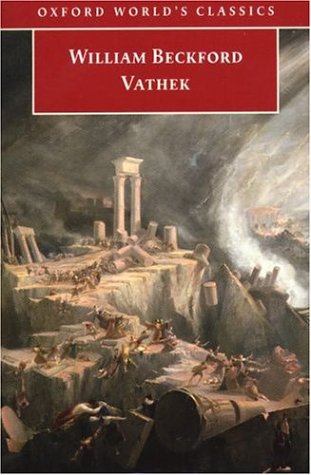
Review: Vathek by William Beckford

This is my first book for the RIP V challenge and one of the strangest novels I have ever read! It’s the story of Vathek, ninth Caliph of the race of the Abassides, and his temptation by a supernatural being (known as ‘the Giaour’), who promises to bestow on him the treasures and talismans of the ‘palace of subterranean fire’. Encouraged by his ambitious mother, the sorceress Carathis, Vathek embarks on a journey through exotic landscapes and begins a descent into hell.

Although William Beckford was English, Vathek was originally written in French and translated into English by Reverend Samuel Henley in 1786. The best way I can describe Vathek is that it’s a sort of dark, twisted fairy tale reminiscent of The Arabian Nights. Beckford mixes eastern mythology and Islamic culture with elements of the gothic novel (ghouls, spirits, graveyards, an atmosphere of evil) and throws in some magic, fantasy and romance for good measure. There are some long and poetic descriptive passages which become quite surreal and dreamlike in places.

Bababalouk had pitched the tents, and closed up the extremities of the valley with magnificent screens of India cloth, which were guarded by Ethiopian slaves with their drawn sabres; to preserve the verdure of this beautiful enclosure in its natural freshness, the white eunuchs went continually round it with their red water-vessels. The waving of fans was heard near the imperial pavilion, where, by the voluptuous light that glowed through the muslins, the Caliph enjoyed at full view all the attractions of Nouronihar.

The book is short in length but it’s not a quick, easy read. The entire story is told in one big chunk, rather than being broken into chapters, which made it seem quite daunting. If it had been any longer I probably wouldn’t have finished it because although the beginning and the ending were great, I started to lose interest during the middle section.

The characters are two-dimensional and impossible to like. At the beginning of the book, Vathek is popular with his subjects as he is fond of the pleasures of life and rarely becomes angry (although when he does lose his temper, one of his eyes becomes ‘so terrible that no person could bear to behold it, and the wretch upon whom it was fixed instantly fell backward, and sometimes expired’). After the Giaour arrives in his kingdom and begins to tempt him with stories of the palace of subterranean fire, however, Vathek becomes a cruel and greedy ruler. One of the conditions the Giaour imposes on him in return for admitting him into the subterranean palace is that he must renounce Islam and perform a series of atrocious crimes. Vathek never shows any remorse for his actions and I found him completely undeserving of any sympathy from the first page of this book to the last. His mother, Carathis, is even worse…

“…by my formidable art the clouds shall sleet hailstones in the faces of the assailants, and shafts of red-hot iron on their heads; I will spring mines of serpents and torpedos from beneath them, and we shall soon see the stand they will make against such an explosion!”

Vathek is completely bizarre and probably a book that you’ll either love or hate. It’s worth reading if you’re interested in the origins of gothic literature, fantasy or horror – and it apparently influenced both Byron and H.P. Lovecraft, among others. If you don’t take this book too seriously, it’s quite entertaining.

After the Sunday Papers #6

On Thursday I posted my sign-up post for the RIP V Challenge. Now I’m signing up for another one: The Really Old Classics Challenge.


The idea of this challenge is to read at least one work that was written before 1600 AD. If you’re very ambitious you can become a ‘Classicist’ by reading four! You can also read a retelling of a really old classic.

The challenge runs until December 31 2010. See the challenge blog to sign up.

At the moment I have no idea what I’m going to read for the challenge. I’m completely new to ‘really old classics’, so any recommendations would be very welcome!

Recently acquired books…

Bought on a visit to my favourite bookshop:
The Secret Scripture by Sebastian Barry
The Rose of Sebastopol by Katherine McMahon
The Victorian Chaise-Longue by Marghanita Laski

Won from LibraryThing Member Giveaways:
Can You Forgive Her? by Anthony Trollope

I was particularly excited to find a copy of The Victorian Chaise-longue, as it’s the first dove-grey Persephone I own (I do also have a copy of Laski’s Little Boy Lost, but it’s one of the Persephone Classics editions). I’m hoping to read The Victorian Chaise-longue soon for the RIP challenge.

Currently reading

I’m still reading Bleak House for the readalong. I’m also reading Vathek by William Beckford, which is a Gothic novel from 1786.

Whatever you’re reading this week, I hope you enjoy it!