After the Sunday Papers #6

On Thursday I posted my sign-up post for the RIP V Challenge. Now I’m signing up for another one: The Really Old Classics Challenge.


The idea of this challenge is to read at least one work that was written before 1600 AD. If you’re very ambitious you can become a ‘Classicist’ by reading four! You can also read a retelling of a really old classic.

The challenge runs until December 31 2010. See the challenge blog to sign up.

At the moment I have no idea what I’m going to read for the challenge. I’m completely new to ‘really old classics’, so any recommendations would be very welcome!

Recently acquired books…

Bought on a visit to my favourite bookshop:
The Secret Scripture by Sebastian Barry
The Rose of Sebastopol by Katherine McMahon
The Victorian Chaise-Longue by Marghanita Laski

Won from LibraryThing Member Giveaways:
Can You Forgive Her? by Anthony Trollope

I was particularly excited to find a copy of The Victorian Chaise-longue, as it’s the first dove-grey Persephone I own (I do also have a copy of Laski’s Little Boy Lost, but it’s one of the Persephone Classics editions). I’m hoping to read The Victorian Chaise-longue soon for the RIP challenge.

Currently reading

I’m still reading Bleak House for the readalong. I’m also reading Vathek by William Beckford, which is a Gothic novel from 1786.

Whatever you’re reading this week, I hope you enjoy it!

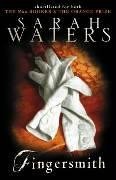
Review: Fingersmith by Sarah Waters

I’ve had a copy of this book on my shelf for a few months now but I kept putting off reading it because, after seeing so many glowing reviews, I was afraid I wouldn’t like it. Eventually I decided I would have to just get on with it, before I really was the only person left on earth who still hadn’t read it!

Somehow I had managed to avoid coming across any spoilers (and hadn’t seen the TV adaptation either) so was able to go into Fingersmith knowing almost nothing about the plot. As I don’t want to spoil the book for any of you who haven’t read it yet, all I will tell you is that Fingersmith is the story of Sue Trinder, an orphan raised by Mrs Sucksby in a den of thieves in Victorian London, and Maud Lilly, a young heiress who lives with her uncle at their country house, Briar. When an acquaintance of Mrs Sucksby’s, known as ‘Gentleman’, comes up with a plan to cheat Maud of her inheritance, Sue agrees to pose as a lady’s maid and help him with his scheme. And that’s all I’m going to say about it!

I was expecting a complex plot with lots of twists, and that was what I got. Unfortunately, I guessed what the first big plot twist was going to be! I was disappointed because I would have loved to have been shocked by it. (Actually, I think if only I’d read this a few years ago before I started reading so many Victorian sensation novels, it probably would have come as a shock.) I’m envious of those of you who didn’t see the twist coming because I can imagine it must have been stunning. Although this did have a slight impact on my enjoyment of the book, luckily there were plenty of other things that I did enjoy!

As I’ve probably mentioned before, the 19th century is one of my favourite periods to read about. I love the original Victorian classics and I love Victorian historical fiction too. Having read both this book and Affinity now, I can say that Sarah Waters has a real talent for portraying the atmosphere of Victorian London: the dark alleys, the narrow streets, the fog, the Thames. The locksmith’s shop at Lant Street, where Sue lives, is described particularly vividly.

Although I thought many of the characters in the book were very unlikeable, I could still find every one of them interesting, which must be a testament to Sarah Waters’ skills as a writer. I thought Gentleman was fascinating (funny how the word gentleman can be made to sound so sinister!). I liked the relationship between Sue and Maud too and the way the book switches perspective between the two girls, giving us an insight into each of their emotions, thoughts and motives, and allowing us to sympathise with them both.

I was really hoping I’d be able to gush about how much I loved this book, like the majority of people have. However, although I did enjoy it and couldn’t put it down at times (it didn’t feel like a 550 page book at all – I got through it in half the time it would normally take me to read a book this length), I don’t think it’s going to be one of my top reads of the year. Maybe it’s just that my expectations were a bit too high, which is not the fault of the book. Having enjoyed this one and Affinity, I’m looking forward to reading the rest of Sarah Waters’ books, starting with The Little Stranger for the RIP challenge.

R.I.P. V Challenge

I’m excited about being able to take part in the R.I.P. Challenge for the first time! The challenge actually started yesterday and runs until October 31st. I’m signing up for Peril the First which means I need to read at least four books from any of these genres: Mystery, Suspense, Thriller, Dark Fantasy, Gothic, Horror, Supernatural.

I’m hoping to read some of these, which are all books I already have on my shelf:

Frankenstein by Mary Shelley
The Little Stranger by Sarah Waters
The Monk by Matthew Lewis
The Victorian Chaise-Longue by Marghanita Laski
Dracula by Bram Stoker
Vathek by William Beckford
The Haunted Hotel by Wilkie Collins
The Sweetness at the Bottom of the Pie by Alan Bradley

I might also re-read a few stories from my Edgar Allan Poe collection for the Short Story Peril.

For more information see the challenge post at Stainless Steel Droppings.

Bleak House Readalong: Chapters 8-13

This is Week 2 of the Bleak House Readalong. I’m slightly ahead of the readalong schedule this week, but will keep this post restricted to chapters 8-13.

*If you haven’t read the book yet, you might encounter some spoilers.*

13 chapters into the book now and it still feels that not much has actually happened yet; Dickens is still bringing in new characters and new storylines. I’m enjoying the chapters narrated by Esther the most as I’m finding the other chapters a bit harder to follow.

In this week’s installments, Esther receives a marriage proposal, Richard tries to choose a profession, and a law-copier called Nemo is found dead from a suspected opium overdose. We meet Mrs Pardiggle who, like Mrs Jellyby, is supposed to be a ‘philanthropist’, but whereas Mrs Jellyby neglects her children, Mrs Pardiggle brings her five sons with her everywhere she goes and forces them to invest in charities that they are too young to know anything about.

We also meet a drunken brickmaker and his wife Jenny, who has a black eye and is nursing a sick baby. Other new characters include Mr Boythorn, an old friend of Mr Jarndyce’s who visits Bleak House, a ‘law-stationer’ called Mr Snagsby, and Jo, a homeless crossing-sweeper.

It will be interesting to see how Dickens is going to weave all these storylines and characters together. A lot of things don’t make much sense at the moment, but I’m hoping that everything will start to become clearer soon. I’m enjoying the book more than I was last week, though – and Esther isn’t annoying me as much now.

For more opinions on this week’s installments, see the list of participants at The Zen Leaf.

Review: Half of a Yellow Sun by Chimamanda Ngozi Adichie

“I do hereby solemnly proclaim that the territory and region known as and called Eastern Nigeria, together with her continental shelf and territorial waters, shall henceforth be an independent sovereign state of the name and title of The Republic of Biafra.”
~Chukwuemeka Odumegwu Ojukwu

Half of a Yellow Sun follows the lives of three central characters before and during the Nigerian-Biafran War of 1967-1970. The first character we meet is Ugwu, a thirteen-year-old boy from a small village, who comes to the town of Nsukka to take up a position as houseboy to Odenigbo. Odenigbo is a university professor who regularly plays host to a lively gathering of friends who are all very opinionated on the political issues facing Nigeria. His girlfriend, Olanna, is the daughter of a rich businessman and is an educated woman with a degree in sociology. Early in the book she travels to Nsukka to live with Odenigbo and Ugwu. The third main protagonist is Richard Churchill, an Englishman drawn to Nigeria by his interest in Igbo-Ukwu art. Richard falls in love with Kainene, Olanna’s intelligent and sarcastic twin sister.

This is the first book I’ve read by Chimamanda Ngozi Adichie and also the first time I’ve read anything on this subject. However, my unfamiliarity with the history, politics and geography of Nigeria wasn’t a problem, because the book explained things very well, on a personal, as well as a political level. The important thing to understand is that the nation of Biafra was formed when one of Nigeria’s ethnic groups, the Igbo, attempted to secede from Nigeria and establish their own country – but the newly-created Republic of Biafra received little support from the rest of the world and lasted less than three years. The Biafran flag (shown to the right) consisted of red, black and green horizontal stripes, with half of a yellow sun in the middle.

The book has an unusual structure: as well as being told from the alternating viewpoints of Ugwu, Olanna and Richard, the story also moves backwards and forwards in time. This structure didn’t really work for me, as I felt it disrupted the flow of the story. It also took me a while to start to feel anything for the characters, which was a problem for me at first. What I did like, though, was that the central protagonists were all from very different backgrounds which gave us the opportunity to see things from three entirely different perspectives.

Then suddenly, the Republic of Biafra was established, the war began, and from this point I became swept into the story and really began to love and care about the characters. We were given some vivid and harrowing descriptions of the suffering of the Biafran people – how children were dying of starvation, how people were murdered and abused, how homes were being destroyed. There’s one memorable scene where Olanna is sitting next to a woman on a train who is holding a calabash containing the severed head of her daughter. There was a lot of violence in the book, but I never felt that it was gratuitous.

The characters all develop over the course of the story, which is always a good thing. Ugwu was probably my favourite character. At the beginning of the book he arrives in Odenigbo’s home as an uneducated teenage boy, who feels bewildered by the new life he has suddenly been thrust into, but as he learns he grows in confidence and becomes a valued member of the family. However, there’s an incident near the end of the book that disappointed me and made me lose respect for him, although the fact that this occurs shows us how war and fear makes people behave in ways that they wouldn’t normally.

The other character I found particularly interesting was Richard. As an Englishman and initally an ‘outsider’, he comes to consider himself a Biafran and wants to write about his experiences, but eventually begins to question whether it’s right for him to tell this story or if it should be left for somebody else to tell. There were also several scenes which took place towards the end of the war when he was accompanying two American journalists who had come to report on the war. The ignorance and insensitivity of the journalists gives an idea of how the situation may have been viewed by some of those outside Nigeria.

There are a few surprises at the end of the book and it certainly didn’t conclude the way I was expecting it to. I can’t really say that I ‘enjoyed’ this book but I’m glad I read it because I now have a much better understanding of this period of Nigerian/Biafran history – and also because the story itself was so moving and one that really affected me.

I’ll leave you with a quote from the book in which Odenigbo explains why his mother, a woman from a small bush village, feels threatened by an educated woman like Olanna.

“The real tragedy of our postcolonial world is not that the majority of people had no say in whether or not they wanted this new world; rather, it is that the majority have not been given the tools to negotiate this new world.”

Highly recommended
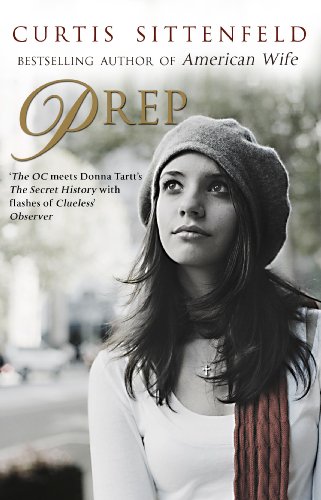
Summer Reading Challenge: Prep by Curtis Sittenfeld

Prep tells the story of four years in the life of Lee Fiora, who wins a scholarship to an exclusive boarding school in Massachusetts. Because most of the other students at Ault have rich parents, Lee feels inadequate and inferior. A lot of her unhappiness is caused by her own insecurities – people do try to be friends with her, but her shyness and paranoia makes her push them away. But Lee is more than just shy; she suffers from social anxiety. She agonises over every decision; she analyses every word anybody says to her. She misses out on parties, meals, trips to Boston and other social activities because she doesn’t know how to deal with them. She has trouble fitting in and feels out of place at Ault.

“Of course, now I wonder where I had gotten the idea that for you to participate in a gathering, the other people had to really, really want you to be there and that anything short of rabid enthusiasm on their part meant you’d be a nuisance…Sometimes now I think of all the opportunities I didn’t take – to get a manicure in town, to watch television in another dorm, to go outside for a snowball fight – and of how refusal became a habit for me, and then I felt it would be conspicuous if I ever did join in.”

Prep is a very well written book (though not quite “Sweet Valley High as written by George Eliot” as was quoted on the cover) and because Lee spends so much of her time observing people and situations, we get a lot of insights into every aspect of boarding school life. I grew up reading boarding school stories such as Enid Blyton’s Malory Towers and St Clare’s series and despite some obvious differences (the Enid Blyton books were set in Britain in the 1940s; Prep is set in America in what appears to be the 1980s or early 90s), there are actually some elements that are very similar. This is definitely not a children’s book, however, but one that will appeal to both adults and young adults.

As this is Lee’s story and we spend the entire book inside Lee’s head, whether or not you like the book will probably depend on what you think of her as a character. I immediately felt that she was somebody I could understand and identify with. She worried about a lot of the same things I worried about myself as a teenager (things that many of us probably worried about, actually, such as saying the wrong thing when answering questions in class, who to sit beside on the bus etc). I was never one of the most popular girls at school so I could relate to Lee and at first I was pleased to have discovered a character who felt so real, but after around 100 pages I started to feel differently about her. She began to come across as shallow, judgmental and difficult to like. I was torn between feeling sorry for Lee and feeling frustrated with her as she made one mistake after another. I also found some of her experiences painful to read about because they reminded me of all the things I didn’t like about going to school and being a teenager!

The other characters in the book (mostly Lee’s fellow students) are interesting because they represent all the different types of people we all knew when we were at school. I did feel that some of them were racial or class stereotypes, though as we only saw them through Lee’s eyes it’s difficult to know whether that was just the way Lee perceived them.

The story is narrated by an older Lee looking back on her school days and there are times when she recognises that she should have handled a situation differently and that she wasted a lot of opportunities, but there’s otherwise very little character development in this book. Although it would have been unrealistic to expect her to have a complete personality change, Lee is almost the same person at the end of her senior year as she was at the beginning of her freshman year, which is a bit disappointing. For this reason, I found Prep slightly dissatisfying, considering the book is almost 500 pages long, but I would recommend it as an accurate portrayal of the awkwardness of adolescence.

I received a copy of this book from Transworld Publishers as part of their Summer Reading Challenge – this is book 4/4 and completes the challenge

Bleak House Readalong: Chapters 1-7

Charles Dickens’ Bleak House is a book that, like Middlemarch by George Eliot, I have attempted to read before but abandoned after a few chapters. This summer I took part in a Middlemarch readalong and finally finished the book (and ended up loving it) so I’m hoping that this Bleak House readalong will be equally successful. I’ve read Chapters 1-7 this week and have now passed the point where I lost interest and stopped reading the last time.

In Bleak House, Dickens divides the narrative between an orphan called Esther Summerson and an unnamed omniscient narrator, which is an interesting technique but one that isn’t really working for me. The book begins by telling us about a long-running court case called Jarndyce and Jarndyce, which has gone on for so many years that the original parties in the suit are now dead and nobody can remember what it was about. In the opening chapter Dickens tells us about the fog that is enveloping London, which can be seen as a metaphor hinting that the court case and much of the following story is going to be shrouded in fog as well.

“Fog everywhere. Fog up the river, where it flows among green aits and meadows; fog down the river, where it rolls defiled among the tiers of shipping and the waterside pollutions of a great (and dirty) city. Fog on the Essex marshes, fog on the Kentish heights. Fog creeping into the cabooses of collier-brigs; fog lying out on the yards, and hovering in the rigging of great ships; fog drooping on the gunwales of barges and small boats…”

When Ada and Richard, two wards of court, are sent to live with John Jarndyce in his home, Bleak House, Esther is asked to accompany them. At the moment we don’t know why this is, or how Esther is connected with the Jarndyce suit. On their way to Bleak House, they meet a variety of interesting people including Mrs Jellyby, who seems more interested in Africa than in her own family, an eccentric old lady who has been closely following the Jarndyce case, and the old lady’s landlord, Mr Krook.

The first seven chapters are concerned with setting the scene and not much has happened yet. I’m not really a lover of long descriptive passages but most of those were confined to the first two chapters. From the third chapter onwards, when the story really began, I started to enjoy it.

We are introduced to a huge number of characters in the first seven chapters. So far I’ve found it easy enough to remember who they all are, but I suspect that it might get more confusing later. One of the problems I had on my first attempt at reading this book was that Esther irritated me – and unfortunately she’s still irritating me this time. I hope I’m going to like her more as the book continues. I also dislike Mr Skimpole. He takes money from Richard and Esther to pay his debts, but everyone seems to think that’s okay because he’s such a harmless, childlike person.

“When you come to think of it, it’s the height of childishness in you — I mean me —” said Mr Jarndyce, “to regard him for a moment as a man. You can’t make him responsible. The idea of Harold Skimpole with designs or plans, or knowledge of consequences! Ha, ha, ha!”

So far I’m undecided about this book. I’m not loving it yet, but I’m not hating it either. Although Bleak House is a very long book (over 700 pages in my edition) and I’m only around 80 pages into it, I don’t think I’ll have any trouble finishing it. I found with the Middlemarch readalong that making a long classic my secondary book to read alongside several shorter books is a method that works perfectly for me.

I’ll try to post another progress update next Wednesday, when I hope to be able to tell you that I’ve started to love the book!

You can see other participants’ thoughts at The Zen Leaf.