After the Sunday Papers #5

Last month was a great reading month for me – I read ten books, which I know is not many for a lot of other bloggers, but for me it’s more than I usually manage to read. And as well as reading those ten books, I was also slowly working my way through Middlemarch by George Eliot, which I finished last weekend. Considering this was my third attempt at reading it, I felt a real sense of achievement when I reached the final page! As I’ve finished it a few weeks ahead of schedule for Ana’s readalong, I won’t post my thoughts on the book just yet, but will wait until later in the month. Who else has been reading Middlemarch for the readalong? Are you enjoying it?

Another readalong I’ve signed up for is Bleak House by Charles Dickens, which is being hosted by Amanda of The Zen Leaf. Bleak House, like Middlemarch, is a book that I started reading once before but stopped because I wasn’t in the right mood for it. I can be a very moody reader sometimes! Hopefully this time I’m going to enjoy it. If you’d like to participate too, see Amanda’s post to sign up.

This week I’ve been reading The Red Queen by Philippa Gregory which I was sent by Simon & Schuster UK for their Red Queen blog tour. The Red Queen is the second book in Philippa Gregory’s new Wars of the Roses series, which was a fascinating time in English history. I would welcome any recommendations of good non-fiction books about this period as I’d really like to learn more about it.

I’ll be posting my review of The Red Queen soon, but in the meantime why not enter this competition to win a signed copy of the UK hardback – it’s open worldwide until September 30th.

I also received two more books for review this week, which is exciting for me as I don’t usually get very many.

After You by Julie Buxbaum is the third book I’ve received from Transworld for their Summer Reading Challenge (the first two that I’ve read and reviewed were Second Hand Heart and If I Stay). I also had a nice surprise when Rosy Thornton contacted me to offer me a copy of her new novel, The Tapestry of Love. I’m looking forward to reading both of these books.

What will you be reading this week?

Good Evening, Mrs Craven: The Wartime Stories of Mollie Panter-Downes

Mollie Panter-Downes was the London correspondent for the New Yorker and this collection from Persephone Books brings together a number of her contributions to the magazine which were written during World War II. The book opens with her Letter from London dated 3 September 1939 and ends with another dated 11 June 1944. Between the two letters are twenty-one short stories, each of which offers an insight into the hopes and fears of British people trying to deal with the changes the war has brought to their lives.

These stories are not particularly dramatic or sensational in any way. They are realistic stories that focus not so much on the war itself, but on the effects of the war on the women (and a few of the men) who were left behind at home. We read about women attending sewing parties, worrying about loved ones who are away fighting, preparing for their husbands to go to war, coping with being pregnant during the war and experiencing almost any other wartime situation you can think of.

After finishing the book, there are a few stories that stand out in my memory more than the others. In Clover, for example, is a story about a rich woman called Mrs Fletcher who takes in a family of evacuees from a poor part of London. This was an interesting study into how the war pushed together people of different social backgrounds who wouldn’t usually have mixed with each other. This Flower, Safety follows Miss Mildred Ewing as she moves from one hotel to another in an attempt to escape from danger, beginning to despair of ever finding somewhere safe to live. Then there’s the story of Miss Burton, who is so hungry she can think about nothing else. The title story is also one of the best; it’s about a woman who has been having an affair with a married man. On the evening before he leaves to go to Libya, she wonders how she’ll be able to find out whether he’s dead or alive:

“Don’t think I’m being stupid and morbid,” she said, “but supposing anything happens. I’ve been worrying about that. You might be wounded or ill and I wouldn’t know.” She tried to laugh. “The War Office doesn’t have a service for sending telegrams to mistresses, does it?”

The stories are published in chronological order, as they appeared in New Yorker between 1939 and 1944, showing how life in Britain changed as the war progressed. Despite the subject matter, these stories are not all bleak and depressing – there’s also a lot of humour in Panter-Downes’ writing, in the form of gentle wit and irony.

As with most of the short story collections that I’ve read, there were some that didn’t interest me very much, but others that I loved and wished were longer. However, I think reading them all at once was a mistake as it was a bit too much for me. I think I would have enjoyed this collection even more if I had dipped in and out and taken the time to appreciate each story individually.

Recommended.

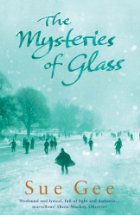
Review: The Mysteries of Glass by Sue Gee

It’s the winter of 1860. Following the death of his father, the young Richard Allen takes his first position as curate in an isolated Herefordshire parish. At first Richard is eager to do well in his new post – but then he falls in love and finds that his faith is put to the test.

The Mysteries of Glass was nominated for an Orange Prize back in 2005 and I can see why, because Sue Gee’s writing is beautiful. I have rarely read a book with such a strong sense of time and place. The book is set in an isolated village in 19th century England and the rural Victorian setting felt entirely believable.

The opening chapters perfectly evoked a winter atmosphere. Although I was reading this book in July, I could still picture the cold, wintry landscape, the snowy fields, the frozen paths leading to Richard Allen’s lonely house, the skating party on the lake. Later in the book, as time passed, I could feel the temperatures rise and the seasons change.

Unfortunately, I had one or two problems with this book. I found it very, very slow – I had to force myself to read at a slower pace than I normally would because I felt I was starting to skim over the words without really absorbing them. After the first few chapters, in which very little actually seemed to happen, I had to make a decision whether or not to continue reading. I was glad that I persevered with it, though. I don’t like abandoning books and this one was so well written and had such a haunting, dreamlike atmosphere that I really wanted to love it.

The characters were realistic and well-drawn, from Alice Birley, the crossing-keeper’s solemn little girl to Edith Clare, the mysterious woman who lives in the woods. However, I thought some of the characters who were potentially the most interesting were very underused, such as Richard’s strong, hot-tempered sister Verity.

Another problem I had was that the religious aspects of the book were a bit too much for me. Knowing that the story was about a curate, I was prepared for this to some extent but I wasn’t really expecting the church scenes to be quite so dominant. If you don’t like that type of thing, you should be aware that it forms a very large part of the book and that the central theme of the story is the portrayal of a man’s inner turmoil as he tries to reconcile his feelings and emotions with his faith and his belief in God.

If this book sounds as if it might interest you at all, then please do give it a try as I definitely seem to be in the minority! The Mysteries of Glass wasn’t a bad book by any means – it didn’t appeal to me but maybe it will appeal to you.

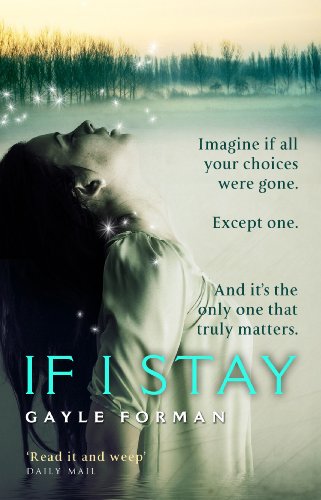
Summer Reading Challenge: If I Stay by Gayle Forman

Until today, the biggest decision seventeen-year-old Mia has faced is whether to go to Juilliard to study music or stay at home with her family and boyfriend. Now she has an even more important choice to make: a choice between life and death.

It’s been snowing outside and school has closed for the day. Mia, her parents and her younger brother Teddy decide to take advantage of the unexpected day off to visit friends. They pile into the car, laughing, joking and arguing about which music to listen to, like any other family going on a drive. The next thing Mia knows, she’s standing in a ditch looking down at the wreckage of their car. At first she thinks she’s survived unscathed, but then she discovers her own body, unconscious on the ground…

If I Stay follows Mia as she watches herself lying in a coma in a hospital bed and witnesses the reactions of her friends and family as they sit outside her room, waiting for news. In a series of flashbacks, we learn what Mia’s life was like before the accident and why she’s finding it so difficult to decide whether she wants to live or die.

I don’t read many YA novels anymore (I think this might even be the first one I’ve reviewed here) but I probably should, because it means I’m missing out on great books like this one. Although If I Stay may sound like a dark and depressing book, it’s actually not. It’s a story about the importance of love and friendship and is a book that can be enjoyed by both adults and teens.

One of the reasons I enjoyed this book so much was because Mia was a character I really cared about. She seemed a genuinely nice person, the type of girl I would have liked to have been friends with at school. She does have some insecurities – she loves playing the cello and listening to classical music for example, and worries that she’s too incompatible with Adam, her rock musician boyfriend – and these are explored throughout the book. I liked the way the musical aspect of the book was handled to show how people from different musical backgrounds are able to respect each other’s tastes and how music can form a bond between them. At the end of the book Gayle Forman gives us her reasons for choosing the various songs that are mentioned in the story, which I thought was a nice idea.

There was one part of the book that I thought was unrealistic – a scene where Adam’s punk rocker friends descend on the hospital – but apart from that, I really enjoyed If I Stay. It’s a very moving and emotional read and I was kept guessing what Mia’s decision would be until the final page.

I received a review copy of this book from Transworld Publishers as part of their Summer Reading Challenge.

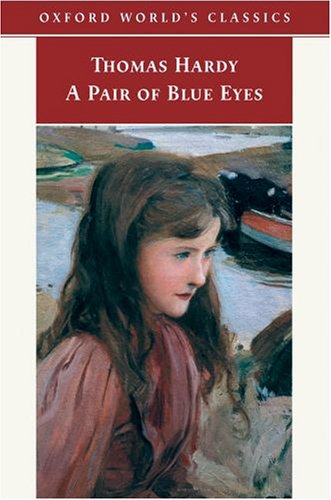
Review: A Pair of Blue Eyes by Thomas Hardy

These eyes were blue; blue as autumn distance – blue as the blue we see between the retreating mouldings of hills and woody slopes on a sunny September morning. A misty and shady blue, that had no beginning or surface, and was looked into rather than at.

I’m loving Thomas Hardy more and more with every book of his that I read. A Pair of Blue Eyes was one of his earliest books, originally serialised in Tinsley’s Magazine from September 1872 to July 1873. Although this is not generally noted as being one of his better novels and is certainly one of his least well known, there was something about it that appealed to me – and I would even say that of all the classics I’ve read so far this year, this might be my favourite.

A Pair of Blue Eyes is the story of Elfride Swancourt, a vicar’s daughter living in a remote corner of England, who is forced to choose between two very different men. One of these, Stephen Smith, is a young architect whom she meets when he is sent by his employer to survey the church buildings. At first, the vicar approves of Stephen and encourages his daughter to spend time with him. It soon emerges, however, that Stephen has been hiding an important secret from the Swancourts; something that could put his relationship with Elfride in jeopardy. Later in the book, another man arrives at Endelstow Vicarage – Henry Knight, an essayist and reviewer from London – and Elfride has to make a difficult decision.

As you might expect with this being a Hardy book, nothing goes smoothly for any of the characters. I would describe A Pair of Blue Eyes as being similar in some ways to the later Tess of the d’Urbervilles, though not as dark and bleak – and not quite as tragic either. Although I didn’t find Elfride particularly likeable, I thought she was an interesting character. Her lonely, secluded life gives her a childlike innocence and vulnerability and at one point Hardy draws a comparison with Miranda from Shakespeare’s The Tempest – both characters have little knowledge of men and a male visitor is a big event (and Elfride even plays chess with Stephen Smith and Henry Knight as Miranda did with Ferdinand in The Tempest). Of the two men, Stephen was the only one I had any real sympathy for. Knight, although another interesting character, annoyed me almost as much as Angel Clare in Tess annoyed me.

The descriptions of scenery in this book are stunningly beautiful and bring the setting vividly to life. If you’re familiar with Hardy you’ll know that he sets most of his works in the fictional region of Wessex in the southwest of England. This story actually takes place in Off-Wessex or Lyonesse, which equates to Cornwall. I had no problem at all in picturing the lonely vicarage, the windswept hills, and the dark cliffs towering over the sea below. Speaking of cliffs, it is thought that the term ‘cliffhanger’ originates from a scene in this book, though I’m not going to say any more about it than that!

Another interesting aspect of this book is that it’s loosely based on Hardy’s relationship with his first wife, Emma Gifford. Unfortunately I don’t know enough about Hardy to have picked up on all the allusions and references to events in his own life. I would like to eventually read a biography as I think it would help my understanding of both this book and his work as a whole.

I found A Pair of Blue Eyes very easy to read. I thought the pacing and flow of the story were perfect and the pages flew by in a weekend. It’s so sad that this book has been ignored and underrated to the point where, until not long ago, I hadn’t even heard of it. Maybe it won’t appeal to everyone and it might not be the best introduction to his work, but I loved it and would highly recommend it to all Hardy fans.

Celebrating Georgette Heyer at Austenprose: August 1st–31st 2010

Some exciting news for any Georgette Heyer fans out there – throughout August, Austenprose will be hosting a month long celebration of Heyer’s work! I feel honoured to have been asked to take part in this event as I’m still very new to Heyer and have so far only read two of her books.

Here is the official announcement of the event from Austenprose:


‘Celebrating Georgette Heyer’ at Austenprose – August 1st – 31st, 2010

Stylish, witty and historically accurate, novelist Georgette Heyer has been delighting readers with her romantic comedies for eighty-nine years. In honor of her birthday on August 16th, Austenprose.com www.austenprose.com will feature a month long event ‘Celebrating Georgette Heyer’ featuring thirty-four book reviews of her romance novels, guest blogs, interviews of Heyer enthusiast from the blog-o-sphere, academia and publishing and tons of great giveaways.

Our very special guests will be Heyer expert Vic Sanborn of Jane Austen’s World and Deb Werksman, acquiring editor of Sourcebook Casablanca and the catalyst in re-introducing Heyer to a new generation of readers.

The festivities start August first with a review of the newly re-issued Georgette Heyer’s Regency World, by Jennifer Kloester. Don’t be a wet goose. Chase away that fit of the blue-devils by attending this bon ton affair.

See this post for more information, including an event schedule.

My review of The Masqueraders is due to be published at Austenprose on Wednesday August 4th. I hope you enjoy the celebrations!

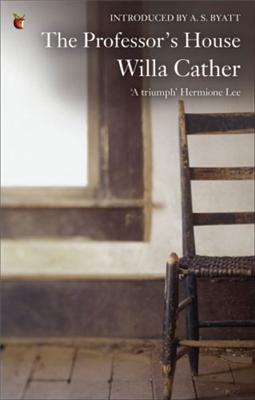
Review: The Professor’s House by Willa Cather

Willa Cather is an author I’ve heard a lot about but whose work I’ve never read until now.  I should probably have started with her most famous book, My Antonia, but something drew me to this one, The Professor’s House.

The Professor of the title is Godfrey St Peter, a man in his fifties, around the same age as Willa Cather was when she wrote this novel. At the beginning of the book, St Peter and his wife are preparing to move into their new home.  At the last minute the Professor decides that he doesn’t want to give up his old house just yet, so that he can continue to work in his old study and spend some time alone with his memories.

Most of the book revolves around St Peter reminiscing about his family and friends and coming to terms with the idea of leaving the past behind and embracing modern life.  At the forefront of the Professor’s thoughts is his former student Tom Outland, who had once been engaged to his daughter Rosamond. On his death in the First World War, Outland left everything he had to Rosamond – and this inheritance is causing trouble for the St Peter family.

If you prefer books with a gripping plot and lots of action you’ll want to avoid this one, as it was one of the slowest moving books I’ve ever read. I have to admit there were a few times during the first few chapters that I came close to abandoning it, but I kept reading because it was so well written. I would describe this as a calm, quiet, reflective book; one with such powerful, eloquent writing and beautiful imagery that it doesn’t really matter that not much actually happens.

The book is divided into three sections; the first and third are essentially character studies of the Professor and his family, particular his two daughters Rosamond and Kathleen and their husbands. The middle section is very different in both style and subject, as it tells in a flashback the story of Tom Outland’s life in New Mexico before he met the St Peter family. This story-within-a-story was fascinating but did feel slightly out of place, almost as if it had just been dropped at random into the middle of an entirely different book.

One of the things that stood out about Cather’s writing for me was the use of colour in her descriptions.

The grey sage-brush and the blue-grey rock around me were already in shadow, but high above me the canyon walls were dyed flame-coloured with the sunset, and the Cliff City lay in a gold haze against its dark cavern. In a few minutes, it too was grey and only the rim-rock at the top held the red light. When that was gone, I could still see the copper glow in the piñons along the edge of the top ledges. The arc of sky over the canyon was silvery blue, with its pale yellow moon, and presently stars shivered into it, like crystals dropped into perfectly clear water.

The Professor’s House is possibly a book I would appreciate more if I read it again when I’m older, as I found it difficult to identify with a fifty-two year old man looking back on his life. This was my first experience of Willa Cather and although I don’t think she’s going to be a favourite author, I will probably read more of her work at some point in the future.