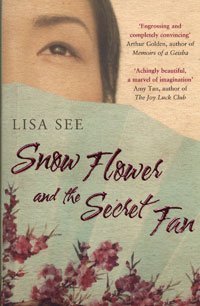
Review: Snow Flower and the Secret Fan by Lisa See

This book was recommended to me after I read Wild Swans by Jung Chang earlier this year and as I had heard a lot of good things about it, I decided to give it a try.

Lily is a Chinese girl born in Hunan Province in 1823, the daughter of a poor farmer. When she is six years old, the local matchmaker has an exciting announcement to make: if Lily’s feet are bound properly they will be the perfect size and shape, allowing her to marry well and improve the fortunes of herself and her family.

As well as arranging marriages for young girls, another job of the professional matchmaker is to find them a laotong or ‘old same’ – a special friend whose personal circumstances match in a number of different ways (e.g. same birthday, same number of siblings). Snow Flower and the Secret Fan tells the story of the lifelong friendship between Lily and her ‘old same’ Snow Flower.

If you haven’t read this book yet, I should warn you that the chapter on footbinding goes into a lot of detail, describing exactly what it involves and how much suffering the girl is forced to endure – all because small feet were considered the ideal and a girl with large feet would be virtually unmarriageable. One of the worst things about the whole process in my opinion was that it was usually carried out by the child’s mother – I just can’t imagine a mother inflicting so much pain and suffering on her daughter and even risking the girl dying from infection. If you can manage to get through this chapter though, there are plenty of other Chinese customs and traditions to learn about.

For example, did you know that Chinese women had a secret language of their own known as nu shu? This came about because women were discouraged from learning standard Chinese writing, so invented their own writing system which they then tried to keep hidden from the men. Throughout the book, Lily and Snow Flower communicate by writing messages to each other on a silk fan, using nu shu.

I also found the custom of the laotong fascinating. Most young Chinese girls had a group of ‘sworn sisters’, who would be her closest friends only until the day she married. Lily, however, was chosen to have a laotong – a girl who would remain her best friend throughout her entire life.

I thought it was sad that women were considered to be worthless and their only value to society was as a potential mother of sons. If a woman only gave birth to girls she was no use to her family. Here Lily and Snow Flower are discussing the possibility that they will both give birth to daughters.

Snow Flower smoothed her hands over her belly and in a small voice reminded me that girls are but worthless branches unable to carry on their fathers’ lines.
“They will not be useless to us,” I said. “Could we not make a laotong match for them now – before they are born?”
“Lily, we are worthless,” Snow Flower sat up. I could see her face in the moonlight. “You know that, don’t you?”

While I wouldn’t say I loved this book, I did enjoy learning about a culture so completely different to my own and I would welcome any suggestions for more historical fiction novels set in China.

New Book Arrivals

I haven’t bought any new books for a while as I’ve been running out of shelf space (as usual!) and have been trying to read some of the books that I already own or borrowed from the library, but here are a few that I’ve acquired in the last couple of weeks.

The Red Queen by Philippa Gregory – I received this from Simon & Schuster for their upcoming Red Queen blog tour (16th-20th August). They also sent me the paperback version of the previous book in the trilogy, The White Queen.

Remarkable Creatures by Tracy Chevalier – I received this book as a thank you gift from Harper Collins for participating in a readers’ panel survey. I have yet to read anything by Tracy Chevalier so I’m looking forward to it.

Second Hand Heart by Catherine Ryan Hyde – I’m taking part in the Transworld Summer Reading Challenge, where bloggers can choose four titles to be sent for review during the summer. This is the first book I’ve received for the challenge – the other three I’ve requested are After You by Julie Buxbaum, If I Stay by Gayle Forman and Prep by Curtis Sittenfeld. (I think there’s still time to sign up at the Between the Lines blog – but it’s EU residents only.)

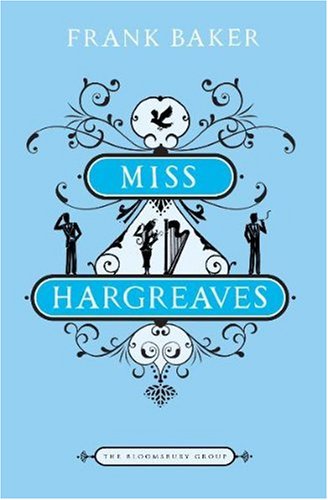
Review: Miss Hargreaves by Frank Baker

When I started to notice these Bloomsbury Group books appearing on other blogs, I knew I wouldn’t be able to resist reading them too. Not just because the covers are so pretty, but also because the stories all sound so intriguing! Miss Hargreaves (pronounced Hargrayves as we are told in the author’s note) was the one that appealed to me the most and the one I’d heard the most about – and it was the right choice because I loved it. It’s a charming tale about the power of imagination and how it can lead to an unusual and unlikely friendship.

“Henry,” I moaned, “she is exactly as I imagined.”
Limping slowly along the platform and chatting amiably to the porter, came – well, Miss Hargreaves. Quite obviously it couldn’t possibly be anyone else.

Norman Huntley has always allowed his imagination to run away with him. On a trip to Ireland with his friend Henry, they amuse themselves by inventing an imaginary eighty-three-year-old woman called Constance Hargreaves. They make Miss Hargreaves a poet and a musician; they give her a dog called Sarah and a cockatoo named Dr Pepusch – and Norman writes her a letter inviting her to stay at his home in Cornford, Buckinghamshire.

Never expecting her to accept his invitation (how could she – she doesn’t exist!) Norman is stunned when a little old lady arrives at the train station accompanied by a dog, a cockatoo, a harp – and even her own bath. It seems that Norman’s creation has come to life – and with even Henry convinced it’s all a practical joke, how will he explain Miss Hargreaves to his parents, his sister and his girlfriend Marjorie?

As the story continues, it gets more and more bizarre. I can safely say this is one of the most original and unusual books I’ve read for a long time! Miss Hargreaves is an unforgettable character – endearing and eccentric, yet ever so slightly sinister – and Norman is torn between a fatherly pride in his creation and frustration at the way she’s taking over his life. Somewhere in the middle of the novel, a gradual shift of power from Norman to Miss Hargreaves takes place, resulting in an almost Frankenstein-like situation where the creator begins to lose control of his creation. And yet Miss Hargreaves seems to be aware that there’s something different about her and that some kind of invisible bond exists between herself and Norman.

I was expecting the story to be funny and entertaining – and it is. However, there are also some very moving and poignant scenes, making the book a perfect mixture of dark and light.

There was only one aspect of this book that I could maybe have done without and that was the music. With Norman Huntley’s church organ, Cornelius Huntley’s violin and Miss Hargreaves’ harp, the musical elements of the book became a bit too much for me. However, I’m sure other readers will enjoy the organ playing scenes and they certainly add to the quirkiness and originality of the book.

Recommended

Pages: 317/The Bloomsbury Group/Year: 2009 (originally published 1940)/Source: My own copy

Review: Miss Ranskill Comes Home by Barbara Euphan Todd

Barbara Euphan Todd was best known as the children’s author who wrote the Worzel Gummidge series about a scarecrow who comes to life. Miss Ranskill Comes Home, first published in 1946, was her only adult novel.

Shortly before the start of World War II, Nona Ranskill was swept overboard whilst on a cruise and was washed up on a desert island. The only other inhabitant of the island is a man known as ‘the Carpenter’, who had also fallen overboard on an earlier occasion. At the beginning of the book, the Carpenter has died and we first meet Miss Ranskill as she’s digging his grave. Before his death however, he had managed to finish building a boat with which he had intended to sail himself and Miss Ranskill to safety. After burying the Carpenter, Miss Ranskill makes an attempt to escape from the island on her own. Luckily, before she becomes hopelessly lost at sea, she is rescued by the British Navy. Returning to England after almost four years, Miss Ranskill discovers that it’s not the England she left behind: in her absence, World War II has begun…

This may all sound very far-fetched, but Todd actually makes it seem believable. I thought the whole idea of someone being cut off from the world and returning home only to find themselves suddenly thrown into the middle of a war was absolutely fascinating. I particularly enjoyed the first half of the book which deals with the first few days of Miss Ranskill’s arrival in England, when everything feels strange and surreal. Even the English language seems different and full of unfamiliar words. When she tries to buy food she can’t understand why she’s asked for her ‘ration book’, or why she needs ‘coupons’ to purchase clothes. This leads to some very amusing situations but at the same time you can’t help but feel sorry for poor Miss Ranskill.

Although he’s dead before the story even begins, the strongest character in the book is the Carpenter. He is constantly in Miss Ranskill’s thoughts and his presence is there on almost every page in the form of flashbacks and memories. Although Miss Ranskill’s friends found it scandalous that she had spent four years in the company of a strange man – particularly a man they consider to be of a lower social standing – I think anyone who has read this book will agree that if we were stranded on a desert island, the Carpenter is exactly the type of person we would like to be stuck there with.

Makes it more homely-like, Miss Ranskill, see.
That had been one of his favourite expressions. He used it as he arranged stones round the smoky fire, and when he handed her a shell.
Saucer, see, Miss Ranskill. We mayn’t have cups, but we’ve plenty of saucers. Makes it more homely.

His optimism and words of wisdom had helped to sustain Miss Ranskill during her time on the island and continue to give her comfort on her return to wartime Britain. However, the years on the island and the company of the Carpenter have given her a new outlook on life and she finds it difficult to adjust. Unlike her friends and family who are all absorbed in their war work, Miss Ranskill feels detached from what’s going on and spends most of the book remembering the island and even feeling nostalgic about the fact that she had to eat fish for every meal and wear the same clothes for nearly four years! England may have changed, but Miss Ranskill has changed even more.

This book has the perfect blend of humour and poignancy and gives us an opportunity to explore World War II from a unique perspective. Recommended.

Pages: 328/Publisher: Persephone Books/Year: 2003 (originally published 1946)/Source: Library book

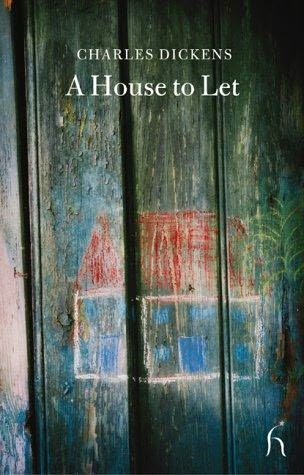
Review: A House to Let by Charles Dickens, Wilkie Collins, Elizabeth Gaskell and Adelaide Anne Procter

A House to Let, at less than 100 pages, is a collaboration between four 19th century authors which originally appeared as the Christmas edition of Charles Dickens’ weekly magazine, Household Words, in 1858.

The book is divided into six sections; the first, Over the Way, and the sixth, Let at Last, are joint efforts by Charles Dickens and Wilkie Collins, and provide the framework for the story. The other four sections are individual contributions from Elizabeth Gaskell, Charles Dickens, Adelaide Anne Procter and Wilkie Collins, in that order.

Over the Way introduces us to Sophonisba, an elderly woman who has never married but has two men vying for her attentions – one is her old admirer Jabez Jarber; the other is her servant, Trottle. When Sophonisba’s doctor advises a change of air and scene, she leaves her home in Tunbridge Wells and moves into new lodgings in London, where she immediately becomes obsessed with the house opposite – a house which has been vacant for many years and is permanently ‘to let’. Determined to discover why the house has remained empty for so long – and convinced she has seen an eye staring out from one of the windows – she asks Jarber and Trottle to investigate.

Over the Way and Let at Last are credited to both Dickens and Collins, but there’s no way to tell exactly which parts were contributed by which writer. The other four chapters, though, are each written in the distinctive style of their respective authors and each tell the story of a previous occupant of the house to let.

The chapter I liked the least was actually the one written solely by Dickens, Going Into Society. The story of a showman and a circus dwarf called Mr Chops, it was just too weird for me and was also quite difficult to read as it was written in dialect. It’s probably significant that I found the two Dickens/Collins collaborations much easier to read than this solo effort, as I’ve always thought Collins was a lot more readable than Dickens.

Three Evenings in the House, the contribution by Adelaide Anne Procter, whose work I was previously unfamiliar with, is in the form of a narrative poem. I’m not a big lover of poetry but luckily for me this was only thirteen pages long and quite easy to understand. Other than providing some variety though, I don’t think this chapter really added much to the story.

The Manchester Marriage
by Elizabeth Gaskell stands out as an excellent piece of writing: a tragic story of Alice Wilson, who is widowed when her husband is lost at sea. After marrying again, she and her new husband move into the house to let where further tragedy awaits them. This is good enough to work as a stand-alone short story (and according to the Biographical Notes, it was actually published separately in its own right). This and the Wilkie Collins contribution, Trottle’s Report, were my favourite chapters. Trottle’s Report is a typical Collins story, with unusual, quirky characters, a mysterious secret, and a slightly dark and gothic feel.

After exploring the histories of the various tenants of the house, the mystery is finally solved in the final chapter, Let at Last, which neatly ties up all the loose ends of the story.

If you like any of these four authors or Victorian fiction in general, then A House to Let is definitely worth reading. It also provides a good introduction to Dickens, Collins, Procter and Gaskell without having to commit yourself to one of their longer works.

Classics/Pages: 97/Publisher: Hesperus Press/Year: 2004 (originally published 1858)/Source: Library book

Book Drum: My profile of The Far Pavilions

Earlier in the year I mentioned that I was taking part in a tournament hosted by the Book Drum website. The idea of Book Drum is to bring books to life with pictures, music, videos and maps. To enter the tournament, members were required to choose a favourite title from a list of approved books and submit a profile of that book.

The book I decided to profile was The Far Pavilions by M.M. Kaye, which I read and reviewed on my blog in February. It was an interesting and fun experience, although I did occasionally regret my choice of book as it has over 950 pages and the profile took forever to complete!

Each profile consists of six sections: Review, Summary, Setting, Author, Glossary – and Bookmarks, which form the largest part of the profile and expand on individual quotes, phrases and references from the book.

Although I didn’t win the tournament, Book Drum have gradually been publishing all of the completed profiles. My profile of The Far Pavilions was published last night and is being featured on the front page of the Book Drum site until Sunday.

Review: Affinity by Sarah Waters

This is the story of two women, both prisoners in their own different ways and drawn together by a special bond – their ‘affinity’.

Margaret Prior is a single woman of twenty nine who, following the death of her father, begins visiting London’s Millbank Prison as a Lady Visitor. Lady Visitors were women who voluntarily visited prisoners with the aim of befriending them and giving them comfort during the time of their imprisonment. However, Margaret is in need of some friendship and comfort herself. From her very first visit, she finds herself strangely drawn to Selina Dawes, a young spiritualist imprisoned for assault after one of her spiritualism sessions goes badly wrong, leaving a woman dead and a girl traumatised.  Selina blames her ‘control spirit’, Peter Quick, for what happened, but is she telling the truth?

The book is told in the form of diary entries – Margaret’s longer sections being interspersed with Selina’s shorter ones. Margaret’s diary entries are very bleak and miserable, as she is trying to cope not only with the loss of her father, but also with her feelings for both Selina and her sister-in-law Helen, the expectations of her domineering mother, and the sense of being ‘left behind’ that she experiences when her younger sister gets married and leaves home. Although I found it difficult to like Margaret, I did have a lot of sympathy for her – she had been labelled a ‘spinster’ and was bound by the conventions of the time, preventing her from studying and leading the kind of life she wanted to lead.  I really wanted her to find happiness with Selina.

Selina’s sections of the story are very vague and confusing and I didn’t fully understand them until I went back and read them again after reaching the end of the book. Her entries chronicle the events leading up to the death of Mrs Brink at the seance, and allow us to watch the development of Selina’s spiritualist abilities and the first appearances of the spirit Peter Quick.  Throughout the story, the reader is made to wonder whether Selina really has the powers she claims to have or if Margaret is the victim of an elaborate hoax.

I enjoyed learning about life in a Victorian prison, as it’s not something I’ve read about in so much detail before. Waters does a wonderful job of conveying the oppressive atmosphere of Millbank, with its labyrinthine corridors and gloomy wards.

I haven’t read all of Sarah Waters’ books yet so I can’t really say where Affinity stands in comparison to her others, but I thought it was an excellent book – suspenseful, moving and with some passages that were genuinely spooky.

Recommended