Top Ten Tuesday: May Flowers

This week’s topic for Top Ten Tuesday (hosted by That Artsy Reader Girl) is “May Flowers”. There are a number of suggestions for ways to approach this topic, such as books with flowers on the covers or books about flowers or gardeners, but I’ve decided just to list ten books with names of flowers in the title.

These are all books that I’ve read and reviewed on my blog – and I’ve managed to find ten different flower names!

1. Blackberry and Wild Rose by Sonia Velton – An interesting historical novel about the community of Huguenot silk weavers living and working in London’s Spitalfields in the 18th century. I was drawn to this book by the pretty cover, but enjoyed the story as well.

2. The Lady of the Camellias by Alexandre Dumas, fils – The novel which inspired the opera La traviata. I read a translation by Liesl Schillinger and enjoyed this story of Marguerite Gautier, who uses bouquets of red and white camellias to send messages to her lovers.

3. The Orchid Hour by Nancy Bilyeau – Historical thriller set in New York’s Little Italy during Prohibition. It’s a fascinating setting and we do learn a little bit about growing orchids too.

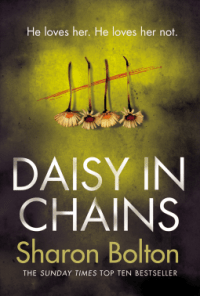
4. Daisy in Chains by Sharon Bolton – This is a contemporary crime novel about a man serving a life sentence for murder and the lawyer he chooses to help him overturn the verdict. A typical Bolton novel with lots of twists and turns!

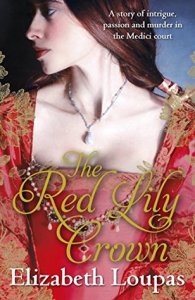
5. The Red Lily Crown by Elizabeth Loupas – An excellent historical fiction novel set in 16th century Florence and following the story of an alchemist’s daughter who enters the household of Francesco de’ Medici, Grand Duke of Tuscany.

6. The Black Tulip by Alexandre Dumas, père – I would never have imagined that a book about a tulip-growing contest could be so exciting, but this one is! I love Dumas and have thoroughly enjoyed everything I’ve read by him so far.

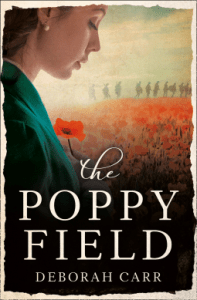
7. The Poppy Field by Deborah Carr – A dual-timeline novel split between the present day and 1916-18 where the story unfolds of a VAD nurse at a casualty clearing station in France during the war. Interesting but predictable.

8. Black Narcissus by Rumer Godden – This classic novel from 1939 follows a group of nuns who set out to establish a new convent in the Himalayas. I loved the atmosphere Godden creates as she explores the relationships between the nuns and how they adjust to the unfamiliar environment.

9. Jasmine Nights by Julia Gregson – A novel about a singer working for ENSA (Entertainments National Service Association) during World War II, performing for the troops in North Africa. An aspect of the war I hadn’t read about before.

10. The Daffodil Affair by Michael Innes – This 1942 mystery novel about a stolen horse, a missing girl and a haunted house is part of Innes’ Inspector Appleby series. I found it too bizarre to be very enjoyable and would recommend starting with a different Appleby novel.

~

Have you read any of these? Which other books can you think of with flowers in the title?

Six Degrees of Separation: From The Anniversary to Wild Swans

It’s the first Saturday of the month which means it’s time for another Six Degrees of Separation, hosted by Kate of Books are my Favourite and Best. The idea is that Kate chooses a book to use as a starting point and then we have to link it to six other books of our choice to form a chain. A book doesn’t have to be connected to all of the others on the list – only to the one next to it in the chain.

This month we are starting with The Anniversary by Stephanie Bishop. It’s not a book I’ve read – or had even heard of until now – but here’s what it’s about:

Novelist J.B. Blackwood is on a cruise with her husband, Patrick, to celebrate their wedding anniversary.

Patrick is older than J.B., formerly her professor. But now his success is starting to wane and hers may overshadow his.

For days they sail in the sun. They lie about drinking, reading, sleeping, having sex. There is nothing but dark water all around them.

Then a storm hits, and Patrick falls off the ship. J.B. is left alone, as the search for what happened to Patrick – and the truth about their marriage – begins.

With a stay-up-all-night plot and breathtaking prose, this is the haunting and unforgettable story of a marriage and a death.

~

I’m using the idea of ‘falling off the ship’ as my first link. Someone else who was swept overboard on a cruise is Nona Ranskill in Miss Ranskill Comes Home by Barbara Euphan Todd (1). Stranded on a desert island just before the start of World War II, Miss Ranskill is rescued after almost four years and returns to England to find that war has broken out in her absence and life has changed almost beyond recognition. I loved this book; it was one of the first books published by Persephone that I read and still one of my favourites.

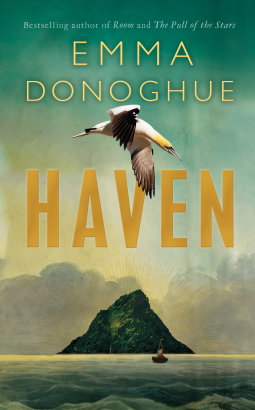
Another novel set on an island is Haven by Emma Donoghue (2). In 7th century Ireland, three monks set out on a pilgrimage to look for an isolated place to build a monastery. Their search takes them to the steep, rocky island of Skellig Michael, uninhabited except for thousands of birds. The novel follows the monks as they try to establish their new settlement and prepare for a life of seclusion. It’s more interesting than it sounds, although I’ve preferred other books by Donoghue.

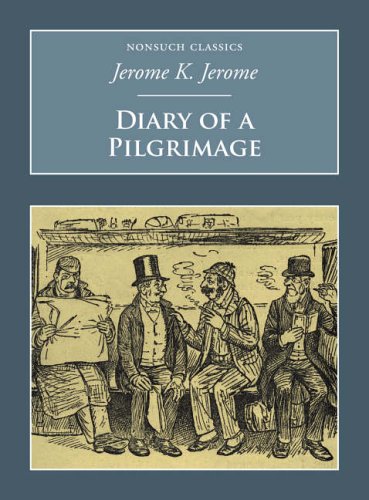
A pilgrimage of a very different sort takes place in Jerome K. Jerome’s Diary of a Pilgrimage (3). First published in 1891, the Diary is narrated by J, an Englishman who travels to Germany with a friend to see the famous Passion Play at Oberammergau. Although it’s not as funny as Jerome’s Three Men in a Boat, it is written in a similar style, with J sharing amusing anecdotes about the things he experiences and people he meets during the journey.

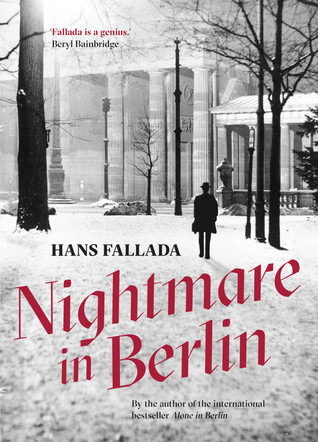
Staying with books set in Germany, my next link is to Nightmare in Berlin by Hans Fallada (4). Despite the title, there’s no connection to Fallada’s more famous book, Alone in Berlin, and this is a completely separate novel, following the story of Dr Doll and his wife Alma in post-war Berlin. Apparently the book is very autobiographical, as Fallada himself, like Dr Doll in the novel, was appointed mayor of a small rural town after the war and later struggles with a serious morphine addiction. I read a translation by Allan Blunden from 2016 (the first time the book was made available in English).

Nightmares are bad dreams and the title of my next book is the opposite – Dreams of Joy by Lisa See (5). Set in the 1950s, this is the sequel to See’s Shanghai Girls and follows nineteen-year-old Joy Louie as she leaves her home in Los Angeles to travel to Shanghai, full of enthusiasm for Chairman Mao’s new communist China. As you can imagine, the story isn’t very joyful at all and Joy eventually begins to learn that the new regime isn’t as wonderful as she hoped.

Another book about Communist China, a non-fiction one this time, finishes my chain. It’s Wild Swans (6), Jung Chang’s autobiography, telling the stories of her grandmother, mother and finally herself and taking us on a journey through the history of 20th century China. I found this book fascinating and was able to learn a lot from it; it’s also one of the most gripping non-fiction books I’ve ever read.

~

And that’s my chain for May! My links have included: falling overboard, islands, pilgrimages, books set in Germany, good and bad dreams and Communist China.

In June we’ll be starting with Butter by Asako Yuzuki.

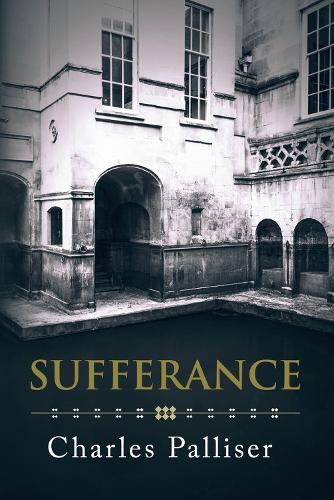
Sufferance by Charles Palliser

Charles Palliser is probably best known as the author of The Quincunx, a long and twisty Dickensian novel which I read and loved years ago, but he has also written five more books including The Unburied and this new one, Sufferance.

Sufferance is a strange novel as none of the characters are named – not even the narrator – and we are not told where or when the story is set. However, it’s obvious enough that we are reading about an occupied European city during the Second World War and at the start of the novel, the Enemy has divided the city into Western and Eastern Zones. We also know that our narrator is a respectable, law-abiding man who works for the government and has a wife and two teenage daughters.

When the narrator’s youngest daughter brings a friend home from school and explains that the girl’s parents have become trapped in the other zone, unable to return to their house, he thinks he is doing the right thing by inviting her to stay with them until her parents come back. He doesn’t expect it to be for long – and it seems that the girl’s parents are wealthy people, who might repay the family for their kindness when they return. Unfortunately, a series of government announcements makes it clear that the girl belongs to a ‘protected community’, who are gradually having their rights taken away and are being closely monitored by the Enemy occupiers.

As the weeks and months go by with no news of the girl’s parents, our narrator and his wife become increasingly anxious and afraid. What will happen if the authorities discover that they are sheltering one of the protected community? To make things worse, the girl has proved to be a selfish, manipulative person who seems ungrateful for the help she has been given and completely unaware of the danger all of them are facing. Tensions within the family start to build as they struggle to agree on how to deal with the situation, but things are only going to get worse the longer they wait.

This is an excellent novel; the vagueness surrounding names, dates and places, which I could have found irritating in another book, is used very effectively here to create a sinister, unsettling atmosphere. Although the historical parallels are very obvious, we are left with the impression that the things described could happen anywhere, at any time and to anybody. The sense of fear and desperation felt by the narrator comes across very strongly, as with the introduction of identity cards, rationing and new laws regarding the girl’s community, he becomes aware that he is committing a crime.

Sufferance is a fascinating exploration of how each decision we make can have serious consequences and how quickly things can spiral out of control. I loved it and really must find time to re-read The Quincunx!

Thanks to Guernica Editions for providing a copy of this book for review via NetGalley.

The Walter Scott Prize Shortlist 2024

The shortlist for the 2024 Walter Scott Prize for Historical Fiction has been announced today! Thanks to this prize, I have discovered lots of great books and authors over the last few years and always look out for the longlists and shortlists; in fact, trying to read all of the shortlisted titles since the prize began in 2010 is a personal project of mine (you can see my progress here).

From the longlist of twelve books which was revealed in February, I had previously read Cuddy by Benjamin Myers, Music in the Dark by Sally Magnusson, For Thy Great Pain Have Mercy on My Little Pain by Victoria MacKenzie and My Father’s House by Joseph O’Connor. Since the longlist announcement, I have also now read The Fraud by Zadie Smith and Hungry Ghosts by Kevin Jared Hosein (not yet reviewed). But did any of the books I’ve read make the shortlist? Let’s find out…

The 2024 Walter Scott Prize Shortlist

The New Life by Tom Crewe (Chatto & Windus)

London, 1894. John and Henry have a vision for a new way of life. But as the Oscar Wilde trial ignites public outcry, everything they long for could be under threat.

After a lifetime spent navigating his desires, John has finally found a man who returns his feelings. Meanwhile, Henry is convinced that his new unconventional marriage will bring freedom. United by a shared vision, they begin work on a revolutionary book arguing for the legalisation of homosexuality.

Before it can be published however, Oscar Wilde is arrested and their daring book threatens to throw them, and all around them, into danger. How high a price are they willing to pay for a new way of living?

***

Hungry Ghosts by Kevin Jared Hosein (Bloomsbury)

On a hill overlooking Bell Village sits the Changoor farm, where Dalton and Marlee Changoor live in luxury unrecognisable to those who reside in the farm’s shadow. Down below is the barrack, a ramshackle building of wood and tin, divided into rooms occupied by whole families. Among these families are the Saroops – Hans, Shweta, and their son, Krishna, who live hard lives of backbreaking work, grinding poverty and devotion to faith.

When Dalton Changoor goes missing and Marlee’s safety is compromised, farmhand Hans is lured by the promise of a handsome stipend to move to the farm as watchman. But as the mystery of Dalton’s disappearance unfolds their lives become hellishly entwined, and the small community altered forever.

Hungry Ghosts is a mesmerising novel about violence, religion, family and class, rooted in the wild and pastoral landscape of 1940s colonial central Trinidad.

***

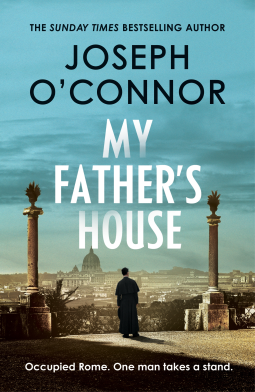
My Father’s House by Joseph O’Connor (Harvill Secker)

September 1943: German forces occupy Rome. SS officer Paul Hauptmann rules with terror.

An Irish priest, Hugh O’Flaherty, dedicates himself to helping those escaping from the Nazis. His home is Vatican City, a neutral, independent country within Rome where the occupiers hold no sway. He gathers a team to set up an Escape Line.

But Hauptmann’s net begins closing in and the need for a terrifyingly audacious mission grows critical. By Christmas, it’s too late to turn back.

Based on a true story, My Father’s House is a powerful thriller from a master of historical fiction. It is an unforgettable novel of love, sacrifice and what it means to be human in the most extreme circumstances.

***

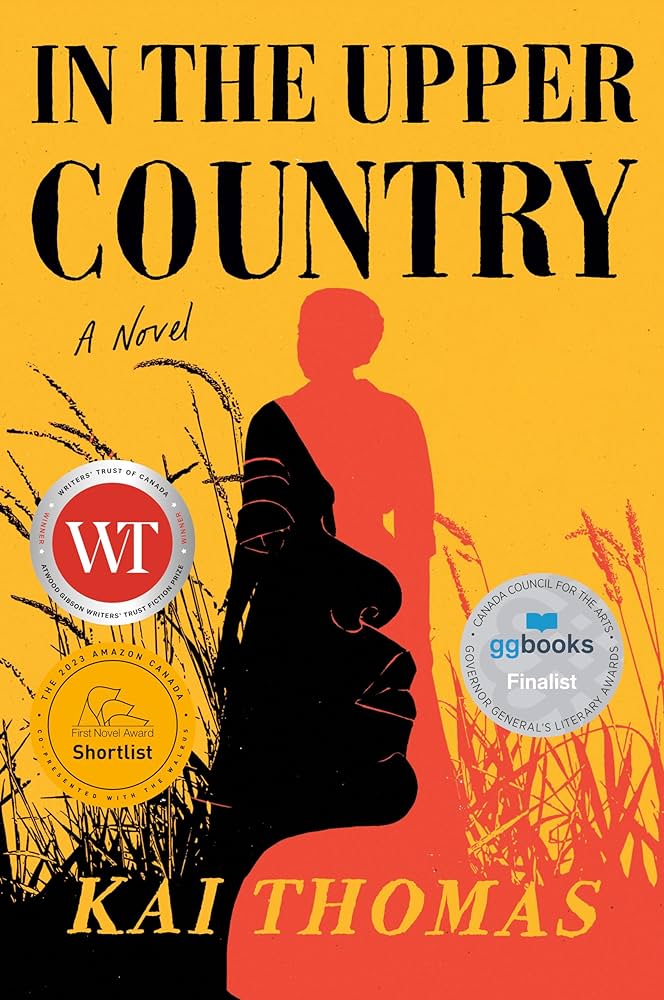
In the Upper Country by Kai Thomas (Penguin Canada)

In 1859, deep in the forests of Canada, an elderly woman sits behind bars. She came to Dunmore via the Underground Railroad to escape enslavement, but an American bounty hunter tracked her down. Now she’s in jail for killing him, and the fragile peace of Dunmore, a town settled by people fleeing the American south, hangs by a thread.

Lensinda Martin, a smart young reporter, wants to gather the woman’s testimony before she can be condemned, but the old woman has no time for confessions. Instead she proposes a barter: a story for a story.

As the women swap stories – of family and first loves, of survival and freedom against all odds – Lensinda must face her past. And it seems the old woman may carry a secret that could shape Lensinda’s destiny.

***

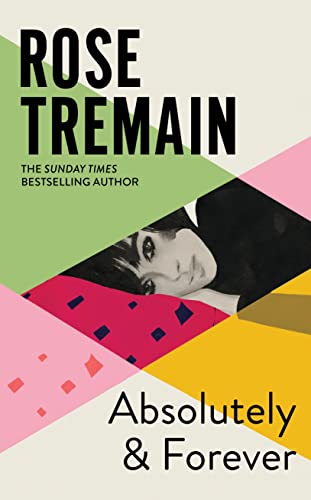
Absolutely and Forever by Rose Tremain (Chatto & Windus)

Marianne Clifford, teenage daughter of a peppery army colonel and his vain wife, falls helplessly and absolutely for eighteen-year-old Simon Hurst, whose cleverness and physical beauty suggest that he will go forward into a successful and monied future, helped on by doting parents. But fate intervenes. Simon’s plans are blown off course, he leaves for Paris and Marianne is forced to bury her dreams of a future together.

It is Marianne who tells this piercing story of first love, characterising herself as ignorant and unworthy, whilst her smart, ironic narration tellingly reveals so much more. Finding her way in 1960s Chelsea, and supported by her courageous Scottish friend, Petronella, she continues to seek the life she never stops craving. And in Paris, beneath his blithe exterior, Simon Hurst continues to nurse the secret which will alter everything.

***

The House of Doors by Tan Twan Eng (Canongate)

It is 1921 and at Cassowary House in the Straits Settlements of Penang, Robert Hamlyn is a well-to-do lawyer and his steely wife Lesley a society hostess. Their lives are invigorated when Willie, an old friend of Robert’s, comes to stay.

Willie Somerset Maugham is one of the greatest writers of his day. But he is beleaguered by an unhappy marriage, ill-health and business interests that have gone badly awry. He is also struggling to write. The more Lesley’s friendship with Willie grows, the more clearly she see him as he is – a man who has no choice but to mask his true self.

As Willie prepares to leave and face his demons, Lesley confides secrets of her own, including how she came to know the charismatic Dr Sun Yat Sen, a revolutionary fighting to overthrow the imperial dynasty of China. And more scandalous still, she reveals her connection to the case of an Englishwoman charged with murder in the Kuala Lumpur courts – a tragedy drawn from fact, and worthy of fiction.

~

So, of the six books I’ve read from the longlist, only two of them have appeared on the shortlist! I’m very surprised not to see Cuddy here as I thought it was the sort of book the judges would have gone for – but obviously not. Of the two that I’ve read, I enjoyed My Father’s House but didn’t like Hungry Ghosts very much, for reasons I’ll explain when I post my review. I’ve also just started reading The House of Doors, but it’s too early to say what I think of it yet.

What do you think? Have you read any of these or would you like to read them?

The winner will be announced at the Borders Book Festival in Melrose in June.

My Commonplace Book: April 2024

A selection of quotes and pictures to represent April’s reading:

commonplace book
noun
a book into which notable extracts from other works are copied for personal use.

~

“A man cannot fight a disease in his body, but he can fight against wickedness if he is so minded – therefore he must be blamed for wickedness.”

Rosabelle Shaw by D.E. Stevenson (1937)

~

“It’s more like my missus’s skein of knitting wool, after one of the kittens has had it, than a decent murder case. I mean, you get hold of one end and start following it up, and all it leads to is a damned knot worked so tight you can’t do a thing with it. Then you grab hold of the other end, and start on that, and what you find is that it’s a bit the kitten chewed through that just comes away in your hand, with the rest of the wool in as bad a muddle as ever.”

They Found Him Dead by Georgette Heyer (1937)

~

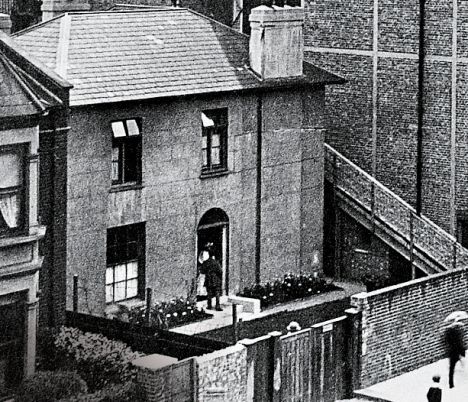
Urania Cottage, Shepherd’s Bush

‘Sometimes it’s as though life is a balance sheet of who you have in your life and who you’ve lost. And very often they aren’t fairly weighted.’

The Household by Stacey Halls (2024)

~

It was, Nat thought, like air raids in the war. No one down this end of the country knew what the Plymouth folk had seen and suffered. You had to endure something yourself before it touched you.

A Different Sound, edited by Lucy Scholes (2023) – quote from The Birds by Daphne du Maurier

~

Even temporary lovers are apt to leave scars on their departure. Permanent lovers leave a cut that never quite heals.

Caroline England by Noel Streatfeild (1937)

~

It was perhaps a paradox that forty years as a criminal barrister had persuaded him to see the best in the worst of people, but then again he had always worked in defence and had learned that although everyone had the capacity to commit murder, even the most cold-blooded killers had a grain of goodness buried somewhere inside them, if you just looked hard enough. Fear, guilt, remorse…it took many forms, but he had never met anyone with no humanity at all.

Close to Death by Anthony Horowitz (2024)

~

Northern Range, Trinidad

Even in an unfair battle, there must be some way forward, some missed road to victory. Once one recognises that not all fights are won with square blows and that anything can go, there are no unwinnable fights.

Hungry Ghosts by Kevin Jared Hosein (2023)

~

There is perhaps nothing that gives one so strong a sense of theatre from the inside as the sound of invisible players in action. The disembodied and remote voices, projected at an unseen mark, the uncanny quiet offstage, the smells and the feeling that the walls and the dust listen, the sense of a simmering expectancy; all these together make a corporate life so that the theatre itself seems to breathe and pulse and give out a warmth. This warmth communicated itself to Martyn and, in spite of all her misgivings, she glowed and thought to herself, “This is my place. This is where I belong.”

Opening Night by Ngaio Marsh (1951)

~

Favourite book read in April:

Close to Death

Authors read for the first time in April:

Diana Gardner, Penelope Mortimer, Frances Bellerby, Inez Holden, Attia Hosain, Sylvia Townsend Warner (all from A Different Sound), Kevin Jared Hosein

Countries visited in my April reading:

England, Scotland, Trinidad (must do better next month!)

~

Reading notes: My reading in the first half of April was dominated by books for 1937 Club; I enjoyed all three of my choices and am now looking forward to 1970 Club in October! I was also pleased that I found time to fit in a book for Reading the Theatre. In May there are no reading events that I’m planning to take part in, so I will focus on catching up with my NetGalley review copies and maybe making some progress with my Classics Club list!

How was your April? What are you planning to read in May?

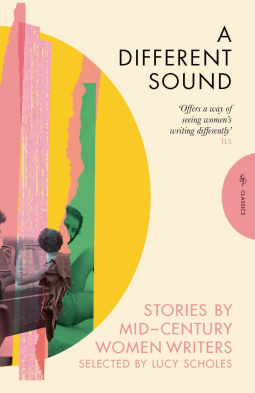
A Different Sound: Stories by Mid-Century Women Writers edited by Lucy Scholes

This is a fascinating collection of short stories, all written by women and originally published in the 1940s and 50s. When I saw the list of authors included in the book, there were several I’d already read, others I’d heard of but never read, and a few that were completely new to me. There are eleven stories in total and as always when writing about collections like this, I’ll have more to say about some of them than others!

There’s only one story in this collection that I’ve read before – and that’s The Birds by Daphne du Maurier. As she’s one of my favourite authors, I decided to read it again and found it just as wonderful and atmospheric as I did the first time. Rather than discuss it again here, I’ll direct you to my previous review and will just add that even if you’ve seen the Hitchcock film, I would still recommend reading the story which is quite different in several ways.

Elizabeth Jane Howard is an author I’m familiar with through her Cazalet Chronicles (I’ve read the first two books in the series and am planning to read the others) and she is represented here with Three Miles Up, an eerie story in which two men are taking a trip through the countryside on a canal boat when they encounter a young woman called Sharon. Once Sharon joins them on the boat, things begin to go wrong and they find themselves sailing up a canal that doesn’t appear on any maps. I loved this one, although I wasn’t aware that Howard wrote ghost stories so it wasn’t what I’d expected at all.

The other two authors I’ve read previously are Stella Gibbons and Elizabeth Taylor. The Gibbons story, Listen to the Magnolias, is set during the war and involves an elderly widow nervously awaiting the arrival of five American soldiers who will be billeted in her home, while Taylor’s The Thames Spread Out follows a woman who is trapped upstairs in her house during a flood while swans swim at the bottom of her staircase. I liked both of these, particularly the second.

Apart from The Birds, my favourite story in the book turned out to be The Skylight by Penelope Mortimer, in which a woman and her young son rent a house in a remote area of France but arrive to find the doors all locked and no sign of the owners. The only point of access is an open skylight in the roof and the mother makes a decision she quickly comes to regret. Mortimer creates a real sense of fear and tension in this story and I couldn’t wait to reach the end to find out if everything was going to be okay!

Considering the publication dates, the Second World War naturally plays a part in many of these stories – I’ve already mentioned the Stella Gibbons, but another is Diana Gardner’s wonderful story, The Land Girl, about a young woman placed on a farm as a Land Girl who takes an instant dislike to the woman whose home she is staying in and decides, out of spite and jealousy, to cause trouble for her.

The stories above are the ones that really stood out for me in this collection, but I enjoyed all of them to some extent, apart from maybe Elizabeth Bowen’s Summer Night which I found well written but confusing due to the structure and changing perpectives. I was also slightly disappointed by Sylvia Townsend Warner’s Scorched Earth Policy about an elderly couple preparing for a wartime invasion, simply because it was too short for any real plot or character development. It was nice to discover some authors I’d never come across before, though: Frances Bellerby, who in The Cut Finger tells the story of a little girl learning some important lessons about the world; Inez Holden whose Shocking Weather, Isn’t It? follows a woman who visits her cousin in various different places over the years; and Attia Hosain who explores the feelings of a newly married woman struggling to fit in with her husband’s friends in The First Party.

I can definitely recommend this collection; I found something to interest me in every story, even the ones I didn’t enjoy as much. I also now have a list of authors I need to explore further!

Thanks to Pushkin Press Classics for providing a copy of this book for review via NetGalley.

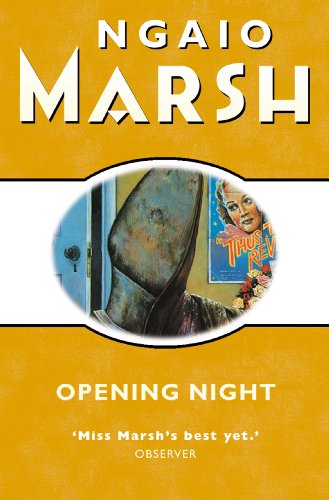
Opening Night by Ngaio Marsh

Opening Night (also published as Night at the Vulcan) is the sixteenth book in Ngaio Marsh’s Inspector Roderick Alleyn series and like many of her novels has a theatrical setting, which makes it perfect for Reading the Theatre, hosted this month by Lory of Entering the Enchanted Castle.

Published in 1951, the novel opens with Martyn Tarne, a young woman from New Zealand, arriving in London to look for acting work. After an exhausting day of unsuccessful auditions and meetings with agents, she eventually finds herself at the door of the Vulcan Theatre where rehearsals are about to begin for a new play, Thus to Revisit. Disappointingly, the play has already been cast, but there’s a vacancy for a dresser to the leading actress, Helena Hamilton, and Martyn finds herself accepting the job.

The next 100+ pages (of a 240 page book) are devoted to describing the backstage preparations for the play, Martyn’s work as first a dresser and then an understudy, and the relationships and interactions between the various members of the cast. There is no hint of any crime until we reach the middle of the book and no sign of Inspector Alleyn either until after the halfway point. I think how much you enjoy this novel will depend on whether you picked it up just because you wanted to read a murder mystery or because you were drawn to the setting.

The crime, when it eventually occurs, involves the death on opening night of one of the actors, Clark Bennington, who is found unconscious backstage after inhaling gas. Suicide is assumed – everyone knows that Bennington has been unhappy and has a drinking problem – but when Alleyn arrives to investigate, he quickly decides that the man was murdered. There are plenty of suspects and motives; for a start, Bennington was married to Helena Hamilton, who has openly been having an affair with one of the other actors, Adam Poole. Also, Bennington is known to have had several heated arguments and altercations before and during the opening night. And to complicate things further, Martyn Tarne’s arrival at the Vulcan has not been welcomed by everyone, least of all Gay Gainsford, a young actress who feels that her role in the company is threatened by Martyn.

Although I would have preferred the murder to have come earlier in the book, once it does happen and Alleyn’s investigation gets under way, the mystery becomes quite an interesting and compelling one. I guessed who the murderer was, but not the motive – and I think it would be very difficult to work that out before it’s revealed right at the end of the book. The mystery is definitely secondary to the setting in this novel, though; Ngaio Marsh herself was a theatre director and her love and knowledge of the theatre comes through very strongly.

Have you read any of Marsh’s Inspector Alleyn novels, theatrical or otherwise? I’ve read very little of her work compared to other Golden Age crime writers so would love to hear your recommendations.