Restless Dolly Maunder by Kate Grenville

Kate Grenville is an author I’ve wanted to read for years but never have, so I’m pleased to have finally had an opportunity to try one of her books. Restless Dolly Maunder is a short novel, inspired by the life of Grenville’s own maternal grandmother, Sarah Catherine Maunder (known to everyone as Dolly).

Dolly is born on a sheep farm in Currabubula, New South Wales in 1881, the sixth of seven children. Her older brothers and sisters can barely read and write, attending school only when their parents can spare them, but by the time Dolly reaches school-age, attendance has become compulsory. Dolly is a bright, intelligent girl and decides that she wants to continue her education and become a teacher after leaving school. Unfortunately, it’s not her decision to make – her father’s permission is required and he refuses to give it, saying that “over my dead body” will a daughter of his go out to work.

As the years go by, Dolly’s siblings begin to marry and move away, while Dolly herself stays on the farm with her parents, eventually marrying Bert Russell, an old friend from school who comes to work for her father. When Dolly discovers that her mother has been keeping a terrible secret from her, she decides that it’s time she and Bert started a new life somewhere else. Aware that farming leaves them at the mercy of the weather, they agree to try something completely different – running a little grocery shop in Wahroonga. It proves to be a success, but Dolly is still not satisfied…in fact, it seems that she’s never going to be satisfied, with anything.

The rest of the novel follows Dolly, Bert and their three children as they move around from place to place, from one business venture to another. Although I did initially have a lot of sympathy for Dolly and understood her desire to make something meaningful of her life, having had her dreams of becoming a teacher destroyed by her father, as the book went on I began to dislike her more and more. It seemed that she was only ever thinking of herself, giving no consideration at all to the effect on her children of constantly being uprooted and disrupted. She was a cold, unloving mother and although she was aware of her faults, she made no attempt to change.

Despite the unlikeable protagonist – and Grenville acknowledges herself in her author’s note that her grandmother was a difficult woman to love – I did enjoy this book. It was interesting to get some insights into life in Australia in the late 19th and early 20th centuries. The family live through both World Wars and although the first leaves them largely untouched, by the time the second comes around Bert and Dolly have sons of fighting age, so are affected in a much more personal way. With this being my first experience of a Kate Grenville book, I didn’t know what to expect from her writing, but I found it very readable. She doesn’t use speech marks, which usually annoys me, but it didn’t bother me too much here, maybe because it’s not a particularly dialogue-heavy book. I’ll look forward to reading more of her work.

Thanks to Canongate for providing a copy of this book for review via NetGalley.

This is book 50/50 for the 2023 Historical Fiction Reading Challenge.

The Fake Wife by Sharon Bolton

I very rarely choose to pick up a contemporary crime novel, but I’m always happy to make an exception for Sharon Bolton. I think I’ve read all of her novels but one and have loved nearly all of them, so I had high hopes for her newest book, The Fake Wife, published last month.

The novel begins on a snowy evening just before Christmas when Olive Anderson, on her way home from a business trip, is staying at a hotel in Hexham, Northumberland. She has managed to get a table in the busy hotel restaurant, but when she enters the dining room she is surprised to see another woman sitting in her place. With no other tables available, Olive agrees to dine with the stranger, but is even more surprised when the woman tells the waiter that she and Olive are a married couple. For some reason even Olive can’t explain, she finds herself going along with the story and accompanying her ‘wife’ back to her hotel room after the meal.

PC Garry Mizon has twice tried and failed to qualify as a detective and has had to settle for a job with the traffic police, patrolling the roads at night and in bad weather. When politician Michael Anderson reports his wife, Olive, missing, Garry is ordered to accompany DS Lexy Thomas to interview him. Believing Olive may have had an accident on the country roads after leaving her hotel, Garry and Lexy head out into the snow to see if they can track her down. Olive, however, isn’t the first woman connected with Michael Anderson who has gone missing and to get to the truth behind her disappearance, Garry and Lexy will need to delve into the politician’s past and the story of his first wife, Eloise.

When I first started to read The Fake Wife, I wasn’t at all sure that I was going to like this particular Bolton novel. Those opening scenes in the hotel seemed ridiculously contrived – Olive’s reaction to having a strange woman stealing her table then pretending to be her wife certainly wasn’t the way I would have reacted! – and as I read on, other parts of the plot felt very implausible as well. It was also clear from early on that there was going to be a lot more sexual content in this book than you normally get from Bolton, something which I don’t really enjoy. Somewhere after the first few chapters, however, I became immersed in the story and then it didn’t really matter how far-fetched the beginning had been. I’m glad I didn’t abandon it, because otherwise I would have missed out on all the twists and turns of the plot as the novel headed towards its conclusion – and I wouldn’t have got to know Garry Mizon.

Garry is a wonderfully endearing character, one of my favourites in all of Sharon Bolton’s books. He’s one of those people who always try their best, yet nothing ever seems to go right for them, as we see at the beginning of the book when he makes a catastrophic and embarrassing mistake during a raid. Having proved yet again his unsuitableness for detective work, he is only asked to drive Lexy to the Andersons’ because nobody else is available, but as the investigation begins to unfold, we quickly discover that he is much more intelligent and resourceful than his superiors think he is – as well as being a genuinely nice person. He and Lexy make a great team and I would love to meet them again in a future book, although I suspect this is probably just going to be a standalone.

This book isn’t a favourite by Bolton, then, but the characters made it worthwhile. It’s also the perfect novel to read at this time of year, as so much of it is set outdoors in the snow. I’ll look forward to her next book, but meanwhile I really need to find time to go back and read Blood Harvest, which I think is the only one I still haven’t read!

Thanks to Orion for providing a copy of this book for review via NetGalley.

A Footman for the Peacock by Rachel Ferguson

This month, Liz at Adventures in Reading, Running and Working from Home is hosting another Dean Street Press December. I hope I’ll manage to read more than one book for this, but I decided to start with one that was sent to me for review by Dean Street Press back in 2016. I do feel guilty about not reading it sooner, but had been put off by some mixed reviews, as well as that ongoing problem shared by all readers – too many books and too little time!

A Footman for the Peacock (first published in 1940) is a strange novel, nothing at all like the only other Rachel Ferguson book I’ve read, Alas, Poor Lady. It’s going to be a difficult book to describe, but I’ll do my best! On the surface, it’s the story of the Roundelay family who live at Delaye, a large country house in the fictional English county of Normanshire. In 1939, when the novel begins, the household consists of Sir Edmund, the head of the family, (who isn’t quite sure why he has been knighted – maybe it was a mistake), his wife Lady Evelyn and their two daughters, practical, down-to-earth Margaret and the more sensitive Angela. There are also three elderly aunts, two of whom haven’t spoken to each other for many years and go to great lengths to continue their silent feud, a cousin and an assortment of servants, including ninety-year-old Nursie, who is suffering from dementia.

Like many aristocratic families in the years between the wars, the Roundelays are finding that money is becoming a problem and the upkeep of such a large estate is much more difficult than it used to be. The house is falling into disrepair, they have no car and Lady Evelyn does the food shopping herself by bus. Despite this, the Roundelays still have the views and attitudes of their class and when it is eventually announced that Britain is at war with Germany, they display a shocking lack of interest in how it will affect anyone other than themselves.

The whole of the first half of the book is devoted to introducing the various members of the household, with some amusing anecdotes about their lives, and describing the history of the house and its surrounding towns and villages. Nothing much actually happens at all until the war breaks out – and even then, there’s not really any plot to speak of, just a series of episodes in which the family prepare their gas masks, cover their doors and windows for the blackout, and use any excuse they can think of to refuse to take in even a single evacuee. Their total selfishness and lack of compassion for those less privileged than themselves makes uncomfortable reading, but Ferguson doesn’t really make it clear whether she expects the reader to feel angry with them, to have sympathy for them or just to experience a feeling of recognition that, unfortunately, the way the Roundelays react to the evacuee situation is probably the way many people reacted and still would today.

Also in the second half of the book, the peacock of the title is brought to the forefront of the story – and yes, it’s a real peacock, who wanders the grounds of Delaye, bad-tempered, noisy and prone to attack anyone other than Sue Privett, the maid. There is an unusual connection between the peacock and the words inscribed on the window of a disused bedroom: “Heryn I dye. Thomas Picocke 1792”. Thomas Picocke, we soon discover, was a ‘running footman’ at Delaye in the 18th century – a servant who would literally run ahead of his employer’s carriage to smooth their journey and prepare for their arrival at their destination. Not a nice job and Picocke’s story, when it begins to unfold, is quite sad, as well as merging with the story of the Delaye peacock in a bizarre and unexpected way.

There are lots of great ideas in this book, then, but the lack of any overarching plot means the separate parts of the novel don’t work together as well as they should. It feels like a rambling, directionless mess, but that doesn’t mean I didn’t enjoy it at all. Ferguson’s portrayal of an upper-class family’s attitude to war is fascinating (and apparently caused some controversy when the book was first published), the eccentric characters are entertaining to read about, and I was intrigued by the little touches of the supernatural in the peacock storyline. I would be happy to try the other two Rachel Ferguson books currently available from Dean Street Press, Evenfield and A Harp in Lowndes Square, but maybe not immediately!

The Winter Spirits: Ghostly Tales for Frosty Nights

The Winter Spirits: Ghostly Tales for Frosty Nights is a collection of twelve new ghost stories written by popular authors of historical and Gothic fiction, all with a Christmas or Advent theme. It’s a follow-up to The Haunting Season, which I haven’t read but which includes eight of the same authors. This is the perfect time of year for ghost stories, so maybe I’ll look for the previous book next winter.

Back to The Winter Spirits and most of the stories are set in the 19th or early 20th centuries, giving them a traditional feel. More variety would have been nice – not just in the time periods, but also in the geographical settings, as the majority take place in Britain, with one or two in America or elsewhere in Europe – but otherwise I really enjoyed this collection. I’ve previously read full-length novels by most of the featured authors, but three of them were new to me: Andrew Michael Hurley, Catriona Ward and Susan Stokes-Chapman. I felt that Hurley’s The Old Play and Stokes-Chapman’s Widow’s Walk were two of the weaker stories, but looking at other reviews, some readers have singled them out as favourites, so I think it’s just a case of different stories appealing to different people! Ward’s contribution, Jenkin, was completely bizarre but added some diversity as it felt quite unlike any of the others.

The biggest surprise, for me, was Natasha Pulley’s The Salt Miracles; I really didn’t get on with her writing style in her novel The Bedlam Stacks, so I wasn’t expecting too much from this tale of disappearing pilgrims on a remote Scottish island (based on St Kilda). However, I ended up loving it – it’s such an unusual and chilling story! Inferno by Laura Shepherd-Robinson, one of my current favourite historical fiction authors, is another I particularly enjoyed – a wonderfully eerie story set in 18th century Italy, where a man is forced to confront his sins. Even better than both of these is Stuart Turton’s creepy and imaginative The Master of the House, in which a young boy who is being neglected by his father makes a deal with the devil. This one feels almost like a very dark fairytale and is one of the highlights of the book.

Of the twelve authors, Laura Purcell is probably the most well established as a writer of horror fiction and she doesn’t disappoint here with Carol of the Bells and Chains, in which a governess trying to deal with two unruly children tells them the story of the Krampus, with unintended consequences. Imogen Hermes Gowar’s A Double Thread, where a woman gets her comeuppance after badly treating her hardworking seamstress, is another I really enjoyed – it made me long for another novel by Gowar, as it’s been a few years since The Mermaid and Mrs Hancock!

The remaining stories are by Elizabeth Macneal, Bridget Collins, Jess Kidd and Kiran Millwood Hargrave. With a range of different styles and subjects, unless you just don’t like ghost stories I think this collection should contain something to please almost every reader.

Thanks to Sphere for providing a copy of this book for review via NetGalley.

The Black Crescent by Jane Johnson

Jane Johnson is a British author who has set several of her novels in Morocco, her husband’s country, with each book exploring a different period in Morocco’s history. The Black Crescent is set in the 1950s, during the time of the French protectorate, when support for Moroccan independence was building momentum.

Our narrator, Hamou Badi, grows up in the remote mountain village of Tiziane, a place where the people still cling to ancient traditions and superstitions. Due to the lines on his hands, Hamou himself is said to be a ‘zouhry’, a legendary figure blessed by a djinn and capable of locating treasure and detecting sources of water. However, it is not treasure that eleven-year-old Hamou finds one day in 1939, but the body of a woman, hidden amongst the palm trees by a dried up riverbed. The lack of interest shown by the French authorities in trying to solve this murder leads to Hamou’s decision to become a police officer and ensure that future victims of crime are given the justice they deserve.

Several years later, in 1955, we rejoin Hamou in Casablanca, where he is now working for the Sûreté, the police force of the French colonialists who are still ruling the country. Hamou takes his job seriously, trying to maintain law and order on the streets of Casablanca, but he quickly discovers that many of his fellow Moroccans see him as a traitor and someone not to be trusted. As the independence movement continues to gather force, Hamou finds himself caught between the two sides and must decide which is most important to him – loyalty to his country or to the employer who pays his wages.

The Black Crescent is a fascinating novel, particularly as I previously had such limited knowledge of French-ruled Morocco. I knew nothing about the work of the Istiqlal (independence) Party or the tensions and unrest following France’s exile of Sultan Mohammed V in 1953. Hamou is the perfect choice of narrator, with one foot in both worlds, showing us that there are good and bad people on both sides. Johnson has clearly researched this period thoroughly (she provides a list of her sources in her author’s note) and writes with an understanding and sympathy for the aims of the Moroccans in attempting to overthrow their French occupiers, but without condoning the violence used by some groups such as the ‘Black Crescent’ of the title.

Hamou is portrayed as an honourable, kind-hearted man trying to navigate his way through a difficult situation and I found him easy to like. He also has a love interest – a young woman he meets in Casablanca – but it only plays a small part in the book and I was just as captivated by the relationship he forms with Madani, the little black cat he rescues and adopts. The book did feel very slow-paced and took much longer to read than I’d expected based on the length, but it held my interest throughout and I learned a lot from it. I wish I’d known there was a glossary at the end of the book, but I was able to understand most of the Moroccan terms from the context anyway, so that wasn’t too much of a problem!

I think The Sultan’s Wife, set in 17th century Morocco, is still my favourite Jane Johnson book so far, but there are three of her earlier novels I haven’t read yet, so that could change!

Thanks to Head of Zeus for providing a copy of this book for review via NetGalley.

This is book 49/50 for the 2023 Historical Fiction Reading Challenge.

Six Degrees of Separation: From Kitchen Confidential to The Thirteenth Tale

It’s the first Saturday of the month, which means it’s time for another Six Degrees of Separation, hosted by Kate of Books are my Favourite and Best. The idea is that Kate chooses a book to use as a starting point and then we have to link it to six other books of our choice to form a chain. A book doesn’t have to be connected to all of the others on the list – only to the one next to it in the chain.

This month we’re starting with Kitchen Confidential by Anthony Bourdain. I haven’t read it and I’m not likely to, but here’s what it’s about:

After twenty-five years of ‘sex, drugs, bad behaviour and haute cuisine’, chef and novelist Anthony Bourdain has decided to tell all. From his first oyster in the Gironde to his lowly position as a dishwasher in a honky-tonk fish restaurant in Provincetown; from the kitchen of the Rainbow Room atop the Rockefeller Center to drug dealers in the East Village, from Tokyo to Paris and back to New York again, Bourdain’s tales of the kitchen are as passionate as they are unpredictable, as shocking as they are funny.

Using food and kitchens as my first link, John Saturnall’s Feast by Lawrence Norfolk (1) is set in the 17th century and tells the story of John Sandall, an orphan who is taken into the household of a wealthy nobleman, Sir William Fremantle. With his knowledge of food and ancient recipes, John is given the task of creating a meal to tempt Sir William’s daughter, who is refusing to eat as a protest against an arranged marriage. This is a complex, multi-layered novel with an unusual plot and a vivid portrayal of life in the kitchen!

The Feast by Margaret Kennedy (2) shares a word in the title, but is a very different book. Published in 1950, it follows a week in the lives of a group of guests who are staying in a hotel on the coast of Cornwall. We know from the beginning that by the end of the week the hotel will have been destroyed by a cliff collapsing on top of it, but we don’t know who will survive and who won’t. I really enjoyed this one; it’s one of my favourites so far by Margaret Kennedy.

Although it doesn’t form a big part of the plot, some of the characters in The Feast have traits that represent one of the seven deadly sins, which I thought was a clever touch. Anne Zouroudi’s Greek Detective series, which follows the investigations of the mysterious Hermes Diaktoros, also uses one of the seven sins as a theme for each novel. The Doctor of Thessaly (3) is the third book in the series, although they can be read in any order, and this one has ‘envy’ as its theme.

I haven’t read many authors whose surname begins with the letter Z, but one of them is Émile Zola. I’ve read three of his books so far and my favourite is Thérèse Raquin (4), the first one I read and a standalone novel which is not part of his longer Rougon-Macquart cycle. This is a very dark novel about two people who commit a terrible crime and the psychological effect this has on the rest of their lives.

I’m going to use a word in the title again for my next link, which leads me to 13, rue Thérèse by Elena Mauli Shapiro (5). This unusual and imaginative novel begins with a man discovering a box full of photographs, letters, postcards and other items that once belonged to Louise Brunet, a Frenchwoman who lived through both world wars. We are given a picture of each item, followed by a few pages of story describing the item’s significance and background, and gradually Louise’s history begins to unfold.

My final link uses the number 13. The Thirteenth Tale by Diane Setterfield (6) is the story of a young woman who agrees to write the biography of a reclusive author. It’s an entertaining read, clearly inspired by several classic Gothic novels, and I described it in my review as a tale of ‘Yorkshire moors, twins, mistaken identities, ghosts and governesses’.

~

And that’s my chain for this month! My links have included: Kitchens, the word ‘Feast’, the seven deadly sins, author names beginning with Z, the name Thérèse and the number thirteen.

In January we’ll be starting with Tomorrow and Tomorrow and Tomorrow by Gabrielle Zevin.

My Commonplace Book: November 2023

A selection of quotes and pictures to represent November’s reading:

commonplace book
noun
a book into which notable extracts from other works are copied for personal use.

~

Kosuke Kindaichi was reading in bed. Despite how slovenly it might appear, he found that if he did not do so in bed, then nothing he read actually made an impression.

The Devil’s Flute Murders by Seishi Yokomizo (1953)

~

“Dad only wanted us to be good people, Leslie and I, that was all, he was only doing the right thing.”

“What he thought was the right thing.”

“What else is there?”

The Progress of a Crime by Julian Symons (1960)

~

‘And I didn’t break in, did I? Sure, didn’t I see you sitting there through the window? Reading your book. You’re one of those, I suppose.’

‘One of what?’

‘Readers.’

I don’t know how to respond to this remark, which appears to be some form of accusation.

Water by John Boyne (2023)

~

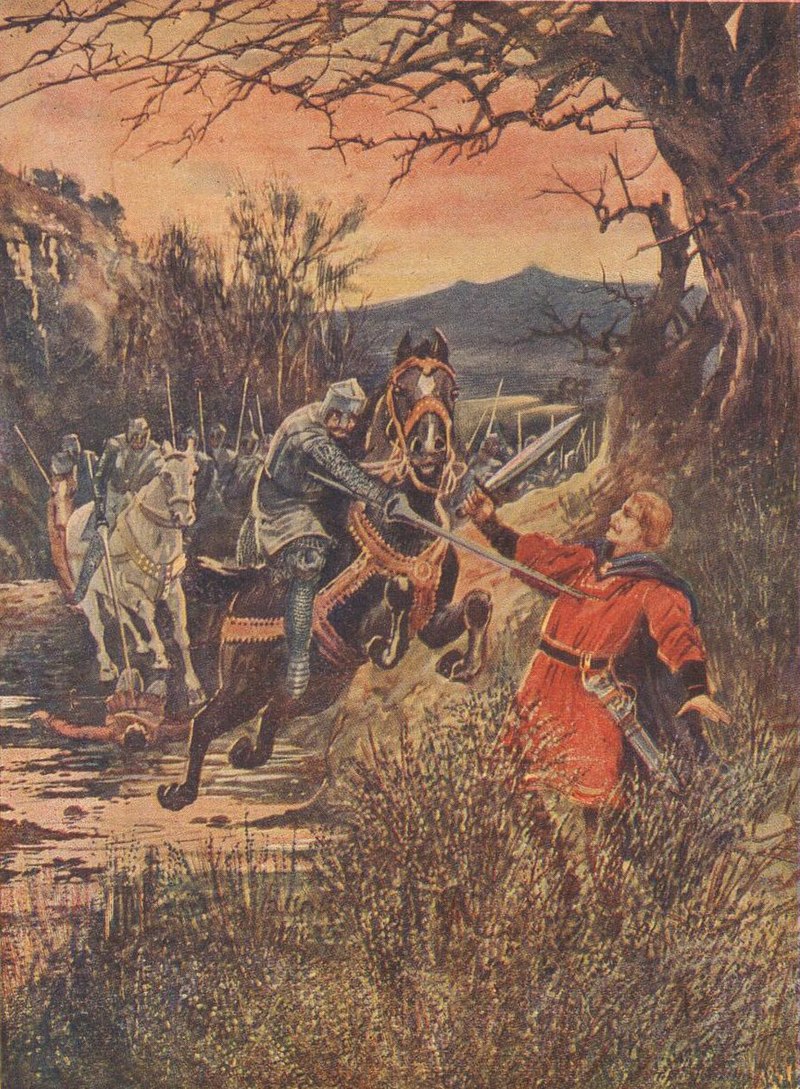
Illustration from “Jack and the Beanstalk”, 1854

18:29 Celia wrote:
‘Evil happens when good people do nothing.’ You have a whistle, Denise, and a duty to blow it.

The Christmas Appeal by Janice Hallett (2023)

~

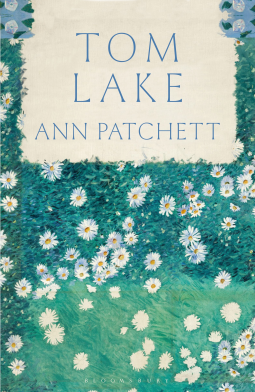
There is no explaining this simple truth about life: you will forget much of it. The painful things you were certain you’d never be able to let go? Now you’re not entirely sure when they happened, while the thrilling parts, the heart-stopping joys, splintered and scattered and became something else.

Tom Lake by Ann Patchett (2023)

~

Love does funny things to people, when it serves to harm and not heal. It makes fools of the most rational of men, and the kindest of women cruel. It makes one think most strangely. It changes a person.

From Widows Walk by Susan Stokes-Chapman
The Winter Spirits by various authors (2023)

~

Figurine from the National Archaeological Museum of Athens

‘It’s one of the universe’s untouchable truths,’ he continued, as if lecturing. ‘Beauty exists. And is the most precious thing there is. And yet none of us can truly define it or agree what it actually is. But when you see it, it casts a spell on you.’

The Figurine by Victoria Hislop (2023)

~

Garry reminded himself that politicians were experts in neatly avoiding questions they didn’t like. He waited, knowing silence sometimes worked better than insistence.

The Fake Wife by Sharon Bolton (2023)

~

The house only isn’t enough, you see. It has to have the setting. That’s just as important. It’s like a ruby or an emerald. A beautiful stone is only a beautiful stone. It doesn’t lead you anywhere further. It doesn’t mean anything, it has no form or significance until it has its setting. And the setting has to have a beautiful jewel to be worthy of it. I take the setting, you see, out of the landscape, where it exists only in its own right. It has no meaning until there is my house sitting proudly like a jewel within its grasp.

Endless Night by Agatha Christie (1967)

~

Favourite books read in November:

Water and The Winter Spirits

Authors read for the first time in November:

Julian Symons, Andrew Michael Hurley, Catriona Ward, Susan Stokes-Chapman

Places visited in my November reading:

England, Ireland, USA, Italy, Greece, Japan, Scotland

~

Reading notes: November was another good month of reading for me. I read two books for Novellas in November, joined in with Read Christie 2023, and caught up with some more of my NetGalley review copies. I was sorry not to take part in any of the other events taking place in the book blogging world, such as Nonfiction November, but there just wasn’t time. Hopefully next year!

In December, I’m planning to join in with Dean Street December, hosted by Liz at Adventures in Reading, Running and Working from Home and I would like to finish my Classics Club Spin book, Nicholas Nickleby – I’m not going to manage it by the deadline, though, which is Sunday! Otherwise, I’ll just see what I feel like reading.

How was your November? Do you have any plans for your December reading?