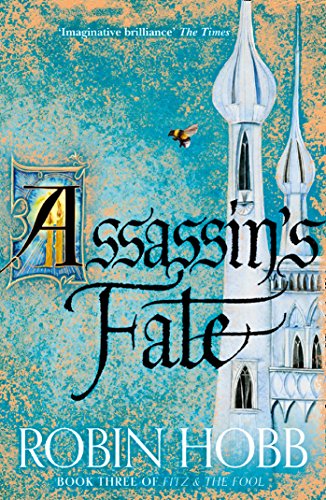
Assassin’s Fate by Robin Hobb

It’s been almost nine years since I decided to read Assassin’s Apprentice, the first book in Robin Hobb’s sixteen-volume fantasy sequence following the adventures of FitzChivalry Farseer, his friend the Fool, and the people of Bingtown and the Rain Wilds. Not being a big reader of fantasy, I wasn’t sure what to expect, but I trusted the opinions of the fellow bloggers who had recommended it – and I loved it! I went on to read the other books in the individual trilogies and quartets that make up the sequence: the Farseer Trilogy, the Liveship Traders Trilogy, the Tawny Man Trilogy, the Rain Wild Chronicles and, finally, the Fitz and the Fool Trilogy. Assassin’s Fate is the final book in this final trilogy, bringing the entire series to a close.

Naturally, I can’t really discuss the last of sixteen books without spoiling certain aspects of the fifteen previous ones, so be warned! If you haven’t read any of these books yet, I strongly recommend starting at the beginning, with Assassin’s Apprentice – and I hope you’ll enjoy your journey through Robin Hobb’s world as much as I did. This particular novel, though, hasn’t become a favourite and even now, more than a week after I finished it I can’t really decide how I felt about it.

Assassin’s Fate picks up the story from the previous book, Fool’s Quest, with Fitz and his companions heading for the distant city of Clerres in pursuit of the people who have captured his young daughter, Bee. As well as Fitz, the party consists of the Fool, in his female guise of Amber, the trainee assassin Spark, Chade’s illegitimate son Lant, and the stableboy, Per. Fitz is convinced that Bee is dead and their mission is one of vengeance only, but Amber senses that she is still alive. Either way, now that they have embarked on their journey, they need to reach Clerres as quickly as possible and passage has been arranged on the liveship Paragon.

The story of Fitz’s journey alternates with chapters narrated by Bee as she describes her ordeal at the hands of her captors, led by the evil Dwalia. I’ve had mixed feelings about Bee throughout this trilogy – on the one hand, I like her as a character and I can see that her viewpoint allows us to witness things that Fitz does not and so fills in the gaps in the story; on the other, having spent the Farseer and Tawny Man trilogies solely inside Fitz’s head, I would have preferred to continue like that. I often find that I start to lose interest slightly when a long series or saga begins to move on to the next generation and the older characters I have grown to love start to take a back seat. In this book, the earlier Bee chapters felt drawn out and repetitive, although later on, when she and her captors arrived in Clerres, I found her story much more compelling.

A bigger problem for me was the amount of time spent on characters from the Liveship Traders and Rain Wilds novels. As this is the book that wraps up the whole sequence, it’s understandable that Hobb would want to give us a chance to say our farewells to the characters from those books as well as the Farseer ones, but I felt that they came to dominate the story too much. I was happy to see Paragon again and his captains Althea and Brashen, but I had no interest in their son Boy-O or in Kennitson of the Pirate Isles. Instead, I would have preferred more interactions between Fitz and the Fool (not Amber, as I shared Fitz’s dislike of her), more communication with Verity, which was hinted at in the previous book but not followed through, and while we were saying our goodbyes to various characters, I would have liked a better send-off for Chade.

I probably sound as though I didn’t enjoy this book much at all, but that’s not true! I did find plenty of things to like, such as the dramatic scenes within the walls of Clerres, the roles of Nighteyes and Motley the crow, and the final few chapters which, despite not being quite the ending to Fitz’s story I would have chosen, still made me cry. I’m just slightly disappointed that so much of this final novel was devoted to characters and storylines I didn’t feel very invested in. I’m sure people who loved the Liveship and Rain Wilds books more than I did will feel much more satisfied with it.

I’m not sure whether any of Robin Hobb’s other books appeal to me (she has also written as Megan Lindholm) but I’m pleased to have read these ones as overall, apart from a few that have been less successful, I’ve thoroughly enjoyed them.

The Empty World by D.E. Stevenson

Did you know that D.E. Stevenson had written a post-apocalyptic novel? I didn’t, until I read the description of this one and was intrigued by how different it sounded from her usual light romances and family sagas. First published in 1936, it’s available in ebook format from independent publisher Lume Books. I’m not sure whether ebooks count towards Karen and Lizzy’s #ReadIndies month, but this book seems to be currently out of print in physical form.

The Empty World begins with historical novelist Jane Forrest and her secretary, Maisie, boarding a flight from New York to London. Jane is prepared for a turbulent journey, but she and the other passengers are alarmed when a particularly violent electrical storm seems to knock them off course and cut off communication with the world below. Finally managing to land in Glasgow, the passengers and crew immediately sense that something is horribly wrong – the airport is eerily deserted and nobody comes to meet the plane. And it’s not just the airport…the city of Glasgow itself also appears to be completely empty of people, animals, birds and any other form of life. Eventually, Jane and her companions are forced to face the possibility that they could be the only human beings left in the whole world.

I don’t want to go into the plot in too much more detail as part of the enjoyment of reading this book was first in wondering what had happened to destroy life on earth and then in wondering how Jane and the other survivors would react. It would be nice to think that if a disaster threw you together with a random group of people you would all work together and cooperate, but of course that’s not what happens here and divisions and tensions within the group are apparent from the start. Some of these are romantic tensions, due to there being seventeen men in the group and only five women. Others arise from different views over how their new society should be run and whether everyone should be allowed to be part of it.

It seemed at first that the whole book would be written from Jane’s perspective and I did find her a likeable heroine, but we also get to know the other people who survived the disaster – thirteen passengers and nine crew members – and some of them go off and have adventures of their own as the novel progresses. As well as Jane and her secretary, these include newspaper proprietor Sir Richard Barton, who becomes the de facto leader of the group, Hollywood actress Iris Bright and her bullying manager, two elderly spinster sisters, and an assortment of pilots and engineers.

A few pages into the book, it began to occur to me that something didn’t feel quite right. I eventually looked back at the first page and discovered that although the book was published in 1936, the story is actually set in 1973, Stevenson’s future. That obviously hadn’t registered with me when I first started reading, although the description of a transatlantic flight only taking twelve hours should have told me it wasn’t the 1930s! To be fair, the setting is only vaguely futuristic and overall it does feel much more like the 30s than the 70s.

I don’t read a lot of post-apocalyptic fiction, but Stevenson seems to explore most of the issues that are usually raised in this kind of novel. Why did some people survive and not others? How should they go about rebuilding their lives and how will each survivor fit into the new community that begins to emerge from the ruins? Which ideas, inventions and customs of the former civilisation are worth preserving and which should be consigned to history? Money, for example, no longer has any meaning when you can walk into an abandoned shop and take whatever you need.

I loved the eerie atmosphere Stevenson creates as she describes a world without life, with inanimate objects frozen in place exactly as they were when the catastrophe struck. Trying to travel anywhere is an ordeal as the roads are blocked with crashed or stationary vehicles (although I don’t think Stevenson had fully appreciated how much busier the roads would have become between the 1930s and 1970s – and can you imagine how bad this problem would be in 2023!). I found it particularly poignant when three members of the party take a small plane and fly to Europe, only to find that the places they’d always dreamed of visiting – Rome and Venice, for example – have completely lost their magic now they are devoid of life. At least you can have the museums and galleries all to yourself!

It’s sad that The Empty World seems to have been almost forgotten and has never received the attention or acclaim of other dystopian novels. Maybe it was just too different from Stevenson’s other work to appeal to her existing readers while her reputation as an author of gentle, domestic fiction may have led to the book being overlooked by science fiction fans. I loved it anyway and found it a fascinating, thought provoking read. I would definitely recommend trying it if you can get hold of it – if you need it in physical format, used copies seem to be quite rare and expensive but maybe you’ll be lucky. The book has also been published in the US under the title of A World in Spell.

Historical Musings #78: Real people or fictional?

Welcome to my monthly post on all things historical fiction! This month, I’m going to look at two different kinds of historical novel – those that insert fictional characters into historical settings and those that focus on real historical figures. The second type of book is sometimes referred to as a ‘biographical novel’ and ranges from Robert Graves’ I, Claudius to Philippa Gregory’s The White Queen. I read and enjoy all sorts of historical fiction, but I know some people like their novels to be completely fictional while others prefer to read about real kings, queens, artists, musicians, politicians etc, so I’m interested to hear your thoughts!

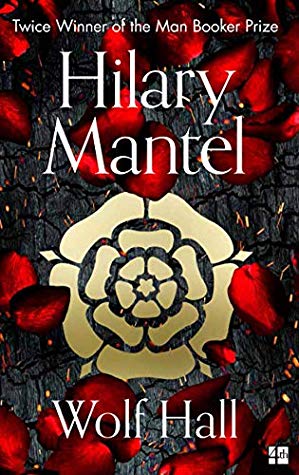
I’m happy to read either of these kinds of book and they both seem to be equally popular, although I’m aware that a lot of readers don’t like reading fiction about real historical figures and would rather read non-fiction about them instead. Personally, I often seem to struggle to digest information through non-fiction, which is why I prefer to get to know historical figures in fictional form first and then use that as a starting point to find out more. I think if I’d just read a non-fiction biography of Thomas Cromwell, I would have forgotten half of what I’d read by the time I finished the book, whereas his story as told in Hilary Mantel’s Wolf Hall trilogy has stayed with me. I know, though, that Wolf Hall only gives me one author’s interpretation of Cromwell’s character and that to get a full picture I would need to explore as many versions as possible, both fictional and factual. We also need to consider an author’s personal prejudices, their target audience or the information and sources available to them at the time of writing. Just look at Shakespeare’s portrayal of Richard III!

There are some obvious advantages to an author in writing about fictional characters – more freedom to invent personalities, dialogue and storylines without having to worry about readers saying, “but that never happened” or “she would never have said something like that”. However, these fictional stories still need to be believable and plausible within the context of the historical period in which the characters are living. And while some authors populate their entire book with imaginary characters only, others include a mixture of real and fictional. In some books, the interactions between the two feel natural and convincing (in Dorothy Dunnett’s Lymond Chronicles, for example, her fictional characters mix seamlessly with Mary, Queen of Scots, Ivan the Terrible and John Dee, to name just a few), while others don’t feel quite right to me (I didn’t like seeing Prince Philip appear in Kate Quinn’s The Rose Code, a book I otherwise loved).

In general, I’m much more comfortable reading about historical figures from previous centuries rather than people who have only recently died or are even still alive, as Prince Philip was at the time the Kate Quinn book was published. I’m also not very keen on books that put real people into completely imaginary situations, for example the current trend for using historical figures such as the Brontë sisters, Charles Dickens or Josephine Tey as detectives in mystery novels. I know a lot of people love these, but they don’t really appeal to me.

What is your opinion on this? If you’re reading a novel set in the past, do you prefer to read about real or fictional characters – or both?

Weyward by Emilia Hart

Witchcraft is a subject I always find interesting to read about, so I was curious to see how Emilia Hart would approach it in Weyward, her debut novel published in the UK earlier this month. It’s a book set in three different time periods, something which doesn’t always work for me, but in this case the three storylines are so closely linked I found the structure very effective.

In Shakespeare’s First Folio, the three witches in Macbeth are referred to as the ‘weyward sisters’, a term which evolved into ‘weird sisters’ in later versions – and just like Macbeth, Emilia Hart’s novel features three ‘weyward’ women.

In 2019, we meet Kate, a young woman trapped in an abusive relationship. Finally making the decision to leave, she flees London for Crows Beck, a village in Cumbria where she has inherited a cottage from her great-aunt, Violet. Settling into the house, known as Weyward Cottage, Kate begins to uncover some family secrets that help her to understand the great-aunt she barely knew. A second thread of the novel is set in 1942 and introduces us to Violet as a girl of sixteen living at Orton Hall with her father. She longs to know more about her mother, who died when she was a small child, but her father refuses to talk about her, except to say that Violet resembles her – and not in a good way. As Violet’s story unfolds, we find out how she came to leave Orton Hall and build a new life at Weyward Cottage.

The third of the weyward women in the novel is Altha Weyward who lives in Crows Beck in the early 17th century. Altha, who has a knowledge of healing and herbs passed down to her by her mother, is on trial for witchcraft, having been accused of killing a local man. As Altha waits to hear whether she will be found guilty, we learn more about her life in the village and the truth behind the man’s death.

The three women are linked not just by a family connection, but also through a shared love of nature. In fact, it’s more than just a love – it’s an affinity so strong that they are able to draw power from the natural environment and find comfort in surrounding themselves with plants and animals even at the most difficult of times. I could have done without so many detailed descriptions of insects and spiders, but on the other hand the affection these women have for even the least pleasant of creatures is what makes them unusual and different. None of them conform to society’s expectations and for Violet and Altha at least, this can lead to suspicion and distrust.

The male characters don’t come out of this book very well; from Kate’s violent, manipulative ex-partner and Violet’s cold, strict father to the men who hold Altha’s fate in their hands, they are very much the villains of the book. However, I did like Violet’s brother Graham and the little we learn of Kate’s father, so not all of the men are shown in a bad light. As for the three female protagonists, I liked all of them, although Violet was the one I felt the closest connection with. The three narratives are written in different styles using different combinations of first and third person and past and present tense, so I never felt confused as to whose story I was reading. Parts of Kate’s story towards the end were quite predictable, but otherwise all three storylines were gripping, staying with one character for just the right length of time before switching to the next, and with plenty of cliffhanger chapter endings to keep things moving forward.

I enjoyed Weyward, although there wasn’t as much focus on witchcraft as I expected – it’s more a book about the magic of nature and the obstacles faced by women over the centuries. It wasn’t always comfortable to read as all three of the main characters go through some very traumatic experiences, but I found it an interesting and unusual novel and will look out for more from Emilia Hart.

Thanks to HarperCollins UK/The Borough Press for providing a copy of this book for review via NetGalley.

This is book 6/50 read for the 2023 Historical Fiction Reading Challenge.

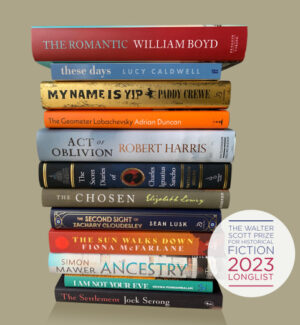
The Walter Scott Prize Longlist 2023

The longlist for the 2023 Walter Scott Prize for Historical Fiction was announced yesterday! Thanks to this prize, I have discovered lots of great books and authors and always look out for the longlists and shortlists; in fact, trying to read all of the shortlisted titles since the prize began in 2010 is a personal project of mine (you can see my progress here).

There are twelve books on this year’s longlist and here they are:

The Romantic by William Boyd (Viking)

These Days by Lucy Caldwell (Faber & Faber)

My Name is Yip by Paddy Crewe (Doubleday)

The Geometer Lobachevsky by Adrian Duncan (Tuskar Rocks)

Act of Oblivion by Robert Harris (Hutchinson Heinemann)

The Secret Diaries of Charles Ignatius Sancho by Paterson Joseph (Dialogue Books)

The Chosen by Elizabeth Lowry (Riverrun)

The Second Sight of Zachary Cloudesley by Sean Lusk (Doubleday)

The Sun Walks Down by Fiona McFarlane (Allen & Unwin)

Ancestry by Simon Mawer (Little, Brown)

I am Not Your Eve by Devika Ponnambalam (Blue Moose Books)

The Settlement by Jock Serong (Text Publishing)

~

I’m delighted to see The Romantic on the longlist as it was one of my favourite books of 2022. I would love to see it win – I really thought it was wonderful! I’m not surprised to see Act of Oblivion here too, as Robert Harris has been nominated for (and in fact, won) this prize in the past. It’s not a book that I personally loved, but I’ll be quite happy if it makes the shortlist. The only other one I’ve read is The Second Sight of Zachary Cloudesley, an entertaining read but not one I was expecting to find on the longlist, so I’ll be interested to see whether it progresses any further.

These Days, The Secret Diaries of Charles Ignatius Sancho and Ancestry are all books I’m aware of and would like to read (I have reserved These Days from the library), but I haven’t even heard of the other six! I obviously need to do some investigating.

The shortlist will be announced in April and a winner in mid-June at the Border Books Festival in Melrose, Scotland.

Have you read any of these books? Are you pleased to see them on the longlist?

Top Ten Tuesday: Books with ‘Heart’ in the title

This week’s topic for Top Ten Tuesday (hosted by That Artsy Reader Girl) is a “Love/Valentine’s Day Freebie”.

To celebrate Valentine’s Day I have listed ten books I’ve read with the word ‘heart’ in the title. However, they are not all love stories – in fact, most of them aren’t!

~

1. Second Hand Heart by Catherine Ryan Hyde – A moving novel exploring the theory of cellular memory – the idea that a transplanted organ retains the memories and characteristics of its previous owner.

2. The Heart of Midlothian by Sir Walter Scott – This classic novel is set in Edinburgh during the 1736 Porteous Riots. It’s not my favourite of the few novels I’ve read by Scott, but I did like the heroine, Jeanie Deans, who walks all the way to London to try to save her sister’s life.

3. The Obscure Logic of the Heart by Priya Basil – The story of a Sikh man and a Muslim woman who fall in love as students, this is the only real ‘romance’ on my list, but it’s also so much more than that, touching on politics, poverty, gun crime and the work of the UN.

4. The Metal Heart by Caroline Lea – In this book set during World War II, Caroline Lea weaves the story of two twin sisters around the building of a chapel in the Orkney Islands by Italian prisoners of war. An interesting blend of fact and fiction.

5. Bleeding Heart Square by Andrew Taylor – This standalone historical mystery is set in 1930s London. It’s both an entertaining novel and a fascinating portrayal of the rise of Oswald Mosley and the British Union of Fascists.

6. The Heart’s Invisible Furies by John Boyne – The story of Ireland from the 1940s to the modern day as seen through the eyes of Cyril Avery, a gay man trying to come to terms with his sexuality, and written with John Boyne’s usual wit and humour.

7. With All My Heart by Margaret Campbell Barnes – A fictional account of the life of Catherine of Braganza, the Portuguese princess who marries King Charles II. First published in 1951, it does feel dated now but is interesting as Catherine is not a popular subject for historical fiction.

8. Written in My Own Heart’s Blood by Diana Gabaldon – The eighth book in Gabaldon’s Outlander series sees Claire and Jamie in America in the middle of the Revolutionary War. It’s not a favourite of mine – I loved the first four in the series, but have been gradually losing interest with each book after that.

9. The Oaken Heart by Margery Allingham – Better known for her Albert Campion detective novels, this is Allingham’s memoir of life in her small English village during the Second World War. Originally published in 1941, while the war was still taking place.

10. The Silvered Heart by Katherine Clements – Set in the 17th century, this novel is inspired by the real life highwaywoman, Katherine Ferrers, also known as ‘the Wicked Lady’. Not much is known about the historical woman, but Clements brings her story to life while also portraying England in the aftermath of Civil War.

~

Have you read any of these books? Which other books with ‘heart’ in the title can you think of?

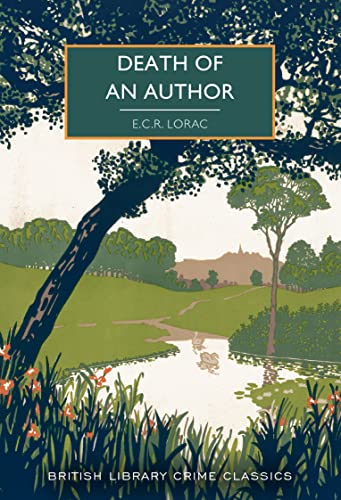
Death of an Author by E.C.R. Lorac – #ReadIndies

E.C.R. Lorac’s Death of an Author, first published in 1935, begins with the novelist Michael Ashe persuading his publisher to arrange a dinner party so that he can meet another of their authors, the crime writer Vivian Lestrange. Despite being famously secretive and reclusive, Lestrange accepts the invitation – but to Ashe’s surprise, a young woman arrives at the party rather than the man he had expected. Vivian, of course, could be either a man’s name or a woman’s, and Lestrange seems amused by Ashe’s assumptions. She engages Ashe in a debate on gender equality and whether it’s possible to tell a man’s writing from a woman’s – and naturally, she comes out of the argument on top.

Three months later, the same young woman approaches the police to report a crime and introduces herself as Eleanor Clarke, secretary to the author Vivian Lestrange. She admits that Lestrange really is a man, although she has impersonated him at parties a few times for fun. Her reason for contacting the police is that Mr Lestrange has disappeared along with his housekeeper, Mrs Fife, and Eleanor is unable to gain entry to his house, her place of work. She is concerned about him and wants the police to investigate. Inspector Bond, however, is convinced that Eleanor herself is Vivian Lestrange and that some sort of deception is taking place. His Scotland Yard colleague, Inspector Warner, on the other hand, believes what Eleanor has told them and accepts that she and Lestrange are two separate people. But which of them is correct – and if Eleanor is telling the truth, what has happened to the real Vivian Lestrange?

This is the first book I’ve read by Lorac, although I’ve been intending to try one for a long time as I know she’s one of the most popular authors in the British Library Crime Classics series. It was maybe not the best one to start with (it has just been reprinted in January, and I would imagine the British Library have been publishing her stronger books first), but I found it enjoyable enough, with one or two reservations. It certainly has a fascinating plot, with the police trying to investigate a crime without being sure who the victim is or even whether a crime has been committed at all. It was interesting to watch the two detectives, Warner and Bond, working together to come up with different possible scenarios and trying to decide which was the most likely.

As an author who wrote under her initials (her real name was Edith Caroline Rivett) and other pseudonyms including Carol Carnac (Lorac is Carol backwards), the arguments Eleanor Clarke makes to defend women’s writing and to refute the assumption that only men could write a certain kind of book must have been close to Lorac’s own heart. And yet, the way the story develops after this seems to contradict some of the points that were being made at the beginning and I was left feeling slightly confused as to what Lorac was actually trying to say.

Although I couldn’t quite manage to love this one, it was still an entertaining read and I’m sure I’ll try more of Lorac’s books. I know some of you have read a lot of them, so I would like to hear which ones you would recommend!

I’m counting this towards #ReadIndies, a month celebrating books from independent publishers hosted by Kaggsy’s Bookish Ramblings and Lizzy’s Literary Life.