The Bewitching by Jill Dawson

I seem to have read quite a few historical novels about witch trials over the last few years – The Witchfinder’s Sister by Beth Underdown, The Familiars by Stacey Halls and Widdershins by Helen Steadman, to name just three. Jill Dawson’s latest novel, The Bewitching, is another and it tells the story of the Witches of Warboys. I had never read anything about this particular case until now, yet it’s apparently one of the best-known of the 16th century witch trials and is thought to have strongly influenced the Witchcraft Act of 1604. In her author’s note, Jill Dawson states that many of the details described in the novel appeared in a pamphlet published at the time, although she has shortened the time frame and invented some of the characters and incidents.

Most of the novel is narrated by Martha, a servant in the household of the Throckmortons, a wealthy family who live in the village of Warboys in Cambridgeshire. Abandoned at birth by her mother and raised by a nun, Martha has been in the service of the Throckmortons for many years now and has watched her master, Robert Throckmorton, rise in the world to his current position of Squire of Warboys Manor. When, one by one, the squire’s five young daughters begin to suffer from sudden attacks of shaking and twitching, Martha is as distressed as if they were her own children. No one knows what is causing these fits, but one daughter after another accuses a neighbour, Alice Samuel, of bewitching them.

To the reader, it seems obvious from the beginning that Alice is innocent – and Martha also feels uneasy about the girls’ accusations, but knows that as a servant her opinion is unlikely to be wanted or welcomed. Although it’s clear that Alice is not a witch, what is less clear is why five previously healthy children should all suddenly be struck with the same affliction and why they should all choose to blame a woman who has done nothing to harm them. There’s a sense of mystery running throughout the whole novel which I found quite unsettling, because even if nobody has actually been ‘bewitched’, there’s definitely something sinister going on at Warboys Manor.

We don’t see very much of Alice’s point of view until later in the book, when she is forced to stand trial at Huntingdon Assizes in 1593 and her daughter, Nessie, and husband, John, also find themselves accused. By this time three ‘scholars of divinity’ have arrived from Cambridge University armed with a handbook on witch-hunting, the Malleus Maleficarum, and further accusations against the Samuels have been made by the powerful Cromwell family. In this atmosphere of superstition, misogyny and fear, poor Alice doesn’t stand a chance.

I found The Bewitching very slow at first, but it became more absorbing later on – and there were even one or two twists, which hadn’t occurred to me but probably should have done! The time period is beautifully evoked, with the language carefully chosen to suit the era and sometimes taken straight from the historical accounts (Alice wears a ‘black thrumbed cap’ and the girls don’t just ‘have fits’ – they are always described as being ‘in their fits’). It’s an eerie and unusual novel and although it didn’t always succeed in holding my attention, I enjoyed it overall. I’ll have to look for Jill Dawson’s earlier books now; she’s written so many and I don’t know how I’ve never come across any of them before!

Thanks to Sceptre for providing a copy of this book for review via NetGalley.

This is book 38/50 read for the Historical Fiction Reading Challenge 2022.

The Dance Tree by Kiran Millwood Hargrave

Having enjoyed Kiran Millwood Hargrave’s previous book, The Mercies, I was looking forward to reading more of her work. This new novel, The Dance Tree, sounded very different, but equally intriguing. It’s set in 16th century Strasbourg during a plague of dancing – yes, dancing, which sounds harmless but, as the novel shows, is anything but.

The Dance Tree begins in 1518 and introduces us to Lisbet, a young pregnant woman, who lives with her husband and mother-in-law. Lisbet has already lost several babies and is determined to carry this one to full term; while her pregnancy advances she finds comfort in looking after the bees that provide the family’s livelihood and visiting the tree she has decorated in memory of her lost children. One day, Lisbet’s sister-in-law, Agnethe, comes home from the nunnery where she has been doing penance for the last seven years; Lisbet has no idea what the sin was that resulted in Agnethe being sent away, but she does know that her return has changed the dynamics within the household and that life will not be quite the same again.

Meanwhile, in the centre of Strasbourg, Frau Troffea walks into a market square, lifts up her hands and begins to dance. She is soon joined by more women…and more…and more, all of them dancing until the soles of their feet bleed. As the women continue to dance day after day – a desperate, frenzied dance that shows no sign of coming to an end – the authorities try to bring them under control, without success.

I knew nothing about the dancing plague before reading this book, so I found that aspect of the novel fascinating. Many theories have been put forward over the years to explain why the women danced, ranging from demonic possession or religious trance to ergot poisoning or mass hysteria. Even today, historians don’t know for sure what was behind the epidemic, but to help us understand some of the possible reasons, Kiran Millwood Hargrave provides back stories for some of the individual dancers. These stories are presented as brief chapters interspersed between Lisbet’s chapters, and although I thought they could have been better integrated into the novel as a whole, they were interesting to read.

I liked Lisbet and had a lot of sympathy for her situation, and also for her best friend, Ida, who is married to a controlling bully who belongs to the ‘Twenty One’, the group of men who rule the city. Agnethe is another intriguing character, although I found the reason for her seven-year penance too easy to guess. However, despite finding the characters interesting, I didn’t manage to form the deep emotional connection with any of them that I would have liked. I’m not sure why this should be, because Hargrave does write beautifully, except that I often find the use of present tense very distancing and I think that was the case here.

Although I didn’t love this book as much as I hoped, I would recommend Kiran Millwood Hargrave’s books to readers interested in historical fiction dealing with women’s lives in unusual settings and circumstances – in this book, the Strasbourg dancing plague, and in The Mercies, the witch trials on the Norwegian island of Vardø.

Thanks to Picador for providing a copy of this book for review via NetGalley.

This is book 22/50 read for the Historical Fiction Reading Challenge 2022.

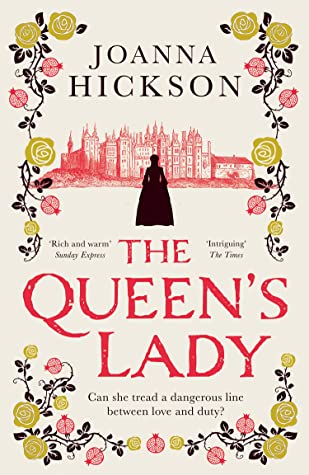
The Queen’s Lady by Joanna Hickson

Joanna Hickson’s new novel is a sequel to 2020’s The Lady of the Ravens and continues the story of Joan Vaux, lady-in-waiting to Elizabeth of York, wife of Henry VII. The ravens that formed such an important part of the first book appear less often here, but Joan still has a strong affinity for them and still believes firmly in the legend that should the ravens ever abandon the Tower of London, the kingdom will fall.

Joan’s position at court means that she witnesses – and is sometimes personally involved in – some of the key events of this period of history. The novel begins in 1502 with the death of Prince Arthur shortly after his marriage to Katharine of Aragon and it is up to Joan to try to comfort his grieving mother, Queen Elizabeth. When Elizabeth herself dies just a year later, Joan’s place at the Tudor court becomes more insecure, particularly when her husband Sir Richard Guildford is imprisoned on suspicion of treason. Eventually, with a new king on the throne – the young Henry VIII – Joan and her family begin to rise to royal favour again, but there’s more drama ahead both for Joan and for the Tudors.

I enjoyed The Lady of the Ravens, but I think this is the stronger of the two books. Although Joan was a real person, she’s one that I knew absolutely nothing about before reading these two novels and I found it fascinating to read about familiar events and people from a completely new perspective. I was particularly interested in the sections where Joan accompanies the two Tudor princesses – Margaret and Mary – to their respective marriages with the King of Scotland and King of France. The fact that Joan is chosen to carry out these important duties is proof of her high standing with the royal family and yet, at various times throughout the novel, we see how quickly this can change and how the King and Queen hold the fates of everyone around them in their hands.

As well as retelling the story of the end of Henry VII’s reign and the beginning of Henry VIII’s, the novel also explores Joan’s personal life: her marriage to Sir Richard Guildford and how she copes during the period of his imprisonment; her often difficult relationship with her son, Hal, who has been raised as a companion to Henry VIII; and her feelings for Anthony Poyntz, a much younger man who had once been like a son to her but is now becoming something more. As Joan is not a well-known historical figure, I had no idea how her story would play out, so was able to enjoy watching it unfold without knowing what was going to happen next.

I think this is my favourite of Joanna Hickson’s books (I’ve read them all apart from one, The Tudor Bride, the second of her two novels about Catherine of Valois). I’ll be interested to see which historical woman she chooses to write about next.

Thanks to HarperCollins for providing a copy of this book for review via NetGalley.

This is book 7/50 for the Historical Fiction Reading Challenge 2022.
Six Tudor Queens: Katharine Parr, the Sixth Wife by Alison Weir

This is the final book in Alison Weir’s Six Tudor Queens series retelling, in fictional form, the stories of the wives of Henry VIII. Katharine Parr, the subject of this sixth novel, has never interested me as much as some of the other wives, yet this book has turned out to be my favourite of the series, not just for what we learn about Katharine herself, but also for the depiction of the political and religious situation in England during the later stages of Henry’s reign.

I have read other novels about Katharine Parr, such as Elizabeth Fremantle’s Queen’s Gambit and Philippa Gregory’s The Taming of the Queen (interestingly, every author seems to choose a different spelling of her name!), but none of them go into as much depth and concentrate almost solely on her time as Henry’s wife and her relationship with Thomas Seymour. This book starts at the beginning, with Katharine’s childhood, and then takes us through her entire life, devoting plenty of time to her earlier two marriages, first to the young Edward Burgh and then to John Neville, Lord Latimer. I particularly enjoyed the section of the book where Katharine is married to Latimer; although it’s not a passionate romance, Katharine comes to love and trust her husband and they have a happy nine years together despite the religious turmoil going on around them (the uprising known as the Pilgrimage of Grace takes place during this period and provides one of the most exciting episodes in the novel).

Although Lord Latimer remains faithful to the Catholic Church, Katharine becomes a supporter of religious reform. When Latimer dies in 1543 and the King, having recently had his fifth wife beheaded, asks her to marry him, Katharine reluctantly accepts, knowing that turning down his proposal would be very unwise and hoping that her influence at court can further the cause of the reformers. Over time she becomes quite fond of Henry, engaging in lively debates with him on the subject of religion, but there is always an undercurrent of danger and Katharine knows that if she is to avoid the fate of her predecessors, she can’t allow her sympathies for the new Protestant religion to become too obvious. Somehow, Katharine manages to survive and outlive the King, free at last to marry Thomas Seymour, the man she really loves…but their time together is tragically short and marred by Seymour’s inappropriate behaviour with the young Princess Elizabeth.

I loved reading about Katharine’s life before she became Queen, as so much of this was new to me – and unlike the book on Anne of Cleves, where Weir admits that she invented a lot of Anne’s story, this one seems to be more grounded in historical fact. Once the novel moves on to her marriages to Henry VIII and Thomas Seymour, I was on more familiar ground and found these sections slightly less interesting to read – particularly as I have never liked Thomas Seymour and wished I could reach into the pages of the book and stop Katharine from marrying him!

Something that has intrigued me throughout this series is the way in which Alison Weir has chosen to portray Henry VIII. She shows him in a much more positive light than usual, to the point where she almost seems to be absolving him of any responsibility for his actions, putting the blame on the people around him instead – Thomas Cromwell, Bishop Gardiner, even some of his victims such as poor Katheryn Howard. On the one hand, it’s interesting to see a more nuanced depiction of Henry, but on the other I’m not convinced that his wives would all have viewed him as favourably as these books suggest!

Katharine Parr herself is portrayed as an intelligent, well-educated and compassionate woman; her previous marriages and experience of life have given her a maturity and common sense that some of Henry’s other wives lacked. She makes an effort to befriend her stepchildren and plays an important part in persuading Henry to restore his daughters Elizabeth and Mary to the line of succession. She gains the King’s trust and is named regent while he is away on a military campaign, as well as becoming the first queen to have books published in English under her own name. Katharine’s life is maybe not as dramatic as some of the other wives’, but because I liked her so much I was able to become fully invested in her story.

Now that this series has come to an end, Alison Weir is moving further back in time with her next novel to tell the story of Henry VIII’s mother, Elizabeth of York, in The Last White Rose.

Thanks to Headline for providing a copy of this book for review via NetGalley.

Book 41/50 read for the 2021 Historical Fiction Reading Challenge.

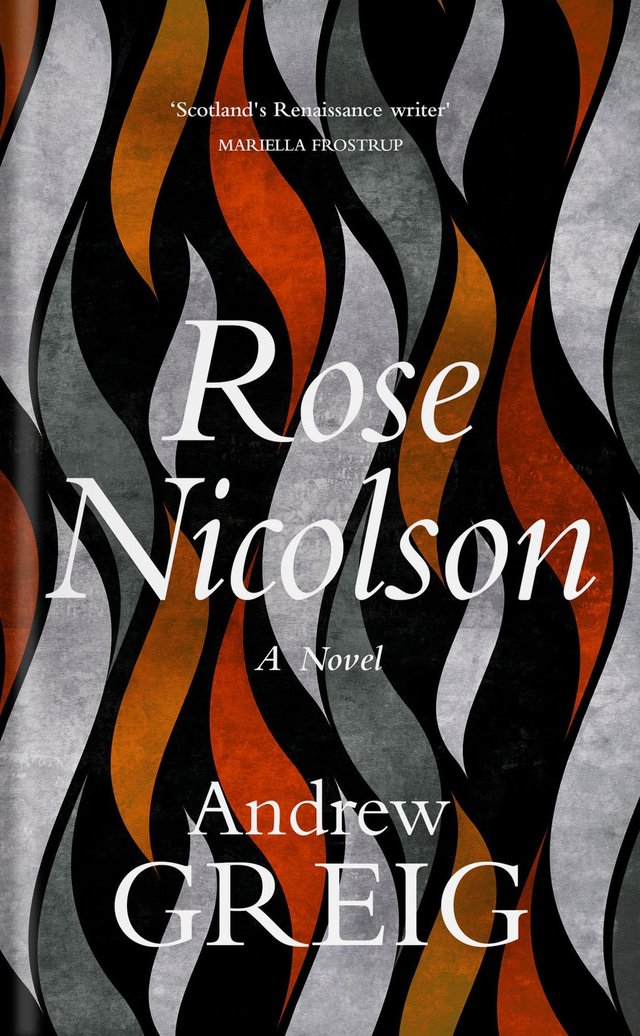
Rose Nicolson by Andrew Greig

I loved Andrew Greig’s last book, Fair Helen, a beautifully written historical novel based on a Scottish Border Ballad, so when I saw that his new one, Rose Nicolson, was going to be set in the same time and place I couldn’t wait to read it. Now that I’ve had the opportunity, I’m pleased to say that I enjoyed it just as much as Fair Helen and can highly recommend it to anyone interested in learning more about Scotland in the 16th century.

Rose Nicolson is a fictional account of the life of a real historical figure, William Fowler, a Scottish makar, or poet, and is presented as his memoir written as an older man looking back on his youth. His story begins in Embra (Edinburgh) in 1574: Mary, Queen of Scots has fled to England leaving her young son, James VI, on the throne, but the real power is held by the Earl of Morton, the latest of four regents to govern Scotland during the young king’s minority. The Protestant religion now dominates but there are still those who have not given up hope of restoring Mary to the throne and returning Scotland to the Catholic church. It is during this time of political and religious uncertainty that William Fowler, the only son of an Edinburgh merchant family, sets out for St Andrews where he will become a student at the university.

William’s time in St Andrews is vividly described: the education he receives; the enlightening conversations and debates on topics such as philosophy, religion, politics and literature; his first tentative attempts at writing poetry; and the friendships he forms with the other students as they bond over drinks at the howff (pub) or during a game of gowf (golf). As you can see, Andrew Greig sprinkles Scots dialect throughout his prose, as well as using language appropriate to the time period – apart from one or two words and phrases here and there that I thought seemed out of place – and the overall effect is a narrative style that feels authentic and convincing. There’s a glossary at the end of the book for anyone who needs it, but I found it easy enough to read without it.

You may be wondering where Rose Nicolson comes into the story. Well, she’s the sister of a friend William makes at university, Tom Nicolson. Rose and Tom are from a Fife fishing family, but while Tom has been given the opportunity to study and to pursue an academic life, that is not possible for Rose. William is captivated by her intelligence, courage and quick mind, but a marriage is already planned for Rose with a local fisherman, so despite William’s love for her it seems that she will never be his wife.

As well as the romantic thread of the novel and the academic one, we also learn a lot about the period of history during which the story is set. The reign of Mary, Queen of Scots is well covered in historical fiction, but the early years of James VI’s reign are written about less often, which is a shame as it’s a complex, interesting and very eventful period. Many of the characters William meets in the novel are people who really existed; these include George Buchanan, the Scottish historian and humanist scholar, who recruits William as a spy; Esmé Stewart, the first of the young king’s many favourites; and most notably, Walter Scott of Branxholme and Buccleuch, the clever and charismatic border reiver who becomes a good friend of William’s and really deserves a whole book to himself! As for our hero William Fowler, I knew nothing at all about him until I read this book; I resisted the temptation to look him up online until I had finished, but it seems that he led a fascinating life. Rose Nicolson only covers the early part of his career, but it looks as though there’s enough material for several more books!

Thanks to Quercus Books for providing a copy of this book for review via NetGalley.

Book 37/50 read for the 2021 Historical Fiction Reading Challenge.

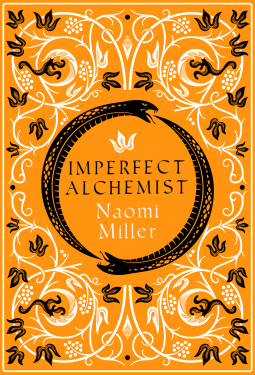
Imperfect Alchemist by Naomi Miller

Mary Sidney may not be as well known as her brother Sir Philip Sidney, the Elizabethan poet who wrote Astrophel and Stella, but she was a successful and accomplished author in her own right – and one of the first Englishwomen to publish under her own name. In Imperfect Alchemist, Naomi Miller brings Mary’s story to life in fictional form, beginning in 1575 when Mary is summoned to court to attend the Queen. Marriage follows a few years later to Henry Herbert, Earl of Pembroke, and although it is an arranged marriage rather than one based on love, Henry at least seems to accept his new wife’s intelligence and learning and allows her the freedom to pursue her literary interests, leading to her eventually establishing a literary circle at their home, Wilton House.

Mary’s story, which is written in the third person, alternates with a first person narrative from the perspective of another young woman, Rose Commin. Rose, a fictional character, comes from a very different background, having grown up in the countryside, the daughter of a cloth merchant and a herbalist. After her mother is put on trial for witchcraft, Rose is sent away to the safety of Wilton House, where she becomes maid to Lady Catherine Herbert, Countess of Pembroke, who encourages her to develop her talent for drawing, as well as teaching her to read and write. Sadly, Lady Catherine dies shortly after Rose’s arrival, but when Henry Herbert marries again and brings his young wife, Mary Sidney, to Wilton House, a friendship begins to form between Rose and her new mistress.

Before reading Imperfect Alchemist, I knew almost nothing about Mary Sidney. Her brother Philip has appeared in one or two books I’ve read (such as Towers in the Mist by Elizabeth Goudge and Watch the Lady by Elizabeth Fremantle) but I can’t remember ever reading anything about Mary. As well as shedding some light on her personal life, the novel explores her involvement with alchemy and medicine, her relationships with other historical figures such as Sir Walter Raleigh, Ben Jonson and Aemilia Lanyer, and her major literary achievements. Not only does Mary prepare and publish an edition of her brother’s The Countess of Pembroke’s Arcadia, she produces new translations of the Psalms and her version of the Antony and Cleopatra story is thought to inspire Shakespeare’s famous play.

Although Mary is, on the surface, the more interesting character, I think I preferred Rose’s sections of the book – possibly because Rose narrates her chapters herself, making her easier to identify with and to warm to. However, I’ve read a few other historical novels recently that have alternated a real woman’s story with an invented one (usually a lady’s maid), and along with the ‘healer being accused of witchcraft’ theme, which also seems to be an increasingly common trend in historical fiction, I didn’t feel that this book had anything very new or different to offer. As an introduction to the life and work of Mary Sidney Herbert, though, it’s excellent and I was certainly able to learn a lot from it. This is Naomi Miller’s first novel and apparently the first in a projected series of novels about early women authors, so I’ll be interested to see who she writes about next.

Book 17/50 read for the 2021 Historical Fiction Reading Challenge.

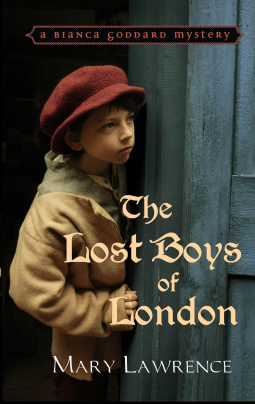
The Lost Boys of London by Mary Lawrence

This is the fifth book in a series of historical mysteries set in the Tudor period and featuring the character of alchemist’s daughter Bianca Goddard. I don’t think it’s essential to read all of the books in the series in order; I started with the fourth one, The Alchemist of Lost Souls, and had no problems in picking up the threads of the story and following the plot.

As The Lost Boys of London opens, Bianca’s husband John is away fighting in Scotland for Henry VIII, leaving Bianca in London, devoting her time to preparing herbal remedies in her ‘room of Medicinals and Physickes’. In the past, Bianca’s skills as a herbalist have led to her assisting Constable Patch with his investigations, and having played a part in solving several previous mysteries, her help is required again when a young boy is found hanging from the exterior wall of a church.

Finding a rosary wrapped around the boy’s neck marked with a set of initials, it seems there could be a religious motive for the murder, and this appears to be confirmed when a second boy is found under similar circumstances at another church. Bianca is determined to do whatever she can to find the murderer before he or she kills again – and she has a personal reason for wanting to do so as quickly as possible. Her own young friend, Fisk, who is about the same age as the other boys, has gone missing and Bianca is afraid that he could become the next victim.

I enjoyed this book more than The Alchemist of Lost Souls. I thought the mystery was stronger and more interesting, with its exploration of topics such as religious conflict, the rivalries between the clergy of various churches, and child poverty in Tudor London. Also, although the previous book included some magical realism elements, which didn’t entirely work for me, there didn’t seem to be anything like that in this one and I thought that was a good decision as the plot was strong enough without it. As well as following Bianca’s investigations in London, there are some chapters describing John’s adventures as a reluctant soldier in the Scottish borders during the war known as the ‘Rough Wooing’ and this added some variety to the novel, taking us away from London now and then to see what was going on elsewhere.

Sometimes the language used is not right for the setting (English houses don’t have ‘stoops’, for example) and I found that a bit distracting, but otherwise the atmosphere is convincing enough and it’s always interesting to read about the lives of ordinary, working-class people in the Tudor period as a change from all of the books dealing with the royal court. Oh, and I love Bianca’s cat, Hobs!

This is apparently the final book in the Bianca Goddard series. I received a copy for review via NetGalley.