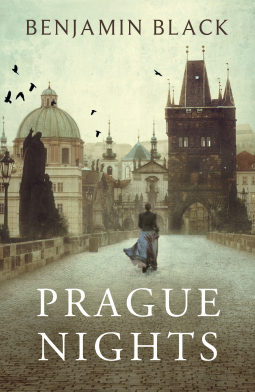
Prague Nights by Benjamin Black

I had never heard of Benjamin Black until I spotted his new novel available on NetGalley, but I quickly discovered that it is a pseudonym of the Irish author better known as John Banville. Not having read anything by Banville either, I had no idea what to expect from Prague Nights, but the title was enough to make me interested in reading it (note: the US title is Wolf on a String) – Prague is a beautiful city and one I would recommend visiting, if you haven’t already. To experience Prague as it is in this novel, however, you would need a time machine as the action takes place more than four hundred years ago, at the end of the sixteenth century.

It’s 1599 and Christian Stern, a young doctor from Regensburg, has just arrived in Prague. On his first night in the city he stumbles across the dead body of a young woman half buried in snow. He reports his discovery and expects that to be the end of the matter, so he is shocked when he is accused of killing the girl himself. Her identity is given as Magdalena Kroll, mistress of the Holy Roman Emperor Rudolf II and daughter of his ‘chief wizard’ Ulrich Kroll. Stern knows he is in serious trouble, but fortunately for him, the emperor – a superstitious man with a strong belief in the occult – believes him to be a messenger whose arrival in Prague had been predicted in a prophecy.

Freed of suspicion now, Stern is given the task of discovering who really did kill Magdalena Kroll. It is a mission which will bring him into conflict with some of the most powerful men in Prague, embroil him in a love affair with another of the emperor’s mistresses, Caterina Sardo, and send him to the town of Most in search of the English occultist Edward Kelley, who it is believed may hold the key to the mystery.

Prague Nights is one of those books that sounds as though it should be much better than it actually is. That’s not to say that I didn’t like it at all, because there were some aspects that I enjoyed, which I’ll return to shortly, but it definitely wasn’t the atmospheric, exciting historical mystery novel I had hoped it would be. I was disappointed that it wasn’t really much of a mystery; yes, there is a murder at the beginning and we find out who was responsible for it at the end, but in between, our narrator, Christian Stern, makes very little effort to actually investigate. Things happen around him but he takes no active part and by the time I reached the end of the book, I found that I no longer really cared how Magdalena Kroll had died and why.

The writing style is descriptive and detailed with a formal feel which suits the time period and the descriptions of Prague’s buildings, bridges and cobbled streets and squares are nicely done:

I had often tried to imagine Prague and its glories, but the reality of it was grander and more gracious than anything I could have dreamed of. Past the castle, we stopped on the height there to look out over the city. The sky was white and the air was draped with a freezing mist, pierced by many spires, all of them appearing black in that pervasive icy miasma. Despite the wintry murk, I could see the river and its bridges and, beyond, the clock tower in the Old Town Square.

This wasn’t enough to make me love the book, however. To be able to love a book I need to at least feel something for the characters and unfortunately I felt very little for Christian Stern or any of the other people who play a part in the novel. That’s particularly frustrating because, in real life, Rudolf II and the members of his court sound fascinating, especially his son, Don Julius Caesar. In his author’s note, Benjamin Black talks about the historical figures on which his characters are based, explaining where he sticks to factual information and where he uses his imagination. As I previously knew nothing about 16th century Prague or Rudolf’s court, it was good to have the opportunity to learn something new, even if the story itself didn’t really succeed in holding my attention.

Have you read anything by Benjamin Black/John Banville? And do you have any other books set in Prague to recommend?
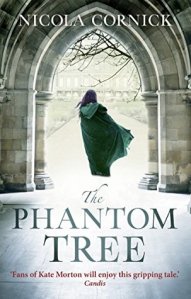
The Phantom Tree by Nicola Cornick

the-phantom-treeI have always found the concept of time-travel fascinating – and equally fascinating are the number of ways in which various authors choose to approach the subject when writing time-travel fiction.  The Phantom Tree is one of many dual time period time-slip novels I have read over the last few years, but I found it refreshingly different in that it deals not with the usual idea of a modern day character going back in time but a woman from the past coming forward to the present time.
The name of our time traveller is Alison Bannister (or Banastre, as she was known in her previous life) and she has been trapped in the 21st century for ten years, unable to find a way to get back.  We first meet Alison walking through the streets of Marlborough one day just before Christmas.  Stopping to look through the window of an art gallery, she is surprised to see a painting of a woman she once knew.  Investigating further, she learns that this is apparently a newly discovered portrait of Anne Boleyn – but she’s sure it isn’t; it’s Mary Seymour, who lived with Alison at Wolf Hall in the 1500s.  To complicate things further, the historian hoping to build his career around the discovery of Anne Boleyn’s portrait is Adam Hewer, Alison’s ex-boyfriend.  Without telling him the truth about her journey through time, how can she convince him that he’s wrong?   

The historical sections of the novel are written mainly from Mary Seymour’s perspective.  Unlike Alison, who is fictional, Mary is a real historical figure – but one whose story has been lost in the mists of time.  Mary is the daughter of Henry VIII’s sixth wife, Katherine Parr, and Thomas Seymour, whom Katherine married following Henry’s death.  Katherine dies shortly after giving birth and Thomas is executed a year later, leaving Mary an orphan in the care of the Duchess of Suffolk.  Mary disappears from historical records in 1550, but Nicola Cornick suggests that she was sent to live with her Seymour cousins at Wolf Hall.  This allows plenty of scope to create a storyline for Mary which is both imaginary and historically plausible.         

Of the two time periods, I found the sections set in the past more interesting – in particular, I enjoyed the supernatural elements of Mary’s story.  Almost from the moment she arrives at Wolf Hall rumours begin to circulate that she is a witch, especially after she has a vision which seems to come true.  She also has a telepathic connection with a secret friend called Darrell and this reminded me instantly of Mary Stewart’s Touch Not the Cat, (which may have been intentional, as Darrell’s nickname for Mary is ‘Cat’). 

The present day story was enjoyable too, though.  I couldn’t help thinking that Alison had adapted remarkably quickly to modern life, which wasn’t at all convincing, but otherwise I was kept entertained by her attempts to find a gateway back to her own time and to decipher a set of clues sent by Mary through the centuries.   

The Phantom Tree does require disbelief to be suspended on many occasions, which I know is not something that appeals to all readers, but I think anyone who likes reading time-slip novels by authors like Susanna Kearsley or Barbara Erskine should find plenty to enjoy here.  I will now be looking out for Nicola Cornick’s previous book, House of Shadows!

Thanks to the publisher for providing a copy of this book via NetGalley for review.


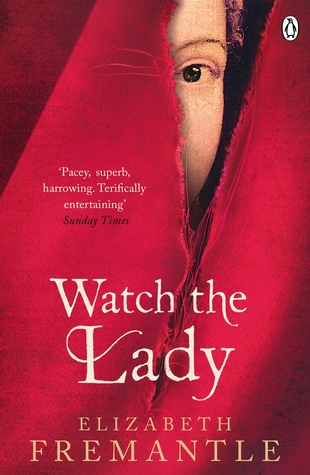
Watch the Lady by Elizabeth Fremantle

watch-the-lady I’ve fallen behind with Elizabeth Fremantle’s books; having read Queen’s Gambit and Sisters of Treason shortly after they came out, the publication of her next book – Watch the Lady – seemed to escape my notice and now there’s also a fourth novel, The Girl in the Glass Tower. I discovered that my library had both and decided that Watch the Lady, her novel about the 16th century noblewoman Penelope Devereux, would be the next one I read.

Penelope’s story is one that is not often told; she has appeared as a minor character in other books I’ve read set during the Elizabethan period, such as Elizabeth I by Margaret George, but this is the first novel I’ve come across in which she is the main character.

Penelope is related to Elizabeth I through her mother, Lettice Knollys, a granddaughter of Mary Boleyn, Elizabeth’s aunt. Lettice has incurred the Queen’s displeasure by secretly marrying Robert Dudley, the man said to be Elizabeth’s own love interest, and has been exiled from court. Lettice’s children, however, are still welcome and Penelope’s handsome, dashing brother, Robert Devereux, Earl of Essex, has become a particular favourite of Elizabeth’s. As Essex rises higher and higher in the Queen’s favour, his enemies plot to pull him down and Penelope must do everything in her power to protect her brother and keep the family’s ambitions alive.

While Essex’s turbulent career, which is marked by military defeats, trials and banishments and ends in the Essex Rebellion of 1601, is followed in detail, Penelope herself is the real focus of the novel. Penelope is considered to be one of the beauties of the Elizabethan court and the inspiration for the poet Philip Sidney’s Astrophil and Stella sonnet sequence. The real nature of her relationship with Sidney is uncertain, but Fremantle gives one interpretation here. Penelope’s unhappy marriage to Lord Rich and her later love for Charles Blount are also described, but I was less interested in these parts of the story and I don’t think the balance between the romance and the politics in this book was quite right for me.

I did like the way Penelope is portrayed – a strong, intelligent and ambitious woman, but one who is still convincing as an Elizabethan woman, rather than feeling like a modern day character dropped into a historical setting – and Essex, if not very likeable, is always interesting to read about. Elizabeth’s adviser, Robert Cecil, however, is very much the villain of the novel; there are several chapters written from his perspective and from the beginning he is shown to be working against Essex and his family, acting on his father’s advice that people need someone to hate and that if he can learn to be that hated person he will be indispensable. I think Cecil does a good job of making himself hated, and it wasn’t until near the end of the book that I began to have some sympathy for him.

I enjoyed reading Watch the Lady and getting to know Penelope Devereux, but this is not my favourite of the three Elizabeth Fremantle novels I’ve read so far, partly because, as I’ve mentioned, Penelope’s love life didn’t interest me all that much, and also because I prefer the periods of Tudor history covered in Queen’s Gambit and Sisters of Treason. I’ve now moved on to The Girl in the Glass Tower and am finding it a much stronger novel; my full thoughts on that one should be coming soon.

Two from Maureen Peters

Maureen Peters (1935-2008) was a Welsh historical novelist and yet another forgotten author whose work is being reissued for a modern audience by Endeavour Press. It seems that Peters was very prolific, writing over one hundred books under several different pseudonyms; most of them were fictional biographies of historical royalty, but she also wrote romances, Gothic novels, family sagas and mysteries. Having now had the opportunity to read two of her books I thought I would combine my thoughts on both of them into one post.

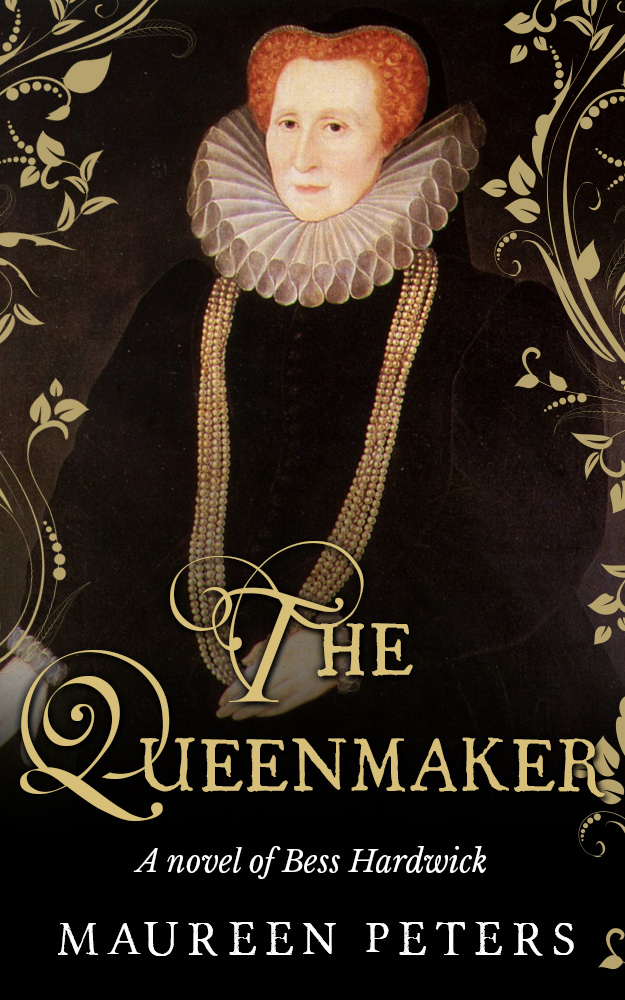
The Queenmaker The first book I’m going to talk about, The Queenmaker (1975), tells the story of Bess Hardwick, one of the richest and most notable women of the Elizabethan court, responsible for the building of great houses such as Chatsworth and Hardwick Hall. Born in Derbyshire, Bess is married at an early age to Robert Barlow, the heir of a neighbouring family, and finds herself a widow within a year. She will marry three more times over the course of her life and with each marriage her wealth increases and her position in society advances. She becomes a friend of Elizabeth I (the queen acts as godmother to her first son), and also has the opportunity to get to know Mary, Queen of Scots during her captivity in England.

With power and influence, though, comes the threat of danger. When Bess arranges a marriage for her daughter with Charles Stuart (son of the Countess of Lennox, Henry VIII’s niece), the family instantly come under suspicion because the child of this marriage, a little girl called Arbella, has Tudor blood and therefore a claim to the crown. As the years go by and Arbella grows into a woman, Bess becomes more and more convinced that her granddaughter will be named heir to the throne and that she – Bess Hardwick – will go down in history as a queenmaker.

Before reading this book I knew very little about Bess; I had come across her name several times in books set at Elizabeth’s court, but I couldn’t have told you any details of her personal life or her accomplishments. Because so much in this novel was new to me, I found it quite an enjoyable read. Obviously I knew that Bess wouldn’t achieve her ambition and Arbella wouldn’t become queen, but I was still interested to see how the story would unfold. However, I thought this book was too short to be completely satisfying. Trying to give an account of an entire life in under 200 pages means leaving big gaps in the story and jumping forward by several years at the start of every chapter. A longer novel would have allowed characters and events to be explored more thoroughly.

The Virgin Queen The Virgin Queen (1972) is another quick and fairly entertaining read which, as the title suggests, focuses on the life of Elizabeth I herself this time. Our narrator is Tomasin Drew, Elizabeth’s friend and companion, who first meets the future queen when Elizabeth is still a young girl living in the household of her stepmother, Katherine Parr. Tomasin remains with the queen for more than fifty years, offering support and friendship throughout the key moments of her life and reign.

Elizabeth is portrayed as a spirited, flirtatious and capricious woman, if not a very likeable one: a strong character, who jumps out of the pages of this novel, unlike Tomasin who stays in the background. Tomasin’s role is as an observer, reporting and commenting on events for the reader; her own personal story is left undeveloped, putting the spotlight firmly on Elizabeth. As with The Queenmaker, though, the approach Maureen Peters takes is disappointingly simplistic. This is another very short novel – too short to look at Elizabeth’s life in any real depth – and there’s nothing new here for those of us who have read about Elizabeth I many times before.

I think both The Virgin Queen and The Queenmaker might be good choices for younger readers or those who simply want a quick introduction to the Elizabethan period (while being aware that not everything in these books will be completely accurate – I spotted at least a few statements for which there is no historical proof, such as Anne Boleyn having six fingers on one hand). I haven’t ruled out reading more of Maureen Peters’ novels, but I’m not in any hurry to do so while there are so many other authors still to discover.

I received copies of both of the above novels via NetGalley for review.

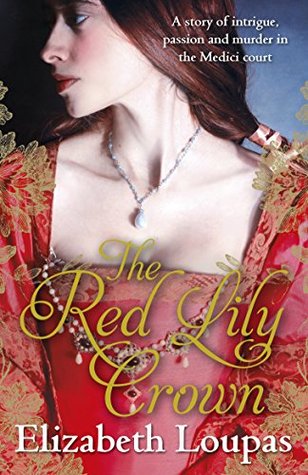
The Red Lily Crown by Elizabeth Loupas

The Red Lily Crown Nearly two years ago I read The Second Duchess by Elizabeth Loupas, a fascinating novel set in Renaissance Italy which told the story of Barbara of Austria, the second wife of Alfonso d’Este, Duke of Ferrara. In The Red Lily Crown we revisit the same time period, but this time we are in Florence, where Barbara’s sister, Giovanna of Austria, is married to Francesco de’ Medici, a member of the ruling Florentine family. The novel opens in 1574 when Grand Duke Cosimo de’ Medici is about to die and his son Francesco is preparing to inherit the red lily crown of Tuscany.

Fifteen-year-old Chiara Nerini is the orphaned daughter of a bookseller and alchemist. Desperate for money to support her grandmother and little sisters, Chiara attempts to sell some of her father’s old equipment to Francesco, who is also known to have an obsession with alchemy. However, Chiara gets more than she bargained for when she finds herself being initiated as Francesco’s soror mystica, the female partner believed to be necessary for the creation of the legendary Philosopher’s Stone. Her new role brings her into the heart of the Medici household where she witnesses first-hand the corruption, intrigue and danger of Francesco’s court.

I loved The Red Lily Crown. I wasn’t sure about it at first, because books about alchemy tend not to appeal to me, but actually the alchemy was only one part of the story. What I found much more interesting was the wonderful portrayal of the Medici court and the people Chiara meets during her time there. Francesco de’ Medici himself is the perfect villain: coldly intellectual, clever and calculating, and with a terrifying knowledge of poisons. His only weakness appears to be his love for his Venetian mistress, Bianca Cappello – although their relationship is not a healthy one. Bianca is as scheming and ruthless as Francesco himself but she is also another victim of his cruelty and can only truly please him when pretending to be something she is not.

Chiara does make some friends too and becomes close to Francesco’s poor wife, the Grand Duchess Giovanna, who has been unable to provide her husband with the healthy male heir he so badly wants. There’s also the possibility of romance for Chiara with a mysterious English alchemist known as Ruanno, but knowing little about him and his previous life in Cornwall, she must decide whether or not he can be trusted. As for Chiara herself, I found that, as with Barbara in The Second Duchess, our heroine is both a strong woman and one whose actions and attitudes are believable in the context of the time period.

All of these characters have their role to play in a fast-moving plot packed with murder, magic, power struggles and poisonings. The setting is a great one too. The Medici palaces, the Nerini bookshop and the streets and squares of sixteenth century Florence are all vividly described – and there are some particularly memorable scenes set in the Grand Duke’s labyrinth in the Boboli Gardens. Not everything that happens in the story is entirely accurate, but Elizabeth Loupas explains in her author’s note what is true and what is fictional. Of course, there is a lot that we still don’t know for sure about the Medici, which leaves plenty of scope for an author to use his or her imagination.

I think I liked The Second Duchess slightly more than this one, but both books I’ve read by Loupas are excellent. I need to get hold of a copy of her other novel, The Flower Reader, as soon as I can!

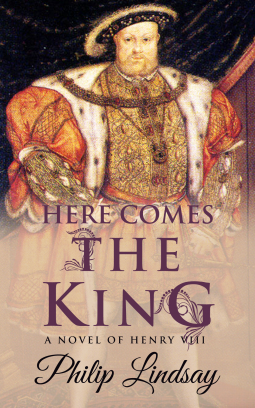
Here Comes the King by Philip Lindsay

Here Comes the King Philip Lindsay (1906-1958) was an Australian author of historical fiction. His books have been out of print in recent years but are now being made available to a modern audience in ebook form by one of my favourite independent publishers, Endeavour Press. Here Comes the King, a 1933 novel about Katherine Howard and Thomas Culpeper, is the first of his books that I’ve read.

Katherine (or Catherine, but I’m sticking to the spelling used in the novel) is a young woman of seventeen or eighteen when she marries Henry VIII at Oatlands Palace and becomes his fifth wife. Her predecessor, Anne of Cleves, has recently been set aside by the king, who believes he was misled as to her appearance. The new queen’s beauty and youthful spirit are much more pleasing to Henry, who calls her his ‘rose without a thorn’. Katherine, though, is less enamoured with her fat, gluttonous, fifty-year-old husband who is suffering from painful leg ulcers and whose moods are becoming increasingly volatile. Although Henry is not generally unkind to her, she is tempted into an affair with the handsome young courtier, Thomas Culpeper – an affair which will lead to both their downfalls.

Here Comes the King is written in the third person from the perspective of several different characters including Culpeper, Henry and Katherine herself, as well as Will Sommers, the king’s fool, Francis Dereham, another man once romantically involved with Katherine, and Jane Boleyn, Lady Rochford, who helps to arrange Katherine’s secret meetings with Culpeper. Jane and Sommers were both in a difficult position, knowing or suspecting what was going on and unsure of what to do with that knowledge, and this made them interesting characters to read about.

However, I felt that I didn’t get to know Katherine very well. She is portrayed as a pretty, flirtatious, immature young girl, and while this does seem to be a widely held view of what the real Katherine was like, I would still have preferred her character to be given a little more depth. Even when she was the viewpoint character, I never felt that I really knew what she was thinking. Culpeper’s character is better written; he is shown in a negative light, being irresponsible, impulsive and a heavy drinker (and allegedly guilty of both rape and murder, although these things are only briefly mentioned as they happen outside the scope of the novel), but his thoughts and feelings come through strongly.

I am far from being an expert on Katherine’s life and her time as Henry’s queen, so I can’t really comment on Lindsay’s accuracy, but the story did seem to follow quite faithfully the general outlines of Katherine’s and Culpeper’s lives. He incorporates things which are known to be historical fact, such as the text of Katherine’s incriminating letter to Culpeper (complete with grammatical mistakes; she is thought to be the least well educated of Henry’s wives) as well as things which may or may not be true but which have become part of the legends surrounding Katherine: practising laying her head on the block the night before her execution, for example, and declaring that “I die a Queen, but I would rather have died the wife of Culpeper”.

I had no problems with Lindsay’s writing (it’s slightly flowery and over-descriptive in places but otherwise feels surprisingly contemporary for a 1930s book) and I would read more of his work, but I didn’t find this particular novel very compelling, maybe because it’s so romance-centred. Admittedly, it would be difficult to write a book about Katherine Howard and not focus on her love affairs; as she spent such a short period as queen and died so young, she left less of a legacy than some of Henry’s other wives, and I think this is why her story has never appealed to me very much. Maybe one of Lindsay’s other novels would interest me more than this one did.

I received a copy of this book for review via NetGalley.

The Sea-Hawk by Rafael Sabatini

The Sea Hawk I love Rafael Sabatini! I can always count on him when I’m in the mood for a good old-fashioned adventure story (which is often) and The Sea-Hawk has it all: treachery, betrayal, revenge, duels, kidnapping and piracy on the high seas. It’s a similar story in some ways to his later pirate novel, Captain Blood, but I think I enjoyed this one slightly more.

Published in 1915, The Sea-Hawk is set in the sixteenth century during the reign of Elizabeth I. Our hero is Sir Oliver Tressilian, a gentleman and former sailor from Cornwall who has worked hard to restore his family’s reputation which had been tarnished by the behaviour of his late father. Sir Oliver is betrothed to the beautiful Rosamund Godolphin who returns his love despite the fact that her brother Peter hates the Tressilians due to a family feud. When Peter is killed in a duel the blame falls on Oliver – and while the reader knows that Oliver is innocent, Rosamund does not. Things quickly go from bad to worse for Oliver and he finds himself sold into slavery and sent to the Barbary Coast at the oars of a Spanish galley.

At home in England Rosamund continues to believe Oliver to be the murderer of her brother, while the real culprit stays quiet and benefits from Oliver’s absence by claiming his estates, as well as the woman he loves. Several months later, in Algiers, we meet a Muslim corsair known as Sakr-el-Bahr, or ‘hawk of the sea’. Sakr-el-Bahr’s pirating skills have won the admiration of Asad-ed-Din, the Basha of Algiers, who claims to love him as a son – but this has made him a target of the Basha’s Sicilian wife, the scheming Fenzileh, and her jealous son Marzak. I don’t think it’s too much of a spoiler to tell you that Sakr-el-Bahr is, of course, Sir Oliver, who is preparing to return to Cornwall to take his revenge…

Having read three of Sabatini’s other novels, I’ve come to know what to expect from him – and The Sea-Hawk definitely lived up to my expectations. I’m finding that his books all follow a similar pattern (at least, the ones I’ve read do) in which the hero suffers a betrayal or injustice of some kind, undergoes a transformation and plots his revenge/attempts to clear his name, while being completely misunderstood and misjudged by his love interest. Sir Oliver is a great character; he’s not always easy to like, but considering everything he is forced to endure, it would be difficult not to want things to work out for him in the end. Rosamund is a frustrating heroine, though, being so quick to think the worst of Oliver – but to be fair, she doesn’t share the reader’s knowledge that he is innocent.

The setting is great too. I particularly loved the chapters set in Algiers, in which Sabatini immerses us in the culture, religion and history of the Barbary coast, with some vivid descriptions of the labyrinths of narrow streets, souks and slave markets, and the courtyards, archways and orchards of the Basha’s palace. The focus on the Barbary corsairs rather than the pirates of the Caribbean gives the book a different feel and a different atmosphere from Captain Blood – and I was pleased to find that there was plenty of land-based action as well as ship-based (as I’m sure I’ve mentioned before, I’m not usually a big fan of books set at sea).

As I’ve now read the four novels which are probably Sabatini’s most popular – Scaramouche, Captain Blood, The Sea-Hawk and Bellarion – I would appreciate any recommendations as to which of his books to read next.