Who would be a queen?

I certainly wouldn’t, based on the stories of the two 16th century queens I’ve been reading about recently!

The Last Queen The first of our two queens is Juana of Castile, also known as Juana la Loca (‘the mad’), whose life is retold in fictional form in The Last Queen by C.W. Gortner. I think most of us will have heard of Juana’s younger sister, Katherine of Aragon, the first wife of Henry VIII who was divorced so that the King could marry Anne Boleyn, breaking away from Rome in the process. Juana’s story is less well known (outside Spain, at least) and less often covered in historical fiction, but just as interesting and tragic.

Juana is the third of five children born to Queen Isabella and King Ferdinand of Spain, whose joint rule has brought together the two Spanish kingdoms of Castile and Aragon. The King and Queen have arranged marriages for all of their children, in the hope of forming political alliances, and Juana finds herself married against her will to Philip, Duke of Burgundy, son of the Holy Roman Emperor. Despite her initial feelings, Juana quickly falls in love with her new husband – but her happiness doesn’t last long. The deaths of her elder brother and sister leave Juana as her parents’ heir and her relationship with Philip changes as a result.

Influenced by the scheming Archbishop Besançon, Philip sets his sights on taking the throne of Spain for himself and Juana finds herself betrayed and accused of insanity. Even as she discovers that the very people she should be able to trust want only to bully and manipulate her, she remains determined to fight for her throne and her country.

This is the first of C.W. Gortner’s books I’ve read and I will definitely consider reading more. I thoroughly enjoyed this moving and dramatic novel which took me through a period of Spanish history of which I previously knew almost nothing. There’s some beautiful descriptive writing which brings each of the various settings to life, from Granada during the Conquest of 1492 to the extravagance of the French court.

Gortner is a male author, if you’re wondering, and he writes very convincingly from the perspective of a young woman in this novel. Whether or not Juana actually suffered from mental illness is debatable; the point of view taken in this book is that the ‘madness’ developed as a result of years of stress and suffering – and branding her mad was a convenient way for her enemies to prevent her from ruling. I don’t know enough about her to say whether this is likely or not, but I did love Gortner’s portrayal of Juana and wished she could have had a little more happiness in her life.
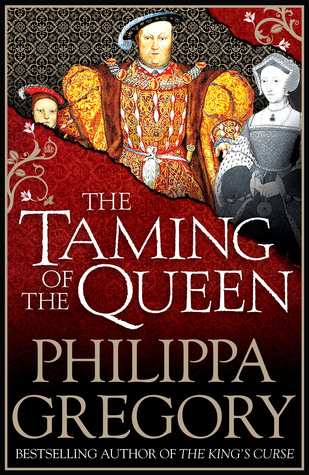
The Taming of the Queen Our second queen is Katherine Parr, sixth and final wife to Henry VIII, whose story is told in The Taming of the Queen by Philippa Gregory. I hadn’t really intended to read this book as I find Katherine one of the less interesting wives and, having read several other fictional accounts of her life (including Queen’s Gambit by Elizabeth Fremantle and The Secret Keeper by Sandra Byrd), I didn’t imagine this one would have anything new to add. When I saw it in the New Books section of the library, however, I couldn’t resist reading it – and I’m pleased I did as I found it to be one of Gregory’s better Tudor court novels.

Katherine Parr (or Kateryn as her name is spelled in this book) could be seen as one of Henry’s luckier wives, outliving the King and managing to avoid both divorce and beheading, but this doesn’t mean that she was happy or that she didn’t fear for her life at times. By this stage of his life Henry is, shall we say, past his prime: Gregory describes (sometimes in too much detail!) his gluttony at banquets, his bodily functions and the smell of his ulcerated leg. Add to this his temper, unpredictable behaviour and obsession with his third wife, Jane Seymour, and you can see how difficult things are for poor Kateryn, especially as she has been forced to give up her secret love for Thomas Seymour.

Kateryn finds some comfort in getting to know her new stepchildren – Mary, Elizabeth and Edward – and restoring them to their places at court, and also in religious study. She welcomes preachers to her rooms (including Anne Askew, who was later burned at the stake) and as a result of this narrowly escapes death herself; she debates religious reform with her ladies and sometimes with the King himself; and she writes several books, becoming the first Queen of England to publish under her own name.

Kateryn is an intelligent and mature woman who has already been widowed twice before her marriage to Henry and she is able to tolerate her situation and handle the King’s whims in a way that a younger, less experienced girl may not have done. I liked her, but I felt that there were times when Gregory attributed words and actions to her that didn’t feel consistent with the way her character was being portrayed. This made me think that maybe she is more comfortable writing from the perspective of younger, livelier narrators.

This is an entertaining read and if you’ve never read about Katherine Parr before, it provides a good overview of her life and of the final years of Henry’s reign (events such as the sinking of the Mary Rose are covered in dramatic detail). I did prefer Elizabeth Fremantle’s Queen’s Gambit, though, and would recommend that book ahead of this one.

Have you read any other novels about Juana of Castile or Katherine Parr? Which are your favourites?

The Lady of Misrule by Suzannah Dunn

The Lady of Misrule Lady Jane Grey, Queen of England for just nine days in 1553, has been replaced on the throne by Mary Tudor, the eldest daughter of Henry VIII. As Mary establishes herself as Queen and returns the country to Catholic rule, Jane is taken to the Tower of London to await the trial which will determine her fate. Joining her in her imprisonment is Elizabeth Tilney, a ‘good Catholic girl’ who has volunteered to be Jane’s companion, and it is through Elizabeth’s eyes that the story is told.

Elizabeth and Jane are the same age, but that’s all they have in common. Jane is a quiet, serious girl, devoted to her books and her Protestant faith, while Elizabeth has a livelier, more rebellious personality and has had experiences of life that are very different from Jane’s. Being such incompatible people, living together in the confines of the Tower is not always easy, but gradually a bond starts to form between the two girls. History tells us what will eventually happen to Jane but The Lady of Misrule is a fictional account of the time she and Elizabeth spend in captivity wondering what the future holds.

I came away from The Lady of Misrule with a mixture of feelings, some negative and some positive. The negative feelings are mainly due to my own personal taste in historical fiction. Suzannah Dunn writes in a very contemporary style, using modern slang and exploring emotions, motives and relationships in a way that she thinks modern readers will identify with. I thought this style worked quite well in The May Bride, a domestic family story about the early life of Jane Seymour, but it irritated me this time. I do understand that the author writes in this way intentionally (she explains why in the Q&A on her website) and it’s not a result of carelessness or poor research, but I do prefer historical novels to feel more ‘historical’. As I’ve said, this is definitely just something that will depend on each individual reader’s own taste.

There were plenty of positive things I can say about this book, though. I have read other novels about Lady Jane Grey, but I liked the fact that Dunn’s approach is quite different, writing about just a short period of her life and from the perspective of someone who is meeting her for the first time. Although the girls spend most of the novel in captivity, they do still have some contact with the outside world and Elizabeth is able to relate to us some of the events that are unfolding beyond the walls of the Tower, but the focus is always on Elizabeth’s and Jane’s personal lives. Jane keeps herself at a distance which means that Elizabeth, who can be quite naive when it comes to politics and religion, often finds her difficult to understand and maybe because of this Jane is not an easy character to like. But this is as much Elizabeth’s story as it is Jane’s and as the novel progresses we learn more about Elizabeth’s past, her relationship with a much older man and the secrets she is trying to hide.

I also liked the portrayal of Jane’s husband, the seventeen-year-old Guildford Dudley, who is also imprisoned elsewhere in the Tower awaiting his own fate. It seems that the one bright spot in Guildford’s life is having the chance to speak to his wife when they take their daily walks in the Tower gardens, but Jane has little time for her husband and instead he and Elizabeth become friends. Guildford has been shown in a very negative light in other books I’ve read and it’s easy to forget that he was just a young man who, like Jane, had been used and manipulated by people more powerful than himself. It was good to see such a different side of him in this novel!

While I can’t say that I loved The Lady of Misrule, it was still an interesting read at times and I would recommend it to fans of Tudor fiction who are happy with a more contemporary approach.

I received a copy of this book for review via NetGalley.

Dacre’s War by Rosemary Goring

Dacres War It’s 1523 and ten years have passed since the armies of Scotland and England met at the Battle of Flodden, resulting in victory for the English and the death of King James IV of Scotland. With a child king (the young James V) and a regent who spends much of his time in France, Scotland lacks strong leadership and Henry VIII of England is taking advantage by ordering the destruction of Scottish border towns. The man responsible for doing this, as well as for keeping some sort of order in the lawless English and Scottish border lands is Thomas Dacre, Warden General of the English Marches.

Dacre is the most powerful man in the north, but he is also making a lot of enemies…including Adam Crozier, head of one of the leading families on the Scottish side of the border, who discovers that Dacre is to blame for the murder of his father. Crozier vows to take revenge and begins the process of forming alliances with other borderers and collecting evidence that will help to bring about the Warden’s downfall.

Dacre’s War is the sequel to After Flodden, Rosemary Goring’s first novel which describes the 1513 battle and its aftermath. I read After Flodden last year and thought it was a good book but nothing special, so I wasn’t sure whether or not to read this one. I am so glad I did decide to read it, because I loved it! The few criticisms I had of the first book (the confusing timeline and the predictability of the plot) were not problems for me this time; I thought this second book was more exciting, faster paced and just a stronger novel in general. If you have not read After Flodden yet, picking this one up first shouldn’t affect your enjoyment or understanding too much – while some of the characters are the same, it’s set ten years later and is a complete story with a beginning and an end.

About half of the story is told from the perspective of the Croziers and half from the Dacres’, although there are also a few chapters set within the Scottish and English courts. It would be easy just to accept Crozier as our hero and Dacre as our villain, but both characters are more complex than that. By allowing us to get inside Dacre’s head and see his point of view, he becomes a more fully developed character and we come to understand that, like most human beings, he is a mixture of good and bad. As well as Crozier and Dacre, there’s also an interesting cast of supporting characters, some new and some old – it was nice to see Louise and Hob again and I enjoyed watching Benoit Brenier going off and having adventures of his own.

My favourite thing about both Dacre’s War and After Flodden, though, is the setting. I love the way Rosemary Goring portrays life in the borders in the 16th century – the raids and feuds that made it such a dangerous place to live, as well as the natural beauty of the countryside. I will be happy if she revisits the world of the Croziers in a third novel, but if not then I’ll be interested to see what she chooses to write about next.

The Tutor by Andrea Chapin

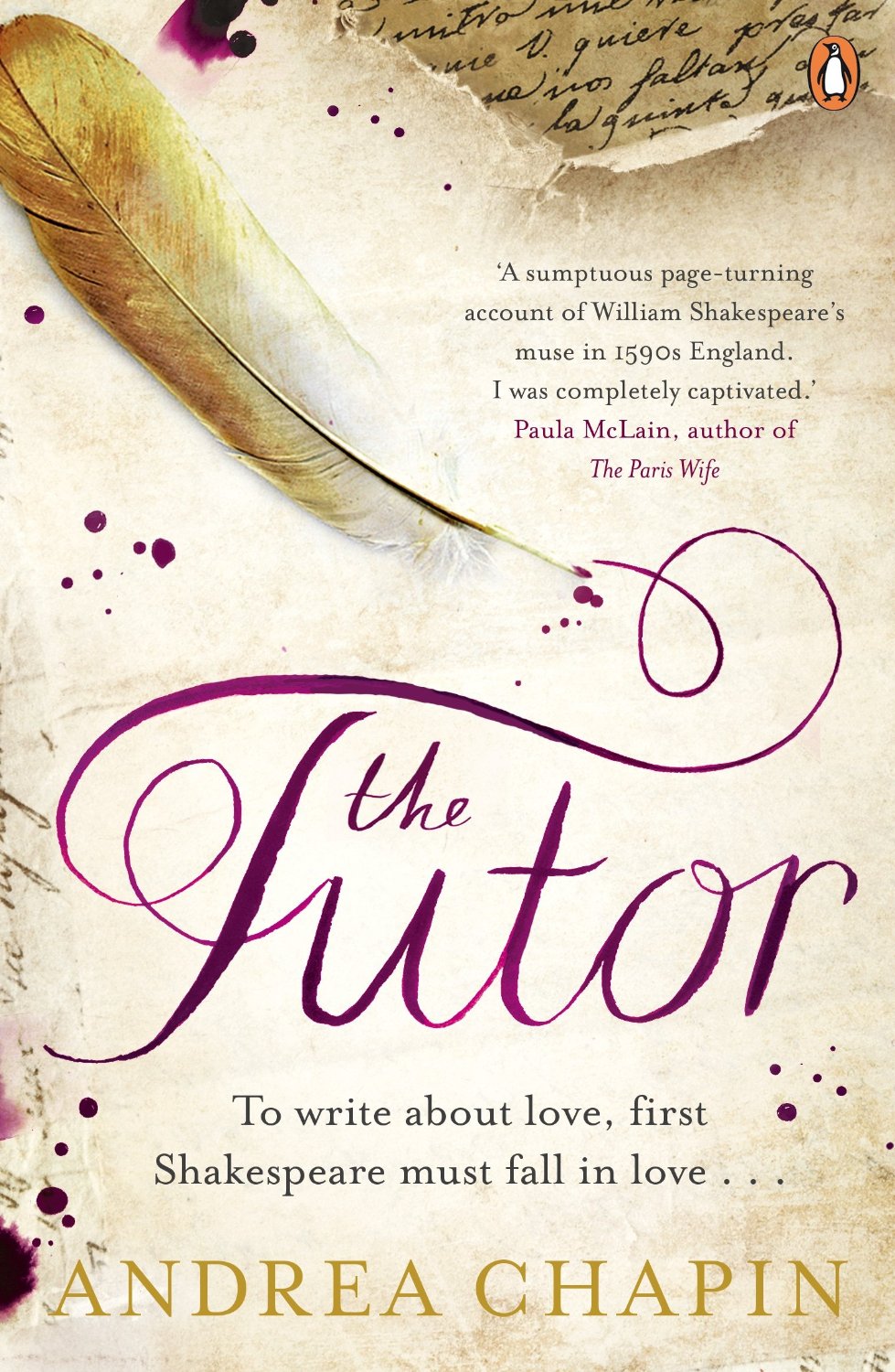
thetutor William Shakespeare is probably the most famous name in literature, yet there is still so much we don’t know about his life and his work. Despite centuries of research by academics and historians many questions remain unanswered. In particular, very little is known about Shakespeare’s activities between 1585 and 1592. In The Tutor, Andrea Chapin gives a fictional account of one of these ‘lost years’.

The novel begins in 1590 and introduces us to Katharine de L’Isle, a widow living in her uncle’s household at Lufanwal Hall in Lancashire. Katharine has no plans to marry again and is enjoying spending time with her cousins and their children and discussing poetry with her Uncle Edward. However, the family are Catholics, and with a Protestant queen on the throne of England they know that their peaceful lives could be interrupted at any moment. Their troubles begin when the family priest and schoolmaster is murdered and Edward is forced into exile, but for Katharine, as well as being a time of tragedy, this is also the start of an exciting new episode in her life.

The death of the priest leads to the arrival of a new tutor at Lufanwal – a young man from Stratford whose name is William Shakespeare. Will’s task is to teach the children Greek and Latin, but Katharine soon discovers that her own knowledge of these languages is better than his. When he confesses that what he really wants to do is write poetry, Katharine agrees to read his verses, offering advice and criticism, and in this way the poem Venus and Adonis begins to take shape. As they continue to work together, Katharine finds that she is falling in love – but does Will feel the same way?

The first thing you need to know about The Tutor is that there is no historical evidence that Shakespeare was in Lancashire during this period or that he ever knew a woman called Katharine de L’Isle. I’m not really sure how I feel about books that fictionalise a whole episode in the life of a real historical figure – I think I prefer to read novels that either deal with wholly fictitious characters placed into historical settings or that follow the life of a famous person while sticking closely to the facts – but the author does make it clear that the relationship between Katharine and Will is imaginary. The romantic aspect of the story was developed well, though I couldn’t really understand why Katharine was so attracted to Will, as I found him arrogant, manipulative and generally annoying. It’s not a very flattering portrayal at all – though having said that, I don’t think I’ve read a fictional portrayal of Shakespeare yet that I did like!

Katharine’s relationship with Will and her influence on his work is one element of this novel: the historical setting is another. I loved reading about life at Lufanwal Hall – the clothes people wore, the food they ate, the superstitions and beliefs they held, how they occupied their time – and we are also given some insights into the dangers of being a Catholic family living in Elizabethan England. Elizabeth I may have been more tolerant of religious differences than her sister and predecessor Mary I, but persecution did still occur under her reign as we see throughout this novel. I found this part of the story very interesting and I think there would have been enough material for a fascinating novel here even without the Katharine and Shakespeare storyline!

I hosted a guest post by Andrea Chapin as part of a blog tour back in April in which she talked about her research for the novel and it’s obvious that she did put a lot of thought into what Shakespeare may realistically have been doing during those lost years. I have read other novels which also explore possible theories regarding Shakespeare and the women who may have inspired his work (Dark Aemilia by Sally O’Reilly and Shakespeare’s Mistress by Karen Harper) and this book compares well with both of those, although I still wasn’t entirely convinced that the writing of Venus and Adonis could have happened exactly as described in the novel.

The Tutor is Andrea Chapin’s first novel and while there were some aspects of it that I thought worked less well than others, I still found a lot to enjoy and will be interested to see what she writes next. Meanwhile, I have added a new page to the Journey Through Time section of my blog in which you can find more suggestions for Shakespeare-inspired reading.

An Accidental Tragedy: The Life Of Mary, Queen Of Scots by Roderick Graham

An Accidental Tragedy The death of Mary, Queen of Scots, executed in 1587, could certainly be considered a tragedy. Was it also an accidental one? Could Mary’s fate have been avoided if she had only been a different type of person and if she had made different choices in life? This is the starting point for Roderick Graham’s 2009 biography of one of Scotland’s most fascinating monarchs, which claims ‘neither to blacken her character by portraying her as a murderess of husbands, nor to sanctify her as the lonely champion of her faith, but to recount the circumstances which formed her character and to explain the events which determined her fate’.

The book begins with Mary’s birth at Linlithgow Palace in 1542 and her rapid accession to the throne when her father, James V of Scotland, died just six days later. Mary was not Scotland’s first child monarch – James V himself and all of the four kings before him also came to the throne at an early age – and the Scottish people had become used to long periods of regency. As Graham explains, this led to an increase in the power and independence of the nobility and caused division and a lack of unity.

After a marriage treaty between Mary and Henry VIII’s son, Prince Edward, was rejected by the Scots, the five-year-old queen was sent to France where she would eventually marry the French king’s heir, the Dauphin Francis. Mary grew up in France rather than Scotland and she and Francis were strongly influenced by her mother’s relatives, the Guises. This meant that when Mary returned to Scotland to rule in 1561 following her husband’s death, she had very little knowledge of the country of her birth. At a time of increasing religious and political conflict among the Scottish noblemen a strong leader was needed.

Roderick Graham does a good job of showing how poorly equipped Mary was for her role as Queen of Scots and how she was unable to provide the sort of leadership the country required. Despite the presence of three influential women in her life – her mother, Mary of Guise; the Queen of France, Catherine de’ Medici; and the King of France’s mistress, Diane de Poitiers – Mary appeared to learn very little from any of them regarding the management of court intrigue and politics. The years that followed her return to Scotland were dominated by murders, plots, rebellions and two disastrous marriages, the first to Lord Darnley and the second to the Earl of Bothwell, finally ending in her abdication and imprisonment in England.

I found it interesting that Graham had chosen to write a book about someone for whom he seemed to have so little admiration, sympathy or liking. He never misses an opportunity to compare Mary with that other queen south of the border – Elizabeth I – and to point out how much stronger, cleverer and wittier the Queen of England was. In contrast, he paints a picture of Mary as immature, incapable of making good decisions and driven by passion and emotion. I’m not sure how fair or unfair his treatment of Mary is, but despite his preference for Elizabeth, he still made me feel sad for Mary as her life drew closer to its tragic end.

An Accidental Tragedy is the first book I’ve read that is specifically about Mary, Queen of Scots. Of course, I’ve come across her in other non-fiction books about the Tudor/Elizabethan period and she has been a secondary character in some of the historical fiction novels I’ve read, but this is the first time I’ve read a comprehensive biography of her entire life. I was particularly interested in reading about this period in Scotland’s history because my favourite historical fiction series, the Lymond Chronicles by Dorothy Dunnett, is set during the first part of Mary’s reign, but this just added another layer of interest to what was already a fascinating and very readable biography.

If anyone has any other biographies of Mary to recommend, please let me know. I would love to read another one.

The Edge of Dark by Pamela Hartshorne

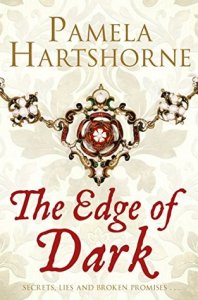
The Edge of Dark I enjoy reading time-slip novels; I love the sense of the supernatural, the atmosphere of mystery and suspense, and the intertwining of two lives – one past and one present. Pamela Hartshorne has written three novels of this type (the other two are Time’s Echo and The Memory of Midnight) but this one is the first I’ve had the opportunity to read. I found it an entertaining, compelling and genuinely eerie read and I’m now looking forward to going back and reading her earlier novels.

The Edge of Dark is the story of Roz Acclam who, at the beginning of the novel, is preparing to start a new job as Events Director at Holmwood House, a recently restored Elizabethan building in York. This is not the first time Roz has been to York; she lived there as a small child until most of her family died in a fire and she was adopted by an aunt in London. She remembers nothing of the fire or her tragic childhood, but almost as soon as she arrives in York, memories begin to come flooding back – the only problem is, they are not her own memories but those of another woman who lived more than four hundred years earlier.

The Edge of Dark is also the story of Jane, the eldest daughter of a butcher who lived in York in the 1500s. Jane’s father is planning ambitious marriages for both of his girls and Jane soon finds herself married off to the handsome, wealthy Robert Holmwood. Joining her new husband at Holmwood House, she discovers that married life is not quite what she’d expected and she begins to long for a child of her own. But Jane’s desire to be a mother eventually grows so strong that she makes a promise she could live to regret.

As Roz tries to settle into her new job the flashbacks into Jane’s life become more frequent and she begins to question why she is having these experiences. Is Holmwood House haunted? Are Jane’s ordeals in the past somehow connected with Roz’s own problems in the present? And what really happened the night the Acclams’ house was set on fire?

Usually when I read a novel set in two time periods I find that I prefer one over the other – as I love historical fiction it tends to be the one set in the past. With this book, Roz’s story and Jane’s are so closely linked that it’s difficult to separate them; the transitions between past and present felt smooth and natural and I could easily become immersed in the lives of both women. Roz and Jane are both strong characters, but there are other interesting characters in each time period too. While some feel less developed than others, the two I found most memorable are (in the present) Helen, a jealous colleague who tries to cause trouble for Roz at work, and (in the past) Margaret Holmwood, Jane’s scheming mother-in-law.

I also liked the fact that the novel is set in York, a city I have visited many times and am quite familiar with. It was obvious that the book was written by an author who knows York, its streets and its buildings very well! Something else I found interesting was seeing what goes into opening a new tourist attraction to the public. I would have liked to have read more about Roz’s work – it sounded fascinating.

I realise I’ve come to the end of this review and haven’t mentioned the significance of the beautiful Tudor necklace on the front cover of the book, but I need to leave something for future readers to discover for themselves!

Thanks to Pan Macmillan for providing a copy of this book for review.

City of God by Cecelia Holland

City of God Since 1966 Cecelia Holland has written over thirty novels, most of them historical fiction, and some are now being re-released in ebook format by Open Road Integrated Media. As I’ve never read any of her work before, I was pleased to receive a copy of her 1979 novel, City of God, via NetGalley.

City of God is set in Rome at the beginning of the sixteenth century and, as the subtitle suggests, it is A Novel of the Borgias. With the former Rodrigo Borgia now Pope Alexander VI, the Borgia family already wield a large amount of influence in Rome, but the Pope’s illegitimate son, the condottiero Cesare Borgia, is now turning his attention to conquering the rest of the Italian city states. Cesare, known as Duke Valentino, has a reputation for being cruel and ruthless and even as he plots and schemes his way to power, his enemies are conspiring against him.

We see all of this through the eyes of Nicholas Dawson, secretary to the Florentine ambassador to Rome. Raised at a Spanish monastery after his English parents died in Pamplona, Nicholas is a man who seems to have no real connection or loyalty to any particular country or city. This makes him an ideal target for Valentino, who has his eye on Florence and needs a spy within the Florentine embassy. Nicholas has already been secretly rewriting the ambassador’s dispatches to suit his own political views – will betraying Florence to the Borgias be the next step?

As this is the first Cecelia Holland novel I’ve read I didn’t know what to expect – and I was quite surprised. This is a book with a very dark and claustrophobic atmosphere and the writing is completely unromantic, focusing firmly on the political machinations of Nicholas and the Borgias and the intrigue of the Papal Court.

I didn’t find this an easy book to read, but that’s because I’m not very familiar with the Borgias or the history of Rome in this period and Holland does seem to assume that the reader has some previous knowledge. She doesn’t spend much time explaining the negotiations, alliances and conflicts between Spain, France and the various Italian city states, but expects us to already understand the politics involved. I do like historical fiction that makes me think and that encourages me to look things up for myself so I can learn about the period, but I did wish I had known more about the subject before I started!

The characters in City of God are very unlikeable. The book doesn’t challenge the popular view of the Borgias as scheming and corrupt – Alexander is a Pope who gambles and who has mistresses and children, while Cesare is brutal and unscrupulous and Lucrezia, his sister, is the subject of gossip and suspicion – and the people around them are not much better. I found nobody to sympathise with or to admire, not even Nicholas. This wasn’t a big problem, though, as I can often still enjoy a book without liking the characters – and at least they were interesting.

Nicholas himself is a fascinating, complex character but it’s never obvious where his loyalties lie or if he even has any at all. He appears to be motivated by self-interest, ambition and the desire for power, and he enjoys using his brains to give advice to the Borgias and to act independently of the Ambassador. I’m not sure I ever fully understood what Nicholas was trying to do, but something that happens right at the end of the book made me think again about what he was hoping to achieve. Nicholas is also a gay man living in a time when it is dangerous to be openly homosexual and this adds another layer to the novel. His relationship with a young man called Stefano is an important aspect of the plot (though don’t expect a great love story, as even this part of the novel is free of romance and sentiment).

City of God was an interesting and unusual read; I didn’t love it but I do want to try another of Cecelia Holland’s books as I think I might prefer one with a different setting. Now that more of her books are being made available again I’ll have plenty to choose from!

I’m counting this book towards Week 3 of the Forgotten Histories Reading Challenge – Read a book with an LGBT protagonist.