Beatrice and Benedick by Marina Fiorato

Beatrice and Benedick “I had rather hear my dog bark at a crow than a man swear he loves me.” These words are spoken by Beatrice near the beginning of Shakespeare’s Much Ado About Nothing, when she is reunited with Benedick, a man whom it is hinted she had been romantically involved with in the past. Shakespeare never gives us any details of Beatrice and Benedick’s history together and in this new novel, Marina Fiorato imagines how they may have met, what could have led to their separation and what brought them together again.

As the novel begins in the summer of 1588, Beatrice, the daughter of Prince Escalus of Verona, is visiting Messina in Sicily, staying at the home of her uncle Leonato, the Governor of Messina. Sicily is under Spanish rule and Leonato is preparing to welcome a party of Spaniards to the island, including the Prince of Aragon, Don Pedro, who is accompanied by his two young Italian friends, Claudio and Benedick. Claudio instantly falls in love with Leonato’s beautiful daughter, Hero, while Beatrice and Benedick are also attracted to each other – but are unable to admit it, preferring to trade insults instead. Just as they begin to acknowledge their love for each other, the two are torn apart with Beatrice heading home to Verona and Benedick joining Don Pedro and Claudio at sea as the Spanish Armada sets out to invade England. Eventually they will all meet again in Messina, setting the scene for the events of Much Ado About Nothing

Well, this book was a surprise! I had expected a light, gentle romantic comedy, but what I got was an entertaining and often quite dark historical adventure novel filled with duels, pageants and puppet shows, sea voyages, mutinies and treasure troves. Like a play, the novel is divided into Acts and Scenes, each Scene narrated by either Beatrice or Benedick. The voices of the two narrators were very similar and I thought more effort could have been made to make them more distinctive, but otherwise I liked the way the novel was structured. I wondered whether Fiorato would be able to pull off the wars of words between Beatrice and Benedick, but I think she did this very well – although Benedick doesn’t seem as quick-witted as Beatrice and usually comes off worst in their encounters.

I know there are some readers who are not interested in prequels, sequels or rewritings of any kind (and actually, I usually am one of those readers) but I enjoyed this one and thought it was very cleverly done, with Shakespeare’s characters and storylines woven perfectly into the history of the period. There are also some elements and characters from other plays, most notably Othello and Romeo and Juliet. Fiorato even manages to incorporate Shakespeare himself into the novel – if you’re not already aware of the theories connecting Shakespeare with Sicily I’ll leave you to find out for yourself!

You don’t really need to be familiar with Much Ado About Nothing as this book does work as a straightforward historical fiction novel, but you will get more out of it if you do read (or watch) the play either before you start or after you finish. As for the historical aspects of the novel, it was interesting to learn about Spanish-ruled Sicily and the fate of the Moors who lived there. I also loved all the beautiful descriptions of both Messina and Verona.

Having enjoyed Beatrice and Benedick so much more than I’d expected to, are there any other Shakespeare-inspired novels you would recommend?
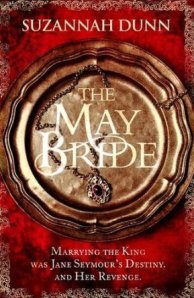
The May Bride by Suzannah Dunn

The May Bride One day in May 1536, Jane Seymour became Henry VIII’s third wife – but she is not the only May bride in Suzannah Dunn’s new novel. The other is Katherine Filliol, the wife of Jane’s elder brother, Edward. Jane is only fifteen when Edward first brings Katherine to Wolf Hall, the Seymour family home, and she is instantly captivated by her beautiful new sister-in-law. Jane and Katherine become close friends – or so Jane thinks, but gradually she discovers that Katherine has been keeping secrets from her and that her marriage to Edward may not be as perfect as it first appeared.

I had my doubts about this book before I started reading it because I had tried to read another of Dunn’s books a few years ago, The Confession of Katherine Howard, and didn’t get very far with it before giving up, not having connected with the writing style or the characters at all. I wondered if I would have the same experience with this book, but luckily that didn’t happen; I found this one much more enjoyable and easier to get into.

I’ve read a lot of novels set during the Tudor period, but this one is slightly different, for several reasons. First, it is a very domestic story, being set almost entirely at Wolf Hall with only the final, shortest section of the book covering Jane’s time at court as lady-in-waiting to Katherine of Aragon and Anne Boleyn. Until that last section there are so few mentions of politics, court intrigues or famous people of the period (apart from the Seymours themselves) that it could almost have been a story about any other wealthy Tudor family going about their daily lives.

I also found it intriguing that although Jane is the most famous Seymour and the one who is narrating, this novel is actually about Katherine Filliol as much as it is about Jane. I didn’t know anything about Katherine before reading the book and although Suzannah Dunn admits in her author’s note that there is very little historical information available on Katherine (and no record of what eventually happened to her) I still appreciated the fact that she had chosen to focus on a little-known character who is not usually the subject of historical fiction.

Finally, this book is written in a style that feels very modern and there is no real attempt to use language appropriate to the period. This is something that usually irritates me, but in this case I think it actually worked quite well once I got used to it. Because this is a family drama, with the emphasis on exploring the relationships between Katherine, Jane and the other Seymours, the fresh and contemporary feel made it easy to identify with the characters. I thought Jane’s brothers, Edward and Thomas, with their very different personalities, were particularly well drawn.

Compared with some of Henry VIII’s other wives, Jane Seymour as queen is often portrayed as quiet and uninteresting but here the young Jane comes to life as a loyal and loving person who is able to see the best in everyone. Unfortunately I didn’t share her fascination with Katherine, but I suppose that’s because I was able to pick up on clues and nuances that wouldn’t have been obvious to an innocent fifteen-year-old girl who is dazzled and enchanted by her new friend.

Although I maybe haven’t learned as much about Jane as I would have done from a more conventional historical novel, I did enjoy reading about her early life and the experiences that shaped the woman and queen she would become.

I received a copy of this book for review from the publisher via NetGalley

The Gondola Maker by Laura Morelli

The Gondola Maker The Gondola Maker is set in Venice in the 16th century and tells the story of Luca Vianello, the son of a gondola maker. As the novel opens in 1581, Luca’s future seems secure – he will marry Annalisa Bonfante, the blacksmith’s daughter, and on his father’s death he will inherit the family business. However, when a tragedy unexpectedly tears the Vianello family apart, Luca is forced to leave the squero (boatyard) behind to seek a new life and career for himself.

I was lucky enough to visit Venice for the first time last year and reading The Gondola Maker reminded me of what a beautiful, unique city it is and how I would love to go again. The author’s descriptions are so vivid that whether or not you’ve been to Venice you’ll be able to picture the grand palazzos of the rich merchants and noblemen lining the Grand Canal, the sun setting behind the basilica of San Marco, the view across the lagoon to the island of San Giorgio Maggiore, and the inside of a prison cell in the Doge’s palace.

Being a novel about a family of gondola makers, it’s no surprise that we are given lots of information on the art of gondola making. And it really is an art! As we accompany Luca on a mission to restore one of his grandfather’s old gondolas, we see how many different people are involved in the process, from the remèri who make the oars and the fórcole (rowlocks which secure the oar) to the blacksmiths who construct the ferri (the metal decorations at the prow). Each of these artists pours their skill, knowledge and love into their work so that each complete gondola is an object of beauty and perfection.

This was all much more interesting to read about than I had expected, but of course there is more to this story than just the making of boats. While it’s true that most of Luca’s time is spent among fellow craftsmen and gondoliers, after he leaves the family squero his adventures also bring him into contact with a successful portrait painter, a maker of costumes for balls and carnivals, and a beautiful young woman who becomes his love interest. Luca himself is a character I found easy to like, which is fortunate as he is narrating his story in the first person, meaning we spend the entire novel in his company.

This is not a particularly fast-paced book and Luca’s story is not always very dramatic, but despite this I did enjoy The Gondola Maker. I found the ending of the book too abrupt and the conclusion of the romantic storyline wasn’t very satisfying which was a bit disappointing, but this didn’t spoil the rest of the novel for me. It was good to have an opportunity to learn about the creation of gondolas, a subject I had never read about or even thought about before – and I loved visiting Venice again, albeit through fiction this time, instead of in person!

1-iRead Button small(1) I read The Gondola Maker as part of an iRead Book Tour. For more reviews, interviews and giveaways please see the tour schedule.

The Collector of Dying Breaths by M.J. Rose

The Collector of Dying Breaths This is the sixth book in M.J. Rose’s Reincarnationist series and although I haven’t read any of the others I think this is the third to feature the character of Jac L’Etoile (the previous two are The Book of Lost Fragrances and Seduction).

The Collector of Dying Breaths is set in two different time periods, one contemporary and one historical. The historical storyline is set in the 1500s and begins with Rene le Florentin, a young apprentice in an Italian monastery, being wrongly accused of murdering his master, the monk and apothecary Dom Serapino. Rescued from prison by Catherine de Medici, who is about to marry into the French royal family, Rene starts a new life in Paris as perfumer to the French court. But while his knowledge of fragrances, potions and poisons makes him indispensable to Catherine, Rene continues to work on a secret project he and Serapino had begun in Italy based on the theory that a person’s dying breath can be captured in a bottle. Rene believes that if he can discover the correct combination of ingredients to mix with the dying breath, he will be able to use the resulting mixture to reanimate the soul.

In present day France, we meet mythologist Jac L’Etoile. Jac comes from a family of perfumers but tries to avoid becoming too closely involved in the perfume industry because certain scents seem to cause her to experience vivid memories of the past – not just her own past, but other people’s too. However, when the rich, eccentric Melinoe Cypros asks her to come to her chateau and continue the work of Rene le Florentin, Jac reluctantly agrees. But as Jac begins to search for the formula needed to reanimate a dying breath, she finds herself haunted by visions of the 16th century perfumer and the woman he loves.

While this is a complete novel in itself and it’s not completely necessary to have read the previous ones, there are frequent references to events from Jac’s past which I’m assuming must have been covered in earlier books and I did feel that I was missing something by coming to the series so late. The author does attempt to give new readers all the backstory we need, but there was too much of this and I found it a bit overwhelming. I did think the historical sections of the novel were well done and I found them more compelling than the contemporary sections. The way Catherine de Medici was portrayed was interesting, if more negative than I’d expected, and I enjoyed the dynamics between Catherine, Rene and Catherine’s astrologer, Ruggieri.

Although it took me a while to get into the present day storyline, once Jac and the others began to work on deciphering lists of ingredients and trying to prepare potions, I became much more interested. I was fascinated by the idea that simply using the same ingredients that Rene used in the 16th century may not work because their properties have altered so much over the centuries. For example, we are told that ambergris (a secretion produced by whales that was commonly used in fragrances) could be slightly different in its modern form because the diet of the whales and the quality of the water in which they live is not the same as five hundred years ago.

This is a very imaginative book, perfect for those readers who like a touch of the paranormal in their historical fiction. I think it was just my unfamiliarity with the series and the characters that prevented me from enjoying it as much as I would have liked to.

TCODB_Tour Banner_FINAL

I read The Collector of Dying Breaths as part of the Historical Fiction Virtual Book Tour. For more reviews, interviews and guest posts please see the tour schedule.

After Flodden by Rosemary Goring

After FloddenThe Battle of Flodden in 1513 was the largest and bloodiest battle fought between England and Scotland. The battle was fought near Branxton, Northumberland, in the north of England and despite the Scots having the biggest army in numbers, the result was a decisive victory for the English. It is estimated that while there were between 1,000-4,000 losses on the English side, there may have been over 10,000 Scottish casualties, including King James IV of Scotland.

After Flodden is a fictional account of the battle and its aftermath. Among the men who went to Flodden and never came back is Louise Brenier’s brother, Benoit. Since coming to Scotland from France several years earlier, the Brenier family have had more than their fair share of troubles, including the death of Louise’s sister, a mistress of James IV. Unwilling to accept that her brother could also be dead, Louise decides to search for him – but finding out the fate of one man among thousands is not going to be easy.

Accompanied by her faithful dog, ‘the vixen’, Louise leaves her home in Edinburgh behind and heads for the dangerous, lawless English/Scottish Borders. She is joined on her journey by two very different men: Gabriel Torrance, a nobleman from the court of King James, and Adam Crozier, leader of one of the Border clans. When both men offer to help look for Benoit, Louise must decide which of them she can trust.

After Flodden is Rosemary Goring’s first novel, published in 2013 to coincide with the 500th anniversary of the battle and having seen some very positive reviews of it last year I was looking forward to reading it myself. Now that I’ve read it, my feelings are mixed. After a slow start I did find myself enjoying the story but I didn’t think it was anything special – though maybe I was just expecting too much from it.

One thing I did love about this book was the choice of subject. Flodden has been mentioned briefly in other books I’ve read, but I have never come across a whole novel devoted to it until now. So many historical fiction novels are the ‘sweeping epic’ sort, covering several decades of history and spanning continents, so it was refreshing to see a book that was so tightly focused on one specific historical event. Reading After Flodden has helped me understand the reasons for the battle and why it was a disaster for the Scots.

In addition to the plot I’ve outlined above, other aspects of the battle and its consequences are also explored. The descriptions of the military preparations for the battle and the weapons and tactics involved are balanced by the more personal, human side. As well as seeing how Louise and her mother react to what has happened, we also meet a young boy who has carried his dying father from the battlefield. Some of the most emotional parts of the book are from the perspective of Patrick Paniter, secretary to James IV, who was one of the men advising the King before the battle and who feels responsible for the disastrous outcome.

I also found the sections of the book describing Louise’s journey south and her encounters with the Border clans very interesting as I only live around 60 miles from the border myself (on the English side). The history of this region is fascinating and I’m surprised it isn’t a more popular choice for historical fiction authors (The Disorderly Knights by Dorothy Dunnett features a feud between two rival Border families, the Scotts and the Kerrs, but I can’t think of many other books that I’ve read that even touch on this subject).

Dialogue is a difficult thing to get right in historical fiction but Goring’s attempt is reasonably good; it doesn’t sound too modern and she uses some Scottish dialect, but not too much. I was less convinced by the way she drops the occasional French word into Madame Brenier’s speech – it didn’t feel natural at all. A bigger problem, for me, is that the story is not told in chronological order but jumps around in time, which I found very confusing. It seemed unnecessary and made it difficult to follow the order of events.

The story was also too predictable, which is not always a bad thing, but when part of the plot revolves around the identity of a traitor it’s disappointing that it’s so easy to guess who that traitor is. It would have been nice to have been kept in suspense until Louise worked out the truth! On the plus side, the book included some useful character lists and a map so that readers can trace Louise’s journey through the Borders. I had to laugh at a misprint listing the members of the ‘Sottish Court’ (though knowing what some of these sixteenth century courts were like, maybe that was an accurate description!)

Although I didn’t enjoy this book as much as I’d hoped to, it was good to have the opportunity to learn more about this important battle.

Queen’s Gambit by Elizabeth Fremantle

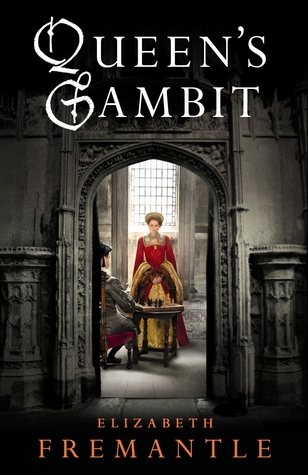
Queen's Gambit So many novels have been written about the six wives of Henry VIII I wasn’t sure if I really wanted to read another one. Queen’s Gambit seemed to be getting such good reviews, though, so I thought I would give it a chance. I was intrigued by the comparisons to both Philippa Gregory and Hilary Mantel, two very different authors, (though now that I’ve read it, I can tell you I found it more similar to the former than the latter) and I also liked the fact that, at least with this edition, the publisher has avoided the usual front cover image of a ‘headless/faceless woman in a pretty dress’ which most recent Tudor court novels seem to have.

Queen’s Gambit tells the story of Katherine Parr. If you’re familiar with the rhyme used to remember the fates of Henry VIII’s six wives (Divorced, beheaded, died; divorced, beheaded, survived), Katherine Parr was the sixth and final wife – the one who ‘survived’. While Katherine’s story may not have been covered in historical fiction as often as some of the other wives, particularly Anne Boleyn, I have read about her before so already knew the basic facts about her life.

Katherine comes to the court of Henry VIII after her husband Lord Latimer dies leaving her a widow for the second time at the age of thirty-one. Soon after her arrival, she falls in love with Thomas Seymour, one of the brothers of the late queen, Jane Seymour. However, Katherine has also caught the eye of the King, who plans to make her his sixth wife. By this stage of his life, Henry is no longer the handsome prince he once was: he has grown fat, he’s suffering from an ulcerated leg, and added to the fact that his previous wives have met such unhappy fates, Katherine has no desire to marry him. She doesn’t dare defy the King’s wishes and accepts his proposal of marriage, but during the years that follow she is unable to forget Thomas Seymour, even after he is sent away from court on a diplomatic mission. Meanwhile, life at court is growing increasingly dangerous for Katherine and as she becomes more deeply involved in the reformed religion she realises that she needs to be very careful if she’s going to survive.

This story is told from two very different perspectives: one is Katherine’s and the other is Dorothy Fownten’s. Katherine is a dignified, mature and intelligent person which makes her easy to like and sympathise with as she learns to cope with life in the treacherous, unpredictable Tudor court, never being sure who can and cannot be trusted, and knowing that two of her predecessors have already lost their heads. Dorothy, known as Dot, is Katherine’s maid and while Katherine moves in the innermost circles at court, Dot is on the outside and can take a more observant and unbiased view of things. I liked both women but I found Dot a more engaging character. Having read a few books about Katherine now, I don’t think she’s really a great subject for historical fiction – there are a lot of other queens’ lives that are much more dramatic and interesting to read about – so some of my favourite parts of the book were actually those that concentrated on Dot’s personal story rather than Katherine’s. When I read the author’s note at the end I was surprised to discover that there really was a maid of that name who served Katherine Parr, though the way she is portrayed in the book is largely fictional.

Another character I enjoyed reading about was Dr Robert Huicke, the King’s physician who becomes a good friend of Katherine’s. Through Huicke we also meet Nicholas Udall, the playwright most famous for writing one of the first English comedies, Ralph Roister Doister. Huicke’s relationship with Udall, as well as his friendship with Katherine, adds another interesting angle to the story.

As I mentioned at the start of this post, I thought this book felt more like a Philippa Gregory novel than a Hilary Mantel and I don’t think the comparisons with Wolf Hall are justified, but I did still enjoy it. Queen’s Gambit is apparently the first in a Tudor trilogy – the second one will explore the lives of Lady Jane Grey’s two sisters, Catherine and Mary, and the third is going to be set in the Elizabethan court. I’m looking forward to reading both.

I received a copy of this book through Netgalley for review.

Historical Fiction Virtual Book Tour: The Chalice by Nancy Bilyeau

The Chalice Today I’m taking part in a blog tour for Nancy Bilyeau’s new novel, The Chalice. This is the second in a series of historical thrillers set in the Tudor period and featuring Joanna Stafford, a former novice nun. Last year I read the first book, The Crown, and since then have been eagerly awaiting more of Joanna’s adventures.

In the previous book, the dissolution of the monasteries by Henry VIII meant that Joanna was forced to leave Dartford Priory before she had the opportunity to finish her period as a novice and become a full nun. It’s now 1538 and Joanna has had to rejoin the secular world where she is hoping to lead a peaceful life raising her cousin’s little boy, Arthur, and establishing her own tapestry business. But when she learns of a prophecy in which she plays an important role, she becomes caught up in a plot to overthrow the King and restore the Catholic religion in England.

Although this is the second Joanna Stafford book I don’t think it’s completely necessary to have read the previous novel before this one, but readers of The Crown will enjoy learning more about Joanna’s background and her past as both the daughter of one of Katherine of Aragon’s ladies and as a novice Dominican nun. Joanna is a great narrator, so easy to like and to sympathise with as she struggles to reconcile all the different sides of her character: her faith and her religious beliefs, her loyalty to her friends and her powerful connections as a member of the Stafford family. As she learns more about the prophecy and the international plot surrounding it, she has some difficult choices to make. How should she interpret what she has heard? And once she has listened to the prophecy is it her responsibility to ensure it is fulfilled whatever the cost?

Because Joanna is a Stafford and the niece of the late Duke of Buckingham, it’s believable that despite the life she has tried to choose for herself, she will inevitably come into contact with rich and powerful people, both close to the King and in opposition to him. In these dangerous times, filled with political intrigue and rebellion, Joanna (and the reader) is never quite sure who can and cannot be trusted, and this adds a lot of drama and suspense to Joanna’s story. Among the real historical people she encounters are her cousins Henry and Gertrude Courtenay (the Marquess and Marchioness of Exeter), the young Catherine Howard, and her old adversary Stephen Gardiner. She also meets the nun and prophet Sister Elizabeth Barton and a few other fascinating historical figures who I won’t name here so as not to spoil the surprise.

Joanna’s two love interests from The Crown are back again too – the former friar, Brother Edmund Somerville, and the constable, Geoffrey Scovill – and her relationships with both of these men are developed further in this book. I do enjoy Joanna’s interactions with Edmund and Geoffrey, who are both great characters, but the romantic aspect of the book never becomes too dominant and is well balanced by the mystery/thriller aspects.

Another area in which I think Nancy Bilyeau really excels is in the way she captures the atmosphere of Tudor England, with all its sights, sounds and smells. She also does a good job of portraying the political and religious tensions of the period, especially what it was like for the nuns and monks whose religious houses had been destroyed or closed down and who were now facing the difficulties of either building a new life for themselves or secretly trying to continue to lead their religious lives in any way they can.

I did find this book a bit confusing at first because unlike the previous book, in which Joanna’s mission was clear – to search for the legendary crown of Athelstan – this time I found it harder to follow what was happening and exactly what Joanna was expected to do. Once I got into the story, though, and the plot began to take shape, it had all the excitement and the page turning qualities I remembered from The Crown. I hope there will be more Joanna Stafford books, but if not I will still be looking forward to any future novels from Nancy Bilyeau.

The Chalice Tour Banner FINAL

I am the first stop on this blog tour – for more reviews, interviews, guest posts and giveaways see the tour schedule.