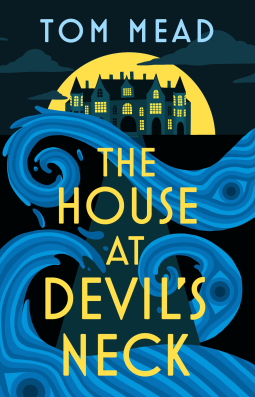
The House at Devil’s Neck by Tom Mead

This is the fourth book in Tom Mead’s Joseph Spector mystery series, but if you haven’t read any of them, don’t worry – they all stand alone and if you wanted to start here, that wouldn’t be a problem. The books are set in the 1930s and are written in the style of Golden Age ‘locked room’ or ‘impossible crime’ novels, with the influence of John Dickson Carr being particularly strong. The series features two detectives: a professional one – Inspector Flint of Scotland Yard – and an amateur one – Joseph Spector, a retired magician.

The House at Devil’s Neck begins in August 1939 with a group of people boarding a coach, ready for a trip to Devil’s Neck, a supposedly haunted house. The house, which can be reached by a causeway at low tide, has a long and dramatic history, but was most recently used as a convalescent home for wounded soldiers during the Great War. The current owner has now opened up the house to tourists and the first party is about to arrive. The guests include Madame la Motte, a medium, and her companion Imogen; a ‘ghost hunter’, Francis Tulp; and a magician – Joseph Spector. No sooner have they reached Devil’s Neck and settled into their rooms, however, than one of the party is found dead.

Back in London meanwhile, Inspector Flint is investigating what appears to be a suicide. The victim is Rodney Edgecomb, a man who, many years earlier, was involved in a high-profile inheritance dispute following the sinking of the Titanic. The circumstances of his death lead Flint to believe this is murder rather than suicide. When he eventually discovers links between Edgecomb and the house at Devil’s Neck, Flint and Spector are able to team up once again to solve the mystery.

I won’t go into the plot in any more detail because it’s such a complex one with so many twists I’m impressed that Tom Mead managed to keep track of it all himself! The murder methods are also very complicated, but the solutions do make sense once Spector explains them. As with his other books, Mead inserts a brief chapter towards the end to warn us that the solution is coming in case we want a chance to try to solve the mystery for ourselves. I think the average reader would find that very difficult – I certainly had no chance at all of solving it! – but the clues are all there and there are references at the end linking back to where you can find them in the text.

What interested me more than the mystery itself was the setting. The descriptions of the house at Devil’s Neck – ‘a hulking shape, a creature waiting at the valley’s nadir’ – are very atmospheric, as the guests arrive in pouring rain and the house quickly becomes cut off from the mainland by the rising water. The house’s history is also fascinating and allows Mead to explore the fate of wounded soldiers and how those left with permanent disabilities struggled to integrate back into society. Spiritualism, the tricks used by mediums and methods of ghost hunting are also subjects touched on in the book.

I loved most of this novel, until I started to feel lost near the end as it became more and more complex! I think the first and third books – Death and the Conjuror and Cabaret Macabre – are still my favourites.

Thanks to Head of Zeus for providing a copy of this book for review via NetGalley.
Book 17/20 for 20 Books of Summer 2025.

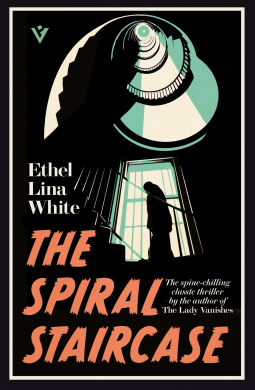
The Spiral Staircase by Ethel Lina White

Originally published as Some Must Watch in 1933, this is a reissue by Pushkin Vertigo under the title The Spiral Staircase – the name of the 1946 film adaptation. I’ve previously read two other novels by Ethel Lina White – The Wheel Spins and Fear Stalks the Village – and enjoyed both, although I found the former slightly disappointing in comparison with Alfred Hitchock’s wonderful The Lady Vanishes, which is based on it. This book has turned out to be my favourite of the three!

Almost the entire novel is set within the walls of the Summit, a lonely country house near the Welsh/English border. Adding to the sense of tension and claustrophobia, the main events of the story also take place over the course of a single evening. As the novel opens, we learn that four murders have recently been committed – the first two in the nearest town, which is over twenty miles away, the next slightly closer, and the fourth in another country house just five miles from the Summit. All four victims were young women and their deaths are on Helen Capel’s mind as she returns to the Summit after her afternoon off and is convinced that she sees a man hiding behind a tree in the dark.

Helen has just started a new job as ‘help’ to the Warren family – Miss Warren and her brother, known as the Professor, and their elderly, bedridden stepmother, Lady Warren. At the start of the novel, the Professor’s son and his wife are staying at the house, as is a student of the Professor’s, Stephen Rice. The rest of the household is made up of two more domestic servants, Mr and Mrs Oates, and the newly arrived Nurse Barker, who has been employed to look after Lady Warren.

When news of another murder, closer than ever this time, reaches the family, the Professor orders that all the doors are locked and everyone stays inside until morning. These should be easy enough instructions to follow, yet for a variety of reasons, one person after another leaves the house or becomes otherwise incapacitated. As a storm rages outside and the tension builds inside, Helen is forced to confront the idea that one of the remaining people in the house could be the murderer.

This book is good fun, but you do need to be able to suspend disbelief now and then (Helen is one of those heroines typical of this genre of book, who, despite knowing there’s a murderer on the loose, tries to open the front door every time someone knocks and spends most of the night wandering around the house on her own, along dark passageways and up and down dimly-lit staircases). Still, Ethel Lina White does a great job of creating an atmosphere of foreboding and fear, not just through stormy weather and shadows, but also through hints that various characters may not be as they seem. Is Lady Warren really unable to walk – and why does she have a gun in her room? And what if Nurse Barker isn’t really a nurse?

I found this a quick, entertaining read, let down slightly by the ending because the killer’s identity wasn’t particularly surprising and their motive was unconvincing. If you’re looking for a cleverly plotted mystery, I think you’ll be disappointed as I would describe this as much more of a psychological horror/suspense novel than a crime novel. It reminded me a lot of Benighted by J.B. Priestley and I think if you enjoyed one there’s a good chance you would enjoy the other. After finishing this book, I watched the film for the first time (it’s currently available on YouTube) and while it’s worth watching in its own right, I didn’t feel that it had much in common with the book!

Thanks to Pushkin Vertigo for providing a copy of this book for review via NetGalley.

Book 8/20 for 20 Books of Summer 2025.

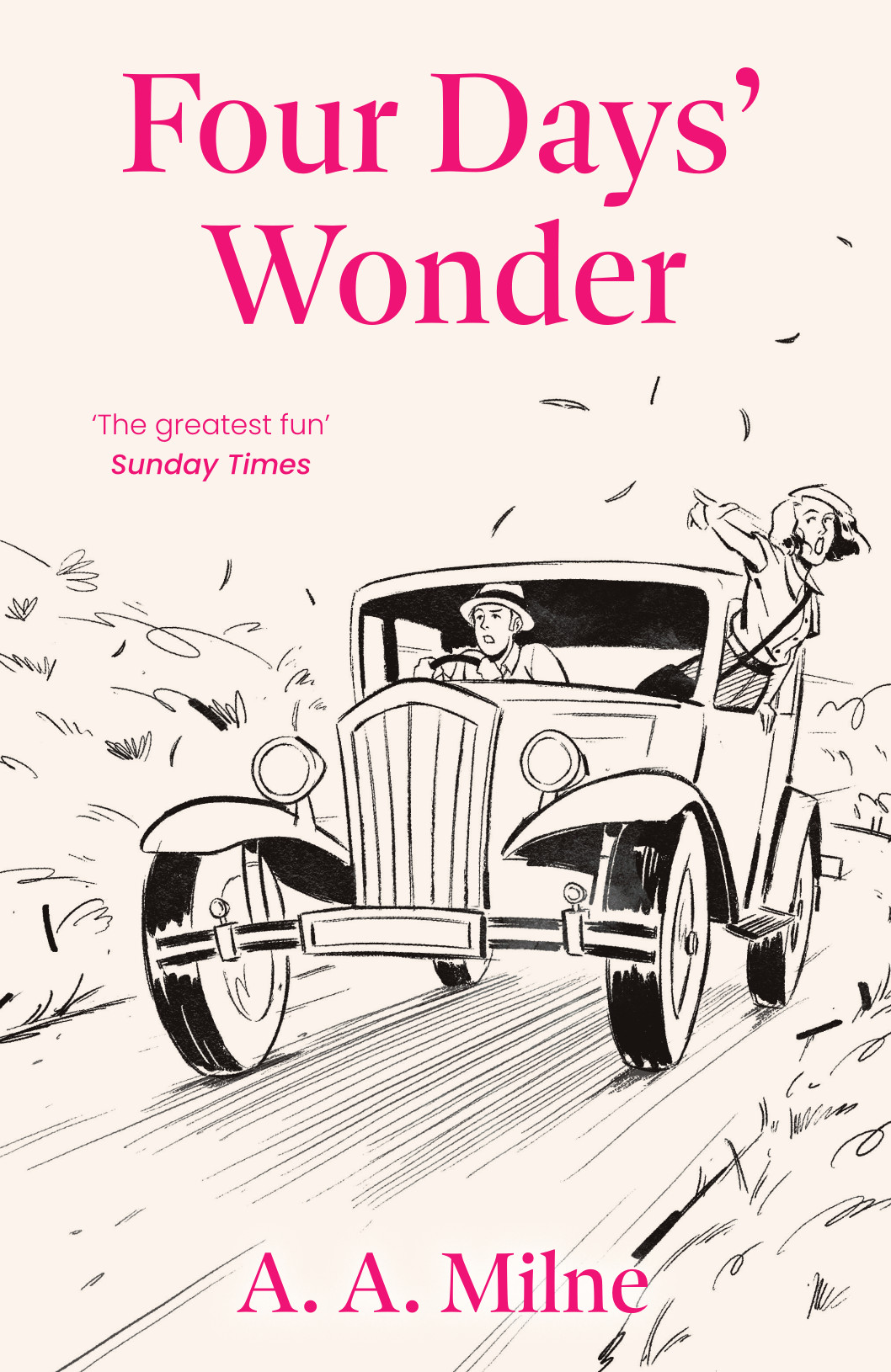
Four Days’ Wonder by A.A. Milne

A.A. Milne is, of course, best known for his Winnie the Pooh stories, but he also wrote a wide variety of works aimed at adults, ranging from novels and plays to essays and poetry. I read and loved his detective novel, The Red House Mystery, a few years ago and was disappointed that he hadn’t written more of them, so when I came across Four Days’ Wonder, described as a ‘spoof on the detective novel’, I thought it might be the next best thing.

Eighteen-year-old Jenny Windell has been raised by her Aunt Caroline at Auburn Lodge, having been orphaned as a child. Now Caroline has died as well and Jenny has moved in with another guardian, the family lawyer, so that Auburn Lodge can be rented out. However, she still has a key and absentmindedly lets herself into the house one day, forgetting that she no longer lives there. To her surprise, she is confronted by the body of her other aunt, Jane Latour, an actress whom she hasn’t seen for several years, lying dead on the drawing room floor.

It seems obvious that Aunt Jane has slipped on the polished floor and hit her head on a brass door stop, but when Jenny hears the new tenants returning to the house, she panics and escapes through a window. It immediately occurs to her that she has left her monogrammed handkerchief beside the body and that her footprints are now visible under the window. Worse still, she had wiped the blood off the door stop (with the handkerchief) and placed it on top of the piano, thereby concealing the evidence. Jenny, who has read a lot of murder mysteries and has an active imagination, is convinced that she has made herself the number one suspect. Her solution is to go on the run, disappearing into the countryside and sleeping on haystacks. What could go wrong?

Four Days’ Wonder is not a book you can take too seriously and Milne clearly didn’t intend it to be. It’s a comic novel, with a similar kind of humour to P.G. Wodehouse or Christie’s Tommy and Tuppence series, where the characters keep getting themselves into ridiculous, farcical situations. The book was published in 1933 and you can see that Milne is parodying various tropes of the Golden Age crime novels that were so popular at that time – dead bodies found in drawing rooms, mistaken identities, messages written in code, and so on. What you won’t find is any real detective work or, in fact, any real mystery. There are policeman (who, naturally, get everything wrong) but as we know from the beginning that Jenny didn’t kill Aunt Jane and that it was almost certainly an accident, there’s not much suspense in terms of wondering what the solution will be.

Jenny is a very likeable heroine, as is her friend Nancy Fairbrother, whom she enlists to help her with her escape. There’s also a love interest for Jenny in the form of Derek Fenton, a young man she meets while on the run, who just happens to be the brother of the crime writer Archibald Fenton, Nancy’s employer. This leads to yet more misunderstandings and comedy moments – such as when, unaware of who Archibald is, Jenny shoots him with her trusty Watson Combination Watch Dog and Water Pistol! Four Days’ Wonder is a lot of fun and I kept thinking that it would make an entertaining adaptation for TV or film – so I wasn’t entirely surprised to find that there is already one, from 1936, although it doesn’t seem to stick very closely to the book and I can’t find it available anywhere either to buy or stream.

My edition of this book is published by Farrago, an imprint of independent publisher Duckworth Books. It’s one of five Milne books for adults available to buy through Farrago’s website, the others being Mr Pim, Two People, Chloe Marr and The Rabbits. I must try more of them at some point!

Cabaret Macabre by Tom Mead

After enjoying the first two books in Tom Mead’s Joseph Spector mystery series, Death and the Conjuror and The Murder Wheel, I was pleased to see that he had written a third one. I think this might even be my favourite of the three! If you haven’t read any of them, you could start here if you wanted to; although there are some references to Spector’s earlier cases, there are no spoilers and all three mysteries work perfectly as separate standalones.

It’s December 1938 and retired magician Joseph Spector has been approached by the wife of Sir Giles Drury, a prominent judge, who wants him to identify the sender of some threatening letters. She believes the culprit may be Victor Silvius, who attacked her husband nine years earlier and has been confined in a private sanatorium ever since. Having noted Spector’s involvement in solving the recent Dean case (described in The Murder Wheel), she hopes he will be able to find out who is behind the letters.

Coincidentally, Spector’s friend Inspector Flint of Scotland Yard has had a visit from Caroline Silvius, sister of Victor Silvius. Caroline believes someone is trying to murder her brother and she’s convinced that person is Sir Giles Drury. With Spector and Flint both investigating the same situation from opposite sides, it’s inevitable that their paths will cross. Arriving at Marchbanks, the Drurys’ country estate, during a period of heavy snow, both men are baffled when a member of the family is found dead under very unusual circumstances. Can they solve the mystery before another murder takes place?

I really enjoyed Cabaret Macabre. It’s very cleverly plotted, with not one but two locked room style murders for Flint and Spector to investigate, but unlike the previous book, which I found too complicated, this one was easier for me to follow. That doesn’t mean it was easy to solve, however, because it certainly wasn’t! I had no idea how the murders were carried out or who was responsible for them, even though the clues were all there in the text. Tom Mead really is a master of this type of mystery and it’s easy to see the influence authors like John Dickson Carr and Agatha Christie have had on his work.

The book has a large number of suspects (and also potential victims) including Sir Giles, his wife and their four sons and stepsons, Victor and Caroline Silvius and an assortment of servants at Marchbanks. There’s also another murder case – or was it suicide? – from nine years earlier (the source of the animosity between Victor and Sir Giles), which could provide the key to what’s happening in the present. It’s impressive that Mead manages to pull all of this together without leaving any obvious holes in the plot. What I particularly love about this series, though, is the idea of a former magician becoming an amateur detective and using his special knowledge of illusions and deceptions to solve crimes and assist the police. Although Spector is still something of a mystery himself and reveals very little of his past or his private life, I think he’s a great character and the perfect partner for the more practical, less imaginative Inspector Flint.

If you haven’t tried a Joseph Spector book yet and are a fan of Golden Age mysteries, I do recommend them; this one and the first one, in particular, have quite an authentic 1930s feel, as well as being fun and entertaining. I’m hoping there’ll be more!

Thanks to Head of Zeus for providing a copy of this book for review via NetGalley.
Book 39/50 for the Historical Fiction Reading Challenge 2024

This is book 20/20 of my 20 Books of Summer 2024.

Yes, I have completed my 20 Books of Summer list with nearly a week to go! I’ll be looking back at my 20 books and my experience with this year’s challenge in a special post at the end of the month.

Three Act Tragedy by Agatha Christie

This month for the Read Christie challenge we are reading Christie novels published in the 1930s and I have chosen Three Act Tragedy from 1934. The book was also published in the US as Murder in Three Acts and that’s not the only difference – apparently the motive for one of the murders was also changed for the US edition. I’m not sure if there are any other Christie novels with significant differences between editions or if this is the only one.

Three Act Tragedy is a Poirot mystery but also features one of Christie’s other recurring characters, Mr Satterthwaite, who appears in The Mysterious Mr Quin and Murder in the Mews. At the beginning of the novel, Satterthwaite and Poirot are both attending a dinner party hosted by the stage actor Sir Charles Cartwright at his home in Cornwall. When one of the other guests, the Reverend Babbington, suddenly drops dead after taking a sip of his cocktail, several people suspect murder – yet there are no traces of poison in his glass. Soon afterwards, another death occurs under similar circumstances at a party attended by many of the same guests, but this time the victim is confirmed to have died from nicotine poisoning. Are the two deaths connected and if so, did the same person carry out both murders?

This is another entertaining Christie novel; maybe not one of her strongest plots, but the motive for the first murder is very unusual and I didn’t guess either that one or the motive for the second murder. I did start to suspect who was responsible, but not until much later in the book, so I can’t claim to have solved the mystery. We don’t see very much of Poirot himself as this is one of the books (like Lord Edgware Dies, which I read last month) where he sits at home and waits for other characters to provide him with information, rather than going out to interview suspects and search for clues himself. Instead, the deaths are investigated by Mr Satterthwaite and Sir Charles, with help from Miss Lytton Gore, affectionately known to her friends as Egg.

I would have liked Poirot to have played a bigger part in the story as although I like the elderly Mr Satterthwaite, he’s not very skilled at detecting, and I never really felt fully engaged with either Sir Charles or Egg. There’s an interesting cast of supporting characters, such as Muriel Wills, who writes plays under a male pseudonym, but I felt that some of these weren’t really used to their full potential. This wasn’t a favourite Christie, then, but I did still enjoy it – and it was good to see Poirot sharing a little bit of his personal history in a conversation with Satterthwaite, as he usually reveals very little about himself.

Next month for the Read Christie challenge (and for August and September as well) we are moving on to the 1940s and 1950s. There are plenty of books I still have to read from those decades, but one I definitely have lined up is N or M?, the third in the Tommy and Tuppence series. I’m hoping to make that one a July read.

This is book 5/20 of my 20 Books of Summer 2024.

Lord Edgware Dies by Agatha Christie

This year’s Read Christie challenge has a ‘Through the Decades’ theme and this quarter we’re reading books from the 1930s. My choice for May is Christie’s 1933 Poirot mystery Lord Edgware Dies (published in the US as Thirteen at Dinner).

The novel is narrated by Poirot’s friend, Captain Hastings – a nice surprise as I tend to love the Hastings books and hadn’t realised he was in this one. At the beginning of the book, Poirot and Hastings are visiting the theatre to watch a performance by the American impressionist Carlotta Adams, known for her impersonations of famous people such as the actress Jane Wilkinson. After the show, they are approached by Jane Wilkinson herself, who asks for Poirot’s help in obtaining a divorce from her husband, Lord Edgware. The actress desperately wants to marry the wealthy Duke of Merton and tells Poirot that if Edgware won’t agree to a divorce, she’s just going to have to kill him!

When Lord Edgware is indeed found dead in his own home, having been stabbed in the neck, Jane Wilkinson appears to be the obvious suspect – after all, she was seen entering the house that evening and everyone knew that she wanted her husband dead. However, Edgware had already agreed to a divorce earlier that day, taking away Jane’s motive. And Jane had spent the whole of that evening at a dinner party with twelve other guests, all of whom can provide her with an alibi. Was Jane really in two places at once – or was it Carlotta Adams who entered Lord Edgware’s house in disguise?

This is a very enjoyable Poirot novel with a clever solution, although I don’t think it’s an absolute favourite as I found it a little bit lacking in atmosphere. The whole story takes place in London and we don’t see much of Poirot actually going out in search of clues – instead he sits and waits for the clues to come to him, much to the frustration of Hastings who wishes Poirot would take a more active role in solving the mystery, like their old friend Inspector Japp:

Poirot replied that he preferred to solve it sitting at home.

“But you can’t do that, Poirot.”

“Not entirely, it is true.”

“What I mean is, we are doing nothing! Japp is doing everything.”

“Which suits me admirably.”

“It doesn’t suit me at all. I want you to be doing things.”

“So I am.”

“What are you doing?”

“Waiting.”

Of course, Poirot is the one who correctly identifies the murderer while Japp, as usual, jumps to the wrong conclusions. I also failed to solve the mystery; although I did guess part of the solution very early on, I allowed myself to get distracted by the red herrings, of which there are many!

What I particularly loved about this book was the relationship between Poirot and Hastings and the way they work so well together, with some chance remarks of Hastings’ inadvertently pointing Poirot in the direction of important clues. Having the novel narrated by Hastings means the reader gets to hear Poirot discussing possible theories with him and sharing his thought processes, which I find more enjoyable than the books where we have no idea what Poirot has been thinking until the end. It also means that we only see the various suspects and witnesses from Hastings’ perspective; Jane Wilkinson, for example, presents herself in public as so silly and vacant that we know there must be more to her than meets the eye. Jane is a great character and Jenny Driver, Carlotta Adams’ friend who owns a fashionable London hat shop, was another favourite.

I’m hoping to read another 1930s Christie novel in June, then for July-September we move on to the 40s and 50s!

They Found Him Dead by Georgette Heyer – #1937Club

This week, Simon of Stuck in a Book and Karen of Kaggsy’s Bookish Ramblings are hosting another of their very popular clubs, where we all read and write about books published in the same year. This time it’s 1937 Club and for my first book I’ve turned to a favourite author who can be almost guaranteed to have had at least one title published in any chosen club year. In 1937, she had two and although An Infamous Army, a novel set before and during the Battle of Waterloo, is one I read a few years ago and didn’t particularly enjoy, I’m pleased to say that I had a much better experience with this one.

They Found Him Dead is one of twelve contemporary detective novels written by Heyer. It begins with the family, friends and business associates of Silas Kane assembling at his country house to celebrate his sixtieth birthday. As with many large gatherings, there are various tensions between members of the group, but when Silas is found dead at the bottom of a cliff after going out for his usual evening walk, the police decide that it was just a tragic accident. Only fourteen-year-old Timothy Harte, half-brother of Silas Kane’s nephew Jim, suspects murder – and when Kane’s heir, Clement, is shot in the head several weeks later, it seems that he could have been right.

Superintendent Hannasyde and Sergeant Hemingway arrive from Scotland Yard to investigate and quickly discover that there’s a large number of suspects including several nephews and nieces in the line of inheritance, some of Kane’s business partners and even his elderly mother, a woman in her eighties. However, they first need to decide whether they really are dealing with two murders or just one – and if there have been two, were they both committed by the same person?

I thought this was an entertaining novel, although I did panic at first due to the huge number of people introduced in the opening chapter. I wished I had drawn a family tree to keep them all straight in my mind, but after a few more chapters everything had settled down anyway and the characters and their relationships became more clearly defined. As a mystery it’s not a very clever or original one – in fact, it’s quite formulaic in many ways, with the country house, family party, motives revolving around inheritances and business deals and the Scotland Yard detectives all being very familiar to anyone who has read a lot of Golden Age crime. The murderer is also quite easy to guess, once you’ve picked up on one very obvious clue.

What I really enjoyed about this book was not the plot but the characters. I particularly loved Timothy, who has an active imagination leading him to see drama and conspiracy in every situation and is nicknamed Terrible Timothy by Sergeant Hemingway. He does actually help to solve the mystery, but not in the way he had expected! There’s also a bit of romance (although it’s quite understated and not a big part of the book), with Timothy’s half-brother, Jim Kane, falling in love with Patricia Allison, companion to Silas Kane’s mother. I liked these two characters as well; in general, the characters in this book are a more pleasant bunch than in the other Heyer mysteries I’ve read! A few of them also appear in her 1951 novel, Duplicate Death, which I read before this one and I’m now wishing I’d read them in the correct order!

I still have a lot of Heyer’s mysteries left to read and am looking forward to them. They don’t really compare to Agatha Christie’s when it comes to plotting a crime, concealing clues and creating red herrings, but they’re still fun to read. This was a great start to the 1937 Club for me and I’m also enjoying my second book, which I’ve almost finished and will be reviewing later in the week.