Bodies of Light by Sarah Moss

This is the first book I’ve read by Sarah Moss, an author I had never really thought about trying until I saw so much praise for her latest novel, Ghost Wall, last year. Bodies of Light is apparently loosely linked to an earlier book, Night Waking, but I didn’t feel that I’d missed anything by reading this one first.

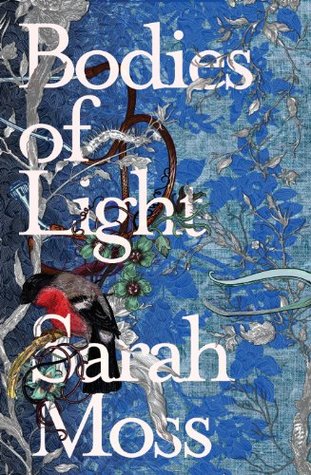
The setting for Bodies of Light is Victorian Manchester where, as the novel opens, a newly married couple – Elizabeth and Alfred Moberley – are moving into their new home. Even this early in their marriage, there are clues that suggest they might not be very happy together; Alfred is a painter who appreciates the finer things in life while Elizabeth is passionate about social reform and women’s rights. Their two daughters, Alethea (Ally) and May, grow up trying to please both parents, being asked to model for their father’s latest portrait one day and accompanying their mother on one of her missions to help women in Manchester’s poorest areas the next.

I really enjoyed the first half of this book; after a slow start I found that I had become completely drawn into the lives of the Moberley family. Each chapter starts with a description of a portrait painted by Alfred or one of his circle, giving an idea of what will follow in the pages to come, and I thought that was a nice touch. As the novel progresses and the children grow older, we see that Elizabeth, despite her good deeds in public, can be a harsh and unloving mother; to explain this, Sarah Moss spends some time at the beginning of the book showing us what made her the way she is, focusing on Elizabeth’s relationship with her own mother and the depression she suffered after Ally’s birth.

The second half of the novel is devoted mainly to Ally, as she goes to London to study medicine at the first medical school to accept female students. She is pushed into this career path by her mother, who believes very strongly that women – particularly ‘fallen women’ – should be entitled to request treatment from a female doctor and who likes the idea of her own daughter becoming one of these doctors. Ally is an intelligent young woman who loves learning, so she throws herself into her studies, but there is always a sense that she is doing this mainly to make her mother happy – and yet, whatever she does, it seems that Elizabeth is never happy.

I felt so sorry for Ally, who self-harms and suffers from nightmares as she is growing up, longing for some comfort and compassion from her mother but receiving only criticism and impatience instead, told that she has no right to complain about anything ‘because there is always someone else worse off.’ Interestingly, her younger sister May, who has the same upbringing, doesn’t seem to suffer from Ally’s anxiety-related problems, possibly due to the fact that Ally, as the eldest, has always felt under more pressure.

Once Ally had left home to begin her medical studies, I found the story a bit less compelling but still interesting. It certainly made me appreciate the educational opportunities that are open to women today and how difficult it must have been for those who were among the first to try to enter a field dominated by men. This is a fascinating book and I do like Sarah Moss’s writing, so I now want to read the sequel, Signs for Lost Children, as well as the earlier Night Waking, which I think tells some more of May’s story.
The House on Half Moon Street by Alex Reeve

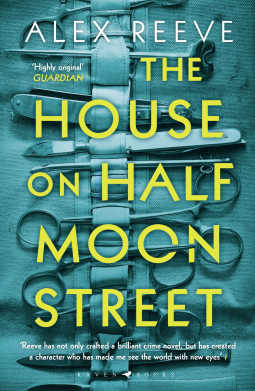
The House on Half Moon Street is both an interesting historical crime novel set in Victorian London and a sensitive exploration of what it means to be transgender in a less enlightened time. This is apparently the first in a planned series and I will certainly be looking out for the next one.

Our hero, Leo Stanhope, is a coroner’s assistant in 1880s London. As the novel opens, the body of a man washed up by the Thames has been brought to the hospital where Leo works. Identified as Jack Flowers and believed to have fallen into the river accidentally, the man’s death seems to be an unfortunate tragedy, but not something which affects Leo personally. However, the next body to arrive is that of a woman – a woman who happens to be the love of Leo’s life, Maria Milanes, and who appears to have been murdered.

Before her death, Maria was a prostitute at a brothel on Half Moon Street, but that didn’t matter to Leo. He loved her and knew that she loved him. Maria was one of the few people he had trusted with his secret, one of the few people who knew that Leo Stanhope was born Charlotte Pritchard. Now Maria is gone and Leo vows to find out who has killed her. Joining forces with pie maker Rosie, Jack Flowers’ widow, he begins to uncover some links between both deaths – but at the same time he must ensure that his own secret is not uncovered, because the truth could have serious consequences.

On one level, as I’ve said, this is a compelling and well-constructed murder mystery. Although I found the pace a bit slow at times, I did enjoy watching Leo move around Victorian London, looking for clues in the Half Moon Street brothel, playing chess with his friend Jacob and word games with his landlord’s daughter in the pharmacy where he lodges, or paying a visit to the midwife and abortionist Madame Moreau, whom he hopes may be able to shed some light on the situation. All of these people and locations are vividly described and all play their part in Leo’s investigations.

Leo himself is easy to like and to warm to; he narrates his story in the first person, letting us into his mind and his heart. I know things are not perfect for transgender people today and that they still face a lot of prejudice, obstacles and challenges, but I can hardly imagine how difficult life must have been for people like Leo who lived more than a hundred years ago. I admired him for his courage in being true to himself and not just continuing to be someone he was not; I was sorry for the sacrifices he’d had to make in adopting his true male identity and the lack of support he received from those he should have been able to rely on; and I was afraid for him too, because he is in such a vulnerable position.

I should warn you that due to the nature of the story, the type of mystery it is and Leo’s vulnerability, the novel does become very dark in places. Although I didn’t find it unnecessarily graphic or violent, there are still a few scenes which are quite disturbing. The Victorian era was certainly not the safest time in which to live if you were seen as different in any way. I’m sure Leo will have more ordeals to go through as the series progresses, but I hope there will be some happiness in store for him too.

Thanks to Raven Books for providing a copy of this book for review via NetGalley.

An Infamous Army by Georgette Heyer

Georgette Heyer’s 1937 novel, An Infamous Army, is one I was particularly interested in reading because it sounded a bit different from most of her others, being as much a story of the Battle of Waterloo as a Regency romance. It can be read as a standalone novel but it also features characters (or descendants of characters) who appeared in her previous novels These Old Shades, Devil’s Cub and Regency Buck.

Several years have passed since Regency Buck ended and the Earl of Worth is in Brussels with his wife, Judith, and their young son. As the threat of Napoleon draws closer, Brussels has become the centre of fashionable society – a place to entertain oneself with dances, picnics and concerts while the outcome of the Vienna Congress and the arrival of the Duke of Wellington are awaited. Judith is hoping to bring about a match between Worth’s brother Charles Audley and her friend Lucy, but she hasn’t counted on Charles falling passionately in love with Lady Barbara Childe, a beautiful but notorious young widow with a reputation for wildness. Although Barbara – or Bab, as she is known – claims to love Charles too, she shows no sign of changing her ways and Judith is sure her brother-in-law is going to be hurt.

The relationship between Charles and Bab develops throughout the first half of the novel, so that by the time the Battle of Waterloo arrives, we are already emotionally invested in the lives of some of the characters who are going to be affected by the battle in one way or another. Heyer is one of those authors you can always count on to have done her research, but everything in this book feels particularly authentic (she famously claimed that every word she attributes to her fictional Duke of Wellington was either spoken or written by him in real life).

Each stage of the battle is described in an incredible amount of detail, not just the tactics and the military manoeuvres, but also the human cost as lives are lost, men are injured and those on the sidelines wait for news of their loved ones. As I’ve mentioned before, I am not usually a fan of lengthy battle scenes, however well written they are, so although I certainly appreciated the accuracy of Heyer’s account of Waterloo and the quality of her writing, I can’t really say that this has become a favourite Heyer novel. This is just a matter of personal taste though, and I’m sure other people will love this book precisely because it does include long battle scenes (by long, I mean they take up most of the second half of the novel).

As for the Charles and Bab storyline, I enjoyed following the course of their relationship, especially as I thought it was difficult to tell at first how Bab really felt about Charles. She comes across at the beginning as self-centred, reckless and fun-loving, the sort of person who causes a scandal wherever she goes (not that it takes much to cause a scandal in 1815 – painting your toenails gold, for example). It took me a while to warm to her, but when I did I found that she was also kind hearted, compassionate and courageous. Even so, she is not one of my favourite Heyer heroines – although, again, I can see why other readers might love her.

Reading An Infamous Army has inspired me to finally try one of Heyer’s six historical novels (i.e. not the ones that are Regency or Georgian romances). I am currently a few chapters into Beauvallet and enjoying it so far; you can expect to hear more about it soon!

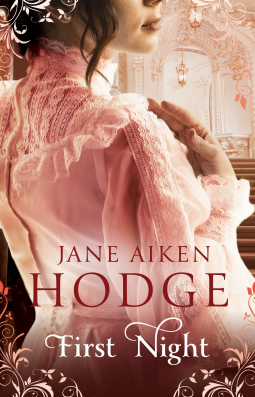
First Night by Jane Aiken Hodge

I enjoyed the three Jane Aiken Hodge books I’ve read previously – Marry in Haste, Strangers in Company and Watch the Wall, My Darling – so I thought I would try another one. First Night was originally published in 1989, but has been recently reissued by Agora Books.

The story begins in 1802 in the fictional Central European principality of Lissenberg. Lady Cristabel Sallis, the teenage daughter of a British duke and politician, and Prince Maximilian, heir to the principality, are performing in a children’s performance of Orpheus and Eurydice to mark the opening of the new Lissenberg Royal Opera House. Cristabel persuades Max to switch parts with her so that she can sing the male lead, revealing her identity at the end to rapturous applause from the audience. Not everyone is so impressed, though – her father is outraged and sends Cristabel home in disgrace.

Twenty-one-year-old American heiress Martha Ann Peabody hears about Cristabel’s escapades and is intrigued. She has been longing for adventure and the chance to make an independent life for herself, so she seeks out Cristabel in England and offers to help her launch a career in opera despite her father’s opposition. With Martha’s money and Cristabel’s talent they are the perfect team and, chaperoned by Cristabel’s Aunt Helen, they make their way to Paris, then Venice, before eventually ending up back in Lissenberg again.

Opera continues to play a big part in the plot of First Night as Cristabel pursues her passion for singing and the three women meet an assortment of composers, musicians and performers, but as the novel progresses the political situation in Lissenberg becomes more and more important. I wish the author had included an author’s note at the end of the book because I would have liked to have known more about her portrayal of Lissenberg and whether she had a real place in mind. It certainly sounds like an oppressive and dangerous place to live: an absolute monarchy under the control of the tyrant Prince Gustav who stops at nothing, including murder, to get what he wants. On the outside, there’s Napoleon Bonaparte, rapidly increasing in power – and Prince Gustav must decide whether to yield to him or try to defy him.

The setting was fascinating, but I can’t really say the same for the characters. I did love Martha Peabody, who is both courageous and kind-hearted and tries to help the people of Lissenberg in any small way she can, but Cristabel was a complete enigma to me. I felt that I never understood how she was really thinking or feeling and this made her come across as a strangely shallow character considering that at the beginning of the book it seemed as though she was going to be the heroine. Based on the first chapter I had also expected a romance between Cristabel and Prince Maximilian, especially when they meet again on Cristabel’s return to Lissenberg, but because Cristabel’s emotions are kept at such a distance from the reader, I wasn’t sure how she truly felt about him or what the nature of their relationship really was.

Unlike the other three books I’ve read by Jane Aiken Hodge, which could be neatly labelled as historical romance, romantic suspense and gothic novel respectively, this one is much more difficult to classify. I certainly wouldn’t describe it as a romance, although the cover might suggest otherwise. I found it difficult to get into and confusing at times, but I enjoyed the last few chapters which were packed with surprises, political intrigue and the revelation of secrets.

This book appears to be the first in a trilogy, followed by Leading Lady and Last Act; I don’t have any plans to look for the other two books at the moment, but I would still like to read Red Sky at Night, one of her earlier novels which I already have on my shelf.

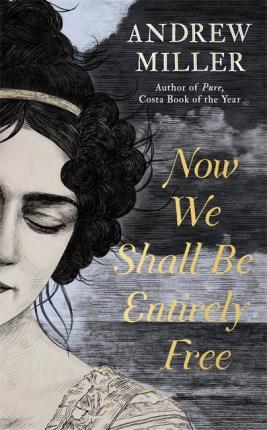
Now We Shall Be Entirely Free by Andrew Miller

It’s 1809 and a wounded man is being carried into his home in Somerset. His name is Captain John Lacroix and he has just returned from Spain, where he has been fighting in the Peninsular War. Injured, exhausted and haunted by his experiences, he seems close to death, but with the help of his housekeeper, Nell, he slowly regains his strength. Unable to contemplate returning to the war, he sets off for Scotland instead – first to Glasgow, then to the Hebrides, in search of some peace and redemption.

Meanwhile, in Spain, a British soldier called Calley is providing evidence to a military inquiry regarding atrocities carried out in the Spanish village of Los Morales during the retreat of the British army. He says he can identify the man responsible for this war crime, the man who was in command of the troops as they raped and murdered. To satisfy the Spanish that justice has been done, Calley is sent to hunt down and punish the perpetrator of the crime, accompanied by a Spanish officer, Medina, who will act as a witness.

Due to the alternating of the two narratives, it very quickly becomes obvious to the reader that the man accused by Calley is John Lacroix…but can it be true? Can the quiet, decent, sensitive man we have been getting to know on his journey to Scotland really have carried out these appalling deeds? Either there is more to the story than meets the eye or we don’t know John Lacroix as well as we think we do. There’s plenty of suspense as we wonder when we will find out exactly what happened that day in Los Morales and what sort of man John Lacroix really is.

As we wait to see whether Calley and Medina will catch up with their target, Lacroix arrives on a remote Hebridean island where he meets Emily Frend and her siblings, Jane and Cornelius. Together with their absent leader, the mysterious Thorpe, they are the last remaining members of a small community who have made the island their home. Intrigued by their lifestyle, Lacroix compliments Emily on her freedom, only for her to explain to him that she does not consider herself to be free at all: “Is it because I take off my stockings to paddle in the sea?” she asks. “That I have let you see me do it? Is that my freedom?”

Now We Shall Be Entirely Free is a beautifully written novel and although there were one or two aspects of the plot that I found unconvincing and although I was disappointed in the Hebridean setting, which I would have expected to have a much stronger sense of place, I could overlook these things because there was so much else that I liked. Andrew Miller has a lot to say about so many things: guilt and blame, the atrocities of war, independence, redemption and love. This is only the second book of his that I’ve read – the first was Pure, a dark and fascinating novel about the destruction of a cemetery in Paris. I enjoyed both but preferred this one because the characters are stronger and because it left me with more to think about at the end. I’m sure I’ll be reading more of his books; I like the sound of Ingenious Pain, so maybe I’ll try that one next.

Thanks to Hodder & Stoughton for providing a copy of this book for review via NetGalley.

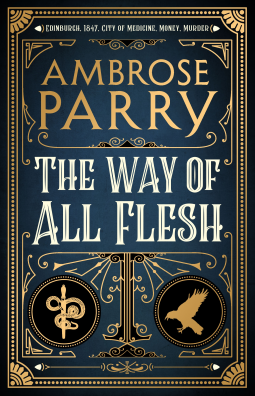
The Way of All Flesh by Ambrose Parry

The Way of All Flesh is the first in a new historical mystery series written by husband and wife team Chris Brookmyre and Marisa Haetzman under the pseudonym Ambrose Parry. Brookmyre is an established crime novelist, while Haetzman is a consultant anaesthetist with a Master’s in the History of Medicine – the perfect combination when writing a crime novel set in the medical world!

It’s 1847 and young medical student Will Raven has secured a position as apprentice to the renowned Scottish obstetrician Dr James Simpson. Simpson is one of Edinburgh’s leading doctors and Raven intends to make the most of this wonderful opportunity to gain experience in the fields of midwifery and anaesthesia. Unfortunately, he doesn’t get off to the best of starts: just before he is due to begin his apprenticeship he discovers the dead body of his friend Evie, a prostitute whom he has being trying to help financially. Stumbling away through the dark streets of Edinburgh’s Old Town, he is attacked by a gang sent after him by a moneylender and turns up battered and bruised for his first day at work – definitely not the impression he had hoped to give!

Settling into his work with Dr Simpson and his colleagues, Raven is required to assist at some difficult births and quickly comes to appreciate the role ether can play in easing the pain of childbirth. During his visits to other households, and in his conversations with other doctors, Raven begins to hear about other women from the Old Town who have been found dead, like Evie, under suspicious circumstances. Determined to find out what really happened to Evie, he decides to investigate…

But this is not just Raven’s story. We also meet Sarah Fisher, Dr Simpson’s housemaid. Sarah is an intelligent young woman who would love to have the opportunities that have been given to Will Raven, but as a career in medicine is not available to her because of her gender and class, she has to resign herself to reading the doctor’s medical books and helping out in his clinic as much as she can. Sarah and Will take an instant dislike to each other, but as they continue to work together – not just in the same household, but also to track down the murderer – they begin to find some common ground.

The Way of All Flesh is a fascinating read for anyone who is interested, as I am, in the history of medicine. Some of the doctors and scientists who appear in the book, including James Simpson, are real historical figures and the novel recreates some of the experiments, discoveries and research that led to the development of anaesthetics, as well as some of the challenges they faced – such as the opposition of the Scottish church leaders, who believed it was natural for women to feel pain in childbirth and that using drugs to relieve it was against the will of God. Remembering that one of the authors of this book is an anaesthetist herself, everything feels very authentic and convincing. I should warn you, though, that the descriptions of childbirth and other medical cases and operations are very detailed and occasionally a bit gruesome!

It was actually the crime element which was the least successful aspect of the book for me. I felt that it took second place to the medical procedures and scientific discussions and after a while I lost track of who had been killed and what the circumstances were; it just wasn’t the sort of mystery I prefer, where I find myself looking for clues and trying to guess who the culprit could be. The setting makes up for it, though – the descriptions of Victorian Edinburgh are wonderfully atmospheric.

Although I thought the secondary characters could have been given more depth, I did enjoy getting to know both Will Raven and Sarah Fisher. This was a promising start to a new series and I will be looking out for the second book.

This is book 13/20 of my 20 Books of Summer.

Thanks to Canongate Books for providing a copy of this book for review via NetGalley.

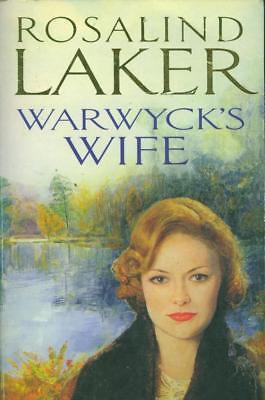
Rosalind Laker: Warwyck’s Wife and Claudine’s Daughter

At the beginning of Thomas Hardy’s The Mayor of Casterbridge, Michael Henchard sells his wife at an auction, an impulsive act which he later regrets and which haunts him for the rest of his life. This horribly cruel and barbaric custom really did take place in England between the 17th and 19th centuries. Rosalind Laker’s 1978 novel Warwyck’s Wife – the first in a trilogy – opens with a similar scene in which a farmer puts his unwanted wife Kate up for auction at a market in Brighton, parading her in front of the crowd with a halter round her neck like an animal.

Among the men who decide to bid for Kate are nineteen-year-old Harry Warwyck and his older brother Daniel. Harry has the best of motives – he has fallen in love at first sight and wants to prevent Kate from being bought by someone who will treat her badly – but Daniel has seen an opportunity to obtain the wife he needs in order to claim his inheritance, Warwyck Manor. To Harry’s disappointment, it is Daniel who is successful…but will he be happy with his new purchase? It’s not the most pleasant or uplifting start to a novel, but Rosalind Laker does a good job of conveying the shame and degradation Kate feels because of her husband’s actions combined with relief at being released from her unhappy marriage and given the chance to start a new life.

Warwyck’s Wife is described as a romance, but there’s certainly nothing very romantic, in my opinion, about the relationship between Daniel and Kate. Daniel makes it clear at the beginning that he wants Kate only because he believes she can be useful to him, and although his feelings for her do begin to change, he is too obsessed with another woman – Claudine Clayton – to appreciate what he has in Kate. Daniel is a thoroughly unlikeable character, actually: he uses and discards Kate as it suits him; he hides the truth from Claudine; and the way he behaves towards Harry is hardly very brotherly either. Not my idea of a romantic hero – not that every book really needs a hero, of course. Kate, on the other hand, is a lovely person, although her devotion to the undeserving Daniel really frustrated me and I couldn’t understand how she could possibly have preferred him to Harry!

Luckily, there is a lot more to this novel than the ‘romance’. Another major part of the plot involves Daniel’s career as a boxer and his ambition to become a champion prize-fighter. The novel is set in 1826, during the reign of George IV, and although I have no interest in boxing in its modern form, I did find it interesting to read about Daniel’s preparation for his fights (or ‘mills’ as they were called), the hours of practice he puts in with his trainer, Jem Pierce, and the spectacle of the mills themselves, which attracted large crowds and were sometimes held illegally, at risk of being stopped by the local magistrate. It seemed a much more violent and chaotic sport than its modern equivalent too, unsurprisingly with little regard for the health and safety of the participants.

There is also a storyline involving Daniel’s plans to develop the little coastal village of Easthampton into a seaside resort similar to Brighton. As you can imagine, this causes a lot of conflict as the scheme meets support from some of the villagers but fierce opposition from others as new workers are brought in to carry out the construction work while existing businesses find themselves under threat. This subplot gives the author a chance to highlight social injustices and the difference in attitude between Kate and Daniel, as Kate does everything she can to improve the working conditions of the builders, masons and labourers while Daniel cares only about money and productivity.

Warwyck’s Wife is not a perfect novel but I found more to like than to dislike and went straight on to read the sequel, Claudine’s Daughter.

~

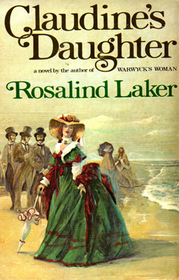
Claudine’s Daughter begins about twenty years after the previous book ends and introduces us to Lucy di Castelloni, Claudine Clayton’s daughter. Lucy has lived in Italy all her life and was married off at an early age to a much older man. Now, following her husband’s death, she has decided to come to England to see where her parents grew up and to find out whatever she can about her family and her origins. Arriving in the town of Easthampton, she quickly catches the eye of three very different men. The first is Richard Warwyck, Daniel’s son; the second is Timothy Attwood, who is distantly related to Lucy’s family; and the third is Josh Barton, who has ambitious plans that could affect the future of everyone in Easthampton.

Although this is very much the story of Lucy and the other ‘second generation’ characters, some of the characters from Warwyck’s Wife appear again too, including Daniel, Kate, and (very briefly) Harry. There’s also a new set of secondary characters: Emmie, the landlady of the house where Lucy takes lodgings; her daughter Meg; and Meg’s lover, a local fisherman. Lucy’s romantic entanglements form a large part of the novel but, like the first book, it is more than just a romance. It’s also a story about the uncovering of family secrets – and while the reader already knows what these secrets are (assuming we have read the first book in the trilogy), Lucy and most of the other characters do not. This means the plot is quite predictable, but the interest is in waiting to see how and when the truth will be revealed.

The most interesting aspect of the book, for me, was seeing how Easthampton, which was only a small village in Warwyck’s Wife, has grown into a thriving resort with piers, pavilions, hotels and theatres. A source of conflict throughout the novel is the question of whether or not the town should be connected to the railway network. Richard Warwyck is in favour as it will allow the area to develop further, but Daniel (whom I still found impossible to warm to) doesn’t like the idea of opening up access to the resort to large numbers of working class people and destroying the select atmosphere.

There is a third novel about the family – The Warwycks of Easthampton – but I don’t own a copy of that one yet and I think I’ve read enough about the Warwycks for now. Maybe I will read it at some point, but there are other books by Rosalind Laker that sound more appealing to me at the moment.