Cuddy by Benjamin Myers

Cuddy is a nickname given to St Cuthbert, the Anglo-Saxon monk, bishop, hermit and saint who lived during the 7th century. He is associated with the island of Lindisfarne (Holy Island), where he spent many years of his life, and with Durham Cathedral, where he is buried, and these are both places I have visited several times, which is what drew me to this novel by Benjamin Myers. The publisher’s description of it as “a bold and experimental retelling of the story of the hermit St. Cuthbert” made me reconsider, as I’ve discovered over the years that experimental books usually aren’t for me, but I decided to give it a chance anyway.

The first section of the book is set in 995, more than three hundred years after the death of St Cuthbert, and is told from the perspective of Ediva, a young woman who accompanies a group of monks as they transport Cuddy’s remains to his new resting place in Durham. We then move forward several centuries in time and join the masons who are repairing the cathedral stonework in 1346. The third section is a ghost story set in 1827 when an Oxford professor, Forbes Fawcett-Black, is invited to attend the opening of Cuthbert’s tomb. Finally, the last part of the book introduces us to Michael Cuthbert, a young man living in a village near Durham in 2019 who is offered a job as a labourer during restoration work at the cathedral.

Each of the four parts could work as a standalone story, but there are also several links between the four, some of which are easy to spot and some that are more obscure. There’s always an ‘Ediva’-type character – one who fills the role of cook or healer, who sees visions and hears the voice of Cuddy – and there’s always a young man with owl-like eyes:

He has brilliant wide eyes that peer into your very
centre
Eyes that seem not to blink. Eyes that one day are
blue
and the next jade, then anthracite and once, red.

The quote above, describing the ‘Owl Boy’, is an example of the writing in the first section of the book, which takes the style of a narrative poem. I don’t think I could have read a whole book written like this, but could cope with it for a few chapters and I thought it was quite effective in creating a mystical, dreamlike atmosphere that suited the time period and the story being told. Myers also finds an appropriate voice and style for each of the other parts of the novel – for example, the 19th century ghost story, The Corpse in the Cathedral, is told through the diary entries of the Professor and is written in a very formal style which suits his character.

My favourite part of the book was actually the modern day story at the end. I loved Michael Cuthbert, who is struggling to care for his dying mother at home while trying to support them both by taking whatever work he can get, and I enjoyed watching him form a friendship with Evie, a kindhearted young woman who works in the cathedral restaurant. I found Michael and Evie’s story very moving and would have been happy to have read a whole book about them!

As for St Cuthbert himself, his own story is related to us through brief excerpts from a wide range of sources including books, essays and articles which are all acknowledged at the end of the book. It’s a lot to take in and digest and I think to really understand who Cuthbert was and why he is significant you would probably need to read some of those sources in full. However, this is a good introduction!

Thanks to Bloomsbury Publishing Plc for providing a copy of this book for review via NetGalley.

Book 4/50 for the Historical Fiction Reading Challenge 2024
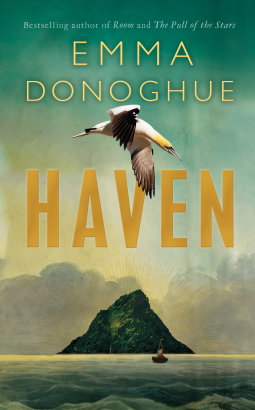
Haven by Emma Donoghue

I’ve read four books by Emma Donoghue now and each one has been completely different from the one before! Haven is a particularly unusual novel and even after finishing it I’m still not quite sure what I really think of it.

The setting is 7th century Ireland and the novel begins with a stranger arriving at the monastery of Cluain Mhic Nóis on the banks of the River Shannon. His name is Artt and he claims to have had a dream, a vision sent by God:

‘An island in the sea. I saw myself there. As if I were a bird or an angel, looking down on the three of us.’

‘Three?’

‘I was with an old monk, and a young one.’ The Abbot shows no sign of understanding him. ‘The dream is an instruction to withdraw from the world. To set out on pilgrimage with two companions, find this island, and found a monastic retreat.’

Artt persuades the Abbot to let him take a small boat and go in search of the island, accompanied by two other monks: the elderly Cormac, who came to religion late in life after losing his loved ones to plague, and Trian, a young man given to the monastery by his parents as a child. The three monks set off in the boat and eventually come to the uninhabited rocky island of Skellig Michael, where they prepare to live in seclusion together for the rest of their lives.

There’s really not much more to the plot than that, but what could have been an extremely boring book is surprisingly absorbing in the hands of Emma Donoghue. I found it interesting to see how the three men set about establishing their own little settlement on the island and how different their views were on what is necessary for survival. Skellig Michael is a harsh, remote and inhospitable place; looking at photos, I can’t imagine what it would have been like to live there, but monks (not the ones in the novel, who are fictional) really did build a monastery there. It’s now a UNESCO World Heritage Site and was used as a location for two of the recent Star Wars films.

Cormac, the most practical of the three, believes that their immediate priority should be to build shelter for themselves ready for the winter, but Artt – or ‘the Prior’ as he now calls himself – insists that there will be time for this later and that their time should first be spent on constructing an altar, a chapel and a stone cross. Meanwhile Trian is kept busy fishing and capturing the puffins and other seabirds that will provide them with meat and eggs, as well as fuel and fat for candles. I should tell you that there are a lot of graphic descriptions of gutting fish and killing birds, which I felt became repetitive and excessive – but I think maybe Donoghue has a message here for us, a warning regarding humans’ destruction of the environment and the wildlife that shares our planet:

But Trian struggles to believe that such a variety of lightsome and beautiful birds have formed in their translucent ovoid caskets, broken out of them, walked, cried out to their brethren, taken flight, over and over for these thousands of years…all so Trian can now fling them down to flame and char on a cooking fire.

I disliked Artt more and more as the story progressed and he became increasingly fanatical and adamant that ‘God would provide’, refusing to listen to the concerns of the other two monks. I also found my attention wandering whenever Cormac began to tell one of his many stories about the saints. The ideal reader for this book would have a much stronger interest in Christianity than I do, I think! There’s a revelation near the end which I had suspected all along, and although it came as no surprise to me, it does provide a turning point in the story – but just as things were starting to get exciting, the book ended. It’s a strange novel, as I said, and won’t necessarily appeal to people who’ve enjoyed Emma Donoghue’s other books (it’s nothing like the other three I’ve read – Room, Frog Music or The Wonder), but it’s a short, quick read and worth picking up if anything I’ve said about it has piqued your interest!

Thanks to Picador for providing a copy of this book for review via NetGalley.

This is book 14/20 from my 20 Books of Summer list.

This is book 42/50 read for the Historical Fiction Reading Challenge 2022.

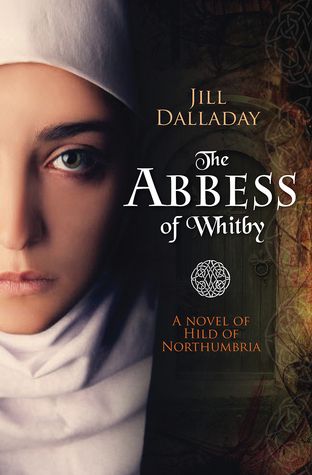
The Abbess of Whitby by Jill Dalladay

Four years ago I read Hild by Nicola Griffith, a beautifully written novel which told the story of Hild (or St Hilda, as she is also known). It was – and still is, I hope – intended to be the first in a trilogy, but as the other books haven’t appeared yet, I was intrigued when I came across The Abbess of Whitby, another novel about Hild. It’s always good to read different interpretations of the same historical figures and events.

Set in 7th century Britain, The Abbess of Whitby begins with the young Hild at the Northumbrian court of King Edwin, her great-uncle. Hild has just been chosen to be a handmaiden of Eostre, the pagan goddess of fertility, but when she, along with Edwin and his other courtiers, is baptised into the Christian faith, this marks the beginning of a transition from the old religion and way of life to the new.

Most of the factual information we have regarding Hild comes from the Venerable Bede’s writings in 731, the Ecclesiastical History of the English People. He tells us nothing about Hild’s life between the ages of thirteen and thirty-three, so Jill Dalladay has imagined a story for her based on what we do know about the kingdom of Northumbria at that time and how a woman of her status and background may have lived. She creates a marriage for Hild with the fictional Cerdic of Din Edin (Edinburgh) – a marriage arranged for political reasons, as was common in that period.

There is no love between Hild and her husband (at least not at first) and she is unhappy about leaving her home and her friends behind, but she doesn’t have time to feel sorry for herself because this is an eventful time and there is always something happening: a war, a raid, or an outbreak of plague. As the years go by, Hild also grows more curious about the Christian religion, especially when she meets and gets to know the monk Aidan. Eventually, as we know from Bede, she becomes the abbess of Whitby Abbey, where the Synod of Whitby is held in 664 at which the method for calculating the date of Easter is established.

This was an interesting read and a good portrayal of 7th century life with all of its hardships and dangers. However, I didn’t find it a particularly gripping novel and although it’s not badly written, it lacks both the beautiful lyrical prose of Nicola Griffith’s Hild and the epic high fantasy feel of Edoardo Albert’s Northumbrian Thrones books. Still, there are not a lot of novels about women from such early periods of history and it was good to learn more about Hild and her world (even if not all of it is based on fact) to add to my existing knowledge.

Have you read any other books about St Hilda of Whitby – or can you recommend anything else set in the 7th century?

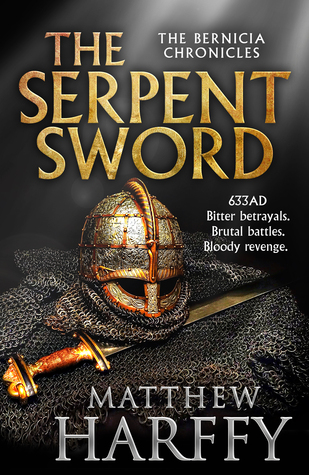
The Serpent Sword by Matthew Harffy

Much as I enjoy reading historical fiction set in other countries, it’s also nice to have the opportunity to learn about the history of my own little corner of the world. This novel by Matthew Harffy, the first of a series, is set in the same time and place as Edoardo Albert’s Northumbrian Thrones trilogy, but as soon as I started to read The Serpent Sword I could tell it was going to be a very different type of book – not necessarily better or worse; just different.

The Serpent Sword opens in the year 633, when Britain is still made up of a collection of warring kingdoms. It begins with murder – the murder of Octa, a favoured warrior of King Edwin, and his lover, a woman called Elda. We don’t know the killer’s identity, but we see him lurking in the shadows of the fortress of Bebbanburg and we learn that there are two motives for what he is about to do. The first is that he has been rejected by Elda, who has chosen Octa instead, and the second, he is unhappy that Edwin has gifted the magnificent sword known as Hrunting to Octa rather than himself.

It was a sword fit for a king. The blades forged from twisted rods of iron. The metal shone with the pattern of rippling water, or the slick skin of a snake. The hilt was inlaid with fine bone and intricate carvings. All who had seen the weapon coveted it.

Too late to be of assistance, Octa’s younger brother Beobrand arrives from Cantware in the south, keen to join the service of a great lord, only to be met with the devastating news of Octa’s death. On a happier note, despite Beobrand’s lack of experience, he impresses Edwin enough to be given a place in the king’s army for his upcoming battle against Penda of Mercia and the Waelisc king, Cadwallon of Gwynedd. However, the battle ends in disaster for Edwin and he and many of his men are killed.

Beobrand, one of the few survivors, is taken to a nearby monastery to recover and this proves to be another turning point in his life. Having formed some new but important friendships at the monastery, he sets off again in search of another lord to serve. He will learn some important lessons on his journey as he grows and develops as a person, acquires new skills and has the chance to fall in love – but he never loses sight of his mission to take revenge upon the man who killed Octa and recover his brother’s sword.

The Serpent Sword is a well-researched work of historical fiction and those readers who like their novels fast-paced and action-packed with plenty of scenes involving battles, weapons and fighting will find a lot to enjoy here. Matthew Harffy’s books have been receiving excellent reviews, many drawing comparisons with Bernard Cornwell, which is clearly high praise if that’s where your tastes lie. However, although I can understand the appeal of this book, the overall feel and style of Edoardo Albert’s novels works better for me with their fantasy-like atmosphere and deeper exploration of the political and religious changes taking place during that period.

Still, it was good to have the opportunity to add to my limited knowledge of Northumbrian history. The focus of Harffy’s novel (and the series, the Bernicia Chronicles) is on the history of Bernicia, the northern half of Northumbria, rather than the southern part, Deira. Bebbanburg with its coastal fort, for example, is modern-day Bamburgh, where an impressive castle still stands, and Hadrian’s Wall, the famous wall built by the Romans, is also referenced, although the characters in the book don’t seem to have a name for it. In some ways, the region described in the book seems almost like a completely different world from the area I know today, but in others it’s strangely familiar.

Despite not really loving The Serpent Sword, I did still find it an interesting read, touching on many different aspects of 7th century life. It is a satisfying novel in itself, but it also feels like the first book in a series, following our hero Beobrand’s transformation from an inexperienced young man to a brave warrior skilled with sword and shield. On reaching the end, there’s the sense that there are many more adventures to come for Beobrand – and yes, there are now another four books that make up the Bernicia Chronicles. Will I be reading them? At the moment I’m not sure, but I could possibly be tempted.

I do have a copy of Bernard Cornwell’s The Last Kingdom which I will get to eventually, although I want to wait a while as I think it could be quite similar to this book – and I suspect it may not be entirely to my taste either. I’m more intrigued by the sound of Cornwell’s new Elizabethan novel, Fools and Mortals, coming later this year.

Thanks to the publisher Head of Zeus for providing a review copy of this book via NetGalley.

Oswald: Return of the King by Edoardo Albert

Oswald One of my favourite reads from the first half of this year was Edwin: High King of Britain, the first in Edoardo Albert’s Northumbrian Thrones trilogy which tells the stories of three seventh century kings. On a visit to the library a few weeks ago I was pleased to find a copy of the second book, Oswald: Return of the King – and I was delighted to discover that it was just as good as the first.

It’s not necessary to have read Edwin: High King of Britain before starting this book – the key events of the previous book are given in a summary at the beginning of this one – but those of you who did read Edwin may remember Oswald as the young boy who fled into exile with his family after his father, Æthelfrith, King of Northumbria, was killed in battle.

During the years of Edwin’s reign, Oswald remains in the northern kingdom of Dal Riata, living amongst the monks on the island of Iona, where he is converted to Christianity. When news of Edwin’s death reaches the island, Oswald is reluctant to take action; he has no real desire to claim the throne for himself and would prefer to stay on Iona and enter the monastery. Abbot Ségéne, however, has other ideas – he wants Oswald to become king so that he can spread the new religion to his people – and a sequence of events follows which will leave Oswald with little choice other than to return to Northumbria and regain his father’s throne.

Oswald’s story is as exciting and engrossing as Edwin’s was. If the title, Return of the King, has made you think of Tolkien’s Lord of the Rings, that’s not a coincidence: Tolkien is thought to have taken the historical Oswald as the inspiration for his fictional character, Aragorn. Edoardo Albert lists Tolkien as a favourite author and there is a definite influence here, though it would be difficult to say how much. This tale of treachery and betrayal, stolen thrones and warring kingdoms does sometimes feel like fantasy – but of course, it isn’t; Oswald was a real person and Albert’s novel is based on historical fact (except where some imagination was clearly needed to fill in the gaps).

Oswald himself is a fascinating character and I thought his internal struggle between his desire to become a monk and his duty to become king was very well written. I also loved the portrayal of his relationship with his younger brother, Oswiu, who is going to be the subject of the third book in the trilogy. The brothers have very different temperaments, and while the loyalty and love they have for each other is plain to see, there’s also a tension which is always there below the surface.

Other characters include friends such as the monk, Aidan, who brings Christianity to the island of Lindisfarne, and enemies such as Cadwallon, King of Gwynedd, and Penda, King of Mercia – and I was pleased to see the return of Coifi, the pagan priest whom we first met in Edwin: High King of Britain, now a lost and lonely character having had his faith in the old gods shaken. I should also mention Oswald’s wonderful pet raven, Bran, who seems to have a personality all of his own (I wasn’t aware until after finishing the book that there are stories associating the real Oswald with a raven).

Before reading this book I had very little knowledge of Oswald or this period of history, so I found it a very informative novel as well as an entertaining one. Albert includes a lot of useful additional material: there’s a map showing the various kingdoms that made up Britain in the year 635, a character list, a glossary of unfamiliar words and a pronunciation guide – which was very helpful as I would otherwise have had no idea how to pronounce a name like Rhieienmelth!

I’m now looking forward to the third book in the trilogy – and while I await its publication I think I would like to read The King in the North by Max Adams for a non-fiction view of Oswald.

Edwin: High King of Britain by Edoardo Albert

Edwin High King of Britain He attempted to unite the warring tribes of Britain under one crown. He converted to Christianity in 627 and many others followed his example. After his death he became a saint. These are some of the achievements of Edwin, the 7th century King of Northumbria, but how many of you, without having read the title of this post, would have known who I was talking about? I always think it’s a shame that so much is written about some historical figures and so little about others, but in this, the first of the Northumbrian Thrones trilogy, Edoardo Albert gives Edwin the attention he deserves.

Edwin: High King of Britain is a fictional account of Edwin’s life. The story begins with Edwin in exile at the court of King Rædwald of East Anglia and follows him as he attempts to regain the throne of Northumbria. With his kingdom secure again, Edwin goes on to conquer several of his neighbouring kingdoms, believing that strength lies in unity. To secure an alliance in the south of the country, he marries Æthelburh, daughter of the King of Kent, but when his new bride heads north accompanied by her two Christian priests, Paulinus and James, Edwin has an important decision to make both for himself and for his people.

This is a fascinating novel and I feel that I’ve learned a lot from it, but it’s also a gripping, entertaining story. My description above might make it sound a bit dry, but it’s really not dry at all. In the first chapter alone, while seeking refuge at King Rædwald’s court, Edwin learns that his Northumbrian rival Æthelfrith has bribed Rædwald to assassinate him, and later that same day he has a moonlight encounter with a mysterious stranger who predicts that he will become a great and powerful king.

In the pages that follow there are battles and duels, feasts and feuds, and lots of political intrigue; there’s always something interesting happening or something new to learn and I was never bored. One very important thread that runs throughout the novel involves the coming of Christianity to Northumbria and the choice Edwin and his people are forced to make between the old pagan gods and the Christian God. This religious conflict is portrayed particularly well through the characters of Paulinus, the Italian missionary, and Coifi, Edwin’s chief pagan priest.

Writing a novel set so far into the distant past means that there is obviously a limit as to how much information is available, but Albert does seem to stick to the known facts as far as possible; his author’s note at the end explains where it was necessary to change things. The main sources he acknowledges are the Anglo-Saxon Chronicle and the Ecclesiastical History of the English People by the Venerable Bede. He also includes some riddles and poetry from the Exeter Book (one of the few remaining works of Anglo-Saxon literature), which I thought was a nice touch.

I have read about this time period only once before, in Nicola Griffith’s beautifully written Hild, but while Hild gives us a female perspective, this is more of a male-dominated story so the two books complement each other very well. It was nice to be able to begin this book with some familiarity with the period, however slight, but I didn’t really need it because the author makes Edwin’s story easy enough to follow even if you have no previous knowledge at all. He also provides a list of characters and a glossary at the front of the book – and a map, which is very useful if you’re not sure where the various kingdoms that make up 7th century Britain are located.

Edwin: High King of Britain is one of the most enjoyable historical fiction novels I’ve read so far this year. I’m now looking forward to reading the sequel, Oswald: Return of the King.

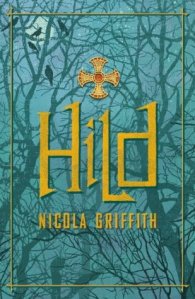
Hild by Nicola Griffith

Hild “That night she dreamt Fursey was talking to Hereswith. It’s what women do: weave the web, pull the strings, herd into the corner. It’s their only power. Then she was inside Hereswith, and Fursey was talking to her. Unless they’re seers. Your mother has built you a place where you can speak your word openly.

Hild is one of the most beautifully written books I’ve read for a long time. Set in 7th century Britain – an island divided by warring kings, where the old pagan religions are under threat from the advance of Christianity – it’s the story of the girl who would later become St Hilda of Whitby.

Hild is the daughter of Hereric of Deira and his wife, Breguswith. She is only three years old when her father is poisoned while in exile in the lands of the Brittonic king, Ceredig, and she, her mother and sister join the court of Hereric’s brother, King Edwin of Northumbria. As the two girls grow older, Hild’s sister Hereswith becomes Edwin’s ‘peaceweaver’ – a female relative who can be married off to secure alliances with other rulers – but Hild’s wyrd (fate) will be something very different.

Ever since Hild was born, her mother, Breguswith, has talked of a dream she’d had during her pregnancy…a dream in which Hild was said to be “the light of the world”. In this novel – the first of a planned trilogy – we see how Hild becomes Edwin’s seer, foretelling his future and giving him the advice he needs to protect and expand his kingdom. Many of Hild’s predictions are based on her observations of the behaviour of animals or changes in the weather and on her shrewd understanding of human ambitions and motivations, but as her reputation as a prophet grows, so does her value to the king.

Reading Hild, for me, was like entering a different world. From the very beginning I was confronted with strange place names – Caer Loid, Elmet, Deira – and unfamiliar words – gesith, wealh, seax, haegtes. Yet I was not reading a book set in a fantasy land, but in my own country. At first I felt lost (and very aware of how ignorant I am of this whole period of history) but eventually I began to slowly make sense of Hild’s world and become absorbed in her story. Nicola Griffith’s writing is beautiful and lyrical; the Anglo-Saxon people lived an almost semi-nomadic lifestyle and there are some gorgeous, poetic descriptions of nature and scenery as Hild, with the rest of Edwin’s court, moves from one part of the kingdom to another.

Hild is not an easy read that you can breeze through with your mind on something else; it does require some effort from the reader, but I definitely think it’s worth making that effort. The only thing that prevented me from truly loving this book is the fact that I found Hild herself difficult to fully engage with on an emotional level until almost the end. Apart from that, I thought Hild was a hugely impressive novel; it reminded me in many ways of Dorothy Dunnett’s King Hereafter, which is high praise from me! I’m looking forward to reading the next part of Hild’s story whenever the second book in the trilogy becomes available.

As a side note, I read an ebook version of Hild but the problem with this was that I couldn’t easily keep turning back to the map, family tree and glossary – and believe me, this is the type of book where you really need to be able to do that! I was delighted, then, to discover that on Nicola Griffith’s blog she provides all of these extras for readers of the ebook to download and use for reference. Very useful, even though by the time I made this discovery I was halfway through the book and had already worked a lot of things out for myself anyway!

Thanks to the publisher for providing a copy of Hild via NetGalley