The Aviator’s Wife by Melanie Benjamin

The Aviator's Wife Melanie Benjamin picks such interesting subjects for her novels, introducing us to historical figures who, despite their significance, we may not know much about: first Alice Liddell, the inspiration behind Alice in Wonderland, then Lavinia Warren or ‘Mrs Tom Thumb’, and now Anne Morrow Lindbergh, wife of the famous aviator, Charles Lindbergh.

We first meet Anne Morrow, daughter of the US ambassador to Mexico, in 1927 at a reception attended by Charles Lindbergh who has recently completed his first solo flight across the Atlantic. Everyone expects Lindbergh to be drawn to Anne’s beautiful older sister, Elizabeth, but instead it is the shy, quiet Anne who catches his eye and when he takes her up in his plane for a private flight, she finds that she shares his love of flying. Soon Lindbergh proposes and Anne accepts, but she quickly discovers that being married to one of the most famous men in America is not going to be easy.

Before reading this book I had heard of the Lindberghs but knew almost nothing about them so, for me, The Aviator’s Wife was very educational as well as being an enjoyable story. I’ve never given much thought as to what being an aviator actually involved and it was interesting to see how the Lindberghs use their roles as aviators to perform a range of useful and varied tasks including charting new routes and mapping flight paths for passenger planes, flying over places of interest to take aerial photographs, and delivering aid to disaster zones. Flying in those early aircraft must have been an amazing experience – the description of Anne’s first flight with Lindbergh is wonderfully written and sounds both terrifying and exhilarating.

This book gives us some fascinating insights into what it is like to be a celebrity. The Lindberghs have very little privacy and everything they do attracts attention from the world’s media. They are followed by reporters and photographers everywhere they go, though as quiet, reserved people neither Charles nor Anne seem very comfortable with being constantly in the spotlight. Charles has already learned to deal with it in his own way, but Anne often finds it difficult. Their fame eventually leads to tragedy – I won’t go into details here (if you’re familiar with the Lindberghs’ lives you will know what this tragedy was and if not I won’t spoil the story for you) but this part of the book was heartbreaking and made even worse by the fact that the way Charles chose to deal with the disaster was completely inadequate.

The relationship between Anne and Charles becomes more and more tense and strained as the years go by, but even as Charles grows increasingly cold and distant, Anne tries to stay loyal to her husband and is supportive when he expresses his controversial views on Hitler and the Nazis, despite the fact that she’s not convinced that he’s right. Charles is portrayed as a complex person with some good qualities but also a lot of bad ones. He tries to control every aspect of Anne’s and their children’s lives and at first it’s frustrating to see how Anne allows him to do this, but eventually she begins to move out of his shadow and finds some independence. As well as being her husband’s co-pilot, navigator and radio operator, Anne becomes an accomplished pilot in her own right and is also the first American woman to obtain a glider pilot’s licence. She later starts to build a successful career of her own as an author, publishing books including the best-selling Gift from the Sea.

I’ve enjoyed all three of Melanie Benjamin’s books but I think this one is her best so far. I was left wanting to learn more about Anne Morrow Lindbergh and feeling that she really deserves to be known as more than just ‘the aviator’s wife’!

I received a review copy of this book from the publisher via Netgalley

The Sisters Brothers by Patrick deWitt

Until I picked up The Sisters Brothers last month I had never read a western before and didn’t think I would ever want to read one. But after Patrick deWitt’s novel, with its unusual title and cover, appeared on the Booker Prize shortlist earlier this year and so many people were saying they enjoyed it, I thought I’d see what it was like.

The Sisters Brothers is set in the 1850s during the Gold Rush and has everything you would expect to find in a western – guns, horses, saloons, duels, drinking, fighting, and gold prospecting. I know this might not sound very appealing to a lot of you, but I hope you won’t let it put you off because at the heart of this novel is a wonderful story about the relationship between two brothers. They are Charlie and Eli Sisters, names that are feared throughout the wild west. Charlie and Eli are hired killers, who earn their living by taking orders from the mysterious Commodore. When the Commodore tells them that their next assignment is to find and kill the prospector Hermann Kermit Warm, the brothers set off on an eventful journey from Oregon to California.

The brothers encounter lots of memorable characters on their travels (including a ‘weeping man’, an orphaned boy and his horse, and a dentist who introduces Eli to the joys of the toothbrush) but the focus is always on Eli and Charlie themselves. Charlie is the more dominant and aggressive brother, while Eli is more cautious and sensitive, which causes some conflict between the two. I was pleased to find that both characters did develop and change, at least to some extent, over the course of the book. Charlie had seemed a completely unsympathetic character at first, but I later found that he had a bit more depth than I’d originally thought. And while Eli wasn’t exactly the most pleasant of people either, I couldn’t help liking him as he did at least have a conscience and wanted to be a better person – even if he didn’t always manage it.

The Sisters brothers are the type of characters we would more often read about from the opposite perspective, as the book’s villains – but in this book, with the story being narrated by Eli, we are supposed to accept them as our heroes (or anti-heroes, maybe). It’s a testament to Patrick deWitt’s writing that he makes it possible for us to care so much about a pair of murderers and I think this is due partly to Eli being such an appealing narrator. Some of the dialogue is very funny and there’s lots of dark humour, but I should probably warn you that there are also some fairly graphic scenes of violence and cruelty, though I think this is to be expected considering the setting and the profession of the two main characters.

The chapters are short and there’s always something happening: in the first fifty pages alone, Eli is bitten by a venomous spider, his horse gets attacked by a bear and a witch tries to put a curse on the brothers. It all felt slightly surreal and sometimes it was hard to see where the story was really leading but it was so much fun it didn’t matter. Later in the book, though, there were some passages that were quite sad and melancholy, which I thought gave the second half of the book a noticeably different feel to the first.

As you can probably tell by now, I loved this book, which I think proves that it doesn’t matter if something is described as a ‘western’, a ‘romance’, a ‘mystery’ or anything else: a good story is a good story and The Sisters Brothers was one of the best I’ve read this year.

The House of the Wind by Titania Hardie

The House of the Wind is a novel consisting of two storylines, one set in the present day and one in the 14th century. In 2007 we meet Madeline Moretti, a young lawyer living in San Francisco. Maddie is grieving for her fiancé, Chris, who has been killed in a car accident. She is also involved in a complicated legal case involving a large company suspected of putting the health of their employees at risk. In an attempt to help Maddie cope with her bereavement away from the stresses of her job, her Italian grandmother arranges for her to spend some time in Italy with a family friend. When Maddie arrives in Tuscany she becomes intrigued by the legend of the Casa al Vento, or House of the Wind, which tells of a woman who emerged unscathed from the ruins of a house destroyed by a storm.

The second main thread of the novel is set in the same area of Tuscany in the year 1347, a time when a mysterious and deadly disease is spreading across Europe. Maria Maddalena, known as Mia, has been raised by her Aunt Jacquetta and hasn’t spoken since her mother’s tragic death. When two young pilgrims come to stay at Jacquetta’s house, Mia slowly begins to find her voice again and at the same time makes some surprising discoveries about her past.

The House of the Wind is the first book I’ve read by Titania Hardie. I thought her writing was beautiful and whether I was reading about 14th century Tuscany or modern day California I was able to become completely immersed in the time and place. I also liked the way so many different elements of myths and legends, religion, poetry, medieval medicine, arts and literature were incorporated into the story.

The obvious similarity between Maddie’s story and Mia’s is that they are both young women trying to deal with their pain and grief (more than six centuries apart) but there are lots of other connections between the two and these are slowly revealed to us as the novel progresses. Although both of the storylines were engaging, I found I was much more interested in the 14th century one and it was fascinating to learn what life was like in Tuscany during that period. However, I’ve read a lot of books with dual timeframes and it seems to be almost inevitable that I’ll like one more than the other (usually the historical one due to my love of historical fiction). I expect there will be plenty of other readers who prefer the present day storyline!

The only problem I had with this book was that the pace was too slow for me in places and there were times when I felt the plot wasn’t moving forward at all, which made the book feel longer than it needed to be. Other than that, I enjoyed The House of the Wind and as I haven’t read Titania Hardie’s previous novel, The Rose Labyrinth, I still have that one to look forward to.

I received a copy of this book from Headline for review

We Have Always Lived in the Castle by Shirley Jackson

I’ve heard so much about this book since I started blogging, particularly around this time of year when it seems such a popular choice for Halloween or the dark winter nights. Yet somehow I had managed to avoid reading any detailed summaries of the plot and so when I finally picked this book up to read it for myself, I was able to go into it with very little knowledge of what it was about. I would hate to spoil things for any future readers, so I’ve deliberately tried to keep my summary here as vague as possible.

The book is narrated by eighteen-year-old Mary Katherine Blackwood, or ‘Merricat’, who lives with her sister Constance, their Uncle Julian, and Jonas the cat in a big house on the edge of town. Near the beginning of the story we see Merricat walking home with some shopping, being taunted and chanted at by everyone she passes. It seems the Blackwoods are very unpopular, but at first we don’t know why.

When Merricat returns home, it becomes even more apparent that something is wrong. Merricat herself does not seem like a normal eighteen-year-old – she likes to bury things in the grounds of the Blackwood house and believes that using magic words and rituals will protect her home and family. Constance is agoraphobic and afraid to walk any further than the garden. Uncle Julian, confined to a wheelchair, is obsessed with the book he’s writing about a tragedy that occurred six years earlier. And what exactly has happened to the rest of the Blackwood family?

We Have Always Lived in the Castle is a great book and now that I’ve read it I can see why it’s considered a modern classic. Something that impressed me about it was the way the story was cleverly constructed so that the truth about Merricat and her family was only revealed very slowly. We know from the first page that something is not right but we’re not quite sure what it is. As we read on we start to form some suspicions, though we’re made to wait a while to find out if we’ve guessed correctly or not.

This is a very disturbing and unsettling book with its portrayal of the claustrophobic world behind the locked doors of the Blackwoods’ house and the cruel, hostile atmosphere of the town outside. Some of the sense of unease comes from the fact that the book is narrated by Merricat, who clearly lives in a world governed by her own rules and superstitions. The reader becomes trapped inside her mind and is made to share her unusual outlook on life. And yet although there’s something slightly sinister about her, Merricat is also very child-like and both she and Constance have a vulnerability that made me concerned for them, locked away in the isolation of their ‘castle’.

The ending was not quite what I had expected and I was left with questions that still hadn’t been answered, but having thought about it, maybe it was a suitable ending for such a strange and powerful book. This was my first experience of Shirley Jackson’s work and now I’m looking forward to reading The Haunting of Hill House.

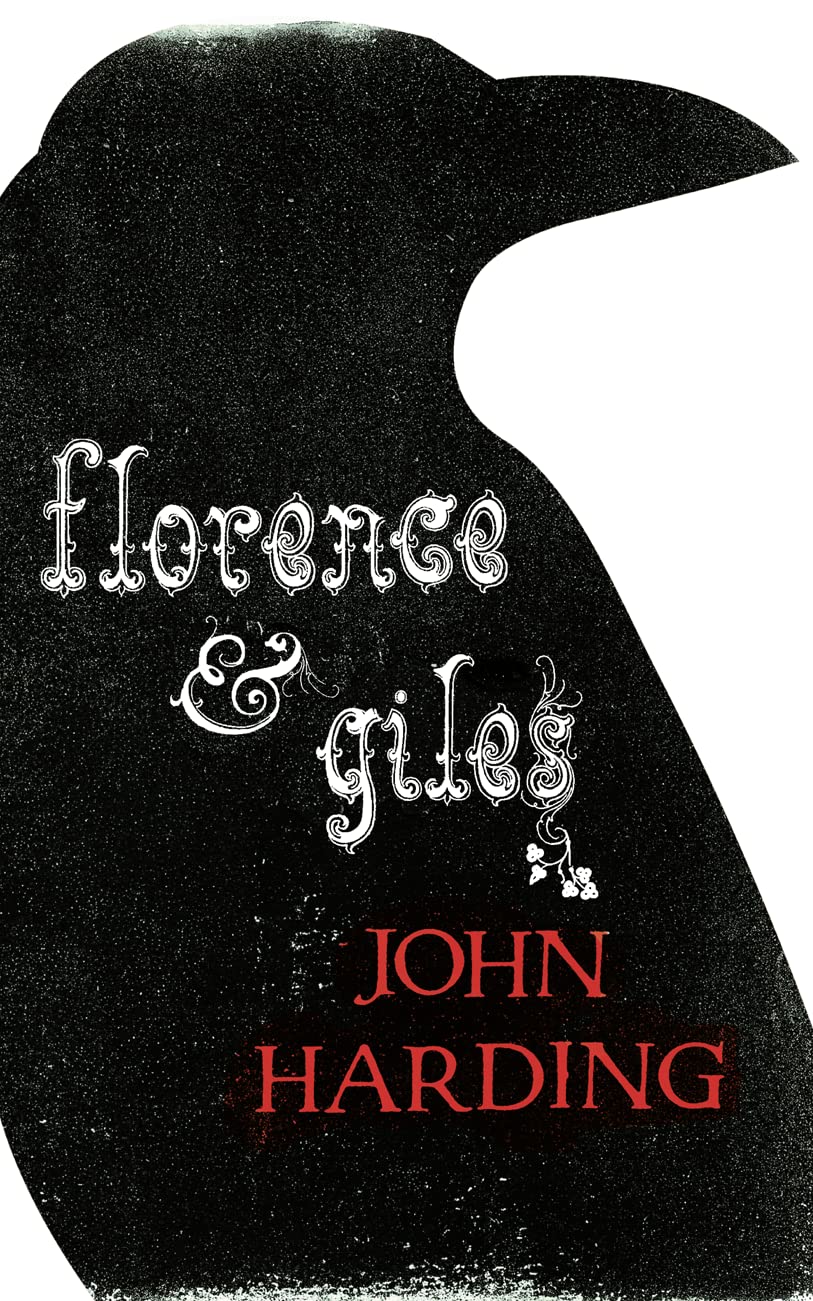
Florence and Giles by John Harding

I hadn’t even heard of Florence and Giles until recently but as soon as I saw that it had been described as a gothic thriller and compared to Henry James and Edgar Allan Poe I knew I wanted to read it – and it went straight onto my list for the RIP challenge!

Florence and Giles could be considered a loose retelling of The Turn of the Screw by Henry James (the first clue is in the title as the children in The Turn of the Screw are called Flora and Miles) but if you haven’t read the Henry James book yet it doesn’t matter at all because this is a great story in its own right.

The book is set in 1891 and the Florence and Giles of the title are two orphans who live at Blithe House, a mansion in New England. The house belongs to their uncle, but Florence and Giles never see him – he never comes to visit and prefers to leave the children under the care of the servants. Soon Giles is sent away to school and twelve-year-old Florence is left behind because her uncle disapproves of education for girls. After secretly teaching herself to read and write, Florence spends her days hiding in a forgotten tower room with books she’s smuggled out of the library.

This seems a good place to mention Florence’s narrative style, which is one of the most unusual I’ve ever come across. Although she’s been denied a formal education, she’s an intelligent and imaginative girl who has created her own private language with a very strange way of using nouns, verbs and adjectives! Here, for example, she describes Blithe House:

A house uncomfortabled and shabbied by prudence, a neglect of a place, tightly pursed (my absent uncle having lost interest in it), leaked and rotted and mothed and rusted, dim lit and crawled with dark corners, so that, even though I have lived here all of my life that I can remember, sometimes, especially on a winter’s eve in the fadery of twilight, it shivers me quite.

The whole story is written in this way. The ‘unbroomed’ library is a ‘dustery of disregard’, her bedroom becomes a ‘smugglery of books’ and she ‘lonelies’ her way around the big house. It did take me a few chapters to get used to Florence’s voice but I loved it because it was so creative and different.

Anyway, back to the story: when Giles is removed from his school after being bullied, a governess is appointed so he can continue his education at home. But as soon as Miss Taylor arrives at Blithe House some strange things begin to happen and Florence starts to believe that she and her brother could be in serious danger. Is Florence right? Can we trust her? We don’t know, but as she’s the book’s only narrator we have no choice but to read on.

Florence and Giles has a wonderfully dark and gothic feel and has everything this type of book should have: the spooky mansion, the mysterious guardian, the sinister governess…Even the quirkiness of Florence’s narrative voice adds to the unsettling feel. Not everything is explained or tied up at the end of the book, but I felt there’d been enough clues throughout the story for me to draw my own conclusions.

I can’t remember who it was that first brought this book to my attention, but as Florence might say, ‘I grateful them!’

Devil Water by Anya Seton

Several years ago I had the pleasure of discovering Anya Seton’s historical fiction novels. The first one I read was Katherine, the story of Katherine Swynford and John of Gaunt, quickly followed by Green Darkness, Avalon and The Winthrop Woman. After that I moved on to other authors and never got round to reading Seton’s other novels. And so I was pleased to come across one I hadn’t read, Devil Water, in the library. This book was originally published in 1962 and the story takes place during the Jacobite Rebellions of 1715 and 1745.

Devil’s Water is the name of the river that flows past Dilston, a village in Northumberland in the north east of England. In the early 18th century, when Anya Seton’s novel begins, Dilston is home to the Radcliffe family. James Radcliffe, the 3rd Earl of Derwentwater, and his younger brother, Charles, are descendants of King Charles II and were both real historical figures.

The first half of the book concentrates on the life of Charles Radcliffe and his secret marriage to a working-class Northumberland girl, Meg Snowdon, with whom he has a daughter, Jenny. Both Charles and his brother, the Earl, are Catholics and Jacobites (supporters of the Catholic James Stuart who is living in exile in France while his half-sister, the Protestant Queen Anne, reigns in his place). In 1715 the Radcliffes join the Jacobite Rising in an attempt to put James, who they consider their rightful king, on the throne. When the rebellion ends in defeat, Charles escapes to France and leaves Jenny to be raised in London by his friend, Lady Betty Lee. Throughout the second half of the book the focus is on Jenny’s adventures which take her across the Atlantic to the plantations of colonial Virginia in search of Rob Wilson, the man she loves.

This book was particularly interesting to me as I’m from the north east of England myself. There are very few novels set in this part of the country so it was nice to read about places that I’m familiar with. I appreciated the effort Seton made to reproduce various local dialects, depending on whether a character comes from Northumberland, London, Scotland, Ireland, Virginia or elsewhere. Although the northern dialects didn’t always seem quite right to me, it wasn’t a bad attempt and it gave the book a more authentic feel. And the characters never sounded too modern or used language that felt out of place either.

Although I knew absolutely nothing about the Radcliffes before reading Devil Water, you can always trust that an Anya Seton novel would have been well researched and as historically accurate as she could make it, while bearing in mind that it’s still fiction and not everything that happens in the book will be completely factual. This book includes two author’s notes at the beginning and end in which she details the research she carried out and explains which parts of the story are likely to be true. There are also some useful maps and family trees which I found myself referring to occasionally. Don’t worry though, because the book is easy enough to read and doesn’t feel like a history lesson at all.

So, I loved the settings and the time period (I’ve read historical fiction about the Jacobites before and it always makes me feel sad, knowing what the outcome will be) but I did have one or two problems with the book. I thought it was much longer than it needed to be and seemed to take forever to read; the pacing didn’t feel right either – some parts of the book dragged and there were some big jumps forward in time, often leaving gaps of ten years. But the main thing that prevented me from really loving this book was that some of the characters were very difficult to like. I never managed to feel any connection to Charles and was more interested in his brother, the Earl of Derwentwater. And another character, who I had just started to warm to, does something really unforgivable that completely changed my impression of them. I did like Jenny (and a few of the minor characters, such as Betty Lee) but because the people around her were so unlikeable, the story didn’t have the emotional impact on me that it might otherwise have done.

Have you read any other Anya Seton books that I haven’t read yet? Which ones would you recommend?

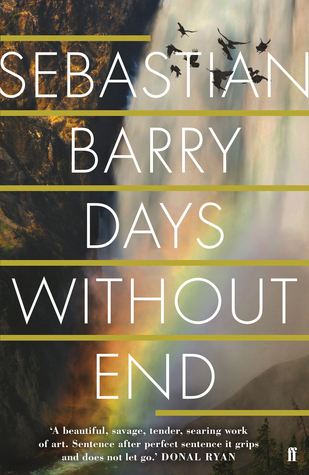
On Canaan’s Side by Sebastian Barry

“Bill is gone. What is the sound of an eighty-nine-year-old heart breaking? It might not be much more than silence, and certainly a small slight sound.”

When this year’s Man Booker Prize longlist was announced at the end of July, one of the titles that I was most looking forward to reading was this one, On Canaan’s Side. I read The Secret Scripture last year and fell in love with Sebastian Barry’s beautiful, poetic writing style. There are some similarities between The Secret Scripture and On Canaan’s Side, the most obvious one being the idea of an old woman looking back on her life, but the stories are different enough to make this book a good read too.

On Canaan’s Side is narrated by Lilly, a retired cook. At the beginning of the book she is eighty-nine years old and has just lost her beloved grandson, Bill, who has committed suicide after returning from fighting in the Gulf War. As Lilly mourns for her grandson, she begins to remember all the things that have happened in her life and over the next seventeen days she shares her memories with us.

Canaan, in the Bible, is the ‘promised land’ and the title On Canaan’s Side represents the idea that many Irish people had that America was a place where they would be safe and happy. Lilly’s story begins during her childhood in Ireland as the daughter of the superintendent of the Dublin police. She is forced to run away to America when both she and her boyfriend, Tadg Bere, find themselves the target of an IRA death sentence. However, Lilly soon discovers that even there, on ‘Canaan’s Side’, she and Tadg are still in danger. The following decades are filled with tragedy and sorrow. Lilly’s story is unbearably sad and yet her voice never becomes self-pitying; she stays a strong and resilient character until the day when her ‘eighty-nine year-old heart’ finally breaks.

At first I thought I wasn’t going to enjoy this book because the first chapter was very ‘stream-of-consciousness’ and it seemed as if it was going to be one of those novels where nothing really happens. But when I got further into the book and the story began to take shape I didn’t want to stop reading. I mentioned at the start of this post how beautifully written The Secret Scripture was and I thought Sebastian Barry’s writing was possibly even more beautiful in this book. I usually prefer books with more plot but the way Barry uses language and imagery is so stunning and mesmerising, the slow pace of the story didn’t bother me.

And it’s really not true that nothing happens: there’s murder, rape and suicide, for a start. Other themes include war (both World Wars, Vietnam and the Gulf War) and how it’s possible to survive a war physically but not mentally; identity and how sometimes we can live with people for years without really knowing who they are; important events in Irish and American history; racial tensions; love and loss.

I loved this book and although it was slow to begin with, I was soon swept away by the quality of Barry’s writing and the atmosphere his words convey. I haven’t read his previous books Annie Dunne and A Long, Long Way but as they are about Lilly’s sister and brother I really should read them soon.