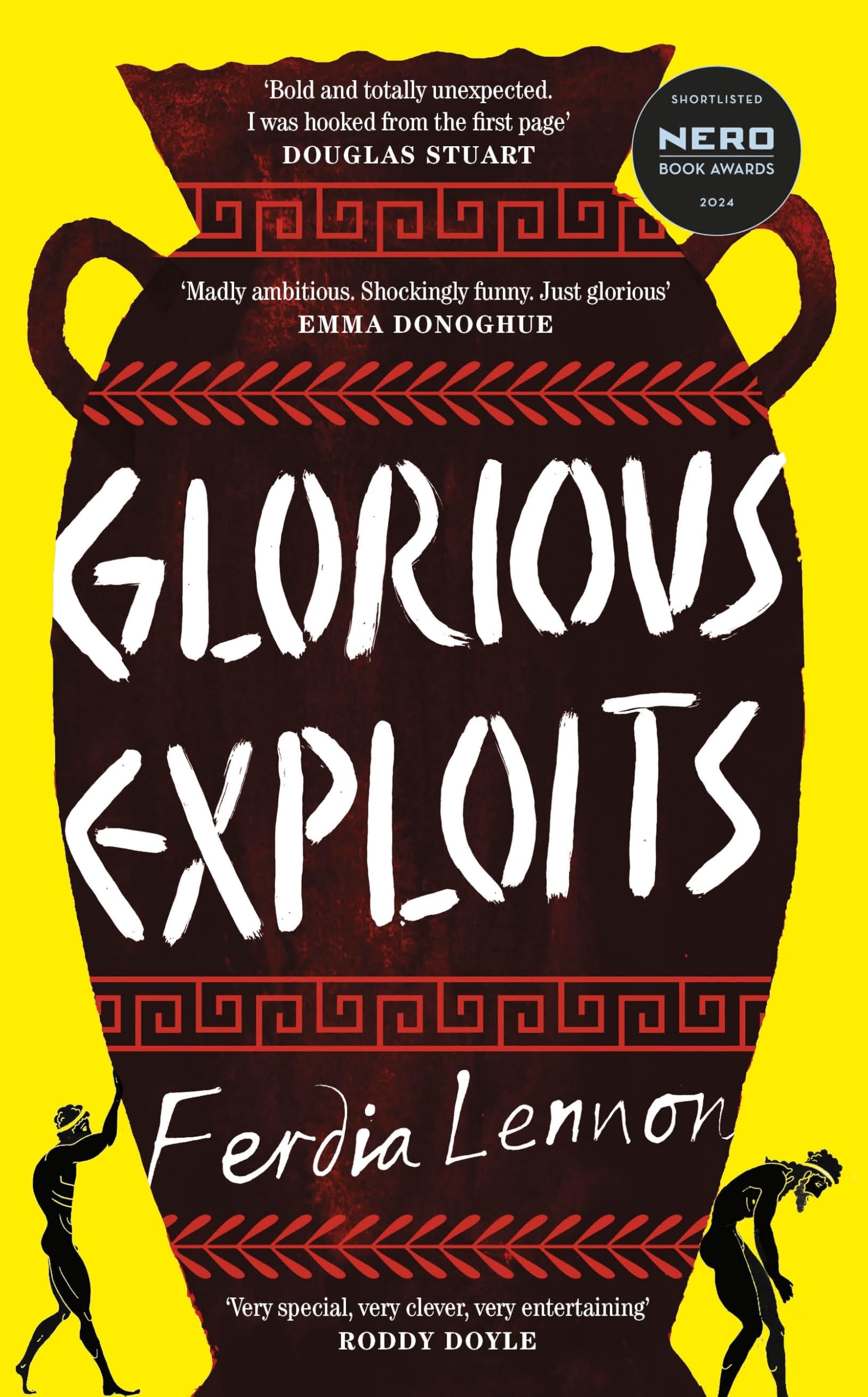
 This is another book that I probably wouldn’t have read if it hadn’t been shortlisted for the Walter Scott Prize this year (I have an ongoing project where I’m attempting to read all of the shortlists for that particular prize). I’m glad I decided to read it, because after a slow start I ended up enjoying it more than I thought I would at first.
Glorious Exploits is set in 412 BC during the Peloponnesian War. An attempt by Athens to invade Sicily has ended in failure and thousands of defeated Athenian soldiers have been imprisoned in a disused quarry in Syracuse where they are slowly starving to death. Gelon and Lampo, two out of work Syracusan potters, occasionally take food to the quarry and in return the prisoners recite lines from plays by the Athenian tragedian Euripides. Gelon loves Greek theatre and when he discovers that some of the prisoners are familiar
with Medea and, even better, Euripides’ newest work, The Trojan Women, he comes up with a plan to stage both plays in the quarry, with the Athenians as actors.
Lampo is our narrator and tells his story using lots of modern Irish vernacular (Lennon is an Irish author) and lots of swearing. He also has a dry sense of humour and I know many people have found the book hilarious, although it didn’t quite work as a comedy for me. Whether or not you’ll like the writing style is entirely down to personal taste, I suppose. I tend to get irritated by historical novels written in very modern, anachronistic language, although as I said when I read Natasha Pulley’s The Hymn to Dionysus earlier this year, it bothers me less when the book is set in the ancient world. I got used to Lampo’s voice after a while and accepted it.
The relationship between Lampo and Gelon forms an important part of the novel. They are very different people but their friendship has endured since childhood. Lampo is illiterate and directionless but always seems cheerful and ready with a joke – until we start to see signs that there’s more to him than meets the eye and we see another side when he falls in love with a slave girl, Lyra. Gelon has a more serious nature and has taught himself to read, developing a love of Greek plays. He’s afraid that the defeat of Athens could mean that the work of great Athenian playwrights like Euripides become lost to history, which is why he comes up with his idea to keep the plays alive. Gelon knows that it’s possible for warring nations to appreciate each other’s art and culture, even if not everyone would agree.
Towards the end, things take a surprisingly dark turn and I found the final part of the book quite moving. It seemed I was more emotionally invested in the story than I thought! I’m not sure if I would rush to read more books by Ferdia Lennon, but I’m glad I stuck with this one despite initially thinking it wouldn’t be for me.





 She Reads Novels