The Sirens by Emilia Hart

After enjoying Emilia Hart’s first novel, Weyward, in 2023, I’ve been looking forward to reading her new one, The Sirens. Weyward linked the stories of three women in different time periods through a family connection, a shared love of nature and a theme of witchcraft. The Sirens also has multiple timelines, but this time the characters are linked by water and the sea.

The novel begins in Australia in 2019 with student Lucy waking up from a sleepwalking episode with her hands around her ex-boyfriend’s neck. Ben is not entirely innocent – they broke up after he shared a nude photo of her with his friends – but she’s afraid he’ll report her for assault, so she packs her things and flees. Planning to take refuge with her sister Jess, an artist, Lucy heads for the town of Comber Bay, but on arrival she finds her sister’s house empty, as if it had been abandoned in a hurry. Lucy is concerned, but on learning that Jess did tell one of the neighbours that she would be going away for a while, she decides to wait in the house until she returns.

Comber Bay is a small town on the coast of New South Wales and has a sinister reputation; over a forty year period, eight men disappeared without trace, never to be seen again. Also, in 1982, a baby was found abandoned in a cave not far from Jess’s house. As she waits to hear from her sister, Lucy begins to uncover the truth behind these mysteries – but she becomes distracted by unsettling dreams of another pair of sisters who lived two centuries earlier.

Lucy’s present day story alternates with the story of those other two sisters, Mary and Eliza, who were found guilty of a crime in Ireland in 1800 and transported to Australia on a convict ship. Later in the book, Jess’s story also begins to unfold, mainly in the form of diary entries from the 1990s (the diary reads more like a novel, but I think we just have to suspend disbelief there). It takes a while for all of these threads to come together, but we eventually begin to see how cleverly they are connected. There are some surprising twists that I didn’t see coming, as well as some that I was able to guess before they were revealed. As ever, when a book has more than one timeline, I find that some are more compelling than others – and in this case, I particularly enjoyed Lucy’s story and the flashbacks to Jess’s teenage years. Mary and Eliza never fully came to life for me, so their adventures on board the Naiad didn’t interest me quite as much as I would have liked.

The title and cover of the book made me think there would be more siren/mermaid mythology incorporated into the story, but there’s only a little bit of that. There’s a lot of beautiful watery imagery, though, and water plays a big part in the novel in so many different ways. There’s Mary and Eliza’s sea voyage on the Naiad; the setting of Comber Bay, with its coastline, cliffs and caves; Jess’s paintings of ships; even the rare skin condition Lucy suffers from, aquagenic urticaria. It’s a book with lots of layers and things to think about. Having read two Emilia Hart books now, however, I do have a problem with her portrayal of men. Almost every male character in both books, with only a few exceptions, is either violent and abusive, a rapist or generally misogynistic or predatory. Obviously that’s true of some men, but I think it’s unrealistic that nearly every man who crosses paths with our female protagonists would be a terrible person. I think it should be possible to promote feminism and give women a voice without going too far in the other direction.

Apart from that, I did like the book and loved the eerie atmosphere Hart creates with Lucy alone in the abandoned Cliff House, uncovering the troubled history of Comber Bay’s past while being haunted by the cries of the women on the convict ship. It’s very similar to Weyward in some ways, but also different enough to be an interesting novel in its own right.

Thanks to The Borough Press for providing a copy of this book for review via NetGalley.
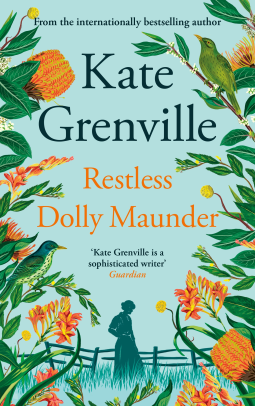
Restless Dolly Maunder by Kate Grenville

Kate Grenville is an author I’ve wanted to read for years but never have, so I’m pleased to have finally had an opportunity to try one of her books. Restless Dolly Maunder is a short novel, inspired by the life of Grenville’s own maternal grandmother, Sarah Catherine Maunder (known to everyone as Dolly).

Dolly is born on a sheep farm in Currabubula, New South Wales in 1881, the sixth of seven children. Her older brothers and sisters can barely read and write, attending school only when their parents can spare them, but by the time Dolly reaches school-age, attendance has become compulsory. Dolly is a bright, intelligent girl and decides that she wants to continue her education and become a teacher after leaving school. Unfortunately, it’s not her decision to make – her father’s permission is required and he refuses to give it, saying that “over my dead body” will a daughter of his go out to work.

As the years go by, Dolly’s siblings begin to marry and move away, while Dolly herself stays on the farm with her parents, eventually marrying Bert Russell, an old friend from school who comes to work for her father. When Dolly discovers that her mother has been keeping a terrible secret from her, she decides that it’s time she and Bert started a new life somewhere else. Aware that farming leaves them at the mercy of the weather, they agree to try something completely different – running a little grocery shop in Wahroonga. It proves to be a success, but Dolly is still not satisfied…in fact, it seems that she’s never going to be satisfied, with anything.

The rest of the novel follows Dolly, Bert and their three children as they move around from place to place, from one business venture to another. Although I did initially have a lot of sympathy for Dolly and understood her desire to make something meaningful of her life, having had her dreams of becoming a teacher destroyed by her father, as the book went on I began to dislike her more and more. It seemed that she was only ever thinking of herself, giving no consideration at all to the effect on her children of constantly being uprooted and disrupted. She was a cold, unloving mother and although she was aware of her faults, she made no attempt to change.

Despite the unlikeable protagonist – and Grenville acknowledges herself in her author’s note that her grandmother was a difficult woman to love – I did enjoy this book. It was interesting to get some insights into life in Australia in the late 19th and early 20th centuries. The family live through both World Wars and although the first leaves them largely untouched, by the time the second comes around Bert and Dolly have sons of fighting age, so are affected in a much more personal way. With this being my first experience of a Kate Grenville book, I didn’t know what to expect from her writing, but I found it very readable. She doesn’t use speech marks, which usually annoys me, but it didn’t bother me too much here, maybe because it’s not a particularly dialogue-heavy book. I’ll look forward to reading more of her work.

Thanks to Canongate for providing a copy of this book for review via NetGalley.
This is book 50/50 for the 2023 Historical Fiction Reading Challenge.

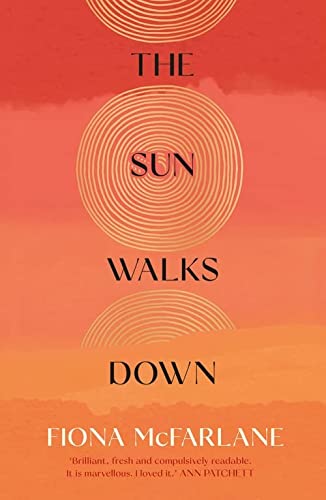
The Sun Walks Down by Fiona McFarlane

The Sun Walks Down by Australian author Fiona McFarlane is not a book I had considered reading until it appeared on this year’s shortlist for the Walter Scott Prize for Historical Fiction. Attempting to read all the shortlisted books for the prize is one of my ongoing personal projects and this is the third I’ve read so far from this year’s list (the others are Act of Oblivion and These Days).

The novel is set in South Australia and takes place over a period of seven days in September 1883. On the first day, a dust storm sweeps through the small town of Fairly in the Flinders Ranges and after it has passed, six-year-old Denny Wallace is found to have gone missing. As the whole community becomes caught up in the search for him, McFarlane introduces us to each resident of the town in turn, exploring their lives and the ways in which they are touched by Denny’s disappearance.

As well as Denny’s parents and siblings, we also meet a Pashtun cameleer, a Ramindjeri tracker, a Swedish painter and his English wife, a pair of newlyweds and an assortment of farmworkers and housemaids. Each has their own story to be told and some are given their own chapter, written in the form of a dream, a confession, a prayer or a set of notes. In this way, McFarlane looks at various aspects of life in colonial Australia and the relationships between the Indigenous people and the European newcomers. Although I did find this interesting (I’ve read shamefully little about 19th century Australia) I felt that there were too many characters in the book and the viewpoint changed from one to another too quickly, preventing me from forming a strong connection with any of them. I would also have preferred a tighter focus on the search for Denny as this seemed to get pushed aside for long periods.

I did love the beautiful descriptions of the Flinders Ranges and the way McFarlane uses colours to bring to life images of the sun, sky and clouds. 1883 was the year when Krakatoa erupted and caused a ‘volcanic winter’ with unusually vivid sunsets:

The sky burns and leaps, it gilds and candles – every drenched inch of it, until the sun falls below the ranges. Then the sky darkens. The red returns, stealthy now, with green above and lilac higher still. It deepens into purple. Here’s the strange new cloud, hovering in its own grey light. Then night comes in, black and blue and grey and white, and the moon in its green bag swings heavy over the red nation of the ranges.

I think I would describe The Sun Walks Down as a book that I admired rather than one that I particularly enjoyed. I can see why other people have given it glowing reviews and why it’s being nominated for awards, but it just wasn’t for me. That probably means it will win the Walter Scott Prize this year – not long until we find out!

This is book 20/50 read for the 2023 Historical Fiction Reading Challenge.

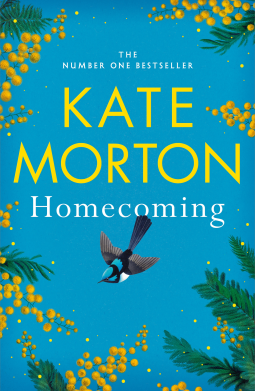
Homecoming by Kate Morton

‘People who grow up in old houses come to understand that buildings have characters. That they have memories and secrets to tell. One must merely learn to listen, and then to comprehend, as with any language.’

The Christmas Eve of 1959 is a hot summer’s day in South Australia. Isabel Turner takes her four children out into the grounds of their Adelaide Hills home for a picnic – and this is where they are found later that day by a man delivering groceries. At first he thinks they are asleep in the sun but, sensing an unnatural stillness, he comes closer and makes the shocking discovery that the Turners are all dead. The local police are convinced that Isabel, who is believed to have been depressed, must have poisoned herself and the children, but the case is never fully solved and becomes the subject of a true crime book, As If They Were Asleep, written by American journalist Daniel Miller.

Almost sixty years later, in 2018, Jess Turner-Bridges is living in London when she receives a call from a hospital in Sydney informing her that her beloved grandmother, Nora, has had a fall and is in a serious condition. Jess hasn’t been back to Australia for years, but her grandmother is the person who raised her when her own mother was unable to, so she leaves for Sydney immediately to be by Nora’s side. Alone in Nora’s house, Jess discovers Daniel Miller’s book in her grandmother’s bedroom and is drawn into the story of the Turner Family Tragedy. Having been unaware until now of her own connection with this tragic incident, Jess is shocked by what she reads, but now that Nora is dying it seems that her chance to find out the truth could be slipping away.

Homecoming, like the other books I’ve read by Australian author Kate Morton, is deeply layered, containing stories within stories, multiple viewpoints and alternating timelines. It’s a long novel and I felt there were things that could probably have been left out without affecting the story too much – Jess’s life in London at the beginning and the backgrounds of some of the minor characters, for example – but otherwise I was completely gripped and read it much more quickly than I would usually read such a long book.

I loved the descriptions of rural Australia and the portrayal of 1950s Tambilla, the small town where the story takes place. As the title suggests, the theme of ‘homecoming’ plays an important part in the story: what it’s like to come home after a long absence and the idea of ‘home’ being not just the opposite of ‘away’ but also of ‘loneliness’. And for forty-year-old Jess, despite living in London for most of her adult life, Australia is still the place where she feels most at home.

The mystery at the heart of the novel – the deaths of Isabel Turner and her children – is not resolved until the end of the book and although the clues were all there, I didn’t pick up on them so didn’t work out what happened. However, there’s another family secret which has big implications for Jess and I found that one very easy to guess, which took away some of the fun. Maybe I’ve just read too many books like this one, but I thought it was very obvious! I did very much enjoy reading Daniel Miller’s As If They Were Asleep (not a real book, of course) which is reproduced in full, a few chapters here and there. It sheds some light on both mysteries, as well as allowing us to see the Turners and their friends and neighbours from a different perspective.

I do wonder whether this book might have worked just as well as a straightforward crime novel set in the 1950s, without the additional family secrets and the Jess and Nora storylines, but I know that’s not what Kate Morton does and probably not what her readers would expect from her! Anyway, apart from guessing the twist too soon, I did love this book and still have one or two of her earlier ones to look forward to.

Thanks to Pan Macmillan for providing a copy of this book for review via NetGalley.
This is book 15/50 read for the 2023 Historical Fiction Reading Challenge.

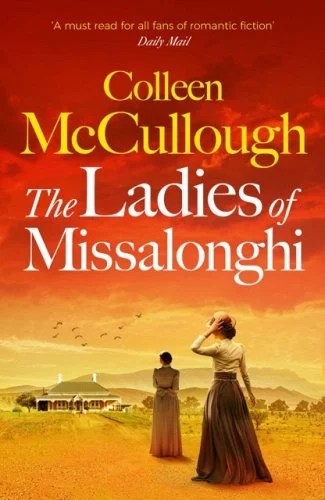
The Ladies of Missalonghi by Colleen McCullough

I acquired a copy of this book when it was published in a new edition in 2015 following Colleen McCullough’s death that year. For some reason, despite loving The Thorn Birds (which I read long before I started blogging so have no review to link to here), I had never read any of her other books and was looking forward to this one. Then I read that there had been accusations of plagiarism when the book was originally published in 1987 due to it apparently being so similar to LM Montgomery’s 1926 novel, The Blue Castle, and that put me off for a while. However, I was looking for something to read for Aus Reading Month (hosted by Brona of This Reading Life and thought I would give it a try. I was unsure whether I could also count it towards Novellas in November as there were 224 pages in my edition (more than the upper limit of 200 for a novella) but several of those pages turned out to be an excerpt from another McCullough book, so I think it counts!

The Ladies of Missalonghi is set in the early 1900s in the small town of Byron in Australia’s Blue Mountains. For generations the Hurlingford family, descendants of the town’s founder, the first Sir William Hurlingford, have held all the power in Byron, owning most of the land and running almost all of the businesses. Only the male Hurlingfords are able to inherit financially, so any unmarried or widowed women find themselves impoverished and relying on the charity of their relatives. Thirty-three-year-old Missy Wright is one of these women; she has never married and lives with her widowed mother, Drusilla Wright (formerly Hurlingford), and spinster aunt, Octavia, in a house known as Missalonghi after the Greek town where the poet Lord Byron died in 1824.

Plain and dark-haired in a clan of tall, blonde Hurlingfords and always dressed in brown to save money, it is now looking likely that Missy will remain single, but she has never given up hope of one day owning a red dress and escaping from her humdrum existence. The romance novels provided by her librarian friend Una are her ‘only solace and sole luxury’ – until one day a stranger arrives in Byron. His name is John Smith and he has bought land in the valley nearby. Has Missy found a way to escape at last?

The Ladies of Missalonghi is in many ways a typical romance novel but it’s an enjoyable one and has a few elements that I found particularly interesting. First, there’s the portrayal of the fate of unmarried women in the years just before World War I, women like Missy, Drusilla and Octavia who lack financial independence and have limited options for improving their position in life. The women of Missalonghi have been treated badly by the men they are forced to rely on for support and scorned by the wealthier, more privileged Hurlingford women. Missy is determined to see these people get their comeuppance, but I won’t tell you how she goes about it as that’s part of the fun of the story!

There’s also a supernatural element that I wasn’t expecting – quite a subtle one, but it’s there and I’m not really sure that it was necessary, particularly as it only emerges at the end and there weren’t any clues to suggest that it was going to happen. On the other hand, it fits with the whole fairy-tale feel of the plot (with Missy as Cinderella). It was actually the romantic thread of the novel that I found least interesting as there didn’t appear to be any chemistry between hero and heroine and their relationship seemed to be based on lies and deceit.

As for the plagiarism issue, I have never read The Blue Castle so can’t comment. McCullough denied the allegations, saying the similarities were unintentional – she had read the book as a child and the details must have stayed with her subconsciously. Whether that’s the truth or not, I can’t see why an already successful author would do something like that deliberately, knowing she would be found out. I’ll have to read The Blue Castle one day to see what I think.

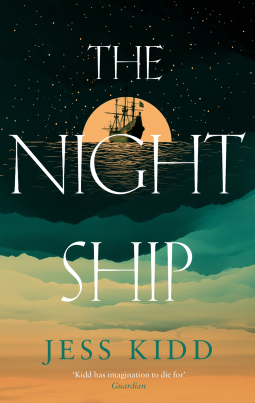
The Night Ship by Jess Kidd

Jess Kidd’s Things in Jars was one of my books of the year in 2019. I don’t think her new novel, The Night Ship, will achieve the same honour this year, but it’s still a book that I enjoyed very much. It takes as its starting point a real historical event – a 17th century shipwreck – and uses it to tell the stories of two children whose lives are separated by more than three hundred years.

In 1629, a nine-year-old Dutch girl, Mayken, is sailing to the Dutch East Indies aboard the Batavia, accompanied by her nursemaid. It’s a long journey and Mayken occupies herself by exploring the ship and getting to know some of the passengers and crew. When one of her new friends tells her about the legendary eel-like monster known as Bullebak, Mayken becomes convinced that Bullebak is the cause of everything bad that is happening aboard the ship and she sets out to capture the monster in a jug.

In 1989, nine-year-old Gil arrives on an island off the west coast of Australia to live with his grandfather following the death of his mother. Gil is a lonely child who has never fit in and he struggles to settle into his new life on the island. He finds some comfort in playing with his best friend, the tortoise Enkidu, and in watching the work of the scientists who have come to the island to investigate the wreck of the Batavia.

The stories of Gil and Mayken alternate throughout the novel so that we spend about the same amount of time with each of them. It soon becomes clear that although the two children are leading very different lives, there are also some parallels between them. Not only will Mayken’s ship be wrecked on Gil’s island, both children have recently lost their mother and are trying to come to terms with this. They are also both drawn to the tales of monsters who appear in their national folklore – for Mayken, it’s Bullebak, and for Gil, the Bunyip. However, I had expected the two storylines to tie together more closely at the end and was slightly disappointed that this didn’t really happen.

I knew nothing about the fate of the people on board the Batavia before I read this book and if you’re not familiar with it either I recommend not looking it up until you’ve finished. It wasn’t actually the shipwreck story that interested me the most, though – I found that I was drawn much more to Gil than to Mayken, despite Mayken’s storyline being more dramatic. Poor Gil has such a difficult time and parts of his story are heartbreaking. I should probably point out here that although both protagonists are young children, this is not a children’s book and is quite harrowing even for an adult to read! I must go back and read Jess Kidd’s earlier novels now; I meant to do that after finishing Things in Jars and never did.

Thanks to Canongate for providing a copy of this book for review via NetGalley.
This is book 39/50 read for the Historical Fiction Reading Challenge 2022.

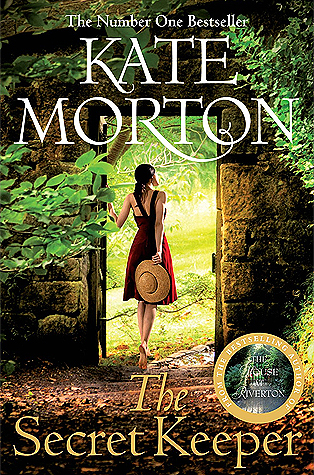
The Secret Keeper by Kate Morton

There are many events taking place in the book blogging calendar this month and AusReading Month hosted by Brona’s Books is one of them. I have a few books by Australian authors waiting to be read, but I decided to read one that has been waiting a long time: Kate Morton’s 2012 novel, The Secret Keeper. I’ve previously read three books by Morton and had mixed experiences with them; I loved The Forgotten Garden but was slightly disappointed in both The Distant Hours and The Clockmaker’s Daughter, so wasn’t sure whether I wanted to bother with this one. I’m pleased I did, because I enjoyed it much more than I expected to.

Like Morton’s other books, The Secret Keeper is set in multiple time periods. It begins in 1961, with sixteen-year-old Laurel Nicolson hiding in a wooden tree house during a family celebration. Laurel just wants some time alone to think, but this means that, from her position in the tree, she is able to see a strange man approaching the Nicolson farmhouse – and is witness to a violent crime involving her mother, Dorothy. We then jump forward fifty years to 2011, when the Nicolsons are gathering at their childhood home for Dorothy’s ninetieth birthday. Laurel, now a successful actress, is still haunted by what she saw on that long ago day and decides that, with Dorothy in poor health, she needs to find out what really happened before her mother dies and takes her secrets with her.

As Laurel begins to investigate her mother’s past, the novel moves back and forth between 2011 and 1940s London where the young Dorothy is looking forward to marrying war photographer Jimmy as soon as their financial situation improves. Dorothy has also made a new friend (or so she thinks): the beautiful, wealthy Vivien, who lives in the house opposite. But when she is betrayed by Vivien, Dorothy puts together a plan of revenge – with unexpected and tragic results.

As is usually the case when I read books set in more than one time period, it was the historical one I enjoyed the most. The present day story was interesting – I enjoyed Laurel’s interactions with her younger brother Gerry, who helps her to uncover the truth about their mother – but I felt that it was effectively just a frame for the much more compelling story of Dorothy, Jimmy and Vivien. I was surprised by how absorbed I became in these parts of the novel, considering that I found Dorothy a particularly unpleasant and irritating character! I did like Jimmy, was intrigued by Vivien and loved the wartime setting, especially as things build to a climax during the London Blitz.

Somewhere in the second half of the book I started to have some suspicions regarding Laurel’s mother and the secrets she was hiding, but this came late enough that it didn’t spoil my enjoyment of the story and I was pleased to find that my guess was correct. Of Kate Morton’s other books, I only have The House at Riverton and The Lake House left to read. Which should I read first?