Love, Sex & Frankenstein by Caroline Lea

Love is a light you can see only when you reach for it. You hold it in your hand and, for as long as the flame glows, it warms you.
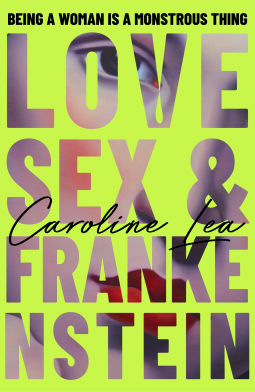
I’ve read three of Caroline Lea’s previous books, all of which I found interesting, so I was looking forward to reading her new novel about the life of Mary Shelley – although I have to admit, if I hadn’t already known I liked Lea’s work, the cover and title of this one would have probably put me off. I’m glad that didn’t happen because I really enjoyed it; it’s probably my favourite of her books so far.

The main focus of the novel is the events of 1816 – known as the Year Without a Summer due to the unusual weather caused by a volcanic eruption the year before. It’s also the year that Mary Godwin and her lover, Percy Shelley, travel to Geneva with their baby son and Mary’s stepsister, Claire Clairmont. Not for the first time, Shelley’s debts have brought the bailiffs to their door and, tired of constantly moving around London to avoid them, Claire has seized the opportunity to persuade Mary and Percy to come to Switzerland with her to visit Lord Byron. Claire is convinced that Byron loves her and claims that he has been begging her to go and spend the summer with him at Lake Geneva but Mary, who is familiar with Byron’s reputation, thinks she’s deluded. However, in their desperation to escape the bailiffs, she and Shelley agree to Claire’s plan.

As they arrive at their hotel in Geneva, the foggy, oppressive weather mirrors Mary’s mood. She and Shelley seem to do nothing but argue and with no sign of Byron, Claire has turned her attentions to Mary’s lover, making no secret of what she is doing. When Byron finally does appear and the party start to spend time with him and his companion, John Polidori, at his rented home, the Villa Diodati, Mary hopes things will improve. However, the dynamics between the four of them only grow more tense and strained and Mary thinks of taking baby Willmouse and running away. Then, during a storm one evening, they gather to read ghost stories and, unimpressed, Byron issues a challenge: they should each write one of their own and see whose is best. Now Mary has something to focus on and during this difficult, emotional time, her famous novel, Frankenstein, begins to take shape.

Despite the title, the writing of Frankenstein forms only a small part of the book; instead Lea concentrates on exploring Mary’s state of mind in the period immediately before and during the creation of the novel. There’s some jumping around between timelines in the first half of the book as Lea tries to fill the reader in on Mary’s background, her childhood and the beginning of her relationship with Shelley, and I found it slightly difficult to keep track of things, but this became less of a problem later in the book when I had settled into the story.

Having read several other novels about the Shelleys and Lord Byron, I was interested to see how Lea’s portrayal of the characters would compare. As our protagonist, Mary is a complex woman but also a contradictory one. She has the strength and determination to repeatedly defy convention to be with the man she loves – the already married Shelley – while at the same time she feels trapped in her relationship with him and unable to escape. Shelley seems to love her in his own way, but is insensitive towards her and expects her just to accept his various infidelities. Mary’s relationship with Claire is equally difficult, continually switching between resentment and affection. As seen through Mary’s eyes, Claire doesn’t come across well at all in this book, flirting openly with Shelley in front of her sister then complaining when Mary later does the same with Byron. (For a more sympathetic view of Claire, try Clairmont by Lesley McDowell.) The portrayal of Byron is also largely very negative – he treats Claire appallingly, although we see a more tender side of him in his interactions with Mary.

This is definitely not a book with likeable characters, then, but the fact that they are all, like Mary, complex and contradictory is what makes them feel human and believable. It’s also beautifully written and I enjoyed reading it, despite not really learning much about Frankenstein!

Thanks to Michael Joseph for providing a copy of this book for review via NetGalley.

Clairmont by Lesley McDowell

I have read several novels about the Romantic poets and their social circle, including Jude Morgan’s Passion and Guinevere Glasfurd’s The Year Without Summer, but Claire Clairmont has always seemed a shadowy character, who hasn’t come to life as strongly as other women such as Mary Shelley or Lady Caroline Lamb. This new novel by Lesley McDowell changes that by giving Claire a voice and placing her at the forefront of her own story.

Clairmont follows Claire throughout three different periods of her life, beginning in 1816 when she accompanies her stepsister Mary Godwin (later Mary Shelley) to Geneva. Claire, Mary and Mary’s married lover, Percy Bysshe Shelley, with whom she already has a baby son, are renting a house by the lake, while Shelley’s friend Lord Byron is staying at the nearby Villa Diodati with his doctor, John Polidori. Claire is pregnant with Byron’s child, but it’s becoming clear that he now views her as an inconvenience and would prefer it if the child was never born.

The Geneva episode taking place in 1816, the ‘year without a summer’ which followed a volcanic eruption in Indonesia, is the part of Claire’s life most people will be familiar with (if they’re familiar with her at all). It was during their stay at the Villa Diodati that Mary began to write her famous novel Frankenstein, and it’s through her own relationships with Byron and the Shelleys that Claire has gained historical significance. In addition, this novel also follows Claire during her time working as a governess in Russia in 1825 and later when she settles in Paris in the 1840s, and we gradually begin to see how those events of 1816 have impacted the rest of her life.

There were things that I liked about this book and things that I didn’t (more of the latter than the former, unfortunately). To start with a positive, I appreciated having the opportunity to learn more about Claire Clairmont, having previously known very little about her beyond her involvement with the Romantic poets. I had no idea what she did or where she went later in life, so I found that interesting. The story is not told in chronological order, but moves back and forth in time, with a Russia chapter followed by a Paris one then back to Geneva again, which I thought was quite confusing, particularly as the gaps between the timelines aren’t adequately filled in and no backstory is given for the characters prior to 1816. It felt as though half of the story was missing and it made it difficult to become fully immersed.

The writing is beautiful and dreamlike and at times reminded me of Maggie O’Farrell’s Hamnet (especially since, like the O’Farrell novel where Shakespeare is never referred to by name, here Byron is always referred to by his nickname, Albe, and never Byron). However, sometimes beautiful writing isn’t enough and I didn’t get on very well with Hamnet so maybe it’s not surprising that I didn’t get on with this book either. The constant jumping around in time and the vagueness of the plot made it hard for me to really get to know Claire and understand her actions. Although I had a lot of sympathy for her because of the terrible way Byron treated her during and after her pregnancy (which has been well documented, including in his own letters), I had no idea what attracted her to him in the first place or how their relationship had reached this point, because none of that is explained or touched upon. Throughout the book, we are continually being dropped into situations that don’t make much sense without being given the full context.

Don’t let me put you off this book if you want to try it – there are plenty of other books I didn’t care for that other people have loved! This will probably be a good read for the right reader; it just wasn’t for me.

Thanks to Headline for providing a copy of this book for review via NetGalley.

Book 7/50 for the Historical Fiction Reading Challenge 2024

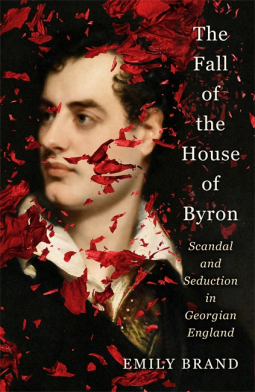
The Fall of the House of Byron by Emily Brand

The poet Lord Byron was famously described by Lady Caroline Lamb as ‘mad, bad and dangerous to know’. This recent biography by Emily Brand shows that he is not the only member of his family to whom this description could apply! Subtitled Scandal and Seduction in Georgian England, the book takes the Byron ancestral home, Newstead Abbey in Nottinghamshire, as its starting point and shows how this once grand house falls into ruin over the years, mirroring the downfall of the Byron family.

George Gordon Byron, 6th Baron Byron, the Romantic poet, is obviously the best known Byron; a lot has already been written about his life and work, so he is not really the focus of this book. He does appear from time to time, but the majority of the book is devoted to the stories of his parents and grandparents, great-aunts, great-uncles and their children. As was common in that era, the same names tended to be passed down from father to son and mother to daughter, so there are lots of Johns, Williams and Georges, Isabellas, Elizabeths and Sophias. The family tree at the beginning of the book is useful, but it’s still easy to get confused! However, some of the family members are given more attention than others and these include:

* William Byron, 5th Baron Byron – Known as ‘the Wicked Lord’, William Byron is rumoured to have tried to abduct an actress at the same time as negotiating his marriage to an heiress. He is also tried for murder after killing a friend in a duel. In later life (after his son elopes with his own cousin), William finds himself in financial difficulties, selling off parts of the family estates and unable to keep Newstead Abbey in good repair.

* Vice Admiral John Byron – Nicknamed ‘Foul-Weather Jack’, John Byron is a Royal Navy officer and explorer. The book describes his adventures at sea, including a shipwreck off the coast of Chile, his role in claiming the Falkland Islands for Britain, and the battles he fought in during the American Revolution. Towards the end of a career which had once seemed so impressive, John returns home under the shadow of failure and suffering from ill health.

* Isabella Howard, Countess of Carlisle – William and John’s sister marries the Earl of Carlisle and lives with him at his estate of Castle Howard in Yorkshire until she is widowed in 1758. Her second marriage, to a much younger man, makes her the subject of gossip, and after separating from him several years later, she travels Europe in the company of a German soldier, writing poetry, throwing parties and falling into debt.

* Captain John Byron – Later known as ‘Mad Jack Byron’, he is Foul-Weather Jack’s son and George Gordon’s father. In 1785, he marries a Scottish heiress, Catherine Gordon, for her money and proceeds to waste her fortune on ‘gambling, pretty women, thoughtless spending on clothes, alcohol and horses’.

Although all of these people were individually fascinating to read about (I was most interested in Isabella, an independent and unconventional woman who is often unfairly judged by the standards of the time), I found the structure of the book quite disjointed and difficult to follow at times. In the first half of the book, each of the main characters has a chapter devoted mainly to them, but by the second half their stories overlap so much that I was struggling to keep them all straight in my mind. Having said that, I’m not sure how else the book could have been structured as the actions of one family member obviously have an impact on the lives of all of the others and it would have probably been impossible to continue writing about each of them separately.

As well as exploring the downfall of the Byron family, the book also offers lots of interesting insights into Georgian life; I particularly enjoyed the descriptions of the fashionable society of Bath and the friendship between Sophia Byron (Mad Jack’s mother) and the authors Fanny Burney and Hester Thrale. Emily Brand has obviously carried out a huge amount of research for this book; I can’t comment on the accuracy as I’ve never read any other non-fiction about the Byrons, but she does quote from a large number of primary sources and everything is clearly referenced at the end of the book. Although at times I found it all slightly overwhelming and felt that I was being given so much information I couldn’t digest it all properly, I still very much enjoyed reading this book and getting to know the members of this scandalous family!

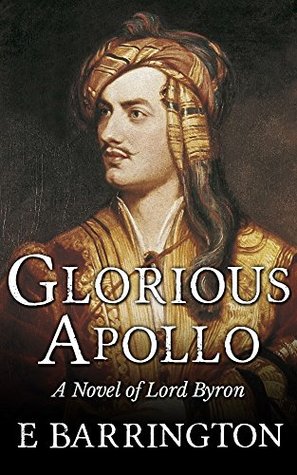
Glorious Apollo by E. Barrington

Glorious Apollo Endeavour Press have been publishing some very intriguing titles recently, including reissues of some older or out-of-print historical fiction novels. I had never heard of the author E. Barrington (a pseudonym of Elizabeth Louisa Moresby, who also wrote under the name Lily Adams Beck) but when I saw Glorious Apollo available on NetGalley I thought I would give it a try.

A bestseller in the 1920s, Glorious Apollo is a fictional biography of the Romantic poet, Lord Byron. Beginning as he prepares to takes his seat in the House of Lords in 1809, the novel takes us through Byron’s entire life and career right up to his death in Greece at the age of thirty-six.

The main focus of the novel is on the women in Byron’s life, particularly Lady Caroline Lamb, Augusta Leigh and Anne Isabella (Annabella) Milbanke. Caroline had an affair with Byron while married to William Lamb, Lord Melbourne, and is the woman who famously described him as “mad, bad and dangerous to know”; Augusta, Byron’s half-sister, was believed to be involved in an incestuous relationship with the poet; Anne was his wife and the mother of his daughter, Ada, but her marriage to Byron was not a happy one. While other aspects of his life and career are also covered in the novel – such as several of his male friendships, his health and weight problems, and the inspiration behind some of his poetry – none of these other things are given as much attention as his relationships with these three women.

This is a novel, so it can’t be assumed that everything in the book happened exactly as Barrington writes it, but it does seem to me that she has closely followed historical fact. At times the book reads more like a work of non-fiction, particularly at the beginning when we are given a lot of biographical information to help us understand Byron’s family background, but she has clearly used some imagination to fill in the gaps, to recreate conversations and to convey the thoughts and emotions of the characters. However, I would have liked to have had the opportunity to get inside Byron’s head more often and to see more of the story from his own perspective rather than from the perspectives of the people around him. The author’s sympathies do seem to be mainly with Anne and the overall impression the book gives of Byron himself is not a very flattering one.

Throughout the novel Barrington also draws on letters, diaries and other primary sources, sometimes quoting from them directly, and she also incorporates extracts from poems, some by Byron and some by other poets. Many of Byron’s major works are briefly discussed, including Childe Harold’s Pilgrimage, Manfred, English Bards and Scotch Reviewers, and So We’ll Go No More A-Roving, and their significance in the context of Byron’s personal life is explored.

Although I did enjoy some parts of the story – and there’s no doubt that Byron is a fascinating subject – Glorious Apollo didn’t quite work for me as a novel. I found Barrington’s writing slightly dry and I couldn’t help feeling that the book would have worked better as non-fiction rather than fiction. It was an interesting read, though, and worth considering if you would like to learn more about Byron and his poetry. I’m still curious about Barrington’s other novels, which include books on Anne Boleyn and Marie Antoinette, so if anyone has read them I would love to know what you thought!

Thanks to the publisher for providing a review copy via NetGalley.

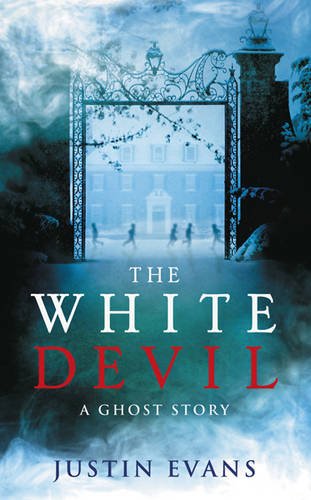
The White Devil by Justin Evans

When seventeen-year-old Andrew Taylor gets into trouble at his school in Connecticut his parents decide to send him to Britain’s prestigious Harrow School to finish his education. On Andrew’s arrival at Harrow, people begin to remark on his resemblance to the poet, Lord Byron, who also attended Harrow two centuries earlier. This makes Andrew the perfect choice for the role of Byron in the school play, which is being written by his housemaster, Piers Fawkes. But when Andrew witnesses the death of one of his new friends and starts to experience terrifying visions and ghostly sightings, he becomes convinced that Harrow is haunted and that the death is connected with something that happened during Byron’s time at the school. With the help of Persephone Vine, the only girl at Harrow, Andrew and Fawkes begin to investigate, but can they discover the truth behind the hauntings before someone else dies?

I was excited about reading The White Devil as it really sounded like a book I would enjoy. And I did enjoy it, though maybe not as much as I was hoping to. I would describe the book as part ghost story, part literary mystery (though not a particularly scary ghost story, in my opinion – while it was certainly very atmospheric and unsettling, the scenes where Andrew encountered the ghost didn’t scare me very much). The Byron element of the novel was what really interested me and the main reason why I wanted to read this book. I admit I wasn’t sure exactly how much of this story was based on historical fact and how much was pure fiction, but I did enjoy watching Andrew and the other characters researching Byron’s life and attempting to solve the mystery surrounding him.

I also loved the Harrow setting, which was very vividly portrayed, and the descriptions of the old buildings, fog and rain gave it a slightly gothic feel. Justin Evans himself spent a year at Harrow and this obviously helped to make his descriptions of the school feel authentic and believable, with insights into many aspects of life at a boys’ public school including school uniforms, traditions and slang. And in making Andrew Taylor an American, this allowed the author to draw on his own experiences to show how Andrew had to adapt not only to a new school but also to a new country and culture.

The one thing that disappointed me about The White Devil was the lack of strong, well-developed characters. The only character I really liked was Piers Fawkes, who had once been a famous poet and now suffering from alcoholism and at risk of losing his job at Harrow. Persephone, as the book’s main female character, never really came to life for me – and apart from Andrew himself, none of the other boys at Harrow had any depth either. If the characters had been stronger I think I would have enjoyed this book more than I did, but it was still a good, atmospheric read.

Passion by Jude Morgan

Passion is a historical fiction novel which tells the story of four women and their relationships with the Romantic poets, Byron, Shelley and Keats. There’s Lady Caroline Lamb, a married woman who has an affair with Lord Byron, and Augusta Leigh, his half-sister who also becomes his lover. Then there’s Mary Godwin, future wife of Percy Bysshe Shelley and author of Frankenstein, and finally, Fanny Brawne, John Keats’ fiancée. This long and ambitious book takes us through the lives of all of these characters, describing the passionate and unconventional relationships that scandalised the public during the early years of the 19th century.

Although the book concentrates on the four women I’ve already mentioned, there are several other women who also play an important part in the story. One of these is the writer and feminist Mary Wollstonecraft (Mary Shelley’s mother) and in the prologue we learn a lot about her life and death. We also meet Byron’s wife, Annabella Milbanke, and Claire Clairmont, Mary’s stepsister, who becomes involved with both Byron and Shelley. All of the female characters in the book are portrayed as interesting and complex people in their own right, not just because of the men they loved.

As well as providing information on the historical and political background of the late 18th and early 19th centuries, Morgan also shows exactly what it was like to be a woman living during those times. It was this attention to detail that made me really believe in the story. And he takes us right inside the minds of Mary, Caroline, Augusta and Fanny, imagining what they might have thought and how they might have felt. I thought the characterisation of Lady Caroline Lamb, with her excitable, emotional personality was particularly well done. I also enjoyed reading about Augusta Leigh’s relationship with her half-brother, Byron – the dialogue between them felt completely believable and the scenes where the two of them were together were some of my favourite parts of the book.

At over 600 pages long and with its variety of narrative styles and techniques this is not the easiest of books to read. The story is told from several different perspectives, there are shifts from past to present tense, and from the third person to first person, sometimes with the characters (particularly Caroline) talking directly to the reader. I had an idea of what to expect as I recently read one of Jude Morgan’s other books, The Taste of Sorrow, and although his writing style does take a while to get used to, I really like it.

Of the three poets, Byron comes across as the most charismatic and colourful character, which I expect was also true in real life, but Shelley was fascinating to read about too. He had such interesting ideas about vegetarianism, religion and marriage. Keats, however, doesn’t appear until near the end of the book and although he and Fanny Brawne do take more of a central role in the final chapters, the focus is definitely on the other characters. Keats’ and Fanny’s story felt disconnected from the others and this is the one thing that disappointed me about the book. I do understand though that Keats was slightly younger than Byron and Shelley and their paths didn’t really cross until later, so maybe it would have been difficult to incorporate him into the earlier parts of the book.

The last few chapters are very sad, with one tragedy and death following another. The scenes towards the end of the book which take place in Keats’ house at the bottom of the Spanish Steps in Rome were particularly poignant as I had visited the house a few years ago and so could picture his final days very vividly. (I would highly recommend visiting the Keats-Shelley House to anyone thinking of going to Rome, by the way.)

Although Morgan’s book about the Brontës, The Taste of Sorrow, had more personal appeal for me because I’m more interested in the Brontës than I am in the Romantic poets, I thought this book was equally impressive. Now that I’ve read it and know a lot more about Byron, Shelley and Keats, maybe I should have another attempt at actually reading their poetry!

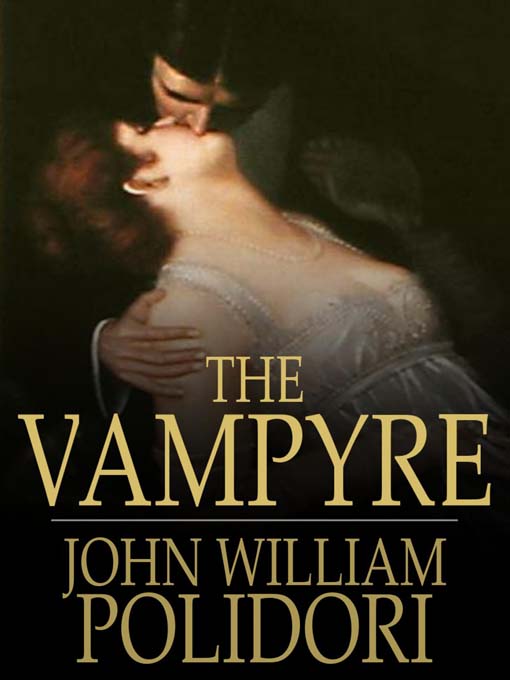
Short Story: The Vampyre by John Polidori

As I’m hoping to read Dracula soon, I thought it might be a good idea to also read one of Bram Stoker’s influences – John Polidori’s The Vampyre. This short story is considered to be one of the first vampire stories in literature and the first to portray a vampire in the way we would recognise today. I have actually been interested in reading this story since I read The Count of Monte Cristo by Alexandre Dumas and was intrigued by the references to the vampire Lord Ruthven. (If you’ve read The Count of Monte Cristo you might remember the scene where the Countess G- is remarking on the Count’s pale skin and nicknames him ‘Lord Ruthven’.)

The origins of The Vampyre are fascinating. John William Polidori was Byron’s personal physician and in 1816, went with him to Switzerland. At the Villa Diodati, on Lake Geneva, Byron and Polidori were joined by the poet Percy Bysshe Shelley, his future wife Mary Wollstonecraft Godwin and her stepsister Claire Clairmont, and decided to amuse themselves by writing horror stories. Mary began work on what would become Frankenstein, and Byron wrote the beginning of a vampire story (which survives today as Fragment of a Novel) based on the various vampire myths and legends. Although Byron abandoned his vampire story, Polidori took inspiration from it and The Vampyre was the result. Unfortunately for Polidori, The Vampyre was wrongly attributed to Byron, despite Byron’s attempts to set the record straight.

As a story, it really isn’t very satisfying. Our narrator is a young Englishman called Aubrey, who travels to Rome with his acquaintance, the nobleman Lord Ruthven. The more time he spends with Ruthven, the more Aubrey begins to distrust him and to realise that Ruthven is not what he seems… The plot is so thin that there’s not much more I can tell you without spoiling it – although really, there’s nothing to spoil as the story is very predictable (for the modern reader anyway – I’m sure it would have been more compelling at the time when it was first published).

The Vampyre is interesting historically because of its portrayal of Lord Ruthven as a mysterious, pale-faced aristocratic figure who preys on innocent young ladies, which is the way many future vampires would be described (the vampires of folklore had generally been described as hideous-looking monsters). If you’re interested in how vampire stories began and how they evolved over the years, this is worth reading. If you’re just looking for a good short story to read, you might be disappointed with this one.

Read The Vampyre online here

Byron’s Fragment of a Novel is also available online and is so short it only takes a few minutes to read. It’s a shame he decided not to continue with this, as I think it had the potential to be much better than The Vampyre. I’ve read a few of Byron’s poems but this is my first experience of his prose and even based on such a short sample of his work I find his writing superior to Polidori’s.

Read Fragment of a Novel online here


John William Polidori (1795-1821)