For Thy Great Pain Have Mercy on My Little Pain by Victoria MacKenzie

I had thought I was ready for the life of an anchoress. I had wanted to prolong each moment of my life, to get closer to experiencing time as God experiences it: not the instantly dissolving moment, but something larger and more encompassing. A stillness that doesn’t pass as soon as you think yourself into it.
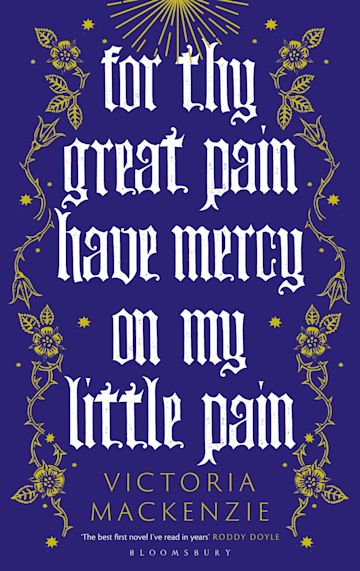
Victoria MacKenzie’s new novella, For Thy Great Pain Have Mercy on My Little Pain, is set in Norfolk in 1413 and imagines a meeting between two real-life women: Julian of Norwich and Margery Kempe. If these names are familiar to you, you’ll know that they were both English mystics of the medieval period and were also both authors. Julian’s Revelations of Divine Love is thought to be the first English work we can be sure was written by a woman, while Margery’s The Book of Margery Kempe is considered to be the first autobiography in the English language.

The stories of the two women only converge towards the end of the book in a meeting which did take place according to Margery herself in The Book of Margery Kempe, but maybe not exactly as it is described here. Victoria MacKenzie recreates the events leading up to their encounter and the sort of conversation they may have had, but before reaching that point she explores the backgrounds of both women, with the perspective alternating between Margery and Julian as they follow very different paths through life.

Little is known of the real Julian’s early life, but MacKenzie suggests here that she may have lost her family to an outbreak of plague and that this, along with an illness during which she experienced visions or ‘shewings’ of Christ, influenced her decision to become an anchoress, secluded in a cell for twenty-three years. Margery, in contrast, doesn’t lock herself away, but remains in the secular world, a wife and mother of fourteen. Like Julian, she begins to have religious visions, but while Julian’s faith is personal and private, Margery prays, weeps and preaches in public, drawing attention to herself and leading to accusations of heresy.

This is Victoria MacKenzie’s debut novel and I admire her for writing something so unusual and original, but although I did like it, I couldn’t quite manage to love it. I found the structure and pacing very unbalanced, with the first section, telling the two separate tales in parallel, being by far the longest and the actual meeting at Julian’s cell being dealt with in just a few pages near the end. Maybe if I was a more religious person myself I would have appreciated this book more, but I could still find a lot to interest me in this story of two medieval women whose different personalities and different journeys through life shape the nature of their relationships with God and each other.

Thanks to Bloomsbury Publishing for providing a copy of this book for review via NetGalley.
This is book 4/50 read for the 2023 Historical Fiction Reading Challenge.
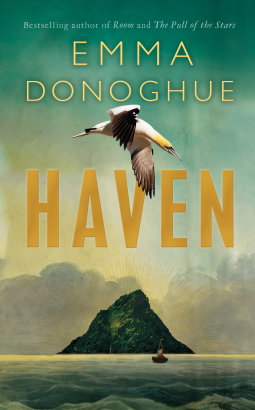
Haven by Emma Donoghue

I’ve read four books by Emma Donoghue now and each one has been completely different from the one before! Haven is a particularly unusual novel and even after finishing it I’m still not quite sure what I really think of it.

The setting is 7th century Ireland and the novel begins with a stranger arriving at the monastery of Cluain Mhic Nóis on the banks of the River Shannon. His name is Artt and he claims to have had a dream, a vision sent by God:

‘An island in the sea. I saw myself there. As if I were a bird or an angel, looking down on the three of us.’

‘Three?’

‘I was with an old monk, and a young one.’ The Abbot shows no sign of understanding him. ‘The dream is an instruction to withdraw from the world. To set out on pilgrimage with two companions, find this island, and found a monastic retreat.’

Artt persuades the Abbot to let him take a small boat and go in search of the island, accompanied by two other monks: the elderly Cormac, who came to religion late in life after losing his loved ones to plague, and Trian, a young man given to the monastery by his parents as a child. The three monks set off in the boat and eventually come to the uninhabited rocky island of Skellig Michael, where they prepare to live in seclusion together for the rest of their lives.

There’s really not much more to the plot than that, but what could have been an extremely boring book is surprisingly absorbing in the hands of Emma Donoghue. I found it interesting to see how the three men set about establishing their own little settlement on the island and how different their views were on what is necessary for survival. Skellig Michael is a harsh, remote and inhospitable place; looking at photos, I can’t imagine what it would have been like to live there, but monks (not the ones in the novel, who are fictional) really did build a monastery there. It’s now a UNESCO World Heritage Site and was used as a location for two of the recent Star Wars films.

Cormac, the most practical of the three, believes that their immediate priority should be to build shelter for themselves ready for the winter, but Artt – or ‘the Prior’ as he now calls himself – insists that there will be time for this later and that their time should first be spent on constructing an altar, a chapel and a stone cross. Meanwhile Trian is kept busy fishing and capturing the puffins and other seabirds that will provide them with meat and eggs, as well as fuel and fat for candles. I should tell you that there are a lot of graphic descriptions of gutting fish and killing birds, which I felt became repetitive and excessive – but I think maybe Donoghue has a message here for us, a warning regarding humans’ destruction of the environment and the wildlife that shares our planet:

But Trian struggles to believe that such a variety of lightsome and beautiful birds have formed in their translucent ovoid caskets, broken out of them, walked, cried out to their brethren, taken flight, over and over for these thousands of years…all so Trian can now fling them down to flame and char on a cooking fire.

I disliked Artt more and more as the story progressed and he became increasingly fanatical and adamant that ‘God would provide’, refusing to listen to the concerns of the other two monks. I also found my attention wandering whenever Cormac began to tell one of his many stories about the saints. The ideal reader for this book would have a much stronger interest in Christianity than I do, I think! There’s a revelation near the end which I had suspected all along, and although it came as no surprise to me, it does provide a turning point in the story – but just as things were starting to get exciting, the book ended. It’s a strange novel, as I said, and won’t necessarily appeal to people who’ve enjoyed Emma Donoghue’s other books (it’s nothing like the other three I’ve read – Room, Frog Music or The Wonder), but it’s a short, quick read and worth picking up if anything I’ve said about it has piqued your interest!

Thanks to Picador for providing a copy of this book for review via NetGalley.

This is book 14/20 from my 20 Books of Summer list.

This is book 42/50 read for the Historical Fiction Reading Challenge 2022.

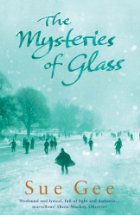
Review: The Mysteries of Glass by Sue Gee

It’s the winter of 1860. Following the death of his father, the young Richard Allen takes his first position as curate in an isolated Herefordshire parish. At first Richard is eager to do well in his new post – but then he falls in love and finds that his faith is put to the test.

The Mysteries of Glass was nominated for an Orange Prize back in 2005 and I can see why, because Sue Gee’s writing is beautiful. I have rarely read a book with such a strong sense of time and place. The book is set in an isolated village in 19th century England and the rural Victorian setting felt entirely believable.

The opening chapters perfectly evoked a winter atmosphere. Although I was reading this book in July, I could still picture the cold, wintry landscape, the snowy fields, the frozen paths leading to Richard Allen’s lonely house, the skating party on the lake. Later in the book, as time passed, I could feel the temperatures rise and the seasons change.

Unfortunately, I had one or two problems with this book. I found it very, very slow – I had to force myself to read at a slower pace than I normally would because I felt I was starting to skim over the words without really absorbing them. After the first few chapters, in which very little actually seemed to happen, I had to make a decision whether or not to continue reading. I was glad that I persevered with it, though. I don’t like abandoning books and this one was so well written and had such a haunting, dreamlike atmosphere that I really wanted to love it.

The characters were realistic and well-drawn, from Alice Birley, the crossing-keeper’s solemn little girl to Edith Clare, the mysterious woman who lives in the woods. However, I thought some of the characters who were potentially the most interesting were very underused, such as Richard’s strong, hot-tempered sister Verity.

Another problem I had was that the religious aspects of the book were a bit too much for me. Knowing that the story was about a curate, I was prepared for this to some extent but I wasn’t really expecting the church scenes to be quite so dominant. If you don’t like that type of thing, you should be aware that it forms a very large part of the book and that the central theme of the story is the portrayal of a man’s inner turmoil as he tries to reconcile his feelings and emotions with his faith and his belief in God.

If this book sounds as if it might interest you at all, then please do give it a try as I definitely seem to be in the minority! The Mysteries of Glass wasn’t a bad book by any means – it didn’t appeal to me but maybe it will appeal to you.