The Greek House by Dinah Jefferies

I always enjoy picking up a new Dinah Jefferies book and finding out which part of the world she’s going to take me to next! India, Sri Lanka, Italy, Morocco and Malaysia are just some of the places I’ve visited through the pages of her novels and now I can add Corfu to the list. More specifically, Corfu in 1923, when the island is occupied by Mussolini’s Italy following a border dispute between Greece and Albania.

Sixteen-year-old Thirza and her nine-year-old brother, Billy, are caught up in the panic on the streets of Corfu Old Town during the Italian naval attack. Dulcie, their mother, has left them with her cousin, Columbine, while she goes to check on a camp of refugee children with whom she volunteers, and when she returns, she finds that Billy has disappeared. Despite weeks of searching, the little boy can’t be found and is eventually presumed dead. Struggling to cope with the trauma, Dulcie blames both Thirza and Columbine for what has happened and goes home to England, leaving behind her husband Piers, director of the British police training school in Corfu.

In 1930, Thirza returns to the island after a long absence, planning to renovate the old family home, Merchant’s House, in the hope that one day her mother will also feel ready to join her there. A lot has changed in the intervening years – the Italians have left and there’s a new woman in her father’s life – but Thirza still feels the shadow of her brother’s disappearance and decides to renew her efforts to find out the truth.

The Greek House is probably not my favourite Dinah Jefferies book, mainly because I found it too easy to predict some of the plot twists and I also thought the number of explicit sex scenes was a bit unnecessary. I loved the Corfu setting, though; everything comes to life in wonderfully vivid detail, whether the intense purple of bougainvillea or the changing colours of the sea in the sunlight. I also knew nothing about the Italian occupation of 1923, so that was interesting, although it only forms a small part of the story.

The disappearance of Billy happens very early in the novel, but it’s the trigger for everything else that happens and I liked the way Jefferies explores the impact of such a tragic incident on the various family members, depending on their different personalities and circumstances. Although I did naturally feel sorry for Dulcie, I also found it slightly annoying that she never really seemed to accept any responsibility for leaving her child in the middle of an invasion in the care of a teenager and a woman who was drunk at the time. Most of my sympathies were with Thirza, who has to live with the guilt as well as the sense of loss, and who feels that her mother will never truly forgive her. The feelings of Dulcie’s husband, Piers, seem to be largely ignored by everybody due to his hard, aloof exterior, but later in the book he mellows thanks to his relationship with his new girlfriend, Penelope – a character I ended up loving.

In her author’s note at the end, Jefferies hints that we’re going to meet some of the same characters again in her next book. That’s something to look forward to!

Thanks to HarperCollins for providing a copy of this book for review via NetGalley.

Night Train to Marrakech by Dinah Jefferies

Night Train to Marrakech is the third and final book in Dinah Jefferies’ Daughters of War trilogy, but if you haven’t read the previous two books that shouldn’t be a problem as I think this one would also work well as a standalone. While Daughters of War and The Hidden Palace followed the stories of the three Baudin sisters, Hélène, Élise and Florence, during World War II, this third novel moves forward to the 1960s to focus on Élise’s daughter, Vicky.

In July 1966, Vicky Baudin arrives in Morocco to visit her grandmother for the first time. Having lost her father during the war, Vicky has only recently discovered that his mother, Clemence, is still alive and living in the mountains outside Marrakech. Vicky has just received a diploma in fashion design from a London art college, so this seems like a good time to travel abroad before beginning a postgraduate course in Paris. As her train arrives at Marrakech station, Vicky is looking forward to getting to know Clemence – and is determined to find a way to meet her hero, the French designer Yves Saint Laurent, who also lives in Marrakech.

In her mountain home, the Kasbah du Paradis, Clemence is awaiting her long-lost granddaughter’s arrival with mixed emotions. Vicky will want to know why she played no part in her son’s life and Clemence doesn’t feel ready to explain. However, she’s forced to confront the memories she’s tried so hard to forget when a man from her past reappears, threatening to reveal her secrets. Meanwhile, Vicky and her cousin Bea also stumble into trouble when they become witnesses to a crime.

Night Train to Marrakech has a much stronger thriller element than the previous two books, which I found quite surprising. The novel is set against a backdrop of rising political tensions – a few months before the novel begins, the Moroccan revolutionary Mehdi Ben Barka is abducted in Paris (a real life incident) – and although this doesn’t form a large part of the plot, it does give a sense of the danger for two young women who unintentionally become mixed up in a situation they don’t fully understand. The descriptions of Morocco itself – the scenery, the buildings, the food, the sounds and smells – are also beautifully done.

The three sisters from the first two books (Vicky’s mother, Élise, and her two aunts, Hélène and Florence) do eventually make an appearance in this one, but I was disappointed that we don’t see very much of them. This is very much Vicky’s story and Clemence’s, and although having two completely new characters to get to know so late in the trilogy unsettled me slightly, I did warm to them later in the book. I found Clemence in particular an intriguing character as she seems so cold and secretive at first but as more and more of her story unfolds, the reason for this becomes clear and by the end of the book I had gained a lot of respect and sympathy for her.

I didn’t enjoy this book as much as Daughters of War and The Hidden Palace – as the third in a trilogy I would have preferred it to be more closely linked with the first two books rather than moving on to the next generation – but the gripping plot and evocative setting still made it worthwhile. As for whether or not Vicky achieves her dream of meeting Yves Saint Laurent, you’ll have to read the book to find out!

Thanks to HarperCollins for providing a copy of this book for review via NetGalley.

This is book 40/50 for the 2023 Historical Fiction Reading Challenge.

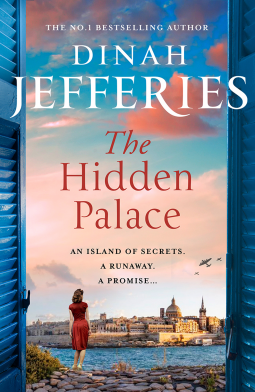
The Hidden Palace by Dinah Jefferies

This is the second book in Dinah Jefferies’ new World War II trilogy which began last year with Daughters of War. Although I think it’s always best to read a series in order if you can, I don’t think it would be a problem if you wanted to start with this book. People and events from the first book are alluded to, but are not essential to understanding the plot of this second novel.

Of the three Baudin sisters we met in Daughters of War, The Hidden Palace only focuses on one of them – the youngest sister, Florence, who has left occupied France for the safety of the English countryside. In England, Florence is reunited with her estranged mother, Claudette, who asks for her help in finding her sister Rosalie – Florence’s aunt – who ran away from home as a teenager and hasn’t been seen or heard from for years. Claudette believes that Rosalie may be in Malta, but with war still raging across Europe, no one is able to go there to look for her.

In an alternating storyline, we go back to the 1920s and follow Rosalie’s adventures when, after an argument with her father, she leaves home and finds work as a dancer in a nightclub in Malta. As the years go by, she builds a new life and identity for herself on the island, which makes Florence’s task much more difficult when, once the war is over, she is able to travel to Malta to begin her search. Accompanied by Jack, the Baudin sisters’ friend who worked for the British Special Operations Executive during the war, Florence is determined to find her aunt – but will her aunt want to be found?

I enjoyed The Hidden Palace overall, although I missed the other two sisters from the first book, Hélène and Élise, who stay behind in France and appear only briefly. Florence was not initially my favourite of the sisters so I wasn’t sure how I would feel about this book focusing mainly on her, but I did warm to her after a while – although I had mixed feelings about the development of her romance with Jack, knowing that he had originally been Hélène’s love interest. I also found the sections of the book set in England slightly lacking in atmosphere; you would hardly think the war was still taking place, as the lives of the characters seem largely unaffected and there’s no sense of any real hardship.

The chapters set in Malta were of much more interest to me, particularly as I have been to Malta and enjoyed revisiting, through Rosalie’s eyes, the vibrant streets of the capital Valletta and the peaceful stillness of Mdina, the ‘Silent City’. Malta was very badly hit during the war, due to its strategic importance as a base in the Mediterranean between Europe and North Africa, and it was the target of thousands of German and Italian air raids, making it one of the most heavily bombed places in the world. This is where Rosalie spends the war years, so as you can imagine, her story is a lot more dramatic than Florence’s in the Devon countryside! However, Rosalie also becomes caught up in a scandal involving human trafficking and I couldn’t see the point in this storyline as it didn’t seem to lead anywhere.

The novel has a satisfactory ending, but not everything is fully resolved, so I’m looking forward to finding out what happens in the final part of the trilogy. The third book, Night Train to Marrakech, is due next year.

Thanks to HarperCollins for providing a copy of this book for review via NetGalley.
This is book 51 read for the Historical Fiction Reading Challenge 2022.

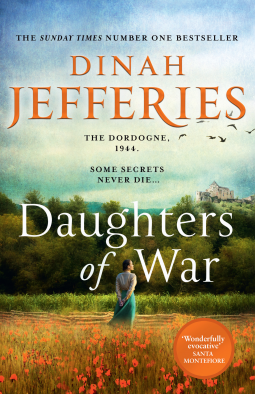
Daughters of War by Dinah Jefferies

After six novels set in Asia, all of which I’ve read and enjoyed, Dinah Jefferies has recently switched her focus to Europe during World War II. Last year’s The Tuscan Contessa was set in 1940s Italy; her new book, Daughters of War, is the first in a new trilogy set in wartime France.

It’s 1944 and France is occupied by the Nazis. In a cottage in the Dordogne live three sisters, all in their twenties, who are each doing their best to protect themselves and their friends and neighbours and to ensure that they all survive the war. Hélène, the eldest, took on the responsibility of caring for the other two after their father died and their mother departed for England, and as well as trying to look after her little family, she also works as a nurse alongside the village doctor. Élise is the rebellious and daring sister, the one who is determined to do whatever she can to help the Resistance, whether that is hiding weapons in the cottage grounds or intercepting and passing on messages. Finally there’s Florence, the innocent and kind-hearted dreamer, who is always happiest when she is at home, spending time in the kitchen or the garden.

As the Occupation continues and liberation still seems like a distant dream, the sisters are faced with a series of important decisions to make. Should they give shelter to Tomas, a deserter from the German army? Can they trust Jack, a British SOE soldier who arrives injured at the cottage one night, asking for help? All they can do is follow their instincts and try to find a balance between keeping themselves safe and working to regain France’s freedom. Along the way, each of the sisters has her own set of personal challenges to overcome, family secrets are exposed and the bonds between the three of them are tested. As the first in a trilogy, not everything is resolved in this book, but the foundations are laid for the characters and ideas to be developed further in the second and third novels.

The book is written from the perspectives of all three sisters; we spend a few chapters with one, then a few chapters with another. I felt the closest to Hélène, although each of the sisters is a strongly drawn character with a distinct personality of her own. Élise has potentially the most exciting storylines, but I would have liked to have read about her activities with the Resistance in more detail – they are skimmed over quite quickly and I thought this was a missed opportunity. I also found it unconvincing that the sisters are so ready to trust and confide in everyone they meet, even when it appears that someone around them might be a traitor; I would have expected them to have shown more caution.

Those are the negatives, but there were also plenty of positives; I particularly loved the descriptions of the beautiful countryside and villages of the Périgord Noir, the region of France where the story is set. I’m sure I’ll be reading the other two books in the trilogy, whenever they are available.

Thanks to HarperCollins UK for providing a copy of this book for review via NetGalley.

Book 42/50 read for the 2021 Historical Fiction Reading Challenge.

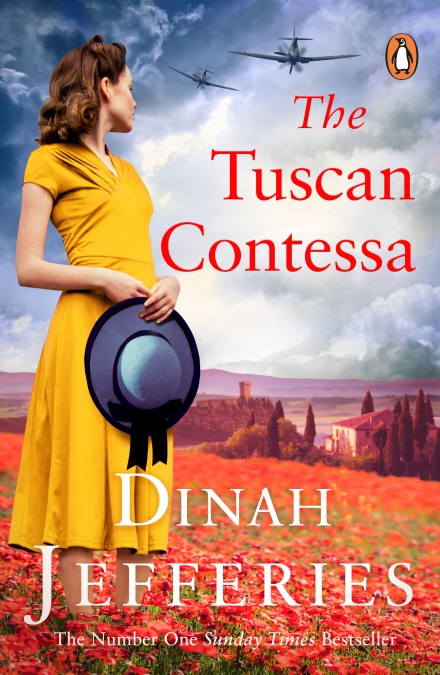
The Tuscan Contessa by Dinah Jefferies

This is the first of Dinah Jefferies’ novels not to be set in Asia. After being whisked off by her previous six books to Sri Lanka, Myanmar, French Indochina and other fascinating settings, it was a surprise to find that her latest one takes place in Italy. I do love reading about Italy, though, and this setting – Rome and Tuscany during World War II – was just as interesting as the others.

The Contessa of the title is Sofia de’ Corsi, who lives with her husband Lorenzo in their Tuscan villa in the Val d’Orcia. Lorenzo works for the Ministry of Agriculture but Sofia knows very little about what his work actually involves, other than that it takes him away from home for long periods of time. The war is in its final years – the story begins in November 1943 – yet life in Italy is becoming more dangerous and more complicated than ever. Much of the country is still under German martial law and although the Allies are advancing and driving the German army back, their progress is very slow. Not only do Italians have the Nazis to worry about, however, but they are also fighting each other, with anti-Fascist partisans locked in civil war with supporters of Mussolini and his Fascist forces.

When James, a British radio engineer, is found wounded near Sofia’s home she offers to give him shelter, but knowing that Lorenzo would be worried for her safety, she decides to keep his presence a secret from her husband. Meanwhile, Maxine, an Italian-American spy, has arrived from Rome to stay with Sofia, having been given the job of gathering information about the Germans to pass on to the resistance and the Allies. But with the Nazi officers stationed in the village beginning to grow suspicious about Sofia’s household, the two women and their loved ones could be in danger.

I have to confess that before I read The Tuscan Contessa I knew very little about Italy during the war, so I was pleased to find that a timeline is included at the front of the book, outlining the key events from the Italian perspective. This helped me to understand what had been happening in the months prior to the beginning of the novel and how there were so many different groups all working with or against each other: the German occupiers, Mussolini’s Blackshirts, the Partisans and communists, Allied soldiers and SOE spies. It’s not surprising that Sofia and her friends are never quite sure who can and cannot be trusted and who might be about to betray them. One thing I really liked about the novel is the way Jefferies shows that there are good and bad people on all sides of any conflict and that both friends and enemies can be found where they are least expected.

Although there are plenty of male characters, all with significant roles to play in the novel, the focus is mainly on the women and the decisions they have to make to keep themselves and their families safe. I liked Sofia but the other characters felt less well drawn and I even found myself confusing some of them with each other. I didn’t feel that I ever truly got to know and understand Maxine, which was a shame because her storyline should have been the most exciting and compelling, as her work took her into some very dangerous situations. It seemed that the characters sometimes took second place to the history unfolding around them, which made the story less emotionally gripping than it could have been.

This is not one of my favourite Dinah Jefferies novels, but I’m still glad I read it even if just for the knowledge I’ve gained of 1940s Italy!

Thanks to Penguin for providing a copy of this book for review via NetGalley.
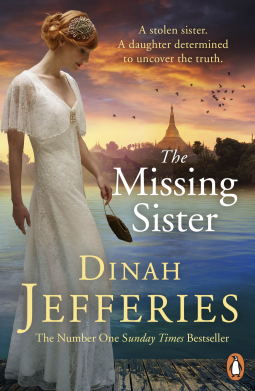
The Missing Sister by Dinah Jefferies

So far, the novels of Dinah Jefferies have taken me to India, Malaya, Ceylon and French Indochina. Now, with The Missing Sister, I have had the opportunity to visit Burma. Known as Myanmar today, the novel is set in 1936 when Burma is still a British colony – although unrest is growing and there are signs that independence might not be far away. It is to Burma that Belle Hatton has come in search of answers to a mystery that has haunted her family for more than twenty years.

Taking a job as a singer in a luxury hotel in the capital city of Rangoon, Belle uses her spare time to hunt for clues that may explain the disappearance of her parents’ baby daughter, Elvira, in January 1911. Belle herself has grown up in England, unaware that her elder sister ever existed, but now that both of her parents are dead, she has discovered a newspaper clipping describing the day Elvira, only three weeks old, vanished from the Hattons’ garden in Rangoon. Although it was all so long ago, Belle is determined to find out what really happened and whether Elvira could possibly still be alive.

As with all of Dinah Jefferies’ novels, the location is beautifully described and although I’ve never been to Burma/Myanmar it was easy to picture the lively, bustling streets of Rangoon (now Yangon), the opulent temples and pagodas, and the scenery Belle sees when, later in the book, she travels upriver to Mandalay. Another common feature of Jefferies’ books tends to be a portrayal of different cultures existing, often uneasily, side by side in the final years of the British Empire (or in the case of The Silk Merchant’s Daughter, the French Empire). This book contains a vivid description of a violent riot between the Burmese and the Burmese Indians, but otherwise I was a bit disappointed that Belle has little involvement with the local people and their struggles, sticking mainly to the British community and focusing on her search for Elvira.

The mystery element of the novel is slightly predictable and although I didn’t guess exactly what had happened to Belle’s sister, I wasn’t at all surprised by the ending of the book. Along the way, Belle is offered help from two very different men – Edward, a British government official, and Oliver, an American journalist – but when she starts to receive anonymous warnings, she is unsure which, if either of them, she can trust. This time, I did guess correctly – but I did have a few doubts as it wasn’t completely obvious.

There was one other aspect of the book that interested me: a storyline set several years earlier and following the story of Belle’s mother, Diana, and how she copes with the tragic disappearance of Elvira. When suspicion falls on Diana herself, she and her husband leave Burma and return to England where, sadly, their marriage starts to break down under the stress of their ordeal. Diana doesn’t receive the support she deserves and decisions are made that will affect not only her own future but also her youngest daughter Belle’s. Diana’s story is told in the form of short chapters interspersed with Belle’s, which means we don’t spend a lot of time with her, but the little glimpses we are given of her life and the way she is treated by her husband are very sad.

This isn’t one of my favourite Dinah Jefferies novels, but I’m looking forward to her next one The Tuscan Contessa, which is out later this year and will be the first she has written not to be set in Asia.

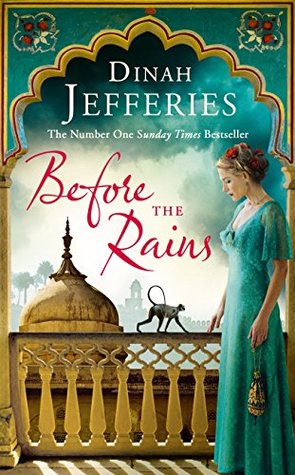
Before the Rains by Dinah Jefferies

Whenever I want a book to transport me to another country and another time, I need look no further than Dinah Jefferies. So far her novels have taken me to Ceylon, Malaya and French Indochina; this one, Before the Rains, is set in Rajputana, India, in the 1930s.

Our heroine, Eliza Fraser, has a passion for photography and hopes to build a career for herself as a photojournalist. When an old family friend and British politician, Clifford Salter, arranges for her to spend a year photographing the royal family of one of India’s princely states, she is both delighted and nervous. India is where she grew up and she still feels a connection to the land and the people, but it is also where, at the age of ten, she witnessed the death of her father in Delhi.

Arriving at the palace where she will live for the next twelve months, Eliza finds that not everyone is happy to have an outsider interfering in their affairs, especially when they discover that she is a widow. Other people, though, are much more welcoming – including Jayant Singh, the younger brother of Prince Anish. When Jay offers to escort Eliza around the countryside in search of subjects for her photographs, she is distressed by the poverty she sees and urges Jay to do something to help his people. In return, Jay helps her to understand the effect British rule has had on India. As they discuss these and other issues and get to know each other better, a friendship forms between them which quickly becomes something more…but Eliza knows that there can only be any future for them if Jay is prepared to defy both his family and the expectations of society.

Like all of Dinah Jefferies’ novels, this one features some lovely descriptive writing, bringing to life the sounds, colours, tastes and smells of India. But along with the beautiful descriptions, there are some brutal, horrifying ones, such as an account of a widow throwing herself onto her husband’s funeral pyre, followed by a discussion of the custom of sati, as well as the fates of unwanted baby girls and of women suspected of witchcraft. For all Eliza had spent her childhood in India, she had been insulated within the British community and it’s only now that she is going out on her excursions with Jay that she feels she is truly starting to understand the country, its history and its people.

Although I loved the setting, I didn’t enjoy this book as much as I enjoyed some of Jefferies’ others, which is mainly due to the fact that I found it predictable and too reliant on coincidences – there were at least two plot twists towards the end that I found completely unconvincing. I also struggled to believe in Eliza’s romance with Jay; I liked both characters, but I thought it seemed too convenient that on arriving at the palace Eliza would immediately catch the eye of a prince. Maybe I should have just been less cynical and more prepared to suspend disbelief.

This is probably my least favourite of Dinah Jefferies’ novels, but I’m still looking forward to reading her new one, The Missing Sister, which will be set in 1930s Burma.