Learned by Heart by Emma Donoghue

Emma Donoghue’s new novel, Learned by Heart, is the story of Anne Lister and Eliza Raine, two real historical figures. Lister, best known for her diaries in which she writes about her lesbian relationships as well as her daily life in West Yorkshire, has been made famous to modern audiences thanks to the recent BBC/HBO drama series, Gentleman Jack. Eliza Raine, her first lover, is believed to be a possible inspiration for Bertha Mason, Mr Rochester’s wife in Charlotte Brontë’s Jane Eyre.

Eliza was born in Madras (now Chennai), the younger daughter of an Indian mother and an English father, who was working there as a surgeon for the East India Company. Following her father’s death, Eliza and her sister were sent to England to live with a Yorkshire family, the Duffins. We join Eliza at her boarding school in York, where she has made several friends but still feels that she doesn’t entirely fit in due to her background and skin colour. When Anne Lister arrives at the school one day in 1805 and is told to share Eliza’s bedroom, Eliza is immediately drawn to the new girl. Lister, as she prefers to be known, is a strong personality – intelligent, rebellious and an ‘outsider’ like Eliza herself. As the two grow closer, their friendship develops into romantic love, but as two fourteen-year-olds in 19th century England they are denied the freedom to be who they really are.

Interspersed with the account of their schooldays are several letters written by Eliza to Lister ten years later. Through these letters, we are aware from the beginning of the novel that Eliza will end up in an asylum, but we don’t know exactly how or why she came to be there. Although we do learn a little bit more as the story progresses, it’s not fully explained until Emma Donoghue’s author’s note at the end of the book. The novel itself concentrates almost entirely on Lister and Eliza’s time at the Manor School in York, something I hadn’t expected when I first started reading, and I do feel that rather than the letters, it would have been more interesting to have had a sequel continuing the story after they leave school and become adults.

After last year’s Haven, an unusual novel about a group of 7th century monks settling on an uninhabited island, Donoghue is on more familiar territory with this one (several of her earlier books have also been set in the 18th and 19th centuries). A huge amount of research has obviously gone into the writing of this book and her portrayal of everyday life in an English girls’ school during the time of the Napoleonic Wars feels vivid and real. However, I don’t think we really needed so many long, detailed descriptions of every game the girls played at school!

Anne Lister is an intriguing character and seeing her only through Eliza Raine’s eyes gives a real sense of the qualities that Eliza finds so attractive. It also means that we don’t fully get to know Lister or to understand her innermost thoughts and feelings, so she is always surrounded by a slight aura of mystery. I didn’t always like her and as she was clearly the dominant force in their relationship, I felt concerned for Eliza as it seemed obvious she was going to get hurt.

As I’ve said, I think I would have been more interested in learning about the adult lives of the characters, but I did still enjoy the book and thought it was a great introduction to the lives of these two fascinating women.

Thanks to Picador for providing a copy of this book for review via NetGalley.

This is book 14/20 of my 20 Books of Summer 2023
This is book 35/50 for the 2023 Historical Fiction Reading Challenge.
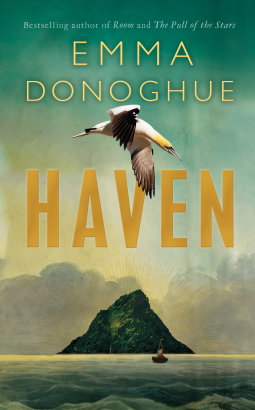
Haven by Emma Donoghue

I’ve read four books by Emma Donoghue now and each one has been completely different from the one before! Haven is a particularly unusual novel and even after finishing it I’m still not quite sure what I really think of it.

The setting is 7th century Ireland and the novel begins with a stranger arriving at the monastery of Cluain Mhic Nóis on the banks of the River Shannon. His name is Artt and he claims to have had a dream, a vision sent by God:

‘An island in the sea. I saw myself there. As if I were a bird or an angel, looking down on the three of us.’

‘Three?’

‘I was with an old monk, and a young one.’ The Abbot shows no sign of understanding him. ‘The dream is an instruction to withdraw from the world. To set out on pilgrimage with two companions, find this island, and found a monastic retreat.’

Artt persuades the Abbot to let him take a small boat and go in search of the island, accompanied by two other monks: the elderly Cormac, who came to religion late in life after losing his loved ones to plague, and Trian, a young man given to the monastery by his parents as a child. The three monks set off in the boat and eventually come to the uninhabited rocky island of Skellig Michael, where they prepare to live in seclusion together for the rest of their lives.

There’s really not much more to the plot than that, but what could have been an extremely boring book is surprisingly absorbing in the hands of Emma Donoghue. I found it interesting to see how the three men set about establishing their own little settlement on the island and how different their views were on what is necessary for survival. Skellig Michael is a harsh, remote and inhospitable place; looking at photos, I can’t imagine what it would have been like to live there, but monks (not the ones in the novel, who are fictional) really did build a monastery there. It’s now a UNESCO World Heritage Site and was used as a location for two of the recent Star Wars films.

Cormac, the most practical of the three, believes that their immediate priority should be to build shelter for themselves ready for the winter, but Artt – or ‘the Prior’ as he now calls himself – insists that there will be time for this later and that their time should first be spent on constructing an altar, a chapel and a stone cross. Meanwhile Trian is kept busy fishing and capturing the puffins and other seabirds that will provide them with meat and eggs, as well as fuel and fat for candles. I should tell you that there are a lot of graphic descriptions of gutting fish and killing birds, which I felt became repetitive and excessive – but I think maybe Donoghue has a message here for us, a warning regarding humans’ destruction of the environment and the wildlife that shares our planet:

But Trian struggles to believe that such a variety of lightsome and beautiful birds have formed in their translucent ovoid caskets, broken out of them, walked, cried out to their brethren, taken flight, over and over for these thousands of years…all so Trian can now fling them down to flame and char on a cooking fire.

I disliked Artt more and more as the story progressed and he became increasingly fanatical and adamant that ‘God would provide’, refusing to listen to the concerns of the other two monks. I also found my attention wandering whenever Cormac began to tell one of his many stories about the saints. The ideal reader for this book would have a much stronger interest in Christianity than I do, I think! There’s a revelation near the end which I had suspected all along, and although it came as no surprise to me, it does provide a turning point in the story – but just as things were starting to get exciting, the book ended. It’s a strange novel, as I said, and won’t necessarily appeal to people who’ve enjoyed Emma Donoghue’s other books (it’s nothing like the other three I’ve read – Room, Frog Music or The Wonder), but it’s a short, quick read and worth picking up if anything I’ve said about it has piqued your interest!

Thanks to Picador for providing a copy of this book for review via NetGalley.

This is book 14/20 from my 20 Books of Summer list.

This is book 42/50 read for the Historical Fiction Reading Challenge 2022.

The Wonder by Emma Donoghue

Despite enjoying two of Emma Donoghue’s previous books – Room and Frog Music – this latest novel about a girl in 19th century Ireland who stops eating didn’t appeal to me when it was published last year. It was only when I picked it up in the library a few weeks ago that I thought ‘actually, this does sound good’ – and with such a beautiful cover, how could I resist? And as it turned out, this is my favourite of the three Donoghue books I’ve read so far.

The Wonder is set in a small community in rural Ireland during just two weeks in 1859. Lib Wright, an English nurse who worked with Florence Nightingale in the Crimean War, arrives in the village to start a new job, knowing nothing about the position she has accepted except that her services will only be required for fourteen days. She is surprised to discover that her patient is an eleven-year-old girl, Anna O’Donnell, and that her task is not to nurse but to watch and observe.

Anna’s parents insist that their daughter has eaten nothing at all since her birthday four months ago and exists purely on prayer and faith. Lib is sceptical, but it seems that most people in the O’Donnells’ village – including the local priest and Anna’s elderly doctor – are happy to believe the claims. News of the girl’s amazing achievement has spread far and wide and visitors are arriving from all over Ireland to see ‘the Wonder’ for themselves. To prove whether or not Anna is a fraud, Lib and another woman – Sister Michael, a nun – have been appointed by a committee to take turns watching over Anna all day and night for the next two weeks.

Lib expects to get to the bottom of this mystery very quickly. Anna looks so healthy and full of life, it seems obvious that someone must be providing her with secret supplies of food – all Lib needs to do is keep her wits about her and ensure that she and Sister Michael never let the girl out of their sight. After a few days, however, she’s not so sure. Is Anna really the saint the villagers believe her to be? Is it all an elaborate hoax? Or could something more sinister be going on – and if Lib decides Anna is in danger, at what point should she try to intervene?

Like The Good People by Hannah Kent, another book set in 19th century Ireland, this is a fascinating exploration of the harm that can be done, often unintentionally, by superstition and a lack of understanding and the basic knowledge we take for granted today. In addition to this, there’s the hugely influential role of the Catholic Church, such a large part of everyday life for many Irish people in the 1850s, which Lib Wright – as an Englishwoman who has had her own faith driven out of her by her experiences in the Crimea – finds very frustrating; it seems incomprehensible to her that so many people are ready to accept that Anna O’Donnell is a living miracle when science suggests that there must be a more logical explanation. Anna’s situation is often quite sad and harrowing to read about and I desperately hoped her story would have a happy ending.

I was curious to know whether The Wonder was based on a true story, as the other Emma Donoghue books I’ve read were, but on reading the author’s note at the end it seems that although it is inspired by tales of Victorian ‘fasting girls’, it is not based on one particular case and is a fictional story.

The mystery element of the novel is very strong and at first the reader is as confused as Lib. Anna doesn’t appear to be a starving child, so she must be getting food from somewhere – but who is giving it to her and how? As the novel progresses and we learn more about the O’Donnell family and the community in which they live, other questions are raised. I was able to put enough of the clues and hints together to form a theory as to what was happening, but I was still completely gripped, waiting for Lib to uncover the truth. I thought The Wonder was…well, wonderful. Highly recommended!

This is Book 1/20 for my 20 Books of Summer challenge.

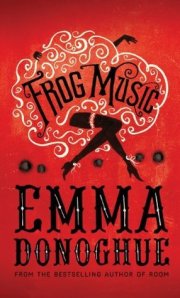
Frog Music by Emma Donoghue

Frog Music This is the second book I’ve read by Emma Donoghue – the first was Room, which I enjoyed, and since then I’ve been wanting to try one of her historical fiction novels. This new one, Frog Music, is set in San Francisco in 1876 and is based on a true crime story.

Twenty-four-year-old Blanche Beunon, once a star of the Cirque d’Hiver in Paris, is now a dancer in a San Francisco burlesque club. She lives in the city’s Chinatown with her lover, Arthur Deneve, and his friend – and former partner on the flying trapeze – Ernest Girard. One week in August, two newcomers enter their little circle. One of these is P’tit, Blanche and Arthur’s baby boy, reunited with his parents after a year of separation. Blanche has rarely even thought about her baby during his absence, but now she discovers what being a mother really means.

The other new arrival is a woman called Jenny Bonnet, just released from jail after being arrested for the crime of dressing in men’s clothes. Jenny, who makes her living from catching frogs and selling them to French and Chinese restaurants, is like nobody else Blanche has ever met and makes her think differently about herself and her life. But when Jenny is shot dead, Blanche is convinced that she herself was the intended victim. Can she find the murderer before he kills again and before she loses P’tit again forever?

The real life murder case on which Frog Music is based remains an unsolved crime to this day, but the solution Donoghue provides is believable and consistent with what we have learned about the personalities and motives of the characters involved. The author also includes a detailed Afterword in which she explains which of the characters and events in the story are factual and which are purely fictional.

While there are some very unpleasant, unlikeable people in this novel, I thought the central character, Blanche, was wonderful. Her personality is a mass of contradictions: she’s tough yet vulnerable, intelligent yet naïve, self-absorbed yet sensitive. She’s such a well drawn character and felt completely real. I loved her and desperately wanted her to find some real happiness. Her story is so sad at times – I don’t want to say too much, but the circumstances surrounding the reappearance of P’tit are shocking and heartbreaking; I found that part of the book quite painful to read. As for Jenny, she remains a secretive and mysterious character throughout the novel. It is only towards the end of the book that we (and Blanche) begin to see beneath her protective outer shell and are finally given some glimpses of the real Jenny Bonnet.

The sense of time and place is very strong. I’m not sure I’ve read a book set in 1870s San Francisco before and I found it a vivid, atmospheric setting. The action takes place during both a heat wave and an epidemic of smallpox and both have an impact on Blanche’s story. Another interesting element of the novel is the role of music. Many songs and rhymes are quoted from in the book and information on each of them is given in an appendix. I thought this really added something to the story, helping to provide context and historical background. As Blanche and the other main characters are French and often use French slang, there is a glossary provided at the back of the book too, if you need help in translating any unfamiliar words.

My only criticism of this book is that the way the story is structured could cause confusion. It follows two time periods – one in Blanche’s present, describing Jenny’s murder and its consequences; the other flashing back to the beginning of their friendship a month earlier. Gradually the two storylines converge until they are only a day or two apart and at this point it becomes slightly difficult to follow the chronological sequence of events. Sometimes we are given the date, but not always, so it’s not immediately clear which thread of the story we are reading.

One other thing I should mention is that as Blanche is an exotic dancer there are some quite graphic descriptions of her work. It was maybe a bit excessive, but I could appreciate that it was all part of who Blanche is and it would have been hard to convey the realities of her life without being explicit at times.

Frog Music is not a book that will appeal to everyone (though you could say the same about any book, I suppose) but I thought it was great and having enjoyed this one and Room I’ll be looking for more of Emma Donoghue’s books soon.

Room by Emma Donoghue

It’s been more than a month since I read this book but it has taken me until now to find the inspiration to post about it. That’s not to say that I didn’t enjoy the book, but as I’ve said before I find it difficult to write about a book that has attracted so much attention and already been raved about by such a lot of people.

I’m sure most of you will already have seen so many reviews of Room that you won’t need a synopsis, but for those of you who do, the plot can be summarised very quickly. The story is narrated by Jack, a five-year-old boy who has spent his whole life living with his mother in a converted shed measuring eleven foot square. His mother had been kidnapped seven years ago and Jack was born in captivity. He has no idea that a world exists outside Room and apart from Ma and Old Nick, the man who is keeping them captive, he has never seen another human being.

The story could have been very harrowing, but I was surprised to find it was less upsetting than I thought. There are a lot of aspects of the plot that are very disturbing and uncomfortable to read about but there are also some positive things that come out of the story: the strong mother/son bond, for example, and the way Jack’s mother uses her imagination to keep him busy and entertained. Being told from a five-year-old’s point of view, there’s nothing very graphic but there are always dark undercurrents beneath the surface. The trauma of Ma’s kidnapping and the abuse she suffered at the hands of Old Nick are only lightly touched on; we know they happened but aren’t given many details because those are things Jack is too young to really understand.

When I first started reading I found Jack’s narration very irritating and I had an awful feeling I was going to have to abandon the book after a few pages. Luckily though, it seemed that I just needed to get used to it. Once I got further into the story I didn’t have a problem with Jack’s voice and even stopped noticing his unusual language after a while. I can see why Donoghue chose to use a child narrator to show the situation through the innocent eyes of a child born into such an unnatural environment. Jack doesn’t know that a different way of life is possible so is quite content with how things are and when Ma finally decides to ‘unlie’ and tell him about Outside, he finds it almost impossible to believe that such a place really exists. His mother was of course fully aware of what had happened and it would have been interesting to have read the same story from her perspective as well, but of course it would then have been a completely different and probably much more traumatic book.

I’m not sure this is a book I would want to read again, but it did keep me completely gripped and I’m glad I’ve finally read it, as it hadn’t really appealed to me when everyone seemed to be reading it last year.

Have you read Room? Do you think I would like any of Emma Donoghue’s other books?