My Commonplace Book: September 2016

A summary of last month’s reading, in words and pictures.
commonplace book
Definition:
noun
a notebook in which quotations, poems, remarks, etc, that catch the owner’s attention are entered

Collins English Dictionary

~

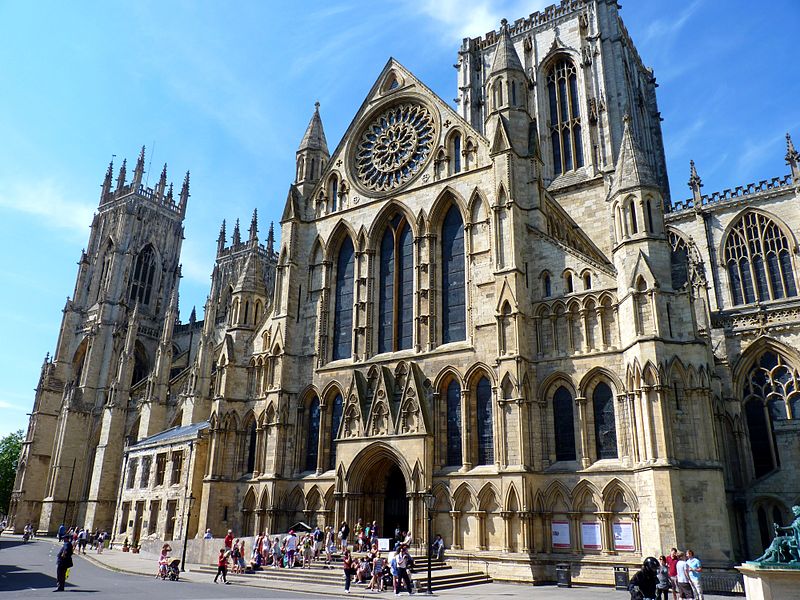
york-minster

Another high wall appeared ahead of us; York seemed a city of walls. Behind it the Minster loomed. Ahead was a large open space crowded with market stalls under brightly striped awnings that flapped in the cool damp breeze. Heavy-skirted goodwives argued with stallholders while artisans in the bright livery of their guilds looked down their noses at the stalls’ contents, and dogs and ragged children dived for scraps. I saw most of the people had patched clothes and worn-looking clogs. Watchmen in livery bearing the city arms stood about, observing the crowds.

Sovereign by CJ Sansom (2006)

~

But whereas the planets are serene in their separateness, knowing any collision with one another likely to destroy them and return them to dust, Fogg remarks that he, along with very many of his race, finds his Separateness the most entirely sad fact of his existence and is every moment hopeful of colliding with someone who will obscure it from his mind.

Restoration by Rose Tremain (1989)

~

elizabeth-of-york

“Do you like history?” he enquired.

“Oh, yes.” She turned eagerly to him, forgetting momentarily the splendour of the pageant. “It is about people, you see. The deeds they performed. The way they thought.”

Elizabeth the Beloved by Maureen Peters (1972)

~

Writing is a kind of magic. One person sits in a room alone and makes marks on a page that represent the images in her mind. Another person looks at those marks, weeks or months or a hundred years later, and similar images appear in that person’s mind. Magic. Plays and choreography hold yet another level of magic and meaning: the marks on the page leap to action in another person’s body, to be seen by thousands of others. The ability to weave that kind of magic paid well in Las Vegas.

The Hawley Book of the Dead by Chrysler Szarlan (2014)

~

He was a good husband. He had comforted her when she’d sobbed violently against his plump chest, then rested dry-eyed against it and tried not to remember all the things she no longer knew about her son. How tall was he now? Had the colour of his hair changed? Did he still wake sometimes in the middle of the night unable to breathe? Did he still like to find beetles in the cracks in a stone wall, or to look for hidden things beneath a rock?
Did he remember her at all?

Rebellion by Livi Michael (2015)

~
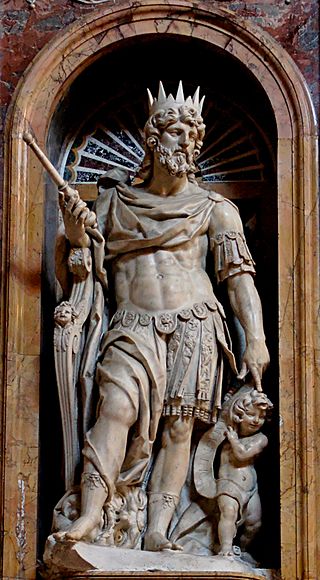
king-david

But the stories that grow up around a king are strong vines with a fierce grip. They pull life from whatever surfaces they cling to, while the roots, maybe, wither and rot until you cannot find the place from which the seed of the vine has truly sprung.

The Secret Chord by Geraldine Brooks (2015)

~

Three telephones kept ringing like demented things, and by post, telegram, wireless, and personal appearance the information poured in. Nine-tenths of it quite useless, but all of it requiring a hearing: some of it requiring much investigation before its uselessness became apparent. Grant looked at the massed pile of reports, and his self-control deserted him for a little.

A Shilling for Candles by Josephine Tey (1936)

~

“It is the only thing I know of to his advantage,” Judith said. “I will admit him to be an excellent whip. But for the rest I find him a mere fop, a creature of affectations, tricked out in modish clothes, thinking snuff to be of more moment than events of real importance. He is proud, he can be insolent. There is a reserve, a lack of openness—I must not say any more: I shall put myself in a rage, and that will not do.”

Regency Buck by Georgette Heyer (1935)

~
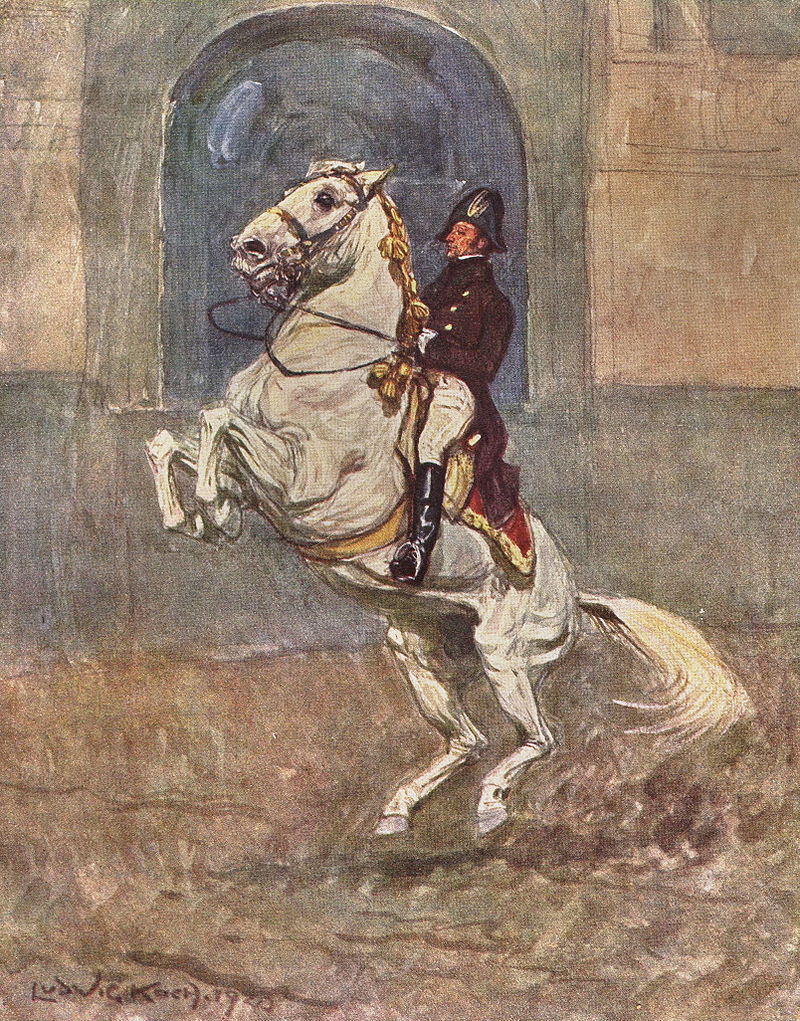
courbette

I heard the fanfare and recognised it; it was the entrance of Annalisa and her white stallion. The trumpets cut through the air, silver, clear and commanding. Old Piebald stopped grazing and lifted his head, with his ears cocked as one imagines a war horse might at the smell of battle and the trumpets. Then the music changed, sweet, lilting and golden, as the orchestra stole into the waltz from The Rosenkavalier.

Airs Above the Ground by Mary Stewart (1965)

~

In books there were people who were always agreeable or tender, and delighted to do things that made one happy, and who did not show their kindness by finding fault. The world outside the books was not a happy one, Maggie felt; it seemed to be a world where people behaved the best to those they did not pretend to love, and that did not belong to them.

The Mill on the Floss by George Eliot (1860)

~

“I might be wrong, but I fancy that however much a girl may admire, or envy, the heroine of some romance, who finds herself in the most extraordinary situations; and however much she may picture herself in those situations, she knows it is nothing more than a child’s game of make-believe, and that she would not, in fact, behave at all like her heroine.”

Black Sheep by Georgette Heyer (1966)

~
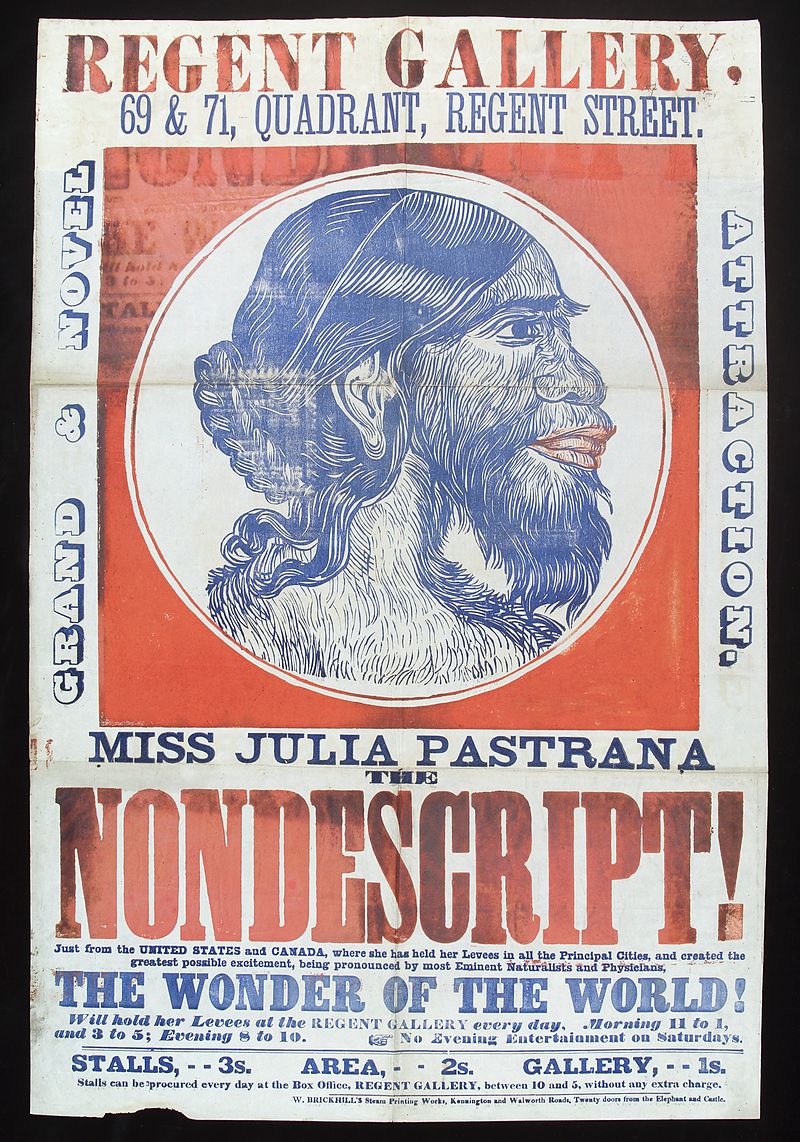
nondescript

“You’re not shy, Julia,” he said. “It’s what I noticed first about you. How calmly you faced the world with that stupendous, utterly unnatural face of yours, and of course – you know the spirit in which I say that, it’s merely a stated fact – I knew then you were a natural. No no, there’s no doubt in my mind, no doubt at all, but that you’ll thrive.”

Orphans of the Carnival by Carol Birch (2016)

~

It happens this way sometimes, we can discover truths about ourselves in a moment, sometimes in the midst of drama, sometimes quietly. A sunset wind can be blowing off the sea, we might be alone in bed on a winter night, or grieving by a grave among leaves. We are drunk at a tavern, dealing with desperate pain, waiting to confront enemies on a battlefield. We are bearing a child, falling in love, reading by candlelight, watching the sun rise, a star set, we are dying…

But there is something else to all of this, because of how the world is for us, how we are within it. Something can be true of our deepest nature and the running tide of days and years might let it reach the shore, be made real there — or not.

Children of Earth and Sky by Guy Gavriel Kay (2016)

~

Favourite books read in September: Sovereign, Airs Above the Ground and Black Sheep
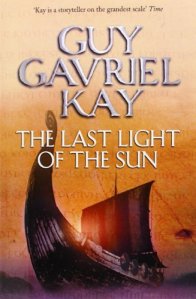
The Last Light of the Sun by Guy Gavriel Kay

The Last Light of the Sun I’m hoping to read Guy Gavriel Kay’s Under Heaven soon for the Once Upon A Time challenge, but first I need to tell you about another of his novels which I read a few weeks ago: The Last Light of the Sun.

This is the third book I’ve read by Kay and like the other two (Tigana and The Lions of Al-Rassan) it is set in a fantasy world that closely resembles a real historical one. A blue moon and a white moon shine in the sky, faeries wait to claim the souls of the dead, and ancient magical forces lurk in the forest, yet the world portrayed in The Last Light of the Sun can easily be identified as Northern Europe in the time of the Vikings, the Anglo-Saxons and the Celts.

In this re-imagined land, the Vikings have been renamed the Erlings, the Anglo-Saxons have become the Anglycn and the Celts have been transformed into the Cyngael. While the Erlings are sea-raiders who inhabit the islands in the far north, the Anglycn live in what is surely the country we now know as England, and the Cyngael live to the west, presumably in Wales. These lands of the Cyngael, on the western edge of the known world, are the last to see the light of the setting sun – and also form the final outpost of the new religion of Jad, the sun god.

Throughout the novel, we follow the adventures of three groups of characters from each of the three cultures I’ve described above. First, we meet Bern Thorkellson, a young Erling who has lost his lands and his freedom as a result of his father being exiled for murder. Desperate to escape and build a new life for himself, Bern joins a raiding party heading for the Anglycn shores. Meanwhile, in the Cyngael lands, two young princes called Alun and Dai happen to be spending the night at the home of a rival Cyngael warrior, Brynn ap Hywll, when it is attacked by another group of Erling raiders. Finally we get to know the family of the Anglcyn king, Aeldred, who has been trying to unite his people against the threat of the Erlings.

To describe the plot in any more detail would be difficult as it does become quite complex as the lives of each of these characters become entwined with all of the others. The author doesn’t really ‘take sides’ or favour one of the three cultures over the other two – perspectives and points of view are balanced fairly between the three and there are good people and bad within each group. Feuds and rivalries are formed, but so are friendships and loyalties as Erling, Anglcyn and Cyngael find that they need to adapt to a changing world.

One thing Kay does in this book, which I’m not sure I really like, is to occasionally leave his main characters behind for a while to explore the life of a completely new character who enters the novel for a few pages and then disappears, never to be mentioned again – as Kay himself describes it: “At the margins of any tale there are lives that come into it only for a moment. Or, put another way, there are those who run quickly through a story and then out, along their paths.” I can understand the reasons for this – to show us what is going on away from the central plot and the central characters – but I did find it slightly distracting.

This is a beautifully written novel, though, and as well as being an entertaining story, it’s also very thought-provoking in places. I particularly liked these two quotes:

“It happens this way. Small things, accidents of timing and congruence: and then all that flows in our lives from such moments owes its unfolding course, for good or ill, to them. We walk (or stumble) along paths laid down by people and events of which we remain forever ignorant. The road someone else never took, or travelled too late, or too soon, means an encounter, a piece of information, a memorable night, or death, or life.”

“A hard truth: that courage can be without meaning or impact, need not be rewarded, or even known. The world has not been made in that way. Perhaps, however, within the self there might come a resonance, the awareness of having done something difficult, of having done…something.”

I’ve loved all three of the Guy Gavriel Kay novels I’ve read so far and am looking forward to reading his others, beginning with Under Heaven. Have you read any of his books, and if so do you have a favourite?

New book arrivals

I’ve acquired some new books recently and thought I would share them here with you:

New books May 2014

The first three books were bought last week on a trip to my favourite book shop, Barter Books:

The Heaven Tree by Edith Pargeter – I’ve wanted to read this for years and was so pleased to find a copy. It’s the first in a trilogy and set during the reign of King John.

The Last Light of the Sun by Guy Gavriel Kay – I’m looking forward to reading this as I enjoyed the other two Guy Gavriel Kay books I’ve read.

Bellarion by Rafael Sabatini – I don’t know anything about this book but I love Sabatini so of course I had to pick this one up!

The next book is a review copy received from Random House:

The Second Duchess by Elizabeth Loupas – The story of Barbara of Austria and her marriage to the Duke of Ferrara. I can’t wait to read this.

I won the final two books in Goodreads giveaways.

The Shining by Stephen King – I’ve read this before, as a teenager, and thought it might be fun to read it again. I didn’t really expect to win it!

The Walls of Byzantium by James Heneage – The first of a new series, The Mistra Chronicles, set in the final decades of the Byzantine Empire.

Have you read any of these books? What did you think of them?

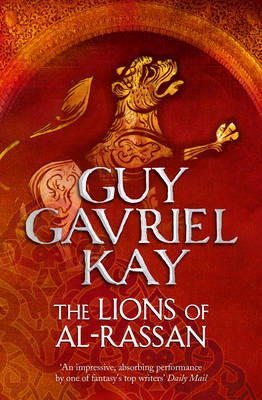
The Lions of Al-Rassan by Guy Gavriel Kay

The Lions of Al-Rassan Guy Gavriel Kay is only a recent discovery for me, but after reading Tigana in June I knew I wanted to read more of his work. Leander of The Idle Woman mentioned that she had been wanting to re-read The Lions of Al-Rassan, one of her favourite books, so we decided it would be interesting to read it at the same time and exchange our thoughts on it.

I should start by saying that although Kay is known as a fantasy author, this book has few, if any, elements that I would describe as ‘fantasy’ and is much closer to historical fiction. The story is set in a fictitious world very similar to medieval Spain. In the north, we have the sun-worshipping Jaddites – brave warriors and horsemen. The Jaddite lands have become divided and weakened over the years due to rivalries between their three kings but they still hope to one day ride south and reconquer the rest of the peninsula. In the south is Al-Rassan, the land of the Asharites, who worship the stars and who value poetry, music and beauty. After the death of their last Khalif, Al-Rassan has also become divided and is not as strong as it once was. Caught between the two are the wandering Kindath people, who pray to the two moons that shine in the sky, one blue and one white. Even with my very limited (almost non-existent) knowledge of Spanish history I could immediately see that the Jaddites represented Christians, the Asharites Muslims and the Kindath Jews.

As tension builds between the Jaddites and the Asharites and war begins to look inevitable, there are big consequences for the novel’s three central characters. One of these is Rodrigo Belmonte, Captain to a Jaddite king and one of the Jaddites’ greatest soldiers. When Rodrigo is exiled by his king he and his company find themselves in the Asharite city of Ragosa. Here he meets another great man, Ammar ibn Khairan, an Asharite who is also in exile, and the two form an instant connection. Our third protagonist is a woman, Jehane bet Ishak, a Kindath physician who joins Rodrigo’s company and becomes close to both men. With the peninsula heading rapidly towards conflict, will the bonds between Rodrigo, Ammar and Jehane be able to survive?

Now that I’ve read two of Guy Gavriel Kay’s novels, it’s hard to say which I liked best because both were such great books. I think I found Tigana more fun to read (simply because I read fantasy so rarely these days and it was something a bit different for me to read a book with magic and wizards) but I found the writing in The Lions of Al-Rassan more powerful and the characters more fully developed. Ammar, Rodrigo and Jehane are all characters that I could love and admire, and considering their very different backgrounds and cultures, it’s quite an achievement that Kay could make it possible to identify with and care about all three of them.

Although this novel is set in a fictional land, the parallels with a real period of history made me feel that I was gaining a better understanding of medieval Spain. But as well as the history, there’s also a lot of drama and excitement throughout the novel: among other things, there are battles, assassination attempts (both successful and unsuccessful), and a masked Carnival. What I really loved about this book, though, was the portrayal of the three main characters and the relationships between them. It’s not as simple as Jehane being in love with both men (or them being in love with her) and having to choose between them; although there is a romantic aspect, the relationships are much deeper and more complex than that and encompass not just love but also friendship, loyalty and trust.

There’s a growing sense of sadness too as you start to approach the end of the book and wonder whether all three of Ammar, Jehane and Rodrigo will survive the coming conflict and how they will cope if they find themselves on opposite sides. The final chapter was one of the most tense and emotional I’ve read for some time, though I thought it would have been even more effective without the epilogue that followed (I was pleased to see that Leander felt the same as I was wondering whether I was the only person who would rather not have had the loose ends tied up).

I’m excited about the prospect of working my way through the rest of Kay’s books, but I’m sure I’ll want to re-read this one at some point too – preferably after I’ve had a chance to read up on Spanish history! If you would like to see what Leander thought of The Lions of Al-Rassan, you can read her post here.

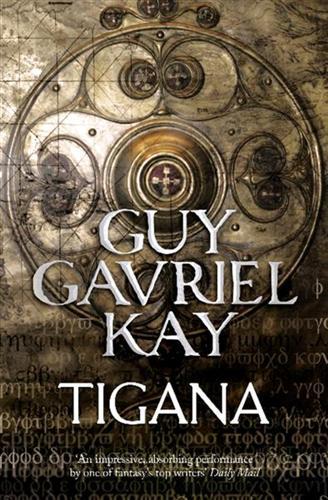
Tigana by Guy Gavriel Kay

Tigana by Guy Gavriel Kay Tigana is a fantasy novel set in the Peninsular of the Palm, a world loosely based on Renaissance Italy. Divided into nine rival provinces, the Palm is an easy target for two invading tyrants, one from the east and one from the west. Four of the Palm’s nine provinces have fallen to Alberico of Barbadior and four to Brandin of Ygrath, both powerful sorcerers, with only one province still to be conquered.

During the battle for one of these provinces, Prince Valentin of Tigana killed Brandin’s son, Stevan, which brought down Brandin’s wrath upon the entire province and its people. Brandin destroyed Tigana’s cities, its culture and its identity, then to complete his revenge he wiped all memory of Tigana and even its name from the minds of everyone in the peninsular, with the exception of those who were born in the province before the invasion. Eighteen years later, at the time when our story is set, a group of Tiganese exiles (including Prince Valentin’s only surviving son) set out to free the Palm of the two tyrants and restore Tigana’s name to the world.

This is the first book by Guy Gavriel Kay I’ve read, although I’ve been aware of his books for years and am now annoyed with myself for waiting so long to actually read one! I loved Tigana – not unreservedly, but enough to make it one of my books of the year so far.

I’ll admit to being very confused at first, as Kay doesn’t make things easy for the reader and throws us straight into a strange, unfamiliar world. Making a few notes of names and places helped, but really all that was needed was some patience. By the time I was halfway through the book, a world with one blue moon and one white, where people worship a Triad of Gods called Eanna, Adaon and Morian, and where wizards can be recognised by their two missing fingers, seemed almost as real as our own! I very rarely read fantasy anymore (not for any particular reason; I did used to enjoy it and am not sure why or when I stopped) but I actually thought that the overall feel of the book and the effort needed to understand the history, folklore and politics of the Palm were not a lot different from reading historical fiction. I could soon see the parallels with Renaissance Italy and the way its feuding city states left it vulnerable to threats from outside.

One of the things I liked about this book is that, with the possible exception of Alberico, none of the characters are portrayed as entirely good or entirely bad. The best example of this is probably Brandin of Ygrath, who at first appears to be one of the villains of the book because of what he has done to Tigana. It’s only later in the novel that we start to get closer to Brandin and see him from the point of view of the woman who loves him. This is Dianora, who is herself from Tigana and has spent several years in Brandin’s saishan (harem) on the island of Chiara, intending to kill him and lift his curse from Tigana. However, when she finds herself falling in love with him, she begins to wonder whether she’ll be able to carry her plan through to its end. I didn’t particularly like Dianora or agree with all of her choices, but I thought the scenes describing her internal conflict were very well written.

I don’t think the problem I had with Dianora was necessarily with the character herself, by the way, but more with the fact that her introduction into the novel came at a point where I had just begun to really understand the plot and to get to know Devin, Alessan, Catriana and the other characters; at that stage I didn’t want to be taken away from them and have to spend two chapters meeting a new character with a long backstory. I did become more interested in Dianora later in the book, but her sections were never my favourites and I was always glad to get back to the other characters’ storylines.

Another example of the boundaries between right and wrong becoming blurred involves the binding of a wizard. I don’t want to go into too many details as part of the fun of reading this book, being someone who doesn’t read much fantasy, was in learning about the various types of magic used in the Palm. However, the wizard binding episode raised some interesting questions. Can it ever be right to enslave a man against his will? Is the freedom of one person as important as the freedom of an entire nation?

As for the ending of the book, I both liked it and disliked it. I couldn’t quite believe in one of the romantic pairings at the end, as there had been so little hint of it throughout the book. There were other things that were left unresolved (or rather, they weren’t resolved in the way I wanted them to be) but I could accept that not everybody could have a happy ending. The revelation about one of the characters (again, I don’t want to say too much here and spoil the story for future readers) was heartbreaking! And the very last line of the epilogue is one of those final sentences that leaves you with something to continuing thinking about and trying to interpret even after you close the book and put it back on the shelf. I’ve got The Lions of Al-Rassan to read next and am excited to think that I might potentially have a new name to add to my list of favourite authors!