Catching up: Three mini-reviews

I always try to finish reviewing the current year’s reads before the new year begins (although I don’t always manage it), so today I’m catching up by posting some brief thoughts on three books read in November and December.
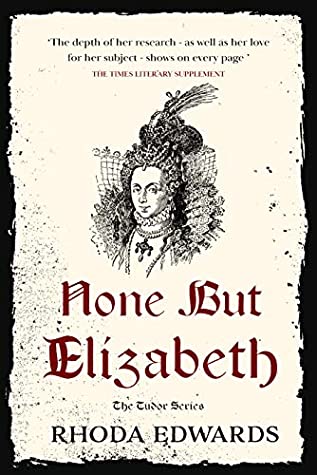
I added None But Elizabeth to my TBR a few years ago after reading Rhoda Edwards’ two novels about Richard III, Some Touch of Pity and Fortune’s Wheel, both of which I enjoyed. This one, first published in 1982, is a fictional retelling of the life of Elizabeth I. The book is written in a straightforward, linear style as we follow Elizabeth from childhood to old age.

There are some things Edwards does very well – the depiction of Elizabeth’s feelings for Robert Dudley, the man she loves but never marries; Elizabeth’s internal conflict over how to deal with the threat of Mary, Queen of Scots; the symbolism used to mark the passing of time; the way in which Elizabethan poetry is woven into the text – but as someone who has read about Elizabeth many times before, there was nothing new or different here. I would recommend reading Margaret Irwin’s Young Bess or Margaret George’s Elizabeth I rather than this one.
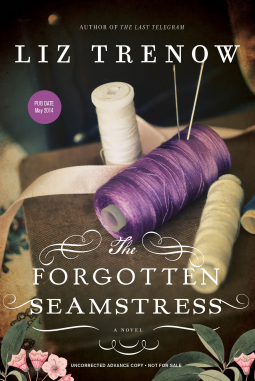
The Forgotten Seamstress by Liz Trenow is a multiple time period novel in which our present day narrator, an aspiring interior designer, finds a beautiful quilt in her mother’s attic with a message embroidered into the lining. She sets out to learn more about the quilt and discovers a connection with a young woman called Maria who spent most of her life in a mental hospital claiming to be a former lover of the Prince of Wales (the future King Edward VIII). As Maria’s story unfolds, in the form of taped interviews recorded by a student in the 1970s, we find out whether she was telling the truth and, if so, what secrets are hidden in the quilt’s design.

I wasn’t expecting too much from this book, but I enjoyed it much more than I thought I would – and for once, I found the modern day storyline as compelling as the historical one. On one level it’s almost a mystery novel, with the narrator hunting for clues to the quilt’s origins, tracking down people who may have known Maria and piecing fragments of information together to try to discover the truth. However, it also provides some insights into social issues such as living conditions in mental institutions, psychiatric treatment in the early 20th century and the later policy of ‘care in the community’. Some parts of the story were too predictable, but it was an interesting read overall and I will probably look for more of Liz Trenow’s books.
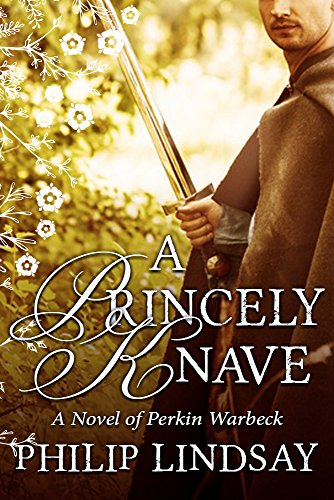
A Princely Knave was the oldest remaining book on my NetGalley shelf (from 2016, I’m ashamed to say). After receiving a copy, I read some negative reviews that put me off it, but in November I finally decided to give it a try. The book was originally published in 1956 as They Have Their Dreams and tells the story of Perkin Warbeck, a pretender to the English throne. Warbeck claimed to be Richard of York, one of the two ‘Princes in the Tower’ – the sons of Edward IV who disappeared from the Tower of London, believed to have been murdered. The novel begins with Warbeck landing in Cornwall in 1497, hoping to lead an army to overthrow Henry VII and take his place on the throne.

Philip Lindsay uses flowery and often antiquated language, a style which was common in older historical novels but feels very dated today. However, I’ve read one or two of his other books so was prepared for this. The biggest problem I had with this particular book was that, apart from Warbeck himself, the characters feel underdeveloped – the group of men who accompany Warbeck in his rebellion are almost indistinguishable and the only significant female character, Warbeck’s wife Katherine Gordon, also lacks depth. Lindsay does explore some fascinating ideas, though; for example, he suggests that even Warbeck himself doesn’t know who he really is – having been told by some that he has royal blood and by others that he is the son of Flemish merchants, he has become unsure of his real identity. I thought it was worth reading, but I probably wouldn’t recommend it unless you’re as interested in this period as I am.
Jane Shore: The Merry Mistress

jane-shore Elizabeth Shore, known as Jane, was a mistress of King Edward IV of England and said to be “merry in company, ready and quick of answer”. She often appears in fiction set during the Wars of the Roses as a minor character – depending on the book, either as a bad influence or a comfort to Edward in his declining health, and a possible conspirator against his brother, Richard III – but several novels have also been written specifically about Jane. I have read two recently and am combining my reviews into one post.
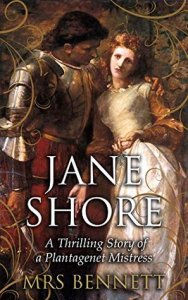
The first of the two books is an old one, written in the 19th century by Mary Bennett, a truly ‘forgotten’ author if ever there was one. She’s so forgotten that I’ve struggled to find any biographical information at all about her (the Database of Victorian Fiction has a paragraph) and can’t even find a definite publication date for Jane Shore – I think it could have been 1869. It seems that Bennett had quite a few novels published, though, so she must have had some level of success at the time.

As Jane was a relatively unimportant historical figure, there is still a lot that we don’t know about her today; obviously even less would have been known in Bennett’s day and fewer sources would have been available to her in researching her book.  Bennett refers to Jane as the daughter of Mr Winstead and the wife of Matthew Shore, ‘the goldsmith’,  while most modern novels give Jane’s father’s name as John Lambert and her husband’s as William Shore, not a goldsmith but a mercer.  It’s difficult for me to comment on the historical accuracy of Jane Shore, then, as it depends on which sources the author had to work from – and it could be that what was considered accurate then is not considered accurate now.

Bennett’s Jane is portrayed, in typical Victorian style, as an innocent, virtuous young woman at the mercy of the king, his friend Will Hastings, and several other men who want to steal her away from her father and husband. She is the sort of person who has things happen to her rather than making them happen herself, which means she is not the most interesting of characters to read about. In fact, I didn’t feel that any of the characters in this novel ever came to life on the page or seemed like real people at all.

The book is entertaining in parts – mainly when the action switches to Wales and the story of two fictional characters, Nesta Llewellyn and the musician Leolin – but very tedious in others and certainly wouldn’t be the best introduction to Jane Shore’s life.  Having read it, I understand now why Bennett is a forgotten author!

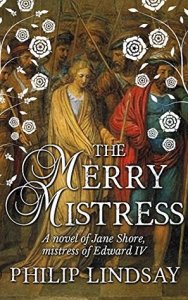
the-merry-mistressAfter reading the Mary Bennett book, I remembered that I had also received The Merry Mistress by Philip Lindsay from NetGalley a while ago, along with another book of his, The Devil and King John. I had mixed feelings about the King John book so was a bit apprehensive about reading this one. I’m determined to get my NetGalley shelf up to date, though, so I decided to give The Merry Mistress a try anyway.
The first thing to say is that this book couldn’t be more different from the Bennett one! Lindsay’s Jane is a much more forceful personality who decides what she wants out of life and then goes and gets it. I expect the fact that this novel was published more recently – in the 1950s – will have something to do with that. But despite Jane making a point of telling us that she expects no rewards or favours from the king in return for becoming his mistress and that she always does her best to help the poor and needy, I didn’t think she was a particularly likeable or sympathetic character. She uses her beauty to get her own way or to manipulate the men around her and I found her quite a shallow, controlling person.

The story is narrated by Jane herself, beginning as she is forced to walk through the streets of London dressed in her kirtle as public penance for her part in the conspiracy between Will Hastings and the Woodvilles. Jane then looks back on her life, starting with her unhappy marriage to the mercer William Shore and then taking us through her romances with Edward IV, Hastings and Thomas Grey, the Marquess of Dorset. Lindsay ignores other possible facets of Jane’s character to focus almost exclusively on her relationships with the men in her life. I appreciate that Jane was a royal mistress, after all, and not famous for much else, but I still felt that this book needed something more.

Things do become more interesting and more compelling in the final third of the novel, when Edward’s death throws the court and the country into disarray once more after several years of relative stability. However, this is very much Jane’s story, so politics are pushed into the background apart from when they touch directly on Jane’s life. Still, I thought The Merry Mistress was a much better novel than Mary Bennett’s Jane Shore. My personal recommendation, though, would be to skip both of these and read Royal Mistress by Anne Easter Smith instead!

The Devil and King John by Philip Lindsay

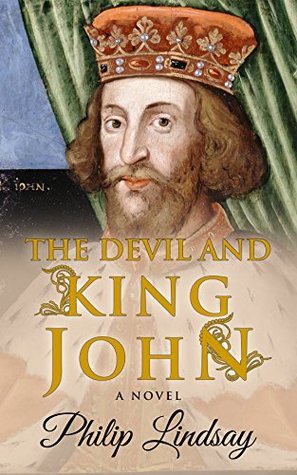
The Devil and King John King John, who reigned from 1199 to 1216, has the unenviable reputation of being one of England’s ‘worst’ kings. Although historians are constantly revising their opinion and adding to what we know of John, people still tend to have a negative impression of him. His portrayal as the villain of Robin Hood must be at least partly responsible for that! This 1943 novel by the Australian author Philip Lindsay attempts to give a more balanced view of John, based around the idea that many of his actions were the result of an uncontrollable temper rather than simply cruelty.

The novel begins with John’s early years when he is known as Lackland because his father, Henry II, has divided his lands between his three eldest sons, leaving no substantial territories for John to inherit (despite John being his favourite son). On Henry’s death, John’s brother, Richard, takes the throne but spends much of his reign overseas fighting in the crusades and neglects the very important task of producing an heir. When Richard dies in 1199, John becomes king…but his own reign will be a very troubled one.

The Devil and King John is a straightforward fictional biography, taking us through the key moments of John’s life and career: his military defeats in northern France and subsequent attempts to win back lost lands; his dispute with Pope Innocent III and his excommunication; the death of his nephew, Arthur of Brittany, widely believed to have been murdered by John; and the rebellion by his barons which led to the signing of the Magna Carta at Runnymede in 1215. Lindsay’s portrayal of John throughout all of this is generally quite sympathetic, but not excessively so and I certainly can’t say that I came away from the book liking the character!

In the opening chapter of the novel we are told that the Angevins (the royal house to which John belongs) were descended from a witch and that “from the devil they had sprung and to the devil they would go”. After this, there are references to the devil on almost every page (at least, it seemed that way). I can understand that the author wanted to keep the theme going throughout the story, but constantly being told that “the devil is in John” or “John rides with the devil” is too much!

When I wrote about the other Lindsay novel I read earlier this year – Here Comes the King, the story of Catherine Howard and Thomas Culpeper – I complained that there was too much focus on the romance and I said I thought I’d enjoy one of his other books more. I did prefer this one and thought there was a good balance of romance, battles and politics. However, I was disappointed with the way in which the female characters were depicted in this book, particularly John’s second wife, Isabella of Angoulême, who had the potential to have been a great character. I also felt slightly uncomfortable reading about the relationship between John, in his thirties, and Isabella, aged thirteen, even though I know that an age difference of this size wasn’t unusual by the standards of medieval nobility.

John’s first wife, Hadwisa (also known as Isabella of Gloucester), is portrayed as a witch who encourages John to follow the ‘Old Religion’. Lindsay states in his author’s note that there is no historical evidence for this, but he wanted to find a way to connect John with witchcraft and to explain the king’s lifetime of conflict with the church over issues such as his reluctance to take communion.

Although there were some aspects of this book that I didn’t like very much, overall I thought The Devil and King John was an interesting read. If you’ve read any of Philip Lindsay’s novels – or any good books about King John – I’d love to hear about them!

My Commonplace Book: July 2016

A summary of this month’s reading, in words and pictures.

commonplace book
Definition:
noun
a notebook in which quotations, poems, remarks, etc, that catch the owner’s attention are entered

Collins English Dictionary

***

He turned his head to smile at her, apologetically; and his face was haggard in the firelight, so that suddenly she cared nothing for kings and wars, nor bishops nor the soul of man, nor for what Thomas did, only for what Thomas was; and she longed to fling her arms round him and hold him close because he was like a lute that was strung too tight.

The Rider of the White Horse by Rosemary Sutcliff (1959)

***

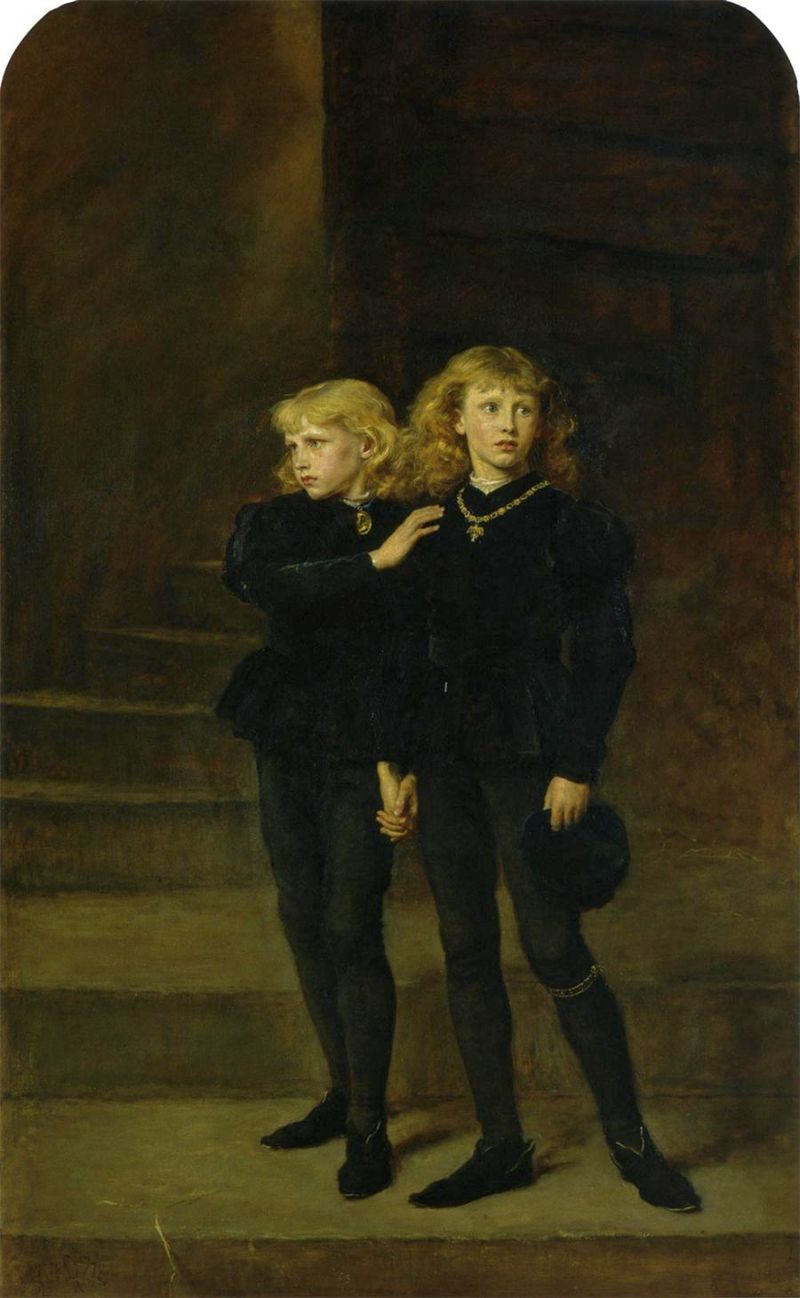
Princes in the Tower

No banners were raised above the company and they wore no livery, anonymity as well as haste their ally this April morning. Where Watling Street cut its blade-straight course towards the Great Ouse, the last of the sentries who had ridden on ahead to silence any word of their coming joined the company and, together, the horsemen thundered towards the small market town of Stony Stratford and the object of their race: the boy who had become king.

Sons of the Blood by Robyn Young (2016)

***

Nash is a follower of the playwrights and knows their best bons mots by heart, but I am fascinated by the actors themselves. I wonder about the life behind the stage and the precariousness of it. The thought of it gives me a shiver. Perhaps my interest stems from the apprehension that actors, whose calling depends on looks and voices and bodies that cannot last, must confront the same hard laws of life that women do. When the brightness of our beauty dies, we are plunged into the dark.

The Revelations of Carey Ravine by Debra Daley (2016)

***

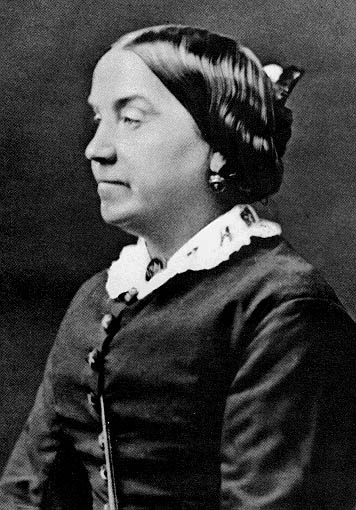
Lizzie Burns

And is it any different with love? Isn’t love the reverse side of the same medal? To love is to have, but rare does it happen that what we have is what we love. Love buys cheap and seeks to sell at a higher price; our greed is for gain that lies outside our reach. We desire those who don’t desire us in return.

Mrs Engels by Gavin McCrea (2015)

***

Before him lay the well-kept grounds, the clipped rose trees already beginning to put forth their glossy leaves, the panes of the glass-house gleaming like ice in the moonlight, the fountain where the water splashed in silver threads, hollow-eyed termini set between yew trees. The windows in the side of the pleasure house facing Desgrez were shuttered; he crept along, however, most warily; he did not know who was posted in the gardens nor what sentries might be placed about the house and grounds.

The Poisoners by Marjorie Bowen (1936)

***

Gondola

They glided away through the spangled water, and he filled his lungs with the haunting sea air. Other gondolas slipped past with lovers or merrymakers. A delicious languor filled the night, lapping of water, wandering of music. He felt a longing, sweeter than possession, for the indescribable, the unattainable. He would return here someday with her; he would occupy one of these palaces; they would live in terms of color – sapphire and silver – in terms of a casement open on the sea-scented night.

Prince of Foxes by Samuel Shellabarger (1947)

***

“Oh, don’t worry, we’re still appalling know-it-alls. We dig things up, but then we photograph and catalogue, record and document, and as often as not we put things back. It’s not the finds so much as the findings. Not the objects but the stories they tell.”

Sandlands by Rosy Thornton (2016)

***

Magna Carta

Under the shade of the pavilion, he noted a table in readiness, stools around it, and parchment and pens and wax all ready, with clerks and knights waiting. They had at least the grace to stand when he entered and, without speaking, took the stool at the table-head. Before him lay the long charter. He knew it by heart, each clause of it had burned into him with rage while impotently he had listened to these rogues’ demands.

The Devil and King John by Philip Lindsay (1943)

***

Favourite books this month: Prince of Foxes and The Revelations of Carey Ravine.

My commonplace book: February 2016

commonplace book
Definition:
noun
a notebook in which quotations, poems, remarks, etc, that catch the owner’s attention are entered

Collins English Dictionary

~

A summary of this month’s reading, in words and pictures.

~

Every sound of the quiet evening came clearly to her ears with an unnatural distinctness; but now each one possessed a different and terrifying meaning. The muffled shouts and laughter of the few remaining bathers from the indoor swimming bath were the cries of fleeing, panic-stricken people. The whisper of the breeze through the pine needles was a frightened man whispering orders in the shadow of fog-shrouded whin bushes. A passing car was the drone of an enemy bomber and the faint lap of water against the sea-green tiles at the far side of the wide pool was the lap of waves against a pebble beach.

Death in Berlin by M. M. Kaye (1955)

~

“The promise of the day!” said Visconti, dreamily and sadly. “Hath it never struck thee how that promise never is fulfilled? Day after day, since the world began, something in the mystery of the dawn is promised – something the sunset smiles to see unfulfilled – something men have ever been cheated of – something men will never know – the promise of the dawn!”

The Viper of Milan by Marjorie Bowen (1906)

~

Louis X

Uncertain health, a clever but overbearing father whose authority had crushed him, an unfaithful wife who had scoffed at him, an empty treasury, impatient vassals always ready to rebel, a famine in the first winter of his reign, a storm which threatened the life of his second wife – beneath what disastrous conjunction of the planets, which the astrologers had not dared reveal to him, must he have been born, that he should meet with adversity in every decision, every enterprise, and end by being conquered, not even nobly in battle, but by the water and mud in which he had engulfed his army?

The Poisoned Crown by Maurice Druon (1956)

~

She looked up as the train passed, and I was almost near enough to catch her eye. She had a round pale face, the usual exhausted face of the slum girl who is twenty-five and looks forty, thanks to miscarriages and drudgery; and it wore, for the second in which I saw it, the most desolate, hopeless expression I have ever-seen. It struck me then that we are mistaken when we say that ‘It isn’t the same for them as it would be for us,’ and that people bred in the slums can imagine nothing but the slums. For what I saw in her face was not the ignorant suffering of an animal. She knew well enough what was happening to her — understood as well as I did how dreadful a destiny it was to be kneeling there in the bitter cold, on the slimy stones of a slum backyard, poking a stick up a foul drain-pipe.”

The Road to Wigan Pier by George Orwell (1937)

~

Flag of Iowa

After all no fledgling had it easy, farmer or crow. Hadn’t he known since he was a boy the way the fledglings had to fall out of the nest and walk about, cheeping and crying, until they grew out their feathers and learned to fly on their own? Their helpless parents flew above them, and maybe dropped them a bit of food, but flying or succumbing belonged to them alone.

Some Luck by Jane Smiley (2014) – review to follow

~

“I must insist upon it,” she continued, “that you shall take me now as I really am — as your dearest friend, your sister, your mother, if you will. I know what I am. Were my husband not still living it would be the same. I should never under any circumstances marry again. I have passed the period of a woman’s life when as a woman she is loved; but I have not outlived the power of loving.”

Phineas Redux by Anthony Trollope (1873)

~

“There is no other way, Robert,” James said quietly, watching the emotions shift across his face. “If Balliol returns you lose everything. At least this way you have a chance to make sure you and your family are protected. Our best hope is that Edward will be able to keep Balliol from the throne. If he succeeds, God willing, you may one day still claim it.”

Renegade by Robyn Young (2012)

~

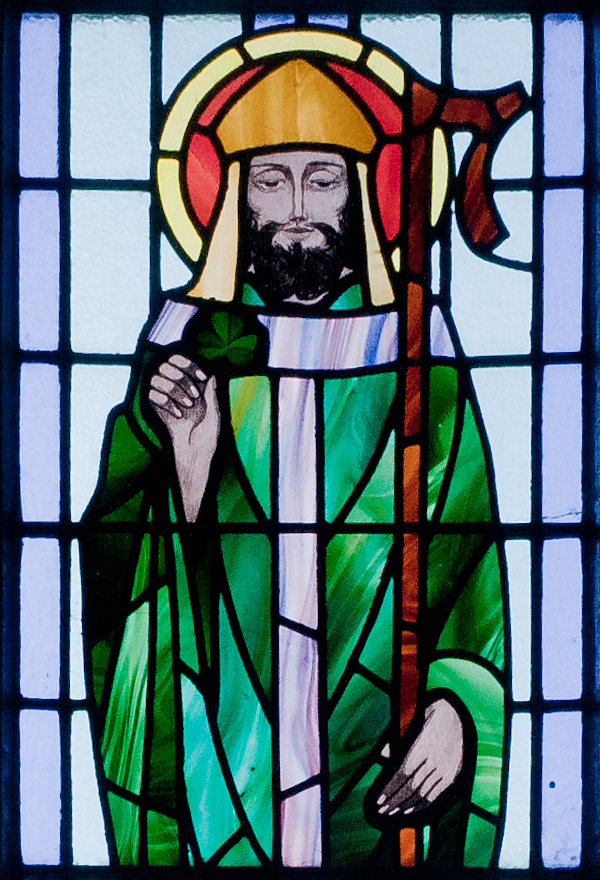
St Patrick

And so it came to be that they carried me away into bondage, slung over the shoulder of the black-beard while the girl walked, roped behind. I cannot tell you of the voyage, nor of the faces of the many who were taken into captivity with us. I can only say that on that day “…the Lord brought over us the wrath of His anger and scattered us among many nations, even unto the utmost part of the earth, where now my littleness is placed among strangers” in the land known as Eire.

The Lion and the Cross by Joan Lesley Hamilton (1979) – review to follow

~

Everybody was bowing, sliding on to one knee as Henry came into the chamber, leaning on his staff and smiling…Here comes the King, and with the coming of the King, all life must stop, the very air must thicken as if congealed in awe of this gross man who hobbled painfully on his tall staff, nodding and smiling, blinking every second.

Here Comes the King by Philip Lindsay (1933)

~

In a country where so many desire status and wealth, petty annoyances can spark disproportionately violent behaviour. We become frustrated because we feel powerless, invisible, unheard. We crave celebrity, but that’s not easy to come by, so we settle for notoriety. Envy and bitterness drive a new breed of lawbreakers, replacing the old motives of poverty and the need for escape. But how do you solve crimes which no longer have traditional motives?

Ten-Second Staircase by Christopher Fowler (2006) – review to follow

~

Favourite books this month: Phineas Redux and The Viper of Milan

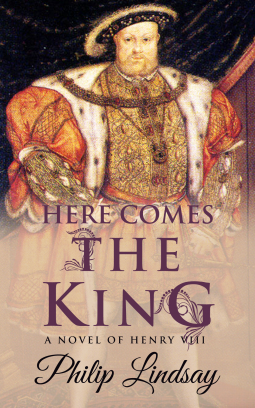
Here Comes the King by Philip Lindsay

Here Comes the King Philip Lindsay (1906-1958) was an Australian author of historical fiction. His books have been out of print in recent years but are now being made available to a modern audience in ebook form by one of my favourite independent publishers, Endeavour Press. Here Comes the King, a 1933 novel about Katherine Howard and Thomas Culpeper, is the first of his books that I’ve read.

Katherine (or Catherine, but I’m sticking to the spelling used in the novel) is a young woman of seventeen or eighteen when she marries Henry VIII at Oatlands Palace and becomes his fifth wife. Her predecessor, Anne of Cleves, has recently been set aside by the king, who believes he was misled as to her appearance. The new queen’s beauty and youthful spirit are much more pleasing to Henry, who calls her his ‘rose without a thorn’. Katherine, though, is less enamoured with her fat, gluttonous, fifty-year-old husband who is suffering from painful leg ulcers and whose moods are becoming increasingly volatile. Although Henry is not generally unkind to her, she is tempted into an affair with the handsome young courtier, Thomas Culpeper – an affair which will lead to both their downfalls.

Here Comes the King is written in the third person from the perspective of several different characters including Culpeper, Henry and Katherine herself, as well as Will Sommers, the king’s fool, Francis Dereham, another man once romantically involved with Katherine, and Jane Boleyn, Lady Rochford, who helps to arrange Katherine’s secret meetings with Culpeper. Jane and Sommers were both in a difficult position, knowing or suspecting what was going on and unsure of what to do with that knowledge, and this made them interesting characters to read about.

However, I felt that I didn’t get to know Katherine very well. She is portrayed as a pretty, flirtatious, immature young girl, and while this does seem to be a widely held view of what the real Katherine was like, I would still have preferred her character to be given a little more depth. Even when she was the viewpoint character, I never felt that I really knew what she was thinking. Culpeper’s character is better written; he is shown in a negative light, being irresponsible, impulsive and a heavy drinker (and allegedly guilty of both rape and murder, although these things are only briefly mentioned as they happen outside the scope of the novel), but his thoughts and feelings come through strongly.

I am far from being an expert on Katherine’s life and her time as Henry’s queen, so I can’t really comment on Lindsay’s accuracy, but the story did seem to follow quite faithfully the general outlines of Katherine’s and Culpeper’s lives. He incorporates things which are known to be historical fact, such as the text of Katherine’s incriminating letter to Culpeper (complete with grammatical mistakes; she is thought to be the least well educated of Henry’s wives) as well as things which may or may not be true but which have become part of the legends surrounding Katherine: practising laying her head on the block the night before her execution, for example, and declaring that “I die a Queen, but I would rather have died the wife of Culpeper”.

I had no problems with Lindsay’s writing (it’s slightly flowery and over-descriptive in places but otherwise feels surprisingly contemporary for a 1930s book) and I would read more of his work, but I didn’t find this particular novel very compelling, maybe because it’s so romance-centred. Admittedly, it would be difficult to write a book about Katherine Howard and not focus on her love affairs; as she spent such a short period as queen and died so young, she left less of a legacy than some of Henry’s other wives, and I think this is why her story has never appealed to me very much. Maybe one of Lindsay’s other novels would interest me more than this one did.

I received a copy of this book for review via NetGalley.