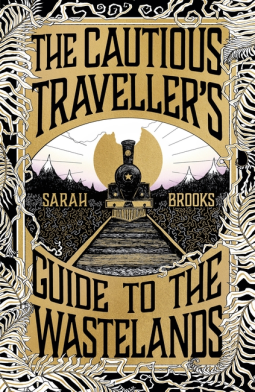
The Cautious Traveller’s Guide to the Wastelands by Sarah Brooks

It’s 1899 and passengers are boarding the Trans-Siberian Express, a twenty-carriage luxury train which will take them from Beijing to Moscow in time to attend the Great Exhibition. The four thousand mile journey will travel through the Wastelands, an abandoned wilderness where the landscape and wildlife seem to be undergoing strange changes and mutations. Since the changes were first recorded several decades earlier, Walls have been built to separate the Wastelands from the rest of Russia and China and passengers are not allowed to leave the train in the area between the Walls. On the previous journey, something went wrong: the glass in the windows cracked, exposing the train to the dangers of the Wastelands. The Trans-Siberian Company blamed the glassmaker and have assured passengers that the train is now safe, but doubts still remain.

The story of the 1899 Trans-Siberian crossing is told from the perspectives of several of the passengers. First, there’s Marya Petrovna, who has boarded the train under a false name and disguised as a mourning widow. At first we don’t know who Marya is or why she is hiding her identity, but we do know that she believes an injustice has been done and has come on this journey in search of answers. Then there’s Dr Henry Grey, an English naturalist whose latest theories have been disproved and who hopes to restore his reputation by studying the Wastelands. Finally, Zhang Weiwei is a sixteen-year-old girl known as ‘the child of the train’ because she was born in the Third Class sleeping car and has spent her whole life travelling backwards and forwards on the train. There are many other people onboard the train, but these are the central three around whom the novel revolves.

The Cautious Traveller’s Guide to the Wastelands is an unusual, imaginative novel and there were many things I enjoyed about it. I’ve read several other books set on trains, but usually, even in Murder on the Orient Express, the train simply provides a way of bringing a group of people together in close confines or of getting them from one destination to another. In this book, the train itself is an important part of the story and could even almost be viewed as another character. Sarah Brooks’ worldbuilding is very impressive; the novel has been compared to Susanna Clarke’s Piranesi and Erin Morgenstern’s The Night Circus and it did make me think of the latter in particular. So much attention to detail goes into describing the various carriages and compartments, the history of the train and its earlier crossings, and the fictional travel guide which gives the novel its name. The Wastelands themselves are less clearly described and although it’s suggested that life there has become tainted in some way, we don’t really know how or why, and much of the mystery still remains at the end of the book, which I’m sure was deliberate – but quite frustrating!

However, I felt that the setting and atmosphere came at the expense of the plot. The pace was very slow, with more than half of the novel devoted to setting the scene and introducing the characters, and it seemed to end just as things were starting to happen. I also would have preferred an explanation for what was happening in the Wastelands and was left wondering what we were intended to take away from the book. Was there a message in there about climate change and the environment – or migration, with walls being built to keep people out (or in)? I think we’re definitely supposed to question whether it’s best to travel cautiously or curiously, embracing change or turning away from it.

The Cautious Traveller’s Guide… is a fascinating alternate history novel, then, with lots to think about and debate. I didn’t find it completely satisfying, but I’m sure the right reader will love it.

Thanks to Orion Publishing Group for providing a copy of this book for review via NetGalley.

This is book 6/20 of my 20 Books of Summer 2024.
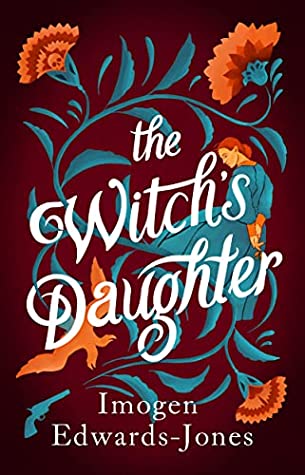
The Witch’s Daughter by Imogen Edwards-Jones

“I have been enamoured of this country and this city for so long. The Venice of the north. How I have loved every golden dome, every frozen canal, every ballet, every concert, every wonderful person I have ever met. This country takes your soul, it takes it away and it doesn’t ever give it back.”

Imogen Edwards-Jones’ new novel, The Witch’s Daughter, is the sequel to 2018’s The Witches of St Petersburg, but I don’t think it’s essential to read them in order. The first book tells the story of Princesses Militza and Stana of Montenegro, who marry into the Russian aristocracy and introduce Rasputin to the Romanov court. This one begins with the murder of Rasputin, then moves on to follow Militza’s daughter, Nadezhda, throughout the Russian Revolution.

As the novel opens in December 1916, Tsar Nicholas II is preoccupied with Russia’s involvement in World War I when news breaks out in Petrograd of Rasputin’s murder. However, the war is soon going to be the least of the Tsar’s troubles because Rasputin has left behind a letter predicting the death and destruction of Nicholas himself and the entire Romanov family. As unrest and violence breaks out on the streets of Petrograd, it seems that the prophecy is starting to come true and Princess Nadezhda finds herself caught up in it all.

Unlike the first book, which took as its premise the idea that Militza and Stana were ‘witches’ who believe they have conjured up Rasputin through black magic, this one – despite the title – involves almost no magic at all. It could be misleading for those who pick it up specifically hoping for a story about witchcraft, but I preferred the more serious tone of this book. I can’t tell you whether everything that happens is historically accurate or not, because I don’t know – the Russian Revolution is not a period I’ve ever studied or read very much about – but I think it works well as a general overview of the situation and the feeling of the Russian people towards the Romanovs and the aristocracy. Edwards-Jones doesn’t shy away from describing the violence and brutality as tensions boil over on the streets and simple demands for ‘peace, land and bread’ spiral into a larger revolutionary movement.

Although the focus is on Nadezhda’s family, and the sequence of events that lead them to flee St Petersburg for the relative safety of the Crimea, The Witch’s Daughter has a large number of other characters and they are all listed at the front of the book in case you have trouble keeping track of the relationships between the various Princes and Princesses, Grand Dukes and Grand Duchesses. The character who interested me the most, however, was Bertie Stopford, a British antiques and art dealer who has some sort of unspecified connection with the War Office and engages in some spying and smuggling on behalf of his friend, the Grand Duchess Vladimir. Bertie was a real person, although I don’t think I’ve read about him before; he seems to have led a very eventful life and is the author of an anonymously published memoir, The Russian Diary of an Englishman: Petrograd 1915–1917, which I’m sure must be fascinating.

I’m not expecting a third book in this series as everything seemed to be tied up nicely at the end, but I’m pleased to have had the opportunity to learn a little bit about Nadezhda and her family.

Thanks to Aria for providing a copy of this book for review via NetGalley.

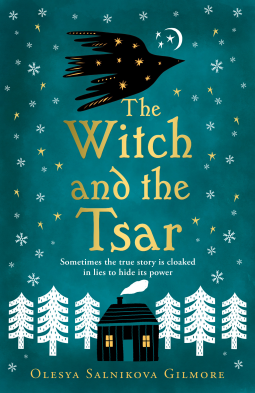
The Witch and the Tsar by Olesya Salnikova Gilmore

I was drawn to this book by the pretty cover, but also because it sounded similar to Katherine Arden’s Winternight trilogy, which I loved. Set in 16th century Russia, during the reign of Ivan the Terrible, The Witch and the Tsar is a blend of history, fantasy and folklore featuring as its heroine the legendary Baba Yaga. Unlike the traditional idea of Baba Yaga as a ferocious old witch who eats children, however, Moscow-born author Olesya Salnikova Gilmore’s portrayal is something very different.

We first meet Yaga, as she is known, living alone in a forest with her wolf Dyen, owl Noch, and Little Hen, a living hut who stands on chicken legs and has a mind of her own. Half-mortal and half-goddess, Yaga has been badly treated in the past so has chosen a life of solitude, interacting with other people only when they come and seek out her knowledge of healing and potions. She is reluctantly drawn back into society when an old friend, the Tsaritsa Anastasia – wife of Tsar Ivan IV – comes to her to ask for help. Convinced that Anastasia is being poisoned by someone at court, Yaga decides to accompany her friend on the journey back to Moscow to keep her safe.

Returning to the world from which she has hidden away for so long, Yaga is dismayed by the evil she senses all around her. Unsettled by an encounter with a former adversary, Koshey Bessmertny (usually known in Slavic myth as Koschei the Deathless), she is then introduced to Ivan Vasilyevich, the man who will later become Ivan the Terrible, and is struck by his power and volatility. When tragedy strikes the Russian court, Ivan becomes more unstable and launches a campaign of terror with his band of oprichniki burning, raiding and pillaging Russia’s towns and cities. It seems that Yaga is the only one who can stop him, but to do so she will have to learn things about herself and her family that she would prefer not to uncover.

I enjoyed some aspects of The Witch and the Tsar, but others not so much. I wasn’t sure what to think of Yaga herself. On the one hand, it’s good to see a much-maligned character given a more sympathetic interpretation; on the other, Gilmore’s Yaga has so little in common with the mythical Baba Yaga she’s really not the same character at all. Also, we are told that although she has the appearance of a young woman, she has actually lived for hundreds of years – yet she never sounds, thinks or behaves the way I would expect someone with centuries of wisdom and experience to sound, think and behave. She just feels like the young woman she appears to be.

It was interesting to see how Gilmore works characters from other Russian and Slavic myths into the story. As well as Koschei the Deathless, we meet Marya Morevna, Morozko the frost demon, the god Volos, the house spirit Kikimora and others. The fantasy/mythology element becomes very dominant in the second half of the book, more than I would have preferred, but Gilmore does a good job of tying it together with the historical storyline, showing how the actions of the gods and demons are linked to the actions of Ivan and his oprichniki. I was particularly intrigued by the character of Ivanushka, the Tsar’s son and heir; Yaga promises Anastasia she will protect him, but we know from history that his story will take a tragic turn.

I think The Witch and the Tsar is worth reading if you’re interested in Russian history and mythology, but naturally I couldn’t help comparing it to Katherine Arden’s trilogy (beginning with The Bear and the Nightingale) which I found much more enjoyable.

Thanks to HarperVoyager for providing a copy of this book for review via NetGalley.

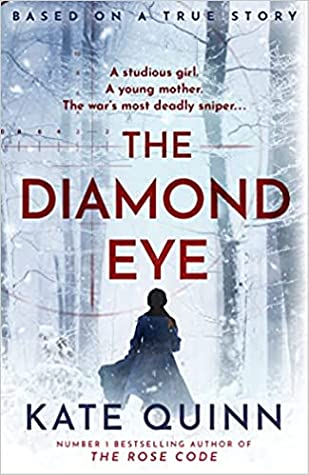
The Diamond Eye by Kate Quinn

I loved The Rose Code by Kate Quinn – it was one of my favourite books last year. Because of that, I think my expectations for her new novel, The Diamond Eye, were slightly too high. I enjoyed it, but I don’t think it will be one of my books of the year this time.

The Diamond Eye is the story of Lyudmila Pavlichenko, a female sniper in the Soviet Army during World War II (and a real historical figure). Lyudmila, or ‘Mila’ as she is called in the novel, was born in Ukraine but considered herself Russian. The book was written before the current war in Ukraine began earlier this year, which gives something as simple as Mila’s choice of identity new relevance.

When we first meet Mila, she is a twenty-one-year-old history student in Kiev (now known as Kyiv, of course) and is trying to get a divorce from her husband Alexei, who seduced her as a teenager then left her to raise their son, Slavka, alone. After an encounter with Alexei at a shooting range during which Mila embarrasses herself by missing a shot, she decides to join an advanced marksmanship course so that she’ll never miss again and can prove to Slavka that she’s the equal of his father. This decision changes Mila’s life because, when Hitler invades Russia a few years later, she is handed a rifle and enlisted into the Red Army as a sniper.

We then follow two alternating storylines – one which describes Mila’s time in the army and how she acquires her reputation as ‘Lady Death’, being credited with 309 kills, and another set in 1942 as Mila embarks on a US tour in an attempt to persuade the Allies to provide support for Russia against the Nazis. The chapters set in America explore Mila’s relationship with Eleanor Roosevelt and a fictitious plot to assassinate the President. This invented storyline adds some tension and excitement to the book, but with Mila’s own life being so fascinating I’m not sure that it was really necessary!

The factual parts of the novel are based on Lyudmila Pavlichenko’s own memoir, Lady Death: The Memoirs of Stalin’s Sniper, which I haven’t read. In fact, I knew nothing at all about Mila before reading this book so everything in it was new to me. Quinn includes a very comprehensive author’s note at the end in which she explains where she tried to stick to the known facts and where she had used her imagination to fill in gaps or make the story more interesting (mainly the bits concerning Mila’s marriage to Alexei and her romantic relationships with two men she meets in the army). Some of the most surprising parts of the story, such as Mila’s friendship with the First Lady are actually true.

There’s a lot of focus on military life, weapons and tactics, which I suppose is to be expected in a novel about a sniper, but that’s never been a particular area of interest to me and reading about the Bletchley Park codebreakers in The Rose Code was much more to my taste. Still, it’s always good to learn something new and I did enjoy the parts of the book about Mila’s personal life and ambassadorial work, if not so much the parts about shooting and killing. I’m sure I’ll be reading more of Kate Quinn’s books.

Thanks to HarperCollins for providing a copy of this book for review via NetGalley.

This is book 28/50 read for the Historical Fiction Reading Challenge 2022.

Historical Musings #72: From the TBR…Russia and Ukraine

Welcome to another of my not-quite-monthly posts on all things historical fiction!

This month I’ve decided to share with you some of the historical fiction waiting on my TBR. With everything going on in the world and with other projects taking place in the book blogging community such as Brona’s Understanding Ukraine, I thought I would focus on books set in Russia or Ukraine. There are a lot that I’ve already read (mainly Russia rather than Ukraine) and you can find reviews elsewhere on my blog using the Russia tag (there are some classics/contemporary novels amongst those too); I’ve just finished The Diamond Eye by Kate Quinn, about a female Soviet sniper, so my review of that one should be coming soon as well.

The titles below are all books that I haven’t read yet. Maybe you can help me decide which I should try to read as soon as possible and which, if any, I could remove from my TBR.

~

The Rose of Sebastopol by Katharine McMahon

Russia, 1854. As the Crimean War grinds on, Rosa Barr – young, headstrong and beautiful – travels to the battlefields, determined to join Florence Nightingale and save as many of the wounded as she can.

For Mariella, Rosa’s cousin, the war is contained within the pages of her scrapbook, her sewing circle, and the letters she receives from Henry, her fiancé, a celebrated surgeon who has also volunteered to work within the shadow of the guns. But when Henry falls ill, and Rosa’s communications cease, Mariella finds herself drawn inexorably towards the war.

Following the trail of her elusive and captivating cousin, Mariella’s epic journey takes her from the domestic restraint of Victorian England to the ravaged landscape of the Crimea. As she ventures deeper into the dark heart of the conflict, Mariella discovers her own strengths and passions through Rosa’s tough lessons of concealment, faithfulness and love.

~

The Siege by Helen Dunmore

Leningrad, September 1941.

German tanks surround the city, imprisoning those who live there. The besieged people of Leningrad face shells, starvation, and the Russian winter. Interweaving two love affairs in two generations, THE SIEGE draws us deep into the Levin’s family struggle to stay alive during this terrible winter. It is a story about war and the wounds it inflicts on people’s lives. It is also a lyrical and deeply moving celebration of love, life and survival.

~

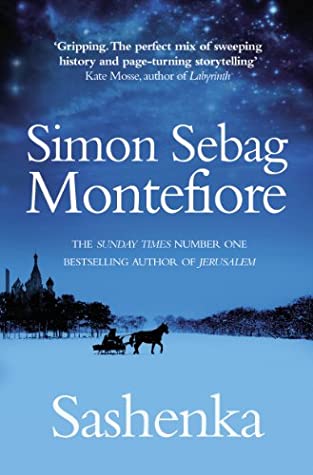
Sashenska by Simon Sebag Montefiore

Winter, 1916. In St Petersburg, snow is falling in a country on the brink of revolution.

Beautiful and headstrong, Sashenka Zeitlin is just sixteen. As her mother parties with Rasputin and her dissolute friends, Sashenka slips into the frozen night to play her role in a dangerous game of conspiracy and seduction.

Twenty years on, Sashenka has a powerful husband and two children. Around her people are disappearing but her own family is safe. Yet she is about to embark on a forbidden love affair which will have devastating consequences.

Sashenka’s story lies hidden for half a century, until a young historian goes deep into Stalin’s private archives and uncovers a heart-breaking story of passion and betrayal, savage cruelty and unexpected heroism – and one woman forced to make an unbearable choice…

~

The House of Special Purpose by John Boyne

Russia, 1915: Sixteen year old farmer’s son Georgy Jachmenev steps in front of an assassin’s bullet intended for a senior member of the Russian Imperial Family and is instantly proclaimed a hero. Rewarded with the position of bodyguard to Alexei Romanov, the only son of Tsar Nicholas II, the course of his life is changed for ever.

Privy to the secrets of Nicholas and Alexandra, the machinations of Rasputin and the events which will lead to the final collapse of the autocracy, Georgy is both a witness and participant in a drama that will echo down the century.

Sixty-five years later, visiting his wife Zoya as she lies in a London hospital, memories of the life they have lived together flood his mind. And with them, the consequences of the brutal fate of the Romanovs which has hung like a shroud over every aspect of their marriage…

~

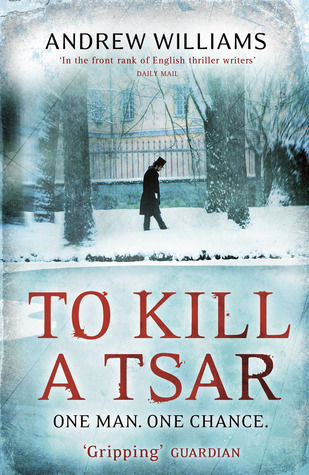
To Kill a Tsar by Andrew Williams

St Petersburg, 1879. A shot rings out in Palace Square. Cossack guards tackle the would-be assassin to the ground. In the mêlée no one notices a striking dark haired young woman in a heavy coat slip away from the scene.

Russia is alive with revolutionaries. While Tsar Alexander II remains a virtual prisoner in his own palaces, his ruthless secret police will stop at nothing to unmask those who plot his assassination and the overthrow of the Imperial regime. For Dr Frederick Hadfield, whose medical practice is dependent on the Anglo-Russian gentry, these are dangerous times. Drawn into a desperate cat-and-mouse game of undercover assignations, plot and counter-plot, he risks all in a perilous double life.

~

The Romanov Empress by CW Gortner

Barely nineteen, Minnie knows that her station in life as a Danish princess is to leave her family and enter into a royal marriage — as her older sister Alix has done, moving to England to wed Queen Victoria’s eldest son. The winds of fortune bring Minnie to Russia, where she marries the Romanov heir, Alexander, and once he ascends the throne, becomes empress. When resistance to his reign strikes at the heart of her family and the tsar sets out to crush all who oppose him, Minnie — now called Maria — must tread a perilous path of compromise in a country she has come to love.

Her husband’s death leaves their son Nicholas as the inexperienced ruler of a deeply divided and crumbling empire. Determined to guide him to reforms that will bring Russia into the modern age, Maria faces implacable opposition from Nicholas’s strong-willed wife, Alexandra, whose fervor has led her into a disturbing relationship with a mystic named Rasputin. As the unstoppable wave of revolution rises anew to engulf Russia, Maria will face her most dangerous challenge and her greatest heartache.

~

The Vanishing Futurist by Charlotte Hobson

When twenty-two-year-old Gerty Freely travels to Russia to work as a governess in early 1914, she has no idea of the vast political upheavals ahead, nor how completely her fate will be shaped by them.

In 1917, revolution sweeps away the Moscow Gerty knew. The middle classes – and their governesses – are fleeing the country, but she stays, throwing herself into an experiment in communal living led by charismatic inventor Nikita Slavkin, inspired by his belief in a future free of bourgeois clutter and alight with creativity. Yet the chaos and violence of the outside world cannot be withstood forever. Slavkin’s sudden disappearance inspires the Soviet cult of the Vanishing Futurist, the scientist who sacrificed himself for the Communist ideal. Gerty, alone and vulnerable, must now discover where that ideal will ultimately lead.

~

* To Kill A Tsar and The Vanishing Futurist are both books I need to read for my Reading the Walter Scott Prize project (I’m particularly interested in The Vanishing Futurist after reading Cyber Kitten’s recent review).
* I have had an unread copy of The Rose of Sebastopol for more than ten years, so I should really read it soon!
* Sashenka was added to my TBR after reading Montefiore’s One Night in Winter, then I saw some negative reviews that put me off reading it.
* I started reading The Siege years ago, but didn’t get very far because I kept thinking of The Bronze Horseman by Paullina Simons which I’d just read and which is also about the Siege of Leningrad.
* I love John Boyne’s books, so I definitely still want to read The House of Special Purpose – and I haven’t read very much fiction about the Romanovs so the CW Gortner book should be interesting.

Have you read any of these? Which other historical fiction novels set in Russia or Ukraine have you read?

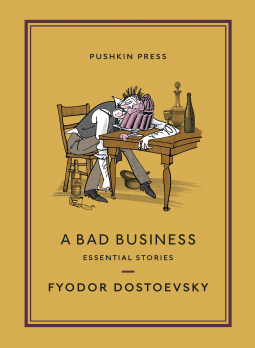
A Bad Business by Fyodor Dostoevsky

Translated by Nicolas Pasternak Slater and Maya Slater

This is the second collection of classic short stories I’ve read from the Pushkin Press Essential Stories series. The first was I Would Prefer Not To by Herman Melville, an author I had never tried before, and I found it a good introduction to his work. In the case of Dostoevsky, I have previously read two of his novels (Crime and Punishment and The Idiot) but was curious to see what his shorter fiction would be like. This collection contains six stories, all in new translations by Nicolas Pasternak Slater and Maya Slater. They are all quite different in subject and style and I think they would give new readers a good idea of what his writing is like, while also being of interest to readers like myself who are only familiar with his full-length novels.

I think my favourite of the six stories was The Crocodile (1865), in which a civil servant, Ivan Matveich, is swallowed alive by a crocodile being exhibited in St Petersburg. There’s not much more to the plot than that, as the rest of the story revolves around the conversations Matveich has with various people from inside the crocodile, but I found it entertaining and surprisingly funny, not something I’ve really associated with Dostoevsky’s work before. It also takes a satirical look at the economic situation in Russia at that time – the German owners of the crocodile refuse to have its stomach slit open to free Matveich because they would be losing their investment, particularly as the crocodile has now increased in value due to becoming so famous!

Conversations in a Graveyard (1873), also published as Bobok, is another satire in which the narrator is sitting in a cemetery after attending a funeral and hears the disembodied voices of the recently buried telling each other their stories. The literary critic Mikhail Bakhtin describes this story as “almost a microcosm of Dostoevsky’s entire creative output,” because it involves many of the themes, ideas and character types that appear in his other work. I probably haven’t read enough of Dostoevsky to be able to fully appreciate this, but I did still find the story interesting – and it reminded me very much of Lincoln in the Bardo!

The title story, A Bad Business (1862), follows a general in the civil service who, after discussing his political ideals with friends, decides to test one of his theories by being nice to people from lower social classes. Unfortunately, when he arrives, uninvited and unwelcome, at the wedding feast of one of his subordinates, things quickly begin to go wrong. A very different type of story is A Meek Creature (1876), about the relationship between a pawnbroker and one of his customers, a girl who pawns items to earn money so that she can advertise in the newspaper for work as a governess. This is a darker story than most of the others in the book and not one of my favourites.

The four stories mentioned so far take up more than 90% of the book, which means that the final two are much shorter. One is The Heavenly Christmas Tree (1876), a sentimental and poignant little story with a fairy tale feel, and the other is The Peasant Marey (also 1876), in which the narrator recalls a childhood memory of being comforted by a peasant after convincing himself there was a wolf in the woods. I liked both of these stories but felt that they suffered from being placed at the end of the collection; I would have preferred the shorter stories to alternate with the novella-length ones to provide more variety.

Although I don’t think any of these are stories I would want to read again, apart from maybe The Crocodile, it was good to have the opportunity to explore Dostoevsky further. I’m hoping to read my copy of The Brothers Karamazov soon.

Thanks to Pushkin Press for providing a copy of this book for review via NetGalley.

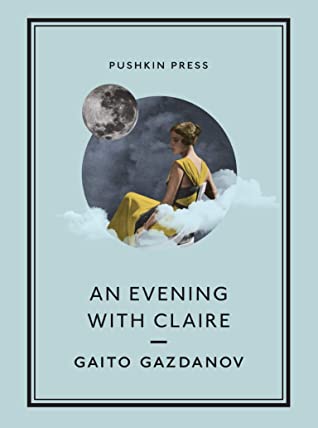
An Evening with Claire by Gaito Gazdanov – Translated by Bryan Karetnyk

When An Evening with Claire was originally published in 1930, Russian author Gaito Gazdanov was living in Paris and hadn’t seen his home country for nearly a decade. This, his first novel, was a success for Gazdanov, bringing him to the attention of other émigré writers, and now that I’ve read it I can understand why. It’s not my usual sort of book but I was drawn to it because I’ve enjoyed other books which have been reissued by Pushkin Press recently and because, apart from Mikhail Bulgakov and Boris Pasternak, I can’t think of any other 20th century Russian authors that I’ve read. This new edition has an introduction by Bryan Karetnyk, who is also responsible for the excellent English translation, which I found very readable.

The novel opens with our narrator, Kolya, in Paris spending an evening with Claire while her husband is away from home. Although we know very little about Kolya’s relationship with Claire at this stage, we do learn that he first met her ten years ago and has been in love with her ever since. However, they have spent most of that time apart and have only now been reunited. Later that evening, while Claire is asleep, Kolya remembers their first meeting, along with many of the other significant moments in his past. As he continues to remember and reminisce, the story of his life begins to take shape: his childhood, his schooldays, his relationships with family members and his experiences during the Russian Revolution and the Civil War that followed.

We actually see very little of Claire herself and I never really felt that I knew her or understood the sort of person she was, but that didn’t matter too much because the main part of the novel concentrates on Kolya’s own history as it unfolds through a chain of memories. His love for the absent Claire is always there and can be seen as a symbol of hope as he dreams of meeting her again one day. I enjoyed the first half of the novel, which includes anecdotes from Kolya’s childhood and his education at a strict military school and gymnasium, but the second half is more interesting as he begins to remember his time serving with the White Army in the Russian Civil War. It all feels very autobiographical and although I don’t know much about Gaito Gazdanov, I’m sure he must have been drawing on some of his own personal experiences and feelings in the writing of this novel.

At just over 200 pages in this edition, An Evening with Claire is a very short novel, but I thought it was the right length for the story being told. In general, I prefer books with more plot and this one has very little, but while this might have been a problem for me in a longer novel, there was just enough here to interest me and hold my attention throughout those 200 pages. This may sound like a strange comparison, but I was reminded of one of my other recent reads, Goodbye Mr Chips, another short book published in the same decade in which a man is looking back on episodes from earlier in his life. They share a focus on the power of memory, recollections of better days and regret for a disappearing world – which are also the reasons why I think An Evening with Claire would have resonated so much with other Russian émigrés of the 1930s. I would be happy to read more by Gazdanov and I see there are four of his other books available in English from the same publisher.

Thanks to Pushkin Press for providing a copy of this book for review via NetGalley.