Another Classics Club Spin!

The Classics Club

It’s time for another Classics Club Spin and after enjoying my last few spin books I’m quite excited about this one.

If you need a reminder, here are the rules:

* List any twenty books you have left to read from your Classics Club list.
* Number them from 1 to 20.
* Next Monday the Classics Club will announce a number.
* This is the book you need to read by 5th January.

And this is my list:

1. David Copperfield by Charles Dickens
2. The Woodlanders by Thomas Hardy
3. A Country Doctor’s Notebook by Mikhail Bulgakov
4. Crime and Punishment by Fyodor Dostoevsky
5. The Vicomte de Bragelonne by Alexandre Dumas
6. The Glass-Blowers by Daphne du Maurier
7. The Sea-Hawk by Rafael Sabatini
8. Prince of Foxes by Samuel Shellabarger
9. The Return of the Native by Thomas Hardy
10. I, Claudius by Robert Graves
11. Excellent Women by Barbara Pym
12. Mary Anne by Daphne du Maurier
13. Bellarion by Rafael Sabatini
14. The Heart of Midlothian by Walter Scott
15. Lorna Doone by R.D. Blackmore
16. The Day of the Triffids by John Wyndham
17. Vanity Fair by William Makepeace Thackeray
18. The Leopard by Giuseppe Tomasi di Lampedusa
19. Around the World in Eighty Days by Jules Verne
20. Oliver Twist by Charles Dickens

I’m happier with this list than I’ve been with any of the other lists I’ve put together for the spin because I’m genuinely looking forward to reading all of those twenty books. I’m not in the right mood at the moment to try to force myself to read something I don’t really feel like reading.

Usually I stick to one book per author for my spin lists but this time I’ve included some of my favourite authors more than once.

Have you read any of these books? Which one would you be hoping for?
The Classics Club Spin number is…

The Classics Club

Number 17

Last week I decided to take part in the Classics Club Spin. The rules were simple – list twenty books from your Classics Club list, number them 1 to 20, and the number announced today (Monday) represents the book you have to read before 6th October 2014.

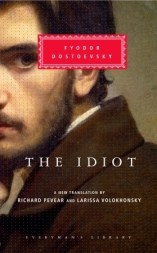
The number that has been selected is 17, which means the book I’ll be reading is:

The Idiot

The Idiot by Fyodor Dostoevsky

I have to admit this is not one of the titles on my list that I was hoping for, but I’m prepared to give it a try! I had a failed attempt at reading Crime and Punishment a few years ago, so I’m hoping I might have more luck with a different book.

If you took part in the spin are you happy with your result?

The Classics Club Spin #7

The Classics Club

It’s time for another Classics Club Spin. I was hoping there would be one this month! As always, here are the rules:

* List any twenty books you have left to read from your Classics Club list.
* Number them from 1 to 20.
* Next Monday (August 11th) the Classics Club will announce a number.
* This is the book you need to read during August and September.

And this is my list:

1. Shirley by Charlotte Brontë
2. The Return of the Native by Thomas Hardy
3. Excellent Women by Barbara Pym
4. A Country Doctor’s Notebook by Mikhail Bulgakov
5. The Vicomte de Bragelonne by Alexandre Dumas
6. The Age of Innocence by Edith Wharton
7. The Hunchback of Notre Dame by Victor Hugo
8. The Cloister and the Hearth by Charles Reade
9. Vanity Fair by William Makepeace Thackeray
10. Germinal by Emile Zola
11. David Copperfield by Charles Dickens
12. The Heir of Redclyffe by Charlotte M. Yonge
13. The Mill on the Floss by George Eliot
14. The Heart of Midlothian by Sir Walter Scott
15. The Glass-Blowers by Daphne du Maurier
16. The Leopard by Giuseppe Tomasi di Lampedusa
17. The Idiot by Fyodor Dostoevsky
18. East of Eden by John Steinbeck
19. Lorna Doone by R.D. Blackmore
20. Around the World in Eighty Days by Jules Verne

I’m not dividing these into categories as I had enough trouble just deciding on my twenty books, but I’ve tried to include a mixture of books that I’m looking forward to reading and books that I feel more hesitant about.

Now I have to wait until next Monday to see what I’ll be reading. Which numbers do you think I should be hoping for?

Classics Club July Meme: Biographies

The Classics Club

This month’s Classics Club Meme question is:

Have you ever read a biography on a classic author? If so, tell us about it. If you had already read works by this author, did reading a biography of his/her life change your perspective on the author’s writing? Why or why not? // Or, if you’ve never read a biography of a classic author, would you? Why or why not?

Looking through my list of books reviewed here on my blog, I can only see three or four biographies of classic authors that I’ve read in the last five years. I’ve also read some fictional biographies (such as The Taste of Sorrow by Jude Morgan) but they’re not quite the same thing! When I read a book, classic or otherwise, I do like to know some basic information about the author (whether they are male or female, which country they are from, how old they are, etc) but I can usually get that information from the book cover or ‘about the author’ page. Beyond that, I don’t usually feel any need to know every detail of the author’s life and prefer just to concentrate on enjoying their work.

One biography that I did enjoy was Claire Tomalin’s Charles Dickens: A Life. It didn’t leave me with a very good opinion of Dickens as a person, but it was interesting to see how people and events from his personal life inspired his fictional plots and characters. Having also read Tomalin’s Samuel Pepys: The Unequalled Self, which is another excellent book, I would like to read more of her work at some point, despite my usual lack of interest in reading biographies. Her book on Thomas Hardy sounds the most appealing to me, but I’ve been waiting until I’ve finished reading all of Hardy’s novels first.

Earlier this year I read The Secret Life of Wilkie Collins by William M. Clarke but although Collins is one of my favourite classic authors, I was a bit disappointed with this particular biography. There’s a lot of information on Collins’ private life (though to be fair, you would expect that from the title) but Clarke doesn’t spend much time discussing his writing. He does occasionally show how aspects of Wilkie’s personal life may have related to his work, but there’s not enough of this and when I reached the end of the book I didn’t feel I’d gained any real insights.

While I did learn a lot about Collins’ and Dickens’ lives from these two biographies, I can’t really say that they changed how I feel about their writing. For the purposes of this meme, a better book for me to mention here is probably the biography of Daphne, Angela and Jeanne du Maurier which I read last year – Daphne du Maurier and Her Sisters by Jane Dunn. Although I had a few problems with this biography too (which I’ve explained in my review) I do think Jane Dunn did a good job of explaining how the girls’ childhood experiences and influences shaped their future careers. I’ve never read anything by Angela du Maurier, but I know that Daphne put a lot of herself into her writing and many of her novels include autobiographical elements – reading Dunn’s biography gave me a better appreciation of this.

Well, it seems I’ve found more to say on the subject of biographies than I’d expected! Do you enjoy reading biographies of classic authors? Which ones have you read?

And my Classics Club Spin book is…

The Classics Club

Number 1

Last week I decided to take part in the sixth Classics Club Spin. The rules were simple – list twenty books from your Classics Club list, number them 1 to 20, and the number announced today (Monday) represents the book you have to read before 7th July 2014.

The number that has been selected is 1, which means the book I’ll be reading is:

The Mayor of Casterbridge

The Mayor of Casterbridge by Thomas Hardy

I’m happy with this. There were some other titles on my list that I would have preferred, but I do love Thomas Hardy and I haven’t read any of his books for a while.

If you participated in the spin too, were you pleased with your result?

The Classics Club Spin #6 – My list

The Classics Club

I was hoping the Classics Club would be hosting another spin this month as I haven’t been making much progress with my Classics Club list recently, so today’s announcement couldn’t have been more welcome!

Here are the rules:

* List any twenty books you have left to read from your Classics Club list.
* Number them from 1 to 20.
* Next Monday (May 12th) the Classics Club will announce a number.
* This is the book you need to read during May and June!

And here is my Spin List:

1. The Mayor of Casterbridge by Thomas Hardy
2. Family Roundabout by Richmal Crompton
3. A Country Doctor’s Notebook by Mikhail Bulgakov
4. The Day of the Triffids by John Wyndham
5. The Vicomte de Bragelonne by Alexandre Dumas
6. The Heir of Redclyffe by Charlotte M. Yonge
7. The Hunchback of Notre Dame by Victor Hugo
8. The Idiot by Fyodor Dostoevsky
9. The Cloister and the Hearth by Charles Reade
10. The Remains of the Day by Kazuo Ishiguro
11. The Glass-Blowers by Daphne du Maurier
12. Around the World in Eighty Days by Jules Verne
13. The Sea Hawk by Rafael Sabatini
14. David Copperfield by Charles Dickens
15. Excellent Women by Barbara Pym
16. Romola by George Eliot
17. Lorna Doone by R.D. Blackmore
18. The Charterhouse of Parma by Stendhal
19. The Leopard by Giuseppe Tomasi di Lampedusa
20. Vanity Fair by William Makepeace Thackeray

I can’t wait for next Monday to find out which book I’ll be reading! Are there any numbers you think I should be hoping for – or hoping to avoid?

Classics Club March Meme: Literary Periods

The Classics Club
It’s been a while since I last answered one of the Classics Club’s monthly memes, but this one appealed to me and I thought I’d join in. The question this month is:

What is your favorite “classic” literary period and why?

This is a very easy question for me to answer. My favourite literary period is, and always has been, the Victorian period (1837-1901). I love the style of Victorian writing and while I do also enjoy reading books from other periods, I usually feel much more comfortable with a Victorian classic than with a classic from the 20th century. The reasons people sometimes give for disliking Victorian novels – the length, the wordiness, the long descriptive passages, the habit of directly addressing the reader – have never really been a problem for me. And some of the greatest characters and most memorable plots in literature can be found in Victorian fiction too.

One of the first Victorian novels I remember reading was A Christmas Carol by Charles Dickens, which I was given as a Christmas present as a child. It was a lovely illustrated hardback edition which I still have and sometimes re-read at Christmas. This was followed several years later by Emily Bronte’s Wuthering Heights and Charlotte Bronte’s Jane Eyre, both of which I read as a young teenager and loved. It took me a lot longer to get to Anne Bronte’s novels but when I eventually did I enjoyed those as well, particularly The Tenant of Wildfall Hall.

Our Mutual FriendDespite enjoying A Christmas Carol when I first read it all those years ago, it’s only more recently that I’ve come to appreciate Charles Dickens’ other work. Our Mutual Friend found its way onto my books of the year list in 2011 and A Tale of Two Cities did the same in 2013.

Dickens and the Brontes are probably the first names that come to mind for most people when they think of Victorian novelists, but there are so many others that I love too. As the Victorian period covers several decades, it obviously encompasses a wide range of different types of books and authors from Gothic novels such as Bram Stoker’s Dracula and Sheridan Le Fanu’s Uncle Silas to the wonderful Victorian sensation novels of Wilkie Collins, Mary Elizabeth Braddon and Ellen Wood (The Woman in White, Lady Audley’s Secret and East Lynne are some of my favourites) and the comedy of Jerome K. Jerome who wrote the hilarious Three Men in a Boat and Three Men on the Bummel.

Sylvia's LoversAnthony Trollope is another of my favourite Victorians (I have now read all six of his Chronicles of Barsetshire and am currently in the middle of his first Palliser novel, Can You Forgive Her?) and so is Thomas Hardy – I’ve loved all of his books that I’ve read so far, especially Tess of the d’Urbervilles and A Pair of Blue Eyes.

As I come to the end of this post I realise I haven’t even mentioned George Eliot or Elizabeth Gaskell – or any of the non-British authors who I’m never quite sure whether to class as ‘Victorian’ or not but who wrote during the same period. And there were some classic children’s novels published during the Victorian era too. I think Black Beauty may actually have been the very first Victorian novel I ever read!

Do you enjoy reading Victorian literature or is there another period that you prefer?

If you do like the Victorians, do you have any favourite authors or books that I haven’t mentioned here?