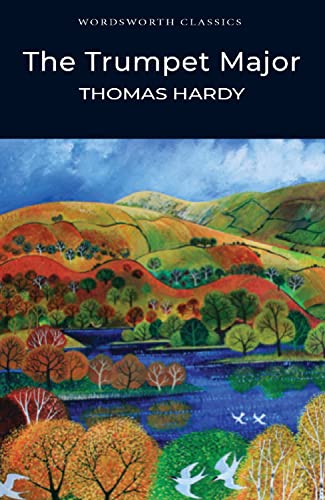
The Trumpet-Major by Thomas Hardy

I love Thomas Hardy so was pleased when The Trumpet-Major was chosen for me in the recent Classics Club Spin. The deadline for finishing our Spin books was 3rd March, but I’m late as usual!

First published in 1880, The Trumpet-Major is set in Hardy’s fictional Wessex during the Napoleonic Wars (making it his only historical novel). Beginning in 1804, it follows the story of Anne Garland and her three suitors: miller’s son John Loveday, who is the Trumpet Major of the title; his brother Bob, a sailor whom Anne has secretly loved since she was a young girl; and Festus Derriman, nephew of the local squire. Anne’s mother, who marries Miller Loveday, would prefer Anne to pick Festus, but it quickly becomes obvious to the reader that he is spiteful and cowardly and that Anne’s choice will be between Bob and John.

With John being a soldier and Bob a sailor in the merchant navy, they each have to spend long periods of time away from home, allowing Anne to grow closer to the other in his absence. It’s difficult to know which, if either, she will eventually accept; John is a typical loyal, steadfast Hardy hero, but Bob, although more immature and less trustworthy, is clearly the one she has lost her heart to. There are lots of twists and turns along the way as the situation becomes complicated by misunderstandings, the arrival of another woman, and the scheming of Festus Derriman. There’s a subplot involving Squire Derriman – known as Uncle Benjy – who is looking for a place to hide his will, but otherwise the novel never really loses its focus on Anne and the three young men, which makes the story easy to follow and, for a Victorian novel, relatively short and quick to read.

The action all takes place in and around Budmouth, a fictional town based on Weymouth on the Dorset coast. This is not a military novel, despite the title and the occupations of two of the main characters, but it plays out against a backdrop of the Napoleonic Wars and the people of Budmouth live in fear of a French invasion at any minute. It’s quite a light story, in comparison with Hardy’s more famous tragedies like Jude the Obscure and Tess of the D’Urbervilles, but the constant threat of war gives it a more serious tone than it would otherwise have had, and there are some dramatic episodes such as a false alarm which causes Anne’s village to begin evacuating in panic and the arrival of a naval press gang.

The Trumpet-Major has a happier ending than many of Hardy’s other books, but I didn’t personally find it very satisfying and would have preferred it to end in a different way. Still, I enjoyed this book and although I would definitely describe it as one of his lesser novels, I can honestly say that I haven’t yet read anything by Hardy that I didn’t like! I only have two of his novels left to read and they are probably his most obscure ones – The Well-Beloved and The Hand of Ethelberta – so I’ll be curious to find out what I think of those two.

This is book 43/50 read from my second Classics Club list.

Book 11/50 for the Historical Fiction Reading Challenge 2024
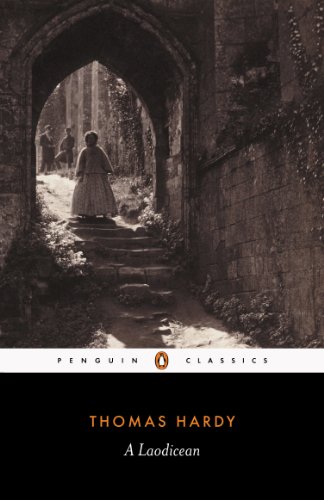
A Laodicean by Thomas Hardy

First published in Harper’s New Monthly Magazine in 1880-81, A Laodicean; or, The Castle of the De Stancys: A Story of To-Day is one of Thomas Hardy’s lesser known novels and one that I very much enjoyed.

Architect George Somerset is exploring the countryside near the village of Sleeping-Green one evening when he stumbles upon a castle. He learns that this is Stancy Castle, the ancestral home of the De Stancy family which has recently been purchased by the wealthy railway contractor, John Power. Mr Power has since died, leaving the castle to his daughter, Paula, who is planning to carry out extensive renovations on the ancient building. When Paula is introduced to Somerset she considers commissioning him to do the work on the castle, but before the restoration even begins Somerset finds himself falling in love with her.

It seems that Somerset has a rival for Paula’s love, however – Captain De Stancy, an impoverished descendant of the aristocratic family who once owned the castle. The Captain’s son, William Dare, has seen a chance to get his hands on some of the Power fortune and is determined that his father must marry Paula, no matter what.

Paula herself is the Laodicean of the title, described by the local minister as ‘lukewarm, and neither cold nor hot’, like the people of the church of Laodicea in the Bible. Throughout the novel she vacillates between Somerset and De Stancy, attracted to both of them in different ways and unwilling to fully commit to one or the other. This reflects the way she feels about society in general. As an industrialist’s daughter who has installed a telegraph wire and a new clock at Stancy Castle, Paula represents science and progress but at the same time she likes the idea of marrying into an aristocratic family and becoming a De Stancy. The clash between tradition and a new way of life is one of the recurring themes that comes up again and again in Hardy’s novels.

Although Paula irritated me with her inability to make up her mind and give either man a definite answer, I found Somerset’s infatuation with her quite annoying as well – I wanted him to notice Paula’s friend, Charlotte, who I think would have been a much better choice for him! Irritating characters aside, I found the story very entertaining, mainly because of the machinations of William Dare, who will stop at nothing to ensure Paula chooses his father. He uses forged telegrams, fake photographs and all sorts of other devious tricks to try to get what he wants and this makes the book more of a pageturner than I’d expected at first.

A Laodicean doesn’t really have the pastoral feel of most of Hardy’s other novels; in fact, most of the second half is set in Europe where the various sets of characters wander around the casinos of Monte Carlo, the spas of Baden and the busy streets and squares of Strasbourg. Things do become a bit far-fetched in this section, with lots of coincidental meetings, but I enjoyed reading something different from Hardy after so many books set in his Wessex countryside.

Although this hasn’t become one of my favourite Hardy novels, it’s still a very good one. I think I only have three more of them to read, as well as some of his short story collections. Have you read this one? What did you think?

This is book 36/50 from my second Classics Club list.

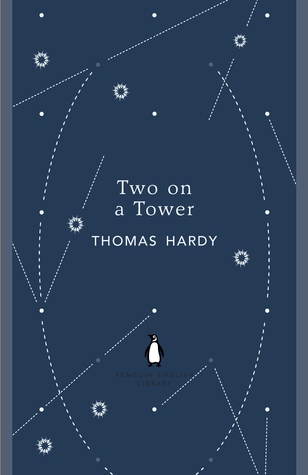
Two on a Tower by Thomas Hardy

This was the book chosen for me in the most recent Classics Club Spin and although it wasn’t one of the books on my list that I was particularly hoping for, I was pleased with the result as Thomas Hardy is one of my favourite Victorian authors. Today is the deadline for posting our reviews and for once I have managed to finish in time!

Two on a Tower was published in 1882 and is one of Hardy’s less well known novels, but that doesn’t mean it isn’t a good one. Although I wouldn’t rank it amongst my top three or four, I still thoroughly enjoyed it. It falls into the group of novels Hardy himself classed as ‘romance and fantasy’ and is set, like many of his other books, in his fictional Wessex. The romantic aspect of the book concerns Lady Viviette Constantine and her relationship with the younger Swithin St Cleeve.

Twenty-year-old St Cleeve lives with his elderly grandmother and dreams of becoming a famous astronomer. He has created an observatory in an old tower on land owned by Lady Constantine and her husband, who is away in Africa. When Lady Constantine meets the young man who is using her tower, she is struck by his beauty and by his passion for his work, and as Swithin introduces her to the wonders of the night sky with its planets and constellations, she becomes aware that she has fallen in love with him. She and Swithin spend more and more time together in their own private world at the top of the tower, hidden away from the prying eyes of society whom, she knows, would disapprove of their relationship – because she is ten years older and belongs to a different social class.

Even after news arrives from Africa of the death of Lady Constantine’s husband, the barriers of age and class still stand in their way. Will she and Swithin ever be able to marry and live together openly? How long will she manage to keep her romance a secret from her scheming brother Louis? And can she fend off the unwelcome attentions of the Bishop of Melchester?

Two on a Tower has a slightly different feel from most of the other Hardy novels I’ve read. It’s quite a gentle story, with none of the truly shocking, tragic scenes that you would find in books like Jude the Obscure and Tess of the d’Urbervilles. That’s not to say there is no drama, because there is, especially at the end – Hardy certainly doesn’t make things easy for Viviette Constantine and Swithin St Cleeve – but what I will remember most from this book are the descriptions of the stars in the night sky and the slow development of the two lovers’ relationship. However, I thought that the sense of place – usually such a strong element of Hardy’s writing – was weaker than usual. Apart from the tower itself, I felt that the surrounding landscape never came to life in the same way as, for example, Egdon Heath in The Return of the Native. It was as if, by concentrating on the wider universe, Hardy had less time to spend on the smaller details of everyday life. Maybe that was intentional; I’m not sure.

As I’ve said, this book hasn’t become a favourite – and I felt less emotionally invested in the central romance than I would have liked, probably because, although I completely believed in Viviette’s love for Swithin, I wasn’t convinced that she really meant much more to him than his telescope did. I was still gripped by their story, though, and overall, I really enjoyed Two on a Tower.

I have four Hardy novels left to read and they are all obscure ones too: The Well-Beloved, A Laodicean, The Hand of Ethelberta and The Trumpet-Major. If you have read them, please let me know which one I should read next!

This is book 14/50 read from my second Classics Club list.

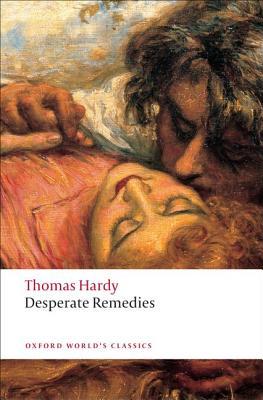
Desperate Remedies by Thomas Hardy

Desperate Remedies (1871) was Thomas Hardy’s first published novel, following an earlier manuscript which failed to find a publisher and was later destroyed. I love Thomas Hardy’s books and have been looking forward to reading this one as it has been described as a sensation novel, a genre of Victorian fiction that I’ve enjoyed since I first discovered authors like Wilkie Collins, Mary Elizabeth Braddon and Ellen Wood, in the years before I started my blog.

At the beginning of the novel, we learn that our heroine, Cytherea Graye, was named after her father’s one true love, a woman who disappeared without explanation and left him heartbroken. Mr Graye later married and had two children – Cytherea and her brother Owen – whom he raised alone after his wife’s death. When Mr Graye himself dies, having made some poor business decisions in the final years of his life, Cytherea and Owen are faced with making their own way in the world. Owen decides to pursue a career as an architect, while his sister advertises for work as a governess.

Finding it harder to get a job than she had expected, Cytherea eventually accepts a position as lady’s maid to Miss Aldclyffe, a middle-aged unmarried woman who seems to be hiding a number of secrets. Why does she have so much affection for Cytherea, whom she has never met until now? Why does she go to such great lengths to employ the mysterious Aeneas Manston as steward on her estate – and why is she so keen to encourage Cytherea to marry him? Manston is another person with secrets and Cytherea is reluctant to marry someone she feels she can’t fully trust, especially as she has already fallen in love with Edward Springrove, her brother’s friend. Unfortunately, Edward is engaged to another woman – and when Cytherea’s financial situation becomes increasingly desperate, she finds herself drawn into Aeneas Manston’s schemes.

I loved Desperate Remedies! It starts off slowly, introducing Cytherea and her family background and explaining the circumstances that lead to her arrival at Miss Aldclyffe’s house, but it quickly develops into an intriguing and entertaining page-turner with plenty of twists and surprises. I liked Cytherea; there are stronger, more interesting heroines in some of Hardy’s later novels, but Cytherea is by no means a weak and helpless woman and I enjoyed following her story.

I did find two of the novel’s big secrets quite easy to guess, but there were still times when I wasn’t sure where the story was going and when the actions of one character or another left me mystified. The plot makes it feel quite similar to a Wilkie Collins novel, but there are still some elements which make it recognisable as a book written by Thomas Hardy, such as the descriptions of the landscape and the portrayal of a small rural community. This isn’t one of my absolute favourite Hardy novels – I think some of his later ones are better – but it’s still a great read.

The remaining novels I have left to read by Hardy are all books that I know nothing about: The Well-Beloved, Two on a Tower, A Laodicean, The Hand of Ethelberta and The Trumpet-Major. Does anyone have any recommendations from those five? I also haven’t read any of his short story collections, Wessex Tales, Life’s Little Ironies and A Group of Noble Dames, so I still have lots of Hardy to look forward to.

This is book 4/20 of my 20 Books of Summer and book 6/50 from my second Classics Club list.

The Woodlanders by Thomas Hardy

the-woodlanders I love Thomas Hardy but have been resisting the temptation to rush through his novels too quickly. I’m dreading there being none left for me to discover for the first time, so since reading Tess of the d’Urbervilles in 2010, I have been limiting myself to one or two a year. It’s been a while since my last Hardy, The Return of the Native, so a few weeks ago I decided it was time to read another one.

The Woodlanders, published in 1887, is set in the small woodland community of Little Hintock. For generations, the people of Little Hintock have made their living from the trees around them. The timber merchant George Melbury, however, is keen for his daughter, Grace, to experience life outside the woodlands and so he sends her away to be educated. The novel opens as she returns to the village after several years of absence and finds herself looking at her old home through new eyes.

Although Grace is promised to Giles Winterborne, a neighbouring woodsman, now that she has become used to a different way of life she can’t help noticing his lack of sophistication, causing her father to question whether the marriage he had planned for her is still appropriate. Grace’s return to Little Hintock coincides with the arrival of a newcomer – Edred Fitzpiers, a young doctor whom Melbury decides will make a much more suitable husband for his daughter than Giles. Despite his good intentions, however, Melbury’s meddling only succeeds in making everyone unhappy in typical Thomas Hardy fashion!

One thing I love about Hardy’s books is that although most of them are set in his fictional Wessex, each one covers a different aspect of Wessex life, from the rural farms of Far From the Madding Crowd and the country fairs and markets of The Mayor of Casterbridge to The Return of the Native’s wild and beautiful Egdon Heath. In The Woodlanders, we see how the lives of the characters have become defined by the woods which surround them, we see Giles Winterborne cutting down trees and pressing apples to make cider, and we see his neighbour, a young woman called Marty South, stripping bark from branches and shaping wood into spars to sell for thatching. It’s the two outsiders in the story – the newly arrived Dr Fitzpiers and the lady of the manor, Felice Charmond – who disrupt the harmony of life in Little Hintock, and Grace who is caught between the sophisticated, cultured world they represent and the simple traditions of her childhood home and friends.

Although this book isn’t as dramatic or tragic as some of Hardy’s others, there were still some scenes near the end that moved me to tears and others that had me holding my breath – and I found the final page beautifully sad and poignant. Not everyone gets the happy ending I would have liked, but that’s true to life, I suppose, and I don’t really expect happy endings from Hardy anyway.

The Woodlanders was apparently one of Hardy’s own favourites; he is quoted as having said, “On taking up The Woodlanders and reading it after many years, I like it as a story best of all”. Now that I’ve read more than half of his novels, I have to say that I think I agree with him. It’s not as powerful or as heartbreaking as Tess or Jude the Obscure, for example, but I really enjoyed it and would definitely include it in my top two or three Hardy novels read so far.

My Commonplace Book: November 2016

A summary of this month’s reading, in words and pictures.

commonplace book
Definition:
noun
a notebook in which quotations, poems, remarks, etc, that catch the owner’s attention are entered

Collins English Dictionary

~

tensyoin

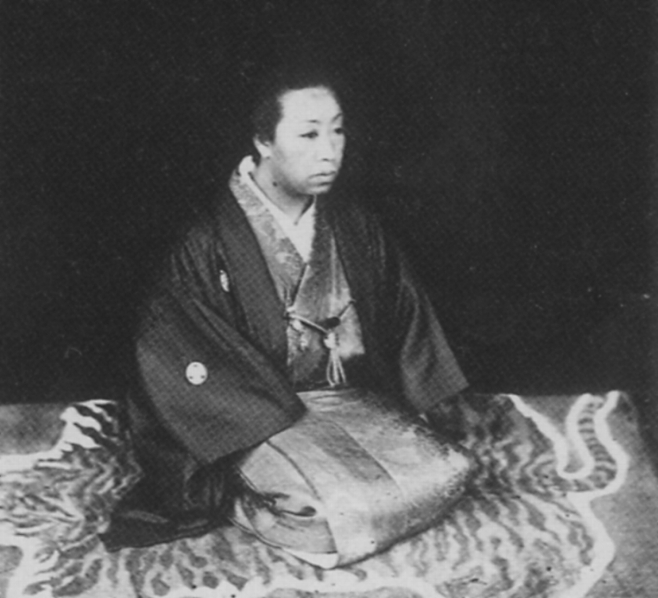
“Barbarians,” she murmured in tones of disbelief. “Barbarians.” Perhaps if she said the word often enough she could defuse the threat. “But in that case…we’re finished. We’re all dead.” It was just as Lord Nariakira had warned. These were not gentle Hollanders. These were other beings, those nameless hordes who’d rampaged across China. Barbarians like those didn’t come in peace. They threatened their lives, their world, everything they knew.

Things were spinning around her. The world was turning upside down. But she couldn’t help feeling curious as well. She wished she could catch a glimpse of these exotic creatures with her own eyes.

The Shogun’s Queen by Lesley Downer (2016)

~

“And then do ye wait and see more; there’ll be plenty of opportunity. Time enough to cry when you know ’tis a crying matter; and ’tis bad to meet troubles half-way.”

The Woodlanders by Thomas Hardy (1887)

~

My family were not readers, but Xavier Mountstuart’s writings had inspired and transported me. I had devoured The Courage of the Bruce and The Black Prince, then graduated to the Indian writings: The Lion of the Punjab, of course, and the tales of bandits and rebels in the foothills of Nepal. I had read of white forts and marble palaces and maharajas’ emeralds; of zenanas and nautch girls in the Deccan; of the sieges and jangals. I had even read a short tract about Hindooism, vegetarianism and republicanism, which had left me a little confused. Mountstuart seemed to me the very acme of Byronic manhood. It was not simply that he was a poet and writer of genius, but that he had lived his writings.

The Strangler Vine by MJ Carter (2014)

~

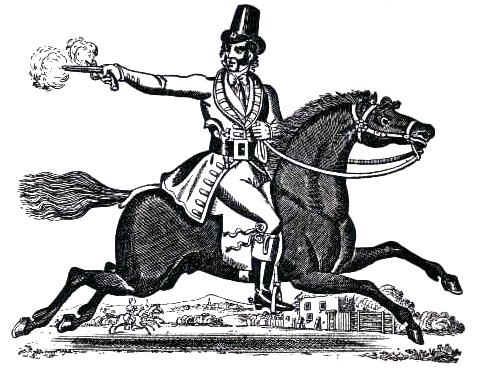
highwayman

“Now, what mean you by that?”

“Just that I am a common highwayman, Miss Betty.”

She stared at him for a moment, and then resumed her work.

“You look it.”

John cast a startled glance down his slim person.

“Is that so, madam? And I rather flattered myself I did not!”

The Black Moth by Georgette Heyer (1921)

~

“No, I don’t care for novels,” she said, shaking her head. “I’ve never really understood them, if I’m honest.”

“In what way?” I asked, confused by how the concept of the novel could be a difficult one to understand. There were some writers, of course, who told their stories in the most convoluted way possible — many of whom seemed to send their unsolicited manuscripts to the Whisby Press, for instance — but there were others, such as Jack London, who offered their readers such a respite from the miserable horror of existence that their books were like gifts from the gods.

The Absolutist by John Boyne (2011)

~

britannia

Frances struck an attitude, sitting upright with head poised high and left hand outstretched as though she grasped an invisible weapon. “Of course, when I am really posing for Roettier, the engraver, I shall wear a helmet and hold a trident and I shall have flowing, Grecian robes. It was altogether the King’s idea, but James of York thought it should be called Britannia. To represent the nation’s might.”

Lady on the Coin by Margaret Campbell Barnes (1963)

~

“My thoughts are my own,” I answered: “and though you keep my person prisoner, these are beyond your control.”

Redgauntlet by Sir Walter Scott (1824)

~

“Not to my knowledge, sir,” said the Viscount.

“I’m glad to hear it! But if you had agreed to the marriage I planned for you a son of yours might have been sitting on my knee at this moment!”

“I hesitate to contradict you, sir, but I find myself quite unable to believe that any grandchild attempting — at this moment — to sit on your knee would have met with anything but a severe rebuff.”

Charity Girl by Georgette Heyer (1970)

~

aemilia-lanyer-poetry

She has a soft spot for little Peter; he had asked why he needed to learn to read when he first arrived.

“Because without reading you only have half a life,” she’d said, watching his puzzled face. “Reading will open doors for you to new worlds.” He had looked at her in wonder then.

“Like the men who sail to the Americas?”

“Yes, something like that.”

The Girl in the Glass Tower by Elizabeth Fremantle (2016)

~

Favourite books this month: The Woodlanders and The Strangler Vine

The Return of the Native by Thomas Hardy

The Return of the Native Egdon Heath, part of Hardy’s fictional Wessex, is a wild and haunting place, steeped in history and superstition. Many of the people who live and work there love the heath and appreciate its beauty, but there are some – including Eustacia Vye – who find the loneliness oppressive. Eustacia, who lives with her grandfather in an isolated cottage on the heath, is desperately looking for a way to escape and believes she has found it in Clym Yeobright.

Clym is the returning native of the title, home for Christmas from Paris where he has been working as a diamond merchant. Clym, who dislikes the diamond trade, is planning to stay at home and become a schoolmaster, but Eustacia sets her sights on marrying him in the hope that she can persuade him to take her back to Paris. After all, there is nothing to keep her on Egdon Heath now that her former lover, the innkeeper Damon Wildeve, has married Clym’s cousin, Thomasin.

Clym’s mother, Mrs Yeobright, is opposed to the idea of both marriages – her son’s with Eustacia and her niece’s with Wildeve – but although she reluctantly accepts Thomasin’s decision, a series of misunderstandings and disagreements damages her relationship with Clym and this will have tragic consequences.

I have mentioned five of the novel’s six main characters so far: the sixth is Diggory Venn, a reddleman (a seller of red ochre, which farmers use to mark their sheep). Diggory is in love with Thomasin and remains quietly devoted to her even after she marries Wildeve. The lives of these six people will draw closer together, with the actions of each one impacting on all of the others. For some, there will be a happy ending, but for others there will be only unhappiness and tragedy.

The Return of the Native was Thomas Hardy’s sixth published novel and first appeared as a serial in 1878. I’ve read almost half of his novels now and always enjoy my visits to Wessex and my glimpses of rural life in the 19th century. This book has a very memorable and atmospheric setting, with the heath itself being at the centre of the story. The way in which the lives of the characters are shaped by the heath is one of the driving forces of the plot, particularly as Clym and Eustacia have such different feelings about it:

Take all the varying hates felt by Eustacia Vye towards the heath, and translate them into loves, and you have the heart of Clym.

A common theme in Hardy’s novels is the progress of the industrial revolution and nostalgia for a way of life that, even in Hardy’s day, was rapidly disappearing. An example of this in The Return of the Native is the character of Diggory Venn, the reddleman, whose skin and clothes are stained with the red dye that he sells.

The traveller with the cart was a reddleman — a person whose vocation it was to supply farmers with redding for their sheep. He was one of a class rapidly becoming extinct in Wessex, filling at present in the rural world the place which, during the last century, the dodo occupied in the world of animals. He is a curious, interesting, and nearly perished link between obsolete forms of life and those which generally prevail.

We also meet some of the local people who live on Egdon Heath – many of whom work as furze (gorse) cutters. These characters provide some moments of comedy and also allow Hardy to explore some of the superstitions, customs and traditions of the region (one of the most memorable scenes occurs near the beginning of the book when dozens of bonfires are lit all around the heath).

As I mentioned above, not all of the characters in the novel are rewarded with a happy ending – but this is something you have to be prepared for with Hardy. The story does finish on a more positive note, although it was interesting to read the footnote at the end explaining that the ending was originally going to be slightly less positive and was changed during the serialisation of the novel.

I loved The Return of the Native, though not as much as some of the other Hardy novels I’ve read. I have one more to read on my Classics Club listThe Woodlanders – which I’m looking forward to reading.