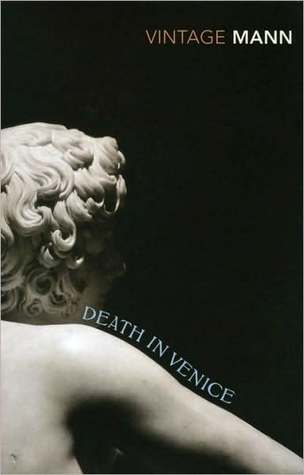
Death in Venice and Other Stories by Thomas Mann

Death in Venice When I decided to participate in this year’s German Literature Month (hosted by Caroline and Lizzy) I discovered that I already had two books by German authors unread on my shelves: Death in Venice and Other Stories by Thomas Mann and Wolf Among Wolves by Hans Fallada. I chose the Thomas Mann simply because the book was a lot shorter and I could be sure of finishing it before the end of the month, but now that I’ve read it I wish I had gone with my heart and chosen Hans Fallada, whose books I have read before and loved. I did find a lot to like and appreciate in Mann’s writing, but I’m not convinced yet that he’s really an author for me.

As well as the title novella, Death in Venice (1912), this edition includes six other stories by Thomas Mann. I read all of them, but will concentrate here on Death in Venice as it is by far the most famous story in this collection and the one I was most interested in reading.

Death in Venice tells the story of Gustav von Aschenbach, an ageing author suffering from writer’s block. He decides to travel in the hope that it will clear his mind and provide inspiration and the destination he settles on is Venice. Mann’s descriptions of Venice are beautifully written, even though at the time of Gustav von Aschenbach’s arrival the weather is dark, gloomy and oppressive, matching the overall mood of the story. I have been to Venice myself, so I found the descriptions of Aschenbach’s approach over the lagoon, his ride in the gondola and his trip across to the Lido particularly vivid.

While in Venice, von Aschenbach becomes intrigued by Tadzio, a beautiful young Polish boy who is staying with his family in the same hotel. Day by day, his infatuation with Tadzio grows; he finds himself watching out for the boy entering the breakfast room each morning and then tries to secretly follow him around Venice. Even when he learns that it may not be safe to remain in the city any longer, von Aschenbach is unable to tear himself away from Venice and Tadzio…and eventually, as the title suggests, his obsession will lead to a death in Venice.

Reading Death in Venice in 2015, it’s difficult not to feel disturbed by the story of a middle-aged man’s infatuation with a teenage boy – although I should point out that Aschenbach never touches or even speaks to Tadzio. The focus is on Aschenbach’s private feelings for the boy and how he chooses to deal with those feelings. I think at least part of his obsession can be attributed to an appreciation of beauty and the despair of a man who is growing older, knowing that his own youth is lost forever (towards the end of the novella, we see Aschenbach dye his hair and cover his wrinkles with make-up in an attempt to look younger). I found out after finishing the story that it was based on Thomas Mann’s real-life experiences and this made me think again about what he was trying to say and how he may have wanted it to be interpreted.

I found the other six stories in this collection a bit uneven, but they are all worth reading. Little Herr Friedemann (1897) – one of the earliest examples of Mann’s work included in the book – is a sad story of a man who was dropped on the floor as a baby and grew up with physical disabilities. Herr Friedemann has learned to cope with his lot in life and things aren’t going too badly for him…until he falls in love. The Joker (also 1897) has some similar themes, but I have to admit the details of this particular story have faded from my mind just a few days after reading it.

The Road to the Churchyard (1900) is a very short story about a widower who sets out to visit the churchyard and becomes irrationally angry with a boy (referred to only as ‘Life’) who is riding his bicycle along the path. This is followed by Gladius Dei (1902), in which a man called Hieronymus enters an art gallery in Munich and loses his temper when he sees a piece of immoral artwork displayed in the window.

Tristan (1903), one of the longer stories in the book, is a love story set in a sanatorium. It contains allusions to the legend of Tristan and Iseult, as well as some musical references and an exploration of attitudes towards life and death. Finally, Tonio Kröger (1903), another novella, follows the course of a man’s life from childhood to adulthood and, like Death in Venice, has some autobiographical elements.

I’m pleased to have finally read some of Thomas Mann’s work, but I found this an interesting book rather than an enjoyable one. I am not a huge fan of short story collections, though, so now I’m wondering whether I would have a better experience with one of his longer novels.

The Glassblower of Murano by Marina Fiorato

The Glassblowers of Murano Since reading Marina Fiorato’s Beatrice and Benedick last year, I’ve wanted to try another of her books. There were three on the shelf in the library, so I had a choice to make!

Two years ago, I visited Venice for the first time and, like many tourists, took a vaporetto to the island of Murano and went into one of the famous glass factories to watch a demonstration of glass blowing. It’s not surprising, then, that I was drawn to this particular book by the title, The Glassblower of Murano.

The novel follows Nora Manin as she undertakes a journey very similar to my own, visiting Murano and entering a glass workshop. Nora is not just a tourist, though – she is planning to start a new life in Venice and is hoping to get a job blowing glass. As the descendant of one of the most famous glassblowers in Venetian history, Corradino Manin, and a talented glass artist in her own right, Nora easily convinces the factory owner to employ her. However, as Nora begins to settle into her new job she learns something about her ancestor that she would rather not have known.

Alternating with Nora’s story is the story of Corradino, set in 1681. Like all glassblowers, Corradino is closely watched by the sinister Council of Ten and forbidden to leave Venice in case he gives away his glassmaking secrets, but one day he is approached by a Frenchman who makes a very tempting offer. Whether or not Corradino does betray the secrets of the glass is something Nora needs to discover if she is to restore not only her ancestor’s reputation but her own.

I enjoyed The Glassblower of Murano. It wasn’t perfect and it did feel like a first book (this was Marina Fiorato’s debut novel and having also read her newest one, Beatrice and Benedick, I think her writing has improved a lot over the years) but it was still an interesting, entertaining read and just what I was in the mood for. I loved the setting, of course, and could feel the author’s own love for Venice shining through on every page. The descriptions of glassblowing techniques are fascinating as well; I’ve never really given any thought as to how mirrors were made, so it was interesting to read about Corradino’s methods. I did wonder whether Corradino was based on a real person, but it seems that he’s an entirely fictional character – although the author’s portrayal of the 17th century world in which he lives feels real and convincing.

Usually when a book has dual time periods, I find that I have a preference for one over the other and this was no exception – the historical storyline was my favourite – but I did find the contemporary strand quite compelling too. I was so caught up in the stories of Nora and Corradino that I was almost (but not quite) able to overlook the flaws with the book, such as the implausible coincidences, the subplots that were started but never developed, and the fact that all of the characters apart from the two main protagonists lacked depth.

I had some problems with The Glassblower of Murano, then, but I thought it was an enjoyable book overall and I’m looking forward to reading her others. Her other novel set in Venice, The Venetian Contract, sounds appealing so maybe I’ll try that one next.

Bitter Greens by Kate Forsyth

Bitter Greens Since reading Kate Forsyth’s Brothers Grimm-inspired The Wild Girl last year, I have been looking forward to Bitter Greens, another novel with a Grimm connection. I’m sure most of us know, or have at least heard of, the fairy tale Rapunzel. Although this fairy tale was included in the Grimm Brothers’ 1812 collection, Children’s and Household Tales, it was actually based on a much earlier story, Persinette, which was published in 1698 and written by a woman called Charlotte-Rose de Caumont de La Force. In Bitter Greens, Kate Forsyth combines a re-telling of the Rapunzel story with a fascinating account of the life of Charlotte-Rose.

The novel begins in 1697, on the day that Charlotte-Rose is banished from the court of Louis XIV and sent to a convent. With her sharp tongue, sense of humour and spirited personality, it seems that Charlotte-Rose has been the cause of too much scandal for the Sun King’s liking and is now receiving her punishment. After the lively and opulent court of Versailles, Charlotte-Rose finds it very difficult to adapt to life in a strict and austere nunnery. The only thing that makes her days bearable is her friendship with one of the nuns, Soeur Seraphina, who entertains her with a story about a little Italian girl called Margherita…

Accused of stealing a handful of bitter greens from a witch’s garden, Margherita’s parents are forced to make a bargain with the witch: she will not report them for the theft if they agree to hand over their daughter as soon as she reaches the age of seven. And so Margherita finds herself taken from her parents and locked in a high tower by Lake Garda – a tower which can only be accessed when Margherita throws her long red hair from the window to form a ladder.

Margherita’s story unfolds slowly, a few chapters at a time, and alternates with the story of Charlotte-Rose who is looking back on her life, her love affairs and her time at court. There is also a third strand to the novel and in this we learn the history of Selena Leonelli, the witch of the fairy tale, who was once a Venetian courtesan known as ‘La Strega Bella’ and a model for the artist Titian. These three women lead lives which are in some ways very different but in others quite similar. Each has been touched by sadness and tragedy, but each woman proves herself to be strong and resilient in the end.

There’s just so much packed into this novel: the scandals and intrigues of the 17th century French court, a version of Rapunzel much darker and more compelling than the one I remember from my childhood, a vivid depiction of Renaissance Italy, magic and witchcraft, religious persecution, stories within stories, and much more. I was never bored, no matter which of the three women I was reading about. Charlotte-Rose is a wonderful character and I’m surprised that more authors of historical fiction haven’t used her as a subject for their novels. This is the first time I’ve had the pleasure of reading about her and I think it’s sad that she seems to have been largely forgotten by history.

Much as I loved Charlotte-Rose, though, I always found myself looking forward to returning to Margherita in her tower. She and Selena never felt quite as real to me as Charlotte-Rose did (which is maybe not surprising as they are supposed to be fairy tale characters, after all!) but I really enjoyed revisiting the Rapunzel story, which I hadn’t read or even thought about for such a long time. There were elements of fantasy and magical realism within Margherita’s tale that worked well alongside the more realistic narrative of Charlotte-Rose and I thought the balance was perfect. I loved Bitter Greens and would highly recommend both this book and The Wild Girl.

Bitter Greens_Blog Tour Banner_FINALv2 I read Bitter Greens as part of the Historical Fiction Virtual Book Tour. For more reviews, interviews and guest posts please see the tour schedule.

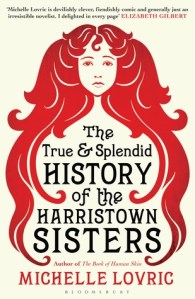
The True and Splendid History of the Harristown Sisters by Michelle Lovric

Harristown Sisters Manticory Swiney and her six sisters are born into poverty in rural 19th century Ireland and brought up by their mother, a laundress. They have never known their father (he visits once a year in the middle of the night) but from him they have inherited some very special gifts: their wonderful names and the abundance of long, thick hair which proves to be their route to fame and fortune. Bullied by the eldest sister, Darcy, into performing on the stage, the girls entertain their audiences by singing, dancing and, as a finale, unleashing their luxuriant cascades of ankle-length hair.

Approached by Augustus Rainfleury and Tristan Stoker, both of whom can see the money-making potential of seven long-haired sisters, the ‘Swiney Godivas’ leave their impoverished Harristown lives behind to find success in first Dublin then Venice. But for black-haired, sharp-tongued Darcy, the rival twins Berenice and Enda, quiet Pertilly, gentle, blonde Oona, wild Idolatry and our narrator, red-haired Manticory, fame doesn’t necessarily bring happiness.

I loved this book, the first I’ve read by Michelle Lovric, and I would agree that it really is a ‘splendid history’. It’s not quite a true one – Manticory and her sisters are fictional – but it was inspired by the story of the real-life Sutherland Sisters, an American family who really did become celebrities due to their long hair. If you have trouble imagining what seven sisters all with floor-length hair would look like, lots of pictures of the Seven Sutherland Sisters can be found online.

With so many Swineys to get to know, I was pleased to find that each sister is given a strong and distinctive personality of her own. I liked some of the girls and disliked others, but they were all great to read about, particularly the fierce, devilish Darcy who takes control of every scene in which she appears. One of my favourite characters, though, was not a Swiney sister at all, but their childhood enemy, Eileen O’Reilly (or the Eileen O’Reilly as she is always described) who enjoys exchanging very imaginative insults with Darcy – and who claims to hate the Swineys yet can’t seem to stay away from them.

Manticory herself has a wonderful narrative voice: strong, poetic and unmistakably ‘Irish’. She manages to bring a lot of humour into her ‘true and splendid history’ but it’s really a very dark story. There’s a vulnerability about the sisters, even Darcy, in that they are manipulated and taken advantage of by ruthless businessmen and men who are…well, attracted to girls with long hair. The Swineys are betrayed and exploited by the very people they have placed their trust in and what makes this even more tragic is that the reader can see this from the beginning while the sisters can’t.

Finally, I want to mention the excellent descriptive writing in this book. Every time Manticory thinks of her childhood in Harristown, County Kildare, she remembers the ‘turf stoves, thin geese and slow crows’ until Harristown becomes almost a character in itself. Later in the book, the descriptions of Venice are particularly beautiful…

The palazzi and churches let their fretted stones hang down into our faces like beautiful, insitent ghosts. Beckoning lanterns hung at arched water-gates. Inside their houses, equisitely dressed Venetians displayed themselves in glowing tableaux so that each palace seemed to host a puppet theatre performing just for us. The city was mystical and barbaric all at once, a floating fortress so delicate that the fairies would hesitate to place the weight of their wings on it.

I also loved the images of the girls hanging their hair from the windows of the bell tower of San Vidal like seven Rapunzels and each of them standing in the bow of a gondola with her hair trailing into the boat behind. I could tell this book was written by someone who knows and loves Venice!

The True and Splendid History of the Harristown Sisters is one of my favourite books of the year so far and I’m now looking forward to investigating Michelle Lovric’s previous novels.

I received a copy of this book from NetGalley for review.

The Gondola Maker by Laura Morelli

The Gondola Maker The Gondola Maker is set in Venice in the 16th century and tells the story of Luca Vianello, the son of a gondola maker. As the novel opens in 1581, Luca’s future seems secure – he will marry Annalisa Bonfante, the blacksmith’s daughter, and on his father’s death he will inherit the family business. However, when a tragedy unexpectedly tears the Vianello family apart, Luca is forced to leave the squero (boatyard) behind to seek a new life and career for himself.

I was lucky enough to visit Venice for the first time last year and reading The Gondola Maker reminded me of what a beautiful, unique city it is and how I would love to go again. The author’s descriptions are so vivid that whether or not you’ve been to Venice you’ll be able to picture the grand palazzos of the rich merchants and noblemen lining the Grand Canal, the sun setting behind the basilica of San Marco, the view across the lagoon to the island of San Giorgio Maggiore, and the inside of a prison cell in the Doge’s palace.

Being a novel about a family of gondola makers, it’s no surprise that we are given lots of information on the art of gondola making. And it really is an art! As we accompany Luca on a mission to restore one of his grandfather’s old gondolas, we see how many different people are involved in the process, from the remèri who make the oars and the fórcole (rowlocks which secure the oar) to the blacksmiths who construct the ferri (the metal decorations at the prow). Each of these artists pours their skill, knowledge and love into their work so that each complete gondola is an object of beauty and perfection.

This was all much more interesting to read about than I had expected, but of course there is more to this story than just the making of boats. While it’s true that most of Luca’s time is spent among fellow craftsmen and gondoliers, after he leaves the family squero his adventures also bring him into contact with a successful portrait painter, a maker of costumes for balls and carnivals, and a beautiful young woman who becomes his love interest. Luca himself is a character I found easy to like, which is fortunate as he is narrating his story in the first person, meaning we spend the entire novel in his company.

This is not a particularly fast-paced book and Luca’s story is not always very dramatic, but despite this I did enjoy The Gondola Maker. I found the ending of the book too abrupt and the conclusion of the romantic storyline wasn’t very satisfying which was a bit disappointing, but this didn’t spoil the rest of the novel for me. It was good to have an opportunity to learn about the creation of gondolas, a subject I had never read about or even thought about before – and I loved visiting Venice again, albeit through fiction this time, instead of in person!

1-iRead Button small(1) I read The Gondola Maker as part of an iRead Book Tour. For more reviews, interviews and giveaways please see the tour schedule.

An update…

Sorry for the unannounced disappearance last week! I’ve been to Venice for a few days and was meaning to post about it before I went but never got round to it.

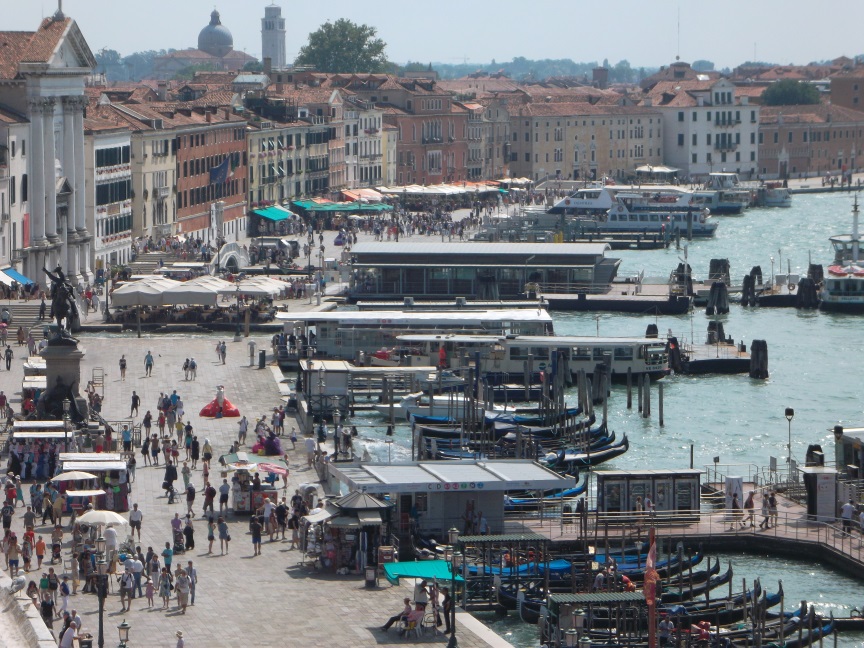
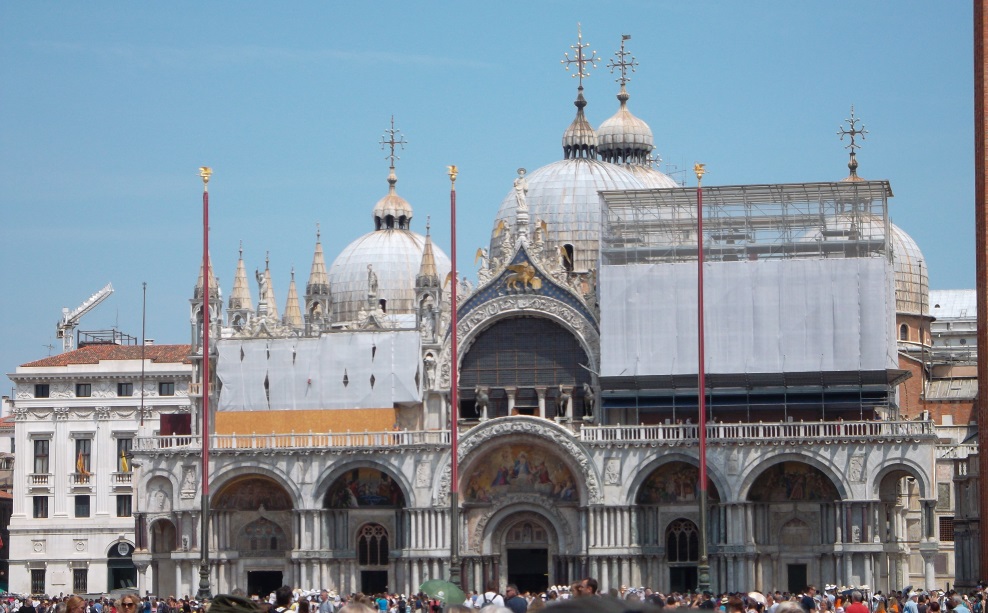
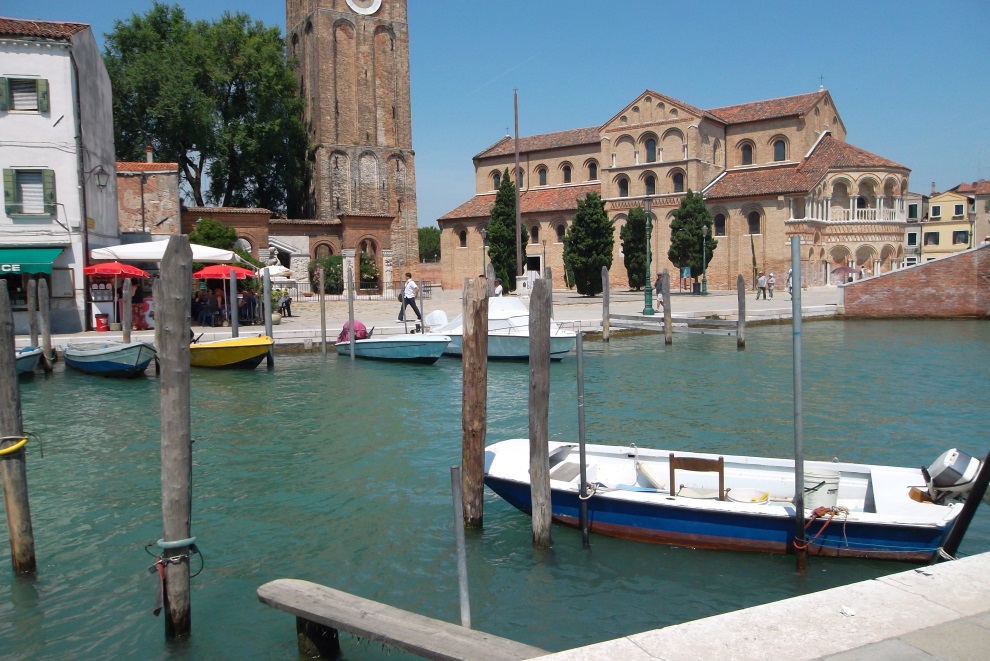
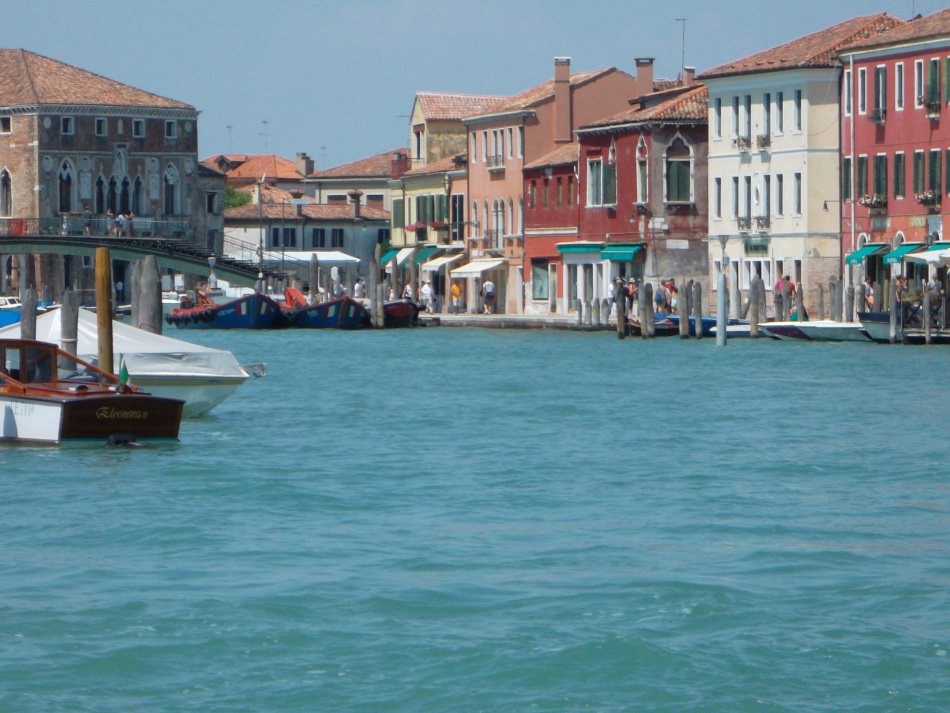
I’m starting to catch up now with all your blog posts I’ve missed while I’ve been away, as well as writing about all the books I’ve been reading recently. But for now, I’ll leave you with some pictures from my trip to Venice. It’s the first time I’ve been and it’s as beautiful and unique as everybody says it is.

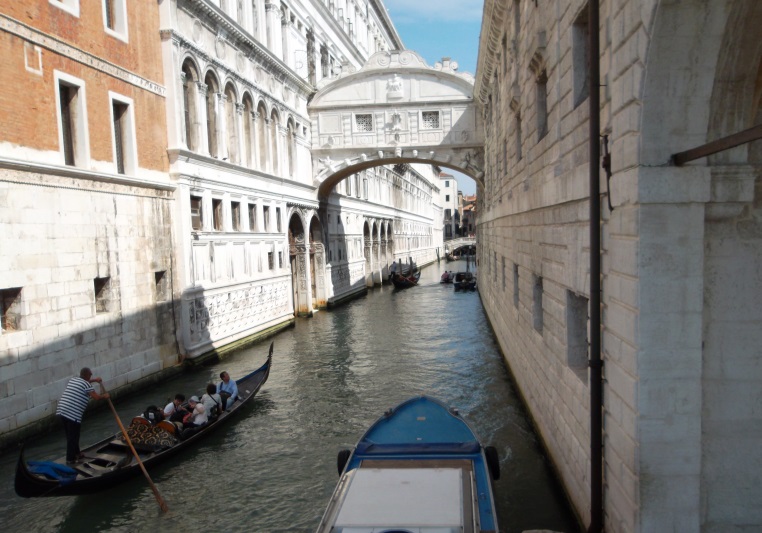
The Bridge of Sighs

Bridge of Sighs

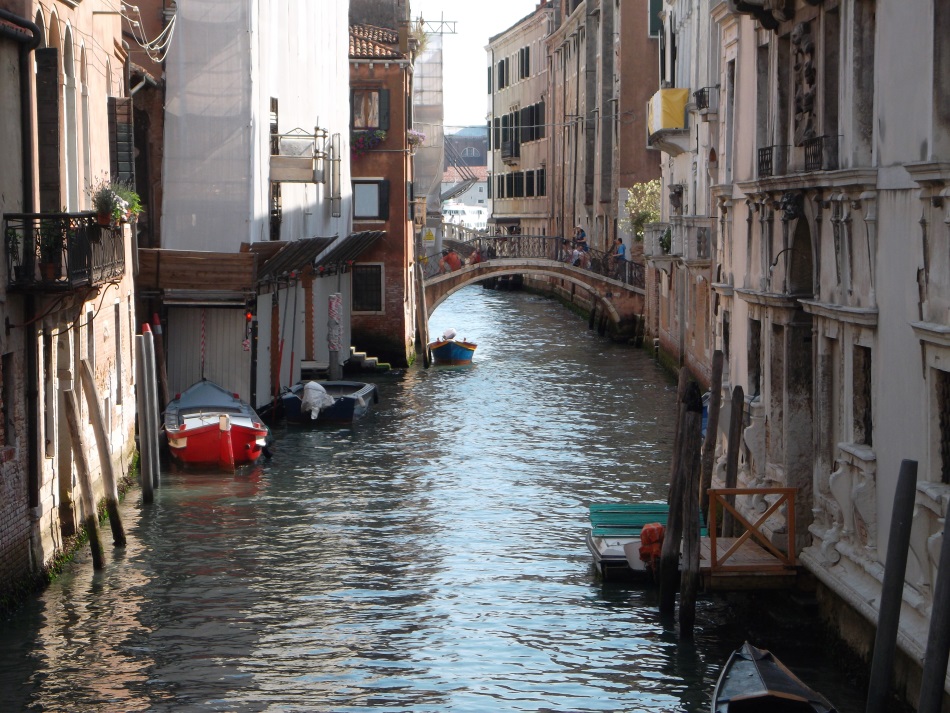
One of Venice’s many canals

Canal

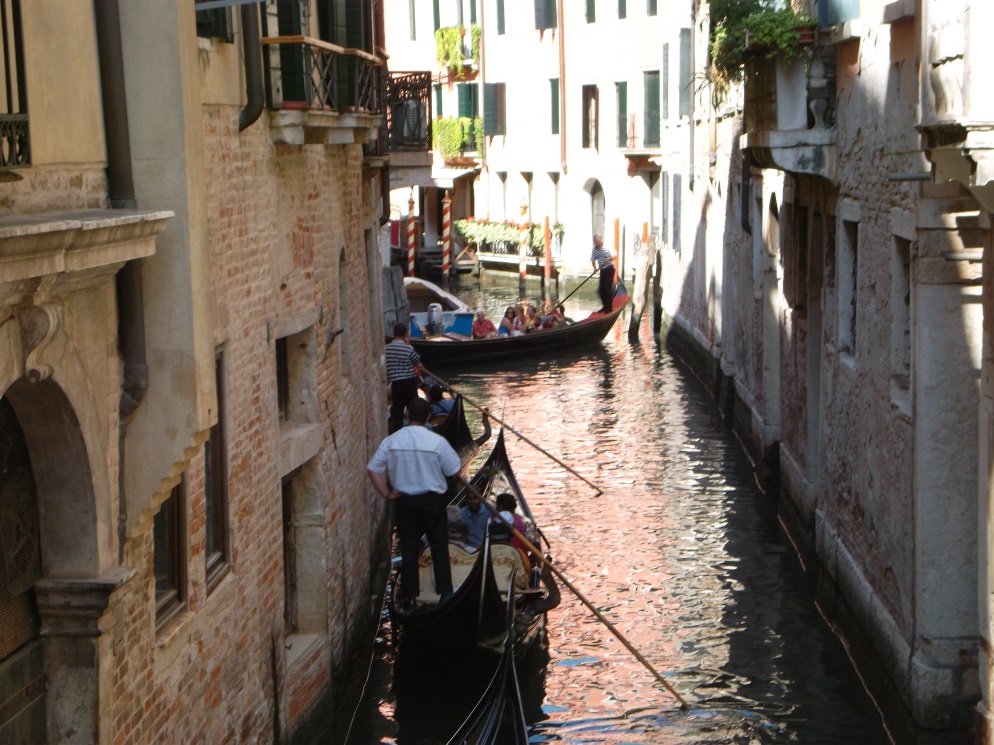
Gondolas

Gondola

Gondolas 1

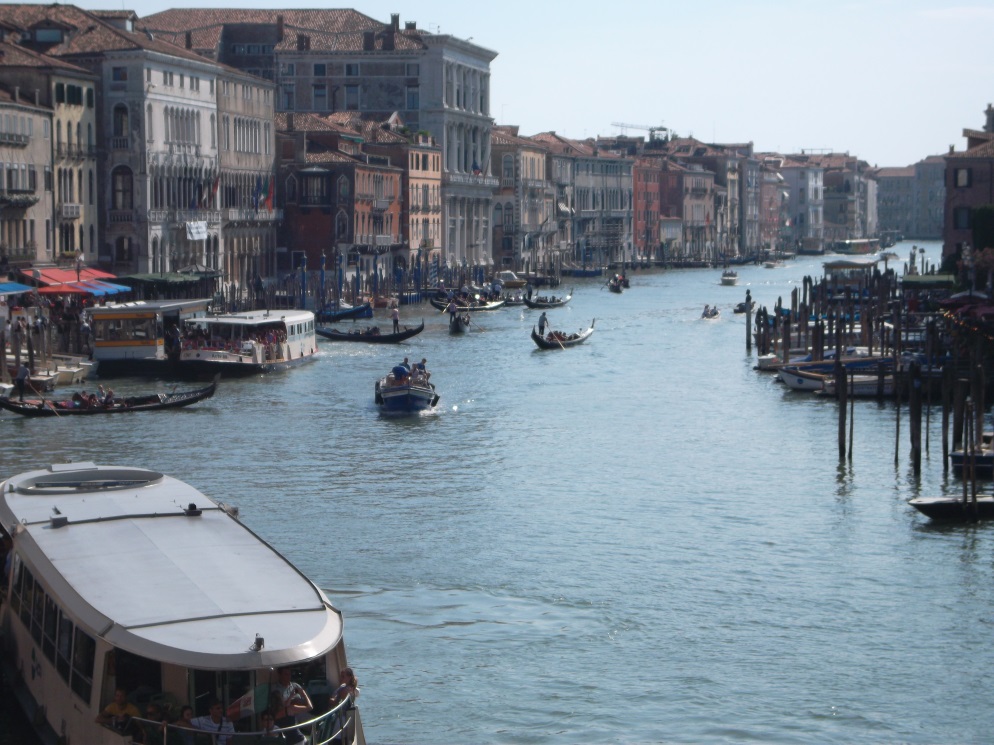
The Grand Canal

Grand Canal

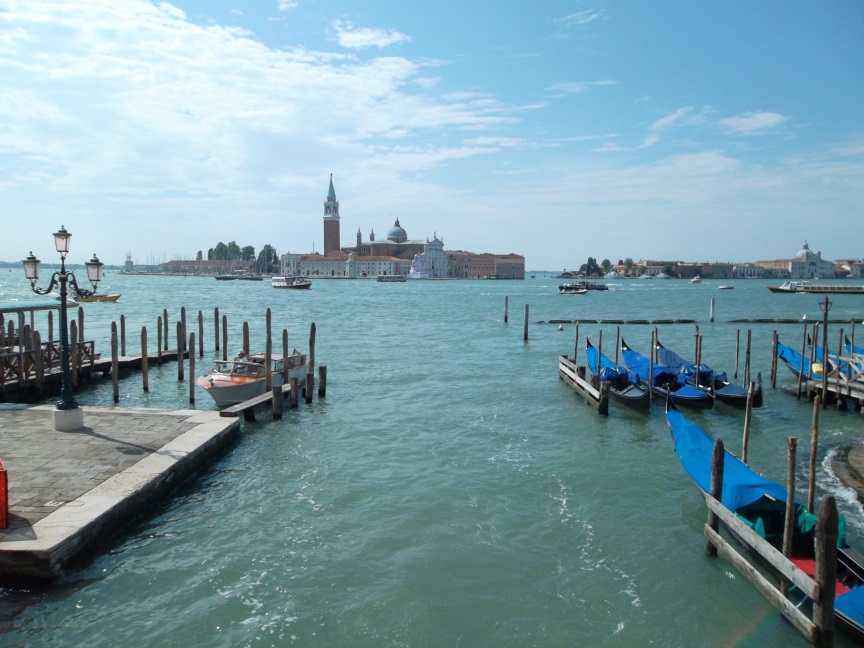
View across the lagoon to San Giorgio Maggiore

Lagoon

The waterfront near San Zaccaria

San Zaccaria

St Mark’s Basilica

St Marks Basilica

And two pictures taken on the island of Murano

Murano 1

Murano 2

The Midwife of Venice by Roberta Rich

The Midwife of Venice is set in 1575 and is the story of Hannah Levi, a midwife who lives in the Jewish ghetto in Venice. Although Jews are forbidden to attend Christian women in childbirth, when the Conte di Padovani summons her to his wife one night Hannah agrees to go with him. The Conte promises that if she assists in the birth of his heir he’ll reward her with a large sum of money – money that Hannah desperately needs so that she can pay the ransom to free her husband Isaac, who has been captured and taken to Valletta, Malta as a slave of the Knights of St John. But when it proves to be a difficult birth and Hannah is forced to use her special ‘birthing spoons’ (a device similar to forceps) she finds herself threatened with accusations of witchcraft.

The plot moves back and forth between Hannah in Venice and Isaac in Malta, until the two alternating storylines begin to come together. Luckily, I found both Hannah’s and Isaac’s adventures equally interesting to read about, so I didn’t mind leaving one character behind for a while to find out what was happening to the other.

I loved the first few chapters of this book; the story’s various locations (the Jewish ghetto, Venice’s streets and canals, the island of Malta) were vividly described without being too detailed, and it was interesting to learn about the relationship between the Christians and Jews in 16th century Venice. But halfway through, the plot started to take some dramatic twists and turns which I can only describe as unbelievable and ridiculous. Hannah was a likeable enough character, but it seemed to me that everything worked out too easily for her (and for Isaac) – there were too many coincidences, too many last-minute escapes and the villains were too easily defeated. If you can suspend your disbelief it’s all very entertaining I suppose – with murder, kidnapping, blackmail, disguises, slavery and even the plague, it’s certainly never boring – but I think I would have preferred something slightly more serious!

One other little problem I had was with the number of Italian and Jewish terms that were dropped into the text, a lot of which were unfamiliar to me. There was a glossary at the end of the book which I didn’t discover until too late – it would have been helpful to have known about it before I began instead of when I was nearly finished.

Although I prefer historical fiction novels to have a bit more depth than this one, The Midwife of Venice was fun to read. The setting and subject matter were unusual and interesting, and the fast pace and cliffhanger chapter endings made it a quick read. Oh, and I love the cover too!