Doctor Thorne by Anthony Trollope

Anthony Trollope was a new discovery for me last year and has now become one of my favourite Victorian authors. I read The Warden last April and Barchester Towers in November and then I swore I wouldn’t wait another six months before reading my next Trollope. And that’s exactly what I have done! Maybe it’s a good thing that I’ve waited so long though, because I love Trollope’s books so much I don’t really want to rush through them too quickly.

In this third volume of the Chronicles of Barsetshire, Trollope takes us away from the cathedral town of Barchester (the setting for the previous two novels) to Greshambury, a small town in another part of the county. Here we meet Dr Thorne, and his beloved niece, Mary. Mary’s birth was surrounded by scandal and she has been brought up by her uncle unaware of her mother’s family and the fact that she is related to the wealthy baronet Sir Roger Scatcherd, the doctor’s friend who is slowly drinking himself to death.

Another friend of the doctor’s is Squire Gresham, whose son, Frank, falls in love with Mary. Unfortunately the Greshams are having money problems and Frank’s family are determined that he must marry a rich woman, which Mary is not. The squire’s wife, Lady Arabella, does her best to keep Frank and Mary apart but will she succeed – or will something happen to change Mary’s fortunes?

As well as the class divide and the social stigma of illegitimacy, other themes include the corruption involved in Victorian politics and the effects of alcoholism. None of the Trollope books I’ve read so far could be described as having an enthralling plot and this one even less so. After reading the first few chapters, although I did enjoy them, I was starting to wonder when the story was going to begin. But although Trollope’s books may initially appear to be about very little, his plots are deceptively clever and intricate, and he has a way of pulling the reader into the story so that you become completely absorbed in the moral dilemmas of his characters. And he does apologise for the slow start too…

I feel quite an apology is due for beginning a novel with two long dull chapters full of description. I am perfectly aware of the danger of such a course… It can hardly be expected that any one will consent to go through with a fiction that offers so little allurement in its first pages; but twist it as I will I cannot do otherwise. I find that I cannot make poor Mr Gresham hem and haw and turn himself uneasily in his arm-chair in a natural manner till I have said why he is uneasy. I cannot bring my doctor speaking his mind freely among the bigwigs till I have explained that it is in accordance with his usual character to do so.

I mentioned in my review of Barchester Towers the habit Trollope has of telling us in advance what’s going to happen and he does it again in this book. The outcome of the novel is completely obvious from the beginning, so if you prefer your books to be full of suspense and surprises then Trollope is maybe not the author for you – although I do usually prefer suspense and surprises myself and yet I still like Trollope. I love his warm, witty writing style so much that I don’t at all mind the number of pages he spends introducing us to his characters and describing their backgrounds, appearances and personality traits. This is something that often bores me in books by other authors, but Trollope’s characters are so interesting that I really enjoy getting to know them all.

I was slightly disappointed that our old friends from the previous two books, Mr Harding, his daughter Eleanor and son-in-law Archdeacon Grantly didn’t feature in Doctor Thorne (although the Bishop and Mrs Proudie from Barchester Towers do make a brief appearance), but the new set of characters made up for it. In fact, the relationship between Dr Thorne and his niece Mary reminded me very much of Mr Harding and Eleanor. With the exception of Frank himself, I didn’t really like any of the Greshams or their relatives, the de Courcys (how much sympathy can you have with characters who are constantly saying things like, “If you marry a girl without a fortune, Frank, how are you to live?”) I did like Frank, Dr Thorne and Mary, and I also enjoyed all the scenes involving the two baronets Sir Roger Scatcherd and his son Louis, both unforgettable characters!

Next in the series is Framley Parsonage. I won’t make any promises this time about how long it will be before I read it, but I’m already looking forward to another enjoyable visit to Barsetshire.

North and South by Elizabeth Gaskell

North and South is the story of Margaret Hale, a young woman who lives with her parents at their parsonage in the idyllic village of Helstone in the south of England. When Margaret’s father decides to resign as parson and takes a new job as a tutor in the northern manufacturing town of Milton, the Hale family initially find it difficult to adapt to their new environment. It is not until Margaret meets some of the inhabitants of Milton that the town begins to feel like home. She forms a close friendship with the Higgins family – the invalid Bessy, her younger sister Mary and their father, Nicholas, who works at the cotton mill. But when the Hales also get to know Mr Thornton, a wealthy mill owner, Margaret finds herself caught in a conflict between the poor mill workers and their rich masters.

There’s also a romantic element to the novel: Mr Thornton falls in love with Margaret who unfortunately is prejudiced against what she calls ‘shoppy people’. She seems to make up her mind to dislike him before she even gets to know him because he’s a tradesman who has earned his money rather than inheriting it and is not her idea of a real gentleman. And to make things worse, Mr Thornton’s mother thinks Margaret is haughty and wants to stop her son from becoming involved with her.

Although there were also a lot of things to like about Margaret, her attitude towards Mr Thornton prevented me from really warming to her until the second half of the book when after meeting different types of people and being exposed to important social issues she begins to reassess some of her views and starts to grow as a person. By the end of the book I didn’t find her the annoying character I did at the beginning. It was interesting to see how both Mr Thornton and Nicholas Higgins also changed due to Margaret’s influence. There’s a lot of character development in this book, which was one of the things I loved about it.

The book takes place during the industrial revolution, an important and interesting period of history. It was a time of progress, allowing the factory owners to develop great wealth and the country’s economy to grow. However, the factory employees were working under appalling conditions, with absolutely no regard for their health and safety. Bessy Higgins is one example of this: she is only nineteen years old and has already developed a lung disease which she blames on inhaling ‘fluff’ from the cotton in the mill where she used to work.

Most of this industry was concentrated in the north of the country, in towns and cities such as the fictional Milton. Gaskell herself was born in London but spent most of her childhood in Cheshire and then settled in Manchester after her marriage (the town of Milton is thought to be based on Manchester), so she would have had first-hand knowledge of the northern way of life and how it may have differed from life in the south. Even today many people still have certain views and misconceptions about the differences between northern and southern England and even more so at the time when Gaskell was writing this novel, so I did appreciate the way she showed both the positive and the negative things about both regions.

North and South hasn’t become one of my favourite classics, but I did still enjoy it, although I was slightly disappointed by the way the book ended – not because I was unhappy with the outcome but because it seemed too abrupt. After reading The Moorland Cottage in February, I’ve now read the required two books to complete the Gaskell Reading Challenge, but as I’ve enjoyed both of my choices I’m sure I’ll be reading more of Gaskell’s work in the future!

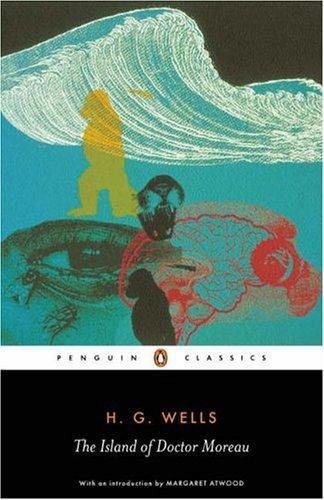
The Island of Doctor Moreau by H.G. Wells

After reading my first H.G. Wells book, Ann Veronica, in March I mentioned that I now felt ready to try one of his science fiction books. The Island of Doctor Moreau is the one I chose to read, and it certainly couldn’t be more different from Ann Veronica!

The story is narrated by Edward Prendick who, having been shipwrecked, is rescued by the crew of the Ipecacuanha. Whilst on board, he becomes acquainted with one of the other passengers, the mysterious Montgomery, who is transporting a cargo of wild animals home to the island where he lives. When the drunken captain of the Ipecacuanha attempts to have Prendick thrown overboard, Montgomery takes pity on him and invites him to accompany him to the island. Here Prendick meets the famous vivisectionist Doctor Moreau, who is carrying out some secret experiments on animals – and as the true horrors of Moreau’s island are revealed, Prendick begins to realise that his own life could be in danger.

I’ve never been a fan of science fiction and wasn’t sure what to expect from this book, but I enjoyed it more than I thought I would. The opening chapters were a bit slow, but things became much more interesting when Prendick arrived on the island and after that the pages flew by.

I didn’t think the story was frightening, although I did feel a growing sense of disgust and repulsion. Some of Moreau’s nightmarish creations were truly horrible to read about. Whatever your personal views on animal testing may be, the way Wells describes the unnecessary pain and suffering Moreau inflicts on his animals is very sad and disturbing. Like Frankenstein and more recently, Jurassic Park, The Island of Doctor Moreau can be seen as a warning of the negative effects of science and the dangers of ‘playing God’. When this book was published in 1896, the kind of technology Wells described only really existed in fiction. But during the 20th and 21st centuries the advances scientists have made in areas such as genetic engineering and cloning mean that Wells’ ideas are no longer so far-fetched. And that’s what really is frightening!

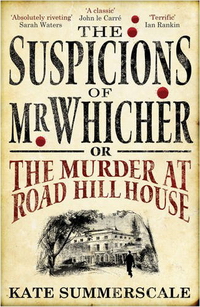
The Suspicions of Mr. Whicher by Kate Summerscale

One night in June 1860 a little boy called Saville Kent was murdered at his home in the village of Road, Wiltshire. As it seemed certain that nobody had entered the house from outside, suspicion fell on the Kent family and their servants. When the local police proved to be incompetent, the Home Secretary requested that Scotland Yard send Detective Inspector Jonathan Whicher to assist them with the investigation. In The Suspicions of Mr. Whicher, Kate Summerscale tells the full story of the case and how it affected Whicher’s career.

This is a non-fiction book based on a true story. Considering the book combines two of my favourite things in literature – mysteries and the Victorians – you won’t be suprised to hear that I thought it was completely fascinating! And although I regretted not reading it sooner (it was first published in 2008), my timing actually couldn’t have been better. Just after finishing the book I discovered that it had been adapted for television, so the story was still fresh in my mind when I sat down to watch it on ITV1 last night (Monday 25th April). I enjoyed the TV adaptation but I’m glad I managed to read the book first.

I appreciated the fact that Summerscale was careful not to give away the solution to the mystery too early in the book, which meant the reader had a chance to study the clues and try to solve the mystery along with Whicher. It was interesting too to see how the vocabulary used in detective work has developed over the years, such as the origins of the word ‘clue’.

Summerscale also explains how during the 19th century people began to place a greater importance on the privacy and security of their homes than they had in the past. Thus a case like the Road Hill one was even more shocking in that it had taken place behind locked doors. The sanctity of the home had been violated and it seemed that the murderer was almost certainly one of the household. This must have made people all over the country afraid that the same thing could happen in their own family home. And with the multitude of new national and local newspapers that had appeared in recent years, detailed reports of this and other horrific crimes could be brought to an even wider audience. This, of course, allowed the public to become ‘armchair detectives’ and come up with their own theories as to what really happened.

The murder at Road Hill House captured the imagination of the British public and inspired a number of fictional detective stories such as The Moonstone by Wilkie Collins, which I read a few years ago. The character of Sergeant Cuff in The Moonstone is thought to be based on Whicher and I can also now see how Collins incorporated some other elements of the Road Hill investigation into his story – the importance which is placed on checking the family’s laundry, for example. I really need to re-read The Moonstone soon because I’m sure that knowing some of the background behind it will help me to get more out of it!

Have you read The Suspicions of Mr Whicher? Are there any other true crime stories that you’ve enjoyed reading?

Jamrach’s Menagerie by Carol Birch

When young Jaffy Brown comes face to face with an escaped tiger in the streets of London, it leads to him being offered a job with Mr Jamrach, a dealer in wild animals. For the next few years Jaffy works at Jamrach’s menagerie, helping to take care of the animals – until one day he gets the chance to go to sea in search of a very special creature…

This novel, the first I’ve read by Carol Birch, grabbed me from the very first page. It was everything I love in a book: historical fiction set in the Victorian period with a fast-paced plot and quirky, interesting characters. When a few chapters into the novel Jaffy set off on his voyage and it became clear that most of the book was going to take place at sea I was slightly worried as I often find seafaring stories boring – but not this time! I was pleased to find that I enjoyed reading about Jaffy’s adventures on board the Lysander, visiting distant lands and battling against storms, starvation and superstition as much as I enjoyed the chapters set in working-class 19th century London.

From tigers and whales to exotic birds and giant reptiles we encounter a large number of animals, both at Jamrach’s London menagerie and in their natural habitat (and be warned that Birch doesn’t shy away from describing the cruel ways in which these creatures were treated in the 19th century). But more importantly, we learn a lot about human nature, about friendship, love and loyalty. Jaffy, as our narrator, is the character around whom all the others revolve including Ishbel, the girl he loves; Tim, his childhood friend and rival; and Dan Rymer, the older sailor who becomes a father figure to the boys.

Birch’s writing is atmospheric and descriptive, giving the story an almost supernatural, mystical feel at times. And although there were a few occasions where I thought the plot suffered slightly from taking second place to the detailed descriptions, for the most part I found the book completely gripping. A good old-fashioned adventure story and a very enjoyable and entertaining read!

Three Men in a Boat (To Say Nothing of the Dog) by Jerome K. Jerome

I have book blogging to thank for the fact that I’ve finally read this wonderful classic. It’s not a book I would ever have thought of reading until I started to notice other bloggers giving it glowing reviews and decided I really had to read it for myself. I’m pleased to say that it lived up to my expectations – I found it an easy, entertaining read, not to mention a genuinely hilarious one! I can’t remember the last time I read such a funny book and I would recommend it to anyone who feels daunted by the thought of reading a Victorian classic.

The ‘three men’ are our narrator, J., and his two friends, George and Harris. When they decide they need a break, the three men (accompanied by Montmorency the dog), set off on a boat trip along the River Thames – and everything that can go wrong does go wrong!

What makes Three Men in a Boat so funny is that, despite the book being written such a long time ago, so much of it is still true of modern day life. The accuracy of the British weather forecast, for example, doesn’t seem to have improved at all since Victorian times!

I do think that, of all the silly, irritating tomfoolishness by which we are plagued, this “weather-forecast” fraud is about the most aggravating. It “forecasts” precisely what happened yesterday or the day before, and precisely the opposite of what is going to happen to-day.

Most people should be able to identify with at least a few of the disasters that J. and his friends recount. I’m sure anybody who has ever been camping will laugh at the descriptions of two people trying to put up a tent in the rain. And what about Uncle Podger hanging a picture on the wall? Does this scenario sound familiar?

“There!” he would say, in an injured tone, “now the nail’s gone.”

And we would all have to go down on our knees and grovel for it, while he would stand on the chair, and grunt, and want to know if he was to be kept there all the evening.

The nail would be found at last, but by that time he would have lost the hammer.

“Where’s the hammer? What did I do with the hammer? Great heavens! Seven of you, gaping round there, and you don’t know what I did with the hammer!”

Some of the funniest parts are when the three men relate to each other little anecdotes about things that happened to them in the past – my favourite was George getting up and going to work in the middle of the night because his watch had stopped and he thought it was morning. I also loved the story Harris told about the time he got lost in Hampton Court Maze.

During their journey up the Thames, we are given lots of historical and geographical facts about the places the three men pass in their boat; these sections read almost like a travel guide and I suspect they might have been of more interest to me if I lived near the Thames and was more familiar with the area. I also don’t have any interest at all in sailing, rowing or boats in general so a lot of the boating jokes went over my head – but I suppose I shouldn’t really complain about there being too much boating terminology in a book called Three Men in a Boat!

Whether you’ll enjoy this novel or not will depend on whether you can connect with Jerome K. Jerome’s sense of humour. If you can’t then you might be disappointed because the book doesn’t really have a plot, other than the outline I’ve given above – so if you do read it I hope you’ll be able to laugh at it as much as I did!

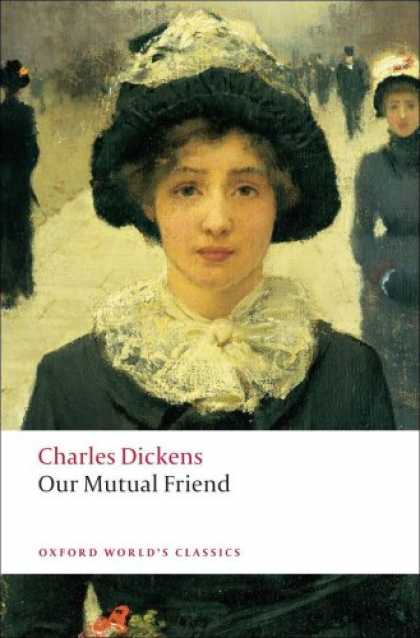
Our Mutual Friend by Charles Dickens

I’m planning to read a lot of Victorian classics this year for the Victorian Literature Challenge (and because I love reading them anyway, of course) so I decided to start with one that has been on my TBR pile for a long time: Our Mutual Friend by Charles Dickens.

Last year I read Bleak House and although I didn’t love it, it didn’t put me off reading more Dickens. However, this one at first felt very similar and some of the aspects of Bleak House that I didn’t like were present here too (a huge number of characters were introduced within the first 100 pages and a lot of different storylines were begun then abandoned for several chapters). I wondered if I really wanted to continue, or if I should choose a different Dickens book to read instead. Then suddenly, things improved. The story started to make sense and I found I was enjoying it. Really enjoying it!

Our Mutual Friend opens with Gaffer Hexam and his daughter Lizzie discovering a dead body in the Thames. The body is assumed to be that of John Harmon, who was on his way to London to marry Bella Wilfer. John’s father had recently died and one of the conditions of his will was that unless John married Bella, he would not be allowed to claim his inheritance.

Bella is disappointed when she learns that he has drowned. It’s not fair: not only has she missed out on the money, now she’s going to have to wear mourning for a man that she’s never met and who died before they were even married! Mr and Mrs Boffin, the kind-hearted couple who inherit the Harmon fortune in John’s absence, feel sorry for her and invite her to stay with them. However, the Boffins soon become the target of fortune hunters and blackmailers such as Silas Wegg and Mr Venus.

Being almost 800 pages long, and being Dickens, this is only one small part of the story. There are several other plots and sub-plots which eventually become woven together – and some very memorable characters, including Jenny Wren, the ‘Dolls’ Dressmaker’, Mrs Higden, who lives her life in terror of the workhouse, and Bradley Headstone, a murderous schoolmaster who falls in love with Lizzie Hexam.

Although I did enjoy this book and found most of it entertaining and gripping, I did struggle with the chapters that took place in the ‘fashionable world’ of the Veneerings’ dining room. This world of dinner parties and politics contrasts sharply with the other main setting of the book, the River Thames, where most of the action takes place. We meet the people who earn their living from the river, we spend some time in the riverside inns and taverns, and in a way the river becomes the most important ‘character’ in the book.

And as the great black river with its dreary shores was soon lost to her view in the gloom, so she stood on the river’s brink unable to see into the vast blank misery of a life suspected, and fallen away from by good and bad, but knowing that it lay there dim before her, stretching away to the great ocean, Death.

I liked both of the two main female characters. Lizzie Hexam is a typical Dickens heroine, but she didn’t irritate me like Esther Summerson did in Bleak House. Bella Wilfer, though, turned out to be a surprisingly complex character. Although she was quite self-absorbed and materialistic, I liked her because she was warm-hearted and despite admitting she wanted to marry a man with money, she also seemed to feel genuinely guilty about it. Money, and how it can change people, is one of the main themes of the book, as Bella explains to her father here:

And yet, Pa, think how terrible the fascination of money is! I see this, and hate this, and dread this, and don’t know but that money might make a much worse change in me. And yet I have money always in my thoughts and my desires; and the whole life I place before myself is money, money, money, and what money can make of life!’

Fathers and daughters play a big part in the story and it’s interesting that with only a few exceptions, the relationship is always the same – a strong, loyal and loving daughter with a weak, villainous or child-like father. Mr Wilfer is described as ‘cherubic’ and devoted to Bella, who treats him like a baby. Then there’s Pleasant Riderhood and her criminal father, Rogue, as well as Lizzie and her father, Gaffer, who was a former associate of Rogue’s. And there’s Jenny Wren, who refers to her alcoholic father as her ‘bad child’ and makes him sit in the corner in disgrace.

Our Mutual Friend is such a big, complex novel it does require the reader to invest a lot of time and effort in it, but it was definitely worth it for me! I now feel much happier about reading more Dickens in the future.