Doomed Romances: Strange Tales of Uncanny Love edited by Joanne Ella Parsons – #ReadIndies

This new short story collection, Doomed Romances: Strange Tales of Uncanny Love, is part of the British Library’s Tales of the Weird series. These books have been around for a few years now but I’ve let them pass me by as I’ve had enough to read with their Crime Classics series! I’m glad I’ve finally found time to try one as although this collection is a bit uneven I did find it entertaining.

The book contains twelve stories by different authors and includes an introduction by the editor, Joanne Ella Parsons. The stories were originally published between 1833 and 2022 and appear here in chronological order. All have a ‘doomed romance’ theme, with some being much darker than others. There are two that I’ve actually read before – one of them is Sheridan Le Fanu’s lesbian vampire novella, Carmilla, and the other is Angela Carter’s The Lady of the House of Love, also a vampire story, first published in The Bloody Chamber. I didn’t read Carmilla again as I just read it fairly recently, but I did re-read the Carter and was impressed again by the beautiful imagery and the atmospheric Gothic setting she creates.

The oldest story in the book is Mary Shelley’s The Invisible Girl, in which the narrator, out walking along the coast of Wales, finds a painting of a beautiful woman hanging on the wall inside a ruined tower. It was good to have the opportunity to try more of Shelley’s work, having only read Frankenstein so far, but I didn’t find this a particularly strong story. Two that I did enjoy were The Little Woman in Black by Mary Elizabeth Braddon and One Remained Behind by Marjorie Bowen. These are also authors I’ve read before; Braddon is a favourite Victorian author of mine and has a very readable writing style. Her story seemed as if it was heading in one direction, but then surprised me with an ending I wasn’t expecting at all! Bowen was a very prolific author of historical novels and supernatural tales – the story in this collection is a ghost story from 1936 and one of the highlights of the book for me.

Joanne Ella Parsons has clearly tried to include stories with a wide range of geographical settings, exploring different cultures, rather than just sticking with more traditional Gothic stories. Wilkie Collins, another Victorian author I usually enjoy, is represented here with Mr Captain and the Nymph, in which a ship’s captain lost on an unidentified Pacific island falls in love with the daughter of a local priest. It’s an interesting story, although not a good example of his best work. Alice Perrin’s The Tiger-Charm is set on safari in India, while Nalo Hopkinson’s The Glass Bottle Trick transposes the famous Bluebeard folktale to a Caribbean setting. The latter are two new authors for me and I found both stories entertaining, but I’m not sure if I would search out more of their work based on these.

Another highlight was Could You Wear My Eyes? by Kalamu ya Salaam, where a man whose wife has died agrees to have her eyes inserted into his face after her death, allowing him to see life from her perspective. It’s a strange story but a fascinating one! The collection is completed with another 19th century story, Ella D’Arcy’s White Magic, and two contemporary ones, I’ll Be Your Mirror by Tracy Fahey and Dancehall Devil by V. Castro.

Doomed Romances is a real mixed bag, then – there are some very strong stories and some much weaker ones, and including Carmilla seemed an odd decision to me, as it’s so much longer than any of the other stories and made the book feel unbalanced. I enjoyed the collection overall, though, and will probably consider reading more of them.

British Library Publishing publish a range of fiction and non-fiction including the Tales of the Weird, Crime Classics and Women Writers series. They are an independent publisher, so I’m counting this book towards #ReadIndies month, hosted by Kaggsy’s Bookish Ramblings and Lizzy’s Literary Life.
The New Magdalen by Wilkie Collins

Wilkie Collins is one of my favourite Victorian authors, but I feel that I haven’t featured him very often on my blog – probably because I read so many of his books pre-blog, including all of his most famous ones (and I don’t re-read very often these days). Even so, there are still some that I haven’t read yet and I was intrigued when I noticed a few years ago that The New Magdalen was being reprinted by Persephone Books, as they’re a publisher associated more with women authors (although there are a small number of Persephones by male authors as well). It has taken me a while to get round to reading it, so I decided to put it on my 20 Books of Summer list to make sure it didn’t linger on my TBR any longer.

First published in 1873, the novel opens during the Franco-Prussian War in a small cottage in France where Mercy Merrick is working as a Red Cross nurse. As the Germany army draws closer, Mercy has taken shelter in the cottage to nurse some wounded French soldiers and has been joined by another young woman, Grace Roseberry. Grace is on her way to England following the death of her father in Rome; she has spent most of her life in Canada and doesn’t know anybody in England, but she is carrying a letter of introduction from her father to a Lady Janet Roy, a wealthy woman whom she hopes will employ her as a lady’s companion. Grace shares this information with Mercy, who in turn tells Grace her own story – that she is a ‘fallen woman’ who has had a difficult past, eventually ending up in a women’s refuge before volunteering as a nurse.

As the two women talk, the cottage suddenly comes under fire from the advancing army and receives a direct hit from a shell. Grace is badly wounded and is declared dead by a French surgeon. Finding herself alone with Grace’s lifeless body, it occurs to Mercy that she could take Grace’s papers, dress herself in Grace’s clothes and present herself to Lady Janet Roy under the name Grace Roseberry. Desperate to escape from her own troubled past and start a new life, Mercy is unable to resist the temptation and goes through with the plan. It proves to be a huge success and soon Mercy is living as Lady Janet’s adopted daughter and even receives a marriage proposal. Before the marriage can take place, however, Mercy makes a shocking discovery – it seems that the real Grace Roseberry may still be alive and looking for revenge!

Wilkie Collins was known for his sensation novels, a genre that takes elements of Gothic melodrama and places them in an ordinary, often domestic setting. His books typically feature family secrets, disputed inheritances, intercepted letters, stolen jewels, mistaken identities and amazing coincidences. The New Magdalen is less sensational than some of his others, but still falls firmly into the genre so you can expect a very entertaining novel. I’ve always found Collins’ writing to be the most readable of all the Victorians and that, in addition to this being a relatively short book for a 19th century classic, makes it a gripping and surprisingly quick read.

I can see why Persephone chose to add this book to their collection as Collins does write such strong and sympathetic female characters and with Mercy’s story he highlights some of the injustices women faced in Victorian society (and in some ways still do today). I think my favourite Collins novels will always be The Woman in White and Armadale, but this is still a great book and would probably be a good introduction to his work if you didn’t want to commit to a longer one.

This is book 2/20 of my 20 Books of Summer 2023 and book 40/50 from my second Classics Club list.

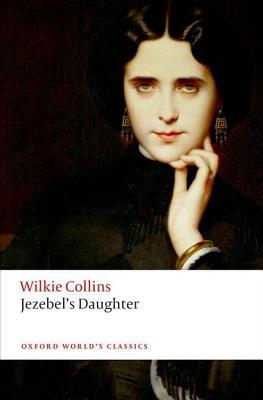
Jezebel’s Daughter by Wilkie Collins

I love Wilkie Collins but it’s been a while since I last read one of his books, so when the Classics Club recently challenged us to read a classic Gothic novel, thriller or mystery during the month of October, I thought Jezebel’s Daughter would be a good one to choose. Published in 1880, this was one of Collins’ later books, although it was based on a much earlier – and apparently unsuccessful – play of his, The Red Vial. I wasn’t really expecting it to be as good as his more famous novels such as The Woman in White, The Moonstone, No Name or my personal favourite, Armadale, all of which I read and loved in the years before I started blogging, but now that I’ve read Jezebel’s Daughter, I can say that while it’s not quite in the same class as those other books, it’s still very entertaining and enjoyable.

At the heart of the novel are two very different women who seem to have little in common other than the fact that they are both widows. First, in England, we meet Mrs Wagner, who has inherited her husband’s share of the business in which he had been a partner. Mrs Wagner is looking forward to becoming more involved in running the business and making some changes of her own – including employing more women. As a philanthropist, she also wants to use her money and position to help those less fortunate, such as Jack Straw, an inmate in the Bedlam lunatic asylum. Believing that Jack would benefit from some kindness and affection, she takes him into her own home, determined to prove that her theory is correct.

The action then switches to Germany, where we are introduced to Madame Fontaine, the widow of a French scientist who had devoted his life to the study of poisons. Since her husband’s death, she has found herself struggling financially, so when her daughter Minna falls in love with Fritz Keller, the son of Mrs Wagner’s wealthy business partner, she sees a possible solution to their money problems. Unfortunately, Madame Fontaine has a terrible reputation – she is the ‘Jezebel’ of the title – and Fritz’s father is strongly opposed to the idea of a marriage between his son and Minna. Can Madame Fontaine find a way to ensure that the marriage takes place before her debts are due to be paid?

Jezebel’s Daughter is a great read – it’s suspenseful and exciting and, because it’s a relatively short novel, it’s faster paced than some of his others as well. With a story involving poisonings, stolen jewels, unexplained illnesses, mysterious scientific experiments, morgues, asylums and plenty of plotting and scheming, there’s always something happening and for a long time I couldn’t imagine how it was all going to be resolved! As well as being fun to read, the book also touches on some important social issues, such as job opportunities for women (Mrs Wagner, like her late husband, believes that women should be employed in the office in positions that would normally be filled exclusively by men) and the humane treatment of people with mental illnesses.

The two central characters are wonderful – not the two young lovers, as you might expect, but the two middle-aged widows. They complement each other beautifully, one representing all that is good and the other all that is bad. But although Madame Fontaine can be seen as the villain of the story, Collins portrays her in a way that allows us to have some sympathy; she is an intelligent, ambitious woman for whom nothing has ever gone smoothly and most of the wicked acts she commits are done out of desperation or love for her daughter.

If anyone has read Collins’ better known works and is wondering what to read next, I would definitely recommend this one – or The Law and the Lady, Man and Wife or Poor Miss Finch, all of which I enjoyed too. I’m glad I decided to read this book for the Classics Club Gothic event – it was the perfect choice!

This is book 9/50 read from my second Classics Club list.

I am also counting this book towards the R.I.P. XIII Challenge (categories: suspense, Gothic).

Classics Club Monthly Meme: Question #42 – Science Fiction and Mysteries

The Classics Club

On the 26th of each month the Classics Club post a question for members to answer during the following month. It’s been a while since I last participated so I’ve decided to join in with this one. The question below was contributed by club member Fariba:

“What is your favourite mystery or science fiction classic? Why do you think it is a classic? Why do you like it?”

I haven’t read a huge number of classics from either of these genres, so rather than pick favourites I’m simply going to write about a few books I’ve enjoyed which fall into each category. First, let’s look at classic mysteries…

Mysteries

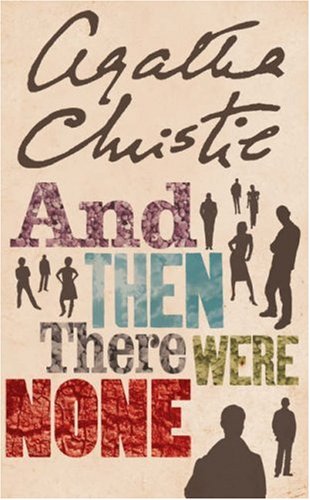
And Then There Were None The first author to come to mind when I think about classic mysteries is Agatha Christie. Although I haven’t read all of her books yet (not even half of them), I’ve loved most of those that I have read, particularly And Then There Were None. It’s such a simple idea – ten strangers are cut off from the world on an isolated island and start to be killed off one by one – but the solution is fiendishly clever!

My next choice is from the Victorian period: a book which TS Eliot famously described as “the first, the longest, and the best of modern English detective novels”. It’s The Moonstone by Wilkie Collins, a novel which centres around the disappearance of a valuable Indian diamond. As anyone who has read it will know, the mystery itself is almost secondary to the wonderful array of memorable narrators, especially Gabriel Betteredge, the elderly servant.

With my interest in history, I also enjoyed The Daughter of Time by Josephine Tey, in which a detective recuperating in hospital decides to amuse himself by trying to solve the mystery of Richard III and the Princes in the Tower. In 1990 this book came top of the British Crime Writers’ Association’s Top 100 Crime Novels of All Time list. I haven’t read any of Tey’s other mysteries yet, but I have A Shilling for Candles on my shelf to read soon.

Science Fiction

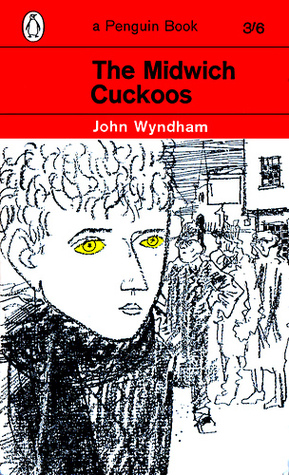
The Midwich Cuckoos A few years ago I read and loved The Midwich Cuckoos, a classic science fiction novel about a mysterious phenomenon which occurs in a quiet English village. I was (and still am) intending to read more of John Wyndham’s books, but haven’t got round to it yet. I know some of his other novels are regarded as being better than this one, so I’m looking forward to trying them for myself.

HG Wells is one of the most famous authors of classic science fiction and so far I have read two of his books – The Island of Doctor Moreau and The Time Machine. I enjoyed both of these novels but I didn’t find either of them entirely satisfying. In the case of The Time Machine in particular, I felt that there were a lot of ideas which could have been explored in more depth. I’m sure I’ll read more of Wells’ novels eventually.

If I can also class dystopian novels as science fiction, there are quite a few that I’ve read including, years ago, 1984 by George Orwell and Brave New World by Aldous Huxley and, more recently, Margaret Atwood’s The Handmaid’s Tale. Otherwise, I really haven’t read much science fiction at all and would love some recommendations!

Have you read any classic mystery or science fiction novels? Which are your favourites?

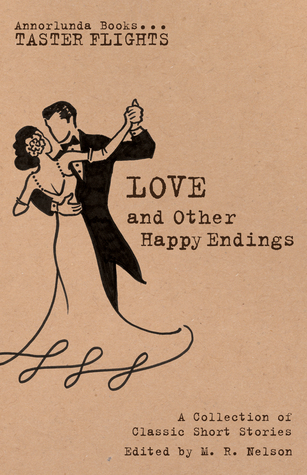
Love and Other Happy Endings, edited by M. R. Nelson

This is a collection of five classic short stories from five very different authors: Katherine Mansfield, L.M. Montgomery, Wilkie Collins, F. Scott Fitzgerald and James Oliver Curwood. The title given to the collection by its editor, M.R. Nelson, means that we know before we begin that each story will have a happy ending of some sort, but I can assure you that this doesn’t spoil the pleasure of reading them. The interest is in seeing how each happy ending is reached and how the conflicts or problems in each story are resolved.

Love and Other Happy Endings First is The Singing Lesson by Katherine Mansfield, a story which appeared in her 1922 collection, The Garden Party and Other Stories. This is a very short story, but Mansfield (a new author for me) manages to pack a lot of meaning into it. The story follows Miss Meadows, a singing teacher, who has had some bad news and begins the day “With despair — cold, sharp despair — buried deep in her heart like a wicked knife”. We see how Miss Meadows’ state of mind affects not only herself but the girls in her class; she is someone who brings her personal troubles into work with her. Later in the day, something happens to change the teacher’s mood and the way she perceives the world is suddenly quite different.

Story two is Akin to Love by L.M. Montgomery, best known for her Anne of Green Gables series. I read her Anne novels (or most of them anyway) as a child, but this is the first time I’ve read any of her other work. Akin to Love is from her 1909-1922 collection of short stories. It’s a simple tale of two single people, Josephine Elliott and David Hartley, who are friends and neighbours. David has proposed to Josephine many times over the last eighteen years and she has turned him down every time. Eventually Josephine begins to experience a feeling akin to love, but will she act on her feelings?

The third story, Mr Lismore and the Widow is by Wilkie Collins, who has long been one of my favourite Victorian authors, so it’s not surprising that this was one of the stories I enjoyed most from this collection. Originally published in 1883, it’s the story of a man in need of money and a woman in need of a husband. It’s easy to predict what will happen – or is it? This is a tale with a twist…a slightly implausible twist, but a fun one!

Next is Head and Shoulders, a story from F. Scott Fitzgerald’s Flappers and Philosophers (1920). It’s a great story, again with a twist, about Horace Tarbox, a clever, intellectual student and Marcia Meadow, a dancer (a philosopher and a flapper?). Despite being complete opposites, the two fall in love, but their relationship does not follow the course you might expect. I’m not really a fan of Fitzgerald, but this is a bright, witty story which really stands out from the others in the book.

The final story is The Other Man’s Wife, taken from the 1920 collection Back to God’s Country and Other Stories by James Oliver Curwood, another author I have never read before. In this story we meet a man who has taken refuge in the wilderness because he needs some time away from the woman he loves – and from her husband, whom he describes as “a scoundrel, a brute, who came home from his club drunk, a cheap money-spender, a man who wasn’t fit to wipe the mud from her little feet, much less call her wife.” This is another very short story, and I found it easy to guess how it would end, but that didn’t make it any less satisfying to read.

Reading these five stories one after the other encouraged me to look for common themes and ideas and to think about the ways in which different authors tackle the subject of love. I wondered why, out of all the short stories in the world, Nelson chose these particular five, so I was interested to read her notes at the end explaining her choices. I really enjoyed this little collection and am pleased to be able to give this review a happy ending!

Thanks to M.R. Nelson for providing a copy of Love and Other Happy Endings for review.

The Secret Life of Wilkie Collins by William M. Clarke

The Secret Life of Wilkie Collins After reading The Frozen Deep recently, my interest in Wilkie Collins was reawakened and I decided it was time to read the biography I bought when I was in the middle of my Collins obsession a few years ago. There were not many to choose from at that time and this one sounded like the best available. I ordered a copy, but by the time it arrived I had moved on to other authors and didn’t feel like reading it anymore. Since then, one or two other biographies have been published which sound more appealing than this one, but it made sense to read the one I already own rather than buying a new one.

The Secret Life of Wilkie Collins was first published in 1988, although the edition I have was revised in 1996. The author, William M. Clarke, is married to Wilkie Collins’ great-granddaughter, Faith Elizabeth Dawson, and maybe because of this connection, the focus of the book is on Wilkie’s private life and relationships with his family and friends rather than on his work. Clarke does attempt to show us the circumstances surrounding the writing of most of Collins’ books, plays and stories and what may have inspired them, but he doesn’t often go into any detailed analysis of these.

After a brief introduction, the book follows Wilkie’s life in chronological order, beginning with his birth in January 1824. Wilkie was the eldest son of the Royal Academy landscape painter William Collins and his wife, Harriet Geddes, who was also from a family of artists. The first few chapters describe Wilkie’s early childhood, some of which was spent in France and Italy and the rest in London. I found this the least interesting section of the book, but it does show us some of the influences Wilkie was exposed to from an early age which would have had an impact on his future career (an appreciation of Italian art, for example, and familiarity with all the writers, poets and authors who were part of his father’s social circle including William Wordsworth, Samuel Taylor Coleridge and John Constable). I also enjoyed reading about Wilkie’s school days and how one of the older boys bullied Wilkie into telling stories late at night!

Clarke then takes us through Collins’ adult life, including his friendship with Charles Dickens, his battle with rheumatic gout (an illness he suffered from for many years), his six-month reading tour of America, and his addiction to laudanum and his unsuccessful attempts to withdraw from it. I’ve mentioned that Clarke doesn’t spend much time discussing Wilkie’s writing, but I did find it interesting to read his thoughts on the effects of laudanum and how in the later stages of his career it may have affected Wilkie’s ability to write descriptions of visual landscapes and construct the intricate plots he was famous for.

There are also some accounts of Collins’ travels with Dickens and I enjoyed reading about these, especially their walking tour of the Lake District (which reminds me that I still haven’t read The Lazy Tour of Two Idle Apprentices). It seemed Dickens disapproved of his daughter, Kate, marrying Wilkie’s younger brother, Charles Collins, and this put a strain on their friendship in later years.

But it’s Wilkie’s romantic relationships that are given the most attention, which is understandable as this book is supposed to be about his ‘secret life’. Wilkie never married but was in long-term relationships with two different women, Caroline Graves and Martha Rudd. He lived openly with Caroline and Harriet, her daughter from a previous marriage, while having three children with Martha, whose household he established at a separate address. Each woman was aware of the other and their children even visited each other. I’m sure neither woman could have been very happy with the position they were in but it seems they were both prepared to accept it as this arrangement continued for more than twenty years! Caroline did leave him briefly to marry another man (Wilkie actually attended the wedding) but returned several years later. Collins does seem to have genuinely cared about both of his families but this sort of behaviour must have been scandalous by Victorian standards (and not very admirable by modern standards either) and led to his sister-in-law, Kate, describing him as “as bad as he could be, yet the gentlest and most kind-hearted of men”.

Wilkie’s life was fascinating to read about, but I can’t really say that I enjoyed this book as I found Clarke’s writing style quite dry and boring. This is a book I’ve been dipping into over the last few weeks and reading a few pages at a time rather than ever feeling a compulsion to sit down and read it from cover to cover. It has clearly been thoroughly researched with lots of quotes from Collins himself and from people close to him (references are provided), and there’s plenty of supplementary material – notes, photographs, family trees, bibliography and several appendices, including an analysis of Wilkie’s bank accounts (Clarke’s unique position as the husband of one of Wilkie’s descendants meant he could access this information) but I think I would have been more interested in a book with more balance between Collins’ private life and his writing.

I’m going to finish this post with a question: do you like reading biographies of your favourite authors or do you think knowing too much about an author’s personal life can affect your enjoyment of their work?

The Frozen Deep by Wilkie Collins

The Frozen Deep I love Victorian literature and if I had to choose a favourite Victorian author it would probably be Wilkie Collins. The Woman in White was the first book of his that I read, in 2006, and within a year I had also read The Moonstone, Armadale and No Name. Since then I’ve read several of his lesser-known books, most of which I’ve reviewed on this blog, and while they weren’t as good as his ‘big four’ novels, I still found something to enjoy in all of them. Sometimes you can have too much of a good thing, though, and it’s now been a few years since I’ve felt like reading any of Wilkie’s books. But when the Estella Society announced their Wilkie in Winter event I decided to join in and read one of the titles I hadn’t already read, The Frozen Deep.

The Frozen Deep is a novella which Collins based on a play he had written, with the help of Charles Dickens, in 1856. The story was inspired by reports of a voyage to the Arctic led by Sir John Franklin in 1845 during which the members of the expedition disappeared without trace.

At the beginning of the book we meet Clara Burnham who is saying goodbye to the man she loves, Frank Aldersley, whose ship is leaving the next day in search of the Northwest Passage. However, another man is also in love with Clara. His name is Richard Wardour, and when he discovers that she has become engaged to somebody else, he vows to take his revenge on the man he believes has stolen her from him. Clara, who is gifted with the Second Sight, is convinced that Richard will succeed in finding and destroying Frank – and when she learns that Richard has also joined the same Arctic voyage she becomes even more afraid.

I really enjoyed reading The Frozen Deep. It’s not one of Collins’ best books, but I hadn’t expected it to be so I wasn’t disappointed and with less than one hundred pages it was perfect for those busy days just before Christmas when I was looking for something quick and entertaining to read. But while I was impressed that Collins could tell such a compelling story in so few pages, I do think there was the potential for it to have been expanded into a full-length novel. I would have liked more details of the Arctic expedition itself and the experiences of the men left stranded by the ice-bound ships. And I thought Richard Wardour could have been a fascinating character, if only there had been time to explore his thoughts and emotions in more depth.

Although this book wasn’t without some flaws, I thought it was very enjoyable and I’m hoping to find time soon to read (or re-read) another of Collins’ books.