The Guernsey Literary and Potato Peel Pie Society by Mary Ann Shaffer and Annie Barrows

Everyone seemed to be reading this book a couple of years ago, apart from me! It had never appealed to me before, but recently I’ve been reading a lot of World War II fiction so I thought it was time I gave it a try – and I’m glad I did.

In The Guernsey Literary and Potato Peel Pie Society we meet Juliet Ashton, who has become famous as a result of the witty newspaper column she wrote during the war. When the war is over, Juliet receives an unexpected letter from a man called Dawsey Adams. Dawsey, who lives in Guernsey, one of the Channel Islands, tells Juliet about the Guernsey Literary and Potato Peel Pie Society, a group he and his neighbours had formed to enable them to meet without arousing the suspicion of the German soldiers who occupied the island. Through Dawsey, Juliet corresponds with the other members of the society. They all have their own stories to tell about both literature and wartime Guernsey, so each member writes to Juliet individually to talk about their favourite books and the joys of reading.

Despite the popularity of this book I had somehow managed to avoid hearing very much about it, so I wasn’t aware until I started reading that it was going to be told entirely in the form of letters. At first I was concerned that this wasn’t going to work for me, but I actually thought the use of letters to tell the story was very effective. It meant we were given a wide variety of different narrators and it allowed each of their stories to unfold slowly and gradually through their correspondence.

I’m ashamed to say that I’ve never even thought about what it was like to live in Guernsey during the war when the island was occupied by German troops and effectively cut off from Britain for five years – and I’m glad that, having read this book, I’ve now learned something about it. There are both happy scenes, such as when all the children who had been evacuated from the island came home to Guernsey at the end of the war, and sad ones – people’s pets being put down because there wasn’t going to be enough food for them, for example. And I enjoyed reading how the islanders managed to outwit the German officers who insisted that all livestock should be handed over to them.

This is a lovely, inspiring story of how in times of hardship and tragedy, people can make the best of a bad situation and work together to help each other survive – and even to have fun.

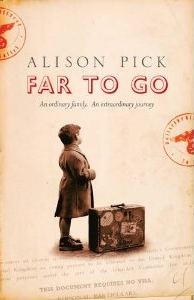
Far to Go by Alison Pick

Far to Go is the moving story of a secular Jewish family, the Bauers, living in the former Czechoslovakia during the build up to the Second World War. Marta is nanny to the Bauers’ beloved little boy, Pepik, and at the beginning of the book, she is quite happy with her position – she gets along with both Pavel, a rich factory owner, and his wife, Anneliese (although Anneliese’s insensitivity annoys her at times) and she loves taking care of Pepik. But in 1938, when the Germans take control of the Sudetenland – the border region of Czechoslovakia where the family live – they find their peaceful existence is under threat. It doesn’t matter to the Nazis that the Bauers don’t consider themselves to be particularly religious – anyone with even a trace of Jewish ancestry is in serious danger. In an attempt to keep six-year-old Pepik safe the Bauers consider sending him to safety on the Kindertransport – but can they go through with it, knowing that they might never see their little boy again?

Far to Go is the first novel I’ve read that covers the lead up to World War II from the Czechoslovakian perspective, so a lot of the historical information was new to me. But instead of confusing the reader with a lot of names, dates and politics, Pick has chosen to concentrate on the lives of an ordinary Czechoslovakian family – a family who at first don’t realise how much danger they are in. Through Marta’s eyes we see how each member of the family tries to cope with the challenging times they are facing and the difficult decisions they are forced to make.

This is also the first time I’ve read about the Kindertransport (a scheme to help Jewish children escape from Czechoslovakia and other occupied countries by train, where they were then placed with foster families in Britain). I had tears in my eyes at the images of children being forcibly removed from their parents’ arms and pushed onto the trains, where they stood looking out of the windows as their families disappeared into the distance. Pick’s writing perfectly evoked the fear and confusion these poor children must have felt.

Although most of the book is written in the third person and focuses on Marta and the Bauers in the late 1930s, there are some sections which are set in the present day and from the viewpoint of an unnamed narrator who is carrying out research into the Holocaust and the survivors of the Kindertransport. At first I was slightly confused and wasn’t sure exactly who or what I was reading about, but eventually everything became clear and I could appreciate the clever structure of the book.

Far to Go is a beautiful, heartbreaking novel and one I would recommend to anyone interested in learning more about such an important period of Czech history.

I received a copy of this book from Headline for review.

The Postmistress by Sarah Blake

It’s 1940. Frankie Bard is an American radio reporter working in London for CBS, broadcasting news on the Blitz into American homes. Frankie is right in the heart of the action, spending her nights sheltering from the bombs and her days reporting on homes that have been destroyed, families torn apart and children left orphaned.

Meanwhile on the other side of the Atlantic, we see the effects the war is having on the small town of Franklin, Massachusetts. In Franklin, we meet the postmistress (or actually, postmaster, as she prefers to be called): Iris James, a middle-aged single woman. And we also meet Emma Fitch, the doctor’s wife. When Emma’s husband travels to London to offer his medical skills to the war effort, it sets a chain of events in motion which will affect the lives of all three women.

I seem to have been reading a lot of books about World War II recently – books written during the war, set during the war and about the aftermath of the war. The Postmistress is a book I’ve had my eye on for a while and I was looking forward to reading it. Unfortunately, it turned out not to be one of the better WWII books I’ve read. In fact, it’s probably the most disappointing book I’ve read so far this year and I very nearly gave up on it after a few chapters. Although the writing was very elegant, it felt impersonal somehow and scenes that I’m sure should have made me cry left me unmoved.

The biggest problem I had was that I didn’t feel a real connection to any of the characters. The only one who came alive for me at all was Frankie Bard. I thought the book lacked focus and might have worked better if it had concentrated more on one central character. As it was, I’m not sure The Postmistress was the best title for this book. It implies that the postmistress (i.e. Iris) would be the main focal point of the book, which she wasn’t – this was really Frankie’s story in my opinion – and although Iris does play an important part in the plot, her character’s potential was never fully explored. As for the third main female character, Emma, she seemed very two-dimensional and I never felt that I got to know her at all.

It’s not all bad, though: there were some things that I did like about this book. I enjoyed the section where Frankie was sent to report on the refugee trains departing from Berlin and to attempt to interview some of the Jewish families who were leaving the city. I’m sure she wouldn’t really have found it quite so easy to travel by ferry from England to France in the middle of the war and then to catch a train to Berlin, though! Despite this and a few other inaccuracies (in the author’s note, for example, Sarah Blake admits that the recording equipment Frankie was carrying hadn’t been invented until 1944), I thought this was easily the most compelling part of the novel. This was around 150 pages into the book and was the first time I’d found myself becoming absorbed in the story, which made me glad I hadn’t abandoned it. Sadly though it didn’t continue to hold my attention and I quickly started to lose interest again when the focus returned to Iris and Emma.

I did find it interesting to read about the various ways in which the war was affecting the lives of people in Massachusetts, thousands of miles away from the fighting. We see people worrying about loved ones in Europe, people feeling frightened and expecting a German U-boat to land at any minute, people tuning into the radio every day to hear the latest news and wishing there was some way they could help. Most of the WWII books I’ve read have been from a European perspective so this was something different and I really liked that aspect of the book.

The Postmistress didn’t work for me personally, but I’ve seen a lot of reviews that are much more positive than mine, so clearly other readers have been able to connect with the characters and the story better than I have. I do however think it would make a good book group choice, as it raises some issues which would be perfect for a discussion, such as the importance of truth and whether the truth should always be told – and what happens to the people we hear about on the news after the reporter stops speaking and the radio is turned off.

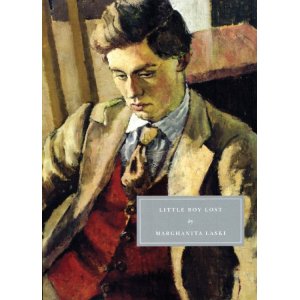
Persephone Reading Weekend: Little Boy Lost by Marghanita Laski

Persephone Reading Weekend is hosted by Claire and Verity. For those of you who are new to Persephone and wondering what this is all about, they’re a publisher dedicated to printing “mainly neglected fiction and non-fiction by women, for women and about women” and Claire and Verity have organised a weekend of reviews, giveaways and other Persephone-related fun. I’m glad I’m able to participate for the first time, as I hadn’t discovered Persephone Books in time for last year’s event. Since then I’ve read four Persephones – this one, Little Boy Lost, is my fifth. And I’m pleased to say that it has just become my favourite so far.

I was originally planning to read Alas, Poor Lady by Rachel Ferguson which I received from my Persephone Secret Santa at Christmas, but due to the length of the book I realised I wasn’t going to be able to read it in time to post about it this weekend. Although I’m still hoping to get to Alas, Poor Lady within the next few weeks (and looking forward to it as I’ve heard some good things about it), I decided that my book for the Reading Weekend would have to be the only other unread Persephone I own, Marghanita Laski’s Little Boy Lost.

And now I feel bad that Little Boy Lost was only my second choice. I can’t believe I’ve let this book sit on my shelf unopened for more than six months; if I’d realised I was going to love it this much I would have read it immediately.

Little Boy Lost is the second book I’ve read by Marghanita Laski – the first was The Victorian Chaise-Longue. However, I found the two books entirely different. Although I did enjoy The Victorian Chaise-Longue, this one was far more emotional and a more gripping, compelling read.

It’s Christmas Day, 1943, when Hilary Wainwright first learns that his son has been lost. He had seen baby John only once – a brief glimpse of a little red face with dark hair poking out of a bundle of blankets. Then, while Hilary was away, his wife, Lisa, was killed by the Gestapo in Paris and their little boy disappeared almost without trace. When the war is over, Hilary goes back to France and with the help of his friend, Pierre, he begins to follow a trail which he hopes will lead him to his lost son.

Laski does an excellent job of portraying the conflicting emotions Hilary experiences, torn between longing to be reunited with his son and worrying that if he does find him he might not want him. All through the book I was guessing what might happen – it wasn’t really obvious what the outcome would be and I could think of several different possibilities, some good and some bad.

The descriptions of post-war France are so vivid: the bomb-damaged buildings, the poverty, the food shortages – unless you were rich enough to take advantage of the black market, of course. And I was shocked by the descriptions of the conditions in the orphanages. As well as there not being enough to eat and drink, and a complete lack of any toys or games, it was chilling to think of children with tuberculosis living alongside the healthy ones.

Although I was trying to avoid hearing too much about this book before I read it, I knew it was supposed to become very nerve-wracking and suspenseful towards the end. Well, I can tell you that this is definitely true! There are so many great books that are let down by a weak ending, but this is certainly not one of them. The tension throughout the final few chapters was nearly unbearable, so much so that I was almost afraid to reach the end. And I imagine most readers, like I did, will have tears in their eyes when they reach the very last sentence.

Nicholas Lezard of The Guardian, who is quoted on the back cover, says it best: “If you like a novel that expertly puts you through the wringer, this is the one.”

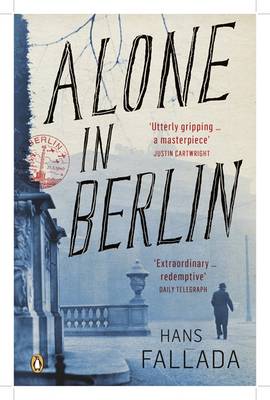
Alone in Berlin by Hans Fallada

“Mother! The Führer has murdered our son. Mother! The Führer will murder your sons too. He will not stop till he has brought sorrow to every home in the world.”

Otto Quangel writes these words on a postcard one Sunday afternoon in 1940, drops it in a crowded building the next day and waits for someone to find it. And in this way, a quiet married couple from Berlin begin their campaign of resistance to World War II.

I’ve been very lucky so far with my reading choices in 2011. Alone in Berlin (published in the US as Every Man Dies Alone) is yet another one that I thoroughly enjoyed. This book has been on my wish list since I noticed it had been translated for the first time and published as a Penguin Classic, and I’m so glad it lived up to my expectations. Not only is it a wonderful story but it’s also important historically as an anti-Nazi novel written by a German and published in 1947, just after the end of World War II.

The book is based on the true story of Otto and Elise Hampel, whom Hans Fallada renamed Otto and Anna Quangel. Fallada was given the Gestapo’s files on the Hampels and was able to draw on this information as part of his research for Alone in Berlin. Before I read this book I knew nothing about the Hampels and their postcard campaign, so I found the plot completely suspenseful, exciting and full of surprises – it was truly unputdownable, the kind of book where I knew as soon as I started reading that I was going to love it.

From the first page we are drawn straight into the action with postwoman Eva Kluge delivering a telegram to Otto and Anna Quangel, informing them that their son has been killed. Meanwhile in the apartment below, the Nazi Persicke family are celebrating the news of the capitulation of France, whilst Frau Rosenthal, the elderly Jewish woman who lives on the fourth floor, is forced to go into hiding after her husband is taken away by the Gestapo.

Devastated by his son’s death and appalled by the Nazi regime, Otto buys some blank postcards and devises a simple scheme which he hopes will raise awareness of Hitler’s atrocities and encourage other German citizens to join the resistance. On the surface, Otto is our hero, the man with the courage to stand up to Hitler, the man who refuses to join the Party although doing so is ruling him out of promotion at work. And yet Otto is not a conventional fictional hero. He comes across as cold and distant and not particularly likeable – but I could understand the reasons for him distancing himself. He was not frightened for himself, but afraid that his actions would endanger anyone associated with him, particularly his beloved Anna who insists on helping him with the postcards despite the risks involved.

The middle section of this book becomes a sort of cat-and-mouse game with Inspector Escherich of the Gestapo attempting to catch the mystery postcard writer. Escherich is a very shrewd and intelligent detective who is able to make clever deductions based on the tiniest clues – almost a brutal, sinister version of Sherlock Holmes – and I was kept in suspense wondering if Otto would give himself away.

But there are so many other things going on in this book. We also meet Enno Kluge, Eva’s husband, whose main ambition is to stay out of the army on health grounds and fill his days with gambling and drinking. Then there’s Trudel Baumann, who was once engaged to the Quangels’ son, and is opposing the war in her own way; Baldur Persicke the Hitler Youth Leader who puts Hitler and the Party before even his own father; and Kuno-Dieter, a teenage boy who flees Berlin for the countryside.

I wasn’t expecting this book to be so easy to read. The writing is clear and direct, getting straight to the point and allowing us to concentrate on the rapidly moving plot. I was concerned that my unfamiliarity with German war-time politics might be a problem, but I needn’t have worried. I had no problem understanding any part of the book. The focus is not on the politics but on the people and their lives. I went through a whole range of emotions while reading this book: fear (for Otto and Anna, for Trudel, for Frau Rosenthal, even at times for Enno); anger (at the Gestapo and the whole system of ‘justice’); and sadness, of course.

Alone in Berlin is a moving and inspirational story about two people standing up for what they know is right. I would highly recommend it if you enjoy reading World War II fiction and would like to view things from a different perspective and also if you enjoy novels that are both gripping and heartbreaking. Don’t let the 600+ pages put you off – I became so absorbed in the story I didn’t even notice the length!

Review: The Night Watch by Sarah Waters

The Night Watch follows the lives of four very different people during and after World War II. There’s Kay, who drove an ambulance during the war, but now, in 1947, there’s something missing from her life and she wanders the streets of London on her own, a lost and lonely figure. There’s Helen, who is feeling insecure in her relationship with the sophisticated Julia. Then there’s Viv, having problems of her own with her boyfriend Reggie, an ex-soldier. And finally, we meet Viv’s brother Duncan, who was in prison during the war and is still haunted by events in his past.

The story quickly becomes so complex and involved that it would be difficult to tell you any more about the plot without spoiling it. What I can tell you about though, is the structure of the book, which was very unusual. The story begins by introducing us to the characters in 1947, after the war has ended, then moves back in time to 1944, and then in the final section goes back further still to 1941. I both liked this structure and disliked it.

I liked it because of the way it led to some surprising revelations about the characters and their histories. I disliked it because so many storylines were left unresolved. I wanted to know what happened; I wanted to know whether Kay, Helen, Viv and Duncan would find happiness. I think this is probably the first Sarah Waters book I’ve read where I really loved and cared about the characters – they all felt so real and believable. But while the book answered some of the questions about the characters’ pasts, I was left with a lot of unanswered questions about their futures.

In comparison to Sarah Waters’ other books, this one feels much more subdued and quiet, with an overall mood of sadness. Apart from relating some of the obvious horrors of war which affected society as a whole, there are some heartbreaking moments in the personal stories of all four main characters (the story that affected me the most was probably Viv’s). I also found it interesting to read about the various jobs that were available to women during the war. With so many of the men away fighting, this was a time when it was deemed acceptable for women to do jobs that would previously have been done by the men. Kay, as I mentioned, was an ambulance driver, and there were other women also doing the same work. Helen and Viv were employed in more conventional office jobs, but were still contributing to the war effort with Helen providing support for people who had lost their homes or were in financial difficulties, and Viv working as a typist for the Ministry of Food.

As I’ve come to expect from Sarah Waters’ books, The Night Watch is both well written and well researched. She manages to incorporate an incredible amount of detail into the book, but the detail never overwhelms the story. I would recommend this to anyone who enjoys reading about life during World War II and the effects of the war on the lives of ordinary people. But if you loved Fingersmith and are looking for more of the same, I should warn you that this book is about as different from Fingersmith as you could imagine!

Recommended.

Good Evening, Mrs Craven: The Wartime Stories of Mollie Panter-Downes

Mollie Panter-Downes was the London correspondent for the New Yorker and this collection from Persephone Books brings together a number of her contributions to the magazine which were written during World War II. The book opens with her Letter from London dated 3 September 1939 and ends with another dated 11 June 1944. Between the two letters are twenty-one short stories, each of which offers an insight into the hopes and fears of British people trying to deal with the changes the war has brought to their lives.

These stories are not particularly dramatic or sensational in any way. They are realistic stories that focus not so much on the war itself, but on the effects of the war on the women (and a few of the men) who were left behind at home. We read about women attending sewing parties, worrying about loved ones who are away fighting, preparing for their husbands to go to war, coping with being pregnant during the war and experiencing almost any other wartime situation you can think of.

After finishing the book, there are a few stories that stand out in my memory more than the others. In Clover, for example, is a story about a rich woman called Mrs Fletcher who takes in a family of evacuees from a poor part of London. This was an interesting study into how the war pushed together people of different social backgrounds who wouldn’t usually have mixed with each other. This Flower, Safety follows Miss Mildred Ewing as she moves from one hotel to another in an attempt to escape from danger, beginning to despair of ever finding somewhere safe to live. Then there’s the story of Miss Burton, who is so hungry she can think about nothing else. The title story is also one of the best; it’s about a woman who has been having an affair with a married man. On the evening before he leaves to go to Libya, she wonders how she’ll be able to find out whether he’s dead or alive:

“Don’t think I’m being stupid and morbid,” she said, “but supposing anything happens. I’ve been worrying about that. You might be wounded or ill and I wouldn’t know.” She tried to laugh. “The War Office doesn’t have a service for sending telegrams to mistresses, does it?”

The stories are published in chronological order, as they appeared in New Yorker between 1939 and 1944, showing how life in Britain changed as the war progressed. Despite the subject matter, these stories are not all bleak and depressing – there’s also a lot of humour in Panter-Downes’ writing, in the form of gentle wit and irony.

As with most of the short story collections that I’ve read, there were some that didn’t interest me very much, but others that I loved and wished were longer. However, I think reading them all at once was a mistake as it was a bit too much for me. I think I would have enjoyed this collection even more if I had dipped in and out and taken the time to appreciate each story individually.

Recommended.