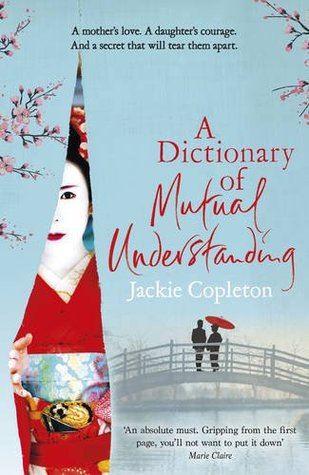
A Dictionary of Mutual Understanding by Jackie Copleton

For many years, Amaterasu has been grieving for the loss of her daughter and grandson, believed to have been killed when the atomic bomb was dropped on Nagasaki in 1945. Even now, Amaterasu still struggles with the feeling of guilt – why did she survive when they did not? – and with the need to find someone to blame. When a stranger comes to her door, claiming to be her lost grandson Hideo, she is unable to believe that it’s truly him. To prove he really is who he says he is, he gives Amaterasu a package of diaries and letters which shed some light on what happened all those years ago and help her to decide whether this man could possibly be Hideo.

As Amaterasu sits and reads the papers she has been given, she is forced to revisit moments from the past which she would rather forget and in the process comes to know more about her daughter Yuko than she did while she was alive. It’s obvious from the start that the villain of the story, as far as Amaterasu is concerned, is Jomei Sato, Yuko’s lover, but we don’t know at first why she dislikes him so much and why she believes he played a part in her daughter’s death. Before we can make sense of the chain of events that led to Yuko standing in a cathedral in Nagasaki which was destroyed when the bomb fell, we have to go back in time to see the beginnings of Yuko’s relationship with Sato – and then further back again to discover Amaterasu’s own personal story and to understand what makes her feel the way she does.

A Dictionary of Mutual Understanding is a beautifully written novel dealing with a subject which I’m sure must have been difficult and emotional to research and to write about. Although Jackie Copleton didn’t actually live through the bombing of Nagasaki herself, her descriptions of the bombing (or pikadon, from the Japanese words for flash and boom) and its aftermath are vivid, intense and shocking. This is not just a novel about war, however. The events of that terrible day in August 1945 are just one part of the story, along with other topics and themes such as family, love, forgiveness and how different people cope with loss and heartbreak.

My knowledge of Japanese history and culture is very limited so I can’t really comment on the accuracy of the novel, apart from to say that it all seemed convincing enough to me! Every chapter begins with a Japanese word or term and its English translation, each one giving us some insight into one small aspect of Japanese life. Sometimes the relevance of the word and its definition to the chapter which follows is obvious, but sometimes I had to think about why a particular word was chosen to represent a particular chapter.

This was an interesting read (especially as it’s one of my goals to read more historical fiction set in Japan) but, with the exception of the pikadon chapter, I didn’t find it quite as moving as I’d expected. This could partly be because of the structure of the novel – the story takes the form of Amaterasu’s memories interspersed with short extracts from Yuko’s diaries and Sato’s letters, and this meant that I was always very aware that I was reading about events that were already in the past, rather than actually being there with the characters sharing their experiences as they happened. I think it might have been this lack of immediacy which stopped me from fully connecting with the characters on an emotional level.

Still, I thought this was a very impressive novel, particularly as it is Jackie Copleton’s first. I would say that I enjoyed it, but ‘enjoyed’ is not really the right word to use given the subject of the book. Instead I’ll say that it is fascinating, gripping and informative and I would be very happy to read more books by this author.

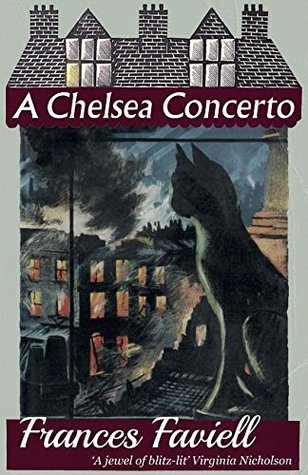
A Chelsea Concerto by Frances Faviell

a-chelsea-concerto I had a nice surprise a few months ago when I unexpectedly received two ebooks from Dean Street Press who were launching their new imprint, Furrowed Middlebrow (in conjunction with Scott from the Furrowed Middlebrow blog). The first one I chose to read was A Chelsea Concerto, a Second World War memoir originally published in 1959.

Frances Faviell lived at 33 Cheyne Place in Chelsea – one of the most heavily bombed areas of London during the war due to its location, close to the Royal Hospital and to several bridges over the River Thames. Her memoir opens in the early days of the war, a period known as the Phoney War because it seemed as though very little was actually happening. During this time, as well as continuing her work as an artist, Frances becomes a Red Cross volunteer, taking part in air-raid drills and trying to ensure that the people of Chelsea are as fully prepared as they can possibly be for whatever may follow.

What follows, of course, is the Blitz, which Faviell describes in vivid detail. Night after night, people living in Chelsea are subjected to one bombing raid after another, emerging from the shelters each morning in fear of what they might find: their home destroyed; a friend or neighbour dead; the roads blocked; an unexploded bomb in the street. With her work as a volunteer, Frances is often at the centre of the action, experiencing and witnessing the most horrifying things, while throughout it all, the Green Cat – her most treasured possession – sits in her window as a symbol of safety and prosperity.

Serene and aloof he sat in the window in the sunlight, surveying with contempt the activities in the street. Everyone begged me to put him down in the cellar with some of the paintings which I had stored there now. But I would not move him. Was he not the Guardian of the Home? He must be treated with respect.

Before the war, Frances had travelled widely and learned to speak several languages, something which enables her to offer help and support to the refugees who have fled to Britain as the Nazis sweep across Europe. There are some real characters amongst the refugees – in particular ‘The Giant’, a large and outspoken Belgian fisherman – and some funny moments, such as the story of Monsieur D, who is suspected of being a spy when mysterious lights show from his window during a blackout. Many of these people, though, are frightened and traumatised and look to Frances for advice and protection. She becomes particularly close to Ruth, a Jewish refugee from Germany, who attempts to kill herself, leaving her young daughter in need of Frances’ care. Nineteen-year-old Catherine, who arrives in London pregnant and unmarried, is another troubled young woman whom Frances finds herself taking under her wing.

Despite the terrible things going on around her – and the terrible things she experiences herself – Frances keeps her sense of humour and often manages to see the funny side (when she remembers a government information leaflet on what to do if German parachutists land, for example, or when she talks about her dachshund, Vicki, known as Miss Hitler).

The wording of the pamphlet which we knew was designed to try and avoid the same panic flight as in Belgium and France caused such hilarity everywhere that every current show included some skit on the arrival of parachutists. In the FAP we went about chivvying one another with the words of the clauses about seeing anything suspicious and “Be calm, be quick, be exact” became a joke in every place of work or exercise which we had to carry out with the Civil Defence.

Most of her memories are quite harrowing, though, such as when she describes the horrors of trying to reassemble pieces of bodies blown apart by bombs and the time she was lowered headfirst into a hole in a collapsed building to assist an injured man. But the most vivid and dramatic episode of all comes near the end when Faviell’s own home is bombed – and although we know that Frances must have survived to be able to write this book, the tension and the sense of danger come across so strongly in her writing that we worry for her anyway.

I haven’t read many wartime memoirs and I couldn’t help comparing this one to the few that I have read. It didn’t have quite the emotional impact that Vera Brittain’s Testament of Youth had on me, for example, but I still found it a fascinating and moving read. Frances Faviell wrote several other books which are also available from Dean Street Press; has anyone read any of them, and if so, which would you recommend?

The Morning Gift by Eva Ibbotson

The Morning Gift This is not the first Eva Ibbotson novel I’ve read – I have previously read Madensky Square and The Secret Countess, both of which I enjoyed – but I’ve been particularly looking forward to this one as so many Ibbotson readers speak so highly of it.

The novel opens in Vienna and introduces us to Ruth Berger, the twenty-year-old daughter of a professor of Zoology, whose life revolves around music, nature and her cousin Heini, the concert pianist she has always expected to marry. When the Nazis invade Austria in 1938, Ruth and her family are forced to flee but while her parents make it to safety in London, Ruth is left behind due to a problem with her student visa. A friend of her father’s, the British scientist Professor Quinton Somerville, comes to the rescue with the suggestion that Ruth marries him as a way of getting to London. Once Ruth is safely in England, the marriage can be annulled.

Of course, things don’t go exactly as planned and dissolving their marriage of convenience proves to be harder than they expected. Ruth becomes a student at Thameside University and finds herself in Quin’s class where it will be impossible for them to avoid each other as the lawyers have advised. While she and Quin struggle with the growing attraction they feel for each other, another complication arrives in the form of Heini who has made his way to England and expects Ruth to marry him as soon as possible. Will Ruth and Quin’s secret marriage be discovered?

The Morning Gift is a lovely, romantic story; it took me a while to get into it as the beginning was quite slow, but I became completely absorbed in the story somewhere in the middle and although it was really quite predictable, I still didn’t want to stop reading until I’d found out how things would end for Ruth and Quin. But there is more to this book than just the romance; among other things, it also offers insights into what life was like for a family who escaped persecution in Austria just in time and took refuge in London. This aspect of the novel is based on the author’s personal experiences – her own mother had to flee Vienna and Eva joined her at Belsize Park in London, where the Berger family live in the novel.

I also liked the academic setting and all the little scientific references that are dropped into the story as Ruth studies for her Zoology degree. I particularly enjoyed the descriptions of the field course at Bowmont, Quin’s estate in Northumberland. Ruth takes genuine pleasure in the natural beauty of her surroundings – the waves tumbling against the cliffs, the smell of vanilla drifting from a gorse bush, the sound of a curlew calling – and I loved seeing the Northumberland coast through her eyes.

I liked both Ruth and Quin, but there’s also a good selection of strong secondary characters: the other refugees who meet for tea and cakes in the Willow Tea Rooms; Ruth’s Uncle Mishak who copes with his wife’s death by planting radishes; Quin’s formidable Aunt Frances who will do anything to prevent Bowmont being given to the National Trust; and Ruth’s fellow students at the university, especially Verena Plackett, the closest thing to a villain in this novel. There are many more – too many to mention here – but all of them have something to add to the story.

I did enjoy The Morning Gift but it’s probably my least favourite of the three Ibbotson novels I’ve read so far. There was nothing in particular that I disliked about this book (apart from the slow start); it’s just that I preferred The Secret Countess and Madensky Square. I’m looking forward to continuing to work through the rest of Ibbotson’s novels!

Thanks to the publisher for providing a review copy via NetGalley.

Jakob’s Colours by Lindsay Hawdon

Jakobs Colours There are many, many novels which deal with the subject of the Jewish Holocaust, but in Jakob’s Colours Lindsay Hawdon explores another very important but largely forgotten piece of wartime history – the Gypsy Holocaust.

Beginning in Austria in 1944, she introduces us to an eight-year-old boy called Jakob. Part Roma and part Yenish, Jakob’s world has been torn apart by the horrors of war. He is running for his life across the Austrian countryside, and as he runs, he clings to his father’s words: “Don’t be afraid, Jakob. See the colours”.

But Jakob’s is not the only story to be told here. We also go back in time to the 1920s where we get to know Jakob’s mother, Lor, and learn of her troubled childhood in England. Later, in a Swiss hospital, Lor meets Yavy, the gypsy who becomes Jakob’s father, and we follow their relationship from its beginnings up to the point where Jakob finds himself alone and on the run.

Jakob’s Colours is very different from any other World War II novel I’ve read – a real accomplishment when you consider the sheer number of books set in this period. I previously knew nothing at all about the fate of the gypsies during the war (like most people, when I think of the Holocaust I tend to think of the Jews) so it’s great to have been given this opportunity to learn something new. However, I struggled with the structure of the novel. The story constantly moves back and forth in time, with each chapter titled either This Day, Before or Long Before, which I found quite confusing and difficult to follow. It felt disjointed and it meant that I never became as fully immersed in the lives of the characters as I would have liked.

I’m disappointed that I wasn’t able to love Jakob’s Colours, especially as the historical background is so fascinating and the subject matter so poignant. It was definitely my problem with the jumping around in time that prevented me from loving it; I’m sure I would have enjoyed the book a lot more if only the story had been told in chronological order. I did still find a lot of things to admire, though – the writing is very poetic and quite beautiful in places, and I liked the colour imagery that runs throughout the novel.

Most of all, I liked the concept that however bad things become we need to continue to hope and to look for the good things in life…to see the colours.

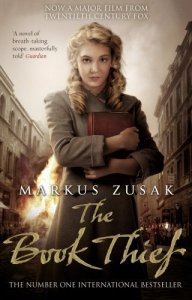
The Book Thief by Markus Zusak

The Book Thief I know what you’re thinking: how could I possibly have not read The Book Thief until now? My answer is that I really don’t know. My excuse is that I wasn’t paying much attention to new releases at the time when the book was published in 2005 so I missed all the hype surrounding it. Since then I have just never felt like reading it; there has always been another book calling to me more loudly. Now that I’ve finally read it, of course, the next question is: was it worth waiting for? And my answer to that is, sadly, no. Not only am I one of the last people in the world to have read The Book Thief, it seems that I’m also one of the only people not to have loved it.

The novel is narrated by Death, who is experiencing one of the busiest times of his career – World War II. Death is everywhere during the war, but he has chosen to focus on the story of a nine-year-old German girl called Liesel Meminger. Liesel’s parents are communists and as the novel begins in 1939, Liesel and her brother, Werner, are being sent to live with a foster family in the small town of Molching. Werner dies during the journey and this is when Death has his first encounter with Liesel – and when he first witnesses her stealing a discarded book, which happens to be called The Grave-Diggers Handbook.

Liesel can’t read but she is fascinated by books and words and this is what sustains her as she faces the challenges of settling into a new home. Her kind-hearted foster father, Hans Hubermann, teaches her to read and with the help of her new friend, Rudy Steiner, Liesel soon begins to add to her small library, becoming the ‘book thief’ of the title. Despite the atrocities going on in the world around her, Liesel’s life on Himmel Street, Molching, is relatively peaceful until the arrival of Max Vandenburg, a Jew in need of help – and a basement to hide in.

I said that I didn’t love the book, but this doesn’t mean I didn’t like it at all, because I did. My problem was the writing style – or I should say, styles, as there are so many all incorporated into one book. There are some very short sentences, some partial sentences, nouns used as verbs, dictionary definitions dropped into the text, and parts of the story told in the form of illustrations and cartoons. Sometimes Death interrupts his narration to talk directly to the reader, to make an observation or to hint at something that will happen later in the book.

It’s certainly creative and unique – I’ve never read anything quite like it – and I can see that a lot of readers will absolutely love it, but I am just not a fan of writing that feels experimental or gimmicky. I don’t even like it when a book is written in the present tense! I find that when a novel is written in an unusual way I end up being distracted by the writing instead of being drawn into the story and the lives of the characters. While I was reading The Book Thief I felt that I was never quite there on Himmel Street with Liesel and Rudy and the others; I could never forget that I was reading a book.

I did like the idea of the story being narrated by Death. I’m aware that this is not a very original concept and that there are other books that also use Death as a narrator (some of Terry Pratchett’s, for example) but I haven’t personally read any so it was something different as far as I was concerned! There were other things that I liked – the development of Liesel’s relationship with her foster parents; the stories Max writes while he’s hiding in the basement; watching Liesel discover the joys of reading – and by the time I started to approach the final chapters of the book, I found that Zusak had made me care about the characters and their fates. There’s no doubt that this is a very moving book and I was close to tears once or twice near the end.

Despite being a little bit disappointed by this book, I completely understand why it is so popular and why so many people love it. I know I’m in a tiny minority, so please, if you haven’t read it yet don’t let me put you off – try it for yourself and see what you think!

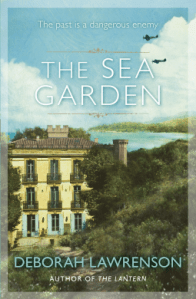
The Sea Garden by Deborah Lawrenson

The Sea Garden I remember hearing a lot about Deborah Lawrenson’s The Lantern a few years ago but never found time to read it, so I was pleased to have the opportunity to read her latest book, The Sea Garden. This book consists of not just one story, but three, each taking up approximately one third of the book and introducing us to three very different women. The stories are loosely connected but each has a different setting and a different feel.

The first of the three stories (you could probably call them novellas) is also titled The Sea Garden. It’s 2013 and Ellie Brooke, a landscape garden designer, is visiting Porquerolles, a small island off the coast of France where she has agreed to restore a memorial garden for a client, Laurent de Fayols. However, she is unprepared for both the hostile welcome she receives from Laurent’s elderly mother and for the supernatural experiences that happen to her while on the island. Ellie’s story then comes to an abrupt end and another begins…

The Lavender Field takes us back to Nazi-occupied France in 1944 and a small community of people working for the French Resistance. Marthe Lincel, a young blind woman, is an apprentice at the Distillerie Musset in Provence. Her work involves creating fragrances and perfumed soaps, but as the war progresses she turns her skills to helping Allied soldiers. There are the beginnings of a dramatic and romantic wartime story here, but again we come to the end too soon…

The third and final story is A Shadow Life, the story of Iris Nightingale, who is working for British Intelligence in 1943, gathering information and recruiting spies to be sent into occupied France. Iris grows close to one of the agents, Xavier Descours, but his work is secretive and dangerous and this is not a good time to be falling in love. As the book draws near to its conclusion, we finally begin to see some connections between Ellie, Marthe and Iris and the men in their lives.

This is a beautifully written book, set in a time period I love to read about (World War II). There are some lovely descriptions of Provence with its lavender fields and also of the island of Porquerolles, a place I previously knew nothing about. The Porquerolles story has some ghostly/supernatural elements and I was impressed with the way the author creates such an eerie atmosphere in what should be a peaceful, idyllic setting. I also enjoyed learning about the work Iris carries out for the SOE (Special Operations Executive); it was fascinating to see the level of secrecy that was required when going undercover in France!

My problem with this book was the structure. Keeping the three stories separate just didn’t work for me as well as a more traditional multiple time period novel would have done. While there were definitely some links between the three, most of these didn’t become obvious until very near the end of the book. When things did start to come together the result was fascinating, but it happened too late and I’m sure I would have been happier if the three stories had been woven together from the beginning to form one cohesive novel.

Marthe’s section in particular felt very disconnected from the other two – yes, there was some character overlap, but I’m not convinced that such a large chunk of the book needed to be devoted to Marthe’s story. The third story – the one with Iris and the secret agents – was the one I found most compelling, possibly because it’s the only one that felt like a complete story and brought in elements from the other two. At the end, though, there were still some questions left unanswered and if I had enjoyed the book more, I would have taken the time to go back and search the earlier sections to see if there were any clues I had missed.

I received a copy of The Sea Garden for review via NetGalley

Love and Treasure by Ayelet Waldman

Love and Treasure In Love and Treasure, Ayelet Waldman traces the fate of a single item – a necklace with a peacock pendant – and uses it to tell the story of Hungary’s Jewish communities before and after the Holocaust. Spanning a period of one hundred years, the novel is divided into three separate stories, but there are links between all three and the peacock pendant plays an important role in each one.

The novel begins in 2013 with a conversation between Jack Wiseman and his granddaughter, Natalie, when he admits to her that the necklace she wore on her wedding day thinking it was her grandmother’s did not actually belong to her grandmother at all. The real owner, he says, is unknown, but he would like Natalie to find her and give the pendant back.

We then move back in time to Salzburg in 1945 where Jack is serving in the US army. He is given the responsibility for guarding the Hungarian Gold Train, a train containing the confiscated personal belongings of thousands of Hungarian Jews (paintings, watches, furs, cameras and other objects) but while he does his best to protect its contents he is forced to watch as his fellow army officers ‘borrow’ one item after another. When Jack’s days in charge of the train come to an end, he himself steals one of its treasures – the peacock pendant – because it reminds him of Ilona, a Jewish girl from the Hungarian town of Nagyvárad whom he has grown close to during his time in Salzburg.

Returning to 2013, Natalie is beginning her search for the original owner of the pendant – a search which will take her to Budapest where she joins forces with Amitai Shasho, an Israeli art dealer on a special mission of his own. This takes us into the final section of the book, set in 1913 Budapest and telling the story of a psychoanalyst and one of his patients, a young Hungarian suffragette whose strong views lead to her father wanting her treated for insanity.

Of the three main sections of the novel I think my favourite was the first one, the story of Jack and Ilona. Ilona is a survivor of the concentration camps and through her character, Waldman explores the lives of the Displaced Persons who lost their homes and their families during the war. I thought she did an excellent job of showing what it may have felt like to be a Jew displaced in Europe after the war had ended. I cared about Jack and Ilona in a way that I never really came to care about Natalie and Amitai, so I was sorry to leave them behind when I reached the end of the first section and moved on to the second.

I also enjoyed the final part of the book: narrated by the psychoanalyst, Dr Zobel, this is the only section to be written in the first person rather than the third, and I thought his narrative voice was very strong and distinctive – just what I would expect from a man of his profession in 1913.

I found Love and Treasure a very interesting read because it introduced me to subjects I knew little or nothing about. The Hungarian Gold Train, for example, really existed, yet it’s something I had never read about before and I thought it was fascinating. While the book didn’t really affect me emotionally as much as I would have expected from a novel about the Holocaust, the fact that it was so intriguing from an historical perspective made up for it.

Love and Treasure tour banner

I read this book as part of the Love and Treasure Historical Fiction Virtual Book Tour. For more reviews, interviews and guest posts please see the tour schedule.