A Quiz for Easter: Children’s Classics

children-reading-1 I was expecting to be posting my third monthly War and Peace readalong update this weekend, but as I’ve found myself behind with this month’s reading I’ve decided to do something different instead. I know ‘first lines’ quizzes are not exactly very original, but I haven’t seen any book bloggers post one recently so I thought this might be something fun for the Easter weekend.

I’ve listed below twenty first lines from children’s classics, all of which I remember reading when I was younger. There’s probably a slight British bias here, but I’ve tried to include some that I would expect most people to be able to guess as well as some that are much more obscure. I’ll be impressed if anybody knows all of them.

Have fun and feel free to share your answers in the comments!

***

1. The primroses were over.

2. Once upon a time, sixty years ago, a little girl lived in the Big Woods of Wisconsin, in a little gray house made of logs.

3. I myself had two separate encounters with witches before I was eight years old.

4. Roger, aged seven, and no longer the youngest of the family, ran in wide zigzags, to and fro, across the steep field that sloped up from the lake to Holly Howe, the farm where they were staying for part of the summer holidays.

5. If you want to find Cherry Tree Lane all you have to do is ask a policeman at the crossroads.

6. It began with the day when it was almost the Fifth of November, and a doubt arose in some breast – Robert’s, I fancy – as to the quality of the fireworks laid in for the Guy Fawkes celebration.

7. “Christmas won’t be Christmas without any presents,” grumbled Jo, lying on the rug.

8. It was seven o’clock of a very warm evening in the Seeonee hills when Father Wolf woke up from his day’s rest, scratched himself, yawned, and spread out his paws one after the other to get rid of the sleepy feeling in their tips.

9. A sudden snow shower put an end to hockey practice.

10. The first place that I can well remember was a large pleasant meadow with a pond of clear water in it.

11. The little old town of Mayenfeld is charmingly situated.

12. This is a story about something that happened long ago when your grandfather was a child.

13. Harriet was trying to explain to Sport how to play Town.

14. The tempest had raged for six days, and on the seventh seemed to increase.

15. When Mary Lennox was sent to Misselthwaite Manor to live with her uncle everybody said she was the most disagreeable-looking child ever seen.

16. The Mole had been working very hard all the morning, spring-cleaning his little home.

17. “Mother, have you heard about our summer holidays yet?” said Julian, at the breakfast-table.

18. A tall, slim girl, “half-past sixteen,” with serious gray eyes and hair which her friends called auburn, had sat down on the broad red sandstone doorstep of a Prince Edward Island farmhouse one ripe afternoon in August, firmly resolved to construe so many lines of Virgil.

19. The Fossil sisters lived in the Cromwell Road.

20. When Mrs. Frederick C. Little’s second son arrived, everybody noticed that he was not much bigger than a mouse.

book-clipart-3

I’ll post the answers next week.

Good luck!

Pictures at an Exhibition by Camilla Macpherson

Pictures at an Exhibition In 1942 the National Gallery in London launched its ‘Picture of the Month’ scheme. Each month one of the masterpieces that had been hidden away to protect them from bombing raids during the war would be brought out of storage and put on display. Daisy Milton, who is working in London as a typist, decides to go along every month to look at the paintings in the hope that it will give her something to look forward to and help her get through the days until the war is over. After each visit to the gallery she writes a letter to her friend Elizabeth in Canada, describing the painting and how it made her feel.

In the present day we meet Claire and her husband, Rob. When Rob’s grandmother, Elizabeth, dies she leaves him a box containing the letters she received from Daisy throughout the war. A recent tragedy has almost destroyed Claire and Rob’s marriage and Claire finds some comfort in reading Daisy’s letters and going to look at the paintings once a month just as Daisy did. As the months go by and Claire finds herself drawn into Daisy’s world she starts to see some parallels between Daisy’s life in the past and her own life in the present.

I enjoyed Pictures at an Exhibition, but although I was interested in both the wartime and modern day storylines I did prefer the wartime one because I found Daisy a much more appealing character than Claire. For a long time Claire annoyed me because she seemed so self-absorbed and unwilling to move on with her life. I had more sympathy for Rob, who came across as a kind, considerate husband who was doing his best to make their marriage work and starting to run out of patience. As Claire’s story unfolded I started to warm to her a bit more, but I would still rather have spent more time with Daisy.

My favourite thing about this novel was having the opportunity to learn about the paintings that were displayed in the National Gallery during the war. Each chapter of the book begins with a QR code that you can scan with your phone (if you have the right sort of phone) and it will take you directly to the painting, or you can look them up online yourself later if you prefer – they are all easy to find on the National Gallery website. Some were very famous paintings that I was already familiar with, such as The Arnolfini Portrait by Jan van Eyck and The Hay Wain by John Constable, but there were others I knew nothing about. It was a fascinating experience to view each of these paintings first through Daisy’s eyes and Claire’s, then to be able to look at them myself and see things in them that I might not have thought of otherwise.

Thanks to the author for sending me a review copy of this book.

Turn of the Century Salon: The Painted Veil by W Somerset Maugham

The Painted Veil Despite the attempts of her mother to arrange a good marriage for her, Kitty Garstin is in no hurry to find a husband. She’s too busy enjoying herself at parties and dances, and it’s only when she’s still unmarried at the age of twenty-five and discovers that her younger sister has become engaged to a baronet that she begins to panic. She agrees to marry Walter Fane, a bacteriologist, and moves to Hong Kong with him. Walter is shy, clever and serious and to the pretty, frivolous Kitty, he seems very cold and aloof. Although he is in love with her, she doesn’t love him in return and soon begins an affair with the charming, charismatic Assistant Colonial Secretary, Charles Townsend.

Eventually Walter learns the truth about Kitty and Charles and confronts Kitty with an ultimatum. She can either accompany him into the interior of China where he has volunteered to deal with a cholera epidemic, or he will allow her to divorce him – but only if Charles agrees to divorce his wife and immediately marry Kitty. When Kitty goes to discuss the situation with Charles, she is cruelly disillusioned by her lover and is left with no other option than to travel to Mei-tan-fu with Walter. Kitty is convinced that Walter is taking her there in the hope that she will die, but it’s here in this remote cholera-ridden city that Kitty finally begins to grow as a person and to make some discoveries about both herself and her husband.

This book was such a surprise. I think I must have formed a preconceived idea that I wouldn’t like Somerset Maugham without ever having tried any of his books or knowing anything about him, because I really didn’t expect to love this as much as I did. I’m so pleased to find that I was wrong! The Painted Veil is one of the best books I’ve read so far this year. I found Maugham’s writing much easier to read than I had thought it might be, but also filled with beauty, poignancy and emotion.

This is quite a short novel but both main characters have a lot of depth and complexity. I disliked Kitty at first – she’s selfish, spoiled and immature – but the fact that she is so flawed and makes such terrible mistakes is what makes her so human. Kitty is changed by her experiences in Mei-tan-fu and we see her mature and gain in wisdom and insight. By the end of the book, I still didn’t like her but I had a better understanding of her and I wanted her to be happy. I had more sympathy for Walter, but because we are viewing him through Kitty’s eyes, we don’t really have a chance to see the other side of his personality that we hear about – when the nuns in the convent tell Kitty how much they admire him, for example, and how tender and loving he can be with the orphaned babies there. Kitty barely knows or understands her husband at all and when she finally begins to do so, we are made to wonder whether it’s going to be too late.

There aren’t a lot of long, descriptive passages in this book but 1920s China is still portrayed beautifully and I loved this description of Kitty watching the rooftops emerging from the mist on her first morning in Mei-tan-fu:

But suddenly from that white cloud a tall, grim, and massive bastion emerged. It seemed not merely to be made visible by the all-discovering sun but rather to rise out of nothing at the touch of a magic wand. It towered, the stronghold of a cruel and barbaric race, over the river. But the magician who built worked swiftly and now a fragment of coloured wall crowned the bastion; in a moment, out of the mist, looming vastly and touched here and there by a yellow ray of sun, there was seen a cluster of green and yellow roofs. Huge they seemed and you could make out no pattern; the order, if order there was, escaped you; wayward and extravagant, but of an unimaginable richness. This was no fortress, nor a temple, but the magic palace of some emperor of the gods where no man might enter. It was too airy, fantastic, and unsubstantial to be the work of human hands; it was the fabric of a dream.

Turn of the Century Salon - March I read The Painted Veil for Katherine’s Turn of the Century Salon. This book was published in 1925 and with its portrayal of society in 1920s colonial Hong Kong and an era when many girls were still raised with the sole aim of making a good marriage, this was an ideal choice for the Salon. If you read it I would also recommend reading Shelley’s sonnet Lift Not The Painted Veil and Oliver Goldsmith’s An Elegy on the Death of a Mad Dog.

Irish Short Story Month Year 3: Two from Oscar Wilde

Irish Short Story Month

Irish Short Story Month is an annual event hosted by Mel U of The Reading Life. To participate all you need to do is read at least one Irish short story during the month of March. In 2011 I read Laura Silver Bell by Sheridan Le Fanu. I didn’t manage to take part in 2012, but as I’ve been neglecting my short story-reading in recent months, I decided to join in again this year.

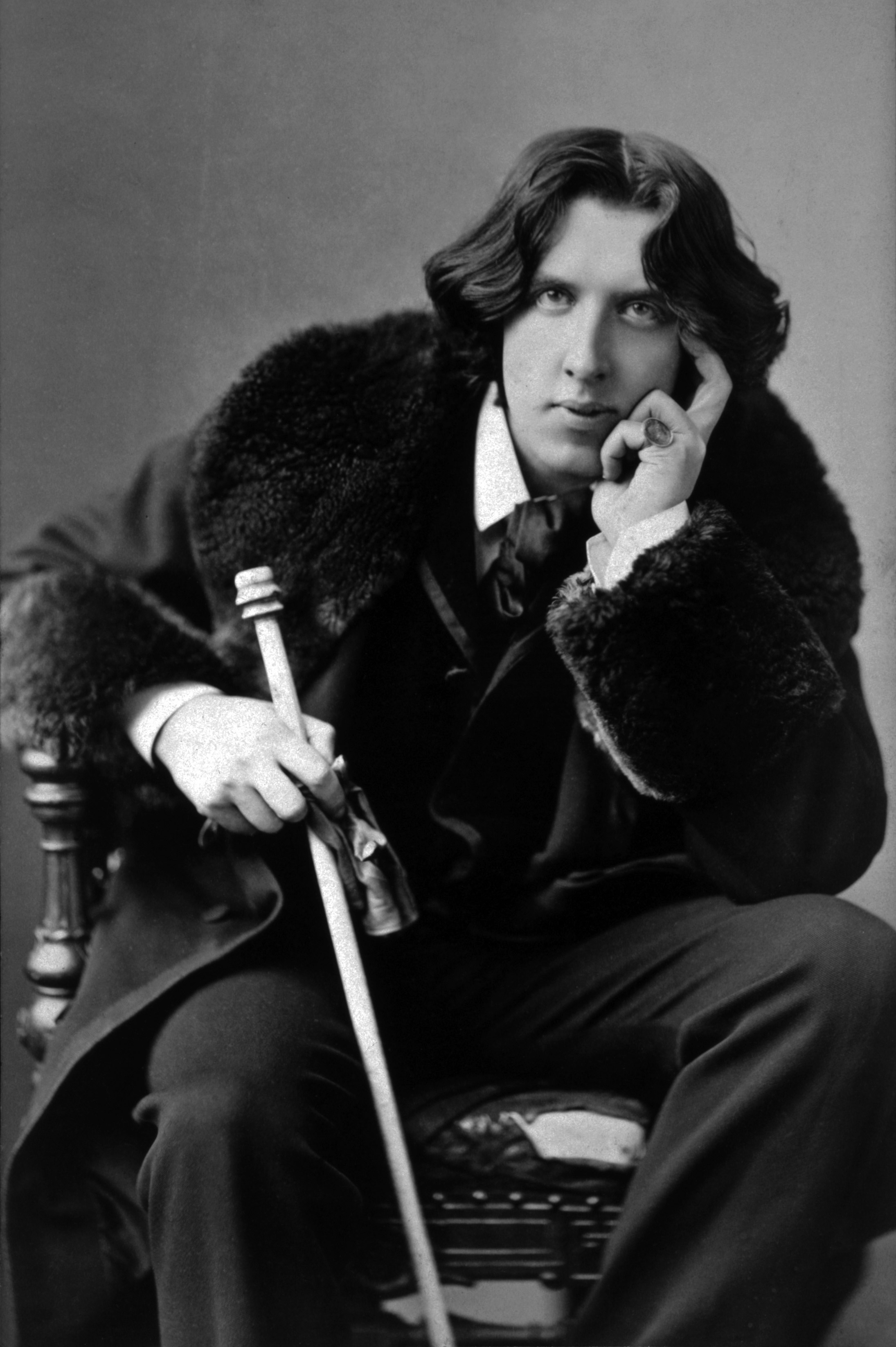
Oscar Wilde, 1854-1900

Oscar Wilde, 1854-1900

I have previously read one of Oscar Wilde’s fairy tale collections for children, A House of Pomegranates, but none of his short fiction for adults. For Irish Short Story Month I’ve read two of his stories – The Model Millionaire and The Sphinx Without a Secret. Both of these are available online and can easily be read in just a few minutes. They also appear in the collection, Lord Arthur Savile’s Crime and Other Stories.

In The Model Millionaire we meet Hughie Erskine, who is in love with Laura Merton, the daughter of a retired Colonel. Hughie is handsome and good-natured but unfortunately has no money and the Colonel will not let him marry Laura until he has ten thousand pounds of his own. One day, Hughie visits his artist friend, Alan Trevor, and finds him painting a portrait of an old beggar dressed in rags, who is standing in the corner of the room.

The beggar himself was standing on a raised platform in a corner of the studio. He was a wizened old man, with a face like wrinkled parchment, and a most piteous expression. Over his shoulders was flung a coarse brown cloak, all tears and tatters; his thick boots were patched and cobbled, and with one hand he leant on a rough stick, while with the other he held out his battered hat for alms.

‘What an amazing model!’ whispered Hughie, as he shook hands with his friend.

‘An amazing model?’ shouted Trevor at the top of his voice; ‘I should think so! Such beggars as he are not to be met with every day. A trouvaille, mon cher; a living Velasquez! My stars! what an etching Rembrandt would have made of him!’

‘Poor old chap!’ said Hughie, ‘how miserable he looks! But I suppose, to you painters, his face is his fortune?’

‘Certainly,’ replied Trevor, ‘you don’t want a beggar to look happy, do you?’

Hughie asks his friend how much he will be paying the beggar for modelling for him and is shocked at how little the amount is compared to the amount Trevor will make from selling the picture. Although Hughie himself is very poor, he feels sorry for the old man and as soon as his friend leaves the room he gives the beggar all the money he has in his pocket. Later that night he discovers that his act of generosity has had a surprising result.

I thought it was very easy to predict what was going to happen in this story, but I enjoyed it and despite it being so short, I still found it satisfying – and very well written, of course.

The other story I read, The Sphinx Without a Secret, is another very short one. The narrator meets his friend, Lord Murchison, in Paris and seeing that something is wrong, asks him what the problem is. Murchison tells him about the beautiful Lady Alroy, whom he had loved and planned to marry.

He took from his pocket a little silver-clasped morocco case, and handed it to me. I opened it. Inside there was the photograph of a woman. She was tall and slight, and strangely picturesque with her large vague eyes and loosened hair. She looked like a clairvoyante, and was wrapped in rich furs.

‘What do you think of that face?’ he said; ‘is it truthful?’

I examined it carefully. It seemed to me the face of some one who had a secret, but whether that secret was good or evil I could not say. Its beauty was a beauty moulded out of many mysteries – the beauty, in face, which is psychological, not plastic – and the faint smile that just played across the lips was far too subtle to be really sweet.

Finding her to be very secretive and surrounded by an atmosphere of mystery, Murchison decided to follow her one day and saw her entering a boarding house where she stayed for a few hours before returning home. When Lady Alroy tried to deny visiting the house, Murchison became convinced that she was hiding something – but what could it be?

Although I didn’t find either of these to be particularly memorable stories, I did enjoy them both as I love Oscar Wilde’s writing style. I liked the ambiguous ending of The Sphinx Without a Secret; despite the suspense that builds up throughout the story it’s not hard to guess what Murchison is going to discover as the title does give it away, but we are still left with something to think about at the end. This story may have been intended as a satire on Victorian sensation fiction, in which everybody had a secret to hide and an ulterior motive for every seemingly innocent action, as well as being a study of a person’s desire to pretend to be something they’re not.

Have you read any of Oscar Wilde’s short stories? Who are your favourite Irish writers?

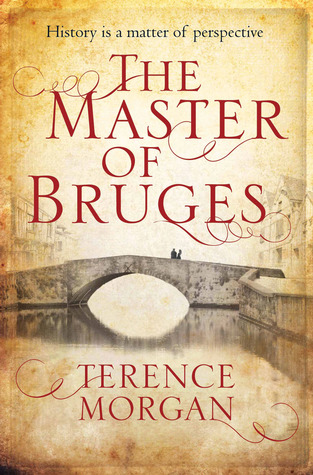
The Master of Bruges by Terence Morgan

The Master of Bruges The Master of Bruges is presented as the fictional memoirs of the 15th century artist, Hans Memling. In December 1464, following the death of his master, the Flemish painter Rogier van der Weyden, Hans travels to Bruges where he works at the Burgundian court, painting portraits of the nobility. As an artist, Memling is naturally a very observant, perceptive person and can offer the reader some insights into both the politics of the period and the lives and personalities of the people he meets in Bruges.

One night two strangers calling themselves ‘Ned and Dick Plant’ come to seek refuge at Memling’s house and Hans finds himself drawn into the drama and intrigues of the Wars of the Roses, the conflict between England’s House of York and House of Lancaster. And when several years later he is invited to England and renews his acquaintance with Ned and Dick, he becomes caught up in one of history’s greatest mysteries: the disappearance of Edward IV’s sons, the Princes in the Tower, who many people believe were murdered by their uncle, Richard III.

Before reading this book I had heard of Hans Memling but was not familiar with his work. The only one of his paintings I knew anything about was his triptych The Last Judgment, which featured a portrait of the banker Tommaso Portinari being weighed in St Michael’s scales, and was captured by the Danzig pirate Pauel Benecke as it was being shipped to Italy. The only reason I was aware of this anecdote was because it formed a minor plot point in Dorothy Dunnett’s House of Niccolo series (specifically, in To Lie with Lions and Caprice and Rondo). Luckily, many of Memling’s paintings can be seen online and I can guarantee that you’ll want to look at them as you read. There are also some short chapters interspersed throughout the novel in which Hans shares with us his views regarding artistic technique, perspective, focus, colours, and some of the tricks artists use to please their sitters, and I enjoyed reading these. As well as being fascinating to read, these chapters are relevant to the story as Memling’s descriptions of his techniques are either directly or indirectly linked to aspects of the plot.

I thought the first part of the novel, which details Hans’ early days as an artist, worked very well but not the second part, after he travels to England. I was interested in learning about Hans and his portraits and I was also interested in the Richard III story – it was the way the two were combined that didn’t work for me. Despite the Wars of the Roses being one of my areas of interest in historical fiction, I think I would have liked this book more if it had continued to tell the story of Memling’s life in Bruges rather than changing focus halfway through to concentrate on the mystery of the Princes in the Tower.

I don’t expect historical novelists to always stick rigidly to the facts, otherwise they would be writing non-fiction rather than fiction, but this particular book stretches credibility too much for me. I appreciated the author’s note at the end of the book, but I wished it had given more information on exactly which aspects of the story were based on fact and which were fictional. As far as I can tell there is no evidence to suggest that Hans Memling ever came to England or had any involvement with the Plantagenets. I also found it hard to believe Morgan’s theories regarding what happened to the two princes (especially a plan of Edward IV’s to have them declared illegitimate), though they were certainly very imaginative ideas. I was happy enough with the characterisation of Richard III, though – he is one of my favourite historical figures and I am definitely of the opinion that he has been unfairly treated by history, so it was good to see him portrayed in a more positive light in this book.

Because of the problems I’ve noted above, I can’t say that I loved The Master of Bruges, but I’m glad I kept reading to the end as there were some big surprises within the final chapters. I think as long as readers are aware that this book does not always give an entirely historically accurate account of the period and that it sometimes takes a more speculative approach to what might possibly have happened, it can be enjoyed as something refreshingly different and fun.

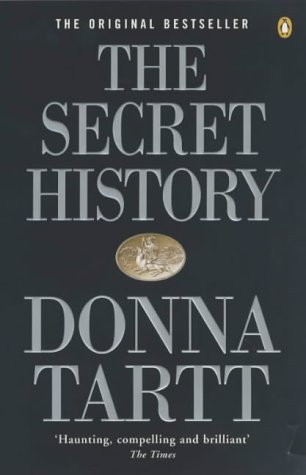
The Secret History by Donna Tartt

The Secret History “I suppose at one time in my life I might have had any number of stories, but now there is no other. This is the only story I will ever be able to tell…”

The Secret History is not exactly a mystery novel, in the usual sense. We are told right at the beginning of the book, in the prologue in fact, that our narrator Richard Papen and his friends have murdered a fellow student, Edmund ‘Bunny’ Corcoran. What we don’t know is why.

To explain the events leading up to the murder, Richard then takes us back to his first day at Hampden College in Vermont where he resolves to join the Classics department, an elite group of five students and their enigmatic professor, Julian Morrow. Despite being warned that Julian is very selective about the students he admits to his class and that taking Classics would leave him isolated from the rest of the college, Richard persists and is accepted into the group. His new friends – Henry, Bunny, Francis, Camilla and her twin brother, Charles – are rich, eccentric and secretive, and as Richard gets to know them better, he learns something shocking about them. But by now he has been drawn into their inner circle and it’s too late to walk away…

The Secret History is divided into two parts and as I read Part 1 and learned more about the build-up to Bunny’s death I found myself completely agreeing with the general opinion that this was a great book. Although we know from the start who is going to be murdered and who will be responsible for his death, the story is still compelling as there are still a lot of secrets to be revealed and a lot of questions to be answered. The story had a timeless feel, which I’m sure was intentional, and I couldn’t work out exactly when it was supposed to be set. I finally decided it must be the late 80s/very early 90s though due to some confusing cultural references for a long time I thought it might be earlier than that. It’s also a wonderfully atmospheric book, a combination of the elegant writing and the insular setting of a small college in a small community. The cold, harsh winter Richard spends alone in Hampden, virtually homeless and trying to stay warm, particularly stays in my mind after finishing the book, although I’m not sure what significance that episode had in the context of the rest of the story.

So, The Secret History is definitely a page-turner and only took me a few days to read, despite the length. Somewhere in Part 2, though, I thought the story started to lose some of its impetus. There was still plenty of suspense as right until the end of the book the reader is kept wondering how things will resolve for Richard, Henry, Francis and the twins, and how they will cope with the consequences of what they did. But I felt that this was dragged out for too long and I quickly got bored with the various excesses of the characters (were there any students in that entire college who didn’t have a drug or alcohol problem? I could accept that some of them might have done, but surely not all of them!) I’m glad to have finally read The Secret History – I was starting to feel that I was the only person in the world who still hadn’t read it – but although I did enjoy it I was not as enamoured with it as so many other people have been. I wonder if maybe I would have liked it more if I’d read it when I was younger and closer to the age of the characters in the story.

One final thing I want to mention is that almost as soon as I started reading The Secret History I started to get the feeling I already knew the story. And then I remembered what it reminded me of – The Secret Diaries by Janice Harrell, a trilogy of young adult novels I read and loved as a teenager. I managed to find my old copy of the final book in the trilogy, Escape, and couldn’t believe the number of similarities with The Secret History, which was published two or three years before Harrell’s books. It was not just the general plot that was the same (a group of students covering up a dark secret, a narrator who is a newcomer and desperate to be accepted by the group, etc.), but some of the finer details as well – the personalities of some of the characters, the consequences of their actions, the weekend trips to a cabin in the woods, even the fact that two of the characters in The Secret History were twins (one male and one female) while in The Secret Diaries we’re constantly being told that Stephen and his girlfriend Tessa look like twins. I can’t find any more information about this online, apart from one or two bloggers who have said they noticed the same thing, but it has made me curious! Has anyone else read both The Secret History and The Secret Diaries?

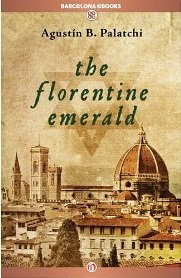
The Florentine Emerald by Agustín Bernaldo Palatchi

The Florentine Emerald The Florentine Emerald is historical fiction set in Florence during the Renaissance. The story begins in 1478 at Cardona Castle in Spain, where Mauricio Coloma is visiting his father, Pedro, who has been chained in a dungeon after being falsely accused of treason. Knowing that he is facing execution, Pedro reveals to Mauricio the truth that until recently converting to Christianity, their ancestors had been Jews. Before he is put to death he also tells his son of a valuable emerald ring hidden under a tile in the floor of their home in Barcelona and advises him to take it to Florence to sell to the Medici, the powerful Florentine family of bankers.

Arriving in Florence with the priceless jewel, Mauricio finds himself in the right place at the right time to thwart an assassination attempt on Lorenzo de’ Medici, the man who rules the Florentine Republic. As a sign of his gratitude, Lorenzo helps Mauricio establish himself in Florence. But then he meets and falls in love with Lorena Ginori, a girl whose parents are planning a more ambitious marriage for her with a man she dislikes. As the years go by, both Lorena and Mauricio have to confront some secrets from their pasts, while around them Florence is thrown into turmoil by the prophecies of the priest Savonarola and the conspiracies of those who want to cause the downfall of both Mauricio and the Medici.

This is an English translation of a Spanish novel by Agustín Bernaldo Palatchi, published by Barcelona eBooks, who if I’ve understood correctly are a spin-off of the Spanish publisher Roca Editorial and partners of Open Road Media, specialising in digital versions of Spanish and English translations. I was pleased to have the opportunity to read the ebook via Netgalley, but as I know not everyone likes or is able to read ebooks I thought it was only fair to point out that I’m not sure if or when The Florentine Emerald might be available in English in any other format.

Something I really enjoyed about this book was learning more about Renaissance-era Florence. In the fifteenth century, Florence was one of the most important centres of European trade and culture, which makes it an ideal setting for historical fiction. There were so many things happening both within Florence itself and in Europe in general during this period that had an effect on Mauricio’s story: outbreaks of plague; the voyages of Christopher Colombus; and the Spanish Inquisition and the threat to the Jews of expulsion from Florence. The first part of the novel is set during roughly the same period as Dorothy Dunnett’s House of Niccolò series which I read recently and so I was already familiar with some of the characters and events that were covered in the book (the papal alum monopoly, the Medici and Strozzi families, the Duke of Urbino and King Ferrante of Naples). This was useful as I would probably have found some of the historical details much more confusing otherwise!

I did find it a bit hard to believe that Mauricio would have been befriended by Lorenzo de’ Medici and given a position at the Medici bank almost as soon as he arrived in Florence and I had to suspend disbelief again as Mauricio immediately began to associate with Leonardo da Vinci, Christopher Columbus and so many other famous people of the period. However, this was only a small part of the story and overall I did enjoy the inclusion of so many real historical figures, especially as there were some I had previously known little or nothing about, including the philosopher Marcilio Ficino and the Dominican friar and preacher, Girolamo Savonarola who plans to reform Florentine society.

I thought the translation was generally good – the writing flowed well and I didn’t have any problems with it, except that it was maybe slightly lacking in emotion and passion. I enjoyed following the adventures of Mauricio and Lorena but something got in the way of me really being able to connect with them emotionally and whether that was due to the translation or not it’s difficult to say without having read the original. I liked the characterisation of Lorenzo de’ Medici, though, and it was interesting to read about the position of power and influence he held in Florence and the much less successful rule of his son and heir, Piero, who followed him. All of this left me wanting to read a good biography of the Medici family or even another fictional account, so any recommendations are welcome!