The Blue by Nancy Bilyeau

Since reading the Joanna Stafford trilogy (The Crown, The Chalice and The Tapestry) a few years ago, I’ve been waiting and hoping for a new book from Nancy Bilyeau and here it is at last: The Blue. Bilyeau wrote so convincingly about Tudor England in the Joanna Stafford books that I was surprised to find she was switching to an entirely different period for this latest novel – the Seven Years War of 1756 to 1763, a war which involved most of Europe, with Britain and France on opposite sides. Set against this backdrop, The Blue is an exciting, thrilling tale of espionage, art, religious persecution – and the race to create a new and beautiful shade of blue.

Our heroine, Genevieve Planché, is a young Huguenot woman whose family fled France when it became impossible for them to openly practise their religion. Despite her French ancestry, Genevieve has grown up in London among the silk weavers of Spitalfields and considers herself to be English, viewing the French king as someone to be feared. As a talented artist, she longs to have the chance to study painting and develop her skills, but as a woman she discovers that most of the opportunities open to men are closed to her. Her grandfather has made plans for her to go to a porcelain manufactory in Derby where she can paint pretty designs on plates and vases, but that’s not what Genevieve wants out of life. Then, just as she’s losing hope, she meets Sir Gabriel Courtenay at a party and receives a very tempting offer…

Sir Gabriel urges her to take up the position she has been offered at the Derby Porcelain Works and track down their chemist who is working on the development of a new colour blue. If Genevieve can steal the formula for blue and pass it to Sir Gabriel, he will help her travel to Venice where, he tells her, she will be taken seriously as a female artist. Genevieve is quick to agree, but once she is in Derby and the true scale of her mission becomes apparent, she begins to have doubts. Why is Sir Gabriel so desperate for the blue? What is the colour’s significance? And what will happen if she is caught?

The Blue is a fascinating novel – I learned so much about the production and decoration of porcelain, the meanings of different colours, and the ways in which art and science can combine to create things of beauty – but it is also a gripping and suspenseful historical thriller. One of the things I enjoyed most about the story was that it was so difficult to decide who could and could not be trusted. From the young woman Genevieve shares a room with at the Porcelain Works to Sir Gabriel himself, she has no idea who is on her side and who is likely to betray her. Although she sometimes makes silly mistakes, that is to be expected when she is faced with trying to navigate her way through so many dangerous situations!

This is the first book I have read via The Pigeonhole, a website/app which makes books available in daily instalments (referred to as ‘staves’). Each stave ended on a cliffhanger which left me desperate to get back to the story the following morning and reading it over a period of ten days was a wonderful experience. The book is written in present tense, something I usually find off-putting, but it seemed to work much better in the serialised format because it helped me to feel closer to Genevieve, almost as if I was sharing in her adventures as they happened.

I would love to read a sequel to The Blue, but if that doesn’t happen then I will look forward to whatever Nancy Bilyeau chooses to write about next.

Thanks to The Pigeonhole and Endeavour Quill for the opportunity to read this novel.
The Murder of My Aunt by Richard Hull

I haven’t read as many of the British Library Crime Classics as a lot of the other bloggers I follow, but of the few that I have read this one is the best so far. It’s not really a whodunnit so there’s no puzzle to solve or clues to decipher, but that doesn’t matter at all – the fun is in wondering whether the crime described in the novel will succeed and, if so, whether the culprit will be caught.

Our narrator, Edward Powell, is a self-obsessed, miserable and bitter young man who lives with his Aunt Mildred in a small Welsh village with a name (Llwll) he finds impossible to pronounce. With his little Pekingese dog and love of French novels, Edward feels out of place in Llwll and longs to move to somewhere more lively and fashionable. Unfortunately, being financially dependent on his aunt, it seems that he will have to stay where he is for now…unless he can think of another solution.

Given the title of the book, I’m sure you will have guessed what Edward’s solution is! Now, under normal circumstances I would be horrified at the thought of somebody plotting to murder his aunt, but I did have some sympathy for Edward as Aunt Mildred is portrayed as such a thoroughly unpleasant woman. She constantly criticises him, complains about everything he says or does, and goes to great lengths to make him look stupid in front of the entire village. Had Edward been a nicer person I could almost have given him my support, but he is no more likeable than she is – he’s lazy, selfish, and believes he is much cleverer than he actually is. Needless to say, the murder of his aunt proves to be more difficult than he expected!

Will Edward’s plans succeed? Obviously, I’m not going to tell you and will leave you to enjoy the story for yourself, but what I will say is that things don’t go smoothly and there are plenty of twists and turns before we reach the end. But the plot is only part of what makes this book so enjoyable; Edward’s narrative voice is wonderful too and transforms what could have been a very dark novel into a very funny one. From the beginning, when he spends the whole of the first page trying to explain how to pronounce Llwll, there is a strong thread of humour running throughout the entire story which is why, despite Edward and his aunt being such unlikeable people, their battle of wits is so entertaining to read.

As well as being funny, there’s also a sense that Edward’s narration could be unreliable. Is he correctly interpreting people and situations? Is Aunt Mildred really as horrible as he thinks she is or is his own negative view of the world distorting the way he sees her? Although this isn’t a mystery in the conventional sense, there’s still plenty of suspense as we wonder whether our questions will be answered, and when – and how – the murder of Edward’s aunt will take place.

The Murder of My Aunt was Richard Hull’s first novel, published in 1934. Having enjoyed it so much, I am looking forward to reading more of his books. Excellent Intentions is also a British Library Crime Classic, while a few others have been reissued by Agora Books. Have you read any of them?

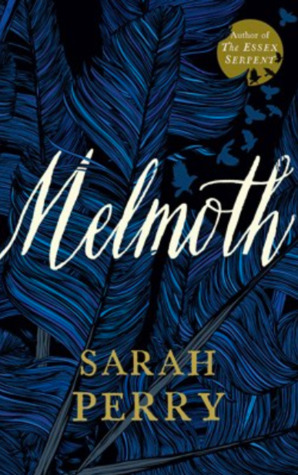
Melmoth by Sarah Perry

Having read Sarah Perry’s previous novel, The Essex Serpent, last year, I was looking forward to reading her new one, Melmoth. I read it in October, just before Halloween, and found it the perfect read for the time of year: dark, atmospheric and Gothic. It’s very different from The Essex Serpent, but with some similar ideas and themes.

At the centre of the novel is the legend of Melmoth the Witness, the woman who stood by Christ’s empty tomb and denied the Resurrection. As punishment for lying about what she had witnessed, she is condemned to wander the earth alone forever, dressed in black and with bare, bleeding feet, forced to bear witness instead to all of the cruelty and misery humans cause for one another. Desperate for some company in her exile, she appears to those who have lost hope and holds out her hand to them, urging them to join her in her wandering.

Helen Franklin, an Englishwoman who lives in Prague where she works as a translator, is fascinated by the tale of Melmoth. Her friend Karel, a Czech academic, has inherited a collection of papers which explore Melmoth’s story, and he passes these on to Helen. As she delves more deeply into the subject, she discovers more documents and journals giving different accounts of Melmoth from earlier times and from around the world. But the story of Melmoth could have a personal significance for Helen herself – because Helen is hiding a secret of her own, which could make her an ideal target for a mysterious woman in black.

Melmoth is a wonderfully atmospheric novel, partly because Prague is such a great setting which lends itself to strong, vivid descriptions, but I think Sarah Perry’s writing style also adds to the mood. Here is the opening paragraph in which we are introduced to Helen Franklin for the first time:

“Look! It is winter in Prague: night is rising in the mother of cities and over her thousand spires. Look down at the darkness around your feet, in all the lanes and alleys, as if it were a soft black dust swept there by a broom; look at the stone apostles on the old Charles Bridge, and at all the blue-eyed jackdaws on the shoulders of St John of Nepomuk. Look! She is coming over the bridge, head bent down to the whitening cobblestones: Helen Franklin, forty-two, neither short nor tall, her hair neither dark nor fair…”

The writing style and some of the devices the author uses, such as speaking directly to the reader, give it an almost timeless feel; although the main part of the novel is set in the modern day, there’s a sense that it could have taken place at any time in history – and of course, the Melmoth legend is a very old one. Through the stories-within-stories which emerge as we continue to read, we see how the influence of Melmoth has touched the lives of not just Helen Franklin, but many other characters throughout history, the most memorable being a boy who faces the horrors of the Holocaust. I enjoyed some of the stories while others interested me less and in the middle of the book I found my concentration wandering; the writing style, which works so well in other ways, creates a distance between the reader and the characters and I felt that I was watching them from afar rather than engaging with them as real people.

On the whole, I preferred The Essex Serpent, but I did love what this book had to say about forgiveness, atonement and loneliness. I’ve also been reminded of Charles Maturin’s 1820 novel, Melmoth the Wanderer, which it might be interesting to read and compare with this one.

Six Degrees of Separation: The Christmas Edition

It’s the first Saturday of a new month which means it’s time for another Six Degrees of Separation, hosted by Kate of Books are my Favourite and Best. The idea is that Kate chooses a book to use as a starting point and then we have to link it to six other books of our choice to form a chain. A book doesn’t have to be connected to all of the others on the list – only to the one next to it in the chain.

The book we’re going to begin with this month is, appropriately for December, A Christmas Carol by Charles Dickens. I still have the beautiful hardback copy I was given as a child with illustrations by Arthur Rackham. I talked about my memories of A Christmas Carol in a Classics Club monthly meme from a few years ao.

There were many different directions I could have taken from this starting point, but I decided to get into the festive spirit with a chain made entirely of Christmas-themed books. Shortly after I first started blogging in 2009, I took part in a Christmas reading challenge for which I read two books: the one above and The Christmas Mystery by Jostein Gaarder.

This is an unusual novel (like most of Gaarder’s), in which the story of an ancient pilgrimage to Bethlehem unfolds through scraps of paper found behind the doors of an Advent calendar. In the present day, meanwhile, a mystery begins to emerge involving the creation of the calendar itself.

Now, from one Christmas mystery to a whole collection of them…

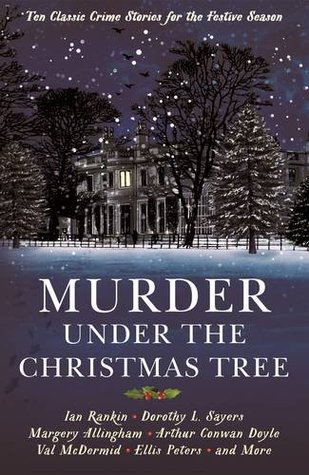
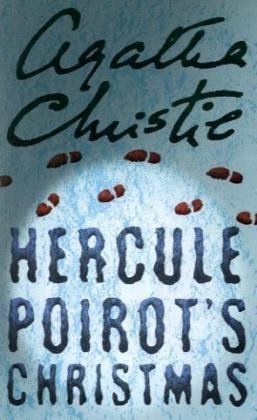
Murder Under the Christmas Tree contains stories by classic crime authors such as Margery Allingham, Dorothy L Sayers and Arthur Conan Doyle. One author whose work doesn’t appear in that collection is Agatha Christie, but she did write a few books with a Christmas theme…including the next book in my chain, Hercule Poirot’s Christmas.

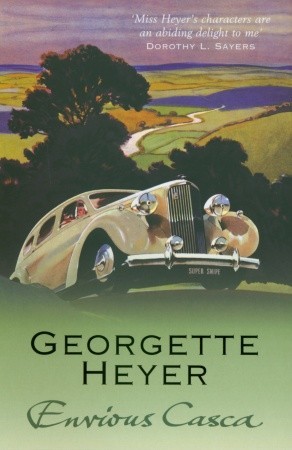
The book involves the murder of an old man who is found dead in his home while his family gather to celebrate Christmas. I enjoyed it, but it wasn’t a favourite Christie and I didn’t find it very Christmassy either. Another book with a very similar plot, published three years later, is Envious Casca by Georgette Heyer.

Envious Casca has also been published under the title A Christmas Party. However, the family featured in the novel were such a nasty, unpleasant group of people, I couldn’t think of anything worse than being a guest at that particular party! Another mystery set at Christmas with a dysfunctional family at its heart is I Am Half-Sick of Shadows, the fourth in Alan Bradley’s Flavia de Luce series.

In I Am Half-Sick of Shadows, eleven-year-old Flavia tries to catch Santa Claus on his way down the chimney. In the final book in my chain, Nora Bonesteel’s Christmas Past by Sharyn McCrumb, Sheriff Spencer Arrowood is also trying to catch a man on Christmas Eve – a criminal who lives on a remote farm in the Appalachian Mountains.

For the first time since I’ve started taking part in Six Degrees of Separation, I am able to bring the chain full circle. The title of my final book contains the words ‘Christmas Past’ – and the first book features the Ghost of Christmas Past!

Have you read any of these? What are your favourite Christmas-themed books?

Next month (January) we will be starting our chains with The French Lieutenant’s Woman by John Fowles.