Walter Scott Prize shortlist of ‘favourite historical novels of all time’ revealed!

The Walter Scott Prize for Historical Fiction have revealed their shortlist of ten ‘favourite historical novels of all time’ as nominated by readers throughout the month of November. I’m pleased that one of my nominations (The Game of Kings) has made it onto the list, along with a lot of other books I’ve read, although I’m surprised by some of the titles as they are not necessarily books I would have expected to see shortlisted. Have a look at the list below and see what you think.

You can vote for the winner here on the Walter Scott Prize website. The poll closes on the 16th December and the winner will be announced in January.

Checkmate by Dorothy Dunnett
The Crimson Petal and the White by Michel Faber
Days Without End by Sebastian Barry
The Eagle of the Ninth by Rosemary Sutcliff
The Game of Kings by Dorothy Dunnett
The Luminaries by Eleanor Catton
A Place of Greater Safety by Hilary Mantel
Tipping the Velvet by Sarah Waters
Waverley by Walter Scott
Wolf Hall by Hilary Mantel

~

Have you read any of these? Which do you think should win? What is your favourite historical novel of all time?

Six Degrees of Separation: From Sanditon to The Song of Achilles

It’s the first Saturday of the month which means it’s time for another Six Degrees of Separation, hosted by Kate of Books are my Favourite and Best. The idea is that Kate chooses a book to use as a starting point and then we have to link it to six other books of our choice to form a chain. A book doesn’t have to be connected to all of the others on the list – only to the one next to it in the chain.

This month we are starting with Sanditon by Jane Austen. I haven’t read it – I do like Austen but am not as big a fan as many people are and haven’t yet ventured past her main six novels. However, I do know that Sanditon was unfinished at the time of her death.

Thinking about other unfinished novels, The Mystery of Edwin Drood by Charles Dickens immediately came to mind, but I used that one in another Six Degrees post quite recently, along with another, Elizabeth Gaskell’s unfinished Wives and Daughters. This made me think a bit harder and then I remembered Lord Byron’s Fragment of a Novel (1), his attempt at writing a vampire story which he never completed. I’m particularly pleased with this link because apparently Sanditon was also first published under the title Fragment of a Novel.

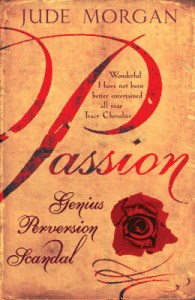
The stories of Byron and his fellow Romantic Poets, Keats and Shelley, are told in Passion by Jude Morgan (2). I love Morgan’s writing and I thought this was an excellent book, focusing on the roles women such as Mary Shelley, Caroline Lamb and Augusta Leigh played in the poets’ lives.

Another book about poets is Possession by AS Byatt (3), although the poets in this one – Randolph Henry Ash and Christabel LaMotte – are fictional. The novel follows two modern day academics as they study the lives of Ash and LaMotte, delving into letters, poems, fairy tales and journal entries, which Byatt presents as if they were authentic Victorian documents.

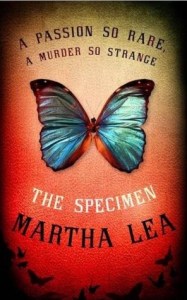
My copy of Possession has butterflies on the cover. So does The Specimen by Martha Lea (4), a book which had many of the elements I usually enjoy in a book – a mystery to be solved, a Victorian setting, strong female characters – yet it turned out to be disappointing. You can’t love every book you read, I suppose.

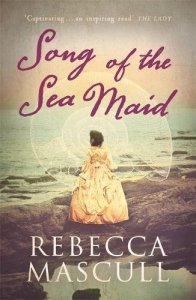
The main character in The Specimen is a young woman called Gwen who travels to Brazil to study and draw plants and insects. Another book about a woman trying to break into the male-dominated field of natural sciences is Song of the Sea Maid by Rebecca Mascull (5), set in Portugal and the Berlengas islands in the middle of the 18th century. I did love that book!

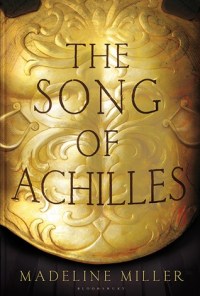
For my final link, I’m taking the word ‘song’ in the title. I had a few books to choose from here, but decided on The Song of Achilles (6), Madeline Miller’s beautiful retelling of the Iliad, told from the perspective of Patroclus, who is portrayed in the novel as Achilles’ lover.

~

Well, that’s my chain for this month. My links included unfinished novels, poets, butterflies and songs. In January, we’ll be starting with Daisy Jones and the Six by Taylor Jenkins Reid which, coincidentally, I just started to read yesterday.

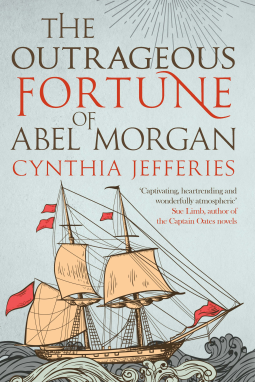
The Outrageous Fortune of Abel Morgan by Cynthia Jefferies

Cynthia Jefferies is probably better known as an established children’s author writing under the name of Cindy Jefferies, but she has recently turned her hand to writing novels for adults, of which The Outrageous Fortune of Abel Morgan was her first. It was the title and cover that caught my attention at first, then when I read what the book was about I thought it sounded like something I was almost certain to enjoy.

The story begins in 1660, with Christopher Morgan returning to England following the restoration of Charles II, having spent several years in exile with the others who fought on the side of the Royalists in England’s recent civil war. Christopher no longer has any interest in taking his place at court and intends to start a new life for himself and his family as owners of the wonderfully named Rumfustian Inn in the village of Dario, but his dreams are destroyed when his beloved wife dies in childbirth. Sinking into depression, he is sustained only by his relationship with his baby son, Abel, whom he raises alone with the help of the servants.

As the years go by, the two become closer than ever, but when Christopher makes an enemy of a local smuggler, he and Abel both pay a terrible price. Abel disappears while out riding his pony and Christopher’s only clue to his whereabouts is a mysterious map of Constantinople. Does this show where Abel has been taken? Christopher isn’t sure, but he’s determined to do whatever it takes to find his son. While he continues to search, however, Abel himself is having adventures of his own…

The Outrageous Fortune of Abel Morgan is best described as a good old-fashioned adventure story – a sort of cross between Robert Louis Stevenson’s Treasure Island and Daphne du Maurier’s Jamaica Inn. With smugglers, secret tunnels, sinister villains, pirate ships and action on the high seas, it’s a fun and entertaining read – yet I didn’t love it as much as I felt I should have done. While I had a lot of sympathy for Christopher, I never warmed to Abel at all; I found him quite selfish and some of his actions towards the end of the book made me actively dislike him. As half of the novel was narrated from his perspective, this was definitely a problem for me. I was also confused by the storyline which plays out in Constantinople as it seems to have very little bearing on the rest of the story and a villain introduced in this section didn’t have the impact I expected him to have.

Still, I was kept in suspense throughout the novel, wondering whether Christopher and Abel would ever meet again. The main theme of the love between father and son is handled with sensitivity and emotion and I had tears in my eyes several times towards the end of the book – which I always think is a sign that an author is doing something right! I would be happy to read more of Cynthia Jefferies’ adult novels; her new one, The Honourable Life of Thomas Chayne, is out now.

Thanks to Allison & Busby for providing a copy of this book for review via NetGalley.

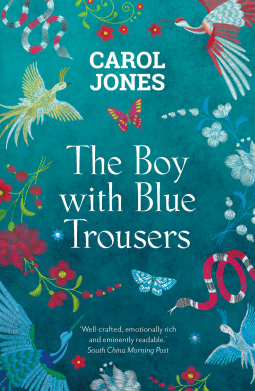
The Boy with Blue Trousers by Carol Jones

I love learning about the histories and cultures of different countries, so I was pleased to find that Australian author Carol Jones’ new novel, The Boy with Blue Trousers, is set in not one location but two – the mulberry groves of China and the goldfields of Australia – and introduces us to two women leading very different lives.

In 1850s China, seventeen-year-old Little Cat is growing up in a small village on the Pearl River Delta. Like the other girls in her community, she spends her days picking mulberry leaves and teasing out the threads from silkworm cocoons to produce reels of silk. It’s hard work, but it is the only life Little Cat has known and, now that she is approaching adulthood, she is growing nervous about what the future may hold. What sort of marriage will the matchmaker arrange for her? Will her husband and his family be kind? Will she have to go and live in another village far away from her own?

In the end, though, none of these things matter to Little Cat, because a disastrous encounter with the village headman, Big Wu, forces her to flee the country in fear of her life. Disguised as a boy, she embarks on a ship bound for Australia where she will join the hundreds of men heading there from China who are hoping to make their fortune in the goldfields.

Meanwhile, another young woman, Violet Hartley, has recently arrived in Australia. Violet, a governess, is trying to escape from her own past in England, and Australia seems like a place full of opportunities. When her first job, looking after two small children, proves to be not quite what she’d hoped for, she decides to accompany the Chinese immigrants on their journey – a decision that leads to her path crossing with Little Cat’s and tying the two separate threads of the story together.

The Boy with Blue Trousers is written in the form of two alternating narratives, so that we spend one or two chapters with Little Cat before switching to Violet for a while and then back again. This allows us to get to know both characters equally well and to see how, although they are living in very different environments, they face similar struggles as unconventional, independent women who don’t conform to the expectations of their respective societies. I have to admit, I didn’t like Violet at all; while I did have sympathy for her situation and the loss of her reputation following an affair with a married man in England – unfair when the man involved didn’t suffer in the same way – I just didn’t find her a very appealing character, especially in comparison to Little Cat, whom I loved.

I had a few problems with this book – apart from not liking Violet, I thought the way in which her story came together with Little Cat’s and the reaction they had to each other felt odd and unconvincing – but I was impressed by the sense of place Carol Jones creates. I particularly liked the descriptions of the mulberry trees, river banks, alleys and courtyards of Sandy Bottom Village, Little Cat’s home in the Pearl River Delta, but the coastal landscape of Robetown in South Australia is also beautifully portrayed.

Carol Jones is not an author I’ve come across until now, but I see she has written another novel, The Concubine’s Child, set in Malaysia, which also sounds interesting. If any of you have read that one, let me know what you thought.

Thanks to Head of Zeus for providing a copy of this book for review via NetGalley.