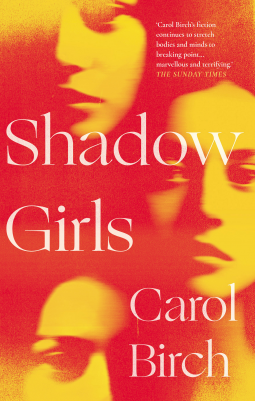
Shadow Girls by Carol Birch

Having enjoyed two of Carol Birch’s earlier novels – Orphans of the Carnival and the Booker Prize nominated Jamrach’s Menagerie – I decided to try her new book, Shadow Girls. I enjoyed this one too, but it’s a very strange novel and not quite what I’d expected!

From the blurb, I had thought this was going to be a ghost story, but for the first half of the book at least, it’s much more of a ‘school story’. Our narrator, Sally, is a fifteen-year-old girl growing up in 1960s Manchester and the time and place are vividly evoked with references to the music, films, fashion and culture of the decade woven into the narrative. Like most girls her age, then and now, Sally’s life revolves around schoolwork and spending time with her friends and her boyfriend, and this is the focus of the first section of the book. Through Sally’s eyes we get to know her best friend, Pamela, a rebellious troublemaker nobody else likes, and their ‘enemy’ Sylvia Rose, a girl from a posh background who is a talented classical singer. She also describes her feelings for Rob, her first serious boyfriend, whom she is starting to have doubts about.

The supernatural element of the story isn’t introduced until surprisingly late in the novel, when Sally has a mysterious encounter with Sylvia that will haunt her for the rest of her life. The pace picks up from this point and it does become the ghost story I had expected – in fact, it’s quite a creepy one, particularly as, like many good ghost stories, it’s never completely clear which of Sally’s experiences are real and which are in her mind.

Despite not much happening for half of the book, I found it all very absorbing and was pulled into Sally’s world from the first page. I’m not sure whether so much build up was really necessary, but I enjoyed it anyway and found the book so difficult to put down that I ended up reading most of it in one day. Now I’m interested in reading Carol Birch’s previous ghost story, Cold Boy’s Wood. Has anyone read that one – or any of her other books?

Thanks to Head of Zeus for providing a copy of this book for review via NetGalley.

Walter Scott Prize for Historical Fiction – 2022 Shortlist

The shortlist for the 2022 Walter Scott Prize for Historical Fiction has been announced today! Thanks to this prize, I have discovered lots of great books and authors over the last few years and always look out for the longlists and shortlists; in fact, trying to read all of the shortlisted titles since the prize began in 2010 is a personal project of mine (you can see my progress here).

From the longlist of thirteen books, which was revealed in February, I have managed to read The Sunken Road, Mrs England, Still Life and Rose Nicolson – and still have some of the others waiting on my TBR. But have any of the books I’ve read made it onto the shortlist?
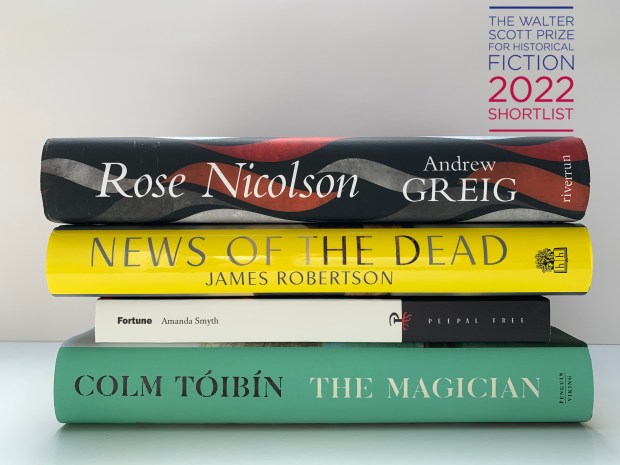
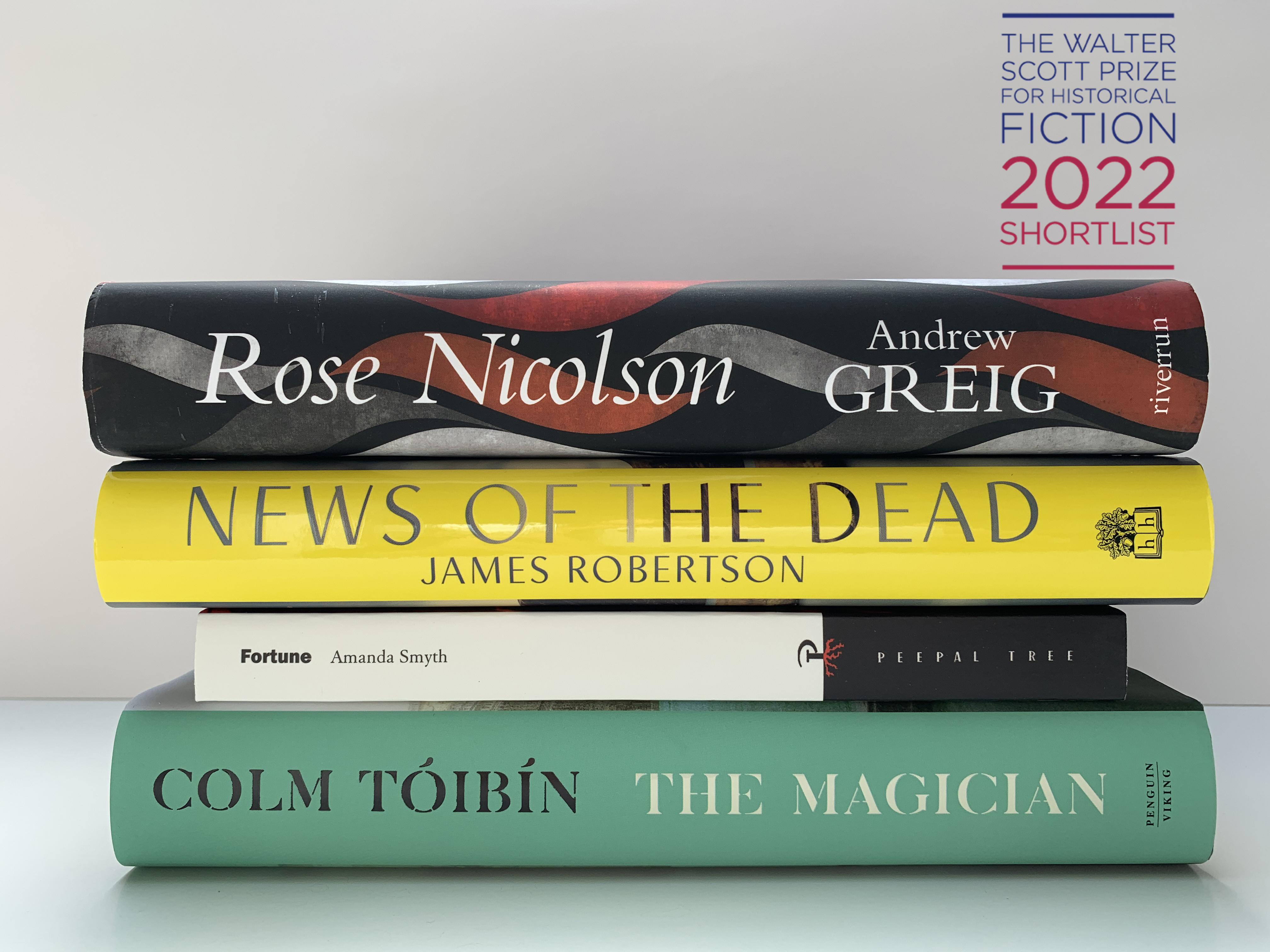
Surprisingly, there are only four titles on this year’s shortlist, rather than the usual five or six – and here they are:
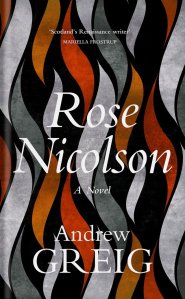
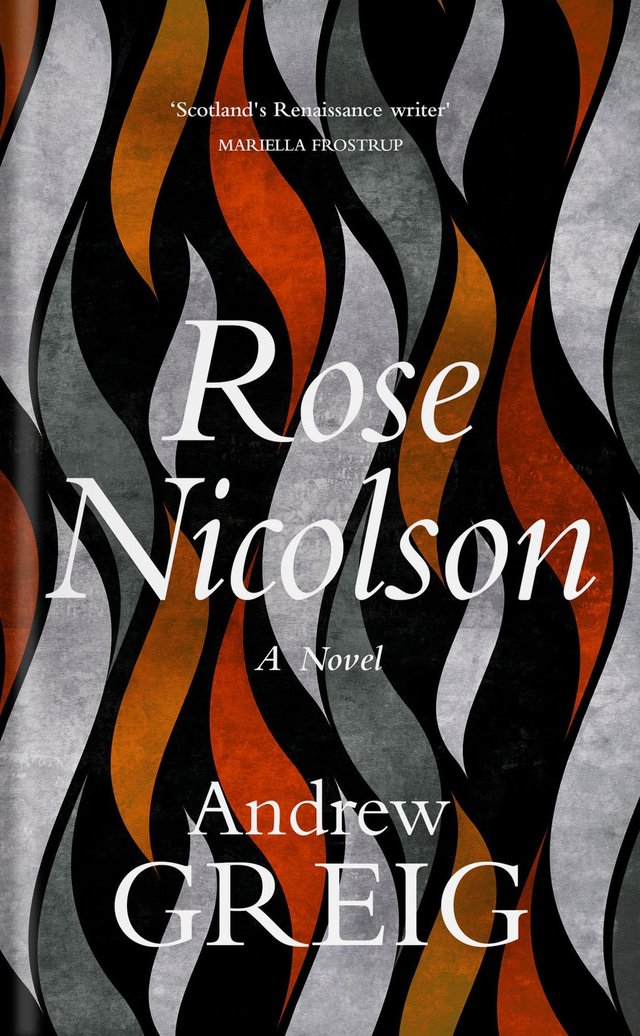
Rose Nicolson by Andrew Greig

Embra, winter of 1574. Queen Mary has fled Scotland, to raise an army from the French. Her son and heir, Jamie is held under protection in Stirling Castle. John Knox is dead. The people are unmoored and lurching under the uncertain governance of this riven land. It’s a deadly time for young student Will Fowler, short of stature, low of birth but mightily ambitious, to make his name.

Fowler has found himself where the scorch marks of the martyrs burned at the stake can be seen on every street, where differences in doctrine can prove fatal, where the feuds of great families pull innocents into their bloody realm. There he befriends the austere stick-wielding philosopher Tom Nicolson, son of a fishing family whose sister Rose, untutored, brilliant and exceedingly beautiful exhibits a free-thinking mind that can only bring danger upon her and her admirers. The lowly students are adept at attracting the attentions of the rich and powerful, not least Walter Scott, brave and ruthless heir to Branxholm and Buccleuch, who is set on exploiting the civil wars to further his political and dynastic ambitions. His friendship and patronage will lead Will to the to the very centre of a conspiracy that will determine who will take Scotland’s crown.

Rose Nicolson is a vivid, passionate and unforgettable novel of this most dramatic period of Scotland’s history, told by a character whose rise mirrors the conflicts he narrates, the battles between faith and reason, love and friendship, self-interest and loyalty. It confirms Andrew Greig as one of the great contemporary writers of fiction.

*
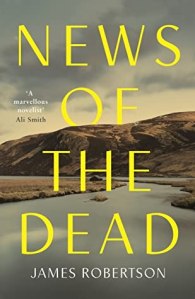
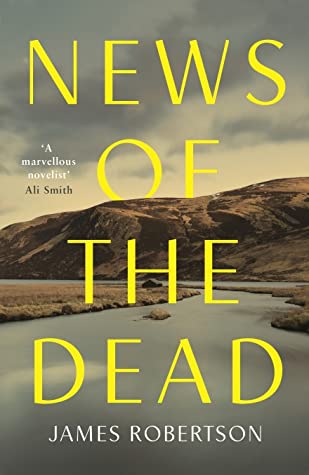
News of the Dead by James Robertson

Deep in the mountains of north-east Scotland lies Glen Conach, a place of secrets and memories, fable and history. In particular, it holds the stories of three different eras, separated by centuries yet linked by location, by an ancient manuscript and by echoes that travel across time.

In ancient Pictland, the Christian hermit Conach contemplates God and nature, performs miracles and prepares himself for sacrifice. Long after his death, legends about him are set down by an unknown hand in the Book of Conach.

Generations later, in the early nineteenth century, self-promoting antiquarian Charles Kirkliston Gibb is drawn to the Glen, and into the big house at the heart of its fragile community.

In the present day, young Lachie whispers to Maja of a ghost he thinks he has seen. Reflecting on her long life, Maja believes him, for she is haunted by ghosts of her own.

News of the Dead is a captivating exploration of refuge, retreat and the reception of strangers. It measures the space between the stories people tell of themselves – what they forget and what they invent – and the stories through which they may, or may not, be remembered.

*
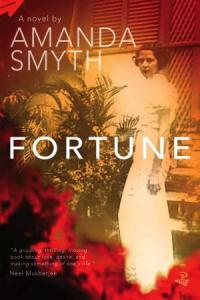
Fortune by Amanda Smyth

Eddie Wade has recently returned from the US oilfields. He is determined to sink his own well and make his fortune in the 1920s Trinidad oil-rush. His sights are set on Sonny Chatterjee’s failing cocoa estate, Kushi, where the ground is so full of oil you can put a stick in the ground and see it bubble up. When a fortuitous meeting with businessman Tito Fernandez brings Eddie the investor he desperately needs, the three men enter into a partnership. A friendship between Tito and Eddie begins that will change their lives forever, not least when the oil starts gushing. But their partnership also brings Eddie into contact with Ada, Tito’s beautiful wife, and as much as they try, they cannot avoid the attraction they feel for each other.

Fortune, based on true events, catches Trinidad at a moment of historical change whose consequences reverberate down to present concerns with climate change and environmental destruction. As a story of love and ambition, its focus is on individuals so enmeshed in their desires that they blindly enter the territory of classic Greek tragedy where actions always have consequences.

*
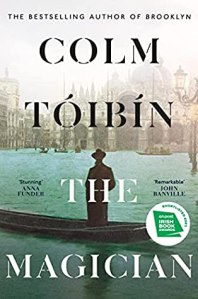
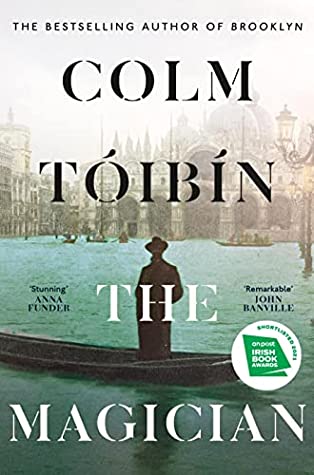
The Magician by Colm Tóibín

Colm Tóibín’s new novel opens in a provincial German city at the turn of the twentieth century, where the boy, Thomas Mann, grows up with a conservative father, bound by propriety, and a Brazilian mother, alluring and unpredictable. Young Mann hides his artistic aspirations from his father and his homosexual desires from everyone. He is infatuated with one of the richest, most cultured Jewish families in Munich, and marries the daughter Katia. They have six children. On a holiday in Italy, he longs for a boy he sees on a beach and writes the story Death in Venice. He is the most successful novelist of his time, winner of the Nobel Prize in literature, a public man whose private life remains secret. He is expected to lead the condemnation of Hitler, whom he underestimates. His oldest daughter and son, leaders of Bohemianism and of the anti-Nazi movement, share lovers. He flees Germany for Switzerland, France and, ultimately, America, living first in Princeton and then in Los Angeles.

The Magician is an intimate, astonishingly complex portrait of Mann, his magnificent and complex wife Katia, and the times in which they lived—the first world war, the rise of Hitler, World War II, the Cold War, and exile.

~

As you can see, I’ve only read one of these four books, Rose Nicolson – and loved it, so I would be very pleased if it won! I will be trying to read the other three, but might not have time before the winner is announced at the Borders Book Festival on Friday 17th June.

Have you read any of these books or are you tempted to read them? Which one do you think will win?
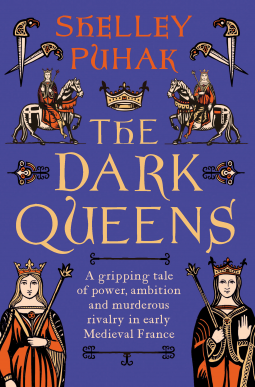
The Dark Queens by Shelley Puhak (non-fiction)

Their ghosts are everywhere; we just need to know where to look.

This is a fascinating dual biography of two little-known medieval queens, Brunhild and Fredegund, who belonged to the Merovingian dynasty and ruled over large swathes of the lands we now know as France and Germany. I don’t often find myself drawn to non-fiction, but this book was a great choice for me as it’s both educational and entertaining – and every bit as readable as fiction.

Most people today have probably never heard of Brunhild and Fredegund and it seems there’s a good reason for that: as Shelley Puhak explains, following the deaths of the two queens, their stories were rewritten – and some of their achievements erased altogether – by the rulers who came after them, including their own son and nephew Clothar II, and later by Charlemagne’s Carolingian dynasty. And yet the influence of these two Merovingian women lived on, in legends and fairy tales, in the naming of roads, and in the character of Brunhild the Valkyrie from Wagner’s opera Der Ring des Nibelungen. Most intriguingly, a battle strategy of Fredegund’s appears to have inspired, whether directly or indirectly, the ‘Birnam Wood comes to Dunsinane’ episode of Shakespeare’s Macbeth.

The two queens came from very different backgrounds. Brunhild was a princess from Visigothic Spain who was married off to King Sigibert of Austrasia in 567 as part of a political alliance. Austrasia was the north-eastern territory of the Kingdom of the Franks; Neustria to the west and Burgundy to the south were ruled by Sigibert’s brothers, Chilperic I and Guntram, respectively. Fredegund, a former slave, rose to power when she married Chilperic of Neustria following the death of his wife under suspicious circumstances. This was only the first of many murders with which Fredegund would be connected; she went on to be associated with a whole series of poisonings, tortures and political assassinations. Brunhild is portrayed as a much more sympathetic character, but the prejudices of the sources do need to be considered!

After the deaths of their husbands, both Brunhild and Fredegund reigned as regents on behalf of their young sons and grandsons. Their kingdoms of Austrasia and Neustria were engaged in war for many years, fuelled by a rivalry between the two queens, which originated in Fredegund allegedly being responsible for the murders of both Galswintha, Brunhild’s sister, and King Sigibert, Brunhild’s husband. However, they were willing to work together where necessary and both queens proved themselves to be strong, intelligent, politically astute women in a world dominated by men.

The Dark Queens is not a particularly academic book. It’s written in the style of narrative non-fiction, drawing on the available primary sources such as the writings of Gregory of Tours and Venantius Fortunatus but sometimes finding it necessary to speculate in order to fill in the gaps. Despite this, it’s clear that Shelley Puhak has carried out a huge amount of research in writing this book and she does include a list of all of her sources, both primary and secondary, at the end, along with a comprehensive section of notes and references. Although The Dark Queens may not satisfy readers who are looking for something more scholarly, I thoroughly enjoyed it and am so pleased I’ve had the chance to get to know Brunhild and Fredegund. I’m surprised they haven’t been written about more widely; they would be wonderful subjects for historical fiction and would make a nice change from the Tudors!

Thanks to Head of Zeus for providing a copy of this book for review via NetGalley.

Top Ten Tuesday: Incoming Books

This week’s Top Ten Tuesday (hosted by That Artsy Reader Girl) is a ‘freebie’, meaning we can choose our own topic.

It’s been a few months since I highlighted any of my new acquisitions, so I’m listing below ten books that have recently been added to my TBR.

1. The Diamond Eye by Kate Quinn – I loved my first Kate Quinn novel, The Rose Code. Her new book, The Diamond Eye, is out now and I’m hoping to read it very soon.

2. All the Seas of the World by Guy Gavriel Kay – This is set in the same world as Kay’s previous two novels, Children of Earth and Sky and A Brightness Long Ago, both of which I’ve read and enjoyed, so I was pleased to receive a review copy from NetGalley.

3. The Toll-Gate by Georgette Heyer – I’ve just started reading this in preparation for the upcoming 1954 Club hosted by Karen and Simon. There’s nearly always a Heyer book to read, whichever year is chosen (and an Agatha Christie as well).

4. The House of the Deer by DE Stevenson – I receive the daily Lume Books newsletter which offers a selection of their titles free or at reduced prices. This DE Stevenson novel was on offer a few weeks ago, but it looks like I’ll need to read Gerald and Elizabeth first.

5. Death on Gokumon Island by Seishi Yokomizo – I’ve enjoyed two of the previous books in the Kosuke Kindaichi mystery series and this one, said to be inspired by And Then There Were None, is the latest to be translated into English.

6. Moll Flanders by Daniel Defoe – I signed up to read this via Pigeonhole in fifteen daily instalments. I’ve had mixed experiences with 18th century literature in the past, but will see how I get on with this one!

7. Yes, Giorgio by Anne Piper – I’ve never heard of this 1961 novel, but it was another special offer from Lume Books. It’s described as a ‘classic comic romance’ and was made into a film starring Pavarotti.

8. In Place of Fear by Catriona McPherson – I’ve been interested in trying Catriona McPherson’s books for a while, as I keep seeing them on other blogs I follow. This is her new book, set in 1940s Edinburgh, and I hope it will be a good one to start with.

9. Winchelsea by Alex Preston – This ‘adventure novel for adults’, about smugglers in the 1740s, sounds as though it could be my sort of book. We’ll soon find out!

10. A Lady’s Guide to Fortune-Hunting by Sophie Irwin – I’m not at all sure whether I’ll like this one, but it was a ‘Read Now’ title on NetGalley last week and is getting mainly good reviews, so I thought I’d give it a try.

~

Have you read any of these? Are you tempted by them? Which new books have been added to your TBR recently?

Six Degrees of Separation: From Our Wives Under the Sea to Full Dark House

It’s the first Saturday of the month which means it’s time for another Six Degrees of Separation, hosted by Kate of Books are my Favourite and Best. The idea is that Kate chooses a book to use as a starting point and then we have to link it to six other books of our choice to form a chain. A book doesn’t have to be connected to all of the others on the list – only to the one next to it in the chain.

This month we’re starting with Our Wives Under the Sea by Julia Armfield. Yet another book I haven’t read! Here’s what it’s about:

Miri thinks she has got her wife back, when Leah finally returns after a deep-sea mission that ended in catastrophe. It soon becomes clear, though, that Leah is not the same. Whatever happened in that vessel, whatever it was they were supposed to be studying before they were stranded on the ocean floor, Leah has brought part of it back with her, onto dry land and into their home.

Moving through something that only resembles normal life, Miri comes to realize that the life that they had before might be gone. Though Leah is still there, Miri can feel the woman she loves slipping from her grasp.

Our Wives Under The Sea is the debut novel from Julia Armfield, the critically acclaimed author of salt slow. It’s a story of falling in love, loss, grief, and what life there is in the deep deep sea.

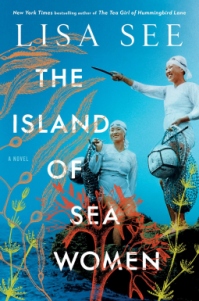
Although I haven’t read the Julia Armfield book, the title and blurb immediately made me think of another novel about women who work in the sea: The Island of Sea Women by Lisa See (1). This book is set in South Korea and tells the story of Young-sook, a woman who belongs to the haenyeo community – female divers who gather seafood from the waters surrounding the island of Jeju. It’s a fascinating novel, but also a powerful and poignant one, as the time period in which it’s set covers World War II and the Korean War.

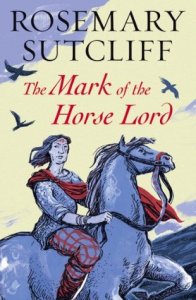
The haenyeo are a semi-matriarchal society, with the family relying on the woman’s income while the husband stays at home to look after the children. The Mark of the Horse Lord by Rosemary Sutcliff (2) set during the time of the Roman Empire, also features a matriarchal society – the Caledones who worship the ‘Great Mother’. The novel follows the gladiator Phaedrus who becomes part of a plot to impersonate King Midir of the Dalriadain.

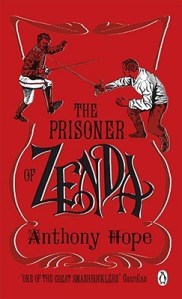
I’ve read several novels about imposters, but the one I’ve chosen to link to next is a classic from 1894: The Prisoner of Zenda by Anthony Hope (3). This novel is set in the fictitious central European kingdom of Ruritania. When the new king is kidnapped and imprisoned by his half-brother Black Michael, his distant cousin Rudolf Rassendyll is persuaded to impersonate him at his coronation. I found this book great fun to read, although I still haven’t continued with the sequel, Rupert of Hentzau.

Another book set in a fictional land is First Night by Jane Aiken Hodge (4), which takes place in 1802 in a European principality known as Lissenberg. The novel follows Cristabel Sallis, a talented young singer, as she sets out to launch a career in opera. I’ve read several of Jane Aiken Hodge’s novels and this is the only one that I haven’t really enjoyed. It’s the first in a trilogy, but I probably won’t continue with it while there are so many of her other books I could be reading instead.

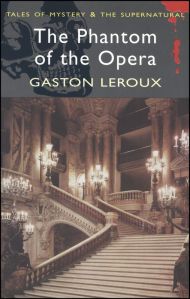
Thinking about books featuring opera, The Phantom of the Opera by Gaston Leroux (5) is obviously the first one that comes to mind! It’s not a favourite classic, but I did find it an entertaining read and loved the descriptions of the Paris Opera House with its underground tunnels and lakes. It’s worth reading even if you’ve seen one of the many film, TV or stage adaptations.

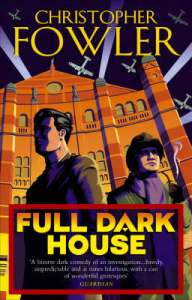
In Full Dark House by Christopher Fowler (6) our octogenarian detectives Arthur Bryant and John May are remembering a case from their younger days in which they investigated a series of murders in a theatre carried out by a killer known as ‘the Palace Phantom’. This is the first in the Bryant and May series and has a wonderful wartime London setting. I also enjoyed the next three books in the series and must continue with the fifth one soon!

~

And that’s my chain for April! My links included women who work in the sea, matriarchal societies, imposters, fictional lands, opera singers and phantoms.

In May we’ll be starting with True History of the Kelly Gang by Peter Carey.