It’s The Classic Club Blog’s 10th birthday – or it was earlier this week – and to celebrate they have put together a questionnaire for members to answer. I love being part of the club (you can find out more about it and see my current list of classic reads here), so I was happy to attempt to answer the questions. There are ten, but I’ve chosen to focus on seven of them.
1. When did you join the Classics Club?
My post announcing that I was joining the Classics Club appeared in March 2012. This confused me because obviously that would have meant the 10th birthday was in March of this year…then I remembered that the club was originally hosted on the personal blog of the founding member, Jillian. Obviously we are celebrating the birthday of the Classics Club Blog this month, rather than the beginning of the club itself!
It’s interesting looking back at the list of planned reads I posted when I joined the club. There were 50 books on the list (which I later expanded to 100), and quite a few (10 in fact) that I never actually read but replaced with other titles. I’ve now moved onto a second list of 50 books but still haven’t included any of those unread books on it. Maybe one day!
2. What is the best classic book you’ve read for the club so far? Why?
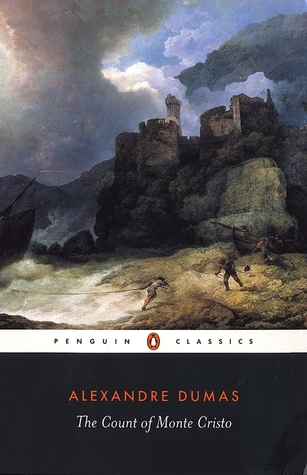 There are many great books I’ve read for the Classics Club – too many to name them all here – but my favourite is one that was actually a re-read for me: The Count of Monte Cristo by Alexandre Dumas. I can’t describe how much I love this book in just a few words, so will direct you to my review if you want to know more. Despite the length (over 1000 pages), it’s such an exciting story that every time I read it I wish it would never end – and Edmond Dantès is one of my favourite characters in all of literature!
3. What is the first classic you ever read?
This is a difficult question for me to answer because I honestly can’t remember! As a child, I read a lot of children’s classics: The Secret Garden, The Hobbit, Black Beauty, the Narnia books, The Wind in the Willows, Watership Down, and many others. I also had a lovely illustrated edition of A Christmas Carol. I think Wuthering Heights was probably my first ‘adult’ classic, followed by things like To Kill a Mockingbird and Pride and Prejudice.
4. What is the most challenging one you’ve ever read, or tried to read?
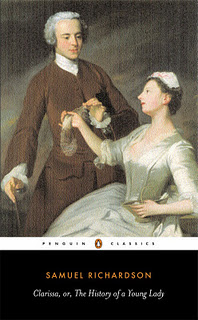 That’s another difficult one to answer because books can be challenging in different ways. I’m going to highlight one that I did manage to finish, but struggled with at times – Samuel Richardson’s 1500+ page novel, Clarissa. It wasn’t necessarily the length of the book that bothered me (The Count of Monte Cristo is almost as long) and I didn’t really have a problem with the 18th century writing style either. The thing that made it challenging for me was the pace and the repetitiveness – the way hundreds of pages could go by without the plot moving forward at all. It took me a whole year to read it, first as part of a group read then on my own after I abandoned the group schedule, but when I reached the end I felt a real sense of accomplishment.
5. Favourite movie adaptation of a classic? Least favourite?
This is an easier question to answer! My favourite would have to be the 1940 adaptation of Rebecca with Joan Fontaine and Laurence Olivier. I love the du Maurier novel it’s based on and it’s one of the few examples I can think of where the film is as good as the book. I would find it hard to single out a least favourite, but I tend not to like adaptations that diverge too much from the original novel (assuming that I’ve read the book first, that is). It annoys me when whole chunks of plot are left out or the ending has been completely changed or a character I loved in the book doesn’t appear at all in the film.
6. Has there been a classic title you expected to dislike and ended up loving? Respecting? Appreciating?
Yes, lots! I have often been – and continue to be – surprised by classics! For example, I’ve never considered myself to be much of a science fiction fan, but gave John Wyndham’s The Midwich Cuckoos a try back in 2013 and loved it. I’ve since enjoyed two of his other books and am currently reading another, The Chrysalids. I didn’t expect to like John Steinbeck or W Somerset Maugham either, but ended up loving East of Eden and The Painted Veil, respectively.
7. Classic/s you are DEFINITELY GOING TO MAKE HAPPEN next year?
My answer to that is everything on my current Classics Club list that I don’t manage to read this year! I had set myself a target of finishing the list by this November, but with twenty out of the fifty books still to read I don’t think that’s at all likely.
~
Are you a member of The Classics Club? If so, have you completed this questionnaire? I would love to read your answers.


 She Reads Novels