It’s the first Saturday of the month which means it’s time for another Six Degrees of Separation, hosted by Kate of Books are my Favourite and Best. The idea is that Kate chooses a book to use as a starting point and then we have to link it to six other books of our choice to form a chain. A book doesn’t have to be connected to all of the others on the list – only to the one next to it in the chain.
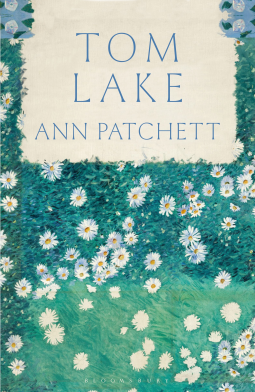
This month we’re starting with Tom Lake by Ann Patchett. I read this last year and liked it, although not as much as I hoped to. Here’s how I described it in my review:
“The title of Ann Patchett’s latest novel, Tom Lake, doesn’t refer to a person, as I’d assumed before I started reading, but to a place – a town in Michigan with a theatre overlooking the lake. One summer in the 1980s, a theatrical group gather at Tom Lake to rehearse the Thornton Wilder play, Our Town. The role of Emily has gone to Lara, a young woman who previously played that same part in a high school production. Here at Tom Lake, Lara meets and falls in love with the charismatic Peter Duke, the actor who plays her father in Our Town and who goes on to become a famous Hollywood star.
Many years later, in 2020, Lara and her husband, Joe, are living on a Michigan farm with their three adult daughters, Emily, Maisie and Nell, who have all come home to be with their parents as the Covid pandemic sweeps across the world. While they help to harvest cherries from the family orchard, the girls ask Lara to tell them about her relationship with Duke. As they listen to her story unfold, they discover things about their mother’s past that makes them reassess everything they thought they knew about her and about themselves.”
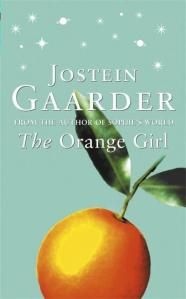

Using cherries as my first link takes me to another book featuring fruit: The Orange Girl by Jostein Gaarder (1), a novel first published in Norwegian and translated into English by James Anderson. Our narrator, a teenage boy whose father has died, reads a letter left to him by his father describing how, as a young man in 1970s Oslo, he had a series of encounters with a mysterious young woman wearing an orange dress and carrying a bag of oranges.
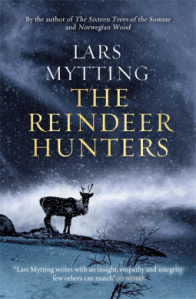
Another novel set in Norway and translated from Norwegian (this time by Deborah Dawkin) is The Reindeer Hunters by Lars Mytting (2). This is the second book in the Sister Bells trilogy about life in the remote village of Butangen where two church bells are said to have supernatural powers. I’ve just discovered that the final book, The Night of the Scourge, is being published in January next year, so that’s something to look forward to!
From reindeer hunting to fortune hunting now! Daisy Goodwin’s The Fortune Hunter (3) is the story of Empress Elizabeth of Austria (known as Sisi) and her relationship with Captain Bay Middleton, a British cavalry officer who acts as her ‘pilot’ (or guide) when she visits England for the hunting season in 1875. Bay, like Sisi, was a real person; he was a notable horseman and jockey who, in the novel, is preparing to race in the Grand National with his horse, Tipsy.
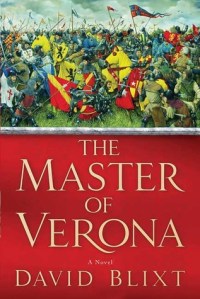

The Master of Verona by David Blixt (4) also features a horse race, in this case the Palio, the medieval race that still takes place today in Siena. The Palio is just one small part of this very entertaining novel set in 14th century Italy and inspired by both the story of Romeo and Juliet and the life of the poet Dante Alighieri. It’s the first in a series of which I’ve also read the second, but still need to finish the others.
A book with a shared word in the title is Madame Verona Comes Down the Hill (5) by Belgian author Dimitri Verhulst. This novella, translated from the original Dutch by David Colmer, is the story of a woman who lives alone in a cottage on a hill, waiting for a cello to be made from the wood of the tree from which her husband hanged himself. This is a beautifully written little book, but it wasn’t really for me.
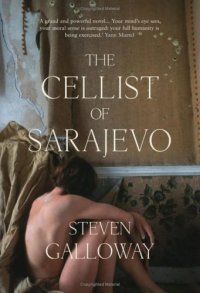
My final link is to another novel featuring cellos. The Cellist of Sarajevo (6) by Steven Galloway is set in 1992 during the Bosnian War. It tells the story of a cellist in the besieged city of Sarajevo, who plays his music in the street for twenty-two consecutive days as a message of hope and resilience.
~
And that’s my chain for March! My links have included fruit, Norway, hunting, horse races, Verona and cellos. It’s a very international chain this month, taking me from America to Bosnia via Norway, England, Italy and Belgium – and including three translated books.
In April we’ll be starting with any travel guide of our choice.
 She Reads Novels
Great first link! Like the sound of The Reindeer Hunters
The Reindeer Hunters is great, although I would recommend starting with the first book, The Bell in the Lake.
Good to know, thanks!
So many tempting titles on your chain this time–I like the sound of the Sister Bells series, The Fortune Hunter and the Master of Verona!
I’m glad you’re tempted! I loved all of those books.
Brilliant chain. It’s great how everyone goes off in different directions!
Yes, I’m always surprised by how different all the chains turn out to be!
Such an interesting chain! Yours is the second Mytting link I’ve seen although to a different book. Thanks for reminding me of The Cellist of Sarajevo. I remember being very impressed by it.
I’ve now seen three Mytting links today, all of them different! I was impressed by The Cellist of Sarajevo too.
Well done! That The Cellist of Sarajevo sounds very good.
Yes, it was an interesting book.
A nicely realised chain, from which I have only read (and enjoyed) The Cellist of Sarajevo
The Cellist of Sarajevo was such a powerful book!
It is indeed.
I’ve only read the Verhulst from your list, which I loved – it was for me. I love your neat links this month.
Thanks! I’m glad you loved the Verhulst.
I may have left this comment 3 times–it keeps giving an error. Your chain is very good! How grim to make a beautiful cello out of that tree though? I read Cellist of Sarajavo when it came out–it was very good.
Don’t worry, your comment only came through once. No, I wouldn’t like the idea of a cello made from that tree!
This is a very enticing chain! I have been to the Palio – when my brother was working in Rome, my family rented a villa in Tuscany for two weeks, exactly halfway between Florence and Siena, and it was definitely the best vacation I have ever had. We loved Siena and the timing was perfect to attend the Palio. I just put it on hold (coincidentally, the only copy is at a library I made a special trip to yesterday to get The Phoenix Crown – isn’t that always the way?).
I remember when Jostein Gaarder’s Sophie’s World came out, and endless conversations about how my company (now part of Penguin) should publish it – as a young adult book or an adult book. I think we tried to split the difference. I found it very tedious and wondered if it would be one of those books people bought but never read. The Orange Girl sounds much better.
That does sound lovely! I’ve been to Italy several times, but never Siena so I haven’t seen the Palio. I think I would consider Sophie’s World more of a young adult book than an adult one. I remember liking it when I read it in the 1990s as it was the first time I’d read about some of those philosophers, but I suspect I wouldn’t find it as interesting now.
I love your international emphasis. I need to venture more outside my U.S.-centered comfort zone. Thanks for the reading suggestions.
One of my goals for this year is to read more books set in different countries, particularly books in translation.
Cherries as the first connection, got to love that! Just like you, I assumed Tom Lake was the name of a character rather than a place, which is what got me started on my chain.
Yes, I think a lot of people will have made that assumption!
Can I join this chain?
Of course! You’re welcome to post your chain in the comments here if you don’t have your own blog.
I’ve wanted to read the Cellist from Sarajevo for so long. I could follow your logic. Here is my link: 6 Degrees
I hope you have a chance to read The Cellist of Sarajevo soon. I thought it was a fascinating book!