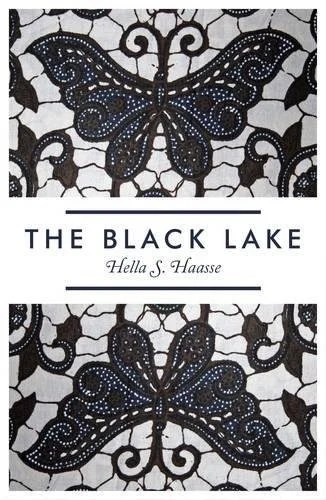
 Translated by Ina Rilke
Since reading Hella S. Haasse’s In a Dark Wood Wandering, I’ve been looking forward to reading more of her books. This one, The Black Lake, is on both my Classics Club list and 20 Books of Summer list and is also perfect for this year’s Women in Translation Month. Always good when one book counts towards multiple projects!
First published in 1948 as Oeroeg, this book is considered a Dutch classic and is apparently often taught in Dutch schools. Now that I’ve read it, I can see why it would be a popular choice with schoolteachers; it’s a short novella (under 140 pages in my edition so doesn’t take long to read), is written from the perspective of a young protagonist, and deals with the subject of colonialism in Indonesia, formerly the Dutch East Indies.
Our unnamed narrator is the son of a Dutch planter and his wife and grows up on their tea plantation in Preanger (now Priangan), West Java. As a child, he forms a close friendship with Oeroeg, the son of his father’s estate manager, and soon the two are inseparable. The narrator becomes vaguely aware that his parents and their servants disapprove of his attachment to a ‘native boy’, but with the innocence of childhood he has no idea why. However, when Oeroeg’s family is struck by tragedy, his father feels a sense of duty to the boy and reluctantly allows the friendship to continue. It’s only when he and Oeroeg start to attend school that the narrator begins to understand that their lives will never be able to follow the same path and that society has different expectations for each of them. During World War II, he leaves to serve in the Dutch army and on his return he finds that neither Oeroeg nor Indonesia are the same as when he went away.
The Black Lake is a beautifully written book, with lovely, vivid descriptions of the island of Java – the mountains, the rivers and the black lake of the title, Telaga Hideung, where one of the story’s pivotal scenes takes place. Ina Rilke’s English translation flows smoothly and is easy to read, while keeping in place some Dutch words and terms which can be looked up in the glossary at the back of the book if needed.
With the whole story being told from the perspective of a boy from a white Dutch colonial family, it’s both interesting and limiting. If Haasse was writing this book today, I think she would be expected to include the perspective of the oppressed people as well as the colonists – or maybe not write it at all and leave the story for an Indonesian author to tell. But in the context of the 1940s, when it was published, it gives some fascinating insights into the colonial mindset and I’m sure Haasse will have drawn on some of her own experiences and views (she was born in Indonesia herself and spent most of her first twenty years there).
Although I found this a powerful book, it’s not really one that I can say I ‘enjoyed’. The writing style was too dreamlike and distancing for me to fully engage with and the narrator’s story left me with a feeling of sadness. He’s naive, oblivious and looks back on his earlier years with what seems to be a fond nostalgia for an idyllic childhood, with a lack of understanding that, for Oeroeg, it was hardly idyllic at all. Oeroeg is the centre of the narrator’s life, yet there’s no indication that Oeroeg feels the same way or places much value on their friendship. Oeroeg proves to be the most socially and politically aware of the two and eventually the narrator is in the uncomfortable position of having stayed the same while everyone and everything around him has changed.
Of the two Haasse books I’ve read, I preferred the much longer In a Dark Wood Wandering, but am glad I read this one as well. If you’ve read any of her other books which are available in English translations, I’d love to hear your thoughts.

This is book 19/20 of my 20 Books of Summer 2024.
This is also book 45/50 from my second Classics Club list
 She Reads Novels
Oh interesting – I wonder if Louise Doughty had this in mind at all while writing Black Water, which also deals with the impact of colonialism in Indonesia.
I haven’t read Black Water, but with the similar title and subject I wouldn’t be surprised if Louise Doughty had read this book and been inspired by it.
Oh I’ll have find my copy of this I’ve not read her but have a couple of her books on my
Shelves
It’s such an interesting book. I hope you like it!
I’m intrigued by both your reviews of Hella Haasse’s books. I haven’t read her at all. You are truly galloping along with your challenges. Well done you. I’m crawling along as per the norm.
Thank you! I’ve actually read my final book for 20 Books of Summer now as well and just need to post the review. It’s the first time I’ve ever managed it. Hella Haasse writes so beautifully – I hope you’re able to try one of her books.
I have never looked into what else Haasse wrote, so thanks for this!
It seems like she wrote a lot of books, but only a few are available in English.
Maybe only a few are available. She was American.
I asked my children if they had studied this at school in the Netherlands. One thought it sounded familiar, but hadn’t read it, the other looked at me blankly. It came out in a special edition distributed free via libraries a few years ago and that’s how I came to read it. In my recollection, I didn’t enjoy it, but when I looked at my Goodreads review, I realised the characters had made a strong impression. I have a couple of her historical novels to read, including one set locally to me in Appeltern, but every time I look at In a Dark Wood Wandering, with its very many thin pages and tiny print, I pass it over for something else. The appeal of Oeroeg (In the Black Lake) was that it was so short, so easy to tick off the 1001 list.
That’s interesting. I was just going by what it says on Wikipedia and the Hella Haasse website regarding The Black Lake being taught in schools. I think maybe some teachers would find it too problematic for the reasons I mentioned in my review. In a Dark Wood Wandering is excellent and a more enjoyable book, but definitely a bigger commitment than this one!
Dutch schools are streamed at different levels. Perhaps it’s taught classically at the highest level, but none of my children did that. They only usually study excerpts from readers in class to teach them literary concepts. Otherwise they pick books themselves from a suggested list of books by Dutch authors, then write extended book reports.